AI and Robotics in Catalyst Discovery: From Self-Driving Labs to Clinical Breakthroughs
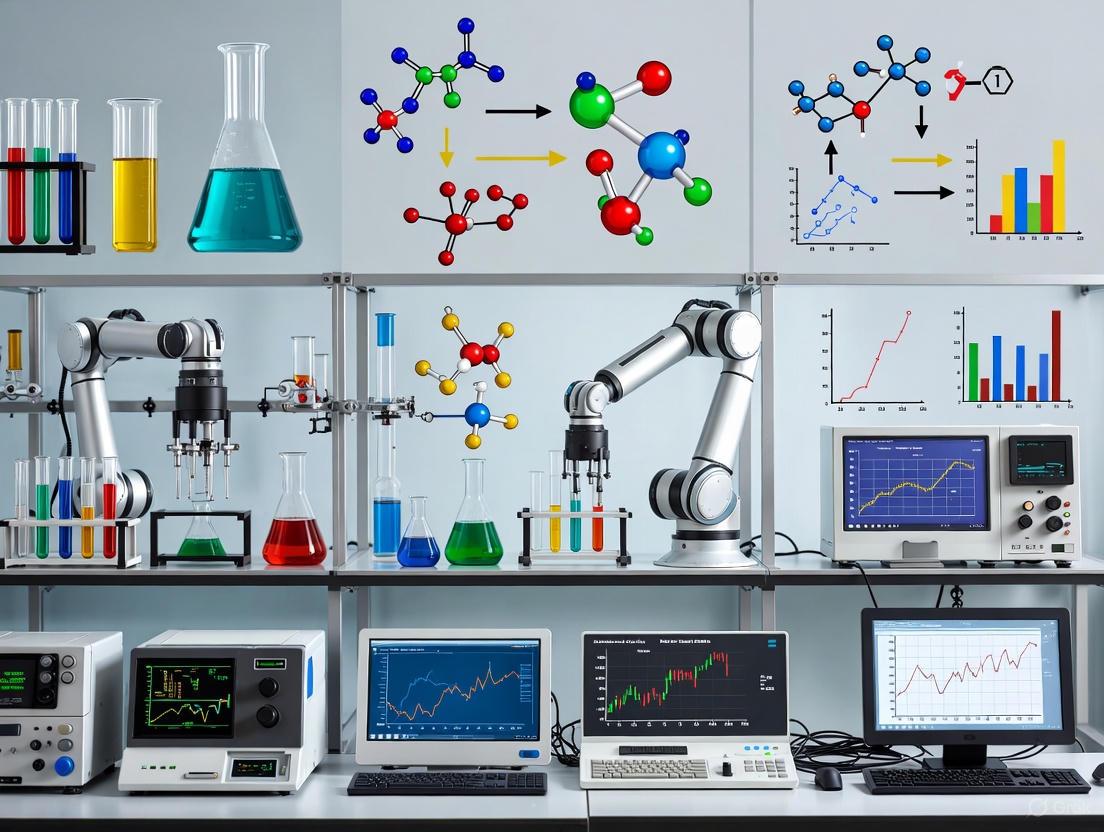
This article explores the transformative integration of artificial intelligence (AI), robotics, and advanced data science into catalyst discovery, a field critical for pharmaceutical development and sustainable energy.
AI and Robotics in Catalyst Discovery: From Self-Driving Labs to Clinical Breakthroughs
Abstract
This article explores the transformative integration of artificial intelligence (AI), robotics, and advanced data science into catalyst discovery, a field critical for pharmaceutical development and sustainable energy. We examine the foundational shift from manual, trial-and-error methods to autonomous, self-driving laboratories (SDLs) that operate with minimal human oversight. The scope covers core methodological components—from robotic hardware and AI-driven decision-making to real-world applications in drug development and electrocatalyst discovery. It also addresses key challenges in optimization, data scarcity, and model generalizability, while providing a comparative analysis of validation frameworks and performance metrics. Tailored for researchers, scientists, and drug development professionals, this review synthesizes current advancements and future trajectories for accelerating biomedical innovation.
The Paradigm Shift: From Manual Experiments to Autonomous Discovery
Defining Autonomous Catalyst Discovery and Self-Driving Labs (SDLs)
Autonomous discovery represents a transformative paradigm in scientific research, where artificial intelligence (AI), robotics, and automation converge to plan, execute, and analyze experiments with minimal human intervention [1]. At the heart of this paradigm are Self-Driving Labs (SDLs)—fully integrated research systems that combine automated instrumentation, data infrastructures, and AI-guided decision-making to enable closed-loop, iterative experimentation [2] [3]. In the specific domain of catalysis, autonomous catalyst discovery refers to the application of these SDLs to rapidly identify and optimize new catalytic materials and reactions, dramatically accelerating research that is fundamental to chemical manufacturing, environmental sustainability, and energy applications [2].
These systems function as robotic co-pilots for scientists, automating the entire research workflow from initial hypothesis generation to experimental execution, data analysis, and subsequent experimental planning [3]. By leveraging AI to dynamically learn from outcomes, SDLs continuously refine their understanding and exploration strategies, enabling them to navigate complex experimental parameter spaces with exceptional efficiency [4]. This approach shifts the traditional, human-centered trial-and-error methodology toward an information-rich, data-driven process that can achieve discoveries 10 to 100 times faster than conventional methods, with the potential to reach 1,000-fold acceleration in the future [3].
Core Components and Workflows of SDLs
The operational framework of a Self-Driving Lab is built upon three foundational pillars that work in concert: automated hardware, computational models, and intelligent decision-making algorithms.
Core Component Table
Table 1: Essential Components of a Self-Driving Lab for Catalyst Discovery
| Component Category | Specific Examples | Function in Autonomous Discovery |
|---|---|---|
| Automation & Robotics | Fixed-in-place robots [1], Mobile human-like robots [1], High-throughput synthesis platforms [2] | Executes repetitive physical tasks such as liquid handling, material synthesis, and sample characterization with high precision and reproducibility. |
| AI & Decision-Making | Bayesian optimization [4], Reinforcement learning [5], Gaussian Process Regression (GPR) [6] | Plans experiments by predicting the most informative conditions to test, thereby minimizing the number of trials needed to reach a goal. |
| Data Infrastructure | FAIR data principles [4], Cloud-based data storage [4], Scientific Large Language Models (LLMs) [4] | Manages large volumes of experimental data, ensuring it is Findable, Accessible, Interoperable, and Reusable for both humans and AI models. |
Standardized Workflow for Autonomous Catalyst Discovery
The following diagram illustrates the closed-loop, iterative process that defines the operation of a Self-Driving Lab.
Diagram 1: Autonomous Catalyst Discovery Workflow.
This workflow operates as a continuous cycle:
- Objective Definition: A human researcher defines the primary goal, such as discovering a catalyst that maximizes yield for a specific reaction [2].
- AI Proposal: An AI algorithm, such as a Bayesian optimizer, analyzes all existing data and proposes a set of experimental conditions (e.g., catalyst composition, temperature, pressure) that are most likely to advance toward the goal [4] [6].
- Robotic Execution: Automated platforms and robots perform the material synthesis and catalytic testing, ensuring high reproducibility and operating 24/7 [1] [2].
- Data Analysis: Integrated analytical instruments automatically collect and process results, feeding structured data back to the AI [3].
- AI Learning: The AI model incorporates the new results, updates its internal understanding of the catalyst landscape, and uses this refined knowledge to propose the next most informative experiment [4]. This loop continues until the performance objective is achieved.
Quantitative Performance and Application Data
SDLs have demonstrated remarkable efficacy in accelerating materials and catalyst research. The following table summarizes key performance metrics from real-world implementations.
Table 2: Quantitative Performance of Self-Driving Labs in Materials and Catalyst Research
| Application Area | SDL System / AI | Key Performance Achievement | Experimental Throughput / Scale |
|---|---|---|---|
| Energy-Absorbing Materials | MAMA BEAR (BU) [4] | Discovered a material with 75.2% energy absorption efficiency, a record high. | Over 25,000 experiments conducted autonomously. |
| Mechanical Structures | BU SDL with Cornell Algorithms [4] | Achieved 55 J/g energy absorption, doubling the previous benchmark of 26 J/g. | Rapid evaluation of novel Bayesian optimization algorithms. |
| Electronic Polymer Films | Polybot (Argonne) [1] | Produced high-conductivity, low-defect electronic polymer thin films. | AI-driven automation of material synthesis and testing. |
| Chip Design (TPU) | AlphaChip (Google) [5] | Generated superhuman chip layouts used in commercial hardware. | Reduced design time from months to hours. |
Experimental Protocols for SDL-Based Catalyst Discovery
Protocol 1: Bayesian Optimization for Catalyst Screening
This protocol is adapted from workflows used to discover high-performance energy-absorbing materials and can be adapted for catalyst optimization [4].
Objective: To efficiently identify the catalyst composition and reaction conditions that maximize product yield within a predefined chemical space.
Materials and Reagents:
- Precursor Solutions: Stocks of metal salts and ligand solutions.
- Solvent Library: A range of polar and non-polar solvents.
- Substrates: High-purity reactants for the catalytic reaction.
- Analytical Standards: Pure samples for GC/MS or HPLC calibration.
Procedure:
- Define Search Space: Establish the parameters and their bounds (e.g., metal molar ratio (0-100%), ligand concentration (0.1-10 mol%), temperature (25-150 °C), reaction time (1-24 h)).
- Initialize with Design of Experiments (DoE): Perform a small set of initial experiments (e.g., 10-20) using a space-filling design like Latin Hypercube Sampling to gather baseline data.
- Build Surrogate Model: Train a Gaussian Process Regression (GPR) model on the collected data to create a statistical surrogate of the catalyst performance landscape [6].
- Select Subsequent Experiment: Use an acquisition function (e.g., Expected Improvement) to identify the single set of conditions that promises the largest performance gain or information gain.
- Execute Experiment Automatically: The robotic platform prepares the catalyst and runs the reaction at the specified conditions.
- Analyze and Update: Automatically quantify the product yield and feed the result back to the GPR model. Repeat from step 4 until a performance target is met or the experimental budget is exhausted.
Protocol 2: Closed-Loop Kinetic Profiling of Catalytic Reactions
This protocol leverages AI and robotics for in-depth mechanistic studies, crucial for catalyst development [2] [6].
Objective: To autonomously map the reaction kinetics and understand the mechanism of a catalytic process.
Materials and Reagents:
- Catalyst Library: A series of related catalyst candidates.
- Reactant Solutions: Prepared at various concentrations.
- Quenching Agents: To stop reactions at precise times for analysis.
- Internal Standards: For accurate quantitative analysis.
Procedure:
- Automated Time-Point Sampling: The robotic system initiates the reaction and automatically withdraws aliquots at pre-defined time intervals.
- High-Throughput Analysis: Each aliquot is automatically quenched and injected into an online GC or HPLC for analysis.
- Data Stream Integration: Concentration-time data for each experiment is automatically parsed and stored in a central database.
- Kinetic Model Proposal: An AI agent (potentially an LLM fine-t on chemical knowledge) suggests plausible kinetic models (e.g., Langmuir-Hinshelwood, Eley-Rideal) based on the reaction data [6].
- Model Fitting and Validation: The system fits the proposed models to the data, comparing goodness-of-fit metrics (e.g., AIC, BIC) to identify the most probable mechanism.
- Design Optimal Discriminatory Experiment: The AI uses the model uncertainties to design a new experiment (e.g., at specific concentrations) whose results will best distinguish between competing kinetic models.
- Iterate: The loop (steps 1-6) continues until the kinetic model is sufficiently validated and the parameters are determined with high confidence.
The Scientist's Toolkit: Research Reagent and Solution Essentials
Table 3: Essential Research Reagents and Materials for Autonomous Catalysis SDLs
| Item | Function / Role in Autonomous Workflow |
|---|---|
| Modular Reactor Systems | Enable rapid testing of reactions under different conditions (pressure, temperature, flow) with minimal manual reconfiguration [2]. |
| High-Throughput Characterization | Integrated analytical tools (e.g., inline spectroscopy, autosamplers for GC/LC) that provide real-time or rapid-turnaround data for closed-loop decision-making [3]. |
| FAIR-Compliant Database | A centralized digital repository that adheres to Findable, Accessible, Interoperable, and Reusable principles, ensuring all experimental data is structured for AI consumption [4]. |
| AI Planning Software | Core algorithms (e.g., for Bayesian optimization or reinforcement learning) that direct the experimental campaign by deciding which experiment to perform next [4] [5]. |
| Precursor Chemical Libraries | Comprehensive, well-organized collections of chemical building blocks (metal salts, ligands, substrates) that the robotic system can access and dispense automatically [2]. |
Implementation and Strategic Considerations
System Architecture and Human-in-the-Loop Design
While fully autonomous operation is the goal, human oversight remains critical. The most effective SDLs are designed for human-AI-robot collaboration [2]. Researchers provide high-level direction, validate machine-generated hypotheses, and oversee safety. The architecture must also prioritize data quality and curation, as AI models are only as good as the data they train on [3]. Implementing a cloud-connected, community-driven platform, as explored at Boston University, can transform an SDL from an isolated instrument into a shared resource, amplifying its impact [4].
Addressing Key Challenges
Deploying a functional SDL requires overcoming several interdisciplinary challenges:
- Hardware Reliability and Integration: Creating robust, interoperable systems that execute complex workflows with high precision and minimal downtime is a significant engineering hurdle [3].
- Workforce Development: A skilled workforce capable of designing, maintaining, and operating these sophisticated platforms is essential for widespread adoption [3].
- Legal and Safety Standards: Establishing clear policies for safe handling of hazardous materials, intellectual property rights, and responsible AI use is fundamental for building trust and ensuring responsible deployment [3].
The integration of AI, robotics, and automation into the scientific process marks a fundamental shift in research methodology. Autonomous catalyst discovery within Self-Driving Labs is poised to dramatically accelerate the development of new materials and chemicals, offering a powerful solution to address urgent global challenges in energy, sustainability, and healthcare [3].
The empirical process of scientific discovery, traditionally guided by researcher intuition and characterized by lengthy timelines, is undergoing a fundamental transformation. The urgent challenges in energy conversion and sustainable raw material use now demand radically new approaches in fields like catalysis research [7]. Autonomous discovery systems, particularly self-driving laboratories (SDLs), have emerged as a powerful strategy to meet this need by dramatically accelerating the pace of materials and chemical innovation. These systems integrate artificial intelligence (AI), robotics, and automation technologies into a continuous closed-loop cycle, enabling efficient scientific experimentation with minimal human intervention [8]. By turning processes that once took months of trial and error into routine high-throughput workflows, autonomous laboratories represent a paradigm shift in experimental science, potentially reducing discovery timelines from decades to mere years.
The core power of these systems lies in their ability to operate as continuous closed loops. In an ideal implementation, an AI model trained on literature data and prior knowledge generates initial synthesis schemes for a target molecule or material. Robotic systems then automatically execute every step of the synthesis recipe, from reagent dispensing and reaction control to product collection and analysis. Characterization data are analyzed by software algorithms or machine learning models, which then propose improved synthetic routes using techniques like active learning and Bayesian optimization [8]. This tight integration of design, execution, and data-driven learning minimizes downtime between manual operations, eliminates subjective decision points, and enables rapid exploration of novel materials and optimization strategies at unprecedented scales.
Quantitative Performance Benchmarks
The acceleration enabled by autonomous discovery systems is demonstrated by concrete experimental results across multiple domains, from materials science to heterogeneous catalysis. The following table summarizes key performance metrics from recent implementations:
Table 1: Performance Benchmarks of Autonomous Discovery Systems
| System/Platform | Application Domain | Key Performance Metrics | Experimental Throughput | Citation |
|---|---|---|---|---|
| MAMA BEAR (BU) | Energy-absorbing materials | Achieved 75.2% energy absorption; discovered structures absorbing 55 J/g (doubling previous 26 J/g benchmark) | >25,000 experiments conducted | [4] |
| A-Lab (2023) | Solid-state synthesis | Synthesized 41 of 58 predicted materials (71% success rate) over 17 days of continuous operation | 58 materials attempted | [8] |
| AFE with Active Learning | Oxidative coupling of methane (OCM) | MAE of 1.69% in C2 yields during training; 1.73% in cross-validation | 80 new catalysts added over 4 active learning cycles | [9] |
| Automatic Feature Engineering | Ethanol to butadiene conversion | MAE of 3.77%-3.93% in butadiene yield predictions | Applied to supported multi-element catalyst datasets | [9] |
| Automatic Feature Engineering | Three-way catalysis | MAE of 11.2°C-11.9°C in T50 of NO conversion | Applied to supported multi-element catalyst datasets | [9] |
These quantitative results demonstrate the dual advantage of autonomous systems: significantly increased experimental throughput combined with enhanced discovery efficiency. The MAMA BEAR system's discovery of materials with unprecedented mechanical energy absorption (55 J/g) opens new possibilities for advanced lightweight protective equipment [4], while the A-Lab's ability to successfully synthesize 71% of targeted materials demonstrates the feasibility of autonomous materials discovery at scale [8].
The performance of AI-driven catalyst design is particularly notable when working with small datasets, which are common in experimental catalysis research. Automatic Feature Engineering (AFE) techniques have achieved remarkable accuracy in predicting catalytic performance across three types of heterogeneous catalysis: oxidative coupling of methane, conversion of ethanol to butadiene, and three-way catalysis [9]. The mean absolute error (MAE) values obtained through AFE were significantly smaller than the span of each target variable and comparable to respective experimental errors, enabling effective catalyst optimization with limited data.
Experimental Protocols for Autonomous Catalyst Discovery
Protocol: Autonomous Workflow for Solid-State Materials Synthesis
Based on: A-Lab Implementation for Inorganic Materials [8]
- Objective: To autonomously synthesize and optimize novel, theoretically stable inorganic materials predicted by computational methods.
- Primary Components:
- Target Selection: Novel materials are selected using large-scale ab initio phase-stability databases from the Materials Project and Google DeepMind.
- Synthesis Recipe Generation: Natural-language models trained on literature data propose initial synthesis recipes, including precursor selection and temperature parameters.
- Robotic Synthesis: Automated solid-state synthesis platforms handle weighing, mixing, and calcination of precursor powders.
- Phase Identification: X-ray diffraction (XRD) patterns are analyzed by machine learning models (convolutional neural networks) for phase identification and quantification.
- Active Learning Optimization: The ARROWS³ algorithm uses results from previous iterations to propose improved synthesis routes for failed or suboptimal syntheses.
- Experimental Workflow:
- Computational targets are imported into the autonomous workflow management system.
- AI-generated synthesis recipes are translated into robotic execution commands.
- Robotic systems execute powder handling, mixing, and heat treatment according to recipe parameters.
- Synthesized materials are automatically transported to XRD instrumentation for characterization.
- ML models analyze diffraction patterns to determine synthesis success and product purity.
- Active learning algorithms update the recipe models based on outcomes.
- The cycle continues with improved recipes for failed targets or proceeds to new targets.
- Key Parameters:
- Success Criterion: Successful synthesis of target material with correct crystal structure as determined by XRD.
- Optimization Variables: Precursor identities, precursor ratios, grinding time, heating rates, reaction temperatures, reaction durations.
- Decision Logic: Heuristic rules combined with Bayesian optimization to prioritize synthesis parameter adjustments.
Protocol: Closed-Loop Optimization for Catalyst Design
Based on: Automatic Feature Engineering with Active Learning [9]
- Objective: To discover and optimize multi-element heterogeneous catalysts through iterative experimentation and machine learning.
- Primary Components:
- Automatic Feature Engineering (AFE): Generates numerous candidate features through mathematical operations on general physicochemical properties of catalyst components.
- Feature Selection: Identifies optimal feature subsets that maximize predictive performance in supervised machine learning.
- Active Learning: Combines exploration (farthest point sampling) and exploitation (high-error sampling) to select informative subsequent experiments.
- High-Throughput Experimentation (HTE): Robotic platforms enable rapid preparation and testing of catalyst candidates.
- Experimental Workflow:
- Initialization: Begin with limited catalyst performance dataset (typically <100 observations).
- Feature Engineering:
- Assign primary features using commutative operations (maximum, weighted average) on elemental properties.
- Synthesize higher-order features through mathematical functions to capture nonlinearities.
- Generate 10³-10⁶ candidate features from a library of elemental properties.
- Model Building: Select 5-10 features that minimize cross-validation error using robust regression (Huber regression).
- Experimental Design:
- Select ~90% of next experiments via farthest point sampling in feature space to diversify composition space.
- Select ~10% of next experiments based on highest prediction errors to refine uncertain regions.
- HTE Execution: Prepare and evaluate designed catalysts using automated synthesis and testing platforms.
- Model Update: Incorporate new data and repeat from step 2.
- Key Parameters:
- Regression Method: Huber regression with leave-one-out cross-validation to minimize overfitting.
- Feature Space: 5,568+ first-order features generated from 58 elemental properties via 8 commutative operations and 12 mathematical functions.
- Stopping Criterion: Model convergence (minimal change in cross-validation error) and/or depletion of experimental resources.
The Scientist's Toolkit: Research Reagent Solutions
Table 2: Essential Research Components for Autonomous Catalyst Discovery
| Category | Component | Function & Application | Implementation Example |
|---|---|---|---|
| AI/ML Infrastructure | Bayesian Optimization Algorithms | Guides experimental parameter selection by balancing exploration and exploitation; maximizes information gain from each experiment. | MAMA BEAR system for energy-absorbing materials [4] |
| Automatic Feature Engineering (AFE) | Automatically generates and selects relevant physicochemical descriptors from elemental properties without prior catalytic knowledge. | Catalyst design for oxidative coupling of methane, ethanol-to-butadiene conversion [9] | |
| Large Language Models (LLM) | Serves as "brain" for autonomous research: plans experiments, accesses literature, controls robotic systems via natural language. | Coscientist, ChemCrow, and ChemAgents systems [8] | |
| Robotic Hardware | Solid-State Synthesis Platforms | Automated weighing, mixing, and heat treatment of powder precursors for inorganic materials. | A-Lab implementation with robotic furnaces and powder handling [8] |
| Mobile Robot Transport Systems | Free-roaming robots transport samples between specialized instruments (synthesizers, chromatographs, spectrometers). | Modular platform with mobile robots connecting Chemspeed ISynth, UPLC-MS, benchtop NMR [8] | |
| Liquid Handling Robots | Precise dispensing of liquid reagents for solution-phase synthesis and catalyst preparation. | Robotic organic synthesis platforms for cross-coupling reactions [8] | |
| Analytical Integration | In Situ/Operando Characterization | Real-time monitoring of catalysts under working conditions to identify active species and mechanistic pathways. | Essential for autonomous catalyst development [7] |
| X-ray Diffraction (XRD) with ML | Automated phase identification and quantification of crystalline materials using machine learning models. | Convolutional neural networks for XRD analysis in A-Lab [8] | |
| Chromatography-Mass Spectrometry | Online analysis of reaction products and yields for organic transformations and catalytic testing. | UPLC-MS systems in modular autonomous platforms [8] | |
| Data Infrastructure | FAIR Data Practices | Ensures data are Findable, Accessible, Interoperable, and Reusable for community-driven science. | BU Libraries public dataset downloaded 89+ times [4] |
| Cloud-Based Science Portals | Shared platforms for collaborative experimentation, data sharing, and community-driven research. | AI Materials Science Ecosystem (AIMS-EC) portal [4] |
Implementation Challenges and Future Directions
Despite their promising results, autonomous discovery systems face several significant constraints that must be addressed for widespread deployment. The performance of AI models depends heavily on high-quality, diverse data, yet experimental data often suffer from scarcity, noise, and inconsistent sources [8]. Most current autonomous systems and AI models are highly specialized for specific reaction types or materials systems, struggling to generalize across different domains [8]. Hardware limitations also present barriers, as different chemical tasks require different instruments, and current platforms lack modular architectures that can seamlessly accommodate diverse experimental requirements [8].
Looking ahead, several strategic developments will be crucial for advancing autonomous discovery systems. Enhancing AI generalization will require training foundation models across different materials and reactions, using transfer learning to adapt to limited new data [8]. Developing standardized hardware interfaces will allow rapid reconfiguration of different instruments, extending mobile robot capabilities to include specialized analytical modules [8]. Community-driven platforms, inspired by cloud computing models, will open SDLs to broader research communities, accelerating discovery through shared resources and combined knowledge [4]. Finally, addressing data scarcity will necessitate standardized experimental data formats, augmented by high-quality simulation data and uncertainty analysis [8].
As these systems evolve, the role of human researchers will transform rather than diminish. The future of accelerated discovery lies in collaborative human-machine systems where AI and automation handle high-throughput experimentation while researchers contribute creativity, intuition, and strategic oversight [4]. This partnership represents the most promising path for achieving the urgent goal of compressing discovery timelines from decades to years, ultimately enabling rapid solutions to pressing global challenges in energy, sustainability, and human health.
Autonomous discovery systems represent a paradigm shift in scientific research, replacing traditional, human-driven laboratory workflows with integrated, self-driving laboratories. These systems synergistically combine artificial intelligence (AI), advanced robotics, and closed-loop workflows to accelerate the pace of discovery in fields ranging from chemistry and materials science to drug development. By creating a continuous cycle of computational design, robotic execution, and data-driven learning, these platforms can conduct scientific experiments with minimal human intervention, compressing discovery timelines that traditionally required decades into mere years [8] [10]. This document details the core components, protocols, and practical implementations of these systems, providing researchers with a framework for deploying autonomous discovery in catalyst development and beyond.
Core Architectural Components
The architecture of an autonomous laboratory is built upon three interconnected technological pillars that form a continuous, adaptive discovery engine.
Artificial Intelligence: The Central Decision-Maker
AI serves as the cognitive center of autonomous laboratories, encompassing several specialized functions:
- Experimental Planning and Design: AI models, particularly large language models (LLMs), can design novel synthesis schemes and predict viable experimental parameters by drawing upon vast scientific literature and existing datasets. Systems like Coscientist and ChemCrow demonstrate LLM-driven agents capable of autonomously planning and controlling robotic operations for chemical experiments [8].
- Knowledge Extraction and Integration: AI systems construct comprehensive biological and chemical representations by fusing multi-modal data. For instance, Insilico Medicine's Pharma.AI platform leverages natural language processing to extract information from over 40 million documents and integrates this with omics data to identify novel therapeutic targets [11].
- Generative Design: Generative models create novel molecular structures or materials configurations optimized for specific properties. Generative adversarial networks (GANs) and reinforcement learning algorithms can design drug-like molecules balanced for potency, metabolic stability, and bioavailability [12] [11].
- Data Analysis and Interpretation: Machine learning models, including convolutional neural networks, automatically interpret complex analytical data, such as X-ray diffraction patterns or NMR spectra, to identify reaction products and quantify yields [8] [13].
Robotic Systems: The Physical Execution Layer
Robotic systems provide the physical interface for conducting experiments with precision and reproducibility:
- Fixed Automation Systems: Integrated robotic workstations handle specific tasks like liquid handling, synthesis, and sample preparation. The A-Lab for solid-state synthesis employs robotic arms for weighing, mixing, and pelletizing precursor powders, followed by automated transfer to furnaces for heating [8].
- Mobile Robotics: Free-roaming mobile robots transport samples between fixed instrumentation stations. The modular platform demonstrated by Dai et al. uses mobile robots to operate a synthesizer, UPLC-MS system, and benchtop NMR, creating a flexible laboratory configuration [8].
- Integrated Analytical Instrumentation: Automated systems incorporate analytical techniques including ultraperformance liquid chromatography-mass spectrometry (UPLC-MS), nuclear magnetic resonance (NMR) spectroscopy, and other characterization methods that provide real-time feedback on experimental outcomes [8] [13].
- Additive Manufacturing: High-resolution 3D printing enables rapid fabrication of custom reactor geometries with complex internal structures optimized for specific catalytic applications [13].
The Closed-Loop Workflow: Integrating Components
The true power of autonomous laboratories emerges from the tight integration of AI and robotics into a continuous Design-Make-Test-Analyze (DMTA) cycle:
- Design Phase: AI models propose candidate materials, molecules, or experimental conditions based on prior knowledge and optimization algorithms.
- Make Phase: Robotic systems automatically execute the synthesis, preparation, or fabrication of the proposed designs.
- Test Phase: Integrated analytical instruments characterize the products and measure their properties or performance.
- Analyze Phase: AI processes the experimental results, updates its models, and uses active learning or Bayesian optimization to propose improved designs for the next iteration [8] [11].
This closed-loop approach minimizes downtime between experiments, eliminates subjective decision points, and enables rapid exploration of parameter spaces that would be intractable through manual methods.
Case Study & Experimental Protocol: The Reac-Discovery Platform for Catalytic Reactor Optimization
The Reac-Discovery platform exemplifies the application of autonomous systems to catalyst and reactor discovery, specifically for multiphase continuous-flow reactions [13].
Reac-Discovery is a semi-autonomous digital platform that integrates the design, fabrication, and optimization of catalytic reactors with periodic open-cell structures (POCS). It aims to simultaneously optimize both reactor geometry (topology) and process parameters to enhance performance in complex multiphasic transformations, where variables such as surface-to-volume ratio, flow patterns, and thermal management strongly influence heat and mass transfer [13].
Detailed Experimental Protocol
Module 1: Reactor Geometry Generation (Reac-Gen)
- Objective: Digitally construct and parametrically define advanced reactor geometries.
- Procedure:
- Select a base structure from the predefined library of 20 surface equations, including Triply Periodic Minimal Surfaces like Gyroid, Schwarz, and Schoen-G.
- Set the three key parameters that define the topology using implicit equations (e.g., for a Gyroid:
sin(x)·cos(y) + sin(y)·cos(z) + sin(z)·cos(x) = L):- Size (S): Defines the spatial boundaries and number of periodic units.
- Level Threshold (L): Sets the isosurface cutoff, controlling porosity and wall thickness.
- Resolution (R): Specifies sampling point density, controlling geometric fidelity.
- Execute the algorithm to generate the 3D model and compute geometric descriptors (void area, hydraulic diameter, local porosity, specific surface area, wetted perimeter, total surface area, free volume, tortuosity).
Module 2: Reactor Fabrication (Reac-Fab)
- Objective: Translate digital designs into physical reactors.
- Procedure:
- Validate the structural printability using a dedicated ML model to avoid fabrication failures.
- Employ stereolithography (SLA) for high-resolution 3D printing of the reactor structure.
- Functionalize the printed structure with the catalytic material (e.g., through immobilization of molecular catalysts or coating with catalytic suspensions).
Module 3: Evaluation and Optimization (Reac-Eval)
- Objective: Autonomously evaluate reactor performance and refine parameters.
- Procedure:
- Install multiple 3D-printed reactors in the parallel self-driving laboratory setup.
- Initiate continuous-flow reactions with real-time monitoring using benchtop NMR spectroscopy.
- Vary key process descriptors (temperature, gas/liquid flow rates, concentration) according to an active learning or Bayesian optimization algorithm.
- Collect reaction conversion and yield data from NMR analysis.
- Train two interconnected ML models:
- A process optimization model to identify optimal reaction conditions.
- A reactor geometry refinement model to correlate topological descriptors with performance and suggest improved geometries.
- Feed the results back to Reac-Gen to initiate the next design iteration.
Key Performance Metrics and Outcomes
Table 1: Quantitative Results from Reac-Discovery Platform Application [13]
| Reaction | Key Optimized Parameter | Achieved Performance | Significance |
|---|---|---|---|
| Hydrogenation of Acetophenone | Space-Time Yield (STY) | Significant enhancement over conventional reactors | Demonstrated platform efficacy for a benchmark transformation |
| CO₂ Cycloaddition to Epoxides | Space-Time Yield (STY) | Highest reported STY for a triphasic reaction using immobilized catalysts | Validated platform for thermodynamically challenging, industrially relevant reactions |
Workflow Visualization
The following diagrams illustrate the core closed-loop workflow and the specific architecture of the Reac-Discovery platform.
Generalized Closed-Loop Workflow
Reac-Discovery Platform Architecture
The Scientist's Toolkit: Essential Research Reagents & Materials
Successful implementation of autonomous discovery systems requires careful selection of hardware, software, and laboratory infrastructure.
Table 2: Essential Research Reagents and Solutions for Autonomous Discovery
| Item | Function/Role | Implementation Example |
|---|---|---|
| AI/ML Models for Planning | Generate initial synthesis schemes, predict properties, and plan experiments. | Coscientist LLM agent; Insilico's Chemistry42 for generative molecule design [8] [11]. |
| Robotic Synthesis Workstation | Automates the execution of chemical synthesis with precision and reproducibility. | Chemspeed ISynth synthesizer; A-Lab's robotic arms for solid-state synthesis [8]. |
| Mobile Robots | Transport samples between fixed instruments, enabling flexible lab configurations. | System by Dai et al. using free-roaming robots to connect synthesizer, UPLC-MS, and NMR [8]. |
| Integrated Analytical Instruments | Provide real-time, automated characterization of reaction outcomes and products. | Benchtop NMR for real-time monitoring; UPLC-MS systems; XRD for phase identification [8] [13]. |
| High-Resolution 3D Printer | Fabricates custom reactor geometries with complex internal structures. | Stereolithography (SLA) printer in Reac-Fab module for creating POCS reactors [13]. |
| Data Management Platform | Handles large, multi-modal datasets and facilitates model training and data exchange. | Recursion OS platform managing ~65 petabytes of proprietary biological and chemical data [11]. |
| Optimization Algorithms | Guide the iterative search for optimal conditions or designs using experimental data. | Bayesian optimization; Active learning (e.g., ARROWS3 algorithm in A-Lab) [8]. |
The integration of AI, robotics, and closed-loop workflows constitutes the technological foundation of modern autonomous discovery systems. As demonstrated by platforms like Reac-Discovery and A-Lab, this integration enables a fundamental reimagining of scientific research—shifting from human-guided, sequential investigation to AI-orchestrated, parallel discovery campaigns. While challenges remain, including data scarcity, model generalizability, and hardware interoperability, the continued advancement of these core components promises to dramatically accelerate innovation across catalysis, materials science, and pharmaceutical development. The protocols and architectures detailed herein provide a roadmap for researchers embarking on the development and implementation of these transformative technologies.
The development of autonomous catalyst discovery systems represents a paradigm shift in materials science and pharmaceutical development. This transition from manual, intuition-driven research to automated, data-driven experimentation addresses fundamental challenges in catalyst discovery, where the structural complexity of drug intermediates often renders conventional catalytic methods ineffective [14]. The integration of high-throughput experimentation (HTE) with artificial intelligence (AI) has created a foundation for fully autonomous systems capable of navigating high-dimensional material design spaces beyond human capabilities [15]. These systems have proven particularly valuable in pharmaceutical synthesis, where they solve challenging problems in process chemistry and medicinal chemistry development [14]. This article examines critical lessons from historical HTE and automation approaches, providing detailed application notes and protocols to inform the next generation of autonomous catalyst discovery platforms.
Key Historical Developments and Quantitative Insights
The evolution of chemical high-throughput experimentation demonstrates a clear trajectory toward increased miniaturization, automation, and computational integration. Early HTE systems focused primarily on homogeneous asymmetric hydrogenation using chiral precious-metal catalysts [14]. Success in these early applications motivated expansion to other high-value catalytic chemistries, necessitating significant advances in reactor design, workflow automation, and analytical techniques [14].
Table 1: Evolution of HTE Capabilities in Pharmaceutical Catalyst Discovery
| Development Phase | Primary Screening Focus | Typical Format | Key Technological Enablers | Material Efficiency |
|---|---|---|---|---|
| Early HTE (Pre-2010) | Homogeneous hydrogenation | 96-well plates | Predefined catalyst libraries, basic automation | Moderate (mg scale) |
| Intermediate HTE (c. 2010-2017) | Cross-coupling, phase-transfer catalysis | 384-well plates | Advanced reactor design, high-throughput analytics | Improved (μg-mg scale) |
| Advanced HTE (Post-2017) | Photoredox catalysis, C-H functionalization | 1536-well plates | Miniaturization, cheminformatics, "nanoscale" screening | High (nano-μg scale) |
| AI-Driven Autonomous Systems | Multi-objective optimization | Continuous flow/HTE integration | Bayesian optimization, LLMs, robotic workflows | Optimal (minimal material consumption) |
Table 2: Performance Comparison of Catalyst Discovery Methodologies
| Discovery Methodology | Time per Catalyst Evaluation | Material Consumption per Experiment | Success Rate for Complex Pharmaceutical Intermediates | Informatics Capability |
|---|---|---|---|---|
| Traditional Trial-and-Error | Days to weeks | Gram scale | Low (<10%) | Limited to laboratory notebooks |
| Early HTE Approaches | Hours to days | Milligram scale | Moderate (10-30%) | Basic database integration |
| DFT-Guided HTE | Hours | Milligram scale | Improved (30-50%) | Computational screening |
| AI-Empowered Autonomous Discovery | Minutes to hours | Nanogram to microgram scale | High (50-80%) | "Big data" informatics, predictive modeling |
The quantitative progression illustrated in Tables 1 and 2 highlights how early automation enabled the exploration of catalyst design spaces orders of magnitude larger than previously possible. The implementation of "nanoscale" reaction screening in 1536-well plates represented a critical breakthrough, dramatically reducing both time and material requirements while generating data density sufficient for informatics-driven approaches [14]. This evolution continues with AI techniques progressing from classical machine learning to graph neural networks and large language models (LLMs), with LLMs particularly promising for their ability to comprehend textual descriptions of catalyst systems and integrate diverse observable features [16].
Detailed Experimental Protocols
Protocol: Nanoscale Catalyst Screening in 1536-Well Plates for Pharmaceutical Applications
Based on evolved HTE techniques for challenging problems in pharmaceutical synthesis [14]
Setting Up
Pre-experiment Preparation (Timeline: 24 hours before screening)
- Reboot control computer and robotic handling systems to clear memory caches and ensure optimal performance.
- Verify environmental controls: maintain laboratory temperature at 23°C ± 0.5°C and relative humidity at 40% ± 5%.
- Calibrate liquid handling systems using fluorescent dye dilution series, verifying accuracy within 2% coefficient of variation.
- Pre-condition 1536-well plates by inert gas purging (N2 or Ar) for 12 hours to remove oxygen and moisture.
Reagent Preparation (Timeline: 4 hours before screening)
- Prepare catalyst libraries at 100mM concentration in appropriate anhydrous solvents under inert atmosphere.
- Formulate substrate solutions at 50mM concentration with internal standard (0.1mM dodecane for GC-MS analysis).
- Verify solution integrity via UV-Vis spectroscopy, rejecting any solutions with evidence of precipitation or degradation.
Automated Screening Execution
Plate Layout and Liquid Handling
- Program robotic platform to dispense 50nL catalyst solutions using non-contact piezoelectric dispensers.
- Add 100nL substrate solutions to appropriate wells, maintaining inert atmosphere throughout.
- Seal plates with gas-permeable membrane for oxygen-sensitive reactions or solid seals for volatile solvent systems.
- Initiate thermal cycling protocol with precise temperature control (±0.1°C) across the entire plate.
Reaction Monitoring and Quenching
- For time-course experiments, program automated sampling at t=5, 15, 30, 60, and 120 minutes.
- Quench reactions by addition of 200nL quenching solution (typically 1% trifluoroacetic acid in acetonitrile).
- Transfer 1μL aliquots from each well to analysis plates using positive displacement capillaries.
High-Throughput Analysis
Analytical Method Integration
- Implement UPLC-MS methods with cycle times of <3 minutes per sample.
- Utilize multi-channel injection systems for parallel analysis of 4-8 samples simultaneously.
- Apply automated data processing with peak integration, identification, and conversion calculations.
Quality Control Measures
- Include control wells with known catalysts in every plate to monitor system performance.
- Implement automated flagging of samples with internal standard deviation >15%.
- Apply background subtraction using blank wells containing all components except catalyst.
Data Management and Analysis
- Experimental Record Keeping
- Automatically log all experimental parameters to centralized database with timestamps.
- Apply cheminformatics analysis using Chemistry Informer Libraries to assess reaction generality.
- Implement Bayesian optimization algorithms to identify promising regions of catalyst space for subsequent iterations.
Exception Handling and Troubleshooting
- Common Issues and Resolution
- Evaporation Effects: If well volumes decrease >10%, increase humidity control or switch to lower vapor pressure solvents.
- Precipitation Events: Automatically flag and exclude wells showing light scattering indicative of precipitation.
- Instrument Drift: Implement periodic recalibration every 100 samples during extended runs.
Protocol: Bayesian Optimization with Gaussian Processes for Autonomous Catalyst Discovery
Based on active learning techniques for handling complex optimization problems [15]
Pre-optimization Setup
Experimental Design Phase
- Define parameter spaces: catalyst composition (5-15 mol%), temperature (25-150°C), pressure (1-50 atm), solvent composition (binary mixtures).
- Establish objective functions: conversion (>80%), selectivity (>90%), turnover number (>1000).
- Set constraints: reaction time (<24h), catalyst cost (<$100/mmol), safety parameters.
Initial Dataset Generation
- Create space-filling design (Sobol sequence) with 20-50 initial data points covering parameter space.
- Execute initial experiments using automated protocols (Section 3.1).
- Validate data quality, removing statistical outliers with studentized residuals >3.0.
Optimization Loop Execution
- Gaussian Process Model Updating
- Update surrogate model with all available data using Matern 5/2 kernel function.
- Calculate acquisition function (Expected Improvement) across parameter space.
- Select next experiment(s) by maximizing acquisition function.
- Execute experiments using automated platforms.
- Iterate until convergence criteria met (improvement <1% over 10 iterations).
Validation and Model Assessment
- Performance Verification
- Validate optimized conditions in triplicate at 10x scale to confirm reproducibility.
- Assess model accuracy by comparing predicted vs. actual performance for validation set.
- Document optimization trajectory and final results in electronic laboratory notebook.
Workflow Visualization
Autonomous Catalyst Discovery Workflow
The Scientist's Toolkit: Essential Research Reagent Solutions
Table 3: Key Research Reagents and Materials for Autonomous Catalyst Discovery
| Reagent/Material | Function | Application Notes | Storage & Handling |
|---|---|---|---|
| Transition Metal Precursors (Pd, Cu, Ni, Fe salts) | Catalytic centers for cross-coupling and other key transformations | Use pre-weighed aliquots in sealed vials for automated dispensing; concentration typically 50-100mM in anhydrous solvents | Store under inert atmosphere (glove box); protect from light |
| Ligand Libraries (Phosphines, diamines, N-heterocyclic carbenes) | Modulate catalyst activity, selectivity, and stability | Organize in transformation-specific screening kits; include diverse steric and electronic properties | Store at -20°C under argon; minimize freeze-thaw cycles |
| Solvent Systems (DMF, DMSO, THF, toluene, MeCN) | Reaction medium influencing solubility and reactivity | Include anhydrous grades with <50ppm water content; use molecular sieves for maintenance | Store under inert atmosphere with continuous purging systems |
| Substrate Solutions (Pharmaceutical intermediates, building blocks) | Target molecules for catalytic transformation | Formulate at standardized concentrations (typically 25-50mM) with internal standards | Store according to stability requirements; use within validated shelf life |
| Quenching Solutions (TFA, AcOH, aqueous bases) | Stop reactions at precise timepoints for accurate kinetics | Compatibility with analytical methods is critical; include precipitation agents for enzyme quenching | Store in automated dispensers with regular replacement (every 2 weeks) |
| Internal Standards (dodecane, mesitylene, deuterated analogs) | Enable quantitative analysis and normalization | Select compounds with minimal interference with analytes; use consistent concentration across experiments | Store in sealed containers; verify stability periodically |
Application Notes for Specific Pharmaceutical Contexts
Hydrogenation of Complex Drug Intermediates
Early HTE successes in homogeneous asymmetric hydrogenation demonstrated the power of automated approaches for pharmaceutical applications [14]. The protocol follows the general nanoscale screening approach (Section 3.1) with these modifications:
- Pressure Considerations: Implement specialized reactors capable of maintaining H2 pressure (1-100 atm) with continuous monitoring.
- Oxygen Sensitivity: Extend inert gas purging to 24 hours and include oxygen scavengers in glove boxes (<1ppm O2).
- Chiral Analysis: Incorporate chiral stationary phases for UPLC-MS to simultaneously determine conversion and enantiomeric excess.
Cross-Coupling for Fragment Assembly
The application of evolved HTE techniques to Pd- and Cu-catalyzed cross-coupling chemistry addressed significant challenges in pharmaceutical synthesis [14]. Key adaptations include:
- Handling Heterogeneous Systems: Implement continuous agitation to maintain suspensions of solid bases or heterogeneous catalysts.
- Gas Management: For reactions involving CO or other gases, use pressurized systems with gas concentration monitoring.
- Byproduct Analysis: Include method for detecting homocoupling and other common side products.
The historical progression from early high-throughput experimentation to modern autonomous discovery systems provides critical insights for the future of catalyst development in pharmaceutical applications. The protocols and applications detailed herein demonstrate how integration of automation, miniaturization, and artificial intelligence—particularly Bayesian optimization and emerging LLM approaches [16]—enables navigation of complex catalyst design spaces that defy traditional research methodologies. These approaches have fundamentally transformed pharmaceutical synthesis, moving from labor-intensive, sequential experimentation to parallelized, informatics-driven discovery. As autonomous systems continue to evolve, the lessons from early HTE implementation will remain essential for developing robust, reproducible, and efficient catalyst discovery platforms capable of addressing the escalating global need for sustainable chemical synthesis.
The convergence of global challenges in energy sustainability and human health demands a transformative approach to research and development. Traditional methods are often too slow to address the urgent needs in clean energy transition and drug discovery. Autonomous discovery systems, which integrate robotics, artificial intelligence (AI), and high-throughput experimentation, are emerging as a pivotal solution to accelerate innovation in both fields. These systems leverage self-driving laboratories (SDLs) and AI-driven data analysis to rapidly identify new materials and molecules, dramatically reducing the time from hypothesis to solution. This document provides detailed application notes and experimental protocols for implementing these advanced technologies, framed within the context of autonomous catalyst discovery and pharmaceutical development.
Application Notes: Sustainable Energy
The transition to a sustainable energy economy requires the rapid development of novel materials, particularly catalysts for energy conversion and storage. Autonomous discovery systems are uniquely positioned to meet this challenge.
Quantitative Landscape of U.S. Sustainable Energy, 2024
The following data illustrates the current state and growth of key sustainable energy technologies in the United States, highlighting sectors where accelerated material discovery is critical [17].
Table 1: Key U.S. Sustainable Energy Metrics and Growth Drivers (2024)
| Metric | 2024 Value or Status | Year-on-Year Change | Implication for Discovery |
|---|---|---|---|
| Power Generation Mix (Renewables) | 24% of total generation | +10.2% | Drives need for efficient electrocatalysts for H₂ production and energy storage. |
| Power Generation Mix (Natural Gas) | 42.9% of total generation | Remained stable | Highlights need for catalysts for cleaner NG combustion and carbon capture. |
| Energy Storage Additions | 11.9 GW (record) | +55% | Urgent requirement for new battery materials and catalysts for flow batteries. |
| Corporate Clean Power Purchases (PPAs) | 28 GW (record) | +26% vs. 2022 | Signals massive demand, putting pressure on supply chains and material innovation. |
| Electric Vehicle (EV) Sales | 1 in 10 new cars | +6.5% | Accelerates need for better fuel cell catalysts, battery materials, and rare-earth-free motors. |
| U.S. Energy Productivity | Record high | +2.0% | Underscores the economic benefit of energy-efficient technologies and materials. |
| U.S. Greenhouse Gas Emissions | +0.5% (15.8% below 2005) | Increase in Industry sector | Focuses effort on decarbonizing industrial processes (e.g., green steel, cement) via catalysis. |
Protocol: Autonomous Workflow for Heterogeneous Catalyst Discovery
This protocol outlines a closed-loop workflow for the discovery and optimization of heterogeneous catalysts, such as those for carbon dioxide reduction or hydrogen evolution.
Protocol 1: High-Throughput Discovery of Energy Catalysts
- Objective: To autonomously synthesize, test, and optimize solid-state catalyst compositions for a target energy application.
Principles: This protocol uses Bayesian optimization to guide experiments, minimizing the number of iterations needed to find a high-performing material [4].
Materials and Reagents:
- Precursor Libraries: Digital inventory of metal salts (e.g., nitrates, chlorides), ligand solutions, and solid supports (e.g., TiO₂, ZrO₂, Carbon).
- Synthesis Platform: Robotic liquid handler for precursor dispensing, automated tube furnace for calcination/annealing.
- Characterization Module: In-line Raman spectrometer or X-ray diffractometer for rapid structural analysis.
- Testing Reactor: High-throughput parallel plug-flow reactor system for catalytic performance evaluation.
- AI Controller: Computer running Bayesian optimization software (e.g., Python with
scikit-optimizeorGPyOpt).
Procedure:
- Hypothesis & Design: Define the experimental search space (e.g., elemental ratios, annealing temperature). The AI proposes an initial set of candidate compositions from a vast chemical space [18].
- Autonomous Synthesis: a. The robotic liquid handler dispenses precursor solutions onto a well-plate or into individual reactor tubes. b. The sample array is transferred to an automated furnace for drying and calcination under a programmed atmosphere.
- High-Throughput Characterization: The synthesized material library is analyzed via in-line characterization to confirm phase purity and obtain preliminary structural data.
- Performance Testing: The sample array is transferred to the testing reactor. Catalytic activity (e.g., conversion, selectivity) is measured in parallel under standardized conditions.
- Data Integration & AI Decision: Performance and characterization data are automatically fed into the AI model. The Bayesian optimization algorithm analyzes the results and proposes the next, most informative set of experiments to get closer to the performance target [4].
- Iteration: The loop (Steps 2-5) continues autonomously until a performance threshold is met or the budget is exhausted.
Workflow Visualization: Autonomous Energy Materials Discovery
Figure 1: Closed-loop workflow for autonomous catalyst discovery.
Application Notes: Pharmaceutical Development
The pharmaceutical industry is leveraging similar autonomous and AI-driven approaches to overcome rising R&D costs and stagnating productivity, focusing on prevention, personalization, and prediction [19].
Key Trends Driving Pharma R&D Innovation
Table 2: Transformative Trends and Technologies in Pharmaceutical R&D (2025)
| Trend | Key Driver | Impact on R&D | Required Capabilities |
|---|---|---|---|
| AI in Drug Discovery | Machine Learning & Data Analytics | Reduces discovery time/cost; predicts molecular interactions & trial outcomes [20]. | AI platforms for target identification; digital agents for clinical trial simulation. |
| Personalized Medicine | Genomics & Molecular Biology | Shifts focus to targeted therapies for smaller patient populations, requiring more efficient trials [19] [20]. | Companion diagnostics; RWE integration; in silico trial models for patient stratification. |
| In Silico Trials | Advanced Computing & Simulation | Reduces need for animal/human trials; accelerates timelines and lowers costs [20]. | Validated computational disease models; regulatory acceptance of digital evidence. |
| Real-World Evidence (RWE) | Wearables & Health Records | Provides post-market effectiveness data; informs regulatory decisions and new indications [20]. | Data harmonization tools; NLP for analyzing unstructured EHR data. |
| Sustainability | Environmental Regulation & ESG | Drives innovation in green chemistry, energy-efficient manufacturing, and waste reduction [20]. | Life-cycle assessment software; continuous flow manufacturing systems. |
Protocol: AI-Augmented Synthesis Planning for Small Molecules
This protocol utilizes large language models (LLMs) to extract and standardize synthetic procedures from literature, facilitating the rapid planning of molecule synthesis, including pharmaceutical intermediates.
Protocol 2: Natural Language Processing for Synthesis Protocol Extraction
- Objective: To automatically convert unstructured text descriptions of chemical synthesis into a structured, machine-readable sequence of actions.
Principles: Transformer-based language models are fine-tuned on annotated corpora of scientific text to recognize chemical entities and synthesis actions [21].
Materials and Software:
- Text Corpus: Digital collection of scientific publications and patents (e.g., in PDF or HTML format).
- Annotation Software: Tool for manual annotation of action terms (e.g., BRAT, Prodigy).
- ACE Model: Fine-tuned transformer model for action sequence extraction (e.g., based on BART or T5 architectures) [21].
- Web Application: User-friendly interface for researchers to input text and receive structured output.
Procedure:
- Data Curation and Annotation: a. Compile a dataset of synthesis paragraphs from the target literature (e.g., for a specific catalyst or molecule). b. Manually annotate the text to identify and label key action terms (e.g., "mix", "heat", "stir", "filter") and their associated parameters (e.g., temperature, duration, atmosphere) [21].
- Model Fine-Tuning: a. Use the annotated dataset to fine-tune a pre-trained language model. This teaches the model the specific language of chemical synthesis. b. Validate model performance using metrics like Levenshtein similarity and BLEU score to ensure accurate translation of text to action sequences [21].
- Deployment and Extraction: a. Deploy the fine-tuned model via a web application or API. b. Input new, unstructured synthesis protocols into the tool. c. The model outputs a structured list of synthesis steps with extracted parameters, ready for database entry or direct use by an SDL.
- Standardization (Guidelines): To improve machine-readability, adopt reporting guidelines such as specifying all numerical parameters with units, using standardized action verbs, and clearly separating sequential steps [21].
Workflow Visualization: AI-Driven Pharmaceutical Research
Figure 2: AI-driven extraction and application of synthesis knowledge.
The Scientist's Toolkit: Essential Research Reagents & Materials
The implementation of the aforementioned protocols relies on a suite of core reagents and platforms.
Table 3: Key Research Reagent Solutions for Autonomous Discovery Systems
| Item / Solution | Function | Application Context |
|---|---|---|
| Bayesian Optimization Software | AI algorithm that models experimental space and suggests the most informative next experiments to find an optimum [4]. | Core to the decision-making engine in self-driving labs for both energy materials and pharma. |
| Precursor Chemical Library | A comprehensive, digitized collection of high-purity starting materials (metal salts, ligands, building blocks). | Provides the physical "alphabet" for constructing new materials and molecules in high-throughput. |
| Liquid Handling Robotics | Automated systems for precise, nanoliter-to-milliliter dispensing of liquid reagents. | Enables reproducible and rapid synthesis of large sample libraries in microtiter plates or vials. |
| Retrieval-Augmented Generation (RAG) | AI technique that grounds a Large Language Model (LLM) in a specific, private database (e.g., internal research reports) [4]. | Allows researchers to query complex datasets and propose experiments based on proprietary data. |
| Annotated Synthesis Corpora | Datasets of scientific text where chemical actions and parameters have been manually labeled. | Serves as the training data for fine-tuning domain-specific language models for synthesis extraction [21]. |
Inside the Self-Driving Lab: AI Architectures and Robotic Applications
The integration of robotic hardware and automation is fundamentally transforming scientific discovery, particularly in the fields of chemistry and pharmaceuticals. Autonomous discovery systems represent a paradigm shift, moving beyond simple task automation to create integrated workflows where artificial intelligence (AI) plans, executes, and analyzes thousands of experiments with minimal human intervention. These systems, often called self-driving labs (SDLs), combine robotics, machine learning, and advanced simulation to accelerate the pace of research dramatically [1]. This evolution is critical for tackling complex challenges such as catalyst discovery and drug development, where the experimental parameter space is vast and traditional manual approaches are prohibitively slow and resource-intensive.
The core value of these automated systems lies in their ability to operate continuously, systematically exploring experimental conditions while learning from each result to inform subsequent steps. This closed-loop operation is enabling a new era of scientific inquiry, from the rapid prototyping of new materials to the optimization of pharmaceutical formulations. This document provides detailed application notes and protocols for the key robotic technologies powering this revolution, with a specific focus on their application within autonomous catalyst discovery systems and robotics research.
Robotic Hardware Modules and Their Applications
Mobile Robotic Scientists
A significant advancement beyond fixed automation is the development of mobile, "human-like" robotic scientists. These dexterous, free-roaming robots are designed to navigate standard laboratory environments and interact with a wide array of existing instrumentation, much like a human researcher. Their primary function is to automate the scientist, not just the laboratory bench, by performing tasks that require movement between different workstations [1].
Key Application in Materials Discovery: At Boston University, the MAMA BEAR self-driving lab is a prime example. This system has conducted over 25,000 experiments with minimal human oversight, leading to the discovery of a material achieving 75.2% energy absorption—the most efficient energy-absorbing material known to date. This success demonstrates the potential for mobile robots to manage long-duration, high-throughput experimental campaigns for novel material properties [4].
Experimental Protocol for Mobile Robot Integration:
- Lab Space Mapping: Digitally map the laboratory floor plan into the robot's navigation system, identifying key coordinates for instruments (e.g., weigh stations, HPLC, gloveboxes).
- Instrument Interfacing: Establish standardized communication protocols (e.g., API connections, RS-232) between the robot's control system and all target laboratory instruments.
- Task Granularity Definition: Break down complex experimental procedures (e.g., "prepare catalyst sample") into discrete, atomic actions executable by the robot (e.g., "pick up vial A," "transfer 5 mL solvent," "vortex for 30 seconds").
- Safety Protocol Implementation: Program dynamic path planning to avoid obstacles and establish safe operational zones using LiDAR and vision systems to ensure collision-free coexistence with human researchers [1] [4].
Robotic Liquid Handling Systems
Robotic Liquid Handling Devices are foundational to modern laboratory automation, providing unparalleled precision, speed, and reproducibility in liquid transfer tasks. These systems are indispensable in pharmaceuticals, biotech, and diagnostics for applications ranging from high-throughput screening to the synthesis of personalized medicine formulations [22].
Core Operational Flow: The operation of a robotic liquid handler can be distilled into a standardized workflow, as shown in the diagram below.
Detailed Protocol for Liquid Handler Calibration and Operation:
- System Initialization:
- Power on the robotic arm, pipetting head, and deck plate.
- Initialize the control software and verify connectivity with the Laboratory Information Management System (LIMS).
- Pre-run Calibration:
- Liquid-Level Detection: Activate the air displacement sensor to detect the liquid surface in source containers, minimizing tip submersion depth.
- Pipette Accuracy Check: Dispense distilled water onto a microbalance at volumes spanning the operational range (e.g., 1 µL - 1 mL). Calculate accuracy (% of target) and precision (% coefficient of variation); recalibrate if values exceed 2% and 1%, respectively.
- Protocol Execution:
- Load the predefined method file specifying source/target wells, volumes, and liquid classes.
- Mount the required tip type (filtered, conductive, etc.).
- Execute the method, with the system logging all actions and any errors for traceability.
- Post-run Maintenance:
- Discard tips into a waste container.
- Run a decontamination wash cycle with 70% ethanol or a suitable detergent.
- Park the robot in its home position [22].
Integrated Catalytic Reactor Discovery Platforms
The most advanced SDLs integrate robotic fabrication, testing, and AI-driven analysis into a single, continuous loop for discovering and optimizing functional materials and reactors.
Reac-Discovery Platform Protocol:
The Reac-Discovery platform is a digital framework for autonomous catalyst reactor discovery, combining three integrated modules [13]:
Module 1: Reactor Design (Reac-Gen)
- Objective: Digitally generate and characterize reactor geometries.
- Procedure:
- Select a base structure from a library of mathematical models (e.g., Gyroid, Schwarz).
- Define parameters:
size(spatial dimensions),level(porosity/wall thickness), andresolution(mesh fidelity). - Execute the slicing routine to compute geometric descriptors: void area, hydraulic diameter, local porosity, specific surface area, and tortuosity.
- Output a validated digital design file ready for fabrication [13].
Module 2: Reactor Fabrication (Reac-Fab)
- Objective: Manufacture the designed reactor via high-resolution 3D printing.
- Procedure:
- Receive the digital design file from
Reac-Gen. - Employ stereolithography (SLA) with a high-resolution (e.g., < 50 µm) 3D printer.
- Use a chemically resistant resin compatible with the target reaction conditions.
- Functionalize the printed structure by immobilizing the catalyst (e.g., through surface adsorption or coating with a catalytic slurry) [13].
- Receive the digital design file from
Module 3: Autonomous Evaluation (Reac-Eval)
- Objective: Autonomously test and optimize the fabricated reactors.
- Procedure:
- Install the 3D-printed reactor in a continuous-flow system.
- Define the parameter space: temperature, gas/liquid flow rates, and concentration.
- Initiate the autonomous loop:
- The AI selects a set of conditions from the parameter space.
- The robotic system sets the flows and temperature.
- Real-time monitoring (e.g., via benchtop NMR) tracks reaction conversion/yield.
- Performance data is fed to the machine learning model.
- The model updates its internal surrogate model and selects the most informative set of conditions to run next.
- Continue until a performance target is met or the experimental budget is exhausted [13].
Quantitative Data and Market Context
The adoption of robotic automation is supported by strong market growth and clear performance metrics. The following tables summarize key quantitative data relevant for researchers and professionals in the field.
Table 1: Global Robotics Market Overview and Adoption Trends (2025)
| Metric | Value | Context & Source |
|---|---|---|
| Global Robotics Market Size (2024) | $94.54 Billion | 14.7% growth from 2023 [23]. |
| Projected Market Size (2034) | >$372 Billion | Anticipated CAGR of 14.7% [23]. |
| Pharmaceutical Robots Market (2024) | ~$215 Million | Projected to reach ~$460M by 2033 (CAGR ~9%) [24]. |
| Average Industrial Robot Cost | $21,350 | As of 2024 [23]. |
| Robot Density (Global Average) | 151 robots / 10,000 employees | South Korea leads with 1,012 [23]. |
| Life Sciences Robot Order Growth | 35% Increase | Year-over-year growth in key sector [25]. |
Table 2: Documented Performance Gains from Robotic Automation
| Application Area | Performance Improvement | Context & Source |
|---|---|---|
| Production Throughput | 30-50% Increase | Compared to traditional methods [26]. |
| Product Defect Reduction | Up to 80% | Due to robotic precision [26]. |
| Process Cost Savings | 25-75% Reduction | From successful automation implementation [25]. |
| Energy Absorption Material | 75.2% Efficiency | Record achieved by MAMA BEAR SDL [4]. |
| CO₂ Cycloaddition STY | Highest Reported | Achieved by Reac-Discovery platform [13]. |
The Scientist's Toolkit: Essential Research Reagent Solutions
The successful implementation of the protocols above relies on a set of core materials and software solutions.
Table 3: Key Research Reagent Solutions for Robotic Automation
| Item | Function / Application | Specific Example / Note |
|---|---|---|
| High-Resolution 3D Printer | Fabricates complex reactor geometries with defined pore architectures. | Stereolithography (SLA) for <50 µm features [13]. |
| Chemically Resistant Resins | Raw material for printing reactors stable under reaction conditions. | Must be validated for solvent/pH/temperature resistance [13]. |
| Periodic Open-Cell Structure (POCS) Library | Digital templates for generating superior heat/mass transfer geometries. | Includes Gyroid, Schwarz, and Schoen-G surfaces [13]. |
| Immobilized Catalyst Systems | Solid catalysts fixed within reactor structures for continuous-flow reactions. | e.g., for hydrogenation or CO₂ cycloaddition [13]. |
| Bayesian Optimization Software | AI core for autonomous experimental design and optimization. | Balances exploration and exploitation in parameter space [4] [13]. |
| Robotic Liquid Handler | Automates precise liquid transfer for high-throughput screening. | Key for assay preparation and catalyst testing [22]. |
| Collaborative Robot (Cobot) | Works alongside humans for tasks like sample prep and instrument loading. | e.g., Standard Bots' RO1 for flexible, barrier-free operation [26]. |
| Laboratory Information Management System (LIMS) | Manages sample metadata, experimental data, and workflow orchestration. | Critical for data integrity and connecting hardware modules [22]. |
Application Note: Accelerating Catalyst Discovery with Active Learning and Bayesian Optimization
The development of high-performance catalysts is a complex challenge due to the vastness of the chemical and compositional space. Traditional methods, which rely on iterative, human-guided experimentation, are often slow, resource-intensive, and can miss optimal solutions. Autonomous discovery systems, which integrate robotics, artificial intelligence (AI), and advanced computational frameworks, are reimagining the future of scientific discovery by transforming this process [1] [4]. This application note details the implementation of a closed-loop, active learning strategy powered by Bayesian optimization (BO) to streamline the development of high-performance catalysts for Higher Alcohol Synthesis (HAS) and other critical reactions [27]. By leveraging AI to guide experimental workflows, researchers can achieve a dramatic reduction in the number of experiments required, significantly accelerating the pace of discovery while improving economic and environmental sustainability [27].
Core Principles and Quantitative Impact
Active learning creates a closed-loop relationship between data acquisition, machine intelligence, and physical experimentation [27]. In this framework, an AI model is used to guide the selection of subsequent experiments based on existing data. The core of this data-driven model often combines Gaussian Process (GP) models with Bayesian Optimization (BO) algorithms [27]. The GP model serves as a surrogate, predicting the performance of unexplored candidates and quantifying the uncertainty of its predictions. The BO acquisition function, such as Expected Improvement (EI) or Predictive Variance (PV), then uses this information to balance exploration (probing uncertain regions of the search space) and exploitation (focusing on areas predicted to be high-performing) [27].
The quantitative benefits of this approach are substantial, as demonstrated in recent research on FeCoCuZr catalysts for HAS [27]. The table below summarizes the key performance metrics achieved through active learning compared to traditional methods.
Table 1: Quantitative Impact of Active Learning in Catalyst Development
| Metric | Traditional Methods | Active Learning Approach | Improvement/Outcome |
|---|---|---|---|
| Number of Experiments | Hundreds to thousands [27] | 86 experiments [27] | >90% reduction in experiments [27] |
| Search Space Coverage | Limited, intuitive sampling | Systematic exploration of ~5 billion combinations [27] | Identified optimal regions in a vast space [27] |
| Higher Alcohol Productivity (STYHA) | ~0.3 gHA h⁻¹ gcat⁻¹ [27] | 1.1 gHA h⁻¹ gcat⁻¹ [27] | 5-fold improvement, highest reported for direct HAS [27] |
| Stability | Varies | Stable operation for >150 hours [27] | Confirmed long-term performance [27] |
| Multi-objective Optimization | Challenging, trade-offs poorly defined | Enabled identification of Pareto-optimal catalysts [27] | Uncovered intrinsic trade-offs between productivity and selectivity [27] |
Integrated Workflow for Autonomous Catalyst Discovery
The application of active learning and BO extends beyond a single reaction. Another powerful implementation is Multifidelity Bayesian Optimization (MF-BO), which integrates data from experiments of differing costs and accuracies (e.g., computational docking, single-point inhibition assays, and full dose-response curves) [28]. This approach mimics the traditional experimental funnel but uses AI to iteratively and optimally select which molecule to test at which fidelity level, maximizing the information gain per unit of resource spent [28]. In a prospective search for new histone deacetylase inhibitors (HDACIs), an MF-BO integrated platform docked over 3,500 molecules, automatically synthesized and screened more than 120 molecules, and identified several new inhibitors with submicromolar potency, all within a constrained budget [28].
The following diagram illustrates the logical workflow of such a closed-loop, autonomous discovery system.
Protocol: Implementation of an Active Learning Campaign for Catalyst Optimization
This protocol provides a detailed methodology for conducting an active learning campaign to optimize a multicomponent catalyst, as exemplified by the development of FeCoCuZr catalysts for higher alcohol synthesis [27]. The process is divided into distinct phases, allowing for progressive complexity from composition optimization to multi-objective analysis.
Materials and Reagent Solutions
Table 2: Essential Research Reagents and Materials
| Item | Function/Description | Role in the Workflow |
|---|---|---|
| Precursor Salts | Metal salts (e.g., nitrates, chlorides) of Fe, Co, Cu, Zr. | Source of active metal components in the catalyst formulation. |
| High-Throughput Synthesis Reactor | Automated system for impregnation, precipitation, or calcination. | Enables rapid and reproducible preparation of catalyst libraries. |
| Fixed-Bed Flow Reactor System | System equipped with automated gas feed, pressure control, and heating. | Used for testing catalyst performance under relevant reaction conditions (high pressure/temperature). |
| Online Gas Chromatograph (GC) | Analytical instrument for separation and quantification of reaction products. | Provides data on product distribution, conversion, and selectivity for performance evaluation. |
| Gaussian Process & Bayesian Optimization Software | Custom Python scripts utilizing libraries like scikit-learn, GPy, or BoTorch. | The core AI brain for building surrogate models and proposing next experiments. |
Experimental Procedure
Phase 1: Composition Optimization at Fixed Conditions
- Seed Data Collection: Begin with a small set of initial data points (e.g., 31 catalysts from related ternary systems FeCoZr, FeCuZr, CoCuZr) to train the initial model [27].
- Model Training: Train a Gaussian Process (GP) model using the molar compositions of the catalysts as inputs and the target performance metric (e.g., Space-Time Yield of Higher Alcohols, STYHA) as the output [27].
- Candidate Selection:
- Calculate the Expected Improvement (EI) and Predictive Variance (PV) acquisition functions for candidate compositions within the search space.
- Manually select a batch of experiments (e.g., 6 catalysts) by balancing recommendations from EI (for exploitation) and PV (for exploration) [27].
- Experimental Execution: Synthesize and test the selected catalyst candidates under fixed reaction conditions (e.g., H₂:CO = 2.0, T = 533 K, P = 50 bar).
- Data Integration and Iteration: Add the new experimental results to the dataset and retrain the GP model. Repeat steps 2-4 for several cycles until performance metrics converge [27].
Phase 2: Concurrent Composition and Reaction Condition Optimization
- Expand Model Inputs: Modify the GP model to accept both catalyst composition and reaction conditions (e.g., Temperature, Pressure, GHSV) as input variables [27].
- Iterative Active Learning Cycles: Continue the closed-loop process of model training, candidate selection (now including reaction conditions), experimentation, and data integration. This phase navigates a significantly larger search space to find the global optimum [27].
Phase 3: Multi-Objective Optimization
- Define Multiple Objectives: Specify competing objectives, for example, maximizing STYHA while minimizing combined selectivity to undesired by-products like CO₂ and CH₄ (SCO2+CH4) [27].
- Implement Multi-Objective BO: Use a multi-objective acquisition function to identify a Pareto front of optimal solutions, representing the best possible trade-offs between the objectives [27].
- Analysis: Analyze the Pareto-optimal catalysts to understand the intrinsic performance trade-offs and select the best candidate for the specific application [27].
Workflow Visualization
The experimental workflow for the active learning campaign, integrating both computational and physical components, is detailed below.
Application Note: Integrating Robotics and Computational Screening
The Role of Robotics and Self-Driving Labs
The physical realization of autonomous discovery relies on self-driving laboratories (SDLs), which combine robotics, AI, and automated experimentation to execute thousands of experiments with minimal human oversight [1] [4]. These systems can feature fixed-in-place robots for specific tasks or mobile, "human-like" robots for more flexible operations, effectively automating the scientist's role in routine lab work [1]. The key advantage of SDLs is their ability to operate continuously, generating high-quality data at a scale and pace impossible for human researchers. Projects like the MAMA BEAR system have demonstrated this capability, conducting over 25,000 experiments and discovering record-breaking energy-absorbing materials [4].
Computational Descriptor Design for Catalyst Discovery
On the computational front, machine learning is accelerating the discovery of new catalytic materials by enabling high-throughput screening of vast chemical spaces. A recent study on CO₂-to-methanol conversion catalysts introduced a novel descriptor called the Adsorption Energy Distribution (AED) [29]. This descriptor aggregates the binding energies of key reaction intermediates across various catalyst facets, binding sites, and adsorbates, providing a more comprehensive fingerprint of a material's catalytic properties than single-facet descriptors [29]. The workflow leverages pre-trained Machine-Learned Force Fields (MLFFs) from initiatives like the Open Catalyst Project to compute these AEDs rapidly and with quantum mechanical accuracy, achieving a speed-up of 10⁴ or more compared to traditional density functional theory (DFT) calculations [29]. This approach allowed for the screening of nearly 160 metallic alloys and the proposal of new candidate materials like ZnRh and ZnPt₃.
Table 3: Key Techniques in Computational Catalyst Discovery
| Technique | Function | Application Example |
|---|---|---|
| Machine-Learned Force Fields (MLFFs) | Fast, accurate computation of adsorption energies and structural relaxations. | Generating adsorption energy distributions for hundreds of materials [29]. |
| Bayesian Optimization with Symmetry Relaxation (BOWSR) | Accurately predicts equilibrium crystal structures without expensive DFT calculations. | Screening ~400,000 transition metal borides and carbides for hard materials [30]. |
| Adsorption Energy Distribution (AED) | A versatile descriptor capturing the energetic landscape of a catalyst surface. | Identifying promising CO₂-to-methanol catalysts like ZnRh and ZnPt₃ [29]. |
| Unsupervised Learning (e.g., Clustering) | Groups materials with similar descriptor profiles to identify promising candidates. | Analyzing AEDs to find materials with properties similar to known effective catalysts [29]. |
The Rise of Large Language Models (LLMs) for Experimental Planning and Literature Synthesis
Large Language Models (LLMs) are transforming scientific research by bringing unprecedented capabilities in experimental planning, design, and execution. These transformer-based models have evolved from tools for natural language processing to autonomous systems capable of driving scientific discovery [31]. In the context of autonomous catalyst discovery systems and robotics research, LLMs serve as central orchestrators that can integrate diverse data sources, computational tools, and laboratory instrumentation to accelerate the pace of research [32]. This shift enables researchers to focus on higher-level thinking—defining research questions, interpreting results in broader scientific contexts, and making creative leaps that artificial intelligence cannot achieve independently [32].
The integration of LLMs into scientific workflows addresses a fundamental challenge in modern chemical research: the separation between computer modeling and laboratory experiments. Traditionally, scientists might spend months using computers to predict molecular behavior, while others dedicate similar timeframes to actual synthesis and testing in the laboratory [32]. LLMs have the potential to remove these silos, creating integrated discovery pipelines that systematically explore chemical space while maintaining detailed records of experimental reasoning and outcomes [31].
Quantitative Performance Assessment of Frontier LLMs
Recent evaluations of frontier LLMs demonstrate their rapidly advancing capabilities in complex reasoning tasks essential for scientific research. A 2025 planning performance assessment compared three frontier LLMs—DeepSeek R1, Gemini 2.5 Pro, and GPT-5—against the specialized planner LAMA on standardized Planning Domain Definition Language (PDDL) tasks [33].
Table 1: Planning Performance of LLMs vs. Traditional Planner (IPC 2023 Learning Track Domains)
| Method | Standard Tasks Solved (/360) | Obfuscated Tasks Solved (/360) | Key Domain Strengths |
|---|---|---|---|
| GPT-5 | 205 | 152 | Spanner (45/45), Childsnack |
| LAMA | 204 | 204 | General dominance across most domains |
| DeepSeek R1 | 157 | 129 | Childsnack, Spanner |
| Gemini 2.5 Pro | 155 | 146 | Childsnack, Spanner |
The results show that GPT-5 performs competitively with the specialized LAMA planner on standard PDDL domains, solving 205 tasks compared to LAMA's 204 [33]. This performance represents substantial improvements over prior generations of LLMs, reducing the performance gap to specialized planners on challenging benchmarks. When tested on obfuscated domains where semantic clues were removed, all LLMs experienced performance degradation, though less severe than previously reported for other models, indicating progress in pure reasoning capabilities [33].
In chemical synthesis planning specifically, GPT-4-powered systems have demonstrated remarkable capabilities. In tests involving seven compounds, browsing-enabled GPT-4 reached maximum scores for synthesizing acetaminophen, aspirin, nitroaniline, and phenolphthalein, significantly outperforming non-browsing models which often provided chemically inaccurate or incomplete procedures [31].
Architecture of Autonomous LLM Systems for Chemical Research
System Components and Workflow
Autonomous LLM systems for chemical research require sophisticated architectures that integrate multiple specialized modules. The Coscientist system exemplifies this approach with a modular architecture where a central Planner LLM instance coordinates specialized tools and modules [31].
The Planner module serves as the central coordination unit, processing user inputs and invoking specialized commands as needed [31]. This architecture employs four primary commands that define its action space:
- GOOGLE: Responsible for internet searches using a dedicated Web Searcher module
- PYTHON: Performs calculations and data processing through a secure code execution environment
- DOCUMENTATION: Retrieves and summarizes technical documentation for APIs and instruments
- EXPERIMENT: Executes experiments through integration with robotic APIs and cloud laboratories
This modular approach allows the system to gather knowledge from diverse sources while maintaining safety through isolated execution environments [31].
Active vs. Passive LLM Deployment
A crucial distinction in implementing LLMs for scientific research lies between passive and active environments:
Table 2: Comparison of Passive vs. Active LLM Deployment in Chemical Research
| Aspect | Passive Environment | Active Environment |
|---|---|---|
| Knowledge Source | Limited to training data | Can access current literature, databases, and instruments |
| Hallucination Risk | Higher | Mitigated through tool-grounding |
| Experimental Capability | None | Direct control of laboratory equipment |
| Safety Considerations | Suggestions only | Real-world safety implications |
| Researcher Role | Information retrieval | AI-driven discovery director |
In passive environments, LLMs answer questions based solely on their training data, risking hallucinations and providing potentially outdated information [32]. In contrast, active environments enable LLMs to interact with databases, laboratory instruments, and computational tools in real-time, gathering current information and taking concrete experimental actions [32]. This active approach is particularly valuable in chemistry, where hallucinations can present safety hazards if models suggest incompatible chemical mixtures or incorrect synthesis procedures [32].
Experimental Protocols for LLM-Augmented Chemical Research
Protocol: Autonomous Retrosynthesis Planning Using LLMs
Purpose: To utilize LLMs for multi-step retrosynthesis planning of target molecules through route-level search strategies.
Principles: Traditional retrosynthesis approaches focus on step-by-step reactant prediction, operating within an extensive combinatorial space [34]. LLM-augmented methods employ efficient schemes for encoding entire reaction pathways, enabling more holistic synthesis planning [34].
Materials:
- LLM system with chemical knowledge (e.g., Coscientist, GPT-4)
- Access to chemical databases (Reaxys, SciFinder) or internet search capabilities
- Code execution environment for pathway evaluation
- Target molecule specification (SMILES, IUPAC name, or structural representation)
Procedure:
- Input Target Molecule: Provide the LLM with a clear specification of the target compound, including relevant constraints or requirements.
- Database Search: Enable the LLM to search chemical literature and databases for relevant reactions and precedents using its browsing capabilities.
- Pathway Generation: Prompt the LLM to generate multiple potential synthetic pathways using its encoded chemical knowledge.
- Route Evaluation: Implement criteria for evaluating proposed routes (length, yield, safety, starting material availability).
- Experimental Translation: Convert the selected route into executable procedures for manual or automated synthesis.
Validation: On benchmark tests, LLM-augmented approaches have demonstrated shorter, more practical syntheses than leading traditional planners [34].
Protocol: LLM-Driven Experimental Planning and Execution
Purpose: To autonomously design, plan, and execute complex chemical experiments using LLM systems with tool access.
Principles: This protocol leverages the full Coscientist architecture to transform high-level research goals into executed experiments through the coordination of multiple tools and modules [31].
Materials:
- LLM system with tool integration capabilities
- Technical documentation for available instruments and APIs
- Cloud laboratory access or automated laboratory equipment
- Code execution environment with appropriate safety constraints
Procedure:
- Problem Formulation: Provide a clear natural language prompt specifying the experimental objective (e.g., "perform multiple Suzuki reactions").
- Knowledge Acquisition: The Planner module searches for relevant information using:
- Internet search for literature procedures
- Documentation search for instrument capabilities
- Code execution for necessary calculations
- Procedure Design: The system integrates acquired knowledge to design a detailed experimental procedure.
- Code Generation: Translate the designed procedure into executable code for the target automation platform.
- Execution: Deploy the generated code to appropriate hardware or cloud laboratory environments.
- Analysis: Process and interpret results, potentially initiating further experimental iterations.
Validation: The Coscientist system has successfully demonstrated this protocol for palladium-catalyzed cross-coupling optimization and other complex chemical tasks [31].
Protocol: Synthesizable Molecular Design with LLMs
Purpose: To design novel, synthesizable molecules with desired properties using LLM-augmented approaches.
Principles: This protocol extends retrosynthesis capabilities to the design phase, ensuring that proposed molecules are not only theoretically interesting but also practically synthesizable [34].
Materials:
- LLM system with chemical structure understanding
- Property prediction tools or databases
- Retrosynthesis planning capabilities
- Synthetic feasibility assessment methods
Procedure:
- Property Specification: Define target properties or functions for the desired molecules.
- Structure Generation: Utilize the LLM to propose candidate structures meeting the specified criteria.
- Synthetic Assessment: Evaluate the synthetic feasibility of proposed structures using retrosynthesis algorithms.
- Route Integration: Combine promising structures with validated synthetic pathways.
- Iterative Refinement: Optimize structures based on synthetic constraints while maintaining target properties.
Validation: LLM-augmented systems have shown capability in suggesting novel, synthesizable molecules with potential applications in medicine and materials science [34].
The Scientist's Toolkit: Essential Research Reagents and Solutions
Table 3: Key Research Reagent Solutions for LLM-Augmented Chemical Research
| Reagent/Tool | Function | Application Examples |
|---|---|---|
| GPT-4/5 | Core reasoning engine for experimental planning | Synthesis design, protocol generation, hypothesis formation |
| Web Search API | Access to current literature and chemical data | Procedure lookup, precedent identification, safety information |
| Chemical Databases | Structured chemical knowledge | Reaction conditions, compound properties, spectral data |
| Code Execution | Computational analysis and procedure translation | Yield calculation, equipment control code generation |
| Cloud Lab APIs | Interface to automated laboratory infrastructure | Experimental execution, data collection, remote operation |
| Documentation Search | Access to instrument specifications and capabilities | Method optimization, error troubleshooting, feature discovery |
| Molecular Encoding | Representation of chemical structures | Retrosynthesis planning, property-strelationship analysis |
Implementation Workflow for Catalysis Discovery
The complete workflow for autonomous catalysis discovery integrates multiple LLM capabilities with experimental automation, creating a closed-loop system for catalyst identification and optimization.
This workflow begins with researcher-defined questions, then leverages LLMs for comprehensive literature review and data mining [32]. The system progresses through catalyst design and hypothesis generation, experimental planning, automated execution, and data analysis [31]. The iterative refinement loop continues until satisfactory catalysts are identified and optimized, with human researchers maintaining oversight of the overall direction while the LLM handles implementation details [32].
Future Perspectives and Challenges
The integration of LLMs into experimental planning and chemical synthesis represents a paradigm shift in research methodology. As these systems continue to evolve, several challenges must be addressed: ensuring safety and accuracy in chemical suggestions, improving evaluation methods beyond knowledge retrieval to test true reasoning capabilities, and developing more sophisticated integration with existing laboratory infrastructure [32].
Current performance assessments demonstrate that frontier LLMs are rapidly closing the gap with specialized planning systems while bringing unique advantages in flexibility and general knowledge [33]. The most promising applications leverage LLMs as orchestrators of existing tools and data sources, using their natural language capabilities to make complex research workflows more accessible and integrated [32]. This approach amplifies human creativity and intuition rather than replacing it, potentially accelerating the pace of discovery in catalysis research and drug development.
For chemical research specifically, future developments will likely focus on enhancing precision in numerical reasoning, improving handling of chemistry's specialized technical languages, and better integrating multimodal information including text procedures, molecular structures, spectral images, and experimental data [32]. As trustworthiness and evaluation methods improve, LLM-augmented systems are poised to become indispensable tools in the researcher's toolkit, transforming how we approach chemical discovery and optimization.
The development of high-performance catalysts is a critical bottleneck in advancing chemical and pharmaceutical industrial processes. Traditional methods, reliant on trial-and-error experimentation and computationally intensive quantum mechanics calculations, are often slow, resource-heavy, and limited by human intuition [35]. Autonomous catalyst discovery systems represent a paradigm shift, integrating artificial intelligence (AI), robotics, and high-throughput experimentation to accelerate this process. A core component of these self-driving labs is inverse design, where desired catalytic properties are specified, and an AI model generates candidate catalyst structures predicted to meet those criteria [1] [4]. This approach inverts the traditional discovery pipeline, enabling a targeted and efficient exploration of vast chemical spaces.
Generative AI models, particularly those capable of understanding and incorporating complex reaction environments, are at the forefront of this transformation. Frameworks like CatDRX (Catalyst Discovery framework based on a ReaXion-conditioned variational autoencoder) exemplify the next generation of tools that move beyond specific reaction classes or predefined fragments [35]. By conditioning the generative process on comprehensive reaction contexts—including reactants, reagents, products, and conditions—these models can propose novel, effective, and synthetically accessible catalysts for a broad range of reactions, thereby accelerating the entire catalyst development pipeline [35].
Core Architecture of the CatDRX Framework
CatDRX is built on a reaction-conditioned variational autoencoder (VAE) designed to learn the complex relationships between catalyst structures, reaction components, and catalytic performance [35]. Its architecture is engineered to generate potential catalyst molecules and predict their performance under given reaction conditions.
Model Architecture and Workflow
The model consists of three primary modules that work in concert, as illustrated in the diagram below:
Catalyst Embedding Module: Processes the catalyst's molecular structure, typically represented as a graph (atom and bond types with an adjacency matrix) or a SMILES string, into a continuous vector representation [35].
Condition Embedding Module: Encodes the reaction context, which includes SMILES strings of reactants, reagents, and products, as well as continuous variables like reaction time. This creates a comprehensive "condition embedding" that defines the reaction environment [35].
Autoencoder Module: The core of the generative process.
- Encoder: Maps the catalytic reaction embedding (from the first two modules) into a probabilistic latent space,
Z, which captures the essential features of effective catalyst-reaction pairs. - Decoder: Samples a latent vector from
Z, concatenates it with the condition embedding, and reconstructs (or generates de novo) a catalyst molecule. - Predictor: A feed-forward network that uses the same latent vector and condition embedding to predict catalytic performance, such as reaction yield [35].
Training Methodology
CatDRX employs a two-stage training strategy for robust performance:
- Pre-training: The model is first trained on a broad and diverse dataset of reactions, such as the Open Reaction Database (ORD), to learn generalizable relationships between catalysts, conditions, and outcomes [35].
- Fine-tuning: The pre-trained model is subsequently adapted to specific downstream reactions or catalytic properties of interest, enhancing its predictive and generative accuracy for specialized tasks [35].
Performance Analysis and Benchmarking
The CatDRX framework has been rigorously evaluated against established benchmarks for both catalytic activity prediction and catalyst generation.
Predictive Performance on Downstream Tasks
The model's performance in predicting catalytic properties like yield was tested on multiple datasets. The table below summarizes its performance in terms of Root Mean Squared Error (RMSE) and Mean Absolute Error (MAE), demonstrating its competitiveness with state-of-the-art models.
Table 1: Catalytic activity prediction performance of CatDRX compared to baseline models across different datasets. Lower RMSE and MAE values indicate better performance.
| Dataset | Metric | CatDRX | Baseline 1 | Baseline 2 | Baseline 3 |
|---|---|---|---|---|---|
| BH | RMSE | 0.91 | 1.05 | 0.98 | 1.12 |
| MAE | 0.68 | 0.81 | 0.74 | 0.87 | |
| SM | RMSE | 1.12 | 1.24 | 1.30 | 1.41 |
| MAE | 0.85 | 0.93 | 0.99 | 1.08 | |
| UM | RMSE | 1.08 | 1.15 | 1.02 | 1.20 |
| MAE | 0.81 | 0.88 | 0.77 | 0.92 | |
| AH | RMSE | 0.95 | 1.10 | 1.01 | 1.18 |
| MAE | 0.72 | 0.85 | 0.78 | 0.91 | |
| CC | RMSE | 2.51 | 2.48 | 2.40 | 2.65 |
| MAE | 1.95 | 1.92 | 1.86 | 2.08 |
The model achieves superior or competitive performance on datasets (BH, SM, AH) that show substantial chemical space overlap with its pre-training data. Performance is reduced on datasets like CC, where the reaction classes and catalysts are largely outside the pre-training domain, highlighting the importance of diverse training data for model generalization [35].
Generative Performance and Inverse Design
In generative tasks, CatDRX can propose novel catalyst candidates by sampling from the latent space and using the decoder conditioned on a target reaction. The framework supports various sampling strategies, including:
- Random Sampling: Exploring the learned distribution of catalysts for a given condition.
- Optimized Sampling: Steering the generation towards regions of the latent space associated with higher predicted performance [35].
The generated candidates are typically validated through a multi-step process involving:
- Synthesizability Filtering: Using chemical knowledge to filter out implausible structures.
- Computational Validation: Employing Density Functional Theory (DFT) calculations to validate reaction mechanisms and energy profiles [35].
- Experimental Validation: Ultimately testing high-ranking candidates in robotic or self-driving laboratories to confirm performance [4].
Experimental Protocols for Catalyst Generation and Validation
This section provides a detailed methodology for employing the CatDRX framework in a practical research setting, from initial setup to candidate validation.
Protocol 1: Model Fine-Tuning for a Target Reaction
Objective: To adapt the pre-trained CatDRX model for a specific catalytic reaction of interest. Reagents & Materials:
- Pre-trained CatDRX model checkpoint.
- Curated dataset for the target reaction (SMILES strings for catalysts, reactants, reagents, products; reaction conditions; catalytic performance values).
Procedure:
- Data Curation: Assemble a dataset of at least 100-200 data points for the target reaction. Ensure data quality by standardizing SMILES notations and normalizing continuous condition variables (e.g., temperature, time).
- Feature Encoding:
- Convert all molecular structures (catalysts, reactants, reagents, products) into the appropriate input format for the model (e.g., graph representations with atom and bond features, or tokenized SMILES sequences).
- Vectorize categorical condition variables and normalize continuous ones.
- Model Configuration:
- Load the pre-trained CatDRX model.
- Define the fine-tuning parameters: learning rate (suggested: 1e-5 to 1e-4), batch size, and number of epochs.
- Initialize the optimizer (e.g., AdamW) and loss functions (e.g., cross-entropy for reconstruction, mean squared error for prediction).
- Training Loop:
- For each batch, compute the loss as a weighted sum of the catalyst reconstruction loss and the catalytic performance prediction loss.
- Backpropagate the loss and update the model parameters.
- Monitor the validation loss to avoid overfitting, employing early stopping if necessary.
- Model Evaluation: Evaluate the fine-tuned model on a held-out test set to confirm its predictive and generative performance for the target reaction.
Protocol 2: Inverse Design of Catalysts for a Desired Property
Objective: To generate novel catalyst candidates optimized for a specific performance metric (e.g., high yield) under fixed reaction conditions. Reagents & Materials:
- Fine-tuned CatDRX model from Protocol 1.
- Target reaction condition embedding.
Procedure:
- Condition Embedding: Encode the target reaction conditions (reactants, products, etc.) using the model's condition embedding module to create a fixed condition vector,
c. - Latent Space Optimization:
- To generate random candidates, sample latent vectors,
z, from a standard normal distribution. - To generate optimized candidates, perform a search in the latent space. This can be done by:
a. Defining an objective function that feeds
(z, c)to the predictor and returns the predicted performance. b. Using an optimization algorithm (e.g., Bayesian optimization) to find thezthat maximizes this objective function [4].
- To generate random candidates, sample latent vectors,
- Catalyst Decoding: For each sampled or optimized latent vector
z, concatenate it with the condition vectorcand pass it through the decoder to generate a candidate catalyst structure. - Post-processing: Convert the decoder's output (e.g., a graph or token sequence) into a standard molecular representation like a SMILES string.
Protocol 3: Validation of Generated Catalysts
Objective: To validate the activity and synthesizability of AI-generated catalyst candidates. Reagents & Materials:
- List of generated catalyst SMILES from Protocol 2.
- Computational chemistry software (e.g., for DFT calculations).
- Access to robotic or self-driving laboratory platforms (optional).
Procedure:
- Chemical Knowledge Filtering:
- Apply rule-based filters to remove candidates with unstable, toxic, or synthetically inaccessible functional groups.
- Check for novelty against existing catalyst libraries.
- Computational Chemistry Validation:
- For a shortlist of candidates, perform Density Functional Theory (DFT) calculations to model the catalytic cycle [35].
- Compute key transition state energies and reaction barriers to estimate catalytic activity and selectivity theoretically.
- Experimental Validation in Self-Driving Labs (SDL):
- For the most promising candidates, synthesize the catalysts or procure them from commercial sources.
- Integrate the candidate list with an SDL platform, such as the MAMA BEAR system used at Boston University, which can autonomously conduct and analyze thousands of experiments [4].
- The SDL will execute the target reaction using the generated catalysts, measure outcomes (e.g., yield, selectivity), and use this data to refine the AI model in a closed-loop fashion [4].
Table 2: Key resources, tools, and datasets for implementing AI-driven catalyst inverse design.
| Item Name | Type | Function / Application | Example / Source |
|---|---|---|---|
| Open Reaction Database (ORD) | Dataset | A large, diverse repository of chemical reactions used for pre-training generative models to learn broad reaction-catalyst relationships [35]. | https://open-reaction-database.org/ |
| CatDRX Model | Software Framework | A reaction-conditioned VAE for generating catalyst candidates and predicting performance under specific reaction conditions [35]. | Communications Chemistry, 2025 |
| Catal-GPT | Software Framework | An LLM-based platform for catalyst research that can generate formulations and extract knowledge from scientific literature with high accuracy [36]. | Science China Press |
| Self-Driving Lab (SDL) | Platform | An integrated system of robotics, AI, and automation that executes high-throughput experimentation for rapid catalyst testing and data generation [4]. | MAMA BEAR (BU), Abolhasani Lab (NC State) [37] |
| Density Functional Theory (DFT) | Computational Tool | A computational method for modeling electronic structures, used to validate generated catalysts by calculating reaction pathways and energy profiles [35]. | Software packages (e.g., Gaussian, VASP) |
| Bayesian Optimization | Algorithm | An efficient strategy for navigating complex search spaces (e.g., latent space or reaction conditions) to find optimal parameters that maximize a target objective [4]. | Various Python libraries (e.g., Scikit-Optimize) |
Integration with Autonomous Discovery Systems
The true potential of generative AI models like CatDRX is realized when they are embedded within a larger autonomous discovery ecosystem. This integration creates a closed-loop, iterative pipeline for rapid innovation, as shown in the following workflow:
- AI-Driven Proposal: The generative model (e.g., CatDRX) proposes a batch of novel catalyst candidates based on target criteria and past data [35].
- In-Silico Filtering: Candidates are screened computationally for synthesizability and stability, potentially using tools like Catal-GPT for literature-based validation [36].
- Robotic Synthesis: Automated systems in self-driving labs prepare the catalyst formulations or load commercially available compounds [1] [37].
- Autonomous Experimentation: Robotics execute the catalytic reactions under precisely controlled conditions, and sensors collect performance data (e.g., yield, selectivity) [4].
- Data Integration and Learning: The experimental results are automatically processed and fed back to update the generative AI model, refining its understanding and improving the next cycle of candidate proposals [35] [4]. This "community-driven" approach, as explored by Boston University and the NSF-funded AI-MI institute, leverages collective knowledge to accelerate breakthroughs [4] [37].
Application Note 1: Autonomous Discovery of Metallic Electrocatalysts for CO₂ Reduction
The electrochemical carbon dioxide reduction reaction (CO₂RR) presents a promising pathway for mitigating CO₂ emissions and generating value-added chemicals. However, discovering catalysts that are both highly active and selective for desired products is challenging due to the vast chemical space of potential materials and complex reaction pathways. This application note details a data-driven high-throughput virtual screening (HTVS) strategy, merging machine learning (ML) and a 3D selectivity map, to autonomously discover efficient CO₂RR catalysts. This workflow aligns with the core objectives of self-driving labs (SDLs) by integrating AI, robotics, and advanced experimentation to accelerate materials discovery [38].
Experimental Protocol: HTVS for CO₂RR Catalyst Discovery
Objective: To identify active and selective CO₂RR catalysts from 465 metallic combinations without initial dependency on material databases or costly density functional theory (DFT) calculations [38].
Methodology:
- Step 1: Active Motif Enumeration. Generate a vast pool of potential catalyst surfaces using the DSTAR (DFR and structure-free active motif-based representation) method. This approach enumerates active motifs—defined by the first nearest neighbor (FNN) atoms, second nearest neighbor atoms in the same layer (SNNsame), and sublayer atoms (SNNsub)—for 30 monometallic and 435 bimetallic elemental combinations.
- Step 2: ML-Based Binding Energy Prediction. Utilize pre-trained ML models to predict the binding energies (ΔECO*, ΔEOH, and ΔE_H) for the 2,463,030 enumerated active motifs. The reported mean absolute errors (MAEs) for the predictions are 0.118 eV, 0.227 eV, and 0.107 eV for ΔECO*, ΔEOH, and ΔE_H, respectively [38].
- Step 3: Selectivity Mapping. Map the predicted binding energies onto a potential-dependent 3D selectivity map. This map uses six thermodynamic boundary conditions to categorize catalysts into product-specific regions: Formate, CO, C1+ (products beyond CO, e.g., ethylene), and H₂ (from the competing hydrogen evolution reaction) [38].
- Step 4: Candidate Validation. Select top candidate materials predicted by the HTVS workflow for experimental validation using standard electrochemical methods (e.g., measuring Faradaic efficiency).
Workflow Visualization
Key Research Reagents & Materials
Table: Essential Materials for CO₂RR Catalyst Discovery & Validation
| Item | Function / Relevance in Protocol |
|---|---|
| DSTAR-based ML Models | Predicts binding energies (ΔECO*, ΔEOH, ΔE_H) for vast numbers of active motifs without requiring full DFT calculations [38]. |
| 3D Selectivity Map | A framework using three binding energy descriptors to predict catalyst activity and selectivity for key CO₂RR products (Formate, CO, C₁₊, H₂) [38]. |
| Cu-Ga Alloy | A catalyst discovered through this HTVS, experimentally validated to show high selectivity for formate production [38]. |
| Cu-Pd Alloy | A catalyst discovered through this HTVS, experimentally validated for high selectivity toward C₁₊ products [38]. |
Results & Data
Table: Key Quantitative Data from the CO₂RR HTVS Study [38]
| Metric | Value / Outcome |
|---|---|
| Total Active Motifs Generated | 2,463,030 |
| MAE for ΔE_CO* | 0.118 eV |
| MAE for ΔE_OH* | 0.227 eV |
| MAE for ΔE_H* | 0.107 eV |
| Key Discovery 1 | Cu-Ga alloy: High selectivity for formate |
| Key Discovery 2 | Cu-Pd alloy: High selectivity for C₁₊ products |
Application Note 2: Robotic & Electro-organic Synthesis in Pharmaceutical Development
The pharmaceutical industry faces persistent challenges in accelerating discovery timelines, ensuring synthesis sustainability, and producing personalized treatments. The integration of robotics and electro-organic synthesis is poised to address these challenges. This note outlines two key applications: the use of self-driving labs (SDLs) for accelerated R&D and the implementation of specific electro-organic protocols, demonstrating how automation and novel reactivity are transforming pharmaceutical synthesis [26] [39].
Experimental Protocol 1: Self-Driving Labs for General Pharmaceutical R&D
Objective: To automate and accelerate the scientific process in pharmaceutical research, from compound synthesis and testing to analysis and iterative learning [1] [4].
Methodology:
- Step 1: Automated Synthesis & Formulation. Employ fixed-in-place or mobile robotic systems for precise tasks such as high-accuracy mixing and dosing of active pharmaceutical ingredients (APIs) and excipients. Collaborative robots (cobots) can be used for small-batch production of personalized drug formulations [26].
- Step 2: High-Throughput Experimentation. Utilize robotic systems to rapidly screen thousands of potential drug compounds or reaction conditions autonomously. AI plans the experiments, which are then executed by robotics [1] [26].
- Step 3: Automated Quality Control (QC). Integrate robotic arms equipped with advanced vision systems and sensors for continuous, real-time inspection of products. This ensures unwavering standards and compliance with regulatory requirements [26].
- Step 4: Data Analysis & Decision Making. AI algorithms analyze the results from the high-throughput experiments, identify patterns, and autonomously determine the subsequent set of experiments to optimize the desired outcome [1].
Experimental Protocol 2: Electro-organic Hofmann Rearrangement in Flow Reactor
Objective: To execute a scalable, automated electro-organic synthesis—specifically, a Hofmann rearrangement—to convert a carbamate substrate into a key synthetic intermediate, demonstrating the integration of electrochemistry and automation for pharmaceutical synthesis [39].
Methodology:
- Step 1: Reaction Setup. Prepare the reaction mixture containing the substrate and sodium bromide (NaBr) mediator in a suitable solvent. The use of a mediator allows for a lower operating potential, enhancing functional group tolerance [39].
- Step 2: Continuous Flow Electrolysis. Pump the reaction mixture through a specialized flow electrochemical reactor. The cited protocol uses a rotating cylinder electrode reactor, which is designed to handle slurries and provides high mass transfer, overcoming a key limitation of many commercial reactors. Graphite felt is used as the anode [39].
- Step 3: Reaction Monitoring & Work-up. Monitor the reaction progress in-line. Upon completion, the effluent is collected and subjected to a standard aqueous work-up procedure to isolate the product [39].
Workflow Visualization
Key Research Reagents & Materials
Table: Essential Reagents & Robotic Systems for Pharmaceutical Applications
| Item | Function / Relevance in Protocol |
|---|---|
| Collaborative Robots (Cobots) | Work alongside humans for tasks requiring flexibility, such as small-batch production of personalized medicines (e.g., Standard Bots' RO1) [26]. |
| Rotating Cylinder Electrode Reactor | A flow reactor designed to handle slurries (poorly soluble solids), decoupling mass transfer from residence time. Essential for scaling up electro-organic reactions [39]. |
| Sodium Bromide (NaBr) | A redox mediator used in the Hofmann rearrangement. It enables the reaction to proceed at a lower potential, improving selectivity and functional group tolerance [39]. |
| Graphite Felt Anode | A three-dimensional electrode material used in the Hofmann rearrangement. It provides a large surface area, allowing for high overall current and improved selectivity [39]. |
| Mobile Cleanroom Robots | Robots (e.g., Stäubli's Sterimove) that can move between workstations, providing flexible automation in sterile GMP environments [24]. |
Results & Data
Table: Impact Metrics of Robotics and Electro-organic Synthesis in Pharma
| Metric | Impact / Outcome | Source |
|---|---|---|
| Production Throughput Increase | 30-50% increase compared to traditional methods. | [26] |
| Reduction in Product Defects | Up to 80% reduction through robotic precision. | [26] |
| Operational Cost Reduction | Up to 40% achievable through automation. | [26] |
| Hofmann Rearrangement | Successful scaling using a rotating cylinder reactor with NaBr mediator and graphite felt anode. | [39] |
| MAMA BEAR SDL (Boston University) | Conducted over 25,000 experiments autonomously, discovering a material with 75.2% energy absorption efficiency. | [4] |
Navigating the Challenges: Data, Generalization, and Hardware Integration
The adoption of autonomous catalyst discovery systems, which integrate artificial intelligence (AI), robotics, and high-throughput experimentation, represents a paradigm shift in materials science and drug development. However, the performance of the AI models that drive these self-driving laboratories (SDLs) is critically dependent on the availability of high-quality, large-scale data. Data scarcity, noise, and inconsistent sources pose a significant bottleneck, hindering AI from accurately performing tasks such as materials characterization and reaction optimization [8]. The FAIR data principles—making data Findable, Accessible, Interoperable, and Reusable—have emerged as an indispensable framework to overcome this challenge [40] [41]. By implementing machine-readable data standards and automated data acquisition, researchers can construct the robust, reliable datasets required to fuel autonomous discovery, thereby accelerating the development of novel catalysts and therapeutics [42].
Protocol: Implementing a FAIR Data Pipeline for Autonomous Catalysis Research
This protocol details the implementation of a local data infrastructure that adheres to the FAIR principles, specifically designed for an automated catalyst test reactor. The methodology is adapted from a case study published in Catalysis Science & Technology [42] [40].
Materials and Reagents
Table 1: Research Reagent Solutions for Automated Catalyst Testing
| Item Name | Function / Description |
|---|---|
| Automated Test Reactor | A reactor system automated for catalytic testing, capable of operating under controlled conditions (e.g., gas-tight or inert atmosphere) [15] [42]. |
| EPICS (Experimental Physics and Industrial Control System) | Open-source software platform for real-time control and data acquisition; automates reactor operations and collects data and metadata [42] [40]. |
| Machine-Readable SOPs | Standard Operating Procedures converted into a digital, machine-actionable format to ensure experimental consistency and reproducibility [42]. |
| Application Programming Interfaces (APIs) | Custom-developed interfaces for seamless data exchange between the local database and external or overarching data repositories [42] [40]. |
| Centralized Database | A local data infrastructure for storing and managing all acquired data and metadata, ensuring it is structured for findability and reusability [40]. |
Procedure
Step 1: System Digitalization and Automated Data Acquisition
- Integrate the automated catalyst test reactor with the EPICS control system [42].
- Develop and implement machine-readable Standard Operating Procedures (SOPs) for all experimental workflows, including synthesis, testing, and characterization. These SOPs are executed by the EPICS platform to ensure rigorous standardization [42] [40].
- Configure the system for fully automated data and metadata acquisition. The system should automatically capture all operational parameters (e.g., temperature, pressure, gas flow rates) and resulting analytical data [42].
Step 2: Data Processing and Upload
- Implement automated, standardized analysis routines for the raw data generated by the reactor and associated analytical instruments.
- Establish a pipeline that automatically uploads the processed data and its rich metadata to the centralized database.
- The system should automatically generate and store relationships between different database entries (e.g., linking a specific catalyst synthesis condition to its performance metrics) [42].
Step 3: Data Sharing and Reuse via APIs
- Develop and deploy Application Programming Interfaces (APIs) to manage data exchange.
- These APIs enable the Findability and Accessibility of data, allowing it to be shared seamlessly within the local data infrastructure and with external, global repositories [42] [40].
- This infrastructure paves the way for advanced machine learning applications and autonomous catalyst discovery by providing a continuous stream of high-quality, FAIR data [42].
Workflow Visualization
Diagram 1: FAIR Data Pipeline Workflow. This diagram outlines the automated flow from experiment execution to data reuse, highlighting critical human oversight points.
Application Notes & Data Output
The successful implementation of the FAIR data pipeline fundamentally transforms the research workflow. It shifts the scientist's role from manual data collector and curator to a supervisor of an automated system, enabling continuous, information-rich experimentation.
Quantitative Data Output and Quality Metrics
The primary outcome of this protocol is the generation of a high-quality, machine-actionable dataset. The following table summarizes key characteristics of the data output compared to traditional manual methods.
Table 2: Data Output and Quality Metrics from an Automated FAIR Pipeline
| Metric | Traditional Manual Approach | FAIR-Compliant Automated Pipeline |
|---|---|---|
| Data Acquisition Speed | Limited by human working hours; significant delays between experiment and data entry. | Continuous, 24/7 operation with real-time data capture [15]. |
| Metadata Completeness | Often incomplete or recorded in personal notebooks, leading to irreproducible data. | Rich, structured metadata is automatically captured alongside primary data [42]. |
| Data Consistency & Reproducibility | Prone to human error and subjective interpretation; low reproducibility. | High consistency and reproducibility enforced by machine-readable SOPs [42] [40]. |
| Interoperability & Reusability | Low; data formats are often inconsistent and require significant manual effort to reconcile. | High; data is structured for seamless integration with other datasets and AI/ML workflows [8] [41]. |
Integration with Autonomous Discovery Systems
The FAIR data pipeline is the foundational element that enables closed-loop, autonomous catalyst discovery. The high-quality data generated is directly fed into AI models, such as those using Bayesian optimization, to plan subsequent experiments [15] [8]. This creates a virtuous cycle where each experiment improves the AI's understanding, dramatically accelerating the discovery of novel materials and optimization of synthesis processes previously inaccessible by conventional methods [15]. Furthermore, the integration of Large Language Models (LLMs) is enhanced by FAIR data, as they require high-quality, reliable data to generate accurate synthesis recipes and prevent the generation of incorrect information [8].
The Scientist's Toolkit: Essential Components for an Autonomous Workflow
Building an integrated system for autonomous catalyst discovery requires the synergy of several key technological components. The following table details these essential elements and their specific functions within the autonomous workflow.
Table 3: Key Components of an Integrated Autonomous Discovery System
| System Component | Specific Function in Autonomous Workflow | Implementation Example |
|---|---|---|
| AI-Guided Decision Making | Analyzes data, proposes next experiments, and optimizes synthesis routes using techniques like Bayesian optimization and active learning [15] [8]. | Bayesian optimization with Gaussian processes for exploring high-dimensional material design spaces [15]. |
| Robotic Execution System | Automatically performs physical experimental tasks such as reagent dispensing, synthesis, sample collection, and transport [43] [8]. | Mobile robots transporting samples between a synthesizer, UPLC-MS, and benchtop NMR [8]; Collaborative robots (cobots) for tasks like powder dispensing [44]. |
| FAIR Data Infrastructure | Provides the backbone for automated data acquisition, storage, and sharing, ensuring data quality and machine-actionability [42] [40]. | A local data infrastructure using EPICS for control and APIs for data exchange, as described in the protocol above [42]. |
| Human–AI–Robot Collaboration | Provides essential oversight for data curation, validation of machine-generated hypotheses, and establishing benchmarks to mitigate AI-related errors [2]. | Scientist-in-the-loop systems where human experts review and validate AI-proposed experimental plans before robotic execution [2]. |
The pursuit of autonomous catalyst discovery systems represents a paradigm shift in materials science and robotics research. A central challenge in this endeavor is the generalization problem, where models trained in one specific context fail to perform accurately when faced with new, unseen data or different experimental conditions. Transfer learning, the paradigm of reusing prior knowledge to learn in and from novel situations, has emerged as a conceptually-enticing solution [45]. This approach is successfully leveraged by humans to handle novel situations and is now being engineered into intelligent robotic systems [45]. When combined with the emergent capabilities of foundation models, transfer learning provides a robust framework for overcoming generalization barriers, enabling robots and discovery platforms to build upon accumulated experience rather than learning each new task from scratch. This document outlines detailed application notes and protocols for implementing these advanced machine learning techniques within autonomous research systems, with a specific focus on catalyst discovery applications.
Theoretical Foundations
A Unified Taxonomy for Transfer Learning in Robotics
For embodied intelligent systems, such as laboratory robotics, transfer learning can be systematized by considering three fundamental aspects: the robot, the task, and the environment [45]. The relationships between these elements define the nature of the transfer learning problem.
Table 1: Taxonomy of Transfer Learning Scenarios in Autonomous Research
| Transfer Scenario | Description | Example in Catalyst Discovery |
|---|---|---|
| Cross-Robot Transfer | Knowledge is transferred between different robotic embodiments. | A manipulation strategy learned by a fixed-base bimanual manipulator is transferred to a humanoid research assistant [45]. |
| Cross-Task Transfer | Experience from one experimental procedure is applied to a related but different procedure. | A bimanual manipulation strategy for placing a box on a conveyor belt is transferred to a handover task [45]. |
| Cross-Environment Transfer | Models trained in one environment (e.g., simulation) are adapted to function in another (e.g., real lab). | A policy trained in a simulated Duckietown environment is deployed on a real robot using domain randomization [46]. |
| Sim-to-Real Transfer | A specific case of cross-environment transfer where computational or simulation data is leveraged for real-world tasks. | Abundant first-principles calculation data is used to predict real catalyst activity for the reverse water-gas shift reaction [47]. |
The core idea is that the experience of a robot performing one task in an environment is leveraged to improve the learning process of a related task in a different context [45]. The key to successful transfer is identifying the similarities and differences between the source and target scenarios. Failure to do so can lead to negative transfer, where the transfer of knowledge impedes performance on the new task [45].
The Role of Foundation Models
Foundation models are defined as "model[s] that is trained on broad data (generally using self-supervision at scale) that can be adapted (e.g., fine-tuned) to a wide range of downstream tasks" [48]. They represent a paradigm shift from hand-crafted, task-specific representations to generalized, data-driven representations learned from phenomenal volumes of data.
In materials discovery, these models decouple the data-hungry representation learning phase from the downstream task, enabling powerful predictive capabilities with minimal target-specific data [48]. They can be architecturally decoupled into:
- Encoder-only models: Focus on understanding and representing input data (e.g., for property prediction).
- Decoder-only models: Designed to generate new outputs sequentially (e.g., for generating new chemical entities) [48].
Application Notes & Quantitative Outcomes
The following tables summarize experimental data and performance metrics from key studies applying transfer learning in scientific and robotic domains.
Table 2: Performance of Sim2Real Transfer in Catalyst Discovery [47]
| Model / Method | Target Data Quantity | Key Metric (e.g., Prediction Accuracy) | Data Efficiency Gain |
|---|---|---|---|
| Chemistry-Informed Domain Transformation | Few (less than ten) data points | High accuracy (specific metric not provided in source) | Achieved accuracy comparable to a model trained from scratch with over 100 target data points. |
| Full Scratch Model (Baseline) | Over 100 data points | Lower accuracy than transfer model | Baseline - no data efficiency gain. |
Table 3: Transfer Learning for PTP1B Inhibitor Prediction in Drug Discovery [49]
| Research Focus | Transfer Learning Application | Therapeutic Target | Reported Outcome |
|---|---|---|---|
| Prediction of inhibitor activity | Framework integrates existing data to enhance predictive accuracy for new compounds. | PTP1B (implicated in diabetes and obesity) | Improved predictive accuracy for identifying promising inhibitor candidates from natural and synthetic compounds. |
Table 4: Sim2Real Reinforcement Learning for Autonomous Vehicle Control [46]
| Training Environment | Testing Environment | Algorithm | Performance Metric | Result |
|---|---|---|---|---|
| Duckietown Simulator | Real-World Duckietown | Proximal Policy Optimization (PPO) | Mean Survival Time | Reached maximum episode length in simulation. |
| Duckietown Simulator with Domain Randomization | Real-World Duckietown | PPO | Distance Travelled | 93% of a baseline agent that had access to simulator state. |
| Duckietown Simulator with Domain Randomization | Real-World Duckietown | PPO | Generalization | Successfully transferred policy to real-world without fine-tuning. |
Detailed Experimental Protocols
Protocol: Chemistry-Informed Sim2Real Transfer for Catalyst Activity Prediction
This protocol details the method for transferring knowledge from abundant first-principles computational data to predict real-world catalyst activity [47].
1. Problem Formulation and Data Collection:
- Source Domain Data Generation: Perform high-throughput Density Functional Theory (DFT) calculations or other first-principles methods to generate a large dataset of catalyst properties (e.g., adsorption energies, activation barriers). This data is scalable but contains systematic errors versus real experiments [47].
- Target Domain Data Collection: Assemble a smaller, high-fidelity dataset of experimental catalyst activities (e.g., reaction rates, turnover frequencies) for the reaction of interest (e.g., reverse water-gas shift).
2. Chemistry-Informed Domain Transformation:
- This is the critical step that bridges the fundamental gap between computation and experiment.
- Identify and apply theoretical chemistry formulas to map the computational data from the source domain into the experimental target domain. This involves using prior knowledge of chemistry and statistical ensembles to relate the source and target quantities [47]. For example, micro-kinetic modeling based on DFT-derived parameters can be used to predict macroscopic reaction rates.
- The output of this step is a transformed source dataset that resides in a more homogeneous feature space with the target experimental data.
3. Homogeneous Transfer Learning:
- With the domains now aligned, standard transfer learning techniques can be applied.
- Use a neural network model. Pre-train the model on the large, transformed source dataset (from Step 2) to learn general features of catalyst chemistry.
- Fine-tune the pre-trained model on the limited target experimental data. This step adjusts the model to correct for residual systematic errors and specialize to the precise experimental conditions [47].
- Validation: Evaluate the final model on a held-out test set of experimental data. The key success indicators are high prediction accuracy and significant data efficiency (i.e., achieving high performance with very few experimental data points).
Protocol: Sim2Real Reinforcement Learning for Robotic Control
This protocol describes training a control policy in simulation and transferring it to a physical robot, using lane-following as an example [46].
1. Simulation Environment Setup:
- Select a high-fidelity simulator relevant to the task (e.g., Duckietown simulator for mobile robots, robotics simulators for manipulators).
- Define the observation space (e.g., single or sequential camera images) and the action space (e.g., continuous steering commands).
- Design a reward function that accurately reflects the task's goal (e.g., reward for staying near the lane center, penalize for leaving the road).
2. Policy Training with Domain Randomization:
- To facilitate transfer, introduce diversity during training by randomizing simulation parameters (e.g., lighting conditions, road textures, camera noise, robot dynamics) [46]. This forces the policy to learn a robust strategy that is not overfitted to a specific simulation configuration.
- Train a policy using a suitable Reinforcement Learning algorithm, such as Proximal Policy Optimization (PPO), which has been shown effective for such vision-based control tasks [46].
3. Real-World Deployment and Evaluation:
- Deploy the trained policy directly on the physical robot without any fine-tuning (zero-shot transfer).
- Quantitative Evaluation: Use standardized metrics to evaluate real-world performance and compare it to simulated performance. Key metrics include:
- Mean Survival Time: The average time the robot operates before failure.
- Distance Travelled: The total distance covered successfully.
- Lateral Deviation: The average error from the desired path [46].
Protocol: Fine-Tuning Foundation Models for Material Property Prediction
This protocol outlines the process of adapting a pre-trained foundation model for a specific property prediction task in materials science [48].
1. Model and Data Selection:
- Select a pre-trained foundation model. For molecules, this is often an encoder-only model (e.g., based on BERT architecture) trained on large corpora of molecular structures represented as SMILES or SELFIES strings [48].
- For inorganic crystals, models leveraging 3D graph-based representations are more appropriate [48].
- Curate a labeled dataset for the target property (e.g., catalytic activity, formation energy). The size can be small relative to the pre-training data.
2. Model Fine-Tuning:
- Replace the output head of the pre-trained model with a new layer suited to the prediction task (e.g., a regression layer for predicting a continuous property like activity).
- Perform transfer learning by training the entire model on the target dataset. The learning rate is often set lower than during pre-training to avoid catastrophic forgetting of the general features.
- This process adapts the model's general-purpose chemical representation to the specifics of the target property.
3. Model Evaluation and Inverse Design:
- Evaluate the fine-tuned model on a held-out test set of target data.
- For generative tasks (e.g., using decoder-only models), the fine-tuned model can be used for inverse design—generating new candidate structures conditioned on desired property values [48].
Workflow Visualization
The following diagrams, defined using the DOT language and adhering to the specified color palette and contrast rules, illustrate the core logical workflows described in this document.
Diagram 1: Sim2Real catalyst discovery workflow.
Diagram 2: Foundation model adaptation workflow.
The Scientist's Toolkit: Research Reagent Solutions
Table 5: Essential Computational and Robotic Resources
| Item / Resource | Function / Description | Application Example |
|---|---|---|
| High-Throughput DFT Codes | Software for automated, large-scale first-principles calculations to generate source domain data. | Generating source data for Sim2Real transfer in catalyst discovery [47]. |
| Robotics Simulators (e.g., Duckietown, OpenAI Gym) | Provide a safe, cost-effective virtual environment for training and testing robotic control policies. | Training a lane-following policy for a mobile robot using RL [46]. |
| Pre-trained Foundation Models | Models pre-trained on broad chemical data (e.g., from PubChem, ZINC), providing a strong starting point for specific tasks. | Fine-tuning for predicting material properties or generating new molecules [48]. |
| Domain Randomization Tools | Software libraries that allow for the parameterization and randomization of simulation properties. | Enhancing the robustness and Sim2Real transferability of RL-trained policies [46]. |
| Chemistry-Informed Mapping Functions | Algorithms and codes that implement theoretical chemistry formulas (e.g., micro-kinetic models). | Bridging the gap between computational data and experimental observables [47]. |
Autonomous catalyst discovery systems represent a paradigm shift in materials science and chemical research, integrating robotics, artificial intelligence (AI), and advanced instrumentation to accelerate discovery. These self-driving laboratories (SDLs) operate through closed-loop cycles of computational prediction, robotic experimentation, and AI-driven analysis [8]. However, their widespread deployment and effectiveness are constrained by significant hardware and workflow challenges, particularly in achieving modular platform integration and implementing robust error recovery mechanisms [8]. This application note examines these constraints within the context of autonomous catalyst discovery, providing a structured analysis of quantitative performance data, detailed experimental protocols, and visualization of critical system workflows to guide researchers and drug development professionals.
Modular Platforms in Autonomous Laboratories
Modularity in autonomous laboratories refers to the design principle that enables different hardware components and software modules to be interconnected, reconfigured, and operated seamlessly within an integrated system. This architecture is crucial for tackling diverse experimental requirements across chemical domains.
Quantitative Analysis of Modular Architectures
The performance and characteristics of different modular autonomous platforms are quantified in Table 1.
Table 1: Comparative Analysis of Modular Autonomous Laboratory Platforms
| Platform Name / Type | Key Integrated Components | Primary Application Domain | Reported Performance Metrics | Modularity Characteristics |
|---|---|---|---|---|
| A-Lab [8] | AI planners, robotic solid-state synthesizers, XRD, ML phase identification | Inorganic materials synthesis | 71% success rate (41 of 58 predicted materials synthesized over 17 days) | Tightly integrated fixed platform for solid-state chemistry |
| Modular Platform with Mobile Robots [8] | Mobile robots, Chemspeed ISynth, UPLC-MS, benchtop NMR | Exploratory synthetic chemistry | Enabled multi-day campaigns for reaction screening and scale-up | High modularity; mobile robots enable dynamic resource sharing |
| KABlab's MAMA BEAR [4] | Bayesian optimization, robotic experimentation | Mechanical energy absorption materials | 75.2% energy absorption achieved; over 25,000 experiments conducted | Evolving towards community-driven shared resource |
| Polybot [1] | AI-driven robotics, automated synthesis & characterization | Electronic polymer thin films | Produced high-conductivity, low-defect polymers | Fixed-configuration automation platform |
Workflow Diagram: Modular Autonomous Laboratory Architecture
The following diagram illustrates the core workflow and information flow in a modular autonomous laboratory system, highlighting the integration between fixed instruments, mobile robotics, and AI decision-makers.
Error Recovery and Fault Tolerance
Fault tolerance in autonomous laboratories refers to the system's ability to detect, isolate, and recover from hardware failures, experimental errors, or unexpected outcomes without complete human intervention, thereby maintaining continuous operation.
Formal Framework and Implementation Strategies
A formal framework for fault tolerance in hybrid scientific workflows emphasizes structured approaches to error management across computational and physical components [50]. In practical implementation, this translates to several key strategies:
- Watchdog Timers: Hardware or software components that monitor system health and trigger recovery actions when anomalies are detected [51].
- Graceful Degradation: The system's ability to maintain partial functionality when full operation is compromised, ensuring valuable data is preserved even during subsystem failures [51].
- Robust Error Handling: Comprehensive error detection and correction mechanisms implemented at both firmware and software levels [51].
- Active Learning-Driven Optimization: As demonstrated in A-Lab, ML models not only optimize for target properties but also adapt to experimental failures by proposing alternative synthesis routes when initial attempts fail [8].
Quantitative Analysis of System Reliability
Table 2 presents performance data on error recovery and system reliability from operational autonomous laboratories.
Table 2: Error Recovery Performance in Autonomous Laboratory Systems
| System / Component | Error Type | Recovery Mechanism | Performance Outcome | Impact on Workflow |
|---|---|---|---|---|
| A-Lab Active Learning [8] | Failed synthesis attempts | ARROWS3 algorithm for iterative route improvement | Successfully synthesized 41 materials after multiple optimization cycles | Maintained continuous 17-day operation with minimal intervention |
| Firmware Watchdog Timers [51] | System hangs / freezes | Hardware-based health monitoring & reset triggers | Prevents complete system failure; enables automatic restart | Maintains safety-critical operation in medical/automotive systems |
| LLM-Based Agents (Coscientist) [8] | Incorrect experimental plans | Tool-using capabilities for verification and code execution | Successfully optimized palladium-catalyzed cross-coupling | Reduced human correction needed in experimental planning |
| Mobile Robot Transport System [8] | Instrument availability | Dynamic rescheduling by heuristic decision maker | Enabled multi-day screening and scale-up campaigns | Resilient to individual instrument downtime |
Workflow Diagram: Error Recovery Process
The following diagram outlines the decision flow for error detection and recovery in an autonomous discovery system, demonstrating how different error types trigger specific recovery protocols.
Experimental Protocols
Protocol: Bayesian Optimization for Autonomous Catalyst Discovery
This protocol outlines the procedure for implementing Bayesian optimization in autonomous catalyst discovery, based on the MAMA BEAR system which conducted over 25,000 experiments with minimal human oversight [4].
Required Research Reagent Solutions:
- Catalyst Precursor Libraries: Diverse chemical space coverage (e.g., metal salts, ligands)
- Solvent Systems: Multiple polarity and protic/aprotic options
- Substrate Solutions: Prepared at standardized concentrations
- Reference Standards: For analytical calibration and quantification
Procedure:
- Initial Design Space Definition:
- Define parameter ranges (temperature, concentration, stoichiometry, etc.)
- Establish success metrics (yield, selectivity, turnover frequency)
- Set safety constraints and failure conditions
Initial Seed Experiment Generation:
- Select 10-50 initial data points using Latin Hypercube Sampling
- Ensure broad coverage of the defined parameter space
- Program robotic systems to execute seed experiments
Model Training and Iteration Cycle:
- Acquire experimental results via automated characterization (UPLC-MS, NMR)
- Update Gaussian process model with new data points
- Calculate acquisition function (Expected Improvement) to identify promising candidates
- Execute top-ranked experiments identified by the optimizer
- Repeat cycle until convergence or resource exhaustion
Validation and Scale-up:
- Validate top-performing catalysts in triplicate experiments
- Execute scale-up reactions for promising candidates
- Perform extended stability and lifetime testing
Protocol: Fault-Tolerant Firmware Implementation for Robotic Systems
This protocol details the implementation of fault-tolerant firmware for robotic components in autonomous laboratories, crucial for maintaining system reliability during extended unmanned operations [51].
Required Research Reagent Solutions:
- Embedded Development Environment: (e.g., Keil MDK, IAR Embedded Workbench)
- Debugging Tools: JTAG debuggers, logic analyzers
- Testing Framework: Unity, CMock for automated testing
- Target Microcontroller: ARM Cortex-M series or equivalent
Procedure:
- System Architecture Design:
- Implement modular firmware design with isolated functionality
- Establish clear interfaces between system modules
- Design communication protocols with error detection (CRC checksums)
Watchdog Timer Implementation:
- Configure hardware watchdog timer with appropriate timeout period
- Implement staggered task scheduling with individual health monitoring
- Design recovery procedures for different failure scenarios
Error Detection Mechanisms:
- Implement sensor data validation ranges and plausibility checks
- Add motor current monitoring for collision detection
- Include communication timeout handling and retry protocols
Recovery Strategy Implementation:
- Design graceful degradation pathways for partial system failures
- Implement safe states for all robotic components
- Create automated system reset procedures with state preservation
Testing and Validation:
- Conduct fault injection testing to validate recovery mechanisms
- Perform long-duration reliability testing under various conditions
- Verify system behavior under power fluctuation scenarios
The Scientist's Toolkit
Table 3: Essential Research Reagent Solutions for Autonomous Catalyst Discovery
| Reagent / Material | Function | Application Example | Technical Considerations |
|---|---|---|---|
| Bayesian Optimization Software | Guides experimental planning by balancing exploration and exploitation | MAMA BEAR system for energy absorption materials [4] | Requires careful acquisition function selection and hyperparameter tuning |
| LLM-Based Agent Systems (e.g., Coscientist, ChemCrow) | Autonomous experimental design and literature analysis | Palladium-catalyzed cross-coupling optimization [8] | Needs verification mechanisms to counter potential hallucinations |
| Modular Robotic Platforms | Physical execution of synthetic and analytical procedures | Mobile robot transport between instruments [8] | Requires standardized interfaces for broad instrument compatibility |
| Kinetic Turbidimetric LAL Assay | Endotoxin detection for biological catalyst systems | Detection accuracy in complex biological media [52] | Superior accuracy (113.8% spike recovery) vs. chromogenic assays (53.8%) |
| Watchdog Timer Circuits | System health monitoring and automatic recovery | Prevents complete failure in extended experiments [51] | Must be implemented at both hardware and software levels |
| Multi-modal Characterization | Integrated analysis (UPLC-MS, NMR, XRD) | Structural elucidation in supramolecular catalysis [8] | Requires data fusion algorithms for correlated analysis |
The integration of modular platforms and robust error recovery mechanisms is fundamental to advancing autonomous catalyst discovery systems. Current implementations demonstrate that modular architectures, particularly those incorporating mobile robotics and standardized interfaces, enable greater flexibility and resource utilization across diverse experimental workflows. Simultaneously, comprehensive fault tolerance strategies spanning from low-level firmware to high-level AI planners are essential for maintaining system reliability during extended autonomous operations. The continued development of these technologies, coupled with the growing emphasis on community-driven platforms and shared resources [4], promises to accelerate the discovery of novel catalysts and materials while increasing the accessibility and reproducibility of autonomous research methodologies.
Addressing LLM Hallucinations and Ensuring Experimental Safety
The integration of Large Language Models (LLMs) into autonomous scientific discovery, particularly in catalyst research and drug development, presents a paradigm shift in experimental throughput and design. However, this fusion of artificial intelligence with physical laboratory systems introduces unique risks. LLM hallucinations—the generation of factually inaccurate or unsupported content—can lead to the proposal of unsafe, wasteful, or scientifically invalid experiments [53] [54]. This document outlines the core principles, detection methodologies, and mitigation protocols essential for deploying LLMs safely within autonomous experimental robotics, ensuring both data integrity and laboratory safety.
Understanding and Categorizing LLM Hallucinations
LLM hallucinations are not monolithic; they manifest in different forms, each with distinct implications for experimental safety.
Core Definitions and Types
- Factuality Errors: The model states incorrect facts (e.g., proposing a catalyst with non-existent properties or an unstable chemical mixture) [53].
- Faithfulness Errors: The model's output misrepresents or distorts the provided source data or prompt instructions, a critical failure when operating based on a specific experimental dataset [53].
- Confabulation: The model fabricates information, such as citing non-existent research or inventing procedural steps [54].
A recent comprehensive survey further classifies hallucinations into intrinsic (contradicting the source input) and extrinsic (containing information unsupported by the source) types [55].
Quantitative Impact of Hallucinations
The table below summarizes performance data for different hallucination detection methods on established benchmarks, illustrating the current state of detection capabilities.
Table 1: Performance of Hallucination Detection Methods on Standard Benchmarks
| Detection Method | Benchmark Dataset | Precision | Recall | F1 Score |
|---|---|---|---|---|
| Datadog Approach (GPT-4) | HaluBench [56] | 0.95 | 0.90 | 0.92 |
| Lynx (8B) Model | HaluBench [56] | 0.88 | 0.85 | 0.86 |
| GPT-4o (Patronus Prompt) | HaluBench [56] | 0.91 | 0.87 | 0.89 |
| Datadog Approach (GPT-4) | RAGTruth [56] | 0.89 | 0.85 | 0.87 |
Causes and Systemic Incentives of Hallucinations
The year 2025's research reframes hallucinations not merely as a technical glitch, but as a systemic incentive problem [53].
- Next-Token Prediction Objective: The foundational training of LLMs rewards predicting a plausible next word, not generating factual truth. This is akin to trying to predict a pet's birthday from its photo—the task is inherently error-prone [54].
- Evaluation Metrics: Common leaderboards and benchmarks typically reward confident guessing over calibrated uncertainty. An "I don't know" response is penalized, while a lucky guess is rewarded, training models to "bluff" [53] [54].
- Architectural and Data Quirks: Noisy or biased training data, limited context windows, and decoding randomness (e.g., high temperature settings) remain contributing factors that can let small errors snowball [53].
Detection and Mitigation Frameworks for Experimental Safety
A multi-layered defense strategy is required to protect autonomous research systems from the consequences of LLM hallucinations.
Hallucination Detection Protocols
Detection methods can be broadly classified, each with strengths and weaknesses for laboratory applications.
Table 2: Taxonomy of Hallucination Detection Techniques
| Category | Principle | Best For | Limitations |
|---|---|---|---|
| Retrieval-Based | Checks generated output against external knowledge bases (e.g., chemical databases). | Verifying factual claims about compounds or reactions. | Sensitive to the quality and scope of the external knowledge. |
| Uncertainty-Based | Uses the model's own confidence scores (logits) or activation patterns to flag uncertain outputs. | Real-time, white-box monitoring of model confidence. | Poorly calibrated models can be highly confident in wrong answers. |
| Learning-Based | Trains separate classifiers to identify hallucinated content. | High accuracy when tailored to a specific domain (e.g., chemistry). | Requires high-quality, domain-specific annotated data. |
| Self-Consistency | Generates multiple answers to the same query and checks for consensus. | Catching logical inconsistencies in experimental reasoning. | Computationally expensive; struggles with subtle factual errors. |
| LLM-as-a-Judge | Uses a separate, often more powerful, LLM to evaluate the output of the primary model. | Black-box evaluation of complex reasoning and faithfulness to context. | Cost and latency of running a second, large model. |
Protocol: LLM-as-a-Judge for Experimental Plan Validation
This black-box method is highly effective for verifying that an LLM-generated experimental procedure is faithful to a provided context (e.g., a standard operating procedure or safety manual) [56].
- Input Components:
- Question: The original research query (e.g., "Propose a synthesis for compound X").
- Context: The ground-truth information, such as a curated database of safe chemical handling procedures or catalyst properties.
- Answer: The experimental plan generated by the LLM in your autonomous system.
- Judgment Prompting: Use a structured prompt with a rubric to guide the judge LLM. The prompt should instruct the judge to identify specific disagreement claims, classified as:
- Contradictions: Output claims that directly oppose the context.
- Unsupported Claims: Output claims that are not grounded in the provided context.
- Structured Output: Enforce a JSON output format from the judge LLM to ensure parseable results [56].
- Action: If any disagreements are found, the system should route the experimental plan for human review before any physical operations are initiated.
The workflow for this safety check is detailed in the diagram below.
Hallucination Mitigation Strategies
Mitigation should be applied throughout the LLM's lifecycle, from initial training to real-time inference.
Table 3: Mitigation Strategies for Autonomous Research Systems
| Strategy | Description | Application in Experimental Research |
|---|---|---|
| Reward Calibrated Uncertainty | Integrate confidence calibration into reinforcement learning, penalizing overconfidence and rewarding "I don't know" when appropriate [53]. | Prevents the model from proposing a highly confident but incorrect or dangerous reaction pathway. |
| Retrieval-Augmented Generation (RAG) with Verification | Ground the LLM's responses in real-time retrieved data from trusted sources (e.g., PubChem, material safety data sheets). Add span-level verification to match each claim to evidence [53]. | Ensures suggested protocols are based on established chemical knowledge and safety data. |
| Fine-Tuning on Hallucination-Focused Datasets | Finetune models on synthetic examples of hard-to-hallucinate scientific concepts and train them to prefer faithful outputs [53]. | Domain-specific adaptation to reduce errors in catalyst design or drug synthesis planning. |
| Factuality-Based Reranking | Generate multiple candidate answers (experimental plans), evaluate them with a lightweight factuality metric, and select the most faithful one [53]. | Increases the odds of selecting a safe and valid procedure from several AI-generated options. |
Integrated Safety Protocol for Autonomous Experimentation
The following workflow integrates LLM safety with robotic system operations, creating a closed-loop for safe autonomous discovery. This is inspired by modular robotic platforms that use mobile robots to operate synthesis and analysis equipment [57].
Protocol Steps:
- Research Query Input: A scientist defines the research goal for the autonomous system.
- LLM Proposal Generation: The LLM produces a detailed experimental plan.
- Automated Safety & Fact-Check: The plan undergoes rigorous checks using the LLM-as-a-Judge protocol (Section 4.1) and other detection methods against a knowledge base of safety rules and chemical data.
- Human-in-the-Loop Review: Any plan flagged by the safety check, or that involves high-risk procedures, is mandatory for human scientist review and approval. This is a critical, non-bypassable step.
- Robotic Execution: Upon approval, the plan is executed by the robotic platform (e.g., a Chemspeed ISynth synthesizer operated by mobile robots) [57].
- Orthogonal Data Collection: The results are characterized using multiple, complementary analytical techniques (e.g., UPLC-MS and benchtop NMR) to mitigate the uncertainty of single-measurement outcomes [57].
- Heuristic Decision-Maker: A rule-based system, designed by domain experts, processes the multimodal data to provide a binary pass/fail grade for the experiment, checking for reproducibility of any hits [57].
- Iterative Feedback: The results and decision are fed back to the LLM, closing the loop and informing the next cycle of hypothesis generation.
The Scientist's Toolkit: Key Reagents and Solutions
For researchers building autonomous discovery systems, the following "reagents" are essential for combating hallucinations.
Table 4: Research Reagent Solutions for Hallucination Mitigation
| Item | Function | Example/Notes |
|---|---|---|
| Trusted Knowledge Bases | Provides the ground-truth context for RAG and verification steps. | PubChem, ChEMBL, Materials Project, internal SOPs and safety manuals. |
| Judgment LLM | Serves as the core engine for black-box faithfulness evaluation. | GPT-4, Claude 3, or other high-performing models used as a separate evaluator [56]. |
| Benchmark Datasets | For evaluating and tuning hallucination detection systems. | HaluBench [56], RAGTruth [56]. |
| Structured Output Parser | Ensures machine-readable results from judgment LLMs. | Libraries like Pydantic or custom validators for JSON output. |
| Heuristic Decision Framework | Provides programmable, rule-based logic for final experimental approval based on analytical data. | Custom software that encodes domain expertise, as used in autonomous catalyst research [57]. |
| Calibration-Aware Training Data | Datasets used to fine-tune models to know when to abstain from answering. | Synthetic datasets containing unanswerable questions or questions with ambiguous context. |
The conventional paradigm in catalyst design has historically relied on static models that assume a fixed catalytic structure. However, a transformative shift is underway, recognizing that heterogeneous catalysts are dynamic systems that undergo significant structural reconstruction under operating conditions [58]. This dynamic fluxionality—where active sites exist as collections of structures that interconvert with low energy barriers—presents both challenges and opportunities for autonomous discovery systems [58]. The emergence of self-driving laboratories (SDLs) that combine robotics, artificial intelligence (AI), and autonomous experimentation creates an unprecedented capability to capture, understand, and optimize these dynamic processes [1] [4]. This Application Note establishes protocols for integrating the study of catalyst dynamics and metastable states into automated discovery pipelines, enabling researchers to move beyond static models and optimize for real-world catalytic complexity.
Computational Framework for Dynamic Systems
Operando Modeling and Global Optimization
Operando modeling represents a critical advancement for simulating catalyst behavior under actual reaction conditions, bridging the gap between idealized computational models and experimental reality [58]. This approach explicitly incorporates environmental factors such as temperature, pressure, and solvent effects that dictate catalyst structure and activity. Implementing operando modeling requires multiscale computational strategies that combine multiple methodologies to address different aspects of the dynamic catalytic process.
Table 1: Computational Methods for Catalyst Dynamics and Metastability
| Method | Primary Function | Key Application |
|---|---|---|
| Global Optimization (GO) | Identifies lowest-energy structures on potential energy surface | Finding global minimum and metastable catalyst structures [58] |
| Ab Initio Molecular Dynamics (AIMD) | Models dynamic interfacial structure under reaction conditions | Simulating structural fluxionality and transient states [58] |
| Machine Learning (ML) Surrogates | Accelerates time-consuming simulations by orders of magnitude | Rapid screening of potential energy landscapes [58] |
| Microkinetic Modeling | Predicts macroscopic reaction rates from elementary steps | Establishing structure-activity relationships under working conditions [59] |
| DOS Similarity Screening | Identifies candidate materials with electronic structures similar to known catalysts | High-throughput discovery of alternative catalytic materials [60] |
A particularly effective protocol for discovering new catalytic materials leverages high-throughput computational screening based on electronic structure similarity. This approach, demonstrated successfully for bimetallic catalysts, uses the full density of states (DOS) pattern as a key descriptor to identify materials with catalytic properties comparable to precious metal catalysts like palladium [60]. The protocol involves:
- Thermodynamic Screening: Evaluating formation energies (ΔEf) for thousands of potential alloy structures to assess stability, allowing a margin of ΔEf < 0.1 eV to account for potentially stabilizable non-equilibrium phases [60].
- DOS Similarity Analysis: Calculating the similarity between candidate alloy DOS patterns and the reference catalyst using the quantitative metric ΔDOS₂₋₁, which approaches zero as electronic structures become more similar [60].
- Experimental Validation: Synthesizing and testing top candidates, as demonstrated by the discovery of Ni₆₁Pt₃₉, which outperformed prototypical Pd catalysts with a 9.5-fold enhancement in cost-normalized productivity [60].
Workflow Visualization: Computational-Experimental Screening
Diagram 1: High-throughput screening protocol for catalyst discovery.
Experimental Methodologies for Metastable State Characterization
Operando Characterization Techniques
Capturing the dynamic behavior of catalysts requires operando characterization—real-time measurement of catalysts under working conditions with simultaneous analysis of performance [58]. This approach reveals transient metastable states that often dictate catalytic activity but are inaccessible through pre- and post-reaction (ex situ) characterization.
Table 2: Operando Characterization Techniques for Catalyst Dynamics
| Technique | Function | Spatial/Temporal Resolution |
|---|---|---|
| Operando IR/Raman Spectroscopy | Monitor chemisorbed species and intermediate formation | Molecular-level identification of surface species [58] |
| Operando XAS (XANES/EXAFS) | Track electronic states and coordination environments | Element-specific electronic and structural information [58] |
| Operando S/TEM | Visualize structural changes with atomic resolution | Sub-Ångström spatial resolution [58] |
| Operando XRD | Monitor crystal structural changes and phase transitions | Bulk structural information with time resolution [58] |
| Operando AP-XPS | Determine surface composition and chemical states | Surface-sensitive chemical information [58] |
No single operando technique provides a complete picture of catalytic mechanisms. Multimodal operando approaches that combine complementary techniques have proven most effective for understanding dynamic catalytic behavior. For example, combining operando XRD with UV-vis spectroscopy has enabled simultaneous monitoring of zeolite lattice expansion and hydrocarbon pool evolution during catalytic reactions [58]. Similarly, coupling X-ray absorption spectroscopy with electron microscopy provides both electronic structural information and nanoscale morphological data [58].
Autonomous Experimental Platforms
Self-driving laboratories (SDLs) represent the experimental implementation of autonomous catalyst discovery, integrating robotics, AI, and high-throughput experimentation to systematically explore catalytic dynamics [1] [4]. These systems can execute and analyze thousands of experiments in real-time, dramatically accelerating the mapping of catalyst behavior under varying conditions.
The MAMA BEAR system at Boston University exemplifies this capability, having conducted over 25,000 experiments with minimal human oversight and discovering an energy-absorbing material with 75.2% efficiency—the most efficient discovered to date [4]. Such systems create continuous discovery loops where experimental data refines AI models, which then design more informative subsequent experiments.
Implementing an effective SDL requires:
- Automated Reactor Systems: Multi-channel reactors enabling parallel catalyst testing under controlled conditions [61].
- Robotic Handling: Both fixed-position and mobile robotic systems for sample preparation, transfer, and analysis [1].
- Integrated Analytics: On-line or at-line analytical capabilities (e.g., chromatography, mass spectrometry) for real-time performance assessment [62].
- AI-Driven Experimental Design: Bayesian optimization and other ML algorithms to prioritize experiments that maximize learning or target performance [4].
Integrated Protocol: From Dynamic Understanding to Catalyst Optimization
Comprehensive Workflow for Autonomous Catalyst Discovery
The following protocol integrates computational and experimental approaches for mapping and optimizing catalyst dynamics within an autonomous discovery framework.
Diagram 2: Integrated catalyst discovery and optimization workflow.
The Scientist's Toolkit: Research Reagent Solutions
Table 3: Essential Research Materials and Computational Tools
| Tool/Resource | Function | Application Notes |
|---|---|---|
| Global Optimization Software (USPEX, CALYPSO) | Structure prediction and optimization | Identifies global minimum and metastable structures; essential for initial catalyst design [58] |
| Ab Initio Molecular Dynamics Codes | Simulating catalyst dynamics under reaction conditions | Models structural fluxionality; requires high-performance computing resources [58] |
| Multi-Modal Operando Characterization Platform | Simultaneous measurement of structure and activity | Combines multiple techniques (e.g., XRD + Raman) for comprehensive dynamic assessment [58] |
| Self-Driving Laboratory Platform | Autonomous experimentation and learning | Integrates robotics, AI, and analytics; enables high-throughput exploration of dynamic systems [1] [4] |
| Standardized Data Formats (Allotrope) | Interoperable data management | Ensures clean, unified data structure for AI/ML model training across experimental platforms [62] |
| Bayesian Optimization Algorithms | AI-driven experimental design | Prioritizes most informative experiments; dramatically accelerates discovery cycles [4] |
Implementation Considerations for Autonomous Discovery Systems
Successful implementation of these protocols requires addressing several practical considerations. Data quality and standardization are paramount, as AI models depend on comprehensive, well-structured datasets that include both successful and failed experiments [62]. The shift from unimodal to multimodal data architecture enables integration of diverse data types (structural, kinetic, spectroscopic) that collectively reveal catalytic dynamics [62].
Furthermore, the transition from isolated SDLs to community-driven platforms creates opportunities for accelerated discovery through shared resources and knowledge [4]. Initiatives like the NSF-funded SDL network for semiconductor nanomaterials establish blueprints for collaborative ecosystems that leverage complementary expertise and instrumentation across institutions [37].
For drug discovery applications, the integration of AI-designed molecules with automated synthesis and testing platforms has demonstrated remarkable acceleration, delivering drug candidates in 12-15 months compared to traditional timelines [62]. These successes highlight the transformative potential of autonomous discovery systems for addressing complex, dynamic catalytic challenges across chemical and pharmaceutical domains.
The integration of dynamic catalyst concepts with autonomous discovery systems represents a paradigm shift in catalyst development. By implementing the protocols and methodologies outlined in this Application Note, researchers can move beyond static models to capture the rich complexity of working catalysts, including metastable states and dynamic fluxionality. The combined power of computational prediction, operando characterization, and self-driving laboratories creates an unprecedented capability to understand and optimize catalytic systems for real-world applications, ultimately accelerating the discovery of higher-performing, more sustainable catalysts for energy, chemicals, and pharmaceuticals.
Benchmarking Success: Validation Frameworks and Performance Metrics
The field of catalyst discovery is undergoing a profound transformation through the integration of artificial intelligence (AI), computational chemistry, and robotics. Autonomous discovery systems, often called self-driving labs (SDLs), represent a revolutionary approach that combines automated synthesis, robotic testing, and AI-guided decision-making to accelerate scientific discovery beyond human-limited timescales [1] [2]. These systems can plan, execute, and analyze thousands of experiments with minimal human intervention, fundamentally reshaping the research landscape for catalysis and materials science [4].
At the heart of these autonomous systems lies a critical challenge: ensuring the reliability of AI-generated predictions through rigorous validation. Density Functional Theory (DFT) serves as the essential bridge between AI-generated hypotheses and experimental validation, providing atomic-level insights with sufficient accuracy to guide robotic experimentation [63] [64]. This application note details protocols for validating AI predictions through computational chemistry, specifically focusing on DFT methodologies within the context of autonomous catalyst discovery systems.
AI-Driven Workflows in Autonomous Discovery
The Autonomous Catalyst Discovery Cycle
Autonomous discovery systems operate through continuous, iterative cycles that integrate computational and experimental components. The Digital Catalysis Platform (DigCat) exemplifies this approach with a five-step workflow: (1) AI-driven material design using large language models and existing databases, (2) stability and cost evaluation, (3) machine learning prediction of adsorption energies, (4) microkinetic modeling of reaction pathways, and (5) experimental validation through automated synthesis [65]. This creates a global closed-loop feedback system where experimental results continuously refine AI models, enabling increasingly accurate predictions with each cycle.
The community-driven approach to autonomous discovery further enhances this paradigm. Systems like the Bayesian experimental autonomous researcher (MAMA BEAR) at Boston University have demonstrated the power of shared experimental platforms, where opening SDLs to broader research communities accelerates discovery through collective intelligence [4]. These systems generate unprecedented volumes of data – MAMA BEAR has conducted over 25,000 experiments – creating rich datasets for training and validating AI models [4].
AI Prediction Methods in Catalysis
Machine learning approaches for catalyst property prediction employ diverse algorithms suited to different data regimes and feature types. Tree ensemble methods (e.g., Gradient Boosting Regressor, Random Forest) typically outperform other approaches for medium-to-large datasets (N > 1,000) with moderate feature dimensionality, effectively capturing nonlinear structure-property relationships [66]. For smaller datasets (N ≈ 200), kernel methods like Support Vector Regression with radial basis functions often achieve superior performance, particularly when using physics-informed features [66].
Table 1: Machine Learning Method Performance for Catalysis Applications
| Algorithm | Optimal Data Regime | Typical Performance | Application Example |
|---|---|---|---|
| Gradient Boosting Regressor | N ≈ 2,669; p = 9-12 | Test RMSE = 0.094 eV for CO adsorption | Cu single-atom alloys [66] |
| Support Vector Regression (RBF kernel) | N ≈ 200; p ≈ 10 | Test R² = 0.98 for overpotentials | FeCoNiRu systems [66] |
| Random Forest | N ≈ 2,669; p = 9-12 | Test RMSE = 0.133 eV for CO adsorption | Cu single-atom alloys [66] |
| Custom Composite Descriptors | N < 4,500 | Accuracy comparable to ~50,000 DFT calculations | Dual-atom catalysts [66] |
DFT Validation Frameworks and Protocols
Best-Practice DFT Methodologies
Validating AI predictions requires robust DFT protocols that balance accuracy with computational efficiency. Best-practice recommendations emphasize moving beyond outdated functional/basis set combinations like B3LYP/6-31G*, which suffers from missing London dispersion effects and significant basis set superposition error [64]. Modern composite methods such as B3LYP-3c, r2SCAN-3c, and B97M-V/def2-SVPD provide substantially improved accuracy without increasing computational cost [64].
The selection of appropriate DFT methodologies should follow a systematic decision tree that begins with assessing the electronic structure character of the system under investigation [64]. For most diamagnetic closed-shell organic molecules – which represent the majority of catalytic systems – single-reference DFT methods are sufficient. However, systems with potential multi-reference character (e.g., radicals, low band-gap systems) require more advanced computational treatments beyond standard DFT protocols [64].
Table 2: Recommended DFT Protocols for Different Chemical Properties
| Chemical Property | Recommended Functional | Basis Set | Dispersion Correction | Key Considerations |
|---|---|---|---|---|
| Reaction energies, barrier heights | r2SCAN-3c [64] | def2-mSVP [64] | Included in composite | Optimal accuracy-efficiency balance |
| Structural optimization | B97M-V [64] | def2-SVPD [64] | DFT-D3 [64] | Excellent for non-covalent interactions |
| Spectroscopy properties | ωB97M-V [64] | def2-TZVP [64] | DFT-D3 [64] | Requires property-specific benchmarks |
| Periodic systems | SCAN [63] | Plane wave (500-600 eV) [63] | D3(BJ) [63] | Metallic systems need smearing |
Addressing DFT Accuracy Challenges
The fundamental challenge in DFT validation remains the exchange-correlation (XC) functional, which Nobel laureate Walter Kohn proved is universal but for which no exact expression is known [63]. Traditional approximations have limited accuracy, with errors typically 3-30 times larger than the chemical accuracy target of 1 kcal/mol required to reliably predict experimental outcomes [63].
Recent breakthroughs in deep learning approaches are transforming this landscape. Microsoft's Skala functional demonstrates how AI can learn the XC functional directly from electron density data, achieving hybrid-level accuracy while maintaining computational efficiency comparable to meta-GGA functionals [63]. This approach, trained on approximately 150,000 accurate energy differences, represents a fundamental shift from the traditional "Jacob's ladder" hierarchy of hand-designed density descriptors toward learned representations that dramatically improve predictive accuracy [63].
Implementation Protocols for AI-DFT Validation
Workflow for Validating AI Predictions
The validation of AI-predicted catalysts requires a systematic workflow that integrates AI-generated hypotheses with multi-level DFT verification and experimental feedback. The following protocol ensures rigorous validation while maintaining computational efficiency:
Protocol Steps:
AI-Generated Candidate Screening: Initiate with AI-proposed catalyst structures from platforms like DigCat, which integrates over 400,000 experimental data points and 400,000 catalyst structures [65]. Filter candidates using stability assessments (surface Pourbaix diagrams, aqueous stability) and cost considerations.
Machine Learning Regression: Apply gradient boosting or kernel methods to predict adsorption energies using appropriate descriptors (electronic, geometric, or intrinsic statistical) [66]. Use these predictions for initial activity screening via thermodynamic volcano plots.
Multi-level DFT Validation:
- Level 1: Perform geometry optimization using robust composite methods (r2SCAN-3c/def2-mSVP) to establish molecular structures [64].
- Level 2: Conduct higher-level single-point energy calculations (ωB97M-V/def2-TZVP) on optimized geometries for accurate energy determinations [64].
- Level 3: Apply solvation corrections (SMD model) and thermal corrections (frequency calculations) to approximate experimental conditions [64].
Microkinetic Modeling: Integrate validated energies into pH-dependent microkinetic models for target reactions (ORR, OER, CO2RR) that account for electric field-pH coupling, kinetic barriers, and solvation effects [65].
Experimental Validation and Feedback: Execute robotic synthesis and high-throughput testing of top candidates. Feed experimental results back into the AI platform to refine predictive models, completing the autonomous discovery loop [2] [65].
Benchmarking and Uncertainty Quantification
Rigorous benchmarking is essential for establishing the reliability of DFT-validated AI predictions. The National Institute of Standards and Technology (NIST) emphasizes that different DFT realizations produce varying results for the same physical quantities, creating computational-method-related uncertainty that should be reported with all DFT-computed data [67].
Protocol for DFT Uncertainty Quantification:
Functional Selection Benchmarking: Test multiple functionals across Jacob's ladder rungs (GGA, meta-GGA, hybrid, double-hybrid) on known systems from benchmarking sets like GMTKN55 [64].
Basis Set Convergence: Establish basis set convergence for target properties by systematically increasing basis set size (e.g., def2-SVP → def2-TZVP → def2-QZVP) [64].
Error Statistical Analysis: Calculate mean absolute errors (MAE), root mean square errors (RMSE), and maximum deviations relative to experimental or high-level wavefunction reference data [66].
Experimental Collaboration: Cross-validate computational predictions with parallel experimental measurements, particularly for novel catalyst systems where reference data may be limited [2].
The Autonomous Discovery Ecosystem
Integrated Human-AI-Robotic Collaboration
The validation of AI predictions extends beyond computational protocols to encompass the entire autonomous discovery ecosystem. Effective systems maintain sustained human oversight to ensure rigorous data curation, validate machine-generated hypotheses, and establish benchmarks to mitigate AI-related errors [2]. This human-AI-robot collaboration leverages the strengths of each component: AI for rapid hypothesis generation, robotics for consistent experimental execution, and human researchers for strategic guidance and complex decision-making.
The community-driven laboratory model represents the next evolution of this paradigm, transforming SDLs from isolated, lab-centric tools into shared experimental platforms [4]. This approach amplifies collective intelligence, as demonstrated by Boston University's SDL, which has enabled external research groups to discover energy-absorbing materials with performance doubling previous benchmarks [4].
Research Reagent Solutions
Table 3: Essential Computational Tools for AI-DFT Validation
| Resource/Tool | Function | Application Context | Access |
|---|---|---|---|
| Open Molecules 2025 (OMol25) [68] | Training dataset with 100M+ molecular snapshots | MLIP training for complex systems | Public dataset |
| Digital Catalysis Platform (DigCat) [65] | Cloud-based catalyst design with AI agent | Autonomous workflow execution | Online platform |
| Skala Functional [63] | ML-learned exchange-correlation functional | High-accuracy DFT validation | Forthcoming release |
| Machine Learning Interatomic Potentials (MLIPs) [68] | DFT-level accuracy at 10,000x speed | Large system simulations | Various implementations |
| CatMath Tool [65] | Surface Pourbaix diagram analysis | Catalyst stability assessment | DigCat platform |
| Multi-level DFT Protocols [64] | Best-practice computational methods | Balanced accuracy-efficiency | Methodological guidelines |
The integration of computational chemistry and DFT provides the essential validation framework that enables trustworthy AI predictions in autonomous catalyst discovery. By implementing the protocols and workflows detailed in this application note, researchers can establish robust validation pipelines that leverage the strengths of AI generation, DFT verification, and robotic experimentation. The future of autonomous discovery lies in increasingly sophisticated human-AI-robot collaborations, where community-driven platforms, shared datasets, and standardized benchmarking protocols will accelerate the development of next-generation catalysts for energy, sustainability, and pharmaceutical applications. As these systems evolve, the continuous refinement of DFT validation methodologies will remain crucial for ensuring the reliability and interpretability of AI-driven scientific discovery.
In the field of autonomous catalyst discovery, the accurate prediction and analysis of performance metrics—specifically yield, selectivity, and activity—form the cornerstone of evaluating catalytic efficiency. These quantitative measurements are indispensable for comparing catalyst candidates, guiding optimization algorithms, and making high-stakes decisions in robotic workflows without constant human intervention. The emergence of self-driving laboratories (SDLs) and AI-powered platforms has transformed these metrics from retrospective analytical results into real-time, actionable data that directly control the experimental feedback loop [13] [65]. Autonomous systems leverage these metrics to iteratively refine catalyst design and reaction conditions, dramatically accelerating the discovery process for applications ranging from pharmaceutical synthesis to sustainable energy solutions [16] [24].
The integration of artificial intelligence, particularly machine learning (ML) and large language models (LLMs), with high-throughput experimentation has established a new paradigm where performance metrics are both inputs and outputs of predictive models [16]. This closed-loop ecosystem enables researchers to navigate the vast compositional and structural space of potential catalysts with unprecedented efficiency, focusing experimental resources on the most promising candidates identified through algorithmic analysis of these key performance indicators [65].
Key Performance Metrics and Their Computational Prediction
Fundamental Metrics and Definitions
In catalyst evaluation, yield, selectivity, and activity serve as the primary triad of performance metrics, each providing distinct yet complementary information about catalytic performance.
- Catalytic Activity: A measure of the rate at which a catalyst converts reactants to products, often expressed as turnover frequency (TOF) or through the reaction rate constant. In computational screening, adsorption energy frequently serves as a powerful descriptor and proxy for activity, as it fundamentally governs the catalyst's interaction with reactants [65] [9].
- Selectivity: The ability of a catalyst to direct the reaction toward a desired product, minimizing formation of by-products. This is quantitatively expressed as the percentage of converted reactant that forms a specific product.
- Yield: The efficiency of the catalytic process in converting the starting material to the desired product, representing the combined effect of both activity and selectivity. Space-time yield (STY), which measures the amount of product formed per unit reactor volume per unit time, is particularly valuable for evaluating reactor efficiency in continuous-flow systems [13].
Table 1: Core Performance Metrics in Catalyst Evaluation
| Metric | Definition | Quantitative Expression | Prediction Approach |
|---|---|---|---|
| Activity | Rate of reactant conversion | Turnover Frequency (TOF), Conversion (%) | ML regression on adsorption energy [65] [9] |
| Selectivity | Preference for desired product | (Moles Desired Product / Moles Total Products) × 100% | Microkinetic modeling, ML classification [65] |
| Yield | Efficiency of desired product formation | (Moles Desired Product / Moles Initial Reactant) × 100% | Combined activity & selectivity models [13] |
| Stability | Resistance to deactivation | Maintenance of activity over time/time-on-stream | Surface Pourbaix analysis, aqueous stability assessment [65] |
AI-Driven Predictive Modeling of Metrics
The prediction of catalyst performance metrics has evolved from reliance on resource-intensive quantum mechanical calculations like Density Functional Theory (DFT) to sophisticated AI models that correlate catalyst features with experimental outcomes.
Machine Learning Regression Models are extensively used to predict catalytic activity, often by estimating adsorption energies of key intermediates. For instance, the Digital Catalysis Platform (DigCat) employs machine learning regression models to predict adsorption energy and activity, which are then used in traditional thermodynamic volcano plot models for initial candidate screening [65]. This approach successfully bypasses more computationally expensive simulations for initial high-throughput screening.
Automatic Feature Engineering (AFE) represents a breakthrough for scenarios with limited experimental data, a common challenge in novel catalyst exploration. AFE generates numerous candidate features through mathematical operations on general physicochemical properties of catalyst components, then automatically selects the most relevant features for predicting the target catalysis without requiring prior domain knowledge [9]. This technique has demonstrated remarkable accuracy in predicting C₂ yields in oxidative coupling of methane (OCM) and butadiene yields from ethanol conversion, achieving mean absolute errors comparable to experimental error [9].
Large Language Models (LLMs) are emerging as powerful tools for predicting catalyst properties from textual descriptions of adsorbate-catalyst systems. These natural language representations provide a flexible way to incorporate diverse observable features, with LLMs demonstrating promising capabilities in comprehending these inputs to forecast performance metrics [16].
Experimental Protocols for Metric Analysis in Autonomous Systems
Protocol 1: High-Throughput Screening of Catalytic Yield and Selectivity
Purpose: To autonomously evaluate yield and selectivity of catalyst libraries under continuous-flow conditions. Applications: Heterogeneous catalyst discovery, reaction optimization [13].
Materials and Equipment:
- Reac-Eval self-driving laboratory module [13]
- 3D-printed periodic open-cell structure (POCS) reactors [13]
- Benchtop NMR spectrometer for real-time monitoring [13]
- Automated liquid and gas handling systems
- Catalyst library (e.g., supported multi-element catalysts) [9]
Procedure:
- Reactor Fabrication: Utilize the Reac-Fab module to fabricate POCS reactors via high-resolution stereolithography 3D printing. Validate printability using a predictive ML model prior to fabrication [13].
- System Configuration: Prime the continuous-flow system with designated reactant reservoirs. Calulate the NMR spectrometer for real-time reaction monitoring.
- Experimental Design: Deploy a Bayesian optimization algorithm to vary process parameters (temperature, flow rates, concentration) and topological descriptors (surface area, porosity, tortuosity) [13].
- Autonomous Operation: Initiate the self-driving laboratory protocol. The system will:
- Automatically execute reactions with varied parameters
- Continuously monitor conversion and selectivity via NMR analysis
- Record performance metrics (yield, selectivity, STY) in real-time
- Update the ML model with new experimental data
- Propose the next set of experimental conditions based on acquired data [13]
- Data Analysis: Allow the system to complete predefined optimization cycles (typically 10-20 iterations). Extract performance maxima from the accumulated dataset.
Notes: This protocol successfully identified a triphasic CO₂ cycloaddition process achieving the highest reported space-time yield using immobilized catalysts [13].
Protocol 2: Closed-Loop Discovery of Catalytic Activity
Purpose: To autonomously discover and optimize catalyst compositions for enhanced activity using cloud-based AI guidance. Applications: Homogeneous and heterogeneous catalyst development, electrocatalyst discovery [65].
Materials and Equipment:
- Cloud-based Digital Catalysis Platform (DigCat) access [65]
- Automated synthesis platforms [65]
- High-throughput characterization equipment
- Computational resources for microkinetic modeling
Procedure:
- Query Initiation: Submit a catalyst design query to the cloud-based platform (e.g., "Please design a new catalyst for oxygen reduction reaction") [65].
- AI-Driven Candidate Generation: The platform's LLM-powered agent generates potential material structures and compositions by analyzing existing catalyst databases and cross-disciplinary material data [65].
- Stability Screening: Execute automated stability analysis including surface Pourbaix diagram analysis and aqueous stability assessment to filter impractical candidates [65].
- Activity Prediction: Employ machine learning regression models to predict adsorption energies of candidate catalysts. Perform initial screening using thermodynamic volcano plot models [65].
- Microkinetic Validation: Integrate selected candidates into pH-dependent microkinetic models that account for electric field-pH coupling, solvation effects, and constant potential corrections [65].
- Synthesis and Testing: Automatically synthesize promising candidates and evaluate them experimentally. Feed results back into the platform to refine AI models [65].
- Iterative Refinement: Continue the closed-loop cycle until candidate catalysts meet target activity metrics.
Notes: This platform integrates over 400,000 experimental data points and 400,000 catalyst structures, enabling highly accurate activity predictions validated against experimental results [65].
Workflow Visualization of Metric-Driven Autonomous Discovery
The following diagram illustrates the integrated workflow of performance metric analysis within an autonomous catalyst discovery system, synthesizing elements from the Reac-Discovery platform [13] and the Digital Catalysis Platform [65]:
Diagram 1: Integrated workflow for performance metric analysis in autonomous catalyst discovery
The Scientist's Toolkit: Essential Research Reagents and Platforms
Table 2: Key Platforms and Computational Tools for Performance Metric Analysis
| Tool/Platform | Type | Primary Function | Application in Metric Prediction |
|---|---|---|---|
| Reac-Discovery [13] | Integrated Digital Platform | Catalyst design, fabrication, optimization | Simultaneous process and topology optimization for yield/selectivity |
| Digital Catalysis Platform (DigCat) [65] | Cloud-Based AI System | Autonomous catalyst design with global feedback | Activity prediction via microkinetic modeling & ML |
| Automatic Feature Engineering (AFE) [9] | Computational Method | Feature generation without prior knowledge | Identifying relevant descriptors from small datasets |
| Triply Periodic Minimal Structures [13] | Mathematical Models | Advanced reactor geometry design | Enhancing mass transfer for improved yield (STY) |
| Surface Pourbaix Analysis [65] | Stability Assessment Tool | Electrochemical stability under conditions | Screening for catalyst stability - a critical performance metric |
| Bayesian Optimization [4] [13] | Algorithm | Experimental parameter selection | Efficiently maximizing yield/selectivity with minimal experiments |
| Large Language Models (LLMs) [16] [65] | AI Model | Text-based catalyst representation | Predicting properties from textual descriptions of catalyst systems |
The autonomous analysis of catalytic performance metrics represents a paradigm shift in catalyst discovery, moving from sequential human-led experimentation to continuous AI-driven optimization. The integration of robotic platforms with advanced AI algorithms has created systems capable of not just measuring but actively learning from yield, selectivity, and activity data to guide subsequent experiments [13] [65]. As these technologies mature, we anticipate increased democratization of catalyst discovery through cloud-based platforms [65], more sophisticated handling of small data challenges through techniques like AFE [9], and greater convergence of computational prediction with experimental validation in fully autonomous workflows.
The future of performance metric analysis lies in increasingly tight feedback loops between prediction and experimentation, where metrics generated in real-time immediately inform the next research questions. This approach, powered by the tools and protocols outlined in this document, promises to dramatically accelerate the development of next-generation catalysts for pharmaceuticals, energy applications, and sustainable chemical processes.
The advancement of autonomous discovery systems, particularly in fields like catalyst development and robotics, is being propelled by a suite of artificial intelligence (AI) technologies. Classical Machine Learning (ML), Graph Neural Networks (GNNs), and Large Language Models (LLMs) represent three distinct paradigms, each with unique strengths and ideal application domains. Autonomous discovery integrates AI, robotics, and high-throughput experimentation to accelerate scientific research, such as the development of new materials and molecules [4] [1]. For instance, self-driving labs can conduct thousands of experiments with minimal human oversight, dramatically accelerating the pace of discovery [4]. This article provides a comparative analysis of these three AI classes, framing them within the context of autonomous catalyst discovery and robotics research. It details their operational principles, provides structured performance comparisons, and offers specific application notes and experimental protocols for researchers and scientists in drug and materials development.
Core Architectural Principles and Data Compatibility
The fundamental differences between Classical ML, GNNs, and LLMs stem from their underlying architectures and the types of data they are designed to process.
Classical Machine Learning encompasses algorithms like decision trees and regression models. They are designed to solve specific, well-defined problems and typically require structured, tabular data [69]. Their operation relies heavily on feature engineering, where domain experts manually select and construct relevant input variables from the data. They are particularly effective when dealing with robust, clearly structured datasets and when model interpretability is a key requirement [69].
Graph Neural Networks operate on data structured as graphs, consisting of nodes (entities) and edges (relationships) [70] [71]. GNNs learn through message passing, where each node iteratively gathers information from its neighbors to create an embedding that captures both its own features and its structural context within the network [71]. This makes them exceptionally powerful for modeling complex, interconnected systems, such as molecular structures (atoms and bonds) [72] or transaction networks for fraud detection [70].
Large Language Models are transformer-based architectures trained on massive amounts of text data. They process information as sequences of tokens and use attention mechanisms to capture dependencies and contextual patterns [70]. Their primary strength lies in understanding and generating human language, but they are also highly capable of few-shot learning and reasoning on unstructured text [70] [73]. In scientific domains, LLMs can process textual descriptions of molecules or experimental conditions, and can be integrated into robotic systems to interpret high-level commands and plan actions [73].
Table 1: Core Architectural and Data Compatibility Overview
| Aspect | Classical Machine Learning | Graph Neural Networks (GNNs) | Large Language Models (LLMs) |
|---|---|---|---|
| Data Structure | Structured, tabular data | Graph-structured data (nodes & edges) [70] | Sequential, unstructured text [70] |
| Primary Strength | Solving specific, narrow tasks; Interpretability | Relational reasoning and pattern detection in networks [70] [71] | Language understanding, generation, and contextual reasoning [70] [73] |
| Learning Paradigm | Feature-based learning from data patterns | Message passing and neighborhood aggregation [71] | Predicting next token based on context in sequences [70] |
| Typical Input Example | Molecular descriptors or catalyst features | A molecule represented as atoms (nodes) and bonds (edges) [72] | Textual description of a molecule or a high-level command like "make coffee" [73] |
Performance and Computational trade-offs
The choice of model has significant implications for predictive performance, computational resource requirements, and operational costs. This is critical for the practical deployment of autonomous systems.
Prediction Accuracy and Suitability: The performance of each model is highly dependent on the task and data structure.
- GNNs consistently achieve superior accuracy in structured prediction tasks involving relational data. For example, novel architectures like Kolmogorov-Arnold GNNs (KA-GNNs) have demonstrated state-of-the-art performance on molecular property prediction benchmarks by integrating Fourier-series-based functions for more expressive node and graph representations [72]. In recommendation systems, GNN-based models provide superior accuracy and explainability [70].
- LLMs dominate tasks involving natural language, such as question answering, summarization, and processing textual scientific data [70]. They are also proving effective in generating action plans for robots and interpreting abstract user commands [73]. However, they can struggle with multi-hop logical reasoning and consistency over factual knowledge [70] [71].
- Classical ML models can deliver strong performance on specific, well-defined problems where features are carefully engineered, often with greater transparency than complex deep learning models [69].
Computational and Operational Costs: The resource demands of these models vary by orders of magnitude, impacting their feasibility for different research settings.
- LLMs require the most extensive resources, with training costs ranging from millions to hundreds of millions of dollars and model sizes spanning tens to hundreds of gigabytes. Inference is also relatively slow (50ms to several seconds) [70].
- GNNs are far more efficient, with model sizes ranging from megabytes to a few gigabytes. They can be trained on a single CPU/GPU in hours to days and offer very fast inference times (sub-1ms to 100ms), making them suitable for real-time applications [70].
- Classical ML models are typically the most lightweight and fastest to train and run, requiring minimal computational overhead [69].
Table 2: Performance and Computational Trade-off Analysis
| Aspect | Classical Machine Learning | Graph Neural Networks (GNNs) | Large Language Models (LLMs) |
|---|---|---|---|
| Model Size | KBs - MBs | MBs - a few GBs [70] | 10GB - 200GB+ [70] |
| Training Time | Minutes to Hours | Hours to Days [70] | Weeks to Months [70] |
| Inference Speed | <1ms | <1ms - 100ms [70] | 50ms - 5s [70] |
| Key Strengths | Interpretability, efficiency on structured data | High accuracy on relational data; Explainable pathways [70] [72] | Language tasks, few-shot learning, versatility [70] |
| Key Limitations | Limited on unstructured data; requires feature engineering | Struggles with rich semantic text [71] | High computational cost; opaque reasoning; can hallucinate [70] [71] |
Application in Autonomous Catalyst Discovery
Autonomous catalyst discovery is a paradigm that combines AI-driven prediction with robotic experimentation to rapidly identify new catalytic materials. The role of AI models in this pipeline is multifaceted.
Application Notes
GNNs for Molecular Property Prediction: GNNs are the cornerstone of modern molecular AI. They naturally represent molecules as graphs, with atoms as nodes and bonds as edges. This allows them to learn directly from the structural information and topological features of molecules, leading to highly accurate predictions of properties like catalytic activity, selectivity, and stability [72] [16]. The integration of advanced architectures like KA-GNNs, which use learnable activation functions, has shown consistent improvements in both prediction accuracy and computational efficiency on molecular benchmarks [72].
LLMs for Knowledge Integration and Design: LLMs are emerging as powerful tools for leveraging the vast and unstructured knowledge in scientific literature. They can process textual descriptions of catalyst systems, adsorbates, and reaction conditions to predict properties or suggest novel candidates [16]. Furthermore, LLMs can assist in experimental design by synthesizing information from published studies and can power natural language interfaces for interacting with self-driving lab systems [4] [16].
Classical ML for Feature-Based Optimization: Classical models remain relevant when reliable molecular descriptors or catalyst features (e.g., composition, surface area) are available. They are computationally efficient and can be highly effective for specific optimization tasks within a well-defined chemical space, often serving as the surrogate model in Bayesian optimization loops for guiding experiments [16] [15].
Experimental Protocol: KA-GNN for Catalyst Screening
This protocol outlines the steps for employing a Kolmogorov-Arnold Graph Neural Network (KA-GNN) to screen potential catalyst molecules [72].
- Objective: To predict the catalytic activity and stability of candidate molecules from a virtual library.
- Data Preparation:
- Input: Obtain or generate molecular structures (e.g., as SMILES strings or 3D coordinate files).
- Featurization: Convert each molecule into a graph representation. Atoms become nodes, initialized with features like atomic number, hybridization, and valence. Bonds become edges, initialized with features like bond type and length.
- Labeling: Compile a dataset with experimentally measured or computationally derived (e.g., DFT) target properties (e.g., adsorption energy, turnover frequency).
- Model Configuration:
- Architecture: Implement a KA-GNN architecture (e.g., KA-GCN or KA-GAT) [72].
- KAN Layers: Replace standard MLP transformations in the GNN with Fourier-based KAN layers in the node embedding, message passing, and readout components.
- Readout: Use a global pooling layer to aggregate node embeddings into a single graph-level representation for property prediction.
- Training:
- Split the dataset into training, validation, and test sets (e.g., 80/10/10).
- Train the model using a suitable optimizer (e.g., Adam) and loss function (e.g., Mean Squared Error for regression).
- Employ early stopping based on the validation loss to prevent overfitting.
- Screening and Validation:
Application in Robotics Research
In robotics, the integration of AI enables robots to perform complex, long-horizon tasks in unpredictable environments, a key requirement for autonomous laboratory research.
Application Notes
LLMs for High-Level Planning and Reasoning: The Embodied LLM-enabled Robot (ELLMER) framework demonstrates how LLMs like GPT-4 can enable robots to understand abstract, high-level commands (e.g., "I'm tired, make me a hot beverage") [73]. The LLM acts as the robot's "brain," decomposing the command into a sequence of sub-tasks (finding a mug, scooping coffee, pouring water), generating executable code for each, and adapting the plan in response to changes. Integration with a Retrieval-Augmented Generation (RAG) system allows the robot to access a curated knowledge base of successful motion primitives, enhancing its adaptability [73].
GNNs for Spatial and Structural Reasoning: While less prominent in low-level robot control, GNNs are powerful tools for tasks requiring an understanding of spatial relationships and scene structure. For instance, they can be used to model 3D object relationships in a scene graph, helping a robot understand how objects relate to one another in its workspace [70].
Classical ML for Sensorimotor Control: Classical control algorithms, often based on ML or statistical principles, remain vital for precise, real-time motor control, trajectory planning, and processing feedback from sensors. Their reliability and low latency are essential for the stable and safe operation of robotic arms and mobile platforms.
Experimental Protocol: ELLMER for Autonomous Laboratory Tasks
This protocol describes how to implement a robotic system capable of executing a multi-step laboratory procedure, such as preparing a sample or catalyst [73].
- Objective: Enable a robotic arm to complete a long-horizon laboratory task (e.g., "Prepare a catalyst sample for testing") in an environment where object positions may change.
- System Setup:
- Hardware: Integrate a 7-DoF robotic arm with a gripper, a depth-sensing camera (e.g., Azure Kinect), and a force-torque sensor mounted at the wrist.
- Software: Establish communication between the robot's control software and the LLM API (e.g., GPT-4).
- Knowledge Base Curation:
- Content Creation: Document successful motion primitives as code snippets or detailed descriptions. Examples include
open_drawer(force_threshold),pick_up(object_id),pour_liquid(container, duration, force_feedback), andscoop_powder(source, amount). - RAG Integration: Populate the knowledge base using a framework like Haystack or a cloud AI service, ensuring it can be queried by the LLM [73].
- Content Creation: Document successful motion primitives as code snippets or detailed descriptions. Examples include
- Task Execution Loop:
- Command Interpretation: The user provides a natural language command. The LLM, augmented by RAG, breaks it down into a sequence of actions.
- Code Generation: The LLM generates executable code (e.g., Python) for each action, incorporating commands to read from the vision and force sensors.
- Execution with Feedback: The robot executes the code. The vision system tracks object positions, while the force sensor detects contacts (e.g., when a drawer is fully open or a pour is complete). This feedback is used to adapt the actions in real-time.
- Validation:
- The success of the task is evaluated (e.g., was the drink successfully made and handed over? Was the catalyst synthesized correctly?).
- The knowledge base is updated with new successful motion examples from the trial to improve future performance.
The Scientist's Toolkit: Essential Research Reagents and Materials
The following table details key software and hardware "reagents" essential for implementing the AI and robotic systems discussed.
Table 3: Key Research Reagents and Materials for Autonomous Discovery
| Item Name | Type | Primary Function | Relevance to Field |
|---|---|---|---|
| PyTorch Geometric | Software Library | Implements graph neural network models and provides utilities for graph learning [71]. | Essential for building and training GNNs for molecular property prediction and relational data analysis. |
| Hugging Face Transformers | Software Library | Provides access to thousands of pre-trained LLMs (e.g., GPT, LLaMA) for fine-tuning and deployment [71]. | Accelerates the integration of state-of-the-art language models into scientific workflows and robotic systems. |
| KA-GNN Codebase | Software Model | Reference implementation of Kolmogorov-Arnold GNNs using Fourier-series-based functions [72]. | A cutting-edge tool for molecular property prediction, offering improved accuracy and interpretability. |
| Retrieval-Augmented Generation (RAG) | Software Technique | Enhances an LLM by providing it with access to a dynamic, external knowledge base [73]. | Critical for grounding LLM decisions in accurate, domain-specific information (e.g., motion primitives for robots). |
| 7-DoF Robotic Arm | Hardware | A robotic manipulator with high dexterity, mimicking human arm movement. | The physical actor in self-driving labs, capable of performing complex tasks like liquid handling and sample manipulation. |
| Force-Torque Sensor | Hardware | Measures forces and torques applied at the robot's wrist. | Enables force-feedback control for delicate tasks like handovers, contact-rich operations (e.g., opening drawers), and pouring [73]. |
Autonomous discovery systems are transforming the landscape of materials science and drug development. By integrating robotics, artificial intelligence (AI), and high-throughput experimentation, these self-driving labs (SDLs) are accelerating the pace of discovery, from new energy materials to life-saving pharmaceuticals. This document details documented success stories and provides detailed experimental protocols for researchers in the field.
Quantified Breakthroughs in Materials and Drug Discovery
Substantial progress has been made in applying autonomous discovery to the development of novel materials and drug compounds. The table below summarizes key, quantitatively-backed success stories.
Table 1: Documented Success Stories from Autonomous Discovery Platforms
| Breakthrough Material / Achievement | Autonomous System / Platform | Key Quantitative Performance Metrics | Potential Application Areas |
|---|---|---|---|
| Record-breaking Energy-Absorbing Material [4] | MAMA BEAR (Bayesian Experimental Autonomous Researcher), Boston University | Achieved 75.2% energy absorption; doubled benchmark from 26 J/g to 55 J/g [4]. | Lightweight protective equipment, helmet padding, advanced packaging [4]. |
| Highly Conductive Electronic Polymer Films [74] | Polybot, Argonne National Laboratory & University of Chicago | Achieved conductivity comparable to highest standards; explored nearly 1 million processing combinations autonomously [74]. | Wearable devices, printable electronics, advanced energy storage systems [74]. |
| Accelerated Discovery of Colloidal Quantum Dots [75] | Self-driving fluidic lab with dynamic flow, North Carolina State University | Increased data acquisition efficiency by >10x; identified optimal materials on first try post-training [75]. | Electronics, photovoltaics, bio-imaging. |
| Novel Catalyst Formulations [65] | Digital Catalysis Platform (DigCat) & Cloud-based AI Agent | Integrated >800,000 experimental and structural data points for catalyst design and global feedback [65]. | Sustainable energy, carbon dioxide reduction, electrocatalytic ammonia synthesis [65]. |
| Market Impact in Pharma Robotics [24] [76] | Various robotic systems (e.g., high-throughput screening, collaborative robots) | Pharmaceutical robots market projected to grow from ~$215M (2024) to ~$460M by 2033 (CAGR ~9%); automation can reduce product defects by up to 80% [24] [76] [26]. | Drug discovery, personalized medicine, manufacturing efficiency [24] [76]. |
Detailed Experimental Protocols
This section provides detailed methodologies for key experiments cited, offering a practical guide for implementing similar autonomous workflows.
Protocol: Autonomous Optimization of Electronic Polymer Processing with Polybot
This protocol outlines the procedure used by Argonne National Laboratory to discover highly conductive polymer films [74].
- Objective: To autonomously explore a vast processing parameter space and identify formulations that simultaneously optimize conductivity and minimize coating defects for electronic polymers.
- Primary Research Reagent Solutions:
- Electronic Polymer Precursors: Specific monomers and solvents for forming conductive polymers (exact chemicals depend on the target polymer, e.g., PEDOT:PSS variants).
- Formulation Additives: Dopants and surfactants to modify material properties.
- Equipment:
- Polybot Platform: An AI-driven, automated materials lab.
- Robotic Liquid Handler: For precise formulation and dispensing.
- Automated Coater: For consistent thin-film deposition (e.g., blade coater).
- Post-Processing Stations: For controlled drying and annealing.
- In-Line Characterization: UV-Vis spectroscopy, automated imaging for defect analysis.
- Four-Point Probe System: For measuring sheet conductivity.
- Step-by-Step Workflow:
- AI-Driven Formulation: The AI algorithm, trained on initial data or prior knowledge, selects a set of precursor ratios, additive concentrations, and processing parameters (e.g., coating speed, annealing temperature).
- Robotic Execution:
- The robotic liquid handler prepares the solution according to the AI's specified formulation.
- The automated coater deposits the solution onto a substrate to form a thin film.
- The film is transferred through a post-processing station for annealing.
- Real-Time Characterization:
- In-line imaging systems capture high-resolution images of the film to identify and quantify coating defects.
- The conductivity of the film is measured using an integrated four-point probe.
- Data Integration and AI Learning: The results (conductivity value, defect score, and images) are fed back to the AI algorithm.
- Closed-Loop Iteration: The AI analyzes the new data, updates its internal model of the parameter-property relationship, and selects the next most informative experiment to run. This loop (Steps 1-4) continues autonomously until a performance target is met or resources are exhausted.
Protocol: High-Throughput Inorganic Materials Discovery via Dynamic Flow Chemistry
This protocol details the "data intensification" strategy developed at North Carolina State University for discovering colloidal quantum dots, which can be adapted for other inorganic material syntheses [75].
- Objective: To accelerate the discovery and optimization of inorganic materials by maximizing data acquisition efficiency and minimizing chemical consumption.
- Primary Research Reagent Solutions:
- Cadmium Precursor: e.g., Cadmium Oleate.
- Selenium Precursor: e.g., Selenium-Trioctylphosphine (Se-TOP).
- Solvents and Ligands: e.g., 1-Octadecene, Oleic Acid.
- Equipment:
- Continuous Flow Microreactor System: With precisely controlled inlet pumps and mixing zones.
- In-Line Spectrophotometer/Fluorometer: For real-time optical characterization.
- Dynamic Flow Control System: For continuously varying reaction conditions.
- Autonomous Control Software: With machine learning for decision-making.
- Step-by-Step Workflow:
- System Priming: The continuous flow microreactor system is primed with solvents and precursors.
- Dynamic Experiment Initiation:
- Instead of establishing a single, steady-state condition, the system initiates a "dynamic flow experiment."
- The flow rates of the precursor solutions are continuously and autonomously varied according to a pre-defined or AI-generated program. This creates a continuous gradient of reaction conditions (e.g., residence time, precursor ratio) flowing through the reactor.
- Real-Time, In-Line Characterization: As the dynamically changing reaction mixture flows past the in-line spectrophotometer, optical properties (e.g., absorbance, photoluminescence) are measured and recorded at high frequency (e.g., every 0.5 seconds).
- Data Streaming and Model Training: The high-density stream of time-stamped data (linking reaction conditions to material properties in real-time) is fed directly to the machine learning algorithm.
- Autonomous Optimization: The AI uses this intensified data stream to rapidly build a accurate model of the synthesis landscape. It then predicts and executes the next set of dynamic flow conditions that will most efficiently converge toward the target material properties (e.g., specific quantum dot size and emissivity).
Workflow Visualization of an Autonomous Discovery Platform
The following diagram illustrates the core closed-loop feedback process that is fundamental to modern autonomous discovery systems, as exemplified by platforms like DigCat and Polybot [74] [65].
Diagram 1: Core autonomous discovery closed-loop workflow.
The Scientist's Toolkit: Key Research Reagent Solutions
Successful implementation of autonomous discovery relies on a suite of essential hardware, software, and data resources. The table below catalogs key components referenced in the documented success stories.
Table 2: Essential Research Reagent Solutions for Autonomous Discovery
| Tool / Solution Name | Type | Primary Function in Autonomous Workflow |
|---|---|---|
| Digital Catalysis Platform (DigCat) [65] | Cloud-based Software & Database | Provides a global, closed-loop platform integrating vast catalyst databases, machine learning models, and microkinetic simulations for AI-driven design. |
| Polybot [74] | Integrated Robotic Platform | An AI-driven, automated materials laboratory that performs formulation, coating, post-processing, and characterization of thin films without human intervention. |
| MAMA BEAR [4] | Specialized Self-Driving Lab | A Bayesian optimization-driven system designed for the high-throughput discovery of materials with tailored mechanical energy absorption properties. |
| Dynamic Flow Microreactor [75] | Hardware & Software | Enables "data intensification" by continuously varying chemical reaction conditions and collecting high-frequency characterization data for accelerated inorganic materials discovery. |
| Collaborative Robots (Cobots) [24] [26] | Robotics | Designed to work safely alongside humans in shared spaces, enabling flexible automation for tasks like sample testing and personalized medicine production. |
| High-Throughput Experimentation (HTE) Racks [65] | Laboratory Hardware | Automated synthesis platforms that can be integrated into a global network, allowing for rapid, parallel experimental validation of AI-proposed candidates. |
| Machine Learning Force Fields [65] | Computational Model | Used within platforms like DigCat to predict atomic-scale interactions and adsorption energies with high accuracy, guiding the selection of stable catalyst candidates. |
The fields of chemical synthesis and drug development are undergoing a profound transformation, moving from human-centric, sequential experimentation to autonomous, AI-driven workflows. Central to this transformation are multi-agent systems (MAS)—orchestrated teams of specialized artificial intelligence agents—and community-driven validation platforms that collectively accelerate discovery while ensuring scientific rigor. This evolution is particularly evident in autonomous catalyst discovery, where the integration of robotics, artificial intelligence, and collaborative platforms creates closed-loop systems capable of continuous learning and optimization. These systems fundamentally reshape validation by making it an integral, continuous process within the research workflow, rather than a final checkpoint [13] [8] [2].
The core challenge in modern research lies in navigating exponentially complex parameter spaces—encompassing reactor geometry, process conditions, and catalyst composition—that far exceed human analytical capacity. Traditional one-factor-at-a-time (OFAT) approaches and static validation frameworks are insufficient for these dynamic, multidimensional problems [13]. Multi-agent systems address this by decomposing complex validation tasks into specialized functions, while community platforms provide the essential infrastructure for benchmarking, knowledge sharing, and collaborative verification of findings. Together, they establish a new foundation for scientific trust in an era of autonomous experimentation.
Multi-Agent System Architectures for Autonomous Validation
Core Architectural Principles
Multi-agent systems in scientific discovery operate on principles of specialization, coordination, and hierarchical decision-making. Unlike monolithic AI systems, MAS employs multiple specialized agents, each with dedicated capabilities, that collaborate through standardized communication protocols to solve problems no single agent could manage independently [77] [78]. This architecture mirrors high-performance research teams, where individual expertise is coordinated toward a common objective.
In validated autonomous systems, this specialization typically follows a three-tiered architecture:
- Orchestrator Agents function as project leaders, defining overall objectives, managing workflow, and handling exceptional circumstances.
- Specialized Task Agents perform domain-specific functions such as experimental design, data analysis, or robotic control.
- Validation Agents provide continuous oversight, verifying results, checking for inconsistencies, and ensuring compliance with predefined scientific standards [77] [78].
This division of labor enables simultaneous optimization across multiple domains while maintaining rigorous validation checkpoints throughout the experimental process.
Implementation in Catalysis and Drug Discovery
Real-world implementations demonstrate the effectiveness of MAS architectures in complex scientific domains. The Reac-Discovery platform for catalytic reactor optimization employs a coordinated digital workflow where specialized modules handle parametric design (Reac-Gen), fabrication (Reac-Fab), and evaluation (Reac-Eval) in an integrated loop [13]. This system simultaneously optimizes both process parameters (temperature, flow rates) and topological descriptors (reactor geometry), achieving record performance in multiphase reactions like CO₂ cycloaddition [13].
Similarly, in pharmaceutical research, Bayer's PRINCE system utilizes a multi-agent approach to streamline preclinical validation. Its architecture employs specialized agents for distinct validation tasks:
- Retrieval-Augmented Generation (RAG) agents provide evidence-based responses by searching vast document archives.
- Text-to-SQL agents convert natural language queries into database commands for precise data validation.
- Document analysis agents draft and validate regulatory submissions.
- Metadata reannotation agents ensure consistency and completeness across historical datasets [78].
This specialized approach reduced manual review efforts by up to 90% while maintaining rigorous compliance standards, demonstrating how MAS can simultaneously accelerate and enhance validation processes [78].
Table 1: Multi-Agent System Implementations in Scientific Research
| System/Platform | Application Domain | Key Specialized Agents | Reported Outcomes |
|---|---|---|---|
| Reac-Discovery [13] | Catalytic Reactor Optimization | Reac-Gen (design), Reac-Fab (fabrication), Reac-Eval (evaluation) | Achieved highest reported space-time yield for triphasic CO₂ cycloaddition |
| Bayer PRINCE [78] | Preclinical Drug Development | RAG, Text-to-SQL, Document Analysis, Metadata Reannotation | 90% reduction in manual review; weeks to hours for document drafting |
| ChemAgents [8] | Chemical Synthesis | Task Manager, Literature Reader, Experiment Designer, Computation Performer, Robot Operator | Autonomous planning and execution of complex chemical tasks |
Communication Protocols for Robust Multi-Agent Coordination
Standardized Protocols for Inter-Agent Communication
The reliability of multi-agent systems depends fundamentally on standardized communication protocols that ensure seamless interoperability between diverse specialized agents. These protocols function as the "rulebook" for AI collaboration, enabling agents from different vendors or with different specializations to understand each other and work together effectively [79]. As enterprise AI systems grow more complex, these protocols have become critical infrastructure components.
The most advanced protocols currently emerging include:
- MCP (Model Context Protocol): Functions as a standardized translator between AI models and external tools/data sources, providing structured context to LLMs.
- ACP (Agent Communication Protocol): Enables workflow orchestration and reliable task delegation between agents using RESTful API structures.
- A2A (Agent-to-Agent Protocol): Facilitates direct collaboration between agents without central oversight, supporting stateful, multi-step workflows.
- ANP (Agent Network Protocol): Handles agent discovery, identity verification, and secure connections across distributed networks.
- AG-UI (Agent-User Interaction Protocol): Manages interfaces for human-AI interaction, ensuring transparency and control [79].
These protocols collectively address the fundamental requirements for validated autonomous systems: context awareness, auditability, secure communication, and graceful error handling.
Implementation with Modern AI Frameworks
Implementing these protocols requires integration with modern AI development frameworks. Platforms like LangChain and AutoGen provide the architectural foundation for building compliant multi-agent systems [80]. The following code example illustrates how memory management—critical for maintaining validation context—can be implemented within these frameworks:
This memory management capability enables agents to maintain context across multi-step validation processes, referencing previous results and decisions—a crucial requirement for scientific reproducibility [80].
Integration with vector databases such as Pinecone and Weaviate further enhances validation capabilities by providing agents with efficient access to vast historical datasets and scientific literature [80]. This combination of standardized protocols, memory management, and external knowledge access creates a robust foundation for trustworthy autonomous validation.
Community-Driven Platforms for Validation and Benchmarking
The Role of Community in Scientific Validation
While multi-agent systems provide the architectural framework for autonomous discovery, community-driven platforms establish the social and technical infrastructure for validation at scale. These platforms address a fundamental challenge in autonomous science: establishing trust in AI-generated findings through transparent benchmarking, knowledge sharing, and collective verification [81] [82].
In the context of catalyst discovery and drug development, community platforms serve several critical validation functions:
- Benchmarking: Providing standardized reference problems and datasets for comparing algorithm performance.
- Knowledge Repositories: Curating validated procedures, successful protocols, and failure analyses.
- Peer Validation: Enabling independent verification of findings through shared experimental protocols.
- Collective Intelligence: Aggregating insights from diverse research groups to identify patterns and anomalies [81].
These functions are particularly valuable for validating multi-agent systems, where complex interactions between specialized components can produce emergent behaviors that require community scrutiny.
Platform Architectures for Scientific Communities
Specialized community platforms like Higher Logic Thrive and Vanilla offer features specifically designed for research communities, including discussion forums, resource libraries, gamification tools, and AI-powered search assistants that help members find relevant validated information [81]. These platforms create structured environments for knowledge exchange that complement the technical capabilities of multi-agent systems.
The most effective platforms balance accessibility with rigorous curation. For example, features like automated moderation, expert verification systems, and structured metadata ensure that community-contributed content meets scientific standards while remaining accessible to diverse participants [81]. This combination of open participation and quality control makes community platforms particularly valuable for validating autonomous discovery systems, where traditional peer review processes may be too slow to keep pace with AI-driven experimentation.
Table 2: Community Platform Features for Scientific Validation
| Platform Feature | Validation Function | Example Implementation |
|---|---|---|
| Discussion Forums & Q&A | Peer troubleshooting and method verification | Higher Logic Thrive, Vanilla Forums [81] |
| Resource Libraries | Sharing validated protocols and reference data | Collaborative libraries with version control [81] |
| Gamification & Reputation Systems | Quality signaling and expert identification | Badges, ribbons, and leaderboards [81] |
| AI-Powered Search | Connecting researchers with relevant validated content | Conversational search assistants [81] |
| Event Management | Hosting validation challenges and benchmarking exercises | Virtual conferences and workshops [81] |
Experimental Protocols for System Validation
Comprehensive Testing Framework
Validating multi-agent systems requires a structured approach to testing at multiple levels of abstraction. The testing framework must assess not only individual component performance but also emergent behaviors resulting from agent interactions [83]. A comprehensive protocol encompasses three distinct testing levels:
1. Unit Testing (Individual Agent Validation)
- Verify each agent's decision logic against predefined test cases.
- Validate error handling for unexpected inputs or edge cases.
- Assess computational efficiency and resource utilization.
- Confirm adherence to specified behavioral constraints [83].
2. Integration Testing (Agent Interaction Validation)
- Verify communication protocols and message parsing.
- Test coordination mechanisms for task allocation.
- Identify potential deadlocks, livelocks, or race conditions.
- Validate conflict resolution algorithms [83].
3. System Testing (Overall MAS Performance)
- Measure global performance metrics under realistic conditions.
- Assess system scalability with increasing agent populations.
- Validate recovery procedures from component failures.
- Verify performance under noisy or incomplete data [83].
This multi-layered approach ensures that validation occurs at appropriate granularities, from individual agent behaviors to system-wide emergent properties.
Quantitative Metrics for Performance Benchmarking
Effective validation requires precise quantitative metrics that enable objective performance comparisons. These metrics should span multiple dimensions of system performance:
Table 3: Multi-Agent System Validation Metrics
| Metric Category | Specific Metrics | Target Values |
|---|---|---|
| Coordination Efficiency | Communication overhead (messages/sec), Conflict resolution success rate, Task allocation optimality | Application-dependent; lower communication overhead generally preferred |
| Computational Performance | Average response time per agent, CPU/memory utilization, Throughput (tasks completed/time) | Minimize resource usage while maximizing throughput |
| Solution Quality | Goal achievement percentage, Accuracy vs. ground truth, Convergence time to optimal solution | Maximize accuracy and success rate; minimize convergence time |
| Robustness | Performance degradation under failure, Recovery time from faults, Performance under noise | <10% performance degradation under single agent failure |
| Scalability | Performance vs. number of agents, Resource consumption growth rate, Coordination overhead growth | Linear or sub-linear performance scaling with agent count |
These metrics should be collected across multiple experimental runs with statistical analysis (mean, standard deviation, confidence intervals) to account for stochastic elements in agent behaviors [83].
Integrated Workflow for Autonomous Catalyst Discovery
The convergence of multi-agent systems and community platforms creates powerful integrated workflows for autonomous discovery. The following diagram illustrates this synthesis in the context of catalyst development:
Autonomous Catalyst Discovery Workflow
This workflow exemplifies the continuous validation paradigm, where each stage incorporates verification mechanisms and community oversight ensures collective scrutiny of results.
Research Reagent Solutions for Autonomous Discovery
Implementing autonomous discovery systems requires both software infrastructure and physical laboratory components. The following table catalogs essential "research reagents"—the key components of integrated human-AI-robot collaboration systems:
Table 4: Essential Research Reagents for Autonomous Discovery Systems
| Component Category | Specific Solutions | Function in Validation Workflow |
|---|---|---|
| AI Agent Frameworks | LangChain, AutoGen, CrewAI | Provide foundation for building, testing, and deploying specialized agents |
| Communication Protocols | MCP, ACP, A2A, ANP | Standardize agent interactions and enable interoperability |
| Robotic Platforms | Chemspeed ISynth, Mobile sample transport robots | Execute physical experiments with precision and reproducibility |
| Analytical Instruments | Benchtop NMR, UPLC-MS, XRD systems | Generate validation data for material characterization |
| Data Management Systems | Vector databases (Pinecone, Weaviate), Structured data lakes | Store and retrieve experimental data for validation and reasoning |
| Community Platforms | Higher Logic Thrive, Vanilla, Circle | Facilitate peer validation, benchmarking, and knowledge sharing |
| Simulation Environments | Computational fluid dynamics, Quantum chemistry packages | Generate synthetic training data and in silico validation |
These components collectively form the technological infrastructure for autonomous discovery, with each element playing a distinct role in the validation ecosystem. The integration between physical robotic systems, AI agents, and community platforms creates a virtuous cycle where each validation strengthens the overall system's capabilities [13] [8] [2].
The integration of multi-agent systems with community-driven platforms represents a fundamental shift in how scientific discovery is validated and accelerated. This synthesis addresses both technical and social dimensions of validation, creating ecosystems where AI-driven automation and human expertise complement rather than replace each other. The protocols, architectures, and workflows outlined in this document provide a roadmap for implementing these systems in catalyst discovery and beyond.
As these technologies mature, we anticipate emergence of increasingly sophisticated validation mechanisms—including automated provenance tracking, federated learning across institutional boundaries, and real-time collaborative verification of results. What remains constant is the core principle: robust validation requires both technical excellence in system design and vibrant communities to provide critical perspective and collective intelligence. The future of discovery belongs to those who can effectively integrate both.
Conclusion
The convergence of AI and robotics is fundamentally reshaping catalyst discovery, establishing a new paradigm where self-driving labs can autonomously navigate vast chemical spaces and deliver validated candidates with unprecedented speed. Key takeaways include the critical role of closed-loop systems integrating AI planning with robotic execution, the emerging power of LLMs and generative models for innovative design, and the necessity of robust, generalizable AI models trained on diverse, high-quality data. For biomedical and clinical research, these advancements promise to drastically shorten the timeline for developing new catalytic processes for drug synthesis, enable the discovery of novel biocatalysts for therapeutic applications, and pave the way for more personalized pharmaceutical manufacturing. Future progress hinges on developing more adaptable hardware, creating collaborative cloud-based SDL networks, and embedding targeted human oversight to guide these powerful systems toward solving the most pressing challenges in medicine.
References
- 1. Autonomous Discovery [https://www.anl.gov/autonomous-discovery]
- 2. Autonomous catalysis research with human–AI–robot ... [https://iciq.org/publication/autonomous-catalysis-research-with-human-ai-robot-collaboration/]
- 3. Could Self-Driving Labs Lead to a New Era of Scientific ... [https://news.ncsu.edu/2025/04/self-driving-labs-new-era-of-research/]
- 4. Reimagining the Future of Materials Discovery [https://www.bu.edu/hic/2025/10/14/reimagining-the-future-of-materials-discovery-from-automation-to-collaboration/]
- 5. How AlphaChip transformed computer chip design [https://deepmind.google/blog/how-alphachip-transformed-computer-chip-design/]
- 6. Recent developments in the use of machine learning ... [https://www.sciencedirect.com/science/article/pii/S1385894725016936]
- 7. Prospects and challenges for autonomous catalyst ... [https://pubs.rsc.org/en/content/articlelanding/2022/cy/d2cy00275b]
- 8. Artificial intelligence-driven autonomous laboratory for ... [https://www.oaepublish.com/articles/cs.2025.66]
- 9. Automatic feature engineering for catalyst design using ... [https://www.nature.com/articles/s42004-023-01086-y]
- 10. Autonomous Materials Synthesis Laboratories: Integrating ... [https://chemrxiv.org/engage/chemrxiv/article-details/688b6f49fc5f0acb521303cc]
- 11. Beyond Legacy Tools: Defining Modern AI Drug Discovery ... [https://www.biopharmatrend.com/business-intelligence/what-is-ai-drug-discovery/]
- 12. Leading AI-Driven Drug Discovery Platforms [https://www.sciencedirect.com/science/article/abs/pii/S0031699725075118]
- 13. Reac-Discovery: an artificial intelligence–driven platform ... [https://www.nature.com/articles/s41467-025-64127-1]
- 14. The Evolution of Chemical High-Throughput ... [https://pubmed.ncbi.nlm.nih.gov/29172435/]
- 15. Automated platforms for electrocatalyst discovery [https://www.nature.com/articles/s44359-025-00113-6]
- 16. AI-Empowered Catalyst Discovery: A Survey from Classical ... [https://arxiv.org/html/2502.13626v1]
- 17. New Study Shows American Sustainable Energy ... [https://about.bnef.com/insights/clean-energy/new-study-shows-american-sustainable-energy-technologies-are-ready-to-meet-increasing-energy-demand/]
- 18. Autonomous high-throughput computations in catalysis [https://www.sciencedirect.com/science/article/pii/S266710932200104X]
- 19. Next in pharma 2025: The future is now [https://www.pwc.com/us/en/industries/pharma-life-sciences/pharmaceutical-industry-trends.html]
- 20. Top Trends in the Pharmaceutical Industry [2025] [https://www.epicflow.com/blog/top-trends-in-the-pharmaceutical-industry-what-to-expect/]
- 21. Language models and protocol standardization guidelines ... [https://www.nature.com/articles/s41467-023-43836-5]
- 22. How Robotic Liquid Handling Devices Works [https://www.linkedin.com/pulse/how-robotic-liquid-handling-devices-works-one-simple-3iije/]
- 23. 100+ Must-Know Robotics Statistics 2025 [https://www.aiprm.com/robotics-statistics/]
- 24. The Impact of Robots on the Pharmaceutical Industry for ... [https://qpsag.com/robots-pharmaceutical-2025/]
- 25. 35 Robotics Statistics Backed by Real-World Data [2025] [https://www.studiored.com/blog/eng/robotics-statistics/]
- 26. How pharmaceutical robots are being used in 2025 [https://standardbots.com/blog/pharmaceutical-robots]
- 27. Active learning streamlines development of high ... [https://www.nature.com/articles/s41467-024-50215-1]
- 28. Bayesian Optimization over Multiple Experimental Fidelities ... [https://pmc.ncbi.nlm.nih.gov/articles/PMC11869128/]
- 29. Machine learning accelerated descriptor design for catalyst ... [https://www.nature.com/articles/s41524-025-01664-9]
- 30. Research Accelerating materials discovery with Bayesian ... [https://www.sciencedirect.com/science/article/abs/pii/S1369702121002984]
- 31. Autonomous chemical research with large language models [https://www.nature.com/articles/s41586-023-06792-0]
- 32. A roadmap for large language models in chemical research [https://engineering.cmu.edu/news-events/news/2025/06/24-roadmap-for-llms.html]
- 33. The 2025 Planning Performance of Frontier Large ... [https://arxiv.org/html/2511.09378v1]
- 34. LLM-Augmented Chemical Synthesis and Design Decision ... [https://openreview.net/forum?id=NhkNX8jYld]
- 35. Reaction-conditioned generative model for catalyst design ... [https://www.nature.com/articles/s42004-025-01732-7]
- 36. AI accelerates catalyst development: Catal-GPT redefines ... [https://e3.eurekalert.org/news-releases/1094385]
- 37. $2M NSF Grant for Self-Driving Labs Will Accelerate Discovery [https://engr.ncsu.edu/news/2025/09/25/2m-nsf-grant-for-self-driving-labs-will-accelerate-discovery/]
- 38. Data-driven discovery of electrocatalysts for CO2 reduction ... [https://www.nature.com/articles/s41467-023-43118-0]
- 39. The Future of Electro-organic Synthesis in Drug Discovery and ... [https://pmc.ncbi.nlm.nih.gov/articles/PMC11621954/]
- 40. Advancing Catalysis Research: Essential Data Practices for ... [https://www.fhi.mpg.de/1620610/2024-10-17-Datamanagement]
- 41. FAIR Principles [https://www.go-fair.org/fair-principles/]
- 42. Advancing catalysis research through FAIR data principles ... [https://www.sciencedirect.com/org/science/article/pii/S204447532400529X]
- 43. Autonomous Smart Laboratories : Center for AI and Robotic ... [https://engineering.purdue.edu/IE/Research/CARE/Autonomous%20Smart%20Laboratories]
- 44. ABB's robotics ecosystem: advancing lab efficiency in drug ... [https://www.drugtargetreview.com/article/157301/abbs-robotics-ecosystem-advancing-lab-efficiency-in-drug-discovery/]
- 45. Transfer Learning in Robotics: An Upcoming Breakthrough ... [https://arxiv.org/html/2311.18044v3]
- 46. Applying transfer learning to the autonomous driving task [https://smartlabai.medium.com/applying-transfer-learning-to-the-autonomous-driving-task-fa4f39484b46]
- 47. Transfer learning from first-principles calculations to ... [https://arxiv.org/html/2504.02848v1]
- 48. Foundation models for materials discovery – current state ... [https://www.nature.com/articles/s41524-025-01538-0]
- 49. New Transfer Learning Framework Developed to Predict ... [https://www.geneonline.com/new-transfer-learning-framework-developed-to-predict-ptp1b-inhibitor-activity-for-metabolic-disorder-drug-discovery/]
- 50. A Formal Framework for Fault Tolerance in Hybrid ... [https://www.sciencedirect.com/science/article/pii/S0167739X25004820]
- 51. Firmware Development For Fault Tolerance [https://www.meegle.com/en_us/topics/firmware-development/firmware-development-for-fault-tolerance]
- 52. A comparative study of blood endotoxin detection in ... [https://journal-inflammation.biomedcentral.com/articles/10.1186/s12950-016-0132-5]
- 53. LLM Hallucinations in 2025: How to Understand and ... [https://www.lakera.ai/blog/guide-to-hallucinations-in-large-language-models]
- 54. Why language models hallucinate [https://openai.com/index/why-language-models-hallucinate/]
- 55. A Comprehensive Survey of Hallucination in Large ... [https://arxiv.org/html/2510.06265v1]
- 56. Detecting hallucinations with LLM-as-a-judge: Prompt ... [https://www.datadoghq.com/blog/ai/llm-hallucination-detection/]
- 57. Autonomous mobile robots for exploratory synthetic chemistry [https://www.nature.com/articles/s41586-024-08173-7]
- 58. Dynamics of Heterogeneous Catalytic Processes at ... [https://pmc.ncbi.nlm.nih.gov/articles/PMC8715484/]
- 59. Optimization Methods for Catalyst Design [https://www.sciencedirect.com/science/article/abs/pii/B9780444634283500540]
- 60. High-throughput computational-experimental screening ... [https://www.nature.com/articles/s41524-021-00605-6]
- 61. High-throughput experimentation in catalyst testing and in ... [https://www.sciencedirect.com/science/article/abs/pii/S0920586103001457]
- 62. How is AI reshaping the role of the lab bench in drug ... [https://www.drugdiscoverynews.com/how-is-ai-reshaping-the-role-of-the-lab-bench-in-drug-discovery-16624]
- 63. Breaking bonds, breaking ground: Advancing the accuracy ... [https://www.microsoft.com/en-us/research/blog/breaking-bonds-breaking-ground-advancing-the-accuracy-of-computational-chemistry-with-deep-learning/]
- 64. Best‐Practice DFT Protocols for Basic Molecular ... [https://pmc.ncbi.nlm.nih.gov/articles/PMC9826355/]
- 65. a global close-loop feedback powered by autonomous AI ... [https://www.oaepublish.com/articles/aiagent.2025.02]
- 66. From descriptors to machine learning interatomic potentials [https://www.oaepublish.com/articles/aiagent.2025.05]
- 67. DFT Benchmarking | NIST [https://www.nist.gov/programs-projects/dft-benchmarking]
- 68. A Record-Breaking Dataset to Train AI Models has Launched [https://newscenter.lbl.gov/2025/05/14/computational-chemistry-unlocked-a-record-breaking-dataset-to-train-ai-models-has-launched/]
- 69. LLMs vs classic Machine Learning [https://virtuslab.com/blog/data/llm-vs-classic-ml/]
- 70. Large Language Models vs Graph Neural Networks [https://www.symmetry-systems.com/blog/large-language-models-vs-graph-neural-networks-it-depends/]
- 71. LLMs and Graph Neural Networks for Complex Knowledge ... [https://www.rohan-paul.com/p/llms-and-graph-neural-networks-for]
- 72. Kolmogorov–Arnold graph neural networks for molecular ... [https://www.nature.com/articles/s42256-025-01087-7]
- 73. Embodied large language models enable robots to ... [https://www.nature.com/articles/s42256-025-01005-x]
- 74. AI-driven, autonomous lab at Argonne transforms materials ... [https://news.uchicago.edu/story/ai-driven-autonomous-lab-argonne-transforms-materials-discovery]
- 75. Researchers Hit 'Fast Forward' on Materials Discovery with ... [https://research.ncsu.edu/researchers-hit-fast-forward-on-materials-discovery-with-self-driving-labs/]
- 76. Robotics in Drug Discovery Market Trends and Growth ... [https://finance.yahoo.com/news/robotics-drug-discovery-market-trends-150000460.html]
- 77. How Multi-Agent Systems Could Orchestrate the Future of ... [https://cytel.com/perspectives/agentic-autonomy-how-multi-agent-systems-could-orchestrate-the-future-of-clinical-development/]
- 78. How Multi-Agent AI Is Transforming Preclinical Drug ... [https://ciberspring.com/articles/how-multi-agent-ai-is-transforming-preclinical-drug-discovery-at-scale/]
- 79. Top 5 Open Protocols for Building Multi-Agent AI Systems ... [https://onereach.ai/blog/power-of-multi-agent-ai-open-protocols/]
- 80. Advanced Protocols for Multi-Agent Coordination in 2025 [https://sparkco.ai/blog/advanced-protocols-for-multi-agent-coordination-in-2025]
- 81. 15 Standout Online Community Software Solutions for 2025 [https://www.higherlogic.com/blog/online-community-software/]
- 82. The Top 17 Best Online Community Platforms in 2025 [https://www.thinkific.com/blog/best-online-community-platforms/]
- 83. Test & Validate Multi-Agent System Performance Fast [https://kanerika.com/blogs/how-to-test-and-validate-multi-agent-system-performance/]