AP-XPS in Biomedicine: Probing Surface Chemistry Under Realistic Working Conditions
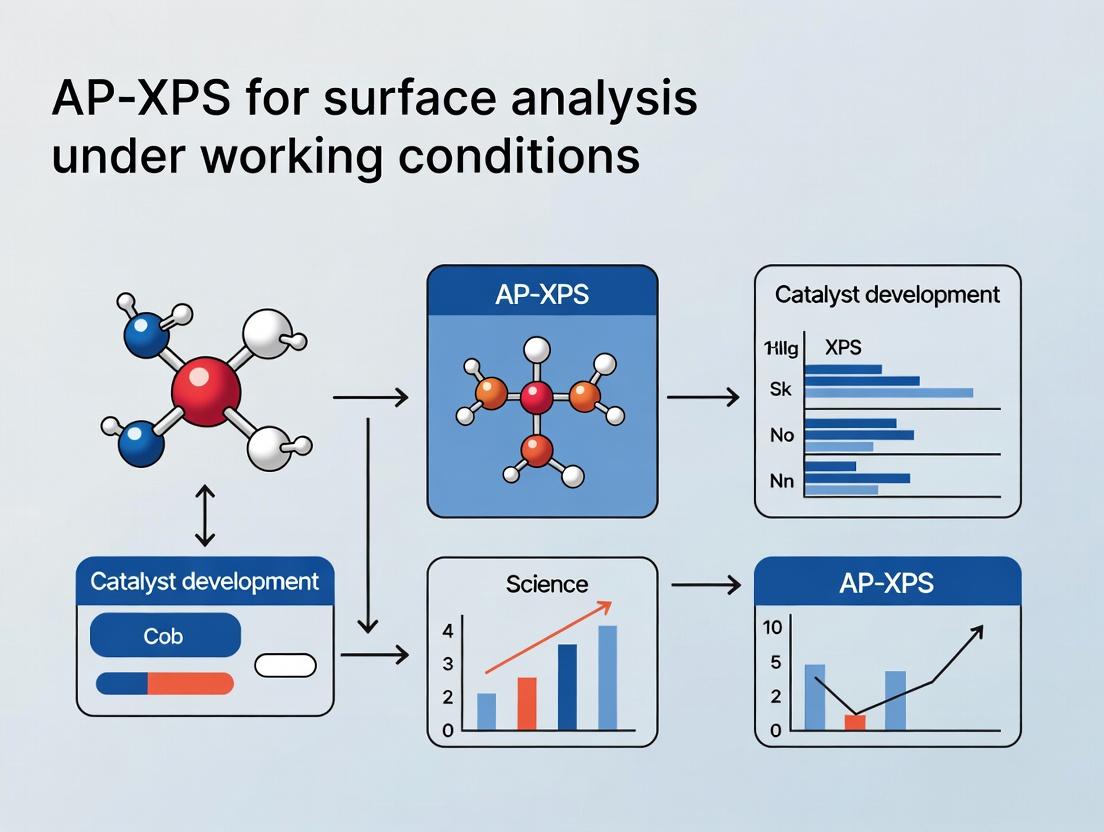
This article provides a comprehensive guide to Ambient Pressure X-ray Photoelectron Spectroscopy (AP-XPS) for biomedical surface analysis under working conditions.
AP-XPS in Biomedicine: Probing Surface Chemistry Under Realistic Working Conditions
Abstract
This article provides a comprehensive guide to Ambient Pressure X-ray Photoelectron Spectroscopy (AP-XPS) for biomedical surface analysis under working conditions. It explores the fundamental principles enabling analysis in realistic gas or liquid environments, details critical methodological considerations and applications in drug-biomaterial interactions, and addresses common troubleshooting and optimization strategies. Finally, it validates AP-XPS by comparing its capabilities with traditional UHV-XPS and complementary techniques, establishing its unique value for researchers and professionals in drug development and biomaterials science.
AP-XPS Fundamentals: From UHV to Ambient Pressure for Realistic Surface Science
Traditional X-ray Photoelectron Spectroscopy (XPS) operates under Ultra-High Vacuum (UHV) conditions (<10⁻⁹ mbar) to enable electron detection without scattering. This environment is fundamentally incompatible with hydrated or volatile biological samples, leading to catastrophic sample degradation and non-representative data.
Quantitative Data: UHV vs. Near-Ambient Pressure (NAP) Conditions
Table 1: Comparative Analysis of XPS Operational Environments
| Parameter | Traditional UHV-XPS | Ambient Pressure (AP)-XPS (Relevant to Biomed) | Consequence for "Wet" Samples |
|---|---|---|---|
| Operating Pressure | < 10⁻⁹ mbar | 0.1 – 25 mbar | UHV causes rapid dehydration and ice formation. |
| Sample Hydration | Impossible | Controlled humidity (up to 100%) possible | Native biological structures collapse in UHV. |
| Max Sample Temp (Hydrated) | < -120°C (cryo) | Up to 600°C (in gas) | UHV restricts analysis to cryo-fixed states. |
| Electron Mean Free Path | ~1 meter | ~1-10 mm | Higher pressure requires specialized electron optics. |
| Probe Depth (in liquid) | N/A | 1-10 nm (via µ-jet, graphene pouch) | AP-XPS enables true solid/liquid interface study. |
| Typical Time-to-Degradation (Protein Film) | Seconds-minutes | Hours-stable | AP allows for in-situ reaction monitoring. |
Table 2: Key Material Property Changes Under UHV
| Sample Type | Property at 1 atm / Hydrated | Property Under UHV (<10⁻⁹ mbar) | Analytical Artefact Introduced |
|---|---|---|---|
| Phospholipid Bilayer | Dynamic, fluid phase | Dehydrated, collapses, phase transition | False lipid composition & order measurement. |
| Protein (e.g., Albumin) | Solvated, native conformation | Denatured, dehydrated film | Misleading chemical state of C, N, S. |
| Polymer Drug Elutant | Swollen, chain mobility | Collapsed, glassy state | Incorrect diffusion coefficient estimation. |
| Aqueous Electrolyte | Ionic solution | Frozen or desiccated salt crust | No electrochemical potential control. |
Experimental Protocols for AP-XPS of Biomedical Samples
Protocol 3.1:In-SituAnalysis of Protein Adsorption on Biomaterial Surfaces
Objective: To monitor the chemical state of serum protein (e.g., fibrinogen) adsorbed onto a biomedical polymer (e.g., PDMS) under hydrated conditions.
- Sample Mounting: Secure a clean, solvent-washed PDMS film on a conductive sample holder. Install within the AP-XPS analysis chamber equipped with a humidity control system.
- Environment Control: Backfill the analysis chamber with water vapor to a pressure of 5 mbar (≈95% RH at 25°C). Stabilize temperature at 28°C using a sample stage Peltier cooler.
- Baseline Spectra: Acquire high-resolution spectra of the clean PDMS surface (C 1s, O 1s, Si 2p) under humid conditions.
- In-Situ Adsorption: Introduce a fine mist of phosphate-buffered saline (PBS) containing 2 mg/mL fibrinogen into the vapor stream via a calibrated micro-nebulizer for 120 seconds.
- Time-Resolved Data Acquisition: Immediately commence sequential acquisition of C 1s and N 1s spectra (5 min/spectrum) for 60 minutes. The N 1s signal emergence confirms protein adsorption.
- Post-Analysis: Flush the chamber with pure water vapor for 30 min, then acquire a final set of spectra. Slowly pump down to UHV for ex-situ comparison (optional, destructive).
Protocol 3.2: Monitoring Electrochemical Reactions at a Bio-Electrode Interface
Objective: To characterize the solid-electrolyte interphase (SEI) formation on a lithium anode in a simulated bio-ionic fluid.
- Electrode Preparation: A thin film Li metal electrode is deposited in-vacuo or transferred via an inert atmosphere suitcase to the AP-XPS system.
- Liquid Cell Setup: Use a "dip-and-pull" meniscus configuration or a sealed micro-channel liquid cell with an X-ray transparent graphene window. Fill the cell with 1M LiClO₄ in propylene carbonate (simulant).
- Electrochemical Control: Connect the sample to an in-situ potentiostat. Set the initial open-circuit potential and monitor.
- Operando Analysis: Apply a constant cathodic current (e.g., 0.1 mA/cm²) to drive Li⁺ reduction and SEI formation. Simultaneously acquire O 1s, C 1s, Cl 2p, and Li 1s spectra at 1-2 mbar of inert gas (to offset solvent vapor pressure).
- Data Correlation: Precisely synchronize XPS spectral binding energy shifts and component intensities with the recorded electrochemical potential vs. time.
Visualization of Concepts and Workflows
Title: The Traditional UHV-XPS Analysis Pathway for Wet Samples
Title: The AP-XPS Operando Analysis Workflow
Title: Thesis Context for AP-XPS in Biomedicine
The Scientist's Toolkit: Key Research Reagent Solutions
Table 3: Essential Materials for AP-XPS Biomedical Experiments
| Item | Function / Relevance | Example & Notes |
|---|---|---|
| Graphene-coated Grids / Windows | Creates a vacuum-tight, electron-/X-ray-transparent seal over liquid samples, preventing evaporation while allowing analysis. | Graphene on TEM grids (e.g., Norcada), used in sealed liquid cells. |
| Micro-fluidic Electrochemical Cells | Enables operando AP-XPS of electrochemical reactions (batteries, corrosion, bio-electrodes) with solvent control. | Custom Si/glass chips with defined channels and electrode contacts. |
| Controlled Humidity Generator | Precisely mixes dry and water-saturated gas streams to achieve 0-100% RH inside the analysis chamber. | Bronkhorst LIQ-FLOW or similar vapor saturation system. |
| Inert Atmosphere Transfer Module | Allows safe, non-reactive transfer of air-sensitive samples (e.g., alkali metals, some organics) from glovebox to spectrometer. | "Suitcase" with integrated pumping and purge capabilities. |
| Model Biological Films | Well-characterized standards for validating AP-XPS performance on biomolecules under humidity. | Langmuir-Blodgett deposited phospholipid layers (e.g., DPPC), spin-coated albumin films. |
| Calibrated Gas Dosing System | Introduces precise amounts of reactive gases (O₂, NO, CO₂) or vapors (drug compounds, solvents) for in-situ studies. | Mass flow controllers and leak valves for gas; heated capillary for vapors. |
| Synchrotron Beamtime | Provides high flux, tunable soft X-rays essential for good signal-to-noise in the higher pressure gas environment. | Essential for time-resolved studies on dilute surface species. |
Within the broader thesis on advancing Ambient Pressure X-ray Photoelectron Spectroscopy (AP-XPS) for in situ and operando surface analysis, the synergistic integration of differential pumping and advanced electron energy analyzers represents the foundational breakthrough. This tandem technology enables the direct probing of solid-gas, liquid-gas, and biological interfaces under realistic working conditions (pressures up to and exceeding 100 Torr), a capability critical for research in catalysis, energy storage, environmental science, and drug development.
Core Technology Breakdown
The Role of Differential Pumping
Differential pumping is a staged vacuum system that maintains the ultra-high vacuum (UHV) required by the X-ray source and detector while allowing a high-pressure environment at the sample stage.
Key Quantitative Data on Differential Pumping Stages:
| Pumping Stage | Typical Pressure Range | Function | Critical Component |
|---|---|---|---|
| Sample Chamber (Stage 0) | 0.1 mbar to >100 mbar (Ambient) | Houses sample in working gas/liquid environment. | High-pressure cell with precise gas dosing. |
| First Aperture & Stage 1 | 10⁻³ to 10⁻⁴ mbar | Captures electrons; initial pressure drop. | Cone or slit aperture (<1 mm diameter). |
| Stage 2 | 10⁻⁶ to 10⁻⁷ mbar | Further pressure reduction via turbo pump. | Intermediate lens system. |
| Stage 3 (Analyzer Chamber) | <10⁻⁹ mbar | Maintains UHV for detector operation. | Hemispherical electron energy analyzer. |
Protocol 2.1: Establishing a Stable Differential Pressure Gradient
- Initialization: Ensure sample is loaded and the main analysis chamber is at base UHV (<1×10⁻⁹ mbar).
- Gas Introduction: Introduce reaction gas (e.g., O₂, CO, H₂O vapor) via a leak valve or doser to the desired pressure (e.g., 1.0 mbar) at the sample. Monitor with a capacitance manometer.
- Pumping Sequence Activation: Power on turbo molecular pumps for Stages 1 and 2. Confirm pressures in each stage are within operational limits (see table above).
- Equilibration: Allow system to stabilize for 5-10 minutes. The pressure in the analyzer chamber must remain below 5×10⁻⁹ mbar for optimal energy resolution.
- Validation: Use a standard sample (e.g., Au foil) to check the Ag 3d spectral resolution. A full width at half maximum (FWHM) degradation of >0.1 eV indicates gas scattering and requires pressure adjustment.
The Electron Analyzer's Role
The hemispherical electron energy analyzer (HEA) must detect low-energy electrons that have undergone significant scattering in the high-pressure region. Its role extends beyond energy dispersion to efficient electron collection and transmission.
Key Quantitative Analyzer Performance Parameters:
| Parameter | Typical Specification | Impact on AP-XPS Performance |
|---|---|---|
| Acceptance Angle | ±15° to ±30° | Increases signal from scattered electrons. |
| Entrance Aperture Diameter | 0.3 mm to 1.0 mm | Balances signal intensity with pressure differential. |
| Electron Transfer Lens Mode | "Transmission" or "Snorkel" | Optimizes collection efficiency at high pressure. |
| Energy Resolution (ΔE/E) | <0.05% (at 50 meV pass energy) | Determines chemical state specificity. |
| Angular Resolution | <0.5° | Enables AP-k-resolved measurements. |
Protocol 2.2: Optimizing Analyzer Settings for High-Pressure Operation
- Lens Mode Selection: Switch the input lens to the "high transmission" or dedicated "AP" mode. This widens the acceptance angle.
- Aperture Selection: For pressures >1 mbar, use the smallest entrance aperture (e.g., 0.3 mm) to protect the analyzer vacuum.
- Pass Energy/Step Size Setting: For survey scans, use a high pass energy (e.g., 100 eV) for sensitivity. For high-resolution scans, reduce pass energy (e.g., 20-50 eV) but increase the number of sweeps and step size (e.g., 0.05-0.1 eV) to maintain signal-to-noise.
- Charge Compensation: For insulating samples (e.g., catalysts, polymers), activate the low-energy electron flood gun and Ar⁺ ion gun in tandem. Adjust flux to achieve stable peak positions without damaging the sample surface.
Integrated Experimental Workflow
Diagram Title: AP-XPS Integrated Experimental Workflow
Application Note: Studying Catalyst Surfaces Under Reaction Conditions
Objective: To determine the active oxidation state of a Cu/ZnO catalyst during the CO₂ hydrogenation reaction at 5 mbar.
Protocol 4.1: Operando AP-XPS of a Catalytic Reaction
- Sample Prep: Deposit catalyst powder on a conductive Si substrate. Load into spectrometer.
- Pre-reaction State: Acquire reference spectra (Cu 2p, Zn 2p, O 1s, C 1s) in UHV and in 5 mbar of inert gas (He).
- Reaction Conditions: Introduce reaction gas mixture (CO₂:H₂ = 1:3) to total 5 mbar. Heat sample to 220°C using radiative or resistive heater.
- Time-Resolved Data Acquisition:
- Set analyzer to fixed transmission mode.
- Acquire sequential high-resolution spectra over Cu 2p and C 1s regions every 5 minutes for 1 hour.
- Use a pass energy of 50 eV and a step size of 0.05 eV.
- Post-reaction: Cool sample in gas mixture, then pump to UHV for post-mortem analysis.
Expected Data Interpretation:
- A shift in Cu 2p₃/₂ peak from ~932.5 eV (Cu⁰/Cu¹⁺) to ~933.8 eV (Cu²⁺) indicates oxidation.
- Emergence of a C 1s peak at ~288-289 eV suggests formate or carbonate intermediate formation.
The Scientist's Toolkit: Key Research Reagent Solutions & Materials
| Item Name | Function in AP-XPS Experiment | Critical Specification |
|---|---|---|
| High-Purity Reaction Gases | Create defined ambient environments (O₂, H₂, CO, H₂O vapor, CO₂). | 99.999% purity, with dedicated leak valves or dosing systems. |
| Conductive Adhesive Tape (e.g., Cu, carbon) | Mount powder samples without insulating layers. | UHV-compatible, low outgassing. |
| Calibration Samples (Au foil, Cu foil) | Reference for energy scale and instrument function. | Clean, polycrystalline foils. |
| Microfluidic Electrochemical Cells | Enable operando liquid-phase and electrochemical studies. | SiNx or graphene membranes transparent to X-rays/electrons. |
| Low-Energy Electron/Ar⁺ Flood Gun | Neutralizes charge on insulating samples under pressure. | Adjustable current (0-100 µA) and electron energy (0-10 eV). |
| In Situ Heater/Cooler Stage | Controls sample temperature from cryogenic to >1000°C in gas. | Minimal magnetic interference, precise thermocouple contact. |
| Graphene-Coated Grids | Supports liquid samples by containing a thin film while allowing electron transmission. | Single-layer graphene on TEM grids. |
Diagram Title: Core AP-XPS System Synergy
The breakthrough enabling surface analysis under working conditions is not a single component but the precise orchestration of differential pumping and the electron analyzer. This allows researchers, including drug development professionals studying protein-ligand interactions at aqueous interfaces, to move from post-mortem analysis to observing dynamic surface processes in real time, directly testing hypotheses within the central thesis of operando surface science.
The central thesis of modern surface science, particularly in the context of operando and in situ analysis, is to bridge the "pressure gap" between traditional ultra-high vacuum (UHV) surface analysis and realistic, technologically relevant environments. Ambient Pressure X-ray Photoelectron Spectroscopy (AP-XPS) is a pivotal technique enabling this transition. It allows for the direct probing of solid-gas and liquid-vapor interfaces under chemically active conditions. Defining the operational pressure ranges—commonly measured in millibar (mbar) or Torr—and understanding the "working condition" window for a given system are fundamental to experimental design and data interpretation in fields ranging from heterogeneous catalysis to electrochemical energy storage and pharmaceutical solid-state analysis.
Pressure Units and the "Working Condition" Window
In AP-XPS, pressure is a critical parameter that defines the mean free path of electrons and photons, thus directly impacting signal intensity and surface sensitivity. The "working condition" window is defined by the intersection of three constraints: (1) the sample environment must maintain a relevant chemical potential (pressure, gas composition), (2) photoelectrons must travel from the sample to the analyzer without excessive scattering, and (3) the X-ray source and detector must operate stably. This window typically spans from approximately 0.1 mbar to 20 mbar, bridging UHV and atmospheric pressure.
Table 1: Pressure Unit Equivalents and AP-XPS Regimes
| Unit | Pascal (Pa) Equivalent | Millibar (mbar) Equivalent | Typical AP-XPS Context |
|---|---|---|---|
| Ultra-High Vacuum (UHV) | < 10⁻⁴ Pa | < 10⁻⁶ mbar | Base pressure for sample prep/cleaning. |
| Near-Ambient Pressure (NAP) | 1 - 1000 Pa | 0.01 - 10 mbar | Core "working condition" window for most gas-solid studies. |
| Atmospheric Pressure | ~101,325 Pa | ~1013.25 mbar | Upper limit for specialized AP-XPS systems. |
| 1 Torr | 133.322 Pa | 1.33322 mbar | Common historical unit; ~1 mbar often used interchangeably. |
Table 2: Electron Mean Free Path (MFP) vs. Pressure for AP-XPS (Example: 500 eV electrons in N₂)
| Pressure (mbar) | Approximate Electron MFP (µm) | Experimental Implication |
|---|---|---|
| 0.1 | ~1000 | Minimal scattering, near-UHV conditions. |
| 1 | ~100 | Optimal balance for surface/bulk probing. |
| 10 | ~10 | Strong surface sensitivity, signal attenuation. |
| 20 | ~5 | Practical upper limit for conventional AP-XPS analyzers. |
Experimental Protocols for Defining the Working Window
Protocol 3.1: Determining the Pressure-Dependent Signal Attenuation Objective: To empirically map the signal intensity of a known substrate core level (e.g., Au 4f) as a function of gas pressure, defining the practical upper limit for a specific gas/analyzer configuration.
- Sample Preparation: Load a clean, stable reference sample (e.g., sputtered Au foil) into the AP-XPS chamber.
- Baseline Measurement: Acquire a high-resolution Au 4f spectrum at base UHV (< 1 × 10⁻⁶ mbar).
- Pressure Ramp: Introduce an inert gas (e.g., N₂, Ar) relevant to the planned experiment. Increase pressure in steps (e.g., 0.1, 0.5, 1, 2, 5, 10 mbar). Allow 5 minutes for stabilization at each step.
- Data Acquisition: At each pressure, acquire the Au 4f spectrum using identical pass energy, step size, and X-ray flux.
- Analysis: Integrate the peak area of the Au 4f₇/₂ peak. Plot normalized intensity (I/I₀, where I₀ is UHV intensity) vs. pressure (mbar). The "working condition" limit is often defined as the pressure where I/I₀ drops to ~10% (or a signal-to-noise threshold defined by the experiment).
Protocol 3.2: Establishing a Catalytic "Working Condition" for CO Oxidation over Pt Objective: To perform operando AP-XPS on a Pt catalyst during CO oxidation, identifying the pressure window where surface species correlate with catalytic activity.
- Catalyst Preparation: Deposit Pt nanoparticles on a conductive substrate (e.g., TiO₂). Load into AP-XPS reactor cell.
- Gas Feed & Analysis: Connect the reactor to a gas mixing system and mass spectrometer (MS) for downstream analysis.
- Activity-Pressure Profile: At a fixed temperature (e.g., 150°C), flow a stoichiometric mix of CO and O₂ (2:1) while increasing total pressure from 0.1 to 5 mbar. Monitor CO₂ production via MS.
- In Situ XPS Acquisition: At key pressure points identified by MS (e.g., onset of activity, maximum yield), acquire high-resolution spectra of Pt 4f, O 1s, and C 1s regions.
- Correlation: Create a table linking pressure, CO₂ turnover frequency (TOF), and the chemical state ratios (e.g., O/(O₂)ₐᵈₛ, CO/(O) from fitted XPS peaks). The "working condition" is the pressure range where reactive intermediates (O, CO*) are directly observed and their concentrations correlate with activity.
The Scientist's Toolkit: Key Research Reagent Solutions & Materials
Table 3: Essential Materials for AP-XPS Experiments
| Item | Function/Explanation |
|---|---|
| Single-Crystal or Thin-Film Model Catalysts | Well-defined surfaces (e.g., Pt(111), CeO₂(100)) for fundamental mechanistic studies under working conditions. |
| Calibrated Gas Mixtures | High-purity gases and certified mixtures (e.g., 1% CO/He, 5% O₂/Ar) for precise control of chemical potential. |
| High-Precision Pressure Transducers | Capacitance manometers for accurate absolute pressure measurement (0.1-100 mbar range) in the reaction cell. |
| Differential Pumping Stages | A series of apertures and pumps separating the high-pressure sample zone from the UHV analyzer, enabling AP operation. |
| Synchrotron Radiation or Al Kα X-ray Source | High-flux, monochromatic X-rays to generate sufficient photoelectron signal through the gas phase. |
| Electron Energy Analyzer with Wide Acceptance Angle | Hemispherical analyzer capable of operating at elevated pressures while collecting electrons over a large solid angle. |
| In Situ Mass Spectrometer (MS) | For simultaneous monitoring of gas-phase composition and catalytic turnover rates during XPS acquisition. |
| Heated/Cooled Sample Manipulator | Allows precise temperature control (-150°C to 1000°C) to simulate true process conditions. |
Conceptual Diagrams
Title: Bridging the Pressure Gap with AP-XPS
Title: Defining the Working Condition Window
Ambient Pressure X-ray Photoelectron Spectroscopy (AP-XPS) is a pivotal technique for investigating surfaces and interfaces under in situ or operando conditions, bridging the "pressure gap" between traditional ultra-high vacuum (UHV) XPS and real-world working environments. This application note, framed within a broader thesis on surface analysis under working conditions, elucidates the fundamental concepts of probe depth and the nature of information retrieved by AP-XPS in hydrated (e.g., aqueous electrolytes, humid air) and gaseous (e.g., catalytic reactions, corrosion) environments. It details key protocols and provides a toolkit for researchers in material science, catalysis, and environmental science.
Core Concepts: Probe Depth and Information Depth in AP-XPS
The "probe depth" in AP-XPS is defined by the distance from the sample surface into the bulk from which photoelectrons can escape without significant energy loss and be detected. It is governed by the inelastic mean free path (IMFP) of electrons in the sample material and, critically, in the ambient gas phase.
- Information Depth (d): Typically defined as 3λ sinθ, where λ is the IMFP and θ is the emission angle relative to the surface normal. This represents the depth from which 95% of the detected signal originates.
- Gas Phase Attenuation: Photoelectrons must travel through the ambient gas (pressure range: 0.1 Torr to 30 Torr) to the detector, leading to scattering and attenuation. The effective probe depth is thus a convolution of the solid-state IMFP and the gas-phase scattering cross-section.
Table 1: Typical Probe Depth and Attenuation Parameters in AP-XPS
| Parameter | Value in UHV-XPS | Value in AP-XPS (1-10 Torr H₂O) | Notes |
|---|---|---|---|
| Electron Kinetic Energy Range | 50-1500 eV | 200-1000 eV (optimized) | Higher KE electrons are less attenuated by gas. |
| Typical IMFP in solids (λ) | 0.5 - 3 nm | 0.5 - 3 nm (material dependent) | Unchanged in solid, but effective path is longer. |
| Gas Phase Scattering Length | ~Infinity | 0.1 - 5 mm (pressure/gas dependent) | Major limiting factor for signal intensity. |
| Effective Probe Depth (d) | 1.5 - 9 nm (3λ) | 0.5 - 5 nm (Highly variable) | Reduced due to gas-phase scattering of low-KE electrons. |
| Detectable Gas Phase Thickness | 0 nm | Up to ~1 mm from sample surface | Proportional to pressure and analyzer acceptance cone. |
Key Experimental Protocols
Protocol 3.1: Measuring Liquid/Vapor Interfaces
Objective: To determine the composition and electronic structure of an aqueous electrolyte or a thin water film on a solid surface.
- Sample Preparation: Mount a flat, conducting substrate (e.g., Pt, Au, SiO₂). For liquid jets, calibrate a micro-liquid jet system (diameter ~10-30 µm) for stable flow.
- Cell Assembly: Use a dedicated in situ electrochemical or humidity cell with an electron-transparent Si₃N₄ or graphene membrane (thickness: 10-100 nm) separating the high-pressure sample region from the differential pumping stages of the spectrometer.
- Environment Control: Introduce water vapor or the electrolyte vapor to the desired pressure (e.g., 5 Torr for saturated humidity at ~5°C). For liquid jets, the jet operates in a vapor-saturated chamber.
- Data Acquisition:
- Set X-ray source (typically Al Kα or synchrotron beam) and incident angle.
- Position the sample/membrane at the focal point of the analyzer.
- Acquire survey and high-resolution spectra (O 1s, C 1s, relevant metal/solute peaks).
- Vary the photoelectron take-off angle (if possible) to perform depth profiling.
- Data Analysis: Deconvolute O 1s peak into components for bulk liquid water (≈536.6 eV), vapor water (≈539.8 eV), and surface/bound water (≈535.2 eV). Use gas-phase attenuation models to quantify probe depth.
Protocol 3.2: Studying Catalytic Reactions in Gaseous Environments
Objective: To monitor the surface state of a catalyst and adjacent gas phase species during a reaction (e.g., CO oxidation).
- Catalyst Preparation: Deposit catalyst nanoparticles (e.g., Pt, CeO₂) on a conductive support. Clean surface via sputtering/annealing in UHV prior to reaction.
- Reactor Cell Loading: Transfer the sample to a high-pressure reaction cell connected to the AP-XPS system, equipped with gas inlets/outlets and mass flow controllers.
- Reaction Condition Setup: Introduce reactant gas mixture (e.g., 0.1 Torr CO, 0.2 Torr O₂, balance He to 1 Torr total). Heat sample to reaction temperature (e.g., 200°C) using a cell heater.
- Operando Measurement:
- Acquire time-resolved spectra of catalyst core levels (Pt 4f, Ce 3d) and gas-phase peaks (C 1s from CO, O 1s from O₂).
- Monitor peak positions and intensities as a function of time/temperature.
- Correlate with simultaneous mass spectrometry data from the effluent gas.
- Analysis: Identify surface intermediates (carbonates, adsorbed CO) from shifted binding energies. Quantify oxidation state changes from spectral fitting.
Visualizations
Diagram 1: AP-XPS System Schematic & Signal Origin
Diagram 2: Experimental Workflow for Operando Catalysis Study
The Scientist's Toolkit: Key Research Reagent Solutions & Materials
Table 2: Essential Materials for AP-XPS Experiments in Hydrated/Gaseous Environments
| Item | Function & Specification | Key Consideration |
|---|---|---|
| Si₃N₄ or Graphene Membranes | Electron-transparent window separating high-pressure cell from analyzer. Thickness: 10-100 nm. | Mechanical stability under pressure differential; chemical inertness. |
| Micro-Liquid Jet System | Generates a continuous, stable stream of liquid (e.g., aqueous electrolyte) for direct liquid-phase analysis. | Jet diameter stability (~20 µm) and vacuum compatibility. |
| Differentially Pumped Electron Analyzer | Detects photoelectrons while maintaining UHV in the detector. Multiple pumping stages. | Acceptance angle and sensitivity at higher gas pressures. |
| High-Precision Gas Dosage System | Mass Flow Controllers (MFCs) and leak valves for precise gas mixture preparation (e.g., CO/O₂/H₂O/He). | Accuracy at low flow rates and corrosion resistance for reactive gases. |
| In Situ Electrochemical Cell | Allows potential control of a working electrode in AP environment. Includes quasi-reference and counter electrodes. | Membrane integrity and electrical feedthrough compatibility. |
| Synchrotron Radiation Beamline | Provides tunable, high-flux X-rays for enhancing signal and accessing lower KE electrons. | Beam focus and energy stability. |
| Calibration Gases | High-purity CO, O₂, H₂, H₂O vapor, etc., for generating known gas-phase photoelectron peaks for energy referencing. | Purity and precise pressure measurement. |
Essential Components of a Modern AP-XPS System for Biomedical Research
1.0 Introduction This application note, framed within a broader thesis on ambient pressure X-ray photoelectron spectroscopy (AP-XPS) for surface analysis under working conditions, details the core components and protocols of a modern system tailored for biomedical research. AP-XPS enables the direct investigation of solid-liquid and solid-gas interfaces under near-physiological conditions, crucial for studying biomaterials, drug delivery systems, and biofilm formation.
2.0 Core Components & Quantitative Specifications A modern AP-XPS system for biomedical applications integrates several specialized subsystems. Their key specifications are summarized below.
Table 1: Essential Components of a Modern Biomedical AP-XPS System
| Component | Key Function | Typical Specifications for Biomedical Research |
|---|---|---|
| High-Pressure Analyzer | Electron detection at elevated pressures (up to 100+ mbar). | Differentially pumped electrostatic lens system; Pressure limit: ≥ 25 mbar for liquid/vapor studies. |
| X-ray Source | Excitation of photoelectrons from the sample. | Monochromatic Al Kα (1486.6 eV); Optional Ag Lα or Cr Kα for reduced beam damage; Low-power modes for organics. |
| Sample Environment Cell | Controls sample environment (gas, vapor, liquid). | In-situ liquid jet, droplet train, or submerged solid samples; Temperature control: -10°C to 80°C; Precise vapor pressure control. |
| Efficient Differential Pumping | Maintains UHV in detector while sample region is at high pressure. | Multiple pumping stages (e.g., 3-stage); High-throughput apertures (< 1 mm diameter). |
| In-situ Microscopy/Alignment | Visualizes sample and liquid/vapor interface positioning. | Long-working-distance optical microscope or video camera; Integrated with sample manipulator. |
| Mass Spectrometry | Correlative analysis of volatile species in the chamber. | Quadrupole or time-of-flight MS; Real-time monitoring of reaction products or degassing. |
| Charge Compensation | Neutralizes charge on insulating samples (e.g., polymers, tissues). | Low-energy electron flood gun; Argon/ nitrogen ion flood source. |
3.0 Experimental Protocols
Protocol 3.1: Analyzing Protein Corona Formation on Nanoparticle Surfaces Objective: To characterize the elemental and chemical state changes on a drug delivery nanoparticle (e.g., PLGA) before and after exposure to a protein-containing fluid under near-physiological conditions. Materials:
- PLGA nanoparticles deposited on a silicon substrate.
- Phosphate-buffered saline (PBS), pH 7.4.
- Fetal bovine serum (FBS) or purified human serum albumin (HSA) solution.
- AP-XPS system with liquid/vapor capability.
Procedure:
- Baseline Measurement: Load the dry nanoparticle sample into the AP-XPS environmental cell. Evacuate and backfill with inert gas (N₂) to 1-2 mbar. Acquire survey and high-resolution spectra (C 1s, O 1s, N 1s) at room temperature.
- Environment Introduction: Introduce water vapor into the cell by flowing N₂ gas through a temperature-controlled water bubbler. Stabilize pressure at 10-15 mbar (near water saturation at 25-30°C).
- Protein Introduction: Introduce a fine aerosol or vapor of the protein solution (e.g., 1 mg/mL HSA in PBS) into the humid N₂ stream using a dedicated inlet. Alternatively, deposit a droplet and study its meniscus or a submerged interface.
- In-situ Exposure & Measurement: Expose the nanoparticle sample to the humid, protein-containing atmosphere for a predetermined time (e.g., 5-60 min). Monitor the N 1s signal appearance and evolution as a marker for protein adsorption.
- Post-Exposure Analysis: Acquire high-resolution spectra (C 1s, O 1s, N 1s) periodically during and after exposure. Flush the cell with humid inert gas to remove non-adsorbed species before final measurement.
- Data Analysis: Deconvolute C 1s peaks to track changes in C-C/C-H (polymer), C-O, C=O, and O-C=O components. The emergence of amide N (≈400.0 eV) in N 1s confirms protein adsorption.
Protocol 3.2: Monitoring Dynamic Redox States of Bacterial Biofilms Objective: To track the chemical state of redox-active elements (e.g., Fe, Mn) in a live biofilm under controlled gas conditions. Materials:
- Biofilm grown on a conductive substrate (e.g., gold-coated slide).
- Defined minimal microbial growth medium.
- AP-XPS system with precise gas mixing capabilities.
Procedure:
- Biofilm Preparation: Grow a model bacterial biofilm (e.g., Shewanella oneidensis MR-1) to a monolayer on the substrate under aerobic conditions. Gently rinse and transfer to the AP-XPS cell under a protective N₂ atmosphere.
- Hydrated Baseline: Introduce water vapor to achieve ~95% relative humidity (≈20 mbar at 30°C) to maintain biofilm hydration. Acquire Fe 2p, O 1s, C 1s spectra.
- Redox Cycling: Use the gas mixing system to change the cell atmosphere. a. Oxidizing Phase: Introduce 5% O₂ in N₂ (total pressure 25 mbar) for 30 min. Acquire spectra. b. Reducing Phase: Switch to an anoxic gas mix of 5% H₂ in N₂ or introduce a volatile electron donor. Acquire spectra over time.
- In-situ Monitoring: Monitor the Fe 2p₃/₂ peak position and shape. A shift to lower binding energy (from ~711 eV towards ~709 eV) indicates reduction from Fe(III) to Fe(II).
- Correlation: Correlate spectral changes with concurrent measurements from the mass spectrometer (e.g., O₂ consumption, H₂O production).
4.0 Diagrams of Key Concepts & Workflows
Title: Core Components of a Modern AP-XPS System
Title: Protocol for In-situ Protein Corona Analysis
5.0 The Scientist's Toolkit: Key Research Reagent Solutions
Table 2: Essential Materials for Biomedical AP-XPS Experiments
| Material/Reagent | Function in AP-XPS Experiment |
|---|---|
| Conductive/Semiconductive Substrates (Si wafers, Au/Ti-coated slides) | Provides a clean, flat, and electrically grounded surface for depositing biomaterials, preventing charge buildup. |
| Model Drug Delivery Nanoparticles (PLGA, Liposomes, Mesoporous Silica) | Well-characterized systems for studying drug loading, surface functionalization, and bio-interfacial interactions. |
| Defined Protein Solutions (HSA, Fibrinogen, Lysozyme) | Used to study non-specific protein adsorption (biofouling) or specific ligand-receptor interactions on surfaces. |
| Synthetic Biological Fluids (Simulated Body Fluid, PBS with Additives) | Provides a controlled, reproducible ionic and pH environment mimicking in-vivo conditions for corrosion or immersion studies. |
| Volatile Redox Probes & Mediators (Hydroquinone, Fe(CO)₅, H₂ Gas) | Enables the study of electron transfer processes at living cell or biofilm surfaces by introducing gaseous/labile reactants. |
| Temperature-Controlled Water Bubbler | Generates a precise and stable partial pressure of water vapor to create humid or pseudo-liquid conditions in the sample cell. |
| Calibration Reference Samples (Au foil, Cu mesh, Adventitious Carbon) | Used for precise binding energy scale calibration before, during, and after in-situ experiments. |
Methodology in Action: Designing and Executing AP-XPS Experiments for Biomedical Interfaces
Sample Preparation Strategies for Biomaterials, Drug Films, and Catalytic Surfaces
Within the broader thesis on Ambient Pressure X-ray Photoelectron Spectroscopy (AP-XPS) for Surface Analysis Under Working Conditions, sample preparation is a critical, initial determinant of experimental validity. Representative, contamination-free, and reproducible surfaces are prerequisites for obtaining meaningful in situ or operando data that reflect authentic functional states. This document details specialized preparation protocols for three key material classes, emphasizing procedures that yield surfaces compatible with AP-XPS interrogation under realistic environmental conditions (e.g., in presence of gases, vapors, or liquids).
Application Notes & Protocols
Biomaterial Surfaces (e.g., Protein Adsorption Layers, Polymeric Scaffolds)
Application Note: AP-XPS enables the study of protein conformation, hydration, and interfacial chemistry on biomaterials under humid or aqueous conditions. Preparation must preserve the native, "soft" state of the biological layer while ensuring electrical conductivity to mitigate charging.
Protocol: Spin-Coating of Protein Films on Conducting Substrates
- Substrate Preparation: Use optically flat, 10 mm diameter single-crystal TiO₂ or Au-coated silicon wafers. Clean via sequential 15-minute sonication in acetone, isopropanol, and Milli-Q water. Dry under a stream of N₂. Activate via UV-ozone treatment for 20 minutes.
- Protein Solution Preparation: Dissolve lysozyme (or target protein) in 10 mM phosphate buffered saline (PBS), pH 7.4, to a final concentration of 1.0 mg/mL. Filter through a 0.22 μm syringe filter.
- Spin-Coating: Pipette 50 μL of protein solution onto the center of the static substrate. Initiate spinning at 500 rpm for 5s (acceleration: 100 rpm/s), then immediately ramp to 4000 rpm for 60s (acceleration: 1000 rpm/s).
- Hydration Control: Immediately transfer the sample to a custom-made, humidity-controlled vessel. For in situ AP-XPS, equilibrate the film at 95% relative humidity (RH) for at least 30 minutes prior to transfer to the spectrometer entry-lock.
Table 1: Key Parameters for Biomaterial Film Preparation
| Parameter | Typical Value/Range | Function/Rationale |
|---|---|---|
| Substrate | TiO₂, Au/Si, Pt/Si | Provides conductivity, defined surface chemistry |
| Protein Concentration | 0.5 - 2.0 mg/mL | Balances monolayer coverage & aggregate formation |
| Spin Speed (Final) | 3000 - 6000 rpm | Controls film thickness & uniformity |
| Relative Humidity (Operando) | 90 - 99% RH | Maintains protein hydration and native state |
| Typical Film Thickness (AP-XPS estimate) | 5 - 15 nm | Ensures signal from entire film is within XPS probe depth |
Drug Films (e.g., API Polymorphs, Amorphous Solid Dispersions)
Application Note: Understanding the surface composition and stability of drug formulations under pharmaceutically relevant pressures of water vapor is crucial. AP-XPS can detect surface enrichment of polymers or active pharmaceutical ingredients (APIs).
Protocol: Preparation of Amorphous Solid Dispersion (ASD) Films
- Solution Preparation: Co-dissolve the API (e.g., Itraconazole) and polymer (e.g., HPMC-AS) in a common solvent (e.g., Dichloromethane: Methanol, 9:1 v/v) at a total solid concentration of 2% w/w. Maintain a defined drug:polymer ratio (e.g., 70:30).
- Film Casting: Using a precision micropipette, deposit 100 μL of the solution onto a clean, 15 mm diameter stainless steel AP-XPS sample stub. Allow the solvent to evaporate slowly under a glass petri dish for 2 hours.
- Vacuum Drying: Place the stub in a vacuum desiccator (< 1 mbar) overnight to remove residual solvent.
- In Situ Conditioning: Mount the stub in the AP-XPS system. Prior to analysis, expose the film to a controlled water vapor pressure of 0.5 - 2.0 Torr (mimicking storage conditions) in the analysis chamber for 30 minutes to achieve equilibrium surface composition.
Table 2: Key Parameters for Drug Film Preparation
| Parameter | Typical Value/Range | Function/Rationale |
|---|---|---|
| API:Polymer Ratio | 50:50 to 80:20 | Models commercial dispersion formulations |
| Total Solid Concentration | 1 - 5% w/w | Affects film morphology and roughness |
| Drying Rate | Slow (covered) | Minimizes crystallization, promotes amorphous phase |
| Operando H₂O Pressure | 0.1 - 5.0 Torr | Simulates pharmaceutical processing/storage humidity |
| Critical Analysis Region | C 1s, N 1s, O 1s | Discriminates API from polymer via chemical shifts |
Catalytic Surfaces (e.g., Supported Nanoparticles, Model Electrodes)
Application Note: Operando AP-XPS requires well-defined, clean catalytic surfaces that can withstand reactive gas environments (O₂, CO, H₂ at 0.1 - 10 Torr) at elevated temperatures (up to 500°C).
Protocol: Preparation of Planar Model Catalyst (Supported Pt Nanoparticles on CeO₂)
- Substrate Preparation: Use a single-crystal SiO₂ wafer. Clean as per Protocol 1.1.
- CeO₂ Thin Film Deposition: Deposit a 10 nm thick CeO₂ film via pulsed laser deposition (PLD) at 500°C in 0.1 mbar O₂. Alternatively, use a well-defined CeO₂(111) single crystal.
- Pt Deposition: Load the CeO₂ substrate into an ultra-high vacuum (UHV) chamber. Clean the surface via cycles of Ar⁺ sputtering (1 keV, 10 min) and annealing at 500°C in 5x10⁻⁷ Torr O₂. Deposit Pt via physical vapor deposition (electron-beam evaporator) at room temperature to a nominal thickness of 0.5 nm (corresponding to ~2-3 nm nanoparticles).
- Pre-Analysis Activation: Transfer the sample (via UHV suitcase if possible) to the AP-XPS. Activate the catalyst in situ by heating to 300°C in 0.1 Torr O₂ for 15 minutes, followed by reduction in 0.1 Torr H₂ for 15 minutes.
Table 3: Key Parameters for Model Catalyst Preparation
| Parameter | Typical Value/Range | Function/Rationale |
|---|---|---|
| Support Material | CeO₂, TiO₂, Fe₃O₄ single crystals or thin films | Provides defined redox & metal-support interaction |
| Pt Nominal Thickness | 0.2 - 1.0 nm | Controls nanoparticle size and dispersion |
| Activation Temperature | 200 - 400°C | Removes contaminants, stabilizes nanoparticle morphology |
| Operando Gas Pressure | 0.01 - 1.0 Torr (O₂, CO, H₂) | Maintains catalytic turnover while enabling electron detection |
| Key Spectral Features | Pt 4f, Ce 3d, O 1s | Monitor oxidation state of metal & support |
The Scientist's Toolkit
Table 4: Essential Research Reagent Solutions & Materials
| Item | Function in AP-XPS Sample Prep |
|---|---|
| Single-Crystal Substrates (TiO₂, Au(111), SiO₂) | Provide atomically flat, chemically defined surfaces for model studies. |
| UV-Ozone Cleaner | Removes organic contaminants and hydroxylates oxide surfaces for better wetting. |
| Precision Spin Coater | Produces uniform, thin films of polymers, proteins, or dispersions. |
| UHV Sputter-Anneal System | Cleans and reconstructs single-crystal surfaces and model catalysts. |
| Electron-Beam Evaporator | Deposits ultrathin, controlled layers of metals (Pt, Cu, Au) for model catalysts. |
| Humidity & Gas Dosing System | Pre-equilibrates and exposes samples to controlled operando conditions (H₂O, O₂, CO). |
| Stainless Steel Sample Stubs | Standard mounts for AP-XPS, compatible with heating/cooling stages. |
| Anhydrous, HPLC-grade Solvents | Ensure pure film casting without impurity-derived surface segregation. |
Visualization of Protocols and Relationships
Title: Biomaterial Film Preparation Workflow
Title: Model Catalyst AP-XPS Experiment Cycle
Title: Sample Prep Role in AP-XPS Thesis
Application Notes
The drive to perform Ambient Pressure X-ray Photoelectron Spectroscopy (AP-XPS) under in situ or operando conditions is central to modern surface science, catalysis, and materials chemistry research. The core experimental challenge lies in maintaining a sufficiently high-pressure environment at the sample while enabling photoelectrons to travel to the detector within the high-vacuum analyzer. This necessitates specialized differential pumping and electron lens systems. The choice of sample environment—Controlled Gas Mixtures, Water Vapor, or Near-Liquid Jets—is not merely technical but fundamentally dictates the scientific question that can be addressed. This protocol details the application and methodology for each approach within a thesis focused on probing surface chemistry under working conditions.
Table 1: Comparison of Key Environmental Parameters for AP-XPS
| Parameter | Controlled Gas Mixtures | Water Vapor (Humidity) | Near-Liquid Microjets |
|---|---|---|---|
| Typical Pressure Range | 0.1 Torr to 20 Torr | 0.5 Torr to 25 Torr (Up to ~95% RH at 25°C) | 0.1 Torr to ~1 Torr (Liquid jet in vacuum) |
| Max. Practical Pressure | ~20 Torr (with standard nozzles) | ~25 Torr (saturation) | ~1 Torr (limited by vacuum load) |
| Primary Scientific Focus | Heterogeneous catalysis, gas-surface reactions, oxidation, corrosion. | Interface hydration, electrochemistry, atmospheric science, biomaterial interfaces. | Liquid-vapor interface, solvation effects, electrochemical double layer, photochemistry. |
| Key Measurable Species | Adsorbed reactants/intermediates/products, oxidation states, work function shifts. | Hydrated ions, water bilayer structure, potential-driven interface changes. | Solvated ions, liquid-phase reaction products, interface-specific concentration. |
| Temperature Control | Precise, from cryogenic to > 1000°C. | Precise, but condensation limits lower end. | Limited; often cooled (≈0°C to 10°C) to reduce vapor pressure. |
| Sample State | Solid (single crystal, foil, powder). | Solid (often with deposited electrolyte). | Flowing liquid (aqueous solutions). |
| Spatial Resolution | ~0.5 mm (typical spot size). | ~0.5 mm (typical spot size). | Defined by jet diameter (50-100 µm). |
| Key Challenge | Maintaining chemical potential/gradient; mass transport. | Distinguishing adsorbed from bulk water/ions. | Jet stability; low signal due to short path length; sample consumption. |
Experimental Protocols
Protocol 1: AP-XPS of a Model Catalyst in Controlled Gas Mixtures Objective: To monitor the oxidation state evolution of a Cu/ZnO catalyst during the water-gas shift (WGS) reaction.
- Sample Preparation: Mount a pressed pellet or foil of the catalyst on a ceramic heater stage using high-temperature conductive paste.
- System Bake & Baseline: Evacuate the analysis chamber to ultra-high vacuum (<1×10⁻⁸ Torr). Acquire reference spectra (Cu 2p, Zn 2p, O 1s, C 1s) at room temperature.
- Gas Introduction: Back-fill the analysis chamber to 1 Torr with a pre-mixed gas stream (e.g., 4% CO, 8% H₂O, balance Ar) using mass flow controllers. Ensure the differential pumping system maintains analyzer pressure < 5×10⁻⁵ Torr.
- Temperature Ramp: Increase sample temperature to 250°C under the gas flow. Allow 30 minutes for system stabilization.
- Operando Measurement: Sequentially collect high-resolution spectra at Cu 2p, O 1s, and C 1s regions. Monitor the shift in Cu 2p satellite features and binding energy, and the emergence of new O 1s peaks from reaction intermediates.
- Post-Reaction Analysis: Cool the sample under gas flow to room temperature, then evacuate the chamber and collect post-mortem spectra to assess permanent surface changes.
Protocol 2: AP-XPS of an Electrode Surface Under Water Vapor Objective: To study the potential-dependent formation of the electric double layer at a Pt electrode in humid atmosphere.
- Sample & Cell Preparation: Fabricate a thin-film Pt working electrode on a conductive substrate. Integrate this into a miniaturized 3-electrode electrochemical cell compatible with the AP-XPS manipulator, with Pt wire counter and pseudo-reference electrodes.
- Electrolyte Deposition: Apply a thin layer (nm-scale) of a protic ionic liquid (e.g., [C₂C₁Im][HSO₄]) or a droplet of dilute acid onto the electrode surface.
- Humidity Control: Introduce high-purity water vapor into the chamber via a leak valve connected to a reservoir of Milli-Q water. Use a calibrated capacitive manometer to set the total pressure to 5 Torr (corresponding to ~90% RH at 25°C).
- Electrochemical Control: Using a vacuum-compatible potentiostat, apply a series of potentials (e.g., from 0.2 V to 1.0 V vs. RHE) to the working electrode.
- Spectral Acquisition: At each applied potential, after current stabilization, acquire O 1s, N 1s (if ionic liquid), and Pt 4f spectra. Deconvolute the O 1s region to track the signal from hydrated hydronium ions (H₃O⁺(H₂O)ₙ) and its dependence on potential.
- Analysis: Correlate the intensity of the hydrated ion signal with the applied potential to map the potential of zero charge and double-layer restructuring.
Protocol 3: AP-XPS of a Flowing Aqueous Microjet Objective: To determine the surface propensity of inorganic ions (e.g., I⁻) at the vacuum-liquid interface.
- Solution Preparation: Prepare a 100 mM solution of NaI in Milli-Q water. Degas by bubbling with inert gas (Ar) for 30 minutes.
- Jet System Alignment: Align the silica capillary (inner diameter ~25 µm) of the liquid microjet system to intersect the X-ray beam and the axis of the spectrometer nozzle. Use a high-performance liquid chromatography (HPLC) pump to pressurize the solution to ~100 bar.
- Jet Operation & Vacuum Stabilization: Initiate the liquid jet. The freely flowing jet travels through the analysis chamber (P ~ 0.1 Torr) into a cooled waste collector. The differential pumping stages maintain the analyzer pressure in the 10⁻⁶ Torr range.
- Data Collection: Acquire spectra at the I 3d, Na 1s, and O 1s regions. Use a higher photon energy (e.g., Ag Lα, 2984 eV) to increase probing depth for bulk-sensitive comparison.
- Quantification: Calculate the I⁻/Na⁺ intensity ratio at the surface (using lower photon energy) and compare it to the bulk ratio (using higher photon energy). A surface-enhanced I⁻/Na⁺ ratio indicates a negative surface affinity for I⁻.
- System Shutdown: Stop the HPLC pump, allow the system to evacuate fully, and flush the capillaries with pure solvent.
The Scientist's Toolkit: Essential Research Reagent Solutions
| Item | Function in AP-XPS Experiments |
|---|---|
| Calibrated Gas Mixtures | Provide precise, reproducible partial pressures of reactive gases (e.g., CO, O₂, H₂) diluted in inert carriers (Ar, He) for controlled gas-phase studies. |
| Protic Ionic Liquids (e.g., [C₂C₁Im][HSO₄]) | Serve as non-volatile, conductive electrolytes for electrochemical AP-XPS, providing ions while minimizing background pressure. |
| High-Purity Liquid Sources | Ultra-pure water (18.2 MΩ·cm) and spectroscopic-grade solvents are critical for vapor generation and microjet solutions to avoid contamination signals. |
| Model Catalyst Samples | Well-defined single crystals or supported nanoparticles (e.g., Pt(111), Cu/ZnO) with known composition and morphology for fundamental studies. |
| Dedicated AP-XPS Sample Holders | Integrated with heating/cooling (ceramic heaters, liquid N₂), biasing, and gas/liquid delivery ports for specific environments. |
| Mass Flow Controllers (MFCs) | Precisely regulate the flow rates of individual gases to create dynamic gas mixtures with controlled composition. |
| Capacitive Manometer | Accurately measures the total pressure in the mTorr to Torr range, essential for defining the ambient environment. |
Diagram: AP-XPS Environment Selection Workflow
This document provides application notes and detailed protocols for conducting in-situ and operando studies using Ambient Pressure X-ray Photoelectron Spectroscopy (AP-XPS) within the context of thesis research focused on surface analysis under working conditions. These methods enable real-time monitoring of dynamic surface processes critical to pharmaceuticals and catalysis.
1. Application Note: Real-Time Monitoring of pH-Triggered Drug Release from Polymeric Nanoparticles
Objective: To characterize the surface chemistry and drug release kinetics of doxorubicin-loaded PLGA nanoparticles in response to a physiologically relevant pH change using AP-XPS.
Key Quantitative Data:
| Condition (pH) | C 1s Carbonyl (C=O) Peak Position (eV) | N 1s (Doxorubicin) Atomic % | O 1s Ester (C-O-C) / Acid (O-C=O) Ratio | Estimated Surface Drug Release (%) |
|---|---|---|---|---|
| 7.4 (Initial) | 288.9 | 2.1 | 3.2 | 0 |
| 5.5 (30 min) | 289.2 (shift) | 0.8 | 1.1 | ~62 |
| 5.5 (60 min) | 289.3 | 0.4 | 0.7 | ~81 |
Protocol:
- Sample Preparation: Synthesize doxorubicin-loaded PLGA nanoparticles via nanoprecipitation. Deposit a dense monolayer onto a conductive silicon wafer via spin-coating.
- AP-XPS Setup: Load sample into a reaction cell capable of in-situ liquid or vapor introduction. Use a monochromated Al Kα X-ray source and a SPECS Phoibos 150 NAP electron energy analyzer.
- Baseline Measurement: Acquire high-resolution C 1s, O 1s, and N 1s spectra at 25°C under 15 mbar of water vapor-saturated N₂ (pH 7.4 buffer equilibrium).
- In-Situ Stimulus: Introduce water vapor pre-equilibrated with a citrate buffer (pH 5.5) into the reaction cell, maintaining total pressure at 15 mbar.
- Operando Monitoring: Acquire sequential high-resolution spectra (C 1s, O 1s, N 1s) every 5 minutes for 60 minutes.
- Data Analysis: Fit C 1s peaks to track the carboxylate/acid shift. Use the N 1s peak (unique to doxorubicin) as a quantitative marker for surface drug concentration. Calculate the O 1s ester-to-acid ratio to monitor polymer hydrolysis.
2. Application Note: Operando Study of Protein Adsorption (Human Serum Albumin) on a TiO₂ Surface
Objective: To observe the competitive displacement of a pre-adsorbed model polymer (PEG) by Human Serum Albumin (HSA) under near-physiological conditions.
Key Quantitative Data:
| Surface Stage | Ti 2p³/₂ Atomic % | N 1s (HSA) Atomic % | C 1s C-O (PEG) / C-C (HSA) Ratio | O 1s Organic/ Oxide Ratio |
|---|---|---|---|---|
| Clean TiO₂ | 25.5 | 0.0 | 0.0 | 0.05 |
| PEG-coated | 8.2 | 0.0 | 4.8 | 0.85 |
| HSA Exposure (15 min) | 4.1 | 5.7 | 1.2 | 2.3 |
Protocol:
- Substrate & Coating: Clean a rutile TiO₂(110) single crystal via Ar⁺ sputtering and annealing. Functionalize by immersing in a 1 mM methoxy-PEG-thiol solution, then rinse and dry.
- AP-XPS Setup: Mount sample. Use a high-pressure analysis chamber equipped with a liquid micro-jet or vapor doser system.
- Initial State: Characterize the PEG-coated surface at 37°C under 1 mbar of water vapor.
- Operando Exposure: Introduce a 1 mg/mL solution of HSA in phosphate-buffered saline (PBS) via a micro-liquid jet or as an aerosol onto the surface while maintaining temperature and pressure.
- Real-Time Analysis: Continuously monitor the N 1s signal (amide nitrogen from HSA) and the C 1s spectral region. Track the attenuation of the Ti 2p signal and the change in the C 1s C-O (PEG) component.
- Post-Analysis: Perform angle-resolved measurements to estimate protein layer thickness.
3. Application Note: Catalytic Degradation of Methylene Blue by Au/TiO₂ Photocatalyst
Objective: To follow the catalytic decomposition pathway of methylene blue (MB) on an Au/TiO₂ catalyst surface under UV-vis illumination and humid conditions.
Key Quantitative Data:
| Reaction Condition | S 2p (MB Sulfur) Atomic % | Au 4f⁷/₂ BE Shift (eV) | C 1s Aromatic (284.5 eV) / Aliphatic (285.2 eV) Ratio | N 1s -NH₂ / -N= Ratio Change |
|---|---|---|---|---|
| Dark, Humid | 1.05 | 83.8 (Au⁰) | 1.5 | Stable |
| UV-vis, Humid (10 min) | 0.62 | 84.1 (Partial Auδ⁺) | 0.7 | Decrease by 40% |
| UV-vis, Humid (30 min) | 0.18 | 84.0 | 0.2 | Decrease by 85% |
Protocol:
- Catalyst Preparation: Deposit Au nanoparticles (5 nm avg.) on a TiO₂ P25 thin film via magnetron sputtering. Incubate the catalyst in a saturated MB vapor chamber to pre-adsorb a monolayer.
- Operando Reactor Cell: Use a dedicated catalytic cell with a quartz window for illumination, gas inlets, and precise temperature control.
- Pre-Reaction State: Acquire reference spectra (S 2p, C 1s, N 1s, O 1s, Ti 2p, Au 4f) at 40°C under 2 mbar of humidified O₂ (5% H₂O).
- Initiate Catalysis: Activate a UV-Vis LED light source (365 nm, 50 mW/cm²) directed at the sample surface.
- Time-Resolved Measurement: Conduct quick successive scans over the S 2p and C 1s regions every 2 minutes. Full spectra every 10 minutes. Monitor the decrease in S (from MB), the chemical shift of Au 4f, and the transformation of C and N species.
- Product Detection: Monitor the appearance of new C 1s (carbonate/carboxyl) and N 1s (nitrate) features indicating mineralization.
The Scientist's Toolkit: Key Research Reagent Solutions
| Item | Function in AP-XPS Experiment |
|---|---|
| Conductive Single Crystal Substrates (Si, TiO₂, Au) | Provides a clean, well-defined, and electrically grounded surface for model studies, preventing charging effects. |
| Poly(D,L-lactide-co-glycolide) (PLGA) | Biodegradable polymer used as a model drug delivery vehicle. Its ester bonds allow hydrolysis to be tracked via O 1s spectra. |
| Human Serum Albumin (HSA) | Model blood protein used to study the fundamental interactions (fouling, specificity) at the bio-interface. |
| Methylene Blue (MB) | Model organic pollutant and pharmaceutical residue. Its distinct S, N, and aromatic C signals make it an ideal molecular probe for degradation studies. |
| Humidified Gas Dosing System | Precise setup to mix water vapor with carrier gases (O₂, N₂) to create controlled near-physiological or environmental atmospheres in the analysis chamber. |
| Liquid Micro-Jet or Aerosol Doser | Device to introduce liquid samples (protein solutions, dissolved drugs) into the high-vacuum environment without flooding the chamber, enabling solid/liquid interface studies. |
| Calibrated Leak Valve & Pressure Gauge | For precise control and measurement of the gaseous environment (0.1 mbar to 30 mbar) inside the AP-XPS reaction cell. |
| In-Situ Illumination Source (LED/Laser) | Integrated light source to initiate and sustain photocatalytic reactions during operando measurement. |
Visualization Diagrams
AP-XPS Workflow for pH-Triggered Drug Release
Proposed Catalytic Degradation Pathway of Methylene Blue
Interrelation of Studies within the AP-XPS Thesis
1. Introduction & Thesis Context This application note details the use of Ambient Pressure X-ray Photoelectron Spectroscopy (AP-XPS) to investigate the surface chemical evolution of biodegradable polymers under physiologically relevant humidity. This work is a core component of a broader thesis research program aimed at advancing operando surface analysis techniques to study material transformations under "working conditions" (e.g., aqueous, gaseous environments). Understanding early-stage, surface-initiated degradation is critical for drug delivery system design, implantable medical device longevity, and controlled-release kinetics.
2. Key Research Findings from Recent Literature Recent studies emphasize that hydrolytic degradation, accelerated by water penetration, is the primary mechanism for polymers like poly(lactic-co-glycolic acid) (PLGA). Surface analysis under realistic humidity is essential, as bulk techniques mask initial surface events.
Table 1: Summary of Key Quantitative Data from AP-XPS Studies on Polymer Degradation
| Polymer System | Experimental Condition (RH, Temp) | Key AP-XPS Observations (Quantitative) | Degradation Implication |
|---|---|---|---|
| PLGA 50:50 | 95% RH, 37°C | C 1s: Ester C=O (288.8 eV) ↓ by 18%; Acid/ester O-C=O (289.1 eV) ↑ by 22% over 72h. O 1s: C=O (532.1 eV) ↑; C-OH (533.3 eV) ↑. | Clear evidence of ester bond hydrolysis, with concomitant formation of carboxylic acid end groups on the surface. |
| Poly(L-lactic acid) (PLLA) | 80% RH, 37°C | O/C atomic ratio increased from 0.40 to 0.55 over 120h. Emergence of a new C 1s component at 289.3 eV (COOH). | Confirms autocatalytic degradation mechanism is surface-accessible, with acid group accumulation. |
| Polycaprolactone (PCL) Film | 60% RH, 25°C | Minimal change in C 1s or O 1s spectra over 168h. O/C ratio stable (0.33). | Highlights the comparative hydrophobic stability of PCL under moderate humidity, relevant for long-term implants. |
3. Detailed Experimental Protocol: AP-XPS of Polymer Films at Physiological Humidity
3.1 Materials & Reagent Solutions Table 2: Research Scientist's Toolkit
| Item | Function & Specification |
|---|---|
| Polymer Resin (e.g., PLGA) | Primary test material. Lyophilized, specific LA:GA ratio (e.g., 50:50), inherent viscosity provided. |
| Chlorinated Solvent (e.g., CH₂Cl₂) | High-purity, anhydrous solvent for preparing uniform thin films via spin-coating. |
| Silicon Wafer Substrates | Clean, polished (100). Provides a smooth, conductive, and chemically inert substrate for film deposition. |
| Spin Coater | Instrument for creating uniform polymer thin films (typically 50-200 nm thick) for surface-sensitive analysis. |
| Humidity Calibration Standard | Saturated salt solution (e.g., K₂SO₄ for 97% RH at 25°C) or certified humidity generator for AP-XPS chamber calibration. |
| AP-XPS System | Spectrometer equipped with a differential pumping system, Al Kα X-ray source, high-transmission electron energy analyzer, and in-situ humidity/dosing cell. |
| Conductivity Paste | Ensures electrical grounding of the insulating polymer sample to mitigate charging during XPS analysis. |
3.2 Protocol Steps
- Film Fabrication: Dissolve 20 mg of polymer in 1 mL of anhydrous dichloromethane. Spin-coat onto a cleaned silicon wafer at 3000 rpm for 60 seconds. Dry films under vacuum overnight.
- AP-XPS System Preparation: Calibrate the near-ambient pressure cell humidity using a calibrated hygrometer or known salt solution. Establish a baseline high-vacuum survey scan (C 1s, O 1s, Si 2p).
- In-Situ Humidity Exposure: Introduce water vapor into the analysis cell to achieve the target relative humidity (e.g., 95% RH). Maintain a constant total pressure (e.g., 10 mbar) with helium as the balance gas.
- Time-Resolved Data Acquisition: Acquire high-resolution spectra of core levels (C 1s, O 1s) at predetermined intervals (e.g., t=0, 2, 6, 24, 72 hours). Use a pass energy of 20-50 eV for optimal resolution.
- Data Processing: Charge-correct all spectra to the adventitious carbon C-C peak at 284.8 eV. Perform peak fitting using appropriate Gaussian-Lorentzian line shapes. Track changes in component areas and atomic ratios (O/C) over time.
- Post-Analysis Validation: Remove sample and corroborate findings with complementary techniques (e.g., Water Contact Angle, AFM) to link chemical changes to wettability and morphology.
4. Visualizing the Workflow and Degradation Mechanism
AP-XPS Humidity Experiment Workflow
Polymer Hydrolytic Degradation Pathway
This application note is situated within a broader thesis on the critical role of Ambient Pressure X-ray Photoelectron Spectroscopy (AP-XPS) in elucidating surface chemistry under operando conditions. A key challenge in pharmaceutical synthesis is the deactivation of heterogeneous catalysts during critical hydrogenation and oxidation steps. This study details the application of AP-XPS to probe the surface state of a Pd/CeO₂ catalyst during the selective hydrogenation of a nitroarene precursor under H₂ atmosphere, mimicking working reactor conditions.
Table 1: AP-XPS Surface Composition of Pd/CeO₂ Catalyst Under Different Conditions
| Condition (Pressure) | Pd⁰ (%) | Pd²⁺ (%) | Ce³⁺ (%) | O_lattice (%) | O_ads/OH (%) | C-C/C-H (%) | C=O/O-C=O (%) |
|---|---|---|---|---|---|---|---|
| UHV (10⁻⁹ mbar) | 45 | 55 | 28 | 72 | 18 | 85 | 15 |
| 1 mbar H₂, 150°C | 92 | 8 | 52 | 58 | 35 | 92 | 8 |
| 1 mbar H₂ + Reactant, 150°C | 78 | 22 | 41 | 65 | 28 | 65 | 35 |
Table 2: Catalytic Performance Correlations
| Catalyst Surface State (Pd⁰ %) | Nitroarene Conversion (%) | Desired Aniline Selectivity (%) | Turnover Frequency (h⁻¹) |
|---|---|---|---|
| < 60 (Oxidized) | < 10 | 45 | 5 |
| 78-92 (Reduced, Active) | 99.5 | 98.7 | 150 |
| >95 (Over-reduced, Sintered) | 85 | 70 | 40 |
Detailed Experimental Protocols
Protocol 1: Operando AP-XPS Experiment for Nitroarene Hydrogenation
- Objective: To monitor the chemical states of Pd and CeO₂ support under reactive H₂ gas and reactant flow.
- Materials: Pd/CeO₂ pellet (5 wt% Pd), 4-nitrobenzaldehyde, high-purity H₂ (99.999%), AP-XPS system with high-pressure cell.
- Procedure:
- Sample Loading: Mount the catalyst pellet on a ceramic heater stage using high-temperature conductive paste inside the AP-XPS analysis chamber.
- Pre-treatment (UHV Baseline): Evacuate to <1×10⁻⁸ mbar. Acquire wide-scan and high-resolution spectra (Pd 3d, Ce 3d, O 1s, C 1s) at room temperature.
- Reduction Step: Introduce 1.0 mbar of H₂. Ramp temperature to 150°C at 10°C/min. Hold for 30 min, acquiring spectra every 10 min.
- Reactive Condition: Introduce a saturated vapor of the nitroarene precursor (4-nitrobenzaldehyde) into the H₂ flow using a precision leak valve, maintaining total pressure at 1.0 mbar. Continue acquisition for 60 min.
- Post-reaction: Cool to 30°C under H₂, then evacuate to UHV. Acquire a final set of spectra to assess permanent changes.
- Key Parameters: Photon energy = 1486.6 eV (Al Kα), Pass Energy = 50 eV for survey, 20 eV for high-resolution. Spot size = 400 µm.
Protocol 2: Post-Analysis Catalyst Characterization
- Objective: Correlate operando AP-XPS findings with ex situ techniques.
- Procedure:
- Transmission Electron Microscopy (TEM): Sonicate used catalyst powder in ethanol, deposit on a Cu grid. Analyze particle size distribution from >200 particles.
- Ex Situ XPS: Compare surface composition from a separately run, but identical, reaction stopped under inert transfer.
- Thermogravimetric Analysis (TGA): Measure carbon deposition on spent catalyst under air flow (10°C/min to 800°C).
Visualizations
Diagram Title: AP-XPS Operando Catalyst Analysis Workflow
Diagram Title: Catalyst Function & Deactivation Pathways
The Scientist's Toolkit: Essential Research Reagents & Materials
Table 3: Key Reagents and Materials for AP-XPS Catalyst Studies
| Item | Function/Justification |
|---|---|
| Model Catalyst (e.g., 5 wt% Pd/CeO₂) | Well-defined system to study metal-support interactions and redox chemistry under pressure. |
| High-Purity Gases (H₂, O₂, CO, N₂) | Reactive and inert gases for creating operando atmospheres; purity prevents contamination. |
| Pharmaceutical Precursor Vapor Source (e.g., Nitrobenzaldehyde) | Representative reactant to study surface interactions relevant to pharmaceutical synthesis. |
| Calibration Sample (Au foil, Cu foil) | For binding energy scale referencing and instrument function verification. |
| High-Temperature Conductive Paste (e.g., Au print) | For secure mounting and heating of catalyst pellets in the analysis chamber. |
| Silicon Nitride Membrane (AP-XPS cell window) | Enables X-ray transmission and electron detection while maintaining pressure differential. |
| Spectroscopic Clean Solvents (IPA, Acetone) | For cleaning sample holders and manipulators to minimize adventitious carbon. |
Ambient Pressure X-ray Photoelectron Spectroscopy (AP-XPS) is a cornerstone technique for operando surface analysis, enabling the study of catalysts, batteries, and biomolecular interfaces under realistic, gas-phase environments. A core thesis in this field investigates the fundamental trade-offs between data fidelity and sample integrity. For sensitive samples—such as organometallic complexes, polymers, biomaterials, or partially reduced catalysts—X-ray induced damage is a critical, often rate-limiting, factor. This application note details protocols for optimizing data acquisition parameters, specifically kinetic energy ranges and scan times, to extract statistically valid chemical-state information while minimizing irreversible radiation damage, thereby advancing reliable working condition research.
Core Principles: Damage vs. Signal-to-Noise Ratio (SNR)
Radiation damage in AP-XPS manifests as photoreduction, decarboxylation, bond cleavage, or desorption. The damage rate is proportional to photon flux, photon energy, and exposure time. The key objective is to maximize the Signal-to-Noise Ratio (SNR) for the chemical states of interest while minimizing the total dose.
- SNR ∝ √(I × t), where I is intensity and t is time.
- Damage ∝ Flux × E × t.
Strategies involve reducing flux (via attenuators), optimizing the analyzed area, and most critically, intelligent acquisition planning: acquiring only necessary energy ranges and using the shortest per-scan times coupled with repeated scanning to build statistics.
Quantitative Data Tables: Energy Ranges & Typical Parameters
Table 1: Recommended Energy Windows for Common Core Levels & Valence Band
| Core Level / Region | Typical Binding Energy Range (eV) | Recommended Acquisition Window (eV) | Critical for Sensitive Samples? |
|---|---|---|---|
| C 1s (Organic) | 284 - 292 eV | 280 - 295 eV | High (C-C/C-H damage) |
| O 1s | 528 - 534 eV | 525 - 540 eV | High (Oxide/OH reduction) |
| N 1s | 398 - 404 eV | 395 - 410 eV | Medium-High |
| Pt 4f / Au 4f | 70 - 90 eV / 84-88 eV | 65 - 95 eV | Low-Metal, but ligands at risk |
| Cu 2p3/2 | 932 - 936 eV | 925 - 945 eV | High (Cu²⁺ → Cu⁺/Cu⁰) |
| Valence Band (VB) | 0 - 20 eV (BE) | -5 - 25 eV | Very High (probes whole electronic structure) |
Table 2: Acquisition Strategy Comparison for a Radiation-Sensitive Polymer (e.g., PEDOT:PSS)
| Strategy | Per-Scan Time (ms/step) | # of Scans | Total Dose | SNR Outcome | Damage Assessment (XPS/Post-mortem) |
|---|---|---|---|---|---|
| Standard Survey | 100 | 1-2 | 1x | Baseline | Severe C-O/C=O loss in C1s, S oxidation |
| Optimized: Narrow-Range, Fast Scanning | 50 | 10-20 | ~1x | Improved (√N scans) | Minimal change in functional group ratios |
| High-Resolution, Long Dwell | 500 | 1 | ~2.5x | Good for single scan | Significant degradation observed |
Experimental Protocols
Protocol 1: Pre-Experimental Damage Threshold Test
Objective: Establish a maximum safe dose for a new sensitive sample. Materials: Identical sample preparations (≥3 spots). Procedure:
- Define a test region: Choose a narrow, representative energy range (e.g., C 1s window).
- Acquire a "Time Zero" spectrum: Use very fast, low-dose conditions (10 ms/step, 1 scan).
- Apply a controlled dose: Expose a fresh spot to the beam for a set duration (e.g., 1, 5, 10 minutes) at standard flux.
- Immediate re-analysis: Acquire a post-exposure spectrum on the dosed spot identical to step 2.
- Quantify damage: Plot relative intensities of vulnerable chemical states (e.g., C-O/C=O ratio for polymers, Cu²⁺/Cu⁺ ratio for catalysts) vs. dose time. The dose before a >5% change is the "safe threshold."
Protocol 2: Optimized Multi-Range Acquisition forOperandoCatalysis
Objective: Monitor Cu 2p, O 1s, and C 1s during CO2 hydrogenation with minimal beam effect. Workflow:
- Use a beam attenuator (if available) to reduce flux by 50-70%.
- Define smallest windows: Set Cu 2p (925-945 eV), O 1s (528-535 eV), C 1s (282-292 eV).
- Set fast per-scan parameters: 50 ms dwell time, 0.05 eV/step. Use pass energy ~50-100 eV for enhanced transmission.
- Cyclic acquisition: Program the spectrometer to cycle through the three windows continuously (Window 1 → Scan 1, Window 2 → Scan 1, Window 3 → Scan 1; Window 1 → Scan 2...).
- Accumulate: Run cycles until SNR is sufficient in the weakest core level. This spreads dose across elements.
- Correlate with gas conditions: Synchronize acquisition cycles with gas pulsing/ramping protocols.
Protocol 3: Valence Band Analysis of Sensitive Perovskites
Objective: Obtain electronic structure data without inducing reduction. Procedure:
- Use a defocused/deflected beam or scan the sample stage to spread heat/dose over a larger area.
- Widen the VB window slightly (-5 to 25 eV) to ensure capture of all features in a single, fast scan.
- Aggressively reduce dwell time: Use 20-30 ms/step.
- Maximize scans: Acquire 50-100 scans. Align and sum in post-processing.
- Validate: Compare the summed VB spectrum with a single, slow scan on a sacrificial spot; feature broadening/loss indicates damage in the slow scan.
Visualizations
Diagram 1: Damage-SNR Trade-off Decision Workflow
Diagram 2: AP-XPS Dose Management Factors
The Scientist's Toolkit: Essential Research Reagent Solutions
Table 3: Key Materials for AP-XPS Studies of Sensitive Samples
| Item | Function & Relevance to Damage Minimization |
|---|---|
| Calibrated X-ray Attenuators | Aluminum or silicon nitride foils placed in the beam path to precisely reduce photon flux, directly lowering the damage rate. |
| Sample Stage with Cryo-Cooling | Liquid nitrogen-cooled stages (capable of <100 K) reduce diffusion and radical-mediated damage in organics and biomolecules. |
| In-Situ Sample Cleaver/Scraper | Enables creation of fresh, clean surfaces inside the analysis chamber, allowing pre- and post-reaction comparison without beam history. |
| Radiation-Sensitive Reference Samples | Poly(methyl methacrylate) film or CuO powder. Used to benchmark and calibrate instrument settings for "damage-aware" acquisition. |
| Fast, Synchronized Gas Dosers | For operando studies, rapid gas switching (ms-s scale) allows shorter experiments aligned with fast acquisition cycles. |
| Charge Neutralizer with Low-Energy Electrons | For insulating samples, a finely tuned, low-flux electron flood gun prevents charging without adding significant additional radiation damage. |
| Software for Automated Cyclic Acquisition | Crucial for running Protocol 2. Allows unattended, dose-spread data collection across multiple energy regions. |
| Post-Processing Software with Scan Averaging | Essential for aligning and summing hundreds of fast scans to build SNR, including drift correction algorithms. |
Optimizing AP-XPS Performance: Troubleshooting Common Issues for High-Quality Data
Ambient-Pressure X-ray Photoelectron Spectroscopy (AP-XPS) is a cornerstone technique for in situ and operando surface analysis, enabling the study of catalysts, electrodes, and interfaces under working conditions (e.g., in gaseous or vapor environments). A fundamental challenge in AP-XPS is the severe attenuation of photoelectron signal intensity as the pressure in the analysis chamber is increased to relevant "working" conditions (1 mbar to several bar). This attenuation is due to inelastic scattering of electrons by gas molecules between the sample and the electron analyzer. This Application Note details validated strategies and protocols to maximize count rates, thereby improving signal-to-noise ratio and time resolution in high-pressure AP-XPS experiments, directly supporting thesis research on surface dynamics under working conditions.
Quantitative Analysis of Signal Attenuation
The attenuation follows an exponential decay law: I = I₀ * exp(-d/λ), where I is the measured intensity, I₀ is the intensity at ultra-high vacuum (UHV), d is the path length through the gas, and λ is the inelastic mean free path (IMFP) of the electron in the specific gas. λ is energy-dependent and gas-specific.
Table 1: Electron Inelastic Mean Free Path (λ in mm) for Common Gases at 1 bar (300K)
| Electron Kinetic Energy (eV) | H₂O (λ) | O₂ (λ) | N₂ (λ) | H₂ (λ) | CO₂ (λ) |
|---|---|---|---|---|---|
| 100 | 0.18 | 0.12 | 0.14 | 0.55 | 0.10 |
| 500 | 0.85 | 0.55 | 0.65 | 2.60 | 0.45 |
| 1000 | 2.00 | 1.30 | 1.50 | 6.10 | 1.05 |
| 2000 | 5.50 | 3.60 | 4.20 | 16.80 | 2.90 |
Data compiled from recent experimental measurements and the TPP-2M formula for predictive calculations (2023).
Table 2: Relative Signal Intensity (I/I₀) at Different Pressures for a 1 mm Path Length
| Pressure (mbar) | Relative Intensity for 500 eV e⁻ in O₂ | Relative Intensity for 1000 eV e⁻ in H₂O |
|---|---|---|
| 0.1 | 0.99 | 0.99 |
| 1 | 0.90 | 0.95 |
| 10 | 0.37 | 0.61 |
| 100 | <0.01 | 0.01 |
Core Strategies and Application Protocols
Strategy 1: Minimization of Electron Path Length (d)
The most effective parameter to control. Achieved via differential pumping stages and the use of a micro-focused X-ray beam and a closely placed aperture at the entrance to the electron analyzer.
Protocol 3.1: Optimization of Sample-to-Aperture Distance
- Equipment Setup: Use an AP-XPS system with a multi-stage differentially pumped electrostatic lens and a movable aperture (e.g., 0.3-0.8 mm diameter) on the first stage.
- Alignment: Using a viewport or sample camera, visually align the sample surface to be precisely coincident with the focal plane of the X-ray beam.
- Distance Calibration: Using a micrometer-driven sample manipulator, move the sample towards the aperture until physical contact is detected (via a small increase in ion current or a piezo feedback signal). Record this zero position.
- Safe Retraction: Retract the sample to a starting distance of ~500 μm.
- Iterative Measurement: At your target pressure (e.g., 1 mbar O₂), acquire a short spectrum (e.g., Au 4f or a substrate peak) at decreasing distances (e.g., 500, 300, 200, 150 μm). CAUTION: Maintain a minimum safe distance (~100 μm) to avoid collisions.
- Determination: Plot peak intensity vs. distance. The optimal working distance is the smallest achievable that is mechanically stable and safe. Gains of 5-10x in intensity are typical when reducing d from 1 mm to 0.2 mm.
Strategy 2: Maximization of Electron Kinetic Energy
Higher kinetic electrons have a longer IMFP (λ). Use higher energy X-ray sources or measure core levels with higher kinetic energy for the same photon source.
Protocol 3.2: Selection of Optimal Core Levels and Sources
- Source Selection: If available, utilize a synchrotron beamline or a lab-based Al Kα (1486.6 eV) source over Mg Kα (1253.6 eV) for a broader range of high KE peaks.
- Element Analysis Planning:
- For elements with multiple core levels (e.g., Pt), prioritize Pt 4p (KE ~1150 eV with Al Kα) over Pt 4f (KE ~1150 eV? Actually Pt 4f is ~1200 eV, but the principle holds for other elements) if spectral interpretation allows.
- For lighter elements, use KLL Auger lines (e.g., O KLL, C KLL) which often have higher KE than their core levels.
- Example: For carbon speciation at 5 mbar H₂O, the C 1s peak (KE ~1200 eV with Al Kα) will suffer ~50% less attenuation than the O 1s peak (KE ~950 eV).
Strategy 3: Use of Scattering Gases with Longer IMFP (λ)
When the gas environment is not a fixed reactant, choose a probing gas with lower scattering cross-sections.
Protocol 3.3: Employing H₂ or He as a Diluent or Probe Gas
- Experimental Design: For studies of solid-gas interfaces where the specific gas is not critical (e.g., some surface stability tests), use H₂ or He as the environment.
- Safety Check: Complete a rigorous risk assessment for H₂ use (flammability). Ensure gas detection and venting systems are operational.
- Calibration: Before the high-pressure experiment, collect a UHV reference spectrum.
- Measurement: Introduce H₂ or He to the target pressure. Refer to Table 1; at 10 mbar, the signal for a 500 eV electron will be ~3-5 times higher in H₂ than in O₂ or H₂O.
Strategy 4: Enhanced Photon Flux & Detection Efficiency
Increase the initial signal I₀ to compensate for attenuation.
Protocol 3.4: Synchrotron-Based High-Flux Measurement
- Beamline Configuration: At a synchrotron, request a focusing optic (e.g., Kirkpatrick-Baez mirrors) to deliver a high photon flux (~10¹² - 10¹³ ph/s) into a micro-spot (e.g., 50 μm x 50 μm).
- Detector Synchronization: Use a high-throughput, delay-line detector (DLD) or a multi-channel plate (MCP) stack coupled to a high-count-rate capable analyzer.
- Spectral Acquisition: Use the shortest possible pass energy on the analyzer that provides acceptable energy resolution to maximize transmission. Acquire spectra in swept or snapshot mode depending on count rate and stability.
Integrated Experimental Workflow
Title: AP-XPS Count Rate Optimization Workflow
The Scientist's Toolkit: Key Research Reagent Solutions
Table 3: Essential Materials and Reagents for High-Pressure AP-XPS
| Item Name | Function/Application | Key Consideration |
|---|---|---|
| Micro-Machined Aperture (SiNₓ or Pt-Ir) | Defines the electron acceptance cone and gas conductance limit. Placed close to sample. | Aperture diameter (300-800 µm) trades signal vs. pressure differential. Must be conductive. |
| Differentially Pumped Electrostatic Lens | Transports electrons from high-pressure region to UHV of analyzer via multiple pumping stages. | Maintains UHV at detector while allowing sample environment up to ~1 bar. |
| High-Brightness X-ray Source | Provides high photon flux (I₀) to generate more photoelectrons. | Lab-based: Monochromated Al Kα (~20 W); Synchrotron: Undulator beamline. |
| Delay-Line Detector (DLD) | Enables high count-rate acquisition (>10⁶ cps) without significant saturation. | Essential for compensating attenuated signals at high pressure. |
| Calibration Gas (CO, Kr) | Used for in situ measurement of instrumental transmission function at pressure. | Kr 3d lines are useful for calibrating attenuation corrections. |
| Conductive, Porous Sample Holder | Allows uniform gas exposure to the sample front surface while providing electrical contact. | Prevents charging and ensures the gas path is only through the analysis volume. |
| Inert Diluent Gas (He, H₂, Ar) | Low-scattering gas to dilute reactive environment or act as probing medium. | H₂ has the longest IMFP but requires strict safety protocols. He is a safe alternative. |
Managing Sample Charging on Insulating Biomaterials and Polymers
The application of Ambient Pressure X-ray Photoelectron Spectroscopy (AP-XPS) for the in situ and operando analysis of insulating biomaterials and polymers represents a significant frontier in surface science. A core thesis in this field posits that understanding surface chemistry under working, often hydrous or reactive, conditions is critical for advancing applications in drug delivery, biointerfaces, and soft matter devices. The principal challenge in applying AP-XPS to these materials is pervasive sample charging, which distorts spectral lineshapes, shifts binding energies, and degrades spectral resolution, thereby obscuring the precise chemical information the technique is designed to reveal. This document outlines practical application notes and detailed protocols to manage this charging, enabling reliable data acquisition from insulating biological and polymeric samples under relevant environments.
Sample charging in XPS occurs when photoelectron emission creates a positive charge on the sample surface. For conductors, this charge is neutralized by electrons from the ground. Insulators, like polymers (e.g., PMMA, PDMS) and biomaterials (e.g., chitosan, protein films, tissue sections), prevent this flow, leading to a positive surface potential. In AP-XPS, the presence of a gas (e.g., water vapor, O₂) can complicate charge neutralization but also provide new pathways for mitigation.
The effectiveness of different charge neutralization strategies is summarized in the table below.
Table 1: Efficacy of Charging Mitigation Strategies for Insulating Samples in AP-XPS
| Strategy | Typical Parameters / Materials | Reported Binding Energy Shift Reduction | Optimal Use Case | Key Limitation |
|---|---|---|---|---|
| Low-Energy Electron Flood Gun | 0.1 - 10 eV electrons, adjustable flux | 90-95% (from >5 eV to <0.5 eV shift) | Broadly applicable to most polymers and dry biomaterials. | Risk of selective neutralization or sample damage (e.g., to radiation-sensitive organics) at higher fluxes. |
| Low-Energy Argon Ion Flood | 0.5 - 20 eV Ar⁺ ions, ~10¹⁴ ions/cm²/s | 80-90% reduction | Useful in conjunction with electrons; can help stabilize surface potential. | Sputtering risk, even at very low energies, may alter surface composition. |
| Metallic Grid / Meshes | Au, Ni, or Cu grids (50-200 lines/inch) placed on sample. | Reduction to <1-2 eV shift | Thick, highly insulating samples (e.g., bone, thick polymer films). | Physical contact may contaminate or deform soft surfaces; masks underlying sample. |
| Ultra-Thin Conductive Coating | ~1-2 nm of Au, Pt, or C deposited by sputtering. | >95% (shifts negligible) | Intractable insulators for high-resolution analysis. | Coating alters surface chemistry, making it unsuitable for in situ reaction studies. |
| In-Situ Metal Nanoparticle Decoration | Sputter-deposited Au or Ag clusters (sub-monolayer coverage). | Reduction to ~0.5-1 eV shift | Biomaterials where a non-uniform conductive path is acceptable. | Potential catalytic activity of nanoparticles may interfere with surface reactions. |
| Elevated Pressure Neutralization | Use of He, N₂, or Ar gas in AP-XPS cell (1-10 Torr). | 70-85% reduction via gas ionization. | Operando studies where process gas (e.g., water vapor) is already present. | Gas-phase scattering of photoelectrons reduces signal intensity. |
Experimental Protocols
Protocol 1: Integrated Low-Energy Electron/Argon Ion Flood Neutralization for Hydrated Polymer Films
Objective: To acquire C 1s and O 1s spectra from a spin-coated Poly(lactic-co-glycolic acid) (PLGA) film under 0.5 Torr water vapor without charging artifacts.
Materials & Setup:
- AP-XPS system equipped with a combined low-energy electron flood gun and argon ion source.
- Si wafer substrate.
- PLGA solution in acetone.
- Water vapor dosing system.
Procedure:
- Sample Preparation: Clean a Si wafer with solvents and plasma treat for 30 seconds. Spin-coat a 100 nm PLGA film from a 2% w/v solution. Insert into AP-XPS manipulator using a conductive carbon tape tab to minimize back-side charging.
- Baseline High-Vacuum Measurement: Pump chamber to <1×10⁻⁷ Torr. Record a survey and high-resolution C 1s spectrum without charge neutralization. Note the broad, shifted peaks.
- Enable Electron Flood: Introduce electrons at 1.0 eV energy with the minimum flux required (start at ~10 µA emission current). Tune the flux while monitoring the C 1s signal in real-time until the peak shape stabilizes and narrows. Record spectra.
- Introduce Water Vapor: Raise the chamber pressure to 0.5 Torr with ultra-pure water vapor. Observe the C 1s peak; it may shift or broaden due to altered charge dissipation.
- Co-Neutralization with Ar Ions: Activate the low-energy argon ion source set to 2 eV. Simultaneously adjust the electron flood flux slightly. The Ar⁺ ions help stabilize the surface potential by providing positive charge compensation. Optimize both fluxes for the narrowest peak width (FWHM).
- Data Acquisition: Acquire high-resolution spectra of C 1s and O 1s. Use the aliphatic carbon (C-C/C-H) component of C 1s as an internal reference, setting it to 285.0 eV for charge correction during data processing.
Protocol 2: Metallic Grid Method for Bulk Insulating Biomaterials
Objective: To analyze the surface composition of a freeze-dried chitosan scaffold.
Materials & Setup:
- AP-XPS system.
- Gold transmission electron microscopy (TEM) grid (200 mesh).
- Conductive copper tape.
- Chitosan scaffold.
Procedure:
- Mounting: Attach a strip of conductive copper tape to the sample stub. Gently place the fragile chitosan scaffold on the tape.
- Grid Application: Carefully lay the gold TEM grid over a representative, flat region of the scaffold. Ensure good contact without crushing the sample.
- Charge Neutralization: Use a very low flux electron flood gun (0.5 eV). The grid provides localized grounding paths. The flood gun compensates charge in the ungridded areas.
- Spatially-Resolved Analysis: Use the X-ray beam to probe spots both under the grid lines (where charging is minimal) and in the open squares of the grid (where flood gun neutralization is primary). Compare spectra from both regions to validate data integrity.
- Data Interpretation: Spectra from under the grid are considered most reliable for absolute binding energy. Spectra from open areas, after careful charge referencing (e.g., to adventitious carbon at 285.0 eV), provide chemical information from the unmasked sample surface.
The Scientist's Toolkit: Key Research Reagent Solutions
Table 2: Essential Materials for Managing Charging on Insulators in AP-XPS
| Item | Function & Rationale |
|---|---|
| Low-Energy, Differentially-Pumped Electron Flood Gun | Provides a tunable flux of low-energy (0-10 eV) electrons to compensate positive surface charge without causing radiation damage. Essential for most soft matter studies. |
| Low-Energy Ion Source (Argon) | Supplies positive ions for dual-source charge compensation, improving stability, especially in gaseous environments. |
| Gold TEM Grids (Various Meshes) | Creates a physical conductive network on the sample surface, providing localized grounding points and reducing the overall insulating area. |
| Conductive Carbon Tape & Adhesives | Ensures the best possible electrical contact between the sample holder/stub and the sample substrate (e.g., Si wafer). |
| Plasma Cleaner/Etcher | Cleans substrate surfaces (e.g., Si wafers) to ensure good adhesion of spin-coated films and remove organic contaminants that can exacerbate charging. |
| Precision Sputter Coater | For applying ultra-thin (1-2 nm) conductive coatings (Au, C) when surface chemistry alteration is not a concern. |
| Inert, Ionizing Gas (e.g., High-Purity Ar, He) | Used in the AP-XPS chamber at moderate pressures (1-10 Torr) to create a conductive plasma path near the sample surface via soft ionization by X-rays and secondary electrons. |
Visualization Diagrams
Title: Decision Workflow for Charging Mitigation in AP-XPS
Title: Protocol for AP-XPS of Hydrated Polymers with Charge Control
Ambient Pressure X-ray Photoelectron Spectroscopy (AP-XPS) enables the study of surfaces under "working" or operando conditions, bridging the pressure gap between Ultra-High Vacuum (UHV) analysis and realistic industrial or catalytic environments. This application note addresses the critical challenge of maintaining surface cleanliness and characterizing contamination in non-UHV environments (e.g., from mTorr to several hundred Torr), which is fundamental for ensuring the validity of AP-XPS data in fields ranging from heterogeneous catalysis to pharmaceutical film analysis.
In non-UHV environments, surfaces are susceptible to rapid adsorption of contaminants from the surrounding gas phase and chamber walls. The primary impacts on AP-XPS research include:
- Spectroscopic Interference: Carbonaceous overlayers (adventitious carbon) and adsorbates (H₂O, CO, organics) obscure signals from the substrate.
- Chemical State Alteration: Reactive contaminants (O₂, H₂S) can oxidize or reduce the surface under study.
- Reduced Signal-to-Noise: Overlayers attenuate photoelectron signals from the substrate of interest.
Table 1: Common Contaminants in Non-UHV AP-XPS Systems
| Contaminant Source | Typical Species | Primary Impact on AP-XPS Measurement | Common Partial Pressure Range in Reactor |
|---|---|---|---|
| Background Chamber Gas | H₂O, CO, CO₂, O₂ | Adsorption, oxidation/reduction, C 1s interference | 10⁻⁷ – 10⁻⁴ Torr |
| Gas Delivery System | Hydrocarbons, siloxanes | Adventitious carbon buildup, Si 2p interference | Varies with purity |
| Sample Transfer | Adventitious Carbon (C-C/C-H) | Dominant C 1s signal, attenuates substrate signal | N/A (surface-bound) |
| Reaction Byproducts | Organic fragments, carbonates | Unintended spectral features, active site blocking | Dependent on reaction |
Protocols for Mitigation and Assessment
Protocol 3.1: Pre-Experiment Chamber and Sample Preparation
Objective: To minimize initial contamination prior to introducing reactant gases.
- Chamber Baking & Plasma Cleaning: Bake the AP-XPS analysis chamber at 120-150°C for 12-24 hours under continuous pumping. Follow with an O₂ or Ar plasma clean (e.g., 10 W, 15 min) to remove hydrocarbons from internal surfaces.
- High-Purity Gas Purification: Employ in-line gas filters (e.g., Agilent, Sigma-Aldrich) for all input gases: Cu catalyst (O₂ removal), molecular sieves (H₂O removal), and hydrocarbon traps.
- Sample Pre-Treatment: If possible, introduce samples via an attached UHV preparation chamber. Perform standard UHV cleaning cycles (sputter-Ar⁺, annealing) prior to transferring to the AP cell.
Protocol 3.2: In-Situ Contamination Monitoring via AP-XPS
Objective: To quantify surface contamination during an operando experiment.
- Baseline Spectrum Acquisition: Acquire a wide-scan and high-resolution spectra of key regions (C 1s, O 1s, Si 2p) of the freshly cleaned surface under high vacuum (<1x10⁻⁶ Torr) in the analysis position.
- Introduce Reaction Environment: Admit the desired high-purity gas mixture to the target operating pressure (e.g., 1 Torr O₂).
- Time-Sequenced Measurement: Collect high-resolution C 1s spectra at regular intervals (e.g., every 5-10 minutes). Deconvolute peaks to track the growth of C-C/C-H (284.8 eV), C-O (286.5 eV), and O-C=O (289.0 eV) components.
- Quantification: Use relative sensitivity factors to calculate the approximate atomic percentage of carbon contamination. Monitor the attenuation of the substrate's primary photoelectron peaks.
The Scientist's Toolkit: Research Reagent Solutions
Table 2: Essential Materials for Contamination Control
| Item / Reagent | Function & Explanation |
|---|---|
| In-Line Gas Purifier Cartridges | Removes trace O₂, H₂O, and hydrocarbons from carrier and reaction gases to ppb levels, critical for maintaining a defined chemical environment. |
| Calibrated Leak Valve | Allows precise, controllable introduction of high-purity gases or vaporized liquid reactants into the AP cell. |
| Sputtering Gun & High-Purity Argon | For surface cleaning via ionic bombardment within a connected UHV chamber prior to AP-XPS analysis. |
| O₂/Ar Plasma Cleaner | Generates reactive oxygen species or energetic ions to remove hydrocarbon contaminants from chamber walls and samples without physical sputtering. |
| High-Temperature Sample Holder | Enables resistive heating of samples to >700°C under gas flow to desorb contaminants and simulate catalytic conditions. |
| Certified Standard Reference Materials | Well-characterized samples (e.g., Au foil, Cu₂O) used to verify spectrometer function and energy calibration under non-UHV conditions. |
| Syringe Pump & Vapor Source | For controlled delivery and vaporization of complex organic molecules (e.g., drug compounds) into the AP cell for in-situ studies. |
Experimental Workflow for Contamination-Aware AP-XPS
Diagram Title: AP-XPS Contamination Assessment Workflow
Data Interpretation and Decision Logic
The decision to proceed with an operando experiment hinges on quantitative thresholds established from baseline data.
Table 3: Contamination Assessment Criteria
| Metric | Calculation Method | "Proceed" Threshold (Example) | "Abort/Clean" Action |
|---|---|---|---|
| Carbon Coverage | (C atomic %)/(Substrate atomic %) from RSF-corrected AP-XPS | Increase < 5% per hour | If increase > 15% per hour, suspect leak/impurity. |
| Substrate Signal Attenuation | (Peak Intensity at Pressure)/(UHV Intensity) | > 0.7 (i.e., <30% attenuation) | If < 0.5, contamination layer is too thick for reliable data. |
| Carbon Chemical State Shift | Growth rate of C-O vs. C-C in C 1s deconvolution | Stable or predictable change | Rapid growth of C-O may indicate oxidative impurities. |
Diagram Title: Data to Decision Pathway for Contamination
This document outlines the critical calibration challenges and provides standardized protocols for performing binding energy referencing in Ambient Pressure X-ray Photoelectron Spectroscopy (AP-XPS). These protocols are framed within the broader thesis research focused on advancing AP-XPS for in situ and operando surface analysis of materials under realistic, working conditions—such as catalytic surfaces in reactive gas environments or solid-liquid interfaces. Accurate energy referencing is fundamental to deriving meaningful chemical state information and comparing data across laboratories and experimental conditions.
Core Challenges in Ambient Pressure Referencing
Referencing in ultra-high vacuum (UHV) XPS is typically achieved using adventitious carbon (C 1s at 284.8 eV) or deposited metals. Under ambient pressures (>1 Torr), these methods become unreliable due to:
- Dynamic Surface Composition: The "adventitious carbon" layer is ill-defined and changes rapidly in reactive gas or liquid environments.
- Sample Charging: Non-conductive samples can charge differentially under AP conditions, complicating reference point stability.
- Gas-Phase Interactions: Photoelectron scattering and inelastic mean free path changes can subtly shift apparent peak positions.
- Electrochemical Potentials: In operando electrochemical AP-XPS, the binding energy is intrinsically linked to the applied electrode potential, requiring a potentiostatic internal reference.
Quantitative Comparison of Referencing Methods
The following table summarizes the primary referencing strategies, their applicability, and associated uncertainties under ambient conditions.
Table 1: Comparison of Binding Energy Referencing Methods for AP-XPS
| Method | Principle | Typical Uncertainty (eV) | Advantages for AP-XPS | Limitations for AP-XPS |
|---|---|---|---|---|
| Adventitious Carbon (C 1s) | Assigning C-C/C-H peak to 284.8 eV. | ± 0.2 - 0.4 (UHV); > ± 0.5 (AP) | Simple, no sample prep. | Unstable in reactive (O₂, H₂) or solvent environments; chemically ambiguous. |
| Gas-Phase Probe | Using a known gas-phase peak (e.g., N₂, He) mixed with the sample environment. | ± 0.1 - 0.2 | Direct, independent of sample surface state. | Requires gas mixing; peak may overlap with sample peaks; scattering corrections needed. |
| Component-Specific Reference | Using a known, stable component of the sample (e.g., substrate metal peak, F 1s in Nafion). | ± 0.1 - 0.2 | Intrinsic to the system; stable if reference component is inert. | Not always available; requires a priori knowledge of the reference component's state. |
| Potentiostatic Reference | For electrochemistry: referencing to the applied potential (e.g., RHE scale). | ± 0.05 - 0.1 (if well-controlled) | Theoretically rigorous for electrochemical systems. | Requires precise 3-electrode cell design and potential control within the AP-XPS setup. |
| Double-Reference | Combining two methods (e.g., gas-phase + component) for cross-verification. | ± 0.05 - 0.15 | Provides validation, increases confidence. | More complex experimental setup and data analysis. |
Experimental Protocols
Protocol 4.1: Gas-Phase Referencing with Nitrogen
Objective: To calibrate the binding energy scale using the N 1s peak from N₂ gas introduced into the analysis chamber. Materials: High-purity N₂ gas (99.999%), calibrated leak valve, AP-XPS system with differential pumping. Procedure:
- Establish the desired ambient pressure environment (e.g., 1 mbar of O₂) relevant to your experiment.
- Introduce a small, known admixture of N₂ gas (e.g., 0.1 mbar partial pressure) via a leak valve.
- Acquire a survey or high-resolution spectrum encompassing the N 1s region.
- Identify the sharp N 1s peak arising from gas-phase N₂. The accepted binding energy for N₂ (N 1s) is 409.9 eV relative to the vacuum level, or 399.9 eV when aligned to the Fermi level of the spectrometer (this value must be calibrated for your specific instrument under UHV first).
- Shift the entire spectrum such that the observed N₂ N 1s peak aligns with the reference value (e.g., 399.9 eV).
- Verify the consistency of this shift by checking the position of a known substrate peak, if available.
Protocol 4.2: Potentiostatic Referencing forOperandoElectrochemical AP-XPS
Objective: To correlate binding energies directly with the applied electrode potential in an electrochemical cell. Materials: AP-XPS electrochemical cell with working (WE), counter (CE), and reference (RE) electrodes; potentiostat; electrolyte. Procedure:
- Cell Assembly: Integrate a thin-film electrode (WE) on an AP-XPS-compatible membrane. Position RE and CE in the electrolyte reservoir. Ensure electrical contact to the potentiostat.
- Initial Calibration: Under UHV or inert gas, characterize the WE at open circuit potential (OCP) using a secondary reference (e.g., gas-phase or adventitious carbon) to establish a baseline.
- Electrochemical Control: Introduce the electrolyte vapor or thin film to create the working environment. Apply a specific potential (E_app) vs. the RE (e.g., Ag/AgCl).
- Data Acquisition: Acquire XPS spectra at the applied potential. The binding energy (BE) of species at the electrode is linked to the potential by: BE = constant - e * (Eapp - Eref), where E_ref is the potential of the RE on the absolute vacuum scale.
- Referencing: For practical analysis, spectra are often aligned so that a key component (e.g., the metal 0 oxidation state of the WE) shows a linear shift with applied potential. The slope should be -1 eV/V. Deviations indicate non-idealities in the electrochemical cell or potential drop.
Protocol 4.3: Double-Reference Validation Workflow
Objective: To employ two independent referencing methods to ensure accuracy. Procedure:
- Perform the primary reference method (e.g., gas-phase N₂) as per Protocol 4.1.
- On the same spectrum, identify a stable, intrinsic component of the sample (e.g., Au 4f₇/₂ of a gold substrate or current collector). Its binding energy should be known from UHV measurements or literature (e.g., 84.0 eV for metallic Au).
- Check the position of this intrinsic component after applying the gas-phase reference shift. The deviation should be within the combined uncertainty (± 0.2 eV). A larger deviation suggests an issue with one of the reference points (e.g., sample charging, incorrect gas-phase alignment).
- Report both the method used for the final shift and the validated position of the internal standard.
Diagrams: Workflows and Relationships
Title: AP-XPS Energy Referencing Decision Workflow
Title: Taxonomy of AP-XPS Referencing Methods
The Scientist's Toolkit: Research Reagent Solutions
Table 2: Essential Materials for AP-XPS Calibration Experiments
| Item | Function in Referencing | Key Specifications & Notes |
|---|---|---|
| High-Purity Calibration Gases | Provide known gas-phase photoelectron peaks for direct energy calibration. | N₂ (N 1s at ~399.9 eV), He (He 1s at known energy), Ar (Ar 2p). Must be 99.999% pure to avoid contamination. |
| Calibrated Leak Valve | Precisely controls the partial pressure of calibration gas introduced into the AP cell. | Should provide stable, reproducible flows in the µbar to mbar range. |
| Reference Sample Kit | For ex-situ spectrometer work function and linearity calibration. | Contains Au, Ag, Cu foils with known core-level positions (e.g., Au 4f₇/₂ = 84.0 eV). |
| Conductive Sample Mounts | Minimizes differential sample charging under AP conditions. | Typically made of high-purity Pt, Au, or stainless steel foil or mesh. |
| AP-XPS Electrochemical Cell | Enables potentiostatic referencing for operando studies. | Must feature a working electrode on a SiNₓ membrane, integrated liquid/gas flow, and electrical feedthroughs. |
| Potentiostat/Galvanostat | Controls and applies the electrochemical potential during operando AP-XPS. | Should be low-noise and compatible with the XPS chamber's electrical feedthroughs. |
| Sputter Deposition Source | For depositing thin, uniform metal reference layers (e.g., Au, Pt) on insulating samples. | Used to create a stable internal reference on challenging samples, though may interfere with surface chemistry. |
| Inert Transfer Chamber | Allows sample transfer from gloveboxes to XPS without air exposure. | Critical for studying air-sensitive materials (battery electrodes, catalysts) prior to AP-XPS analysis. |
Optimizing Pressure, Temperature, and Photon Flux for Sensitive Biological Relevant Samples
Within the broader thesis on Ambient Pressure X-ray Photoelectron Spectroscopy (AP-XPS) for surface analysis under working conditions, a critical challenge is the analysis of sensitive, biologically relevant samples (e.g., proteins, lipid bilayers, drug molecules on carriers). These samples are susceptible to damage from the experimental conditions inherent to XPS. This application note details protocols for optimizing the triumvirate of pressure, temperature, and photon flux to preserve sample integrity while obtaining chemically specific surface information.
The Optimization Challenge: Core Parameters
Quantitative Damage Thresholds for Biological Samples
Recent studies have established approximate damage thresholds for biological samples under X-ray illumination. The following table summarizes key quantitative guidelines.
Table 1: Damage Thresholds and Recommended Ranges for Biological AP-XPS
| Parameter | Typical Damaging Range | Recommended "Safe" Range for Sensitive Samples | Primary Damage Mechanism | Measurement Notes |
|---|---|---|---|---|
| Photon Flux | > 10^9 photons/s/µm² | 10^7 - 10^8 photons/s/µm² | Direct bond scission, radical generation, heating. | Use calibrated photodiodes or mesh. Attenuate using filters or defocus. |
| Total Dose | > 10^8 photons/µm² | < 10^7 photons/µm² | Cumulative radiation damage. | Control via flux x exposure time. |
| Sample Temperature | > 280 K (for hydrated) > 330 K (dry) | 275 - 278 K (hydrated) 283 - 300 K (dry, stable) | Dehydration, denaturation, phase changes. | Use Peltier stage or cryostat. Monitor with embedded thermocouple. |
| Chamber Pressure (H₂O) | < 5 mbar (for hydration) | 5 - 15 mbar (for 95-99% RH) | Inadequate hydration leads to dehydration. | Precise control via leak valve/needle valve. Calibrate with hygrometer. |
| Photon Energy (Al Kα) | 1486.6 eV (standard) | Consider lower energy (e.g., 400-800 eV) | Higher kinetic energy of photoelectrons can increase secondary electron damage. | Use synchrotron tunability or alternative lab sources (e.g., Cr Kα). |
Interplay of Parameters
The damage mechanisms are synergistic. For example, increased pressure (water) improves hydration but increases scattering of photoelectrons, requiring higher flux or longer acquisition, which increases dose. This relationship must be carefully balanced.
Experimental Protocols
Protocol: Establishing a Hydration Isotherm for Lipid Bilayers
Objective: To determine the optimal H₂O pressure (relative humidity, RH) for maintaining a fully hydrated, liquid-crystalline phase lipid bilayer (e.g., DOPC) on a solid support.
Materials: See "Scientist's Toolkit" below. Workflow:
- Sample Preparation: Deposit a supported lipid bilayer (SLB) on a clean SiO₂ substrate via vesicle fusion in a fluid cell. Rinse with ultrapure water.
- Load & Cool: Transfer wet sample to AP-XPS pre-chamber. Cool sample stage to 277 K.
- Initial Evacuation: Pump chamber to UHV (<10^-7 mbar) briefly (≤ 2 min) to remove bulk water.
- Isotherm Scan: a. Isolate analysis chamber and introduce research-grade water vapor via a precision leak valve. b. Stabilize pressure at a set point (e.g., 0.5 mbar). Allow 5 minutes for equilibrium. c. Acquire O 1s spectrum (30 sec, attenuated beam). Fit components: H₂O (liquid/vapor, ~533.5 eV), PO₄⁻ of lipid headgroups (~532.3 eV), SiO₂ substrate (~532.8 eV). d. Calculate the ratio I(H₂O) / I(PO₄⁻). This is the hydration metric. e. Increment pressure stepwise (e.g., 0.5, 1, 2, 5, 8, 12, 15 mbar) and repeat steps b-d.
- Data Analysis: Plot the I(H₂O)/I(PO₄⁻) ratio vs. H₂O pressure. The "optimal" pressure is at the onset of the plateau, indicating full hydration without excessive water layer thickness that attenuates photoelectrons.
Protocol: Photon Flux-Dose Titration on a Protein Film
Objective: To determine the maximum permissible photon flux and total dose for acquiring a usable N 1s spectrum from a lysozyme film without significant chemical degradation.
Materials: See "Scientist's Toolkit" below. Workflow:
- Sample Preparation: Spin-coat a 100 µL solution of 1 mg/mL lysozyme in ammonium acetate buffer onto a clean Au substrate. Dry gently in Ar stream.
- Load & Set Conditions: Transfer sample. Set chamber to relevant environment (e.g., 1 mbar N₂ or 5 mbar H₂O). Set temperature to 285 K.
- Attenuated Beam Reference: a. Attenuate beam to ~10% of maximum flux using a filter or aperture. b. Acquire a rapid survey scan and a high-resolution N 1s spectrum (30 sec). This is the T₀ reference.
- Dose Series: a. Move beam to a fresh spot on sample. b. Acquire consecutive N 1s spectra (e.g., 10 spectra, 30 sec each) using the same attenuated flux. c. Fit N 1s peaks: amide (-NH-, ~400.2 eV), protonated amine (-NH₃⁺, ~401.5 eV), and potentially a damage product (e.g., -NOx, >402 eV).
- Flux Series: a. Move to a fresh spot. Set flux to ~50% maximum. b. Acquire consecutive N 1s spectra as in step 4. c. Repeat for 100% maximum flux on a fresh spot.
- Analysis: Plot the normalized intensity of the amide peak versus total photon dose (photons/µm²) for each flux level. The dose at which the amide signal drops by >10% defines the damage threshold.
The Scientist's Toolkit: Research Reagent Solutions
Table 2: Essential Materials for AP-XPS of Biological Samples
| Item | Function & Relevance | Example Product/Note |
|---|---|---|
| Precision Leak Valve | Controls the introduction of water vapor or reactive gases with fine resolution (0.01 mbar steps) to maintain precise relative humidity. | VAT (e.g., Series 54), Parker. |
| Research-Grade Water | High-purity water for vapor generation. Essential to avoid organic contaminants that adsorb and create spectral interference. | Millipore Milli-Q or similar, 18.2 MΩ·cm. |
| Peltier Cooling Stage | Actively cools the sample holder to near-freezing temperatures (275-280 K) to stabilize hydrated samples and mitigate beam-induced heating. | SPECS, ScientaOmicron, or custom. |
| Calibrated X-ray Filter/Attenuator | Thin Al or Si foils placed in the beam path to reduce photon flux by a known, quantifiable factor (e.g., 10x). | Commercial X-ray filters (e.g., from Moxtek). |
| Sputter-Deposited SiO₂/Si Substrates | Provide a reproducible, flat, and chemically well-defined hydrophilic surface for supporting lipid bilayers or protein films. | Thermally grown SiO₂ (300 nm) on Si wafer. |
| Sonicator with Temperature Control | For preparation of small, unilamellar vesicles (SUVs) used in supported lipid bilayer formation. | Benchtop sonicator with microtip. |
| Spin Coater | For creating uniform, thin films of protein or polymer solutions on substrates for model studies. | Standard wafer spin coater. |
| In-situ Hygrometer | Measures relative humidity inside the analysis chamber independently of pressure readings for direct calibration. | Capacitive polymer sensor (e.g., Vaisala). |
Validating AP-XPS: Comparative Analysis with UHV-XPS and Complementary Techniques
Application Notes: Core Principles & Capabilities
X-ray Photoelectron Spectroscopy (XPS) is a cornerstone technique for surface chemical analysis. The fundamental difference between traditional Ultra-High Vacuum XPS (UHV-XPS) and Ambient Pressure XPS (AP-XPS) lies in the sample environment, which dictates the information accessible to the researcher.
- Traditional UHV-XPS (Typical pressure: < 10⁻⁹ mbar): The sample must be introduced into and analyzed under an ultra-high vacuum. This is incompatible with volatile species, hydrated surfaces, or in-situ reactions. For biomaterials, this necessitates rigorous sample preparation (dehydration, freezing, or conductive coating) that can alter the native surface state.
- AP-XPS (Typical pressure: 0.1 – 25 mbar): Utilizes a differential pumping system and an electron energy analyzer with high acceptance angle to maintain the detector in high vacuum while the sample is in a "near-ambient" pressure environment. This allows for the analysis of samples in the presence of water vapor, reactive gases, or even small amounts of liquids (via a micro-jet), enabling the study of biomaterial surfaces under in-situ or operando conditions.
Key Application for Biomaterials: AP-XPS uniquely allows for the study of the solid-liquid interface by creating a hydrated layer on the sample surface. This is critical for investigating protein adsorption, biofilm formation, and corrosion behavior in physiologically relevant environments—data that UHV-XPS can only infer from dried or frozen samples.
Quantitative Data Comparison Table
Table 1: Comparative Analysis of AP-XPS vs. UHV-XPS for a Titanium Alloy (Ti-6Al-4V) Biomaterial Surface with Adsorbed Bovine Serum Albumin (BSA).
| Analysis Parameter | UHV-XPS (Dried Sample) | AP-XPS (In 5 mbar H₂O Vapor) | Implication for Biomaterial Science |
|---|---|---|---|
| Detected Oxide State (Ti2p) | Primarily TiO₂. Minor sub-oxides possible from sputtering artifacts. | TiO₂ dominant. Possible observation of hydroxylated Ti-OH species. | AP-XPS reveals the hydrated oxide layer critical for protein binding and osseointegration. |
| Carbon 1s Signal | High adventitious C (C-C/C-H). Possibly denatured/dehydrated protein signal (C-N, C=O). | Reduced adventitious carbon. Enhanced signal from hydrated/oriented protein (clear N-C=O amide peak). | UHV-XPS sees surface contaminants. AP-XPS observes the active protein overlayer as it interacts with water. |
| Nitrogen 1s Signal (from BSA) | Weak or broad; may be obscured by contamination. Can be difficult to quantify. | Strong, distinct peak at ~400.0 eV (amide N). Clear indicator of protein presence and coverage. | AP-XPS provides unambiguous, quantitative identification of adsorbed protein under realistic conditions. |
| Oxygen 1s Signal | Lattice O (TiO₂) and adventitious O (H₂O, C-O). | Lattice O, hydroxyl O (Ti-OH), and a significant component from liquid/vapor H₂O. | Direct probing of the hydration state of the biomaterial surface and its interface with water. |
| Information Depth | ~5-10 nm (traditional). | Can be tuned from ~1-10 nm by varying photon energy and take-off angle. | AP-XPS offers depth-profiling of the solid-liquid interface non-destructively. |
| Sample State | Dehydrated, potentially denatured. "As-prepared" or "post-mortem" analysis. | Hydrated, near-native. In-situ or operando analysis under working conditions. | AP-XPS data is physiologically relevant; UHV-XPS data may contain preparation artifacts. |
Experimental Protocols
Protocol A: Traditional UHV-XPS Analysis of a Protein-Coated Biomaterial
Objective: Determine the surface composition and chemical states of a dried protein film on a Ti-6Al-4V substrate.
- Sample Preparation: Spin-coat a 1 mg/mL BSA solution in phosphate-buffered saline (PBS) onto a polished, cleaned Ti-6Al-4V disk. Air-dry for 2 hours in a laminar flow hood.
- Introduction: Mount the dried sample on a standard XPS stub using double-sided conductive carbon tape. Introduce to the XPS load-lock chamber.
- Pre-Analysis: Pump load-lock to <10⁻⁶ mbar, then transfer to the main UHV analysis chamber (<10⁻⁹ mbar). Optionally, perform a mild, short-duration (e.g., 30s, 1 keV Ar⁺) sputter etch to reduce adventitious carbon, acknowledging potential protein damage.
- Data Acquisition:
- Use a monochromatic Al Kα X-ray source (1486.6 eV).
- Pass Energy: 20-50 eV for high-resolution scans.
- Analyze core-level spectra: C 1s, O 1s, N 1s, Ti 2p, Ca 2p, P 2p.
- Charge neutralization with low-energy electron flood gun is essential.
- Data Processing: Reference C-C/C-H peak in C 1s to 284.8 eV. Use peak fitting software to deconvolute chemical states.
Protocol B: AP-XPS Analysis of a Biomaterial in Hydrated Conditions
Objective: Monitor the chemical evolution of a Ti-6Al-4V surface and subsequent protein adsorption under water vapor.
- Sample Preparation: Clean the Ti-6Al-4V disk via sonication in successive baths of acetone, ethanol, and deionized water. Plasma clean (Ar/O₂) for 5 minutes to ensure a reproducible, hydrophilic oxide surface.
- Introduction: Mount the clean sample on a heater/cooler stage in the AP-XPS analysis cell. Seal the cell.
- Environment Control:
- Evacuate the cell to base pressure (~10⁻⁴ mbar).
- Introduce high-purity water vapor via a leak valve to a stable pressure of 5 mbar.
- Allow the sample to equilibrate for 15-30 minutes to form a stable adsorbed water layer.
- In-Situ Protein Exposure: Introduce a low concentration of BSA (e.g., via aerosol droplet injection or from a reservoir) into the water vapor stream. Monitor the N 1s signal in real-time to track adsorption kinetics.
- Data Acquisition:
- Use a synchrotron light source (for tunable energy) or a high-brightness lab-based Al Kα source with a delay-line detector.
- Set photon energy to optimize surface sensitivity (e.g., ~700 eV for O 1s).
- Acquire spectra sequentially: O 1s, C 1s, N 1s, Ti 2p.
- No charge neutralization is typically needed due to the ionizing environment.
- Data Processing: Reference the O 1s peak of liquid water to 533.0 eV. Deconvolute spectra, accounting for gas-phase water vapor peaks if present.
Diagrams
Title: Workflow Divergence for Biomaterial XPS Analysis
Title: AP-XPS Setup for In-Situ Biomaterial Interface Analysis
The Scientist's Toolkit
Table 2: Essential Research Reagent Solutions & Materials for AP-XPS Biomaterial Studies
| Item Name | Function & Relevance |
|---|---|
| Synchrotron Beamtime / Monochromated Al Kα + Delay-Line Detector Lab Source | Provides the high-flux, tunable X-rays necessary to penetrate the gas phase and achieve sufficient signal from the sample surface at elevated pressures. |
| High-Precision Sample Stage with Heater/Cooler | Allows for temperature control to mimic physiological conditions (37°C) or study temperature-dependent adsorption/desorption phenomena. |
| Ultra-High Purity Water Vapor Source | Creates the controlled humid environment essential for studying hydration layers and biomolecular interactions without contaminant interference. |
| Aerosol Droplet Generator or Micro-Liquid Injector | Enables the introduction of proteins, electrolytes (e.g., PBS), or other solutes directly onto the sample surface within the AP cell for in-situ exposure studies. |
| Plasma Cleaner (Ar/O₂) | Provides a reproducible method for generating atomically clean and hydrophilic oxide surfaces on metal biomaterials (e.g., Ti, Co-Cr alloys) prior to in-situ experiments. |
| Standardized Protein Solutions (e.g., BSA, Fibrinogen, Lysozyme) | Well-characterized model proteins used to study the fundamental principles of protein adsorption, conformation, and orientation on biomaterial surfaces. |
| Differential Pumping System & High-Acceptance Aperture | The core engineering solution that maintains the analyzer in UHV while the sample is at millibar pressures, enabling AP-XPS functionality. |
The fundamental thesis driving modern surface science is the need to analyze materials under operando or in situ conditions—environments that mimic real-world applications, from catalytic reactors to biological interfaces. A significant challenge, termed the "pressure gap," exists between traditional ultra-high vacuum (UHV) surface analysis techniques and the pressurized, often wet, conditions of real-world processes. This note details how Ambient Pressure X-ray Photoelectron Spectroscopy (AP-XPS) is a pivotal technology that bridges this gap, complementing electron microscopy techniques.
AP-XPS enables the direct probing of chemical states and composition at solid-gas and solid-liquid interfaces at pressures from 0.1 Torr to several tens of Torr. It provides quantitative, element-specific information about surface chemistry while reactions are occurring.
High-Pressure (HP) SEM/TEM allows for direct imaging and structural analysis of samples in gaseous environments (up to ~20 bar in SEM, ~1 bar in TEM). It reveals morphological changes, particle dynamics, and structural evolution under stress or reactive atmospheres.
Liquid Cell (Scanning) Transmission Electron Microscopy (LC-(S)TEM) encapsulates samples between thin membranes, enabling direct imaging of processes in liquid, such as nanoparticle growth or biological cell response.
The synergy is clear: HP-SEM/TEM and LC-EM provide unparalleled structural and dynamic visual data, while AP-XPS delivers complementary, quantitative chemical state analysis of surfaces and interfaces under analogous conditions. Together, they form a correlative microscopy suite for comprehensive operando characterization.
Quantitative Comparison of Techniques
Table 1: Technique Comparison for In Situ/Operando Surface Analysis
| Feature | AP-XPS | HP-SEM/TEM | Liquid Cell EM |
|---|---|---|---|
| Primary Output | Chemical state, composition, oxidation state | High-resolution imaging, morphology, crystallography | Imaging of dynamic processes in liquid |
| Typical Pressure Range | 0.1 mbar - 100 mbar (specialized: >1 bar) | SEM: Up to ~20 bar; TEM: Up to ~1 bar | ~1 bar (liquid encapsulated) |
| Spatial Resolution | 10 nm - 10 µm (beam size) | SEM: ~1 nm; TEM: <0.1 nm | TEM: 1-2 nm (limited by cell) |
| Information Depth | 1-10 nm (surface sensitive) | SEM: ~µm; TEM: Sample thickness (~100 nm) | TEM: Liquid cell thickness (50-1000 nm) |
| Key Environment | Gas, vapor, (recent) liquid films | Gas | Aqueous solution, buffers |
| Sample Requirements | Conductive or thin, UHV-compatible periphery | Electron-transparent for TEM; conductive for SEM | Electron-transparent windows, limited thickness |
| Quantitative Data | Excellent (elemental % , oxidation states) | Limited (EDS semi-quantitative) | Very limited |
Table 2: Complementary Data from a Model Catalysis Study (CO Oxidation on Pt)
| Technique | Condition (Pressure, Temp) | Key Observation | Complementary Insight |
|---|---|---|---|
| AP-XPS | 1 mbar O₂ + CO, 150°C | Detection of Pt⁰, Pt²⁺, and chemisorbed O species | Identifies active surface phase as partially oxidized Pt. |
| HP-TEM | 1 mbar O₂ + CO, 150°C | Visualizes dynamic reshaping of Pt nanoparticles | Links surface faceting (seen in TEM) to oxidized state (XPS). |
| AP-XPS | Switch to 1 mbar CO only | Rapid reduction of Pt²⁺ to Pt⁰ | Confirms redox mechanism inferred from particle shape changes in TEM. |
Experimental Protocols
Protocol 1: AP-XPS Study of a Catalyst Under Reaction Conditions
Objective: To determine the surface chemical state of a Pt/Al₂O₃ catalyst during CO oxidation.
Materials:
- AP-XPS system with differentially pumped hemispherical analyzer and high-pressure cell.
- Al Kα or synchrotron X-ray source.
- Pt/Al₂O₶ powder pressed into a pellet.
- Mass flow controllers for CO, O₂, and inert gas.
- Resistive heating stage with temperature controller.
Procedure:
- Sample Loading: Mount the pellet on a high-temperature holder. Insert into the AP-XPS analysis chamber.
- Baseline UHV Measurement: Evacuate chamber to <1x10⁻⁷ mbar. Acquire survey and high-resolution spectra (Pt 4f, O 1s, C 1s, Al 2p) at room temperature.
- Pressure Equilibration: Introduce reactant gas mixture (e.g., 0.5 mbar CO, 0.5 mbar O₂) using mass flow controllers. Allow pressure to stabilize.
- Operando Measurement Sequence: a. Heat the sample to the target temperature (e.g., 150°C) at a rate of 10°C/min. b. Once stable, acquire high-resolution spectra for relevant core levels. c. Perform a temperature ramp (e.g., 50-300°C), collecting spectra at 25°C intervals. d. Alternatively, at fixed temperature, modulate gas ratios (e.g., from oxidizing to reducing) and monitor spectral changes.
- Data Analysis: Fit Pt 4f spectra with doublet components for Pt⁰ (71.0 eV) and Pt²⁺ (72.5-73.0 eV). Quantify the ratio as a function of condition. Monitor O 1s for lattice oxygen (530.0 eV) and adsorbed species (531.5 eV).
Protocol 2: Correlative HP-TEM and AP-XPS Workflow
Objective: To correlate structural dynamics with surface chemistry for a catalyst.
Procedure:
- Sample Preparation: Synthesize identical batches of model catalyst (e.g., Pt nanoparticles on a flat, electron-transparent SiNₓ support).
- Parallel Experiment Setup: a. HP-TEM Path: Load sample into a dedicated HP-TEM holder. Introduce reaction gases. Image the same particle or area while ramping temperature/gas conditions. b. AP-XPS Path: Load a sample from the same batch into the AP-XPS. Follow Protocol 1 under identical pressure/temperature/gas profiles.
- Data Correlation: Synchronize the experimental timelines. Overlay the Pt oxidation state (from XPS) with nanoparticle shape/size/facet data (from TEM) as a function of time or condition.
Visualization: Experimental Workflows and Relationships
Diagram Title: Bridging the Pressure Gap with Correlative Techniques
Diagram Title: Correlative AP-XPS and HP-TEM Workflow
The Scientist's Toolkit: Key Research Reagent Solutions
Table 3: Essential Materials for AP-XPS and Correlative Studies
| Item | Function & Application | Key Considerations |
|---|---|---|
| Model Catalyst Thin Films | Well-defined samples (e.g., Pt on SiNₓ) for correlative HP-TEM/AP-XPS. | Must be electron-transparent and UHV-compatible. Reproducibility is critical. |
| Gas Dosing System | Precise mixing and delivery of reactive gases (CO, O₂, H₂) and vapors (H₂O). | Requires mass flow controllers (MFCs) calibrated for relevant pressure ranges. Inert gas purging essential. |
| Heatable Sample Holders | Resistive heating of samples under gas pressure for operando studies. | Must maintain thermal and electrical isolation. Materials must not outgas or react. |
| Electron-Transparent Windows | SiNₓ, graphene, or similar membranes for LC-EM and some HP-EM. | Enables liquid/gas containment while allowing electron/X-ray transmission. Thickness limits resolution. |
| Synchrotron Beamtime | High-flux, tunable X-ray source for high-pressure and high-spatial-resolution AP-XPS. | Essential for pushing detection limits and spatial resolution. Access is competitive. |
| Environmental Transfer Holders | Allows vacuum transfer of air-sensitive samples (e.g., battery electrodes) to AP-XPS. | Preserves the sample's pristine state from glovebox to analysis chamber. |
The central thesis of modern surface science research is understanding material behavior under real-world, "working" conditions—such as in catalytic reactors, electrochemical cells, or under specific gas atmospheres. Ambient Pressure X-ray Photoelectron Spectroscopy (AP-XPS) has revolutionized this field by enabling elemental and chemical state analysis at pressures from the Torr to the mbar range. However, to develop a truly comprehensive molecular-level picture of surface processes, the integration of complementary vibrational spectroscopies—specifically, Infrared (IR) and Raman—is essential. This combined approach correlates electronic structure (via AP-XPS) with molecular vibrations and adsorbate identities (via IR/Raman), bridging critical knowledge gaps in operando analysis.
Application Notes: Combined Insights from a Multi-Technique Approach
The integration of AP-XPS, IR, and Raman addresses distinct but overlapping analytical domains:
- AP-XPS: Provides quantitative elemental composition, chemical oxidation states, and work function changes. It is surface-sensitive (~5-10 nm depth) but typically lacks detailed molecular fingerprinting.
- Infrared Spectroscopy: Identifies molecular functional groups and adsorbates via their specific bond vibrations (e.g., C=O, O-H, N-O). Polarization-modulation IRRAS enables monolayer sensitivity under operando conditions.
- Raman Spectroscopy: Offers complementary vibrational information, particularly effective for probing metal-oxygen bonds, carbonaceous species, and materials with low infrared absorption. Surface-Enhanced Raman Spectroscopy (SERS) dramatically boosts sensitivity.
Table 1: Comparative Analysis of Integrated AP-XPS, IR, and Raman Techniques
| Analytical Aspect | AP-XPS | Infrared (e.g., PM-IRRAS) | Raman (incl. SERS) | Synergistic Advantage |
|---|---|---|---|---|
| Primary Information | Elemental composition, oxidation states, surface potential | Molecular bond vibrations (dipole moment change) | Molecular bond vibrations (polarizability change) | Correlates electronic state with specific molecular identity. |
| Probe Depth | 5-10 nm | 0.5-5 nm (for surface modes) | 50-1000 nm, surface-confined for SERS | Multi-scale depth profiling of the interfacial region. |
| Pressure Compatibility | Up to ~100 mbar (standard), Torr range with special cells | UHV to several bar | UHV to several bar | Unified operando environment across all techniques. |
| Key Strength | Quantitative chemical state analysis | Identification of adsorbates & reaction intermediates | Excellent for oxides, carbons, and aqueous environments | Distinguishes spectator species from active intermediates. |
| Example in Catalysis | Tracking Ce³⁺/Ce⁴⁺ ratio during CO oxidation | Identifying adsorbed CO species (atop vs. bridge-bonded) | Observing peroxide (O₂²⁻) formation on catalyst | Full mechanistic pathway from active site reduction to product formation. |
Recent search results highlight applications in:
- Electrocatalysis: Combined AP-XPS and SERS reveal potential-dependent oxidation states of Ni in NiOOH electrocatalysts alongside the vibrational signatures of intermediate species during the oxygen evolution reaction (OER).
- Heterogeneous Catalysis: For CO₂ hydrogenation on Cu/ZnO catalysts, AP-XPS tracks Cu⁰/Cu⁺ ratios under reaction mixtures, while simultaneous IR monitors the formation of formate (HCOO) and methoxy (OCH₃) surface intermediates, linking active site chemistry to product selectivity.
- Battery Interfaces: Operando Raman identifies Li₂O₂ formation in Li-O₂ batteries, while AP-XPS confirms the concurrent evolution of the solid-electrolyte interphase (SEI) composition on the electrode surface.
Experimental Protocols
Protocol 1: IntegratedOperandoStudy of a Model Catalyst
Objective: To correlate the oxidation state of a transition metal catalyst with the identity of adsorbed reaction intermediates under catalytic conditions.
Materials & Reagents:
- Model catalyst thin film (e.g., Pt or Co₃O₄ deposited on Si wafer or conductive substrate).
- Operando reaction cell compatible with all three techniques (see Toolkit).
- Calibration gases (CO, O₂, CO₂ in UHP balance, mass flow controllers).
- Heating cartridge and temperature controller.
Procedure:
- Mounting: Secure the catalyst sample in the multi-port operando cell.
- Baseline Acquisition: Under UHV or inert gas flow, collect reference AP-XPS spectra (core levels of catalyst elements), IR background, and Raman spectrum.
- Reaction Conditions: Introduce reactant gas mixture (e.g., 1% CO, 20% O₂, balance He at 1 mbar total pressure). Heat the sample to the target temperature (e.g., 200°C).
- Simultaneous/Sequential Data Acquisition:
- AP-XPS: Acquire spectra for relevant core levels (e.g., Pt 4f, Co 2p, O 1s, C 1s) with high energy resolution.
- IR: Collect PM-IRRAS spectra in the 800-4000 cm⁻¹ range, co-adding scans for adequate signal-to-noise.
- Raman: Collect Stokes Raman shift spectra using a 532 nm or 785 nm laser to avoid fluorescence, focusing through the same viewport.
- Transient Analysis: Stepwise change a parameter (e.g., gas composition, temperature). Monitor the time evolution of key signals: XPS peak positions (chemical shift), IR band intensities, and Raman peaks.
- Post-reaction: Cool under reaction gas, then under inert gas, and finally under UHV to acquire a final set of "post-mortem" spectra.
Table 2: Key Parameters for Simultaneous Data Collection
| Technique | Parameter Monitored | Typical Settings (Example) | Acquisition Time per Spectrum |
|---|---|---|---|
| AP-XPS | Pt 4f, O 1s, C 1s | Pass Energy: 20-50 eV, Spot Size: 200-400 µm | 1-5 minutes per region |
| PM-IRRAS | CO stretch region (1900-2100 cm⁻¹) | Resolution: 4 cm⁻¹, PEM frequency: 50 kHz | 2-10 minutes |
| Raman | Metal-O / Carbon region (200-1800 cm⁻¹) | Laser: 532 nm, 5 mW, Grating: 600 lines/mm | 30 seconds - 2 minutes |
Protocol 2: Probing Solid-Electrolyte Interfaces (SEI) in Batteries
Objective: To characterize the chemical composition and evolution of the SEI layer on a battery anode under operando cycling.
Procedure:
- Assemble a miniaturized electro-chemical cell with an XPS/Raman/IR-transparent window (e.g., graphene-coated SiNx membrane for XPS, CaF₂ for IR, glass for Raman).
- Introduce a minimal amount of liquid electrolyte compatible with the pressure constraints of the AP-XPS system (<10 mbar vapor pressure).
- Using an integrated potentiostat, apply a constant current or voltage to initiate SEI formation.
- Periodically interrupt cycling to acquire AP-XPS spectra (Li 1s, C 1s, O 1s, F 1s) and confocal Raman maps (characteristic bands for Li₂CO₃, LiF, polymerized organics).
- Use IRRAS to monitor the consumption of electrolyte solvent molecules (e.g., EC, DMC) by tracking their characteristic C=O and C-O vibrational modes near the electrode surface.
Visualization: Workflows and Relationships
Diagram Title: The Tri-Spectroscopy Operando Analysis Workflow
Diagram Title: Surface Reaction Monitoring with AP-XPS and Vibrational Spectroscopy
The Scientist's Toolkit: Essential Research Reagents & Materials
Table 3: Key Reagent Solutions and Materials for Integrated Operando Studies
| Item Name | Function / Role | Specific Example / Note |
|---|---|---|
| Model Catalyst Wafers | Well-defined, uniform samples for fundamental studies. | Pt(111) single crystal, ALD-grown Co₃O₄ on Si, SERS-active Au nanoparticle arrays. |
| Gas Dosing System | Precise control of operando atmosphere. | Mass Flow Controllers (MFCs) for UHP gases, calibrated leak valves for vapors (H₂O, solvents). |
| Operando Reaction Cell | Centralized sample environment for all probes. | Multi-port cell with X-ray/IR/Raman windows, heating/cooling, and electrical feedthroughs. |
| XPS Calibration Standards | Binding energy scale calibration. | Sputter-cleaned Au foil (Au 4f7/2 at 84.0 eV), Cu foil (Cu 2p3/2 at 932.67 eV). |
| IR Window Materials | Provide pressure seal and IR transmission. | CaF₂, BaF₂, or ZnSe for mid-IR; Diamond for high-pressure/chemical resistance. |
| Raman Enhancement Substrates | Boost weak Raman signals from adsorbates. | SERS substrates: Au or Ag nanoparticles on Si or TEM grids. |
| Electrochemical Kit | For operando battery/electrocatalysis studies. | Miniaturized 3-electrode setup, solid-state reference electrode, ionic liquid electrolytes for UHV compatibility. |
| Spectral Analysis Software | Correlate data streams and perform multivariate analysis. | CasaXPS for XPS, OPUS for IR, WiRE for Raman; custom Python/Matlab scripts for co-registration. |
This document provides detailed application notes and protocols for the quantitative analysis of chemical state information, a critical pillar within a broader thesis on Ambient Pressure X-ray Photoelectron Spectroscopy (AP-XPS) for surface analysis under working conditions. The ability to accurately and reproducibly quantify chemical species (e.g., oxidation states, adsorbates, reaction intermediates) on surfaces in operando environments is fundamental for advancing research in catalysis, energy storage, and interfacial science in drug delivery systems.
Core Concepts & Data Tables
Quantitative assessment in AP-XPS hinges on rigorous analysis of spectral data. Key metrics include peak area, full width at half maximum (FWHM), and binding energy (BE) position. Reproducibility is measured through repeated experiments.
Table 1: Quantitative Metrics for Chemical State Analysis from AP-XPS Spectra
| Metric | Description | Formula/Standard | Target for High Accuracy |
|---|---|---|---|
| Peak Area (Intensity) | Integrated signal for a specific chemical state. | Background subtraction (e.g., Shirley, Tougaard) followed by integration. | Linear with concentration; validated with standards. |
| Binding Energy (BE) Position | Core-level electron BE, indicative of chemical state. | Referenced to a reliable standard (e.g., Au 4f7/2 at 84.0 eV, adventitious C 1s at 284.8 eV). | Stability within ±0.05 eV under constant conditions. |
| Peak FWHM | Width of photoelectron peak. | Measured after fitting with appropriate line shapes (Voigt, Gaussian-Lorentzian). | Consistent with theoretical values and instrumental resolution. |
| Signal-to-Noise Ratio (SNR) | Ratio of peak signal to background noise. | (Peak Height) / (Std. Dev. of Background) | >10:1 for reliable quantification. |
| Reproducibility (Precision) | Consistency of measured parameters across multiple runs. | Relative Standard Deviation (RSD) of peak area or BE position across n measurements (n≥3). | RSD < 5% for area, < 0.1 eV for BE. |
Table 2: Common Sources of Error and Correction Strategies
| Error Source | Impact on Accuracy/Reproducibility | Mitigation Protocol |
|---|---|---|
| Beam-Induced Effects | Sample damage, reduction, or carbon deposition altering chemical states. | Use lowest possible X-ray flux, defocus beam, employ fast acquisition, raster sample. |
| Charging Effects | BE shifts and peak broadening, especially on insulating samples. | Use flood gun for charge compensation, place thin samples on conductive substrate, model charge correction. |
| Gas-Phase Scattering | Attenuation of photoelectron signal in high-pressure environments. | Use short analyzer working distance, correct with known scattering cross-sections. |
| Spectral Overlap | Inability to resolve adjacent chemical states. | Use high-energy resolution, synthetic spectra fitting with constraints, complementary techniques (e.g., IR). |
| Background Modeling | Incorrect background leads to erroneous peak areas. | Validate choice (Shirley, Tougaard, Linear) on well-known standards relevant to the sample. |
Experimental Protocols
Protocol 1: Establishing a Quantitative Calibration Curve for a Metal Oxide Catalyst System
Aim: To quantify the ratio of Ce³⁺/Ce⁴⁺ on a ceria-based catalyst surface under operando conditions. Materials: Reference samples (CeO₂, Ce₂O₃), AP-XPS system with gas dosing, conductive sample holder. Procedure:
- Preparation: Sputter-clean reference samples (CeO₂, Ce₂O₃) in UHV to obtain standard spectra for pure Ce⁴⁺ and Ce³⁺ states.
- Standard Acquisition: Acquire high-resolution Ce 3d spectra for each reference at the target pressure (e.g., 1 mbar O₂) and temperature (e.g., 300°C). Use identical pass energy, step size, and spot size.
- Spectral Deconvolution: Fit the Ce 3d spectra for each standard using a consistent set of spin-orbit doublets and satellite peaks established in literature. Fix the BE separation and area ratio (3d5/2/3d3/2) where appropriate.
- Calculate Reference Areas: Record the total fitted area for peaks unequivocally assigned to Ce³⁺ (e.g., u''' and v''' features) and Ce⁴⁺ (all other features).
- Create Calibration Curve: Prepare a series of physically mixed or partially reduced calibration samples. Plot the known Ce³⁺/(Ce³⁺+Ce⁴⁺) ratio (from preparation stoichiometry or complementary analysis) against the measured AP-XPS peak area ratio from Step 4.
- Validate Curve: Use a linear fit. The R² should be >0.98. Test with an independent validation sample.
Protocol 2: Assessing Reproducibility of Adsorbate Coverage Measurements
Aim: To determine the reproducibility of CO coverage measurements on a Pd(111) single crystal during CO oxidation. Materials: Pd(111) crystal, AP-XPS system, mass spectrometer, precision leak valves for CO and O₂. Procedure:
- Surface Preparation: In UHV, cycle the Pd crystal through Ar⁺ sputtering (1 keV, 15 min) and annealing (800°C) until a clean, sharp (1x1) LEED pattern and contaminant-free XPS survey are obtained.
- Operando Condition Setup: Introduce a defined gas mixture (e.g., 0.25 mbar CO, 0.25 mbar O₂). Stabilize temperature at 300°C. Allow system to reach steady-state (monitor via MS).
- Repeated Spectral Acquisition: Acquire a sequence of O 1s spectra (or C 1s) over 10 identical, consecutive cycles. Each cycle: 5 min acquisition, 2 min pause. Keep all instrumental parameters constant.
- Data Analysis: For each of the 10 spectra, fit the O 1s region with components for lattice oxide (Pd-O), adsorbed oxygen, and adsorbed CO (oxide/carbonate). Precisely define the BE range and background type for all fits.
- Statistical Calculation: For the fitted peak area of the CO-related component, calculate the mean, standard deviation, and Relative Standard Deviation (RSD). The RSD quantifies the experimental reproducibility under these specific operando conditions.
Visualizations
AP-XPS Quantitative Analysis Workflow
Spectral Fitting & Accuracy Assurance Loop
The Scientist's Toolkit: Key Research Reagent Solutions
Table 3: Essential Materials for Quantitative AP-XPS Studies
| Item | Function & Importance for Quantification |
|---|---|
| Certified Reference Materials (CRM) | Well-characterized standards (e.g., pure metals, stoichiometric oxides) for binding energy calibration and chemical state validation. Essential for establishing accuracy. |
| Conductive Sample Adhesives/Substrates | High-purity tantalum or stainless steel foils/meshes. Minimizes charging on insulating samples, improving peak resolution and positional accuracy. |
| Calibrated Gas Dosing System | Precision leak valves and mass flow controllers. Enables precise and reproducible creation of operando gas environments, critical for reproducibility studies. |
| In-Situ Sputter Ion Source | Ar⁺ or Ar⁺/Cl⁺ gas source. For reproducible surface cleaning and preparation of standard samples prior to operando measurements. |
| Electron Flood Gun | Low-energy electron source. Compensates for surface charging on insulators, stabilizing BE positions and improving fitting reliability. |
| Spectral Fitting Software | Commercial (e.g., CasaXPS, Avantage) or open-source packages with constraint-setting capabilities. Enforces physically meaningful fitting parameters, enhancing accuracy. |
| Thermocouples & Heating Stages | Accurate temperature measurement and control (±1°C). Temperature is a critical parameter affecting surface chemistry; control is vital for reproducibility. |
Introduction
Within a thesis on Ambient Pressure X-ray Photoelectron Spectroscopy (AP-XPS) for surface analysis under working conditions, it is critical to acknowledge its inherent limitations. AP-XPS excels at providing chemical state and elemental composition information from the top few nanometers of a surface in gas environments up to tens of mbar. However, for a holistic understanding of functional interfaces in catalysis, energy storage, or biomaterials, complementary techniques are often required. This document outlines key limitations and provides application notes for integrating other methodologies.
Limitation 1: Lack of Long-Range Order and Crystallographic Information
AP-XPS is insensitive to long-range atomic order and crystal structure.
- Complementary Technique: Ambient Pressure X-ray Diffraction (AP-XRD).
- Protocol: In-situ Catalyst Phase Analysis under Reaction Conditions
- Sample Preparation: Synthesize supported metal nanoparticles (e.g., 5 wt% Ni/CeO2) via wet impregnation. Load powder onto a flat, conductive, heatable sample holder compatible with the AP-XRD cell.
- Gas Environment: Install the holder in a bespoke AP-XRD reactor cell. Purge with inert gas (He). Introduce a reactive gas mixture (e.g., 1% CO, 4% O2, balance He) at a total pressure of 100 mbar.
- Temperature Program: Heat the sample from 25°C to 600°C at 10°C/min while maintaining gas flow.
- Data Acquisition: Use a synchrotron X-ray source (e.g., ≤ 20 keV) or a high-flux laboratory source with a 2D detector. Acquire diffraction patterns continuously (e.g., 30 sec/pattern) throughout the temperature ramp.
- Analysis: Integrate 2D patterns to 1D intensity vs. 2θ plots. Identify crystalline phases (Ni, NiO, CeO2, Ce2O3) via reference patterns (ICDD PDF database). Monitor peak shifts for lattice expansion/contraction.
Table 1: Comparison of AP-XPS and AP-XRD for Structural Analysis
| Feature | AP-XPS | AP-XRD |
|---|---|---|
| Probed Information | Elemental & Chemical State | Crystallographic Phase & Structure |
| Spatial Sensitivity | Surface (1-10 nm) | Bulk (μm-scale penetration) |
| Lateral Resolution | ~10 μm (micro-focused beam) | ~100 μm to mm |
| Typical Pressure Range | ≤ 50 mbar | ≤ 1 bar (specialized cells) |
| Key Output | Oxidation states, adsorbed species | Crystal phases, lattice parameters, particle size (Scherrer) |
Limitation 2: Limited Spatial Resolution for Heterogeneous Samples
Conventional AP-XPS beam spots (≥10s of μm) average over surface heterogeneity.
- Complementary Technique: Scanning Probe Microscopy (SPM), specifically Atomic Force Microscopy (AFM) in liquid/gas.
- Protocol: Correlative AP-XPS and AFM for Co-catalyst Particle Analysis
- Sample Fabrication: Prepare a model thin-film catalyst (e.g., Au nanoparticles on TiO2(110) single crystal) suitable for both techniques.
- Sequential Analysis: First, perform AP-XPS analysis (e.g., 1 mbar H2, 300°C) to determine the average oxidation state of Au and Ti. Use a micro-focused beam to collect spectra from several distinct 50 μm spots.
- Ex-situ Transfer: Cool and vent the AP-XPS system under inert gas. Transfer the sample to an environmental AFM using a portable vacuum transfer module to minimize air exposure.
- AFM Imaging: Mount the sample in the AFM liquid/gas cell. Use tapping mode in N2 atmosphere with the same reactant gas (1 mbar H2) if possible. Acquire high-resolution topography images (e.g., 1x1 μm², 512x512 pixels) over regions corresponding to AP-XPS analysis spots.
- Data Correlation: Overlay AP-XPS chemical maps (if available) with AFM topography to correlate nanoparticle height/distribution with local chemical states.
Limitation 3: Probing Buried Interfaces and Liquid States
AP-XPS probes the immediate solid/gas or solid/liquid interface but cannot analyze deeper buried solid/solid interfaces or the bulk composition of liquids.
- Complementary Technique: In-situ/Operando Electrochemical Mass Spectrometry (EC-MS) for Battery Research.
- Protocol: Analyzing Solid-Electrolyte Interphase (SEI) Evolution
- Cell Assembly: Construct a model electrochemical cell with a thin, porous working electrode (e.g., Si nanoparticles on Cu), Li metal counter/reference, and a liquid electrolyte (1M LiPF6 in EC:DMC). The cell must have a membrane interface to the gas inlet of a mass spectrometer.
- Operando Experiment: Place the cell in a temperature-controlled holder. Apply a constant current (C/10 rate) for lithiation/delithiation.
- Gas Evolution Monitoring: Use a capillary to continuously sample gases evolved at the electrode surface. Direct these gases to a quadrupole mass spectrometer (QMS).
- Data Acquisition: Monitor relevant mass-to-charge (m/z) signals in real-time: m/z=2 (H2), 26 (C2H4), 44 (CO2), 64 (SO2), etc. Synchronize MS data with the cell's voltage profile.
- Correlation: Combine gas evolution profiles (from EC-MS) with post-mortem AP-XPS analysis of the cycled electrode surface (after careful washing) to link gaseous decomposition products with the chemical composition of the formed SEI layer.
Visualizations
Title: Integrating Techniques to Overcome AP-XPS Limitations
Title: Operando EC-MS Protocol for Battery SEI Analysis
The Scientist's Toolkit: Research Reagent Solutions
Table 2: Essential Materials for Complementary *Operando Studies*
| Item | Function | Example/Specification |
|---|---|---|
| Model Catalyst Samples | Well-defined systems for correlative study. | Single crystal supports (TiO2(110), CeO2(111)), monodisperse nanoparticle depositions. |
| AP Reactor Cells | Allows X-ray/spectroscopy access at pressure. | Hastelloy body, Be or SiNx X-ray windows, integrated heating and gas delivery. |
| Electrochemical Operando Cells | Enables simultaneous electrochemistry and analytics. | Swagelok-type or coin cells modified with gas outlet capillary. |
| Vacuum Transfer Modules | Protects air-sensitive samples between instruments. | Portable vessel with bake-out and pumping capability. |
| Calibrated Gas Mixtures | Precise control of reaction environment. | 10% CO/He, 5% O2/He, 1% H2/Ar, with certified composition. |
| QMS Calibration Gas | For quantitative gas evolution analysis. | Known mixture of H2, CO2, C2H4 in inert gas at ppm levels. |
| Reference Standards | For spectroscopic and diffraction calibration. | Au foil (for XPS Fermi edge), Si powder (for XRD angle calibration), clean Cu (for AES). |
Conclusion
AP-XPS has fundamentally transformed our ability to interrogate surface chemistry under conditions that mirror real-world biomedical and pharmaceutical environments, bridging the critical 'pressure gap.' By mastering its foundational principles, methodological applications, and optimization strategies, researchers can unlock unprecedented insights into dynamic processes like drug-biomaterial interactions, catalytic synthesis, and polymer degradation. Validation against traditional techniques confirms its unique role, not as a replacement, but as an essential complementary tool. Future directions point toward higher pressures, more sophisticated liquid phase analysis, and multimodal in-situ platforms, promising to further illuminate the complex interfacial chemistry governing drug efficacy, implant performance, and diagnostic device function, thereby accelerating innovation in clinical research and therapeutic development.