Artificial Neural Networks for Catalyst Performance: A Comprehensive Guide to Modeling, Optimization, and Validation
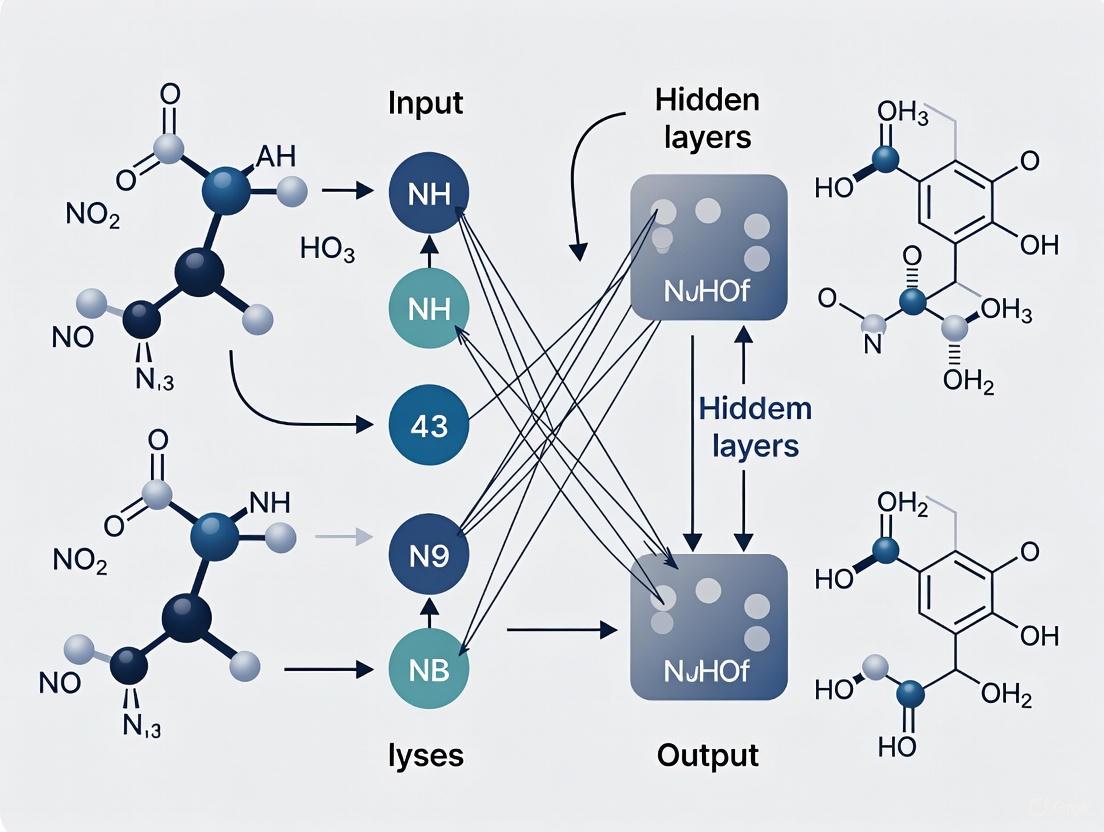
This article provides a comprehensive exploration of Artificial Neural Networks (ANNs) in modeling and predicting catalyst performance, a transformative approach accelerating discovery in energy and chemical sciences.
Artificial Neural Networks for Catalyst Performance: A Comprehensive Guide to Modeling, Optimization, and Validation
Abstract
This article provides a comprehensive exploration of Artificial Neural Networks (ANNs) in modeling and predicting catalyst performance, a transformative approach accelerating discovery in energy and chemical sciences. It covers the foundational paradigm shift from trial-and-error methods to data-driven discovery, detailing the specific workflow of ANN development from data acquisition to model training. The content delves into advanced methodological applications across diverse catalytic reactions, including hydrogen evolution and CO2 reduction, and addresses critical challenges such as data quality and model interpretability through troubleshooting and optimization strategies. A dedicated section on validation and comparative analysis equips researchers to evaluate model robustness and generalizability against traditional methods and other machine learning algorithms. Tailored for researchers, scientists, and development professionals, this guide synthesizes current innovations to bridge data-driven discovery with physical insight for efficient catalyst design.
The ANN Revolution in Catalysis: From Trial-and-Error to Data-Driven Discovery
The field of catalysis research is undergoing a profound transformation, shifting from traditional development modes that relied heavily on experimental trial-and-error and high-cost computational simulations toward an intelligent prediction paradigm powered by machine learning (ML) and artificial intelligence (AI) [1]. This paradigm shift addresses fundamental limitations in traditional catalyst development, which has been characterized by extended cycles, high costs, and low efficiency [2] [3]. The integration of machine learning, particularly artificial neural networks (ANNs), has begun to unravel the complex, non-linear relationships between catalyst composition, electronic structure, reaction conditions, and catalytic performance [4].
The emergence of this new research paradigm aligns with broader digital transformation trends across process industries, where organizations progress through stages of digital maturity from basic data collection to advanced, data-driven decision making [5]. In catalysis research, this evolution has manifested as three distinct, progressive stages of ML integration that represent increasing levels of sophistication and capability. These stages form a comprehensive framework for understanding how machine learning, especially neural network technologies, is fundamentally reshaping catalyst performance modeling and discovery.
This application note details these three stages of ML integration in catalysis research, providing structured protocols, quantitative performance comparisons, and practical toolkits for implementation. By framing this transformation within the context of artificial neural networks for modeling catalyst performance, we aim to equip researchers with the methodological foundation needed to navigate this rapidly evolving landscape.
The Three Stages of ML Integration in Catalysis
Stage 1: Data-Driven Catalyst Screening and Performance Prediction
The initial stage of ML integration focuses on establishing data-driven approaches for catalyst screening and performance prediction, moving beyond traditional trial-and-error methods. This stage leverages supervised learning algorithms to identify hidden patterns in high-dimensional data, enabling rapid prediction of catalyst properties and activities without resource-intensive experimental or computational methods.
Experimental Protocol: Implementing Catalyst Screening with ANN
Data Acquisition and Curation: Compile a standardized dataset from computational and experimental sources. Essential databases include Catalysis-Hub, Materials Project, and OQMD [6]. For CO₂ hydrogenation catalysts, collect features such as adsorption energies, d-band centers, coordination numbers, and elemental properties (electronegativity, atomic radius) [4].
Feature Engineering: Transform raw data into meaningful descriptors. For alloy catalysts, calculate features like d-band center, surface energy, and work function. Apply dimensionality reduction techniques (PCA, t-SNE) to mitigate the curse of dimensionality [2] [6].
Model Architecture and Training: Implement a feedforward neural network with 2-3 hidden layers using hyperbolic tangent activation functions. For initial screening, structure the network with 50-100 neurons per hidden layer. Use a 80:20 train-test split and apply L2 regularization (λ = 0.001) to prevent overfitting [6].
Performance Validation: Evaluate model performance using k-fold cross-validation (k=5-10) and calculate standard metrics: Mean Absolute Error (MAE), Root Mean Square Error (RMSE), and coefficient of determination (R²). For catalytic performance prediction, target RMSE < 0.05 eV for adsorption energy prediction [4].
Table 1: Performance Metrics of ANN Models for Catalyst Screening
| Catalytic System | Prediction Target | Best Algorithm | MAE | RMSE | R² | Data Points |
|---|---|---|---|---|---|---|
| Cu-Zn Alloys [4] | Methanol yield | ANN | 0.02 eV | 0.03 eV | 0.96 | 92 DFT |
| FeCoCuZr [7] | Alcohol productivity | Gaussian Process | 8.2% | 10.5% | 0.89 | 86 experiments |
| Single-atom Catalysts [1] | CO₂ to methanol | ANN + Active Learning | 0.03 eV | 0.04 eV | 0.94 | 3000 screening |
Stage 2: Active Learning and Multi-Objective Optimization
The second integration stage employs active learning strategies to iteratively guide experimental design and optimization. This approach creates a closed-loop system between data generation and model refinement, dramatically reducing the number of experiments required to identify optimal catalysts. This stage is particularly valuable for navigating complex, multi-component catalyst systems with vast compositional spaces.
Experimental Protocol: Active Learning for Catalyst Optimization
Initial Sampling and Space Definition: Define the chemical and parameter space for exploration. For a FeCoCuZr higher alcohol synthesis catalyst system, this encompasses approximately 5 billion potential combinations of composition and reaction conditions [7]. Begin with a diverse initial dataset (10-20 samples) using Latin Hypercube Sampling to ensure broad coverage.
Acquisition Function and Model Update: Implement a Gaussian Process (GP) model as the surrogate function. Use Bayesian Optimization (BO) with an Expected Improvement acquisition function to select the most informative subsequent experiments. After each iteration (typically 4-6 experiments), update the GP model with new data [7].
Multi-Objective Optimization: For complex performance requirements, implement multi-objective optimization. For higher alcohol synthesis, simultaneously maximize alcohol productivity while minimizing CO₂ and CH₄ selectivity. The algorithm identifies Pareto-optimal solutions that balance these competing objectives [7].
Experimental Validation and Closure: Execute the proposed experiments from the acquisition function. Measure key performance metrics (e.g., STYₕₐ for higher alcohols) and incorporate results into the dataset. Continue iterations until performance targets are met or saturation occurs (typically 5-8 cycles) [7].
Table 2: Impact of Active Learning on Experimental Efficiency
| Catalyst System | Traditional Approach | Active Learning | Reduction in Experiments | Performance Improvement | Cost Reduction |
|---|---|---|---|---|---|
| FeCoCuZr HAS [7] | 1000+ experiments | 86 experiments | 91.4% | 5x higher alcohol productivity | 90% |
| CO₂ to Methanol SAC [1] | 3000 DFT calculations | 300 DFT + ML | 90% | Identified novel SACs | 85% |
| Surface Energy Prediction [1] | 10,000 DFT calculations | ML with active learning | 99.99% | 100,000x speedup | 95% |
Stage 3: Predictive Dynamics and Fundamental Mechanism Elucidation
The most advanced stage of ML integration focuses on predicting dynamic catalytic behavior and elucidating fundamental reaction mechanisms. This involves using neural networks to explore complex reaction pathways, transition states, and microkinetics, providing atomic-level insights that were previously computationally prohibitive. Neural network potentials (NNPs) enable accurate molecular dynamics simulations at significantly reduced computational cost compared to traditional density functional theory (DFT).
Experimental Protocol: Transition State Screening with Neural Network Potentials
Reaction Network Exploration: For the target catalytic system (e.g., Cu and Cu-Zn surfaces for CO₂ hydrogenation), define the scope of possible reaction intermediates and pathways. The MMLPS (Microkinetic-guided Machine Learning Path Search) framework enables autonomous exploration without prior mechanistic assumptions [4].
Neural Network Potential Training: Train a global neural network (G-NN) potential on a diverse set of DFT calculations encompassing various adsorbate configurations and surface structures. For Cu-Zn systems, include 500-1000 DFT calculations covering key intermediates (*CO₂, *H, *O, *HCOOH, *CH₃OH) [4].
Transition State Search and Validation: Implement the CaTS (Catalyst Transition State screening) framework that combines neural network potentials with dimer method or nudged elastic band calculations for transition state search. Validate identified transition states through frequency calculations confirming a single imaginary frequency [1].
Microkinetic Modeling and Analysis: Integrate the neural network-predicted energies and transition states into a microkinetic model to determine dominant reaction pathways and rate-determining steps under realistic conditions. For CO₂ hydrogenation on Cu-Zn, this revealed the formate pathway dominance and Zn decoration effects on Cu(211) step edges [4].
Table 3: Neural Network Applications in Catalytic Mechanism Studies
| Application Area | ML Framework | Traditional Method | ML Performance | Key Insight |
|---|---|---|---|---|
| Reaction Path Search [4] | MMLPS with G-NN | DFT-based sampling | Near-DFT accuracy, 1000x faster | Zn atoms preferentially decorate Cu(211) step edges |
| Transition State Screening [1] | CaTS with transfer learning | DFT frequency calculations | 10,000x efficiency gain | Enabled screening of hundreds of catalytic systems |
| Descriptor Identification [4] | SISSO | Linear regression | Identified non-linear descriptors | Methanol yield tied to temperature and adsorption balance |
| Surface Property Prediction [1] | SurFF foundation model | DFT surface calculations | 100,000x speedup | High-throughput surface energy prediction |
The Research Toolkit: Essential Solutions for ML-Driven Catalysis
Successful implementation of artificial neural networks in catalyst performance research requires both computational tools and experimental frameworks. This section details essential research reagents and solutions that form the foundation for modern, data-driven catalysis research.
Table 4: Essential Research Reagent Solutions for ML-Driven Catalyst Studies
| Category | Solution/Reagent | Specifications | Research Function | Example Application |
|---|---|---|---|---|
| Computational Databases | CatalysisHub [6] | Reaction energies, activation barriers | Training data for activity prediction | Screening adsorption properties |
| Feature Generation | d-band center calculator [6] | Electronic structure descriptor | Predicts adsorption strength | Metal alloy catalyst design |
| ML Algorithms | ANN with Bayesian optimization [7] | Python (scikit-learn, PyTorch) | Non-linear pattern recognition | Complex composition-performance relationships |
| Active Learning Platform | Gaussian Process Regression [7] | Uncertainty quantification | Guides iterative experimentation | FeCoCuZr catalyst optimization |
| Reaction Analysis | CaTS framework [1] | Transition state screening | Accelerates kinetic analysis | Identifies rate-determining steps |
| Performance Validation | High-throughput reactor [7] | Parallel testing capability | Experimental validation of predictions | Confirm ML-predicted optimal catalysts |
The integration of machine learning in catalysis research has evolved through three distinct stages—from initial data-driven screening to active learning optimization and finally to predictive dynamics and mechanism elucidation. This progression represents a fundamental paradigm shift from traditional trial-and-error approaches to rational, AI-guided catalyst design. Artificial neural networks have proven particularly valuable in modeling the complex, non-linear relationships inherent in catalyst performance, enabling researchers to navigate vast chemical spaces with unprecedented efficiency.
As these methodologies continue to mature, the catalysis research landscape is transforming into a more integrated, data-driven discipline. Future developments will likely focus on strengthening the connections between these three stages, creating seamless workflows from initial screening to mechanistic understanding. The researchers and organizations who successfully master and integrate these three stages of ML adoption will be positioned at the forefront of catalytic science, capable of addressing critical challenges in energy sustainability and chemical production with accelerated, intelligent design capabilities.
A Feedforward Neural Network (FNN) is the most fundamental architecture in deep learning, characterized by its unidirectional information flow. In an FNN, connections between nodes do not form cycles, meaning information moves exclusively from the input layer, through potential hidden layers, to the output layer in a single direction. This structure is formally known as a directed acyclic graph [8].
This one-way flow distinguishes FNNs from more complex architectures like recurrent neural networks (RNNs), which can have feedback loops, creating an internal memory. The simplicity of FNNs makes them more straightforward to train and analyze, providing an essential foundation for understanding broader neural network concepts [8]. They serve as powerful, universal function approximators, capable of mapping complex, non-linear relationships between inputs and outputs, which is highly valuable for predictive modeling in scientific research.
Core Architectural Principles
The architecture of a feedforward neural network is built upon several key components and principles that work in concert to transform input data into a predictive output.
Fundamental Components
- Input Layer: The network's entry point, which receives the feature data. Each node (or neuron) in this layer represents a single feature.
- Hidden Layers: These intermediate layers sit between the input and output layers. Each neuron in a hidden layer performs a weighted sum of its inputs, adds a bias, and passes the result through a non-linear activation function. Deep networks contain multiple hidden layers.
- Output Layer: The final layer that produces the network's prediction. The nature of its activation function (e.g., linear, softmax) depends on the task (regression or classification).
- Connections: Every connection between neurons has an associated weight (
W). During training, these weights are adjusted to minimize prediction error [9].
The Mathematical Engine of a Single Neuron
The operation of a single neuron can be mathematically represented as:
Y = f ( Σ (Wn • Xn) ) [9]
Where:
- Y is the neuron's output.
- f is the non-linear activation function.
- Wn is the weight associated with the n-th input connection.
- Xn is the n-th input value.
The summation (Σ) is the weighted sum of all inputs plus a bias term. This calculation is fundamental to the network's ability to learn complex patterns.
Advanced Concepts and Theoretical Limits
Memory Capacity in Single-Layer FNNs
For binary single-layer FNNs, the theoretical maximum memory capacity—the number of patterns (P) that can be stored and perfectly recalled—is not infinite. It is governed by the network's size and the sparsity of the data [10].
Table 1: Factors Influencing Neural Network Storage Capacity
| Factor | Symbol | Description | Impact on Capacity |
|---|---|---|---|
| Network Size | N |
Number of input/output units. | Increases exponentially as (N/S)^S where S is sparsity [10]. |
| Pattern Sparsity | S |
Number of active elements in each input pattern. | Higher sparsity (fewer active units) generally increases capacity [10]. |
| Pattern Differentiability | D |
Minimum Hamming distance between any two stored patterns. | Higher differentiability (more orthogonal patterns) reduces interference but limits the pool of candidate patterns [10]. |
Exceeding this capacity leads to catastrophic forgetting, where learning new patterns interferes with or erases previously learned ones. This is a significant challenge in continual learning scenarios [10].
The Tabular Foundation Model (TabPFN)
A recent innovation demonstrating the evolving application of FNN principles is the Tabular Prior-data Fitted Network (TabPFN). TabPFN is a transformer-based foundation model designed for small-to-medium-sized tabular datasets. It leverages in-context learning (ICL), the same mechanism powering large language models, to perform Bayesian inference in a single forward pass [11].
- Methodology: TabPFN is pre-trained on millions of synthetic tabular datasets generated from a defined prior distribution. When presented with a new dataset, it uses the training samples as context to directly predict the labels of test samples without traditional iterative training [11].
- Significance: This approach can outperform gradient-boosted decision trees on datasets with up to 10,000 samples, and does so thousands of times faster, showcasing the potential for rapid, accurate analysis common in scientific research [11].
Experimental Protocols for FNN Application
This section provides a detailed, step-by-step methodology for developing a predictive model using a Feedforward Neural Network, adaptable for tasks like modeling catalyst performance.
Protocol 1: Building a Predictive FNN Model
Objective: To construct and train an FNN for predicting material properties or catalytic performance based on process parameters.
Workflow Overview: The diagram below illustrates the end-to-end workflow for this protocol.
Materials and Reagents:
Table 2: Essential Research Reagents & Computational Tools
| Item | Type | Function/Description |
|---|---|---|
| Process Parameter Dataset | Data | Input features (e.g., temperature, pressure, precursor concentrations). Serves as the model's input (X) [9]. |
| Performance Metric Data | Data | Target output (y) for supervised learning (e.g., yield strength, catalytic activity, conversion efficiency) [9]. |
| Python with PyTorch/TensorFlow | Software | Core programming environment and libraries for building, training, and evaluating neural network models. |
| Scikit-learn | Software | Provides essential utilities for data preprocessing (e.g., StandardScaler), model evaluation, and train-test splitting. |
| High-Performance Computing (HPC) or GPU | Hardware | Accelerates the computationally intensive model training process. |
Step-by-Step Procedure:
Data Preparation and Feature Selection
- Collect Data: Assemble a dataset where each row represents an experiment and columns represent input parameters and the corresponding target output(s). For example, a catalyst study might use inputs like
feed speed ratio,temperature, andprecursor concentration, with an output likereaction yield[9]. - Preprocess Data: Clean the data by handling missing values and outliers. Normalize or standardize the input features to a common scale (e.g., using
StandardScalerfrom Scikit-learn) to ensure stable and efficient training. - Split Dataset: Partition the data into three sets: Training Set (~70%) for model learning, Validation Set (~15%) for hyperparameter tuning, and Test Set (~15%) for final, unbiased evaluation.
- Collect Data: Assemble a dataset where each row represents an experiment and columns represent input parameters and the corresponding target output(s). For example, a catalyst study might use inputs like
Model Architecture Design
- Define Layers: Specify the number of hidden layers (depth) and the number of neurons in each layer (width). Start with a simple architecture (e.g., 1-2 hidden layers) and increase complexity if necessary.
- Select Activation Functions: Choose non-linear activation functions for the hidden layers (e.g., ReLU - Rectified Linear Unit) to enable the network to learn complex patterns. The output layer's activation function should match the task: a linear function for regression or sigmoid/softmax for classification.
- Initialize Model: Create the FNN model in your chosen framework (e.g., PyTorch or TensorFlow).
Model Training and Validation
- Choose Loss Function and Optimizer: Select a loss function appropriate for the task (e.g., Mean Squared Error (MSE) for regression). Choose an optimizer like Adam or SGD (Stochastic Gradient Descent) to update the network weights.
- Train the Model: Iteratively present batches of training data to the model. The optimizer adjusts the weights to minimize the loss between the model's predictions and the true target values.
- Validate and Tune: After each training epoch (a full pass through the training data), use the validation set to monitor performance and prevent overfitting. Use these results to tune hyperparameters (e.g., learning rate, number of layers/neurons, batch size).
Model Evaluation and Inference
- Final Testing: Evaluate the final, tuned model on the held-out test set to obtain an unbiased estimate of its performance on new, unseen data.
- Deploy for Prediction: Use the trained model to predict outcomes for new experimental conditions, aiding in catalyst design and optimization.
Application Notes in Scientific Research
FNNs have proven to be versatile and effective tools across diverse scientific domains. The following case studies highlight their practical utility.
Table 3: Case Studies of FNNs in Scientific Modeling
| Field | Study Objective | FNN Architecture & Performance | Key Insight |
|---|---|---|---|
| Materials Engineering [9] | Predict mechanical properties (Yield Strength, UTS, Elongation) of flow-formed AA6082 tubes. | FNN vs. Elman RNN vs. Multivariate Regression. FNN achieved the lowest avg. prediction error of 7.45%. | FNNs can effectively model complex, non-linear relationships in manufacturing processes, outperforming both traditional regression and certain recurrent architectures for this static prediction task [9]. |
| Epidemiology [12] | Predict the 2025 measles outbreak case numbers in the USA. | A simple FNN using historical data features. Achieved a Mean Squared Error (MSE) of 1.1060 over 34 weeks of testing. | Relatively simple FNN architectures can provide accurate, real-time predictions for public health crises, offering a valuable tool for resource planning and intervention strategies [12]. |
| Computer Science [13] | Investigate the emergence of color categorization in a neural network trained for object recognition. | A CNN (a specialized FNN for images) was probed for its internal representation of color. | Higher-level categorical representations can emerge in FNNs as a side effect of being trained on a core visual task (object recognition), suggesting that task utility can shape internal feature organization [13]. |
Visualization of a Basic Feedforward Network
The following diagram depicts the core architecture of a simple Feedforward Neural Network, showing the connections and data flow between its layers.
Application Notes
The development of high-performance catalysts is pivotal for advancing energy and chemical technologies. Artificial Neural Networks (ANNs) have emerged as a powerful machine learning technique to navigate the complex, high-dimensional challenges of optimizing heterogeneous catalysts, significantly accelerating the discovery process [14] [15]. ANNs are particularly valuable for establishing non-linear relationships between a catalyst's properties—such as its geometric and electronic structure—and its performance metrics, enabling predictive modeling that can guide experimental efforts [15]. This document outlines a standardized workflow for employing ANNs in catalyst performance modeling, ensuring robust, reproducible, and reliable outcomes.
The standardized workflow for ANN-based catalyst research is a sequential, iterative process. It begins with the acquisition and rigorous cleaning of data from both experimental and theoretical sources. This high-quality data is then prepared for model ingestion, followed by the careful design and training of the ANN architecture. The model is thoroughly evaluated using relevant metrics, and the insights generated are effectively visualized to guide catalyst design and optimization, potentially closing the loop by informing new data acquisition campaigns.
Experimental Protocols
Protocol 1: Data Acquisition and Cleaning for Catalytic Properties
Objective
To gather a consistent, high-quality dataset on catalyst properties and performance, and to preprocess this data to mitigate the negative effects of data contamination on ANN model training.
Materials and Reagents
- Data Sources: High-throughput experimental setups, computational databases (e.g., from Density Functional Theory calculations), and scientific literature [14] [15].
- Computing Software: Python environment with libraries such as Pandas for data manipulation, NumPy for numerical operations, and Scikit-learn for basic outlier detection.
- Specialized Tools: Graph Neural Networks (GNNs) for advanced data cleaning involving relational data structures [16].
Methodology
Data Collection:
- Compile a dataset of catalyst properties. A typical dataset, as used in modern studies, may include ~235 unique heterogeneous catalysts [14].
- For each catalyst, record key performance metrics (e.g., adsorption energies for C, O, N, H) and electronic structure descriptors (e.g., d-band center, d-band filling, d-band width, d-band upper edge relative to the Fermi level) [14].
- Ensure the data range for each variable is sufficiently wide to enable the ANN to learn generalizable patterns [15].
Data Cleaning:
- Anomaly Detection: Identify and address anomalous data originating from sensor drifts or signal transmission issues. Techniques include calculating statistical metrics like the Thompson tau-local outlier factor or using a group anomaly detector that incorporates data graph structure and local density [16].
- Label Verification: Correct mislabeled data, a common issue due to expert error or environmental noise. Employ a graph clustering model (e.g., GNNs) to rectify mislabels by leveraging the underlying graph structure of the data, which is less susceptible to initial label noise [16].
- Standardization: Handle missing values by removal or imputation (e.g., filling with mean values or NAN) and check for consistency in formats and units across all variables [17].
Protocol 2: Data Preparation and Feature Selection
Objective
To transform the cleaned data into a format suitable for ANN training and to identify the most salient features for predicting catalytic performance.
Materials and Reagents
- Software: Python with Scikit-learn for data transformation and decomposition.
- Analysis Tools: Libraries for statistical analysis (e.g., SciPy) and feature importance calculation (e.g., SHAP).
Methodology
- Data Splitting: Partition the dataset into three subsets: Training (~60-70%), Validation (~15-20%), and Test (~15-20%). This separation is crucial for unbiased model evaluation and preventing overfitting [17].
- Data Transformation: Normalize or scale input features to a similar range (e.g., [0, 1] or [-1, 1]) to stabilize and accelerate the ANN training process [17].
- Feature Selection & Analysis:
- Perform Principal Component Analysis (PCA) to reduce dimensionality and identify dominant patterns in the electronic structure features [14].
- Use feature importance analysis, such as Random Forest or SHAP (SHapley Additive exPlanations), to identify critical descriptors. For instance, d-band filling may be critical for predicting the adsorption energies of C, O, and N, while the d-band center is more important for H adsorption [14].
Protocol 3: ANN Model Architecture Design and Training
Objective
To construct and train an ANN model that accurately maps catalyst descriptors to performance metrics.
Materials and Reagents
- Deep Learning Frameworks: TensorFlow/Keras or PyTorch.
- Computing Hardware: Computers with GPUs for accelerated training.
Methodology
Architecture Selection:
- Design a network with input, hidden, and output layers. The input and output layers correspond to the number of features and target variables, respectively.
- Determine the number of hidden layers and neurons through iterative testing. A common starting point is a single hidden layer, with the number of neurons potentially determined by a sensitivity test to avoid under-fitting or over-fitting [15].
- Use non-linear activation functions (e.g., sigmoid, ReLU) in the hidden layers to enable the network to learn complex patterns [15].
Model Training:
- Compilation: Choose an optimizer (e.g., Adam, SGD), a loss function (e.g., Mean Squared Error for regression, Cross-Entropy for classification), and evaluation metrics (e.g., accuracy) [17].
- Hyperparameter Tuning: Optimize key parameters using the validation set.
- Fitting: Train the model on the training set and monitor its performance on the validation set to implement early stopping and prevent overfitting [17].
- Checkpointing: Save the model at intervals to retain the best-performing version [17].
Protocol 4: Model Evaluation and Interpretation
Objective
To assess the trained ANN model's predictive performance on unseen data and to interpret the model to gain physical insights into catalytic behavior.
Materials and Reagents
- Evaluation Metrics: Standard statistical measures (e.g., RMSE, R², Accuracy, Precision, Recall, F1-score).
- Interpretation Tools: SHAP, LIME, or built-in feature importance methods.
Methodology
- Performance Validation: Use the held-out test set to generate final, unbiased performance metrics. Calculate the Root Mean Square Error (RMSE) or other relevant scores to quantify prediction accuracy [15].
- Error Analysis: Examine where the model makes mistakes to identify potential areas for improvement in data quality or feature engineering [17].
- Model Interpretation: Apply techniques like SHAP analysis to understand the contribution of each input descriptor (e.g., d-band properties) to the model's predictions, transforming the "black box" model into a source of fundamental insight for catalyst design [14].
Data Presentation
Key Electronic Structure Descriptors for Catalytic Adsorption Energies
Table 1: Key electronic structure descriptors and their relative importance for predicting the adsorption energies of various atoms on heterogeneous catalysts, as identified through SHAP analysis [14].
| Descriptor | Description | Primary Influence on Adsorption Energy |
|---|---|---|
| d-band filling | The extent to which the d-electron band is occupied. | Critical for C, O, and N adsorption energies. |
| d-band center | The average energy of the d-electron states relative to the Fermi level. | Most important for H adsorption energy. |
| d-band width | The energy breadth of the d-electron band. | Secondary influence on all adsorption energies. |
| d-band upper edge | The position of the upper edge of the d-band. | Secondary influence on all adsorption energies. |
Standard Evaluation Metrics for ANN Models in Catalysis Research
Table 2: Common metrics used for evaluating the performance of regression and classification ANN models in catalysis research [17] [15].
| Metric | Formula | Use Case |
|---|---|---|
| Root Mean Square Error (RMSE) | (\sqrt{\frac{\sum{i=1}^{n}(Pi - A_i)^2}{n}}) | Regression tasks (e.g., predicting adsorption energy, reaction yield). |
| Accuracy | (\frac{\text{Number of Correct Predictions}}{\text{Total Predictions}}) | Classification tasks (e.g., identifying high/low activity catalysts). |
| Precision | (\frac{\text{True Positives}}{\text{True Positives + False Positives}}) | Classification tasks where false positives are critical. |
| Recall | (\frac{\text{True Positives}}{\text{True Positives + False Negatives}}) | Classification tasks where false negatives are critical. |
| F1-Score | (2 \times \frac{\text{Precision} \times \text{Recall}}{\text{Precision} + \text{Recall}}) | Overall measure for binary classification models. |
Mandatory Visualization
ANN Catalyst Modeling Workflow
ANN Model Development & Training Process
The Scientist's Toolkit
Research Reagent Solutions
Table 3: Essential computational tools and data sources for building ANN models in catalyst performance research.
| Tool / Resource | Type | Function in Workflow |
|---|---|---|
| DFT Calculations | Data Source | Provides high-fidelity data on electronic structure descriptors (d-band properties) and reaction energies [14]. |
| High-Throughput Experimentation | Data Source | Generates large-scale, consistent experimental data on catalyst activity and selectivity under various conditions [14]. |
| Python (Pandas/NumPy) | Software | Core environment for data manipulation, cleaning, and numerical computations [17]. |
| TensorFlow/PyTorch | Software | Deep learning frameworks used for building, training, and deploying flexible ANN architectures [17]. |
| SHAP Analysis | Software | Provides post-hoc model interpretability, identifying the most critical catalyst descriptors for a given prediction [14]. |
| Graph Neural Networks (GNNs) | Software/Method | Advanced method for data cleaning and modeling complex relationships in non-Euclidean data, such as material graphs [16]. |
Application Note: High-Throughput Screening of Catalytic Materials
The integration of Artificial Neural Networks (ANNs) with high-throughput screening (HTS) methodologies has revolutionized the discovery and optimization of catalytic materials. This paradigm shift moves research beyond traditional "trial-and-error" approaches, enabling the rapid computational assessment of vast material libraries to identify promising candidates for experimental validation [18]. This application note details the implementation of ANN-driven HTS for catalytic materials, such as Metal-Organic Frameworks (MOFs) for gas separation and catalytic electrodes for the Hydrogen Evolution Reaction (HER) [18] [19].
Key Quantitative Findings
Table 1: Performance Metrics of ANN Models in High-Throughput Screening Studies
| Catalytic System | Machine Learning Model | Key Performance Metric | Value | Reference |
|---|---|---|---|---|
| MOF Mixed-Matrix Membranes (He/CH₄ Separation) | eXtreme Gradient Boosting (XGBoost) | Predictive Accuracy for MMMs Performance | Best among 4 tested models | [18] |
| CI Engine with Biofuel Blend | Levenberg-Marquardt Back-Propagation ANN | Regression Coefficient (R²) for BTE | 0.99859 | [20] |
| CI Engine with Biofuel Blend | Levenberg-Marquardt Back-Propagation ANN | Regression Coefficient (R²) for BSFC | 0.99814 | [20] |
| CI Engine with Biofuel Blend | Levenberg-Marquardt Back-Propagation ANN | Regression Coefficient (R²) for NOx | 0.92505 | [20] |
Detailed Experimental Protocol
Protocol 1: High-Throughput Computational Screening of MOF Mixed-Matrix Membranes
This protocol describes the creation of a large-scale dataset for machine learning by integrating high-throughput computer simulations (HTCS) with polymer data, as applied to helium separation [18].
- Database Curation: Source a database of experimentally synthesized porous materials. For example, use the CoRE MOF 2019 database, which contains 10,143 MOF structures [18].
- Material Characterization via Simulation: For each MOF structure, calculate key structural and performance characteristics using molecular simulations:
- Structural Descriptors: Calculate geometric properties using tools like Zeo++, which include:
- Largest Cavity Diameter (LCD)
- Pore Limiting Diameter (PLD)
- Density (ρ)
- Accessible Surface Area (VSA)
- Accessible Pore Volume (Vp)
- Porosity (ɸ)
- Performance Metrics: Use Grand Canonical Monte Carlo (GCMC) and Molecular Dynamics (MD) simulations to calculate:
- Gas Permeability
- Gas Selectivity (e.g., He/CH₄ selectivity)
- Structural Descriptors: Calculate geometric properties using tools like Zeo++, which include:
- Polymer Data Collection: Compile a set of polymer properties from experimental literature, including gas permeability and selectivity.
- Dataset Generation for MMMs: Combine the MOF and polymer data to create a large virtual library of Mixed-Matrix Membranes (MMMs). The Maxwell model is a suitable theoretical framework for predicting the overall gas permeability of the composite membrane based on the properties of its polymer matrix and MOF fillers [18]. This process can generate a dataset of over 450,000 MMM samples [18].
- Machine Learning Model Development:
- Input Features: Use the calculated MOF descriptors, polymer properties, and MOF loading fraction as input features for the model.
- Model Training & Selection: Train multiple machine learning models (e.g., XGBoost, Random Forest, DNN) on the dataset. Evaluate their performance using metrics like Root Mean Square Error (RMSE) and R² to select the best-performing model (e.g., XGBoost) [18].
- Validation: Validate the computational strategy by comparing the simulated gas permeability of known MOFs with existing experimental data to ensure accuracy [18].
Application Note: Uncovering Structure-Performance Relationships
A critical advantage of advanced machine learning models, particularly Graph Neural Networks (GNNs), is their ability to decode complex Structure-Performance Relationships in catalysis. These models can predict catalytic properties and provide human-interpretable insights into which structural features of a catalyst lead to high performance, thereby guiding rational design [21].
Key Quantitative Findings
Table 2: Capabilities of ANN/GNN Models in Elucidating Structure-Performance Relationships
| Model / System | Catalytic Reaction | Key Predictive Capability | Interpretability Feature |
|---|---|---|---|
| HCat-GNet [21] | Rh-catalyzed Asymmetric 1,4-Addition | Predicts enantioselectivity (ΔΔG‡) and absolute stereochemistry | Identifies atoms/fragments in ligand affecting selectivity |
| HCat-GNet [21] | Asymmetric Dearomatization; N,S-Acetal Formation | Generalizability across different reaction types | Highlights key steric/electronic motifs |
| ANN [20] | CI Engine Performance and Emissions | Regression R² > 0.92 for NOx, Smoke, BTE, BSFC | "Black-box" prediction of performance from operational inputs |
Detailed Experimental Protocol
Protocol 2: Predicting Enantioselectivity with a Graph Neural Network (HCat-GNet)
This protocol uses the Homogeneous Catalyst Graph Neural Network (HCat-GNet) to predict the enantioselectivity of asymmetric reactions catalyzed by metal-chiral ligand complexes, using only the SMILES representations of the molecules involved [21].
- Data Preparation and Molecular Representation:
- Input Data: Compile a dataset of catalytic reactions, including the SMILES strings of the substrate, reagent, and chiral ligand, along with the experimentally measured enantioselectivity (e.g., as ΔΔG‡ or ee).
- Graph Construction: For each molecule (ligand, substrate, reagent), automatically generate a graph representation where atoms are nodes and bonds are edges.
- Node Feature Encoding: For each atom (node), encode its chemical properties into a feature vector. This includes:
- Atomic identity (element)
- Degree (number of connected non-hydrogen atoms)
- Hybridization
- Membership in an aromatic system
- Membership in a ring
- Absolute configuration (R, S, or none) of stereocenters
- Model Training and Interpretation:
- Graph Assembly: Concatenate the individual molecular graphs into a single, disconnected reaction graph.
- Model Training: Train the GNN on the assembled reaction graphs to predict the enantioselectivity value.
- Explainability Analysis: Apply explainable AI (XAI) techniques, such as atom-based attention mechanisms, to the trained model. This analysis identifies which specific atoms within the chiral ligand the model deems most critical for achieving high or low enantioselectivity. This provides a data-driven, human-interpretable guide for ligand optimization [21].
The Scientist's Toolkit: Essential Research Reagents and Materials
Table 3: Key Research Reagent Solutions for ANN-Driven Catalysis Research
| Item / Solution | Function / Description | Example Use Case |
|---|---|---|
| CoRE MOF Database | A curated database of experimentally synthesized Metal-Organic Frameworks, providing atomic-level structures for simulation and ML. | Source of material structures for high-throughput screening of adsorbents and catalysts [18]. |
| Zeo++ Software | An algorithm for high-throughput analysis of porous materials; calculates geometric descriptors like PLD, LCD, and surface area. | Generating key input features for ML models predicting adsorption and catalytic performance [18]. |
| Grand Canonical Monte Carlo (GCMC) | A molecular simulation technique used to study adsorption and separation equilibria in porous materials at a fixed chemical potential. | Calculating gas uptake and selectivity for MOFs in the dataset [18]. |
| SMILES Representation | A line notation system for representing molecular structures using short ASCII strings. | Serves as a simple, universal input for GNNs to build molecular graphs without complex DFT calculations [21]. |
| Graph Neural Network (GNN) | A class of deep learning models designed to perform inference on data described by graphs. | Mapping the complex relationship between molecular structure of catalysts and their performance (e.g., enantioselectivity) [21]. |
| Explainable AI (XAI) Techniques | Methods that help interpret the predictions of complex "black-box" models like ANNs and GNNs. | Identifying which substituents on a chiral ligand most influence enantioselectivity in asymmetric catalysis [21]. |
Building and Applying ANN Models: From Hydrogen Evolution to CO2 Reduction
The application of artificial neural networks (ANNs) in catalyst performance research represents a paradigm shift from traditional trial-and-error experimentation to a data-driven discovery process. A critical factor determining the success of these models is input feature engineering – the strategic selection and construction of numerical descriptors that effectively capture the underlying physical and chemical properties governing catalytic behavior. This protocol provides a comprehensive framework for identifying, evaluating, and implementing key descriptors derived from electronic structure and geometric characteristics, enabling researchers to build more accurate, generalizable, and interpretable neural network models for catalyst design.
A Framework for Catalyst Descriptors
Descriptors for catalytic systems can be systematically categorized into three primary classes based on their origin and computational requirements. The table below outlines these categories, their bases, and key examples.
Table 1: Categories of Foundational Descriptors for Catalysis
| Descriptor Category | Basis | Key Examples | Typical Data Requirements |
|---|---|---|---|
| Intrinsic Statistical [22] | Fundamental elemental properties | Elemental composition, atomic number, valence orbital information, ionic characteristics, ionization energy [22] | Low (readily available from databases) |
| Electronic Structure [22] | Quantum mechanical calculations | d-band center ($\epsilond$) [22], spin magnetic moment [22], orbital occupancies, charge distribution, non-bonding electron count (e.g., $Ni{e-d}$) [23] | High (requires DFT calculations) |
| Geometric/Microenvironmental [24] [22] | Local atomic arrangement and structure | Interatomic distances [22], coordination numbers [22], local strain [22], surface-layer site index [22], area of metal-adsorbate triangles (e.g., $S_{M-O-O}$) [22] | Medium to High (may require structural optimization) |
Electronic Structure Descriptors
Core Concepts and Physical Basis
Electronic structure descriptors encode information about the electron density distribution and energy levels of a catalyst, which directly influence its ability to bind reaction intermediates and lower activation barriers. These descriptors are typically derived from Density Functional Theory (DFT) calculations, which serve as the computational foundation for modern quantum mechanical modeling [23]. The accuracy of neural network predictions for complex properties, such as Hamiltonian matrices, is significantly enhanced when the model architecture respects fundamental physical symmetries, such as E(3)-equivariance, ensuring predictions are invariant to translation, rotation, and reflection [25] [26].
Key Electronic Descriptors and Measurement Protocols
Table 2: Key Electronic Structure Descriptors and Measurement Methods
| Descriptor | Physical Significance | Measurement Protocol |
|---|---|---|
| d-Band Center ($\epsilon_d$) [22] | Average energy of the d-band electronic states relative to the Fermi level; correlates with adsorption strength. | 1. Perform DFT calculation on the catalyst surface. 2. Project the electronic density of states (DOS) onto the d-orbitals of the metal site. 3. Calculate the first moment (weighted average energy) of the d-band DOS. |
| Spin Magnetic Moment [22] [27] | Measure of unpaired electron spin; influences reaction pathways in radical intermediates. | 1. Conduct a spin-polarized DFT calculation. 2. Integrate the spin density ($\rho{\uparrow} - \rho{\downarrow}$) over the atomic basin of interest. |
| Machine-Learned Hamiltonian [25] [26] | Full quantum mechanical Hamiltonian predicting system energy; provides a complete electronic description. | 1. Use a deep E(3)-equivariant neural network (e.g., NextHAM [25], DeepH-hybrid [26]). 2. Train on a dataset of DFT-calculated Hamiltonians. 3. The model outputs Hamiltonian matrix elements for new structures. |
| Non-Bonding Lone-Pair Electron Count ($Ni_{e-d}$) [23] | Count of non-bonding electrons in specific orbitals; can be used to predict activity trends. | 1. Perform DFT calculation to obtain electron density and orbital projections. 2. Analyze the orbital-projected DOS to identify and count non-bonding states near the Fermi level. |
Geometric and Microenvironmental Descriptors
Core Concepts and Physical Basis
Geometric descriptors quantify the spatial arrangement of atoms around an active site. The local geometry directly affects the steric accessibility for adsorbates and can induce strain that modifies electronic properties. For nanostructured catalysts like nanoparticles and high-entropy alloys, which possess diverse surface facets and binding sites, Adsorption Energy Distributions (AEDs) have been introduced as a powerful descriptor. AEDs aggregate the spectrum of adsorption energies across various facets and sites, providing a more holistic fingerprint of a catalyst's activity than a single energy value from one ideal surface [24].
Key Geometric Descriptors and Measurement Protocols
Table 3: Key Geometric and Microenvironmental Descriptors and Measurement Methods
| Descriptor | Physical Significance | Measurement Protocol |
|---|---|---|
| Interatomic Distance [22] | Determines steric effects and metal-metal interactions in multi-site catalysts. | 1. Optimize the catalyst structure using DFT or a Machine-Learned Force Field (MLFF). 2. Calculate the Cartesian distance between specific atomic pairs. |
| Coordination Number [22] | Number of nearest neighbors; a lower number often indicates an under-coordinated, more reactive site. | 1. From an optimized structure, identify all atoms within a cutoff radius (e.g., the first minimum in the radial distribution function) of the central atom. 2. Count these neighbors. |
| Local Strain [22] [27] | Measure of lattice distortion from an ideal structure; strain can shift electronic energy levels. | 1. Define a reference bond length or lattice parameter ($a0$). 2. Measure the actual bond length in the system ($a$). 3. Calculate strain as $\epsilon = (a - a0)/a_0$. |
| Adsorption Energy Distribution (AED) [24] | Characterizes the range of adsorption energies available on a realistic nanoparticle catalyst. | 1. Generate a diverse set of surface slabs representing different facets and terminations. 2. For each slab, create multiple adsorption sites. 3. Use MLFFs (e.g., from OCP [24]) to compute adsorption energies for all configurations. 4. Plot the histogram of energies to form the AED. |
Integrated Workflow for Descriptor Selection and Model Implementation
The process of building a robust ANN model for catalysis involves a structured workflow from initial data collection to final model deployment. The following diagram and protocol outline this integrated approach.
Figure 1: A workflow for descriptor-driven catalyst design, integrating computational and machine learning steps.
Protocol: End-to-End Descriptor Engineering and ANN Training
Objective: To systematically select and apply electronic and geometric descriptors for training an ANN that predicts catalyst performance. Primary Applications: High-throughput screening of catalyst libraries, prediction of adsorption energies, and discovery of structure-property relationships.
Materials and Reagents:
- Computational Software: DFT code (e.g., VASP, Quantum ESPRESSO), MLFF platform (e.g., Open Catalyst Project (OCP) [24]), atomistic visualization tool (e.g., OVITO, VESTA).
- Data Resources: Materials Project database [24], Open Quantum Materials Database (OQMD) [23], other curated DFT datasets.
- Computing Hardware: High-performance computing (HPC) cluster with CPUs/GPUs.
Procedure:
Data Acquisition and Curation: a. Define Search Space: Select metallic elements and their stable phases from databases like the Materials Project, filtered by experimental relevance and computational feasibility [24]. b. Generate Ground Truth Data: Perform high-quality DFT calculations to obtain target properties (e.g., adsorption energies, formation energies, reaction overpotentials) for a subset of materials. For geometric descriptors, use DFT or pre-trained MLFFs to relax and optimize catalyst structures [24]. c. Data Cleaning: Validate computational results and remove outliers. Benchmark MLFF-predicted energies against explicit DFT calculations to ensure accuracy (e.g., target MAE < 0.2 eV for adsorption energies) [24].
Descriptor Calculation and Selection: a. Compute Foundational Descriptors: Calculate a broad initial set of descriptors from all three categories (Intrinsic, Electronic, Geometric). b. Feature Engineering: Construct composite descriptors if necessary. For example, the ARSC descriptor integrates Atomic property, Reactant, Synergistic, and Coordination effects into a single, powerful feature [22]. c. Feature Selection: Apply techniques like Recursive Feature Elimination (RFE) or feature importance analysis from tree-based models (e.g., XGBoost) to identify the most predictive descriptors and reduce dimensionality [22]. The goal is a compact, non-redundant, and physically meaningful descriptor set.
Model Training and Validation: a. Algorithm Selection: Choose an ANN architecture suitable for the data. For complex, geometric input, use E(3)-equivariant graph neural networks [25] [26]. For tabular descriptor data, fully connected networks or tree ensembles like XGBoost are effective [22]. b. Training: Split data into training, validation, and test sets. Train the model, using the validation set for hyperparameter tuning. c. Validation: Evaluate the model on the held-out test set. Use metrics like Mean Absolute Error (MAE), Root Mean Square Error (RMSE), and R². Critically, assess extrapolation ability by testing on elements or material classes not seen during training [24] [22].
Iterative Refinement and Application: a. Analysis: Use explainable AI (XAI) techniques (e.g., SHAP, feature importance) to interpret which descriptors are driving predictions [23]. This can reveal new physical insights. b. Active Learning: Deploy the trained model to screen a large virtual library of candidate materials. Select promising candidates for subsequent DFT validation or experimental synthesis, adding these new data points to the training set to improve the model iteratively [24] [22].
The Scientist's Toolkit
Table 4: Essential Computational Reagents and Resources
| Tool/Resource | Function/Benefit | Application Context |
|---|---|---|
| Density Functional Theory (DFT) [23] | Provides high-quality ground truth data for electronic properties and energies. | Calculating target properties (e.g., adsorption energy) and electronic descriptors (e.g., d-band center). |
| Machine-Learned Force Fields (MLFFs) [24] | Enables rapid structural relaxation and energy calculation at near-DFT accuracy. | Generating geometric descriptors and AEDs for large numbers of complex structures. |
| E(3)-Equivariant Neural Networks [25] [26] | Deep learning models that respect physical symmetries for predicting quantum mechanical properties. | Directly learning the Hamiltonian or other electronic properties from atomic structure. |
| Open Catalyst Project (OCP) Datasets & Models [24] | Pre-trained MLFFs and large, curated datasets for catalysis research. | Accelerating the workflow for calculating adsorption energies and generating training data. |
| Explainable AI (XAI) Techniques [23] | Interprets "black-box" models to identify critical features and build trust. | Post-hoc analysis of ANN models to understand descriptor importance and guide feature engineering. |
The pursuit of efficient catalysts for the hydrogen evolution reaction (HER) is a cornerstone of developing sustainable hydrogen production technologies. Traditional methods for catalyst discovery, which often rely on empirical experimentation or computationally intensive density functional theory (DFT) calculations, struggle to navigate the vast chemical compositional space in a time-efficient manner [28]. Artificial Neural Networks (ANNs) and other machine learning (ML) models have emerged as powerful tools to accelerate this process by learning complex patterns from existing data to predict catalytic performance [29] [30]. A significant challenge in building robust, generalizable models lies in the "curse of dimensionality," where an excessive number of input features can lead to overfitting and reduced interpretability. This case study examines a specific research initiative that successfully developed a high-precision ML model for predicting HER activity across diverse catalyst types using a minimized set of only ten features [28]. The strategies and protocols detailed herein provide a framework for researchers aiming to construct efficient and accurate predictive models for catalyst performance.
The highlighted study achieved a high-performance predictive model for hydrogen adsorption free energy (ΔGH), a key descriptor for HER activity. The following tables summarize the quantitative outcomes and the minimal feature set used.
Table 1: Performance Comparison of Machine Learning Models for ΔGH Prediction (10-Feature Set)
| Machine Learning Model | R² Score | Other Reported Metrics |
|---|---|---|
| Extremely Randomized Trees (ETR) | 0.922 | - |
| Random Forest Regression (RFR) | - | - |
| Gradient Boosting Regression (GBR) | - | - |
| Extreme Gradient Boosting (XGBR) | - | - |
| Decision Tree Regression (DTR) | - | - |
| Light Gradient Boosting (LGBMR) | - | - |
| Crystal Graph CNN (CGCNN) | Lower than ETR | - |
| Orbital Graph CNN (OGCNN) | Lower than ETR | - |
Table 2: The Minimized 10-Feature Set for HER Catalyst Prediction
| Feature Name | Description / Interpretation |
|---|---|
| Key Feature φ | φ = Nd₀²/ψ₀ - An energy-related feature highly correlated with ΔGH [28]. |
| Other Features | A curated set of nine additional features based on atomic structure and electronic information of the catalyst active sites, without requiring additional DFT calculations [28]. |
The core achievement was the development of an Extremely Randomized Trees (ETR) model that demonstrated superior predictive accuracy (R² = 0.922) using only ten features [28]. This model significantly outperformed two deep learning approaches, the Crystal Graph Convolutional Neural Network (CGCNN) and the Orbital Graph Convolutional Neural Network (OGCNN), underscoring that thoughtful feature engineering can be more critical than model complexity alone [28]. Furthermore, the model demonstrated remarkable efficiency, completing predictions in approximately 1/200,000th of the time required by traditional DFT methods, and successfully identified 132 new promising HER catalysts from the Material Project database [28].
Experimental Protocols
Data Acquisition and Curation Protocol
Objective: To assemble a high-quality, labeled dataset for training and validating the HER activity prediction model. Reagents/Resources: Catalysis-hub database [28], Python programming environment, data processing libraries (e.g., Pandas, NumPy). Workflow Diagram:
Procedure:
- Data Collection: Download the initial dataset of 11,068 catalyst structures and their corresponding hydrogen adsorption free energy (ΔGH) values from the Catalysis-hub database [28].
- Energy Range Filtering: Narrow the dataset by retaining only data points where ΔGH falls within the physically meaningful range of [-2, 2] eV. This step aligns with the known principle that optimal HER catalysts have |ΔGH| close to zero [28].
- Structure Validation: Manually or algorithmically inspect and remove data points associated with unreasonable hydrogen adsorption structures (e.g., incorrect bonding geometries) to ensure data integrity.
- Final Dataset: The final curated dataset consists of 10,855 data points encompassing diverse catalyst types (pure metals, intermetallic compounds, non-metallic compounds, perovskites) and involves 42 chemical elements [28].
Feature Engineering and Model Training Protocol
Objective: To extract, select, and minimize the feature set and use it to train a high-performance ETR model. Reagents/Resources: Curated dataset, Python with ASE (Atomic Simulation Environment) module, Scikit-learn or similar ML library. Workflow Diagram:
Procedure:
- Initial Feature Extraction: Use the ASE Python module to automatically identify adsorbed hydrogen atoms and material surface structures. Scripts should extract an initial set of 23 features, including electronic and elemental properties of the active site atoms and their nearest neighbors [28].
- Preliminary Model Building: Establish and compare six different ML models (RFR, GBR, XGBR, DTR, LGBMR, ETR) using the full set of 23 features to establish a baseline performance.
- Feature Importance Analysis: Run a feature importance analysis on the best-performing model (e.g., ETR) to identify which of the 23 initial descriptors contribute most significantly to the accurate prediction of ΔGH.
- Feature Set Minimization: Based on the importance analysis, reselect the features to create a new, minimized set of only ten features. This set includes the key energy-related feature φ (φ = Nd₀²/ψ₀) and nine other highly relevant structural/electronic descriptors [28].
- Final Model Training: Retrain the Extremely Randomized Trees (ETR) model using the minimized 10-feature set.
- Model Validation: Evaluate the final model's performance on a held-out test set, reporting the R² score and other relevant metrics to confirm the maintained or improved predictive power.
The Scientist's Toolkit
Table 3: Essential Research Reagent Solutions for ML-Driven HER Catalyst Discovery
| Item | Function / Relevance |
|---|---|
| Catalysis-hub Database | Provides a large, peer-reviewed repository of catalyst structures and corresponding adsorption energies for training reliable ML models [28]. |
| Material Project Database | A computational database used as a source of new, unexplored catalyst structures for virtual screening and prediction [28] [30]. |
| Atomic Simulation Environment (ASE) | A Python module used to set up, manipulate, run, visualize, and analyze atomistic simulations; crucial for automating feature extraction from catalyst structures [28]. |
| Extremely Randomized Trees (ETR) | The ensemble ML algorithm that demonstrated highest accuracy in this study for predicting ΔGH with a minimal feature set [28]. |
| Key Feature φ (Nd₀²/ψ₀) | A engineered descriptor that encapsulates critical energy-related information and is strongly correlated with HER free energy, reducing reliance on numerous other features [28]. |
The escalating concentration of atmospheric CO₂ necessitates the development of efficient technologies for its conversion into valuable fuels and chemicals. Photocatalytic CO₂ reduction, which uses sunlight to drive these chemical transformations, presents a promising solution [31]. Among various catalytic materials, ferroelectric materials have emerged as particularly attractive candidates due to their unique switchable polarization, which promotes efficient charge separation—a critical factor in photocatalytic efficiency [32] [33].
The integration of Artificial Neural Networks (ANNs) into this field addresses a significant challenge: the traditional trial-and-error approach to catalyst development is often slow and resource-intensive. ANNs serve as powerful predictive tools, enabling researchers to model complex relationships between a catalyst's physical properties and its photocatalytic performance, thereby accelerating the optimization process [34] [32]. This case study details the application of ANN modeling to enhance the photocatalytic CO₂ reduction performance of ferroelectric materials, providing application notes and detailed protocols for researchers.
Key Performance Parameters and Quantitative Relationships
The performance of ferroelectric photocatalysts is governed by several intrinsic and operational parameters. Understanding these relationships is crucial for both experimental design and model development. The following table summarizes the key input parameters and their impact on critical performance metrics, as identified from experimental and modeling studies [32].
Table 1: Key Parameters Influencing Ferroelectric Photocatalyst Performance
| Parameter Category | Specific Parameter | Impact on Photocatalytic Process |
|---|---|---|
| Intrinsic Material Properties | Band Gap (eV) | Determines the range of solar spectrum absorbed; narrower band gaps generally enhance visible light absorption [32]. |
| Polarization (µC/cm²) | The internal electric field from switchable polarization enhances charge separation, reducing electron-hole recombination [32] [33]. | |
| Structural Characteristics | Surface Area (m²/g) | A higher surface area provides more active sites for CO₂ adsorption and surface reactions [32]. |
| Crystal Structure & Phase | Affects polarization strength, charge mobility, and overall catalytic activity. | |
| Performance Metrics | Charge Separation Efficiency (%) | Directly influences the number of available charge carriers for the reduction reaction [32]. |
| Light Absorption Efficiency (%) | Measures the material's effectiveness in utilizing incident light [32]. | |
| Product Selectivity (e.g., CH₄, CO, CH₃OH) | Determined by the interaction of activated CO₂ and intermediates with the catalyst surface. |
ANN modeling has been successfully employed to map these complex, non-linear relationships. For instance, a shallow neural network can predict outputs like charge separation (%), light absorption (%), and surface area based on inputs such as band gap and polarization [32]. The predictive accuracy of such models is often validated using linear regression analysis, correlating predicted values with experimental measurements [32].
Experimental Protocol for Catalyst Synthesis and Evaluation
This section provides a detailed methodology for preparing, characterizing, and testing ferroelectric photocatalysts, forming the foundational dataset for ANN training.
Catalyst Synthesis via Precipitation
The following protocol, adapted from a study on cobalt-based catalysts, can be modified for ferroelectric material synthesis [35].
- Objective: To synthesize a ferroelectric catalyst precursor with controlled composition and morphology.
- Materials:
- Metal precursor salt (e.g., Co(NO₃)₂·6H₂O, Bi(NO₃)₃, NaTaO₃).
- Precipitating agent (e.g., Oxalic Acid (H₂C₂O₄), Sodium Carbonate (Na₂CO₃), Sodium Hydroxide (NaOH)).
- Deionized Water.
- Procedure:
- Prepare a 0.2 M aqueous solution of the metal precursor salt in 100 mL deionized water.
- In a separate container, prepare a 0.22 M aqueous solution of the precipitating agent in 100 mL deionized water. Note: A slight excess of precipitant ensures complete conversion of the metal precursor [35].
- Under continuous stirring at room temperature, add the precipitant solution dropwise to the metal salt solution. Continue stirring for 1 hour to complete the precipitation reaction.
- Separate the resulting precipitate by centrifugation.
- Wash the precipitate repeatedly with deionized water until the washings reach a neutral pH.
- Transfer the washed precipitate to a Teflon-lined autoclave and heat at 80°C for 24 hours for hydrothermal treatment.
- Recover the solid via centrifugation and dry it in an oven at 80°C overnight.
- Finally, calcine the dried precursor in a furnace under a static air atmosphere at a temperature and duration specific to the target ferroelectric phase (e.g., 500-700°C for 2-4 hours).
Photocatalytic CO₂ Reduction Testing
- Objective: To evaluate the performance of the synthesized ferroelectric catalyst in reducing CO₂ under simulated sunlight.
- Materials:
- Photocatalytic reactor system with a gas-closed circulation setup.
- Light source (e.g., 300 W Xe lamp simulating solar spectrum).
- High-purity CO₂ gas.
- Water vapor source.
- Gas Chromatograph (GC) equipped with a Flame Ionization Detector (FID) and Thermal Conductivity Detector (TCD).
- Procedure:
- Disperse 20 mg of the photocatalyst powder in a designated area of the reaction chamber.
- Seal the reactor and evacuate the system to remove all air.
- Introduce a mixture of CO₂ and water vapor into the reactor. The total pressure should be maintained at ambient or slightly elevated levels.
- Turn on the light source to initiate the photocatalytic reaction. Ensure consistent cooling to maintain room temperature.
- At regular intervals (e.g., every hour), withdraw a small volume of gas from the reaction chamber using a gas-tight syringe.
- Inject the gas sample into the GC for quantitative analysis of reaction products (e.g., CH₄, CO, CH₃OH).
- Calculate key performance indicators such as product evolution rate (µmol g⁻¹ h⁻¹) and product selectivity (%).
Workflow Visualization
The following diagram illustrates the integrated experimental and computational workflow for optimizing photocatalysts.
ANN Modeling Protocol for Performance Prediction
This protocol outlines the process of developing an ANN model to predict and optimize ferroelectric photocatalyst performance.
- Objective: To construct a robust ANN model that maps ferroelectric material properties to photocatalytic CO₂ reduction efficiency.
Software/Tools: Python (with libraries like Scikit-Learn, TensorFlow, or PyTorch) or a custom Fortran program [35] [32].
Procedure:
- Data Acquisition and Curation:
- Compile a high-quality dataset from experimental results (see Section 3). The dataset should include input features (e.g., band gap, polarization, surface area) and target outputs (e.g., charge separation efficiency, yield of specific products like CH₄) [34].
- Clean the data by handling missing values and removing outliers.
- Normalize or standardize the dataset to ensure all features are on a similar scale, which improves model training stability and convergence.
- Model Architecture and Training:
- Network Selection: A feedforward neural network with one hidden layer (a "shallow" network) has been successfully applied in similar studies [32].
- Input/Output Layers: The number of nodes in the input and output layers should match the number of selected features and target variables, respectively.
- Hyperparameter Tuning: Systematically vary hyperparameters such as the number of neurons in the hidden layer, learning rate, and activation functions (e.g., ReLU, Sigmoid). One study trained 600 different ANN configurations to identify the optimal model [35].
- Training: Split the dataset into training, validation, and test sets (e.g., 70/15/15). Use the training set to adjust the model weights and the validation set to monitor for overfitting and tune hyperparameters.
- Model Evaluation and Optimization:
- Evaluate the final model on the held-out test set. Common metrics include Mean Absolute Error (MAE) and Root Mean Square Error (RMSE) for regression tasks. A well-trained model should show MAEs for energy predictions within ± 0.1 eV/atom and for forces within ± 2 eV/Å, as demonstrated in advanced neural network potentials [36].
- Use the trained model for in-silico screening and optimization. By providing desired performance targets, the model can reverse-predict the optimal combination of material properties.
- Data Acquisition and Curation:
ANN Optimization Pathway
The logical flow of the ANN-driven optimization process is depicted below.
Essential Research Reagent Solutions and Materials
The following table catalogs key materials and their functions for research in ferroelectric photocatalyst development and testing.
Table 2: Essential Research Reagents and Materials
| Item Name | Function/Application | Example & Notes |
|---|---|---|
| Cobalt Nitrate Hexahydrate | Metal precursor for synthesizing cobalt-based oxide catalysts (e.g., Co₃O₄) [35]. | Co(NO₃)₂·6H₂O (Sigma-Aldrich, 98% purity). A common starting material for precipitation. |
| Oxalic Acid | Precipitating agent for generating specific catalyst precursors with controlled morphology [35]. | H₂C₂O₄•2H₂O (Alfa Aesar, 98% purity). Reacts with metal salts to form insoluble oxalates. |
| Sodium Carbonate | Precipitating agent for generating carbonate precursors [35]. | Na₂CO₃ (Sigma-Aldrich, 99% purity). |
| Titanium Dioxide (TiO₂) | Benchmark photocatalyst for performance comparison [32]. | P25 (Degussa) is widely used as a reference material. |
| Ferroelectric Powder (e.g., BiFeO₃) | Model ferroelectric photocatalyst for fundamental studies [33]. | Bismuth Ferrite is a popular multiferroic material studied for CO₂ reduction. |
| High-Purity CO₂ Gas | Reactant source for photocatalytic reduction experiments [31]. | Enables testing under controlled atmospheres, including low-concentration (5-20%) simulations. |
| Xenon Lamp Light Source | Simulates the solar spectrum for laboratory-scale photocatalytic testing [32]. | 300 W Xe lamp is commonly used to provide full-spectrum or filtered light. |
Application Note: Leveraging Advanced Neural Networks in Catalytic Research
The integration of artificial intelligence, particularly graph neural networks (GNNs) and conditional variational autoencoders (CVAEs), is revolutionizing catalyst design by moving beyond traditional trial-and-error and computational methods. These architectures enable accurate prediction of catalytic properties and the generative design of novel catalyst candidates, significantly accelerating the discovery pipeline [37] [38]. This note details their operational principles, performance benchmarks, and practical implementation protocols to equip researchers with the tools needed for modern, data-driven catalyst development.
GNNs are exceptionally suited for chemical problems because they operate directly on graph representations of molecules, where atoms are nodes and bonds are edges. This allows them to inherently capture structural information that is crucial for understanding catalytic behavior [38]. The Message Passing Neural Network (MPNN) framework is a dominant paradigm, where information from neighboring atoms is iteratively aggregated to build informative molecular representations [39] [38]. For generative tasks, CVAEs offer a powerful framework for creating novel molecular structures. They learn a compressed, continuous latent space of catalyst designs and can generate new candidates from this space when conditioned on specific reaction contexts or desired properties [37] [40].
Quantitative Performance Benchmarks
Table 1: Performance of GNN Architectures for Catalytic Yield Prediction
| GNN Architecture | Application Context | Performance (R²) | Key Advantage |
|---|---|---|---|
| Message Passing Neural Network (MPNN) | Cross-coupling reactions | 0.75 [39] | Highest predictive accuracy on heterogeneous datasets |
| Graph Attention Network (GAT) | Cross-coupling reactions | Benchmarkable [39] | Dynamic attention weights for neighbors |
| Graph Isomorphism Network (GIN) | Cross-coupling reactions | Benchmarkable [39] | High expressive power for graph structures |
| Residual Graph Convolutional Network (ResGCN) | Cross-coupling reactions | Benchmarkable [39] | Mitigates vanishing gradients in deep networks |
Table 2: Capabilities of Conditional Generative Models for Catalyst Design
| Model Architecture | Core Function | Conditioning Input | Key Outcome/Interpretability |
|---|---|---|---|
| CatDRX (CVAE-based) [37] | Catalyst generation & yield prediction | Reaction components (reactants, reagents, etc.) | Generates novel catalysts for given reaction conditions |
| ICVAE (Interpretable CVAE) [40] | De novo molecular design | Target molecular properties (e.g., HBA, LogP) | Establishes a linear mapping between latent variables and properties |
Experimental Protocols
Protocol: Training a GNN for Catalytic Property Prediction
Objective: To train a Graph Neural Network for predicting reaction yields or other catalytic performance metrics. Key Reagents & Computational Tools: See Table 4 in Section 5.
Workflow:
- Dataset Curation: Assemble a dataset of catalytic reactions with annotated outcomes (e.g., yield, enantioselectivity). Representative examples include the Open Reaction Database (ORD) [37] or specialized datasets for cross-coupling reactions [39].
- Graph Representation: Convert each molecular species (catalyst, reactant, product) into a graph. This involves:
- Node Features: Atomic number, chirality, formal charge, etc.
- Edge Features: Bond type, conjugation, stereochemistry [38].
- Model Architecture Selection: Choose a GNN variant (e.g., MPNN, GIN, GAT). The MPNN framework is a robust starting point [39].
- Training & Validation:
- Split the data into training, validation, and test sets.
- Train the model using a regression loss function (e.g., Mean Squared Error) to predict the target property.
- Use the validation set for hyperparameter tuning and early stopping.
- Interpretation (Optional): Apply explainability techniques like the integrated gradients method to determine the contribution of specific input descriptors to the model's prediction, providing chemical insights [39].
Protocol: Inverse Catalyst Design with a Conditional VAE
Objective: To generate novel catalyst candidates optimized for a specific reaction or set of target properties. Key Reagents & Computational Tools: See Table 4 in Section 5.
Workflow:
- Pre-training: Train a VAE on a broad database of molecular structures (e.g., ORD) to learn a general-purpose latent space of chemical compounds [37]. The model learns to encode a molecule into a latent vector
zand decode it back. - Conditioning: For conditional generation, the model is adapted to become a CVAE. The encoder and decoder are conditioned on additional input, such as SMILES strings of reaction components (reactants, products) or numerical property values [37] [40].
- Fine-tuning: The pre-trained model is fine-tuned on a smaller, task-specific dataset to specialize in the target reaction class [37].
- Candidate Generation:
- Sample a latent vector
zfrom the prior distribution (e.g., standard normal). - Concatenate
zwith the conditioning vectorcrepresenting the target reaction or properties. - Pass the combined vector through the decoder to generate a new catalyst structure (e.g., as a SMILES string or graph) [37].
- Sample a latent vector
- Validation & Optimization: Use the latent space for optimization. By moving in the direction of improving predicted properties, new candidates can be generated. These should be validated with computational chemistry (e.g., DFT) or background knowledge filters before experimental testing [37].
Integrated Workflow for Data-Efficient Catalyst Discovery
Combining active learning with ML potentials and generative models creates a powerful, closed-loop discovery pipeline. This is crucial for managing the high computational cost of data generation in catalysis [41].
Protocol: Active Learning-Enhanced Workflow for Reactive Potentials
Objective: To efficiently build a robust machine learning potential for simulating catalytic reactivity at finite temperatures with minimal DFT calculations.
Workflow:
- Initial Data Collection (Stage 0): Run short, uncertainty-aware molecular dynamics (MD) simulations using a preliminary model (e.g., a Gaussian Process) on reactant states to gather an initial dataset of configurations [41].
- Reactive Pathway Discovery (Stage 1): Use enhanced sampling methods (e.g., OPES-flooding) biased along collective variables (CVs) to push the system to discover reaction pathways. An active learning loop identifies and adds high-uncertainty reactive configurations to the training set [41].
- Model Refinement (Stage 2): Train a more powerful model (e.g., a Graph Neural Network potential) on the accumulated dataset. Use a Data-Efficient Active Learning (DEAL) scheme to select a non-redundant set of structures that ensures uniform accuracy across all sampled transition pathways [41].
- Mechanistic Insight: Use the refined potential to run long-time-scale MD or free energy simulations (e.g., using Metadynamics) to compute free energy barriers and elucidate reaction mechanisms under operative conditions [41].
| Category | Item / Software / Resource | Brief Description & Function |
|---|---|---|
| Data Resources | Open Reaction Database (ORD) [37] | A broad, open-access repository of reaction data used for pre-training generalist models. |
| Downstream Specialized Datasets (e.g., for cross-coupling) [39] | Smaller, focused datasets for fine-tuning models on specific reaction classes. | |
| Software & Libraries | GNN Frameworks (e.g., PyTorch Geometric, DGL) | Libraries that implement MPNN, GIN, GAT, and other GNN architectures. |
| Generative Model Codebases | Implementations of CVAE, ICVAE, and other generative architectures for molecules. | |
| Electronic Structure Codes (e.g., VASP, Gaussian) | Provide high-quality DFT calculations for generating training data and validating candidates. | |
| Computational Methods | Density Functional Theory (DFT) [42] [41] | The primary method for generating accurate quantum-mechanical data on energies and reaction barriers. |
| Enhanced Sampling (e.g., OPES, Metadynamics) [41] | Techniques used to accelerate the sampling of rare reactive events in simulations. | |
| Active Learning Schemes [41] | Iterative protocols for selecting the most informative data points to label, maximizing data efficiency. |
Overcoming Practical Hurdles: Data, Generalizability, and Interpretability
The application of Artificial Neural Networks (ANNs) for modeling catalyst performance represents a paradigm shift in research and drug development. However, the development of high-fidelity, data-driven models is often critically constrained by the "small-data" problem, characterized by limited datasets of insufficient quantity and quality for effective machine learning (ML) [43]. This challenge is particularly acute in catalysis research, where high-throughput experimentation or computation is often time-intensive and resource-prohibitive [15] [44]. This Application Note details structured protocols and strategies designed to overcome these hurdles, enabling robust ANN development even from limited experimental or computational data.
Protocols for Data Enhancement and Quality Control
Protocol: Automatic Feature Engineering (AFE) for Small Data
Principle: Manually designing numerical descriptors (features) that encapsulate the essence of catalysis requires deep domain knowledge and is often performed ad hoc [43]. Automatic Feature Engineering (AFE) circumvents this by algorithmically generating and testing a vast number of feature hypotheses, identifying the most relevant descriptors for a specific catalytic reaction without prior mechanistic assumptions.
Experimental Workflow:
- Primary Feature Assignment: For each catalyst in your dataset (e.g., defined by its elemental composition), compute primary features by applying commutative operations (e.g., maximum, minimum, weighted average) to a library of fundamental physicochemical properties (e.g., electronegativity, ionic radius, valence) of its constituent elements [43]. This ensures the features are invariant to the notational order of elements.
- Higher-Order Feature Synthesis: Generate compound features by applying arbitrary mathematical functions (e.g., logarithmic, exponential) to the primary features and creating products of two or more of these functions [43]. This step captures non-linear and combinatorial effects critical to catalysis, enhancing the expressive power of simple ML models. A typical AFE process can generate 10³ to 10⁶ features [43].
- Feature Subset Selection: Employ a feature selection algorithm (e.g., wrapper method) combined with a robust, simple regression model like Huber regression to identify the optimal subset of features (typically 4-8 features) that minimizes the prediction error, as validated through Leave-One-Out Cross-Validation (LOOCV) [43].
Table 1: Validation of AFE-Generated Models on Diverse Catalytic Reactions
| Catalytic Reaction | Target Variable | MAE (Training) | MAE (LOOCV) | Reference |
|---|---|---|---|---|
| Oxidative Coupling of Methane | C2 Yield (%) | 1.69% | 1.73% | [43] |
| Ethanol to Butadiene | Butadiene Yield (%) | 3.77% | 3.93% | [43] |
| Three-Way Catalysis | T50 of NO Conversion (°C) | 11.2 °C | 11.9 °C | [43] |
Protocol: Mitigating Electronic Structure Method Sensitivity
Principle: Data generated from Density Functional Theory (DFT) calculations can be sensitive to the choice of density functional approximation (DFA), introducing bias and reducing data quality for discovery efforts [44]. This protocol uses consensus across multiple DFAs to enhance data fidelity.
Experimental Workflow:
- Multi-DFA Calculation: For a set of molecular or material structures, calculate the target property (e.g., formation energy, electronic band gap) using not one, but multiple different density functional approximations (DFAs).
- Consensus Analysis: Apply a game-theoretic approach or similar statistical method to identify the optimal DFA or a consensus value from the multiple calculations [44]. This helps to minimize the error associated with any single, potentially biased, functional.
- Data Curation for ML: Use the consensus-corrected properties as the ground-truth data for training and validating your ANN model. This approach has been shown to improve the accuracy of models predicting properties like formation energy [44].
Protocol: Active Learning Integration for Data Acquisition
Principle: Active Learning (AL) intelligently selects the most informative data points to be experimentally tested next, maximizing the value of each experiment and rapidly improving model performance with minimal data [43].
Experimental Workflow:
- Initial Model Training: Train an initial ANN model on your available, limited dataset.
- Candidate Selection: Use the trained model to predict outcomes for a large set of virtual, untested catalysts.
- Informed Experimentation: Select the next experiments based on one of two criteria, or a combination:
- Farthest Point Sampling (FPS): Choose catalysts that are least similar to those already in the training data within the selected feature space, thereby diversifying the dataset [43].
- Highest Uncertainty/Best Performance: Select catalysts where the model's prediction has the highest uncertainty or predicts the highest performance, targeting areas of the chemical space that can most refine the model or are most promising [43].
- Iterative Feedback Loop: Conduct High-Throughput Experimentation (HTE) on the selected candidates, add the new data to the training set, and retrain the ANN model. Repeat until model performance converges.
Active Learning Cycle
Implementation and Essential Research Toolkit
Table 2: Research Reagent Solutions for ANN-Driven Catalyst Research
| Category / Item | Function in Protocol | Specific Examples & Notes |
|---|---|---|
| Computational Databases | Provides large, standardized datasets for pre-training or benchmarking models, mitigating data scarcity. | Materials Project [44]; Cambridge Structural Database (CSD) [44]; DrugBank [45]. |
| Feature Engineering Library | Automates the generation of physicochemical descriptors for catalyst components. | XenonPy [43] (provides a library of element properties for AFE). |
| Machine Learning Frameworks | Provides algorithms and infrastructure for building, training, and validating ANN and other ML models. | Scikit-Learn (traditional ML) [35]; TensorFlow, PyTorch (deep learning) [35]. |
| High-Throughput Experimentation (HTE) | Rapidly generates experimental catalytic performance data, essential for active learning loops. | Automated flow reactors, parallel synthesis platforms [44] [43]. |
| Data Extraction Tools | Automates the mining of structured data from scientific literature to augment datasets. | ChemDataExtractor toolkit [44]. |
Automatic Feature Engineering Workflow
In the field of catalyst performance research using artificial neural networks (ANNs), overfitting presents a fundamental challenge that compromises the reliability and predictive power of developed models. Overfitting occurs when a model learns the specific details and noise in the training data to such an extent that it negatively impacts its performance on new, unseen data [46] [47]. In practical terms, a catalyst performance model suffering from overfitting might demonstrate excellent predictive accuracy on its training data—such as known catalyst compositions and their corresponding activities—but fail to generalize to novel catalyst structures or reaction conditions encountered in real-world drug development or industrial processes [48].
The primary manifestation of overfitting is a significant discrepancy between training and validation performance metrics. As the model increasingly memorizes the training dataset instead of learning the underlying patterns that govern catalyst behavior, its validation error begins to increase while training error continues to decrease [48] [49]. This phenomenon is particularly problematic in catalyst research where data acquisition is often costly and time-consuming, resulting in limited dataset sizes that are especially vulnerable to overfitting [50]. The complex architectures of deep neural networks, which contain millions or billions of tunable parameters, further exacerbate this vulnerability by providing sufficient capacity to memorize training examples rather than generalize from them [48].
Core Principles and Mechanisms of Overfitting
Fundamental Concepts and Definitions
Overfitting represents a critical failure mode in machine learning models where a model becomes too specialized to the training data, capturing noise and irrelevant patterns rather than the underlying data distribution. In the context of catalyst performance modeling, an overfit model might memorize specific catalyst-activity relationships from its training set but cannot extract generalizable principles that apply to new catalyst candidates [46] [47]. This problem stands in direct opposition to the primary goal of machine learning in catalyst research: to build models that can accurately predict the performance of previously unencountered catalyst structures and compositions.
The conceptual relationship between model complexity, training duration, and overfitting can be visualized through the following diagram:
Diagram 1: The relationship between model training and overfitting risk.
Contrasting Training Behaviors: Properly Fit vs. Overfit Models
The behavioral differences between properly fit and overfit models become apparent when analyzing their learning curves throughout the training process. A well-generalized model shows a steady decrease in both training and validation loss, with both metrics eventually stabilizing at similar values [48] [47]. In contrast, an overfit model displays a distinctive divergence: while training loss continues to improve, validation loss begins to deteriorate after a certain point, indicating that the model is learning dataset-specific patterns that do not generalize to unseen data [49].
This divergence pattern serves as the primary diagnostic indicator for overfitting. For catalyst performance models, this might manifest as excellent prediction accuracy on training catalyst examples but poor performance when predicting activities for catalysts with novel structural features or under different reaction conditions [50]. The point at which validation loss begins to increase while training loss continues to decrease represents the transition between learning generally applicable patterns and memorizing training-specific information [48] [49].
Methodological Framework for Overfitting Mitigation
Comprehensive Table of Overfitting Mitigation Techniques
The following table summarizes the primary techniques available for preventing and detecting overfitting in catalyst performance models, along with their specific applications in research settings:
| Technique Category | Specific Methods | Key Mechanism | Application Context in Catalyst Research |
|---|---|---|---|
| Data-Centric | Data Augmentation [48] [51] [52] | Artificially increases training data diversity | Generating virtual catalyst variants through structural perturbations |
| Feature Selection [51] | Reduces input dimensionality | Selecting most relevant catalyst descriptors (e.g., surface area, active site geometry) | |
| Model-Centric | Architecture Simplification [48] [52] | Reduces model capacity | Decreasing neurons/layers in ANN catalyst models |
| Dropout [48] [52] | Randomly deactivates neurons during training | Preventing co-adaptation of features in catalyst-activity models | |
| Regularization | L1/L2 Regularization [48] [51] [52] | Penalizes large weights in loss function | Constraining parameter values in neural networks predicting catalyst performance |
| Early Stopping [48] [49] [52] | Halts training when validation performance degrades | Preventing over-optimization on limited catalyst experimental data | |
| Validation | k-Fold Cross-Validation [51] [47] | Assesses model stability across data splits | Robust performance estimation with limited catalyst datasets |
| Hold-Out Validation [51] | Separates data into distinct sets | Standard evaluation protocol for catalyst models |
Table 1: Overfitting mitigation techniques relevant to catalyst performance modeling.
Data-Centric Approaches
Data Augmentation Protocols
Data augmentation encompasses techniques that artificially expand the size and diversity of training datasets by creating modified versions of existing data samples. In catalyst research, this approach addresses the fundamental challenge of limited experimental data, which is particularly acute in early-stage catalyst discovery and optimization [48] [50]. For structural catalyst data, augmentation might involve generating virtual catalyst variants through molecular transformations that preserve essential catalytic properties while introducing meaningful variations in descriptor values [50].
A robust data augmentation protocol for catalyst performance modeling involves:
- Identifying augmentable features in catalyst datasets (e.g., structural descriptors, composition ratios, synthesis parameters)
- Defining transformation boundaries that maintain chemical plausibility
- Generating augmented samples through automated perturbation of original data
- Validating augmented data against domain knowledge constraints
- Integrating original and augmented data in training pipelines
The effectiveness of data augmentation stems from forcing the model to encounter variations of each training example, thereby discouraging memorization and encouraging learning of invariant patterns [48]. For catalyst models, this approach significantly reduces the risk of overfitting to specific structural motifs or composition ranges present in the limited original dataset.
Feature Selection Methodology
Feature selection techniques address overfitting by reducing the dimensionality of the input space, eliminating irrelevant or redundant descriptors that contribute to model complexity without improving predictive power [51]. In catalyst informatics, where models may incorporate dozens of structural, electronic, and compositional descriptors, feature selection is particularly valuable for identifying the most relevant predictors of catalytic activity.
The experimental protocol for feature selection in catalyst modeling includes:
- Comprehensive descriptor calculation for all catalyst examples
- Correlation analysis to identify redundant features
- Implementation of automated feature selection algorithms (filter, wrapper, or embedded methods)
- Iterative model training with different feature subsets
- Validation of selected features against domain knowledge
- Final model training with optimized feature set
This approach not only mitigates overfitting but also often improves model interpretability by highlighting the most influential catalyst descriptors [51]. For research teams, this can provide valuable insights into structure-activity relationships that guide further catalyst design.
Model Architecture Strategies
Architecture Simplification
Model architecture simplification directly addresses overfitting by reducing the number of learnable parameters, thereby limiting the model's capacity to memorize training examples [48] [52]. In practice, this involves systematically reducing the number of layers or neurons in a neural network until an optimal balance between representation power and generalization is achieved.
The implementation protocol for architecture simplification involves:
- Establishing a performance baseline with an initial architecture
- Iteratively removing layers or reducing neurons while monitoring validation performance
- Applying grid search or Bayesian optimization to explore the architecture space
- Selecting the simplest architecture that maintains target performance levels
- Validating the simplified model on held-out test data
For catalyst performance models, this approach prevents the network from developing overly complex mappings between catalyst descriptors and activity measurements that may not generalize beyond the specific examples in the training set [48].
Dropout Implementation
Dropout is a regularization technique that operates by randomly excluding a proportion of neurons during each training iteration, preventing complex co-adaptations among neurons and forcing the network to develop more robust representations [48] [52]. In catalyst modeling, dropout ensures that predictions do not over-rely on specific combinations of input descriptors, instead distributing predictive responsibility across multiple network pathways.
The standard implementation protocol includes:
- Inserting dropout layers after fully-connected layers in the network
- Setting an appropriate dropout rate (typically 0.2-0.5)
- Applying dropout during training but not during inference
- Potentially using different dropout rates for different layers
- Validating the effectiveness through ablation studies
Research has demonstrated that dropout effectively reduces overfitting across diverse domains, including chemical informatics applications such as catalyst performance prediction [48] [52]. The technique is particularly valuable when working with complex catalyst datasets containing numerous correlated descriptors.
Regularization Techniques
L1 and L2 Regularization
L1 and L2 regularization techniques address overfitting by adding penalty terms to the loss function that discourage the model from developing excessively large weight values [48] [51] [52]. These methods operate on the principle that models with smaller weight values tend to be smoother and less sensitive to specific training examples, thereby improving generalization.
The mathematical formulations of these regularization approaches are:
- L1 Regularization: Adds the sum of absolute weights to the loss function:
Loss = Original_Loss + λ × Σ|weights| - L2 Regularization: Adds the sum of squared weights to the loss function:
Loss = Original_Loss + λ × Σ(weights²)
The implementation protocol for regularization includes:
- Selecting the appropriate regularization type (L1 for feature selection, L2 for general prevention of large weights)
- Determining the optimal regularization strength (λ) through hyperparameter tuning
- Modifying the loss function to include the regularization term
- Monitoring training and validation performance to assess effectiveness
- Potentially combining with other regularization techniques
In catalyst informatics, L2 regularization (also known as weight decay) is particularly common and has demonstrated effectiveness in preventing overfitting while maintaining model capacity to capture complex structure-activity relationships [48] [52].
Early Stopping Methodology
Early stopping addresses overfitting by monitoring model performance during training and halting the process when validation metrics begin to deteriorate, indicating the onset of overfitting [48] [49] [52]. This approach recognizes that continued training beyond a certain point typically improves performance on training data at the expense of generalization capability.
The experimental protocol for early stopping implementation involves:
- Partitioning data into training, validation, and test sets
- Establishing a patience parameter (number of epochs to wait after validation plateaus)
- Tracking validation loss at each epoch during training
- Stopping training when validation loss fails to improve for the specified patience period
- Restoring weights from the epoch with the best validation performance
Advanced implementations may incorporate techniques such as:
- Dynamic patience adjustment based on training progress
- Integration with learning rate schedulers
- Multi-metric monitoring (e.g., validation loss, accuracy, and MAE)
For catalyst models trained on limited experimental data, early stopping provides an effective mechanism to prevent overfitting without requiring modifications to model architecture or data [49]. Recent research has demonstrated that history-based approaches analyzing validation loss curves can further optimize stopping decisions, potentially identifying overfitting trends earlier than conventional methods [49].
Advanced Validation and Uncertainty Quantification
Robust Validation Frameworks
Robust validation methodologies are essential for accurately assessing model generalization and detecting overfitting in catalyst performance prediction. The standard approach involves data partitioning, where available catalyst data is divided into distinct training, validation, and test sets [51] [47]. The validation set provides an unbiased evaluation during model development and hyperparameter tuning, while the test set serves as a final assessment of generalization performance.
k-Fold cross-validation represents a more rigorous validation approach particularly suited to limited catalyst datasets [51] [47]. This technique involves:
- Randomly partitioning the dataset into k equally sized subsets (folds)
- Performing k training iterations, each using a different fold as validation and the remaining folds as training data
- Calculating performance metrics across all iterations
- Reporting mean performance and variability across folds
The cross-validation protocol for catalyst models specifically includes:
- Ensuring representative distribution of catalyst classes across folds
- Maintaining temporal splits when relevant (e.g., when predicting newly discovered catalysts)
- Accounting for dataset imbalances through stratified sampling
- Documenting performance variability as an indicator of model stability
This approach provides a more comprehensive assessment of model generalization while maximizing the utility of limited catalyst data [51] [47].
Uncertainty Quantification in Catalyst Models
Uncertainty quantification has emerged as a powerful approach for assessing model reliability and identifying potential overfitting in complex predictive tasks. Bayesian deep learning methods, particularly Bayesian neural networks (BNNs), provide a framework for estimating both epistemic uncertainty (from model limitations) and aleatoric uncertainty (from inherent data noise) [50].
In catalyst informatics, uncertainty quantification enables:
- Identification of predictions extending beyond the model's reliable knowledge domain
- Assessment of reaction robustness under varying conditions
- Prioritization of experimental validation efforts
- Detection of potential overfitting through uncertainty patterns
The implementation protocol for uncertainty-aware catalyst modeling involves:
- Selecting appropriate Bayesian framework (e.g., Monte Carlo dropout, Bayesian neural networks)
- Modifying network architecture to produce uncertainty estimates alongside predictions
- Training with appropriate loss functions that incorporate uncertainty
- Analyzing uncertainty patterns across different catalyst classes and conditions
- Validating uncertainty estimates against experimental reproducibility
Recent research has demonstrated the successful application of Bayesian approaches in chemical reaction prediction, achieving high accuracy in feasibility assessment while providing uncertainty estimates that correlate with experimental robustness [50]. This integration of uncertainty quantification represents a significant advancement in developing reliable, trustworthy catalyst models resistant to overfitting.
Experimental Protocols and Workflow Integration
Integrated Workflow for Overfitting Prevention
A comprehensive approach to overfitting prevention integrates multiple techniques throughout the model development pipeline. The following diagram illustrates a robust workflow for developing catalyst performance models with built-in overfitting mitigation:
Diagram 2: Integrated workflow for robust catalyst model development.
Successful implementation of overfitting mitigation strategies requires both computational and domain-specific resources. The following table catalogs essential components of the catalyst modeler's toolkit:
| Toolkit Category | Specific Resource | Function in Overfitting Prevention |
|---|---|---|
| Data Management | High-Throughput Experimentation (HTE) [50] | Generates comprehensive catalyst datasets covering diverse chemical space |
| Data Augmentation Libraries (e.g., Albumentations, Imgaug) [52] | Artificially expands training data through transformations | |
| Model Architecture | Neural Network Frameworks (TensorFlow, PyTorch) | Implements dropout, regularization, and flexible architectures |
| Automated Architecture Search Tools | Identifies optimal model complexity for specific catalyst tasks | |
| Regularization | L1/L2 Regularization Implementations [48] [52] | Constrains model parameters to prevent overfitting |
| Dropout Layers [48] [52] | Randomly deactivates neurons to prevent co-adaptation | |
| Training Control | Early Stopping Callbacks [48] [49] [52] | Monitors validation performance and halts training when overfitting begins |
| Learning Rate Schedulers | Adjusts learning dynamics to improve generalization | |
| Validation | Cross-Validation Implementations [51] [47] | Assesses model stability across data partitions |
| Bayesian Uncertainty Tools [50] | Quantifies prediction reliability and identifies domain limitations |
Table 2: Essential resources for implementing overfitting mitigation strategies.
Protocol Implementation: Case Example for Catalyst Performance Prediction
To illustrate the practical application of these techniques, consider the following detailed protocol for developing a robust catalyst activity predictor:
Phase 1: Data Preparation
- Collect catalyst performance data from high-throughput experimentation (e.g., conversion rates, selectivity measurements) [50]
- Implement train/validation/test split (e.g., 70/15/15) with stratification by catalyst class
- Apply data augmentation through:
- Addition of random noise to numerical descriptors (within experimentally plausible ranges)
- Generation of virtual catalyst variants through functional group modifications
- Synthetic minority oversampling for imbalanced catalyst classes
- Perform feature selection using random forest importance scores and correlation analysis
Phase 2: Model Configuration
- Initialize neural network architecture with moderate complexity (e.g., 2-3 hidden layers)
- Incorporate dropout layers with rate 0.3 after each hidden layer
- Configure L2 regularization with λ = 0.001 in all dense layers
- Implement early stopping with patience of 50 epochs and restore best weights
- Set up uncertainty quantification using Monte Carlo dropout for inference
Phase 3: Training and Validation
- Train model with batch normalization and reduced learning rate after plateau
- Monitor both training and validation loss at each epoch
- Execute cross-validation across 5 folds to assess model stability
- Apply time-series validation if temporal effects are relevant (e.g., catalyst degradation)
Phase 4: Model Assessment
- Evaluate final model on held-out test set
- Analyze uncertainty estimates for different prediction confidence levels
- Compare performance across catalyst subclasses to identify potential biases
- Conduct ablation studies to quantify contribution of each regularization technique
This comprehensive protocol integrates multiple overfitting mitigation strategies, providing a robust framework for developing reliable catalyst performance models even with limited experimental data.
Overfitting presents a fundamental challenge in developing artificial neural networks for catalyst performance prediction, particularly given the frequent constraints of limited and noisy experimental data. Through the systematic application of the techniques outlined in this document—spanning data-centric approaches, model architecture strategies, regularization methods, and robust validation frameworks—researchers can develop models that generalize effectively to novel catalyst systems and reaction conditions.
The integrated workflow combining multiple mitigation strategies provides a comprehensive defense against overfitting, ensuring that catalyst models capture genuine structure-activity relationships rather than memorizing training examples. As artificial intelligence continues to transform catalyst discovery and optimization [53] [54], these robust training and validation practices will remain essential for developing reliable, trustworthy models that accelerate research and development in catalytic science and drug development.
The application of Artificial Neural Networks (ANNs) and other machine learning (ML) models in catalyst research has revolutionized the discovery and optimization of catalytic materials. However, these advanced models often operate as "black boxes," providing predictions without insights into the underlying factors driving catalytic performance. SHapley Additive exPlanations (SHAP) is a unified approach from cooperative game theory that addresses this critical interpretability challenge. SHAP assigns each feature an importance value for a particular prediction, enabling researchers to understand complex model decisions [55].
In catalyst informatics, this interpretability is paramount. For instance, when predicting the hydrogen evolution reaction (HER) activity of catalysts or the power density of microbial fuel cells, understanding which physicochemical properties—such as elemental composition, surface area, or nitrogen doping types—most influence the prediction is essential for guiding rational catalyst design [28] [56]. SHAP provides both local interpretability (explaining individual predictions) and global interpretability (summarizing model behavior overall), making it particularly valuable for exploring complex structure-activity relationships in catalysis [55] [57].
Theoretical Foundation of SHAP
SHAP is grounded in Shapley values, a concept from cooperative game theory developed by Lloyd Shapley in 1953. In the context of machine learning, the "game" is the prediction task, the "players" are the input features, and the "payout" is the difference between the model's prediction and the average prediction [55] [57].
The core SHAP explanation model is represented as:
[g(\mathbf{z}')=\phi0+\sum{j=1}^M\phij zj']
where (\phi0) is the expected value of the model prediction, (M) is the number of features, (\mathbf{z}') represents simplified binary inputs indicating presence or absence of features, and (\phij) is the Shapley value for feature (j) [57].
Shapley values uniquely satisfy three desirable properties:
- Local Accuracy: The explanation model (g) matches the original model (f) when approximating the prediction for input (\mathbf{x}).
- Missingness: Features absent in the input receive no attribution.
- Consistency: If a model changes so that the marginal contribution of a feature increases or stays the same, its Shapley value should not decrease [57].
These properties ensure that SHAP explanations are both faithful to the model and intuitively understandable to researchers.
Experimental Protocols for SHAP Analysis
Protocol 1: SHAP Analysis for Carbon-Based Catalyst Performance Prediction
This protocol details the application of SHAP to interpret machine learning models predicting the power density of microbial fuel cells with N-doped carbon catalysts [56].
Research Reagent Solutions
Table 1: Essential reagents and computational tools for SHAP analysis in catalyst informatics
| Item Name | Specification/Version | Function in Protocol |
|---|---|---|
| Python SHAP Package | Version 0.44.1 or later | Calculation and visualization of Shapley values |
| Scikit-learn Library | Version 1.3 or later | Implementation of ML models (GBR, RFR, etc.) |
| Gradient Boosting Regressor (GBR) | - | Primary predictive model for catalyst performance |
| Dataset of Physicochemical Properties | >80 samples with features | Model training and interpretation basis |
| Jupyter Notebook Environment | - | Interactive analysis and visualization |
Step-by-Step Methodology
Data Collection and Preprocessing
- Collect a minimum of 80 experimental samples from peer-reviewed literature on MFCs with N-doped carbon cathode catalysts [56].
- Compile the following feature categories for each sample:
- Elemental composition: Carbon, Nitrogen, Oxygen content (atomic %)
- Nitrogen functionality: Pyridinic N, Pyrrolic N, Graphitic N content
- Structural properties: BET surface area, Pore volume
- Structural order: ID/IG ratio from Raman spectroscopy
Machine Learning Model Development
- Implement a Gradient Boosting Regressor (GBR) using scikit-learn.
- Split data into training (80%) and test sets (20%) using stratified sampling.
- Optimize hyperparameters via grid search with 5-fold cross-validation.
- Validate model performance: Target R² > 0.85 and RMSE < 0.10 on test set [56].
SHAP Value Calculation
- Initialize the SHAP
Explainerobject with the trained GBR model. - Compute SHAP values for all samples in the test set:
- Initialize the SHAP
Interpretation and Visualization
- Generate summary plots combining feature importance and effects:
- Create force plots for individual predictions to illustrate local interpretability.
- Analyze dependence plots to investigate interaction effects between top features.
Expected Outcomes and Interpretation
- The GBR model should achieve R² ≈ 0.86 and RMSE ≈ 0.09 on the test set [56].
- SHAP analysis will reveal that Graphitic N content and ID/IG ratio are typically the most impactful features, with specific value ranges (e.g., Graphitic N > 30%) associated with optimal performance.
- Negative SHAP values for high Pyridinic N content may indicate potential detrimental effects on power density in certain contexts.
Protocol 2: Feature Importance Analysis for Hydrogen Evolution Catalysts
This protocol employs tree-based models for interpretable prediction of hydrogen adsorption free energy (ΔG_H) across diverse catalyst types [28].
Research Reagent Solutions
Table 2: Essential tools for feature importance analysis in HER catalyst screening
| Item Name | Specification/Version | Function in Protocol |
|---|---|---|
| Extremely Randomized Trees (ETR) | Scikit-learn implementation | High-accuracy prediction of ΔG_H |
| Catalysis-hub Database | Publicly available dataset | Source of 10,855 catalyst data points |
| Atomic Simulation Environment | ASE Python package | Feature extraction from atomic structures |
| Matplotlib/Seaborn | - | Visualization of feature importance |
Step-by-Step Methodology
Data Acquisition and Feature Engineering
- Acquire 10,855 hydrogen adsorption free energies and corresponding structures from Catalysis-hub [28].
- Extract 23 initial features describing atomic structure and electronic properties using ASE.
- Apply recursive feature elimination to identify the 10 most predictive features, including the key descriptor φ = Nd0²/ψ0 [28].
Model Training and Validation
- Implement Extremely Randomized Trees Regressor (ETR) with 100 estimators.
- Train on 85% of data, validate on 15%, ensuring representative sampling of catalyst types.
- Target performance: R² > 0.92 on test set [28].
Feature Importance Analysis
- Extract Gini importance from the trained ETR model:
- Sort features by importance and create horizontal bar plots.
- Compare results with permutation importance for validation.
Cross-Model Validation
- Compare ETR performance with Random Forest, XGBoost, and deep learning models (CGCNN, OGCNN).
- Confirm ETR achieves superior performance (R² = 0.922) with minimal features [28].
Expected Outcomes and Interpretation
- The ETR model should achieve R² = 0.922 using only 10 features, outperforming more complex models [28].
- Feature importance analysis will identify the engineered feature φ = Nd0²/ψ0 as highly predictive of hydrogen adsorption energy.
- Researchers can leverage these insights to prioritize specific electronic and structural properties when designing new HER catalysts.
Workflow Visualization
Advanced Applications in Catalyst Research
Case Study: Interpretable Prediction of HER Catalysts
Recent research demonstrates the power of combining SHAP with feature importance analysis for multi-type hydrogen evolution catalyst prediction. By analyzing 10,855 catalysts from diverse categories (pure metals, intermetallic compounds, perovskites), researchers identified that a minimal feature set of just 10 descriptors could achieve exceptional predictive accuracy (R² = 0.922) using Extremely Randomized Trees [28].
The feature importance analysis revealed that an energy-related feature φ = Nd0²/ψ0 showed strong correlation with hydrogen adsorption free energy. SHAP analysis further illuminated the optimal ranges for these features, enabling the prediction of 132 new catalyst candidates with promising HER performance. This approach reduced computational screening time by a factor of 200,000 compared to traditional DFT methods [28].
Case Study: N-Doped Carbon Catalysts for Microbial Fuel Cells
In optimizing carbon-based catalysts for microbial fuel cells, SHAP analysis revealed complex nonlinear relationships between nitrogen functionality and power density. The GBR model achieved R² = 0.86 in predicting power density, and SHAP analysis showed that graphitic nitrogen content and structural disorder (ID/IG ratio) were the most impactful features [56].
Counterintuitively, SHAP dependence plots revealed that excessive pyridinic nitrogen could negatively impact performance in certain contexts, explaining contradictory findings in previous literature. This insight helps reconcile conflicting reports about the role of different nitrogen types in ORR catalysis [56].
Comparative Analysis of Interpretation Methods
Table 3: Comparison of model interpretation techniques in catalyst informatics
| Method | Mechanism | Advantages | Limitations | Best Use Cases |
|---|---|---|---|---|
| SHAP | Game theory-based Shapley values | Model-agnostic, local & global explanations, theoretical guarantees | Computationally intensive for large datasets | Interpreting individual predictions, identifying feature interactions |
| Feature Importance (Gini) | Based on node impurity reduction in trees | Fast computation, native to tree models | Model-specific, can be biased toward high-cardinality features | Initial feature screening, tree-based model interpretation |
| Permutation Importance | Measures accuracy drop when shuffling features | Model-agnostic, intuitive interpretation | Requires retraining for statistical significance | Validating feature importance across different model types |
Implementation Considerations and Limitations
While SHAP significantly enhances model interpretability, researchers should be aware of several limitations. Computational demands can be substantial for large datasets or complex models, though approximation methods like KernelSHAP and TreeSHAP mitigate this issue [57]. Additionally, SHAP values indicate feature importance but do not necessarily imply causal relationships—domain expertise remains essential for contextualizing results.
When applying SHAP to catalyst informatics, particular attention should be paid to data quality and feature engineering. As demonstrated in HER catalyst prediction, carefully engineered physical descriptors often outperform raw features in both predictive accuracy and interpretability [28].
The integration of SHAP with other interpretability methods—such as partial dependence plots and counterfactual explanations—provides a more comprehensive understanding of model behavior and catalyst structure-activity relationships [55] [58].
Generative AI and Bayesian Optimization for Inverse Catalyst Design and Outlier Detection
The pursuit of high-performance catalysts is a cornerstone of advancements in energy and environmental technologies. Traditional catalyst development, often reliant on empirical trial-and-error or theoretical simulations, struggles with the inefficiencies of exploring vast chemical spaces and complex catalytic systems [34]. Artificial Neural Networks (ANNs) and other machine learning (ML) models have emerged as transformative tools for establishing intricate structure-property relationships and predicting catalytic performance, such as adsorption energies, with high precision [34] [14]. This application note details a integrated framework that leverages generative artificial intelligence (AI) for the inverse design of catalytic materials and Bayesian optimization for their efficient refinement, all within the overarching research context of using ANNs for modeling catalyst performance.
Inverse design represents a paradigm shift from traditional forward design (from structure to property). It starts with a target property—for instance, an optimal adsorption energy for a key reaction intermediate—and works backward to identify candidate catalyst structures that fulfill this criterion [59]. This approach is particularly powerful for navigating the immense complexity of catalytic active sites, where coordination and ligand effects intertwine to create a diverse landscape of possible structures [59]. Generative AI models, such as Generative Adversarial Networks (GANs) and Variational Autoencoders (VAEs), are uniquely suited for this task, as they can learn the underlying distribution of known catalyst data and generate novel, plausible candidate structures [14] [60].
However, the generative process can produce a wide array of candidates, not all of which are optimal or even feasible. This is where Bayesian optimization (BO) proves invaluable. BO is a sample-efficient, sequential design strategy used to globally optimize black-box functions that are expensive to evaluate [14]. In this context, the "expensive function" is the validation of a candidate's performance, typically through density functional theory (DFT) calculations or experimental synthesis. BO guides the search towards the most promising candidates, minimizing the number of costly evaluations needed. Furthermore, the integration of robust outlier detection protocols is essential to identify and manage anomalous data points that can arise from errors in data generation, calculation, or from genuinely novel but non-optimal catalytic behaviors. This ensures the integrity of the training data for ANNs and the reliability of the overall design loop [14] [61].
Key Methodologies and Quantitative Benchmarks
Generative AI for Inverse Catalyst Design
Generative models have demonstrated significant success in the inverse design of catalysts and their components. The core principle involves training a model on a dataset of known catalyst structures and their properties, enabling the model to learn the complex relationships between chemical composition, structure, and catalytic performance.
- Topology-based Variational Autoencoders (VAEs): As demonstrated in a study on high-entropy alloys (HEAs), a topology-based VAE framework (PGH-VAEs) can enable the interpretable inverse design of catalytic active sites [59]. This approach uses persistent GLMY homology to create a high-resolution representation of the 3D spatial features of an active site. The VAE's latent space is structured to have physical interpretability, relating to coordination and ligand effects. This model achieved a remarkably low mean absolute error (MAE) of 0.045 eV for predicting *OH adsorption energy using a semi-supervised learning framework with only around 1,100 DFT data points [59].
- Generative Adversarial Networks (GANs): GANs have been applied to identify and optimize potential catalysts by analyzing electronic structures. In one workflow, a GAN was used to generate new catalyst candidates by learning from a dataset of heterogeneous catalysts characterized by their d-band properties (e.g., d-band center, filling, width) and adsorption energies [14]. The generated candidates were then filtered and optimized, a process enhanced by outlier detection.
- Transformer Models for Ligand Design: For molecular-level design, deep-learning transformer models have been used for the inverse design of vanadyl-based catalyst ligands. One model, trained on a curated dataset of six million structures, achieved high performance in validity (64.7%), uniqueness (89.6%), and similarity (91.8%), demonstrating its capability to generate feasible and novel ligands tailored for specific catalytic scaffolds [60].
Bayesian Optimization for Catalyst Refinement
Bayesian optimization serves as the strategic guide for the experimental or computational validation cycle. It builds a probabilistic surrogate model (often a Gaussian Process) of the target function (e.g., catalytic activity as a function of composition) and uses an acquisition function to decide which candidate to evaluate next.
- Integration with Generative Workflows: In a combined ML framework, a GAN was used to generate initial catalyst candidates, and Bayesian optimization was subsequently employed to refine these candidates further. This hybrid approach leverages the generative power of GANs to explore the chemical space broadly and the exploitative efficiency of BO to hone in on the most promising regions [14].
- Descriptor Optimization: BO has been effectively used to optimize catalyst descriptors, such as those related to the d-band electronic structure, to achieve target adsorption energies for key species like C, O, N, and H, which are critical for reactions in electrocatalysis and batteries [14].
Outlier Detection for Data Integrity
Outlier detection is a critical step for maintaining the quality of both the initial training data and the data generated during the active learning loop. It helps identify errors, rare events, or candidates that deviate significantly from the desired pattern.
- SHAP Analysis: SHapley Additive exPlanations (SHAP) analysis is used to interpret the output of ML models and can help identify outliers by revealing which features contribute most to a model's prediction for a specific data point. In catalyst design, SHAP has been applied to analyze the importance of various d-band descriptors, aiding in the understanding and identification of anomalous candidates [14].
- Principal Component Analysis (PCA): PCA is a powerful tool for dimensionality reduction and outlier detection. By projecting high-dimensional data into a lower-dimensional space, data points that are distant from the main clusters can be easily identified as outliers. This method has been used in conjunction with ML models to analyze the chemical space of catalysts and high-energy materials [14] [36].
- Isolation Forest: This machine learning method is specifically designed for outlier detection. It works by randomly selecting a feature and then randomly selecting a split value between the maximum and minimum values of the selected feature. The premise is that anomalies are few and different, making them easier to "isolate" with this random partitioning [61].
Table 1: Performance Benchmarks of Featured Machine Learning Models in Catalyst Design
| Model / Framework | Primary Application | Key Performance Metric | Reported Value | Data Size |
|---|---|---|---|---|
| PGH-VAEs [59] | Inverse design of HEA active sites | Mean Absolute Error (*OH adsorption energy) | 0.045 eV | ~1,100 DFT data points |
| Transformer Model [60] | Inverse ligand design | Validity / Uniqueness / RDKit Similarity | 64.7% / 89.6% / 91.8% | 6 million structures |
| GAN + BO Framework [14] | Catalyst generation & optimization | Identification of optimal d-band descriptors | Critical: d-band filling for C, O, N adsorption | 235 unique catalysts |
| ANN Model [32] | Photocatalytic performance prediction | Analysis of charge separation, light absorption | Low error confirmed via linear regression | Not Specified |
Application Notes and Experimental Protocols
Protocol 1: Inverse Design of Catalyst Active Sites using a Topology-Based VAE
This protocol outlines the procedure for the inverse design of catalytic active sites, specifically for high-entropy alloys, using a persistent GLMY homology-based VAE (PGH-VAEs) [59].
Workflow Overview:
Step-by-Step Procedure:
Active Site Identification and Sampling:
- Select a catalyst system of interest (e.g., IrPdPtRhRu High-Entropy Alloys).
- Sample a diverse set of catalytic active sites across various Miller index surfaces, such as (111), (100), (110), (211), and (532), to maximize structural diversity [59].
- Define the active site to include the adsorption site (e.g., a bridge site) and its first and second-nearest neighbors.
Topological Feature Extraction using Persistent GLMY Homology (PGH):
- Represent the atomic structure of each active site as a colored point cloud, where "color" encodes chemical information (e.g., element identity, group, period).
- Establish paths between points based on bonding and element property differences.
- Convert the atomic structure into a path complex and compute its PGH fingerprint. This involves a filtration process that captures the topological features (Betti numbers) across different spatial scales.
- Discretize the filtration parameter and represent the PGH fingerprint as a fixed-dimensional feature vector for model compatibility [59].
Data Augmentation and Semi-Supervised Learning:
- Perform DFT calculations on a subset of the generated structures to create a labeled dataset (e.g., *OH adsorption energies).
- Train a lightweight, fast ML model (e.g., Random Forest, Shallow ANN) on this labeled DFT dataset.
- Use this trained model to predict the properties of a larger, unlabeled dataset of generated structures, effectively augmenting the training data for the VAE [59].
Multi-Channel VAE Training:
- Design a multi-channel VAE architecture. The inputs are the PGH fingerprints and other relevant chemical descriptors.
- Structure the VAE's encoder and decoder to have separate modules or channels dedicated to learning the coordination effect (spatial arrangement) and the ligand effect (chemical identity distribution).
- Train the VAE on the complete (DFT-labeled and ML-predicted) dataset. The loss function should combine reconstruction loss and prediction error for the target property [59].
Latent Space Interpretation and Inverse Design:
- Analyze the trained VAE's latent space. Due to the multi-channel design, different dimensions of the latent vector should correlate with physical properties (e.g., coordination number, specific elemental presence).
- For inverse design, define the target property value (e.g., ideal *OH adsorption energy = 0.5 eV). Sample points from the latent space that decode to structures predicted to have this property.
- Decode these latent points back into the topological descriptor space, which can then be mapped to actual atomic structures [59].
Validation and Active Learning:
- Select the top generated candidate structures and validate their properties using DFT calculations.
- Incorporate the newly validated data (structures and DFT-calculated properties) back into the training dataset to refine the VAE and the predictive ML model in an active learning loop.
Protocol 2: Integrated GAN and Bayesian Optimization for Catalyst Discovery
This protocol describes a workflow that combines a Generative Adversarial Network (GAN) for candidate generation with Bayesian Optimization (BO) for efficient candidate selection and refinement [14].
Workflow Overview:
Step-by-Step Procedure:
Dataset Curation:
- Compile a dataset of known catalysts with their associated properties. For electrocatalysis, this should include adsorption energies for key intermediates (C, O, N, H) and electronic structure descriptors (d-band center, d-band filling, d-band width, d-band upper edge) [14].
GAN Training and Candidate Generation:
- Train a GAN on the curated dataset. The generator learns to produce new catalyst candidates (represented by their feature vectors), while the discriminator learns to distinguish between real data points and generated ones.
- After training, use the generator to produce a large pool of novel catalyst candidates.
Outlier Detection and Initial Filtering:
- Apply outlier detection methods to the generated candidate pool to remove implausible or erroneous candidates.
- PCA Outlier Detection: Project the high-dimensional candidate data onto its first two principal components. Candidates falling outside a defined confidence ellipse (e.g., 95% confidence interval) around the main data clusters are flagged as outliers and removed [14] [61].
- Isolation Forest: Apply the Isolation Forest algorithm directly to the feature vectors to identify and filter out anomalies [61].
Bayesian Optimization Loop:
- Surrogate Model: Initialize a Gaussian Process (GP) surrogate model using the existing dataset of known catalysts.
- Acquisition Function: Select an acquisition function (e.g., Expected Improvement - EI) to determine the next candidate to evaluate from the filtered pool.
- Candidate Evaluation: The candidate with the highest acquisition function value is selected for evaluation via DFT calculation.
- Model Update: The surrogate model is updated with the new data point (candidate features and its DFT-validated performance). This process repeats for a set number of iterations or until performance converges [14].
Validation and Analysis:
- The top candidates identified by the BO loop are synthesized and tested experimentally.
- Use SHAP analysis on the final model to interpret the importance of various features (e.g., d-band filling, d-band center) for the achieved performance, providing physical insights [14].
Protocol 3: Outlier Detection in Catalytic Datasets
This protocol provides a standardized methodology for identifying and handling outliers in catalyst datasets to ensure data integrity for ANN training [14] [61].
Workflow Overview:
Step-by-Step Procedure:
Data Preprocessing:
- Clean the dataset by handling missing values and removing obvious duplicates or errors.
- Standardize the feature set (e.g., d-band descriptors, structural features) to have a mean of zero and a standard deviation of one to ensure all features contribute equally to the outlier detection algorithms.
Apply Outlier Detection Methods (Ensemble Approach):
- Principal Component Analysis (PCA):
- Perform PCA on the standardized dataset.
- Calculate the Hotelling's T² statistic and the Q-residuals for each data point.
- Flag data points that exceed the critical limits for both T² and Q-residuals as outliers [14].
- Isolation Forest:
- Train an Isolation Forest model on the dataset.
- The algorithm returns an anomaly score for each sample. Data points with a score of -1 are classified as outliers [61].
- Z-Score Method (for Individual Features):
- For critical, well-understood descriptors (e.g., d-band center), calculate the Z-score. Data points with a Z-score magnitude greater than 3 are considered potential outliers [61].
- Principal Component Analysis (PCA):
Outlier Handling and Decision:
- Manually investigate all data points flagged by at least two of the above methods.
- Decision Tree:
- If the outlier is due to a data entry error or a failed calculation, remove it from the dataset.
- If the outlier is a valid but rare data point from a known but under-represented class, consider keeping it, as it may represent valuable diversity.
- If the outlier is a valid and novel candidate that was generated by a generative model, flag it for further investigation but potentially keep it in a separate "exploration" set, as it might lead to discovery outside the current design goals.
- Document all decisions for reproducibility.
The Scientist's Toolkit: Research Reagent Solutions
Table 2: Essential Computational Tools and Datasets for Inverse Catalyst Design
| Tool / Resource Category | Specific Examples | Function in Workflow |
|---|---|---|
| Generative AI Models | Variational Autoencoders (VAEs), Generative Adversarial Networks (GANs), Transformer Models [59] [14] [60] | Core engines for generating novel catalyst structures or ligands from a target property. |
| Optimization Algorithms | Bayesian Optimization (with Gaussian Processes), Active Learning [14] | Efficiently guides the selection of candidates for expensive validation, maximizing the information gain per experiment. |
| Outlier Detection Methods | PCA, Isolation Forest, SHAP Analysis, Z-score, Local Outlier Factor (LOF) [14] [61] | Identifies and manages anomalous data to ensure dataset quality and model robustness. |
| Descriptor Libraries | Topological Descriptors (e.g., PGH), Electronic Descriptors (d-band center, width, filling), Compositional Descriptors [59] [14] | Quantitative representations of catalyst structures and properties that serve as input for ML models. |
| Validation Tools | Density Functional Theory (DFT) codes (VASP, Quantum ESPRESSO), High-Throughput Experimentation [59] [14] | The "ground truth" validation step for generated candidates, providing data for the active learning loop. |
| Data Sources | Curated datasets (e.g., from literature, high-throughput DFT), Open Catalyst Project, Materials Project [14] [60] | Foundational data required for training initial generative and predictive models. |
Ensuring Model Reliability: Benchmarking and Performance Metrics
In the field of catalyst research, the application of Artificial Neural Networks (ANNs) has introduced powerful capabilities for predicting catalyst performance, designing novel materials, and optimizing synthesis conditions. The high-dimensional and complex nature of catalyst search spaces, encompassing composition, structure, and synthesis parameters, makes ML and ANN models particularly valuable for establishing structure-property relationships [62] [63]. However, the predictive utility of these models is entirely contingent upon the implementation of robust validation strategies to ensure their generalizability and reliability. Without proper validation, models risk being overfitted to their training data, rendering their predictions misleading and scientifically invalid. This document outlines established cross-validation techniques and the critical use of blind test sets, providing a framework for researchers to develop ANNs that offer trustworthy predictions for catalyst design and performance modeling.
The core challenge in machine learning is ensuring an algorithm's ability to generalize, meaning it remains effective when presented with new, unseen inputs from the same distribution as the training data [64]. Cross-validation (CV) serves as a fundamental technique for evaluating this ability, helping to compare and select the most appropriate model for a given predictive task while typically exhibiting lower bias than other evaluation methods [64]. The basic principle involves partitioning the dataset, using subsets for training and validation in an iterative process to obtain a robust estimate of model performance [64].
Core Cross-Validation Techniques
Multiple cross-validation techniques exist, each with specific advantages and ideal use cases. The choice of method depends on factors such as dataset size, data distribution, and computational resources.
k-Fold Cross-Validation
The k-Fold method is a widely adopted technique that minimizes the disadvantages of a simple hold-out approach.
- Algorithm: The dataset is randomly split into k equal (or nearly equal) folds. For each of the k iterations, k-1 folds are used for training, and the remaining single fold is used as the validation set. This process is repeated until each fold has served as the validation set once. The final performance score is the average of the k validation results [64].
- Advantages: This method provides a more stable and trustworthy performance estimate than the hold-out method, as the model is validated on multiple different data sub-sets, reducing the variance of the estimate.
- Disadvantages: The computational cost increases with the number of folds, as k models must be trained and validated. The standard rule of thumb in the data science community, based on empirical evidence, is to prefer 5- or 10-fold cross-validation [64].
Hold-Out Validation
Hold-out is the simplest cross-validation technique and is often used for very large datasets.
- Algorithm: The dataset is divided once into two parts: a training set (e.g., 80% of the data) and a test set (e.g., the remaining 20%) [64].
- Advantages: It is computationally efficient, requiring the model to be trained only once. This makes it practical for large-scale datasets.
- Disadvantages: The performance estimate can be highly dependent on a single, arbitrary data split. If the split is not representative of the overall data distribution (e.g., due to class imbalance), the estimate will be unreliable [64].
Leave-One-Out and Leave-P-Out Cross-Validation
These methods represent exhaustive approaches to cross-validation.
- Algorithm:
- Leave-One-Out (LOOCV): A special case of k-Fold where k is equal to the number of samples (n) in the dataset. For each of the n iterations, a single sample is used for validation, and the remaining n-1 samples are used for training [64].
- Leave-P-Out (LpOC): This method creates all possible training sets by using p samples as the test set and the remaining n-p samples as the training set. The number of iterations is equal to the combination C(n, p), which can be very large [64].
- Advantages: These methods are very thorough and make maximal use of the available data for training.
- Disadvantages: They are computationally prohibitive for large datasets, as they require building n or C(n, p) models. LOOCV is also known to have high variance [64].
Stratified k-Fold Cross-Validation
This is a variation of k-Fold that is crucial for dealing with datasets that have significant imbalances in the target variable.
- Algorithm: The splitting process ensures that each fold contains approximately the same percentage of samples for each target class as the complete dataset. In regression tasks, it aims to maintain similar distributions of the target value across all folds [64].
- Advantages: It preserves the class distribution in each fold, leading to more reliable performance estimates for imbalanced datasets, which are common in materials science and catalyst discovery.
Table 1: Summary of Core Cross-Validation Techniques
| Technique | Key Principle | Best For | Advantages | Disadvantages |
|---|---|---|---|---|
| Hold-Out | Single split into train/test sets. | Very large datasets. | Computationally efficient. | Unreliable, high-variance estimate. |
| k-Fold | Rotating validation across k data folds. | General use, medium-sized datasets. | Stable & robust performance estimate. | Higher computational cost than hold-out. |
| Leave-One-Out (LOOCV) | Each single sample is a test set. | Very small datasets. | Uses almost all data for training. | Very high computational cost; high variance. |
| Stratified k-Fold | Preserves class distribution in each fold. | Imbalanced classification datasets. | Reliable estimates on imbalanced data. | More complex implementation. |
The Critical Role of a Blind Test Set
While cross-validation is used for model selection and tuning, a blind test set (or hold-out test set) is the ultimate arbiter of a model's real-world performance.
- Purpose: The blind test set is a portion of the data that is held back from the entire model development process, including cross-validation. It is used exactly once to assess the generalization error of the final model chosen after training and hyperparameter tuning [64].
- Protocol: In a standard supervised machine learning workflow, it is common practice to set aside about 20% of the available data as a test set before any model development begins. This data must not be used for model adjustment or optimization [62]. The remaining 80% is then used for the cross-validation process to train and select the best model. Only after the final model is fixed is it evaluated on the blind test set to obtain an unbiased estimate of its performance on unseen data.
- Interpretation: The performance metric (e.g., Mean Absolute Error, Coefficient of Determination) on the blind test set is the most trustworthy indicator of how the model will perform in practice. A significant performance drop between cross-validation and the blind test set is a classic sign of overfitting.
Application in Catalyst Research: A Case Study
The application of these validation principles is evident in real-world materials science research. For instance, a study aimed at predicting the mix design of Engineered Geopolymer Composites (EGC) successfully employed a dual-stage ANN validation approach [65].
Experimental Protocol:
- Database Formulation: A database was compiled from literature with seven key mix-design influencing factors (e.g., fly ash content, GGBS content, activator/binder ratio) [65].
- Model Training and k-Fold CV: Several ANN models were trained and analyzed. A specific model, ANN [2:16:25:7], was identified as the best performer through this cross-validation process, achieving 80% accuracy [65].
- Independent Cross-Validation: To further enhance validation, a separate, independent ANN based on a Gradient Descent Momentum and Adaptive Learning Rate Backpropagation (GDX) was developed. This GDX-ANN was used explicitly to cross-validate the predictions made by the primary ANN models [65].
- Outcome: This robust validation strategy ensured that the final model could reliably predict EGC mix proportions, thereby reducing the number of costly and time-consuming physical trial mixes required in the laboratory [65].
Table 2: Key Research Reagent Solutions for Computational Catalyst Research
| Reagent / Tool | Function in Validation Workflow | Example Sources |
|---|---|---|
| Material Databases (e.g., CatApp, Catalysis-Hub.org) | Provide standardized, large-scale datasets of catalyst properties and reaction energies for training and testing ANN models. | [62] |
| High-Throughput Calculation Packages (e.g., ASE, pymatgen) | Generate consistent and reliable data for model training through automated ab initio simulations, forming the basis of the dataset. | [62] |
Automated Train/Test Splitting Functions (e.g., sklearn.model_selection) |
Enable the reproducible partitioning of datasets into training, validation, and blind test sets, which is fundamental to the protocol. | [64] |
| Standardized Performance Metrics (e.g., MAE, R²) | Quantify model prediction errors and goodness-of-fit in an interpretable and comparable way, essential for evaluating CV and blind test results. | [66] [65] |
Workflow Visualization
The following diagram illustrates the integrated workflow for model training, cross-validation, and final evaluation using a blind test set, as described in this document.
The discovery and optimization of catalysts are pivotal for advancing sustainable energy solutions and industrial chemical processes. Traditional computational methods, primarily Density Functional Theory (DFT), have provided invaluable atomic-scale insights into catalytic mechanisms and properties. However, the high computational cost of DFT, which scales cubically with system size, severely restricts the complexity and scale of systems that can be practically studied, making exhaustive screening of catalyst libraries prohibitively expensive [67] [68].
Artificial Neural Networks (ANNs) and other machine learning (ML) methods have emerged as powerful tools to accelerate materials discovery. These models learn the complex relationships between a material's structure/composition and its properties from existing DFT data, enabling rapid predictions at a fraction of the computational cost. This application note provides a rigorous benchmark of ANN performance against traditional DFT calculations within catalyst research, offering structured data, detailed protocols, and practical resources for scientists.
Quantitative Benchmarking: ANN vs. DFT
Extensive research demonstrates that ANNs can achieve accuracy comparable to DFT while offering dramatic computational speedups, often by several orders of magnitude. The tables below summarize key performance metrics and computational efficiency gains reported across various catalytic applications.
Table 1: Comparison of ANN Model Accuracy for Catalytic Properties
| Catalytic Application | ANN Model Type | Target Property | Reported Accuracy (vs. DFT) | Citation |
|---|---|---|---|---|
| Bimetallic NRR Catalysts | Artificial Neural Network (ANN) | Limiting Potential (UL) | MAE = 0.23 eV | [69] |
| Hydrogen Evolution Reaction (HER) | Extremely Randomized Trees (ETR) | Adsorption Free Energy (ΔGH) | R² = 0.922 | [28] |
| Fermionic Hubbard Model | ANN Functional | Ground-State Energy | Deviation < 0.15% | [70] |
| Organic Molecules & Polymers | Deep Learning Framework | Total Energy, Forces, Band Gap | Chemical Accuracy | [67] |
Table 2: Computational Efficiency of ANN Models vs. DFT
| Computational Task | DFT Computation Time | ANN Prediction Time | Speedup Factor | Citation |
|---|---|---|---|---|
| Multi-type HER Catalyst Screening | Not explicitly stated | Not explicitly stated | ~200,000x | [28] |
| Deep Learning DFT Emulation | Scales cubically with system size | Linear scaling with small prefactor | Orders of magnitude | [67] |
| General Workflow (DFT+ML) | High (Hours to Days) | Low (Seconds to Minutes) | 2-3 orders of magnitude | [71] |
The data shows that ANNs are not merely fast approximations but are highly accurate surrogates for DFT. The ~200,000x speedup reported for HER catalyst screening transforms the discovery process, enabling the high-throughput virtual screening of vast compositional spaces that are intractable for pure DFT methods [28].
Experimental and Computational Protocols
To ensure reproducible and reliable results, adherence to standardized protocols for both DFT benchmarking and ANN model development is crucial.
Protocol for DFT Benchmarking and Data Generation
This protocol outlines the steps for generating high-quality reference data for training and validating ANN models, using the Nitrogen Reduction Reaction (NRR) on bimetallic surfaces as an example [69].
- System Modeling: Construct slab models of the catalytic surfaces. For bimetallic alloys, this includes creating different surface configurations and stoichiometric ratios.
- DFT Calculations:
- Software: Employ plane-wave basis set codes such as VASP (Vienna Ab Initio Simulation Package) [67].
- Parameters:
- Exchange-Correlation Functional: Select a suitable GGA functional (e.g., PBE).
- Basis Set Cutoff: Set the plane-wave kinetic energy cutoff (e.g., 400-500 eV).
- k-point Sampling: Use a Monkhorst-Pack grid for Brillouin zone integration.
- Convergence Criteria: Define thresholds for electronic (e.g., 10-5 eV) and ionic (e.g., 0.02 eV/Å) relaxation.
- Reaction Energy Profile Calculation:
- Identify all relevant reaction intermediates for the catalytic cycle (e.g., *N2, *N2H, *N, *NH, *NH2, *NH3 for NRR).
- Compute the adsorption free energy for each intermediate using the computational hydrogen electrode model for electrochemical steps: ΔG = ΔEDFT + ΔEZPE - TΔS.
- The potential-determining step is identified as the elementary step with the highest free energy change.
- The theoretical limiting potential is calculated as UL = -max(ΔGi)/e, where ΔGi is the free energy change of step i.
- Electronic Structure Analysis:
- Dataset Curation: Compile the calculated properties (UL, εd, adsorption energies) into a structured dataset for ANN training.
Protocol for ANN Model Development and Training
This protocol describes the process of building, training, and validating an ANN model to predict catalytic properties, based on successful implementations in recent literature [69] [28].
Feature Selection and Engineering:
- Input Features: Utilize physically intuitive features derived from the catalyst's structure and composition. The d-band characteristics (center, width, upper edge) are highly effective for transition metal catalysts [69]. For broader applicability, include elemental properties (e.g., electronegativity, atomic radius) and local structural descriptors of the active site.
- Feature Minimization: Employ feature importance analysis (e.g., from tree-based models) to identify and retain the most critical features, improving model simplicity and performance. Studies have successfully reduced feature sets from 23 to just 10 key parameters without loss of accuracy [28].
- Target Variable: Define the model's output, such as the limiting potential (UL) or adsorption free energy (ΔGH).
Model Architecture and Training:
- Algorithm Selection: For structured data, algorithms like Extremely Randomized Trees (ETR), Random Forest, or Gradient Boosting have shown excellent performance [28]. For more complex learning (e.g., direct mapping of atomic structure to electronic properties), Deep Neural Networks are required [67].
- Data Splitting: Partition the dataset into training (~80%), validation (~10%), and a held-out test set (~10%).
- Training Loop: Optimize the model's weights by minimizing a loss function (e.g., Mean Absolute Error) between predictions and DFT-calculated values using the training set.
- Hyperparameter Tuning: Use the validation set to tune hyperparameters (e.g., number of layers, nodes, learning rate).
Model Validation and Deployment:
- Performance Assessment: Evaluate the final model on the untouched test set using metrics like Mean Absolute Error (MAE) and R-squared (R²).
- High-Throughput Screening: Deploy the trained model to predict the target property for thousands of candidate materials in a virtual library.
- DFT Validation: Select top-performing candidates identified by the ANN for final validation using full DFT calculations to confirm predictions.
The Scientist's Toolkit: Key Research Reagents & Solutions
The following table details essential computational tools and data resources used in the featured studies for developing ANN-accelerated catalyst discovery pipelines.
Table 3: Essential Research Reagents & Solutions for ANN Catalyst Research
| Resource Name | Type | Primary Function in Research | Citation |
|---|---|---|---|
| VASP (Vienna Ab Initio Simulation Package) | Software | Performs high-fidelity DFT calculations to generate electronic structure data and reaction energies for training ANNs. | [67] |
| Catalysis-hub Database | Database | Provides a large, peer-reviewed repository of catalytic reaction data (e.g., adsorption energies) for model training and benchmarking. | [28] |
| Atomic Simulation Environment (ASE) | Python Module | Facilitates the setup, analysis, and automatic feature extraction (e.g., bond lengths, coordination numbers) from atomic structures. | [28] |
| AGNI / Chebyshev Descriptors | Atomic Fingerprints | Represents the chemical environment of an atom in a mathematically invariant form, serving as input for the ANN. | [67] |
| d-band Center (εd) | Electronic Descriptor | A key feature input for ANN models predicting adsorption strength and catalytic activity on transition metal surfaces. | [69] [68] |
The integration of Artificial Neural Networks with Density Functional Theory represents a paradigm shift in computational catalysis. Rigorous benchmarking confirms that ANNs provide exceptional speedups, often exceeding 10,000x, while maintaining accuracy comparable to DFT (e.g., MAEs ~0.2 eV for reaction energies). This performance enables the rapid screening of vast chemical spaces, as demonstrated in applications ranging from the nitrogen and hydrogen evolution reactions to complex organic systems.
The provided protocols and toolkit offer a clear roadmap for researchers to implement this powerful hybrid approach. By leveraging ANNs for high-throughput initial screening and reserving resource-intensive DFT for final validation, scientists can dramatically accelerate the discovery and development of next-generation catalysts, pushing the boundaries of materials design.
The application of machine learning (ML) in catalysis informatics has revolutionized the process of discovering and optimizing novel materials, such as hydrogen evolution catalysts (HECs) [28]. Among the diverse ML algorithms available, Artificial Neural Networks (ANNs), Random Forest (RF), eXtreme Gradient Boosting (XGBoost), and Support Vector Machines (SVMs) are frequently employed. However, their relative performance is highly dependent on the specific dataset characteristics and the research context. This application note provides a structured, comparative analysis of these four algorithms, delivering detailed protocols and data-driven insights tailored for researchers modeling catalyst performance. The findings indicate that while ANNs are powerful for complex, non-linear relationships in large datasets, tree-based ensembles like XGBoost often achieve superior accuracy with structured tabular data and limited samples, offering critical guidance for algorithm selection in computational catalysis [28] [72] [73].
Quantitative Performance Comparison
The comparative effectiveness of ANN, Random Forest, XGBoost, and SVM varies significantly across different scientific domains and data structures. The following table synthesizes key performance metrics from recent studies to guide algorithm selection.
Table 1: Comparative Performance of ML Algorithms Across Different Studies
| Study Context | ANN Performance | Random Forest Performance | XGBoost Performance | SVM Performance | Key Performance Metrics |
|---|---|---|---|---|---|
| World Happiness Index Classification [74] | Accuracy: 86.2% | Accuracy: Not Specified | Accuracy: 79.3% (Lowest) | Accuracy: 86.2% | Overall Accuracy |
| Innovation Outcome Prediction [73] | Weaker predictive power vs. tree-based ensembles | Consistently high performance | Consistently outperformed other models in accuracy, precision, F1-score, and ROC-AUC | Excelled in recall metric | Accuracy, Precision, F1-Score, ROC-AUC, Recall |
| Hydrogen Evolution Catalyst Prediction [28] | CGCNN and OGCNN models were outperformed by ETR | Part of the model comparison (RFR) | Part of the model comparison (XGBR) | Not a top performer in this study | R² Score (ETR best model: 0.922) |
| High Stationarity Time Series Forecasting [72] | RNN-LSTM model was outperformed | Outperformed by XGBoost | Outperformed competing algorithms (incl. RNN-LSTM), particularly on MAE and MSE | Less accurate than XGBoost | MAE (Mean Absolute Error), MSE (Mean Squared Error) |
| Land Cover Classification [75] | Not Tested | High effectiveness, less sensitive to training sample size than XGBoost | Most sensitive to training sample size; achieved high accuracy with sufficient data | Relatively good results with small training samples; performance highly dependent on gamma parameter | Cohen's Kappa, Overall Accuracy, F1-score |
Experimental Protocols
Protocol 1: Benchmarking ML Algorithms for Catalytic Property Prediction
This protocol outlines the procedure for a comparative ML study, as applied in hydrogen evolution catalyst (HEC) prediction [28].
3.1.1 Data Collection and Preprocessing
- Data Sourcing: Obtain a validated dataset of catalyst structures and their corresponding target properties. Public databases like Catalysis-hub can be sources for hydrogen adsorption free energy (ΔGH) and atomic structures [28].
- Data Curation: Clean the data by removing unreasonable structures and narrowing the target property range to a relevant interval (e.g., ΔGH between -2 eV and 2 eV for HER activity). The dataset used in the cited study included 10,855 HECs across various types (pure metals, intermetallic compounds, perovskites) [28].
- Feature Extraction: Calculate a minimal set of descriptive features based on the atomic structure and electronic properties of the catalyst's active site. The protocol from the study successfully used only 10 features, including a key energy-related descriptor, to achieve high accuracy [28].
3.1.2 Model Training and Evaluation
- Algorithm Selection: Implement a suite of algorithms for comparison. The standard set includes:
- Tree-Based Ensembles: Random Forest Regression (RFR), Extreme Gradient Boosting Regression (XGBR), and Extremely Randomized Trees Regression (ETR) [28].
- Artificial Neural Networks: Such as Crystal Graph Convolutional Neural Network (CGCNN) or Orbital Graph Convolutional Neural Network (OGCNN) for structured data [28].
- Support Vector Machines: For non-linear regression (SVR) or classification (SVC) [76].
- Model Training: Split the dataset into training and test sets (e.g., 80/20). Train each model on the training set. For tree-based models, hyperparameters may require optimization via techniques like Bayesian search [73].
- Performance Evaluation: Evaluate all models on the held-out test set using appropriate metrics. For regression, use R² score, Mean Absolute Error (MAE), and Root Mean Squared Error (RMSE). For classification, use accuracy, precision, recall, F1-score, and ROC-AUC [74] [73].
Protocol 2: Workflow for ANN-Based Catalyst Design and Binding Energy Prediction
This protocol details the use of a deep generative model for designing new catalyst candidates and predicting their properties, based on a study using a Variational Autoencoder (VAE) [77].
3.2.1 Data Preparation and Molecular Representation
- Data Set Assembly: Use a database of transition metal complexes with computed properties (e.g., DFT-calculated binding energies). An example dataset includes 25,116 complexes with 91 ligands and 6 transition metals [77].
- Molecular Representation: Represent catalyst molecules as strings. The SELFIES representation is recommended over SMILES for organometallic complexes, as it guarantees 100% molecular validity upon generation, which is crucial for automated design [77].
- Data Augmentation: Augment the dataset by generating multiple valid string representations (e.g., SELFIES) for each catalyst. This technique improves the model's robustness and predictive performance [77].
3.2.2 Model Architecture and Training
- VAE Architecture: Construct a VAE, typically using a Recurrent Neural Network (RNN) for sequence processing, to encode the molecular representation into a latent space and decode it back [77].
- Predictor Network: Add a separate feed-forward neural network that takes the latent space vector as input and predicts the target property (e.g., oxidative addition binding energy). This predictor is crucial for property-based optimization [77].
- Model Training: Train the combined VAE and predictor network on the augmented dataset. The loss function typically combines reconstruction loss (for the molecule) and prediction error (for the property) [77].
3.2.3 Catalyst Generation and Optimization
- Latent Space Exploration: After training, sample points from the organized latent space or perform gradient-based optimization towards a desired property value (e.g., a binding energy within the optimal range suggested by a Sabatier analysis) [77].
- Candidate Reconstruction: Decode the optimized latent space points back into molecular representations (SELFIES) to generate new, valid catalyst candidates with predicted high performance [77].
Workflow and Signaling Diagrams
Comparative ML Analysis Workflow
The diagram below illustrates the logical workflow for a comparative machine learning study in catalysis research.
ANN Training via Backpropagation
The diagram below outlines the fundamental signaling pathway of an Artificial Neural Network, specifically the forward and backward propagation processes used in training.
The Scientist's Toolkit: Research Reagent Solutions
Table 2: Essential Computational Tools and Datasets for ML in Catalysis
| Item Name | Type | Function/Application | Relevant Context |
|---|---|---|---|
| Catalysis-hub Database [28] | Data Repository | Provides access to peer-reviewed DFT-calculated data, including atomic structures and hydrogen adsorption free energies (ΔGH) for various catalysts. | Essential for sourcing reliable training data for hydrogen evolution reaction (HER) catalyst models. |
| Atomic Simulation Environment (ASE) [28] | Python Module | A toolkit for setting up, manipulating, running, visualizing, and analyzing atomistic simulations. Used for automatic feature extraction from catalyst adsorption structures. | Used to script the extraction of structural and electronic features from catalyst active sites. |
| SELFIES (SELF-referencIng Embedded Strings) [77] | Molecular Representation | A string-based molecular representation that guarantees 100% validity of generated molecular structures. | Superior to SMILES for representing organometallic complexes and for use in generative models for catalyst design. |
| Extremely Randomized Trees (ETR) [28] | Machine Learning Algorithm | A tree-based ensemble method that can achieve state-of-the-art predictive performance for catalytic properties using a minimal set of features. | Recommended for building high-precision predictive models for multi-type catalyst screening. |
| Variational Autoencoder (VAE) with Predictor [77] | Deep Generative Model | A neural network architecture that learns a compressed latent representation of molecules and can be optimized to generate new catalysts with desired properties. | Used for the de novo design of novel catalyst candidates, such as for Suzuki cross-coupling reactions. |
In the application of Artificial Neural Networks (ANNs) for modeling catalyst performance, the selection and interpretation of evaluation metrics are paramount. These metrics not only quantify the predictive accuracy of a model during its development but also determine its utility in real-world scenarios, such as predicting novel catalyst properties or optimizing reaction conditions. While metrics like R-Square (R²), Mean Absolute Error (MAE), and Root Mean Squared Error (RMSE) provide a foundational understanding of model performance on internal data, the ultimate test of a model's value in research and development is its generalizability to external, unseen datasets [78] [79]. This protocol details the calculation, interpretation, and application of these key metrics, with a specific focus on establishing robust methodologies for assessing model generalizability in catalysis research.
Core Regression Metrics: Interpretation and Application
The following metrics are essential for the quantitative evaluation of regression models, such as those predicting catalytic activity or reaction yield. The table below provides a comparative overview.
Table 1: Key Regression Evaluation Metrics for Catalyst Modeling
| Metric | Mathematical Formula | Interpretation | Strengths | Limitations |
|---|---|---|---|---|
| R-Square (R²) | R² = 1 - (SSR/SST) SSR: Sum of Squared Residuals SST: Total Sum of Squares [78] | Proportion of variance in the dependent variable explained by the model [78] [80]. | Intuitive scale (0-1); useful for comparing model fits on the same dataset [78] [80]. | Increases with added predictors, risking overfitting; not suitable for comparing across different datasets [78] [80]. |
| Adjusted R-Square | Adjusted R² = 1 - [(1-R²)(n-1)/(n-k-1)] n: sample size, k: number of features [78] | R² adjusted for the number of predictors, penalizing model complexity [78]. | More robust than R² for models with multiple features; helps select simpler, more parsimonious models [78]. | Less commonly reported in some ML software; interpretation is otherwise similar to R² [78]. |
| Root Mean Squared Error (RMSE) | RMSE = √[Σ(Pᵢ - Aᵢ)²/n] Pᵢ: Predicted, Aᵢ: Actual value [15] | Average magnitude of error, in the same units as the target variable [78] [81]. | Sensitive to large errors; easily interpretable due to unit consistency [78] [80]. | Highly sensitive to outliers due to squaring [80]. |
| Mean Absolute Error (MAE) | MAE = Σ|Pᵢ - Aᵢ|/n Pᵢ: Predicted, Aᵢ: Actual value [78] | Average magnitude of error, treating all errors equally [78] [80]. | Robust to outliers; simple and intuitive interpretation [80]. | Not differentiable everywhere; does not penalize large errors as heavily [80]. |
Protocol for Metric Calculation and Internal Model Validation
This protocol outlines the steps for training an ANN for catalyst prediction and calculating the core evaluation metrics on a hold-out test set.
Objective: To develop and internally validate an ANN model for predicting catalyst performance (e.g., reaction yield) and report its performance using R², Adjusted R², RMSE, and MAE.
Materials and Reagents:
- Computing Environment: Python (with libraries such as PyTorch/TensorFlow, scikit-learn, pandas, NumPy) or commercial software (e.g., MATLAB).
- Dataset: A curated dataset of catalyst properties (e.g., composition, surface area, synthesis conditions) and corresponding performance metrics.
Experimental Workflow:
Procedure:
- Database Preparation: Compile a dataset with
nindependent variables (features) and the dependent variable (target, e.g., catalytic activity). Ensure the data range is wide enough to avoid a model that is only predictive in a local region [15]. - Data Splitting: Randomly split the entire dataset into three subsets:
- Training Set (e.g., 70%): Used to learn the model parameters (weights).
- Validation Set (e.g., 15%): Used for tuning hyperparameters (e.g., number of hidden layers, learning rate) and early stopping to prevent overfitting.
- Test Set (e.g., 15%): Held out entirely until the final model is built. This set provides an unbiased estimate of the model's generalization error on unseen data from the same distribution [15].
- Model Training and Selection:
- Train multiple ANN architectures (e.g., varying hidden layers and neurons) using the training set.
- Use the validation set performance (e.g., lowest RMSE) to select the best model architecture and hyperparameters.
- The final model is trained on the combined training and validation sets after hyperparameter selection.
- Model Testing and Metric Calculation:
- Use the finalized model to generate predictions for the hold-out test set.
- Calculate the evaluation metrics by comparing the predictions (
P_i) to the actual values (A_i) from the test set using the formulas in Table 1. - A well-trained model is indicated by a relatively small RMSE and MAE from the testing set [15]. Cross-validation can be performed to ensure stability of these results.
Assessing Generalizability to External Datasets
A model performing well on its internal test set may still fail in practice if applied to data from a different source, a phenomenon known as poor generalizability [79] [82]. This is a critical concern in catalysis research, where models are often trained on limited data from specific experimental conditions.
The Pitfalls of Non-Generalizable Models
Lack of generalizability often stems from methodological errors undetectable during internal evaluation [79]:
- Violation of Independence: Applying data preprocessing techniques (e.g., oversampling to handle class imbalance or data augmentation) before splitting data into training and test sets leads to data leakage. This creates an overoptimistic performance estimate because information from the "unseen" test set has already influenced the training process [79].
- Batch Effects: Systematic differences between data collected from different sources (e.g., different labs, different instrument calibrations) can cause a model to learn these non-biological or non-chemical artifacts. A model achieving 98.7% F1 score on its original dataset may correctly classify only 3.86% of samples from a new dataset acquired under different conditions [79].
- Inappropriate Data Splitting: If multiple data points from a single catalyst or experiment are distributed across training and test sets, the model may memorize site-specific nuances rather than general principles, leading to poor performance on truly novel catalysts [79].
Protocol for External Validation and Generalizability Assessment
This protocol provides a framework for rigorously evaluating a model's performance on external data.
Objective: To assess the generalizability of a trained ANN model by evaluating its performance on a completely external dataset, and to use the SPECTRA framework to characterize performance as a function of data similarity.
Research Reagent Solutions:
- Internal Model: A fully trained ANN model from Protocol 2.1.
- External Validation Dataset: A dataset collected independently from the training data, e.g., from a different research group, a different synthesis method, or a different analytical instrument. It must contain the same features and target variable.
- SPECTRA Framework: A methodological approach that plots model performance as a function of decreasing similarity (cross-split overlap) between training and test data, providing a more complete picture of generalizability [83].
Experimental Workflow for External Validation:
Procedure:
- Acquire External Dataset: Secure a dataset that was not used in any part of the model development process (training, validation, or internal testing).
- Preprocessing Consistency: Apply the exact same preprocessing steps (e.g., scaling, imputation) used on the training data to the external dataset.
- Model Prediction and Evaluation: Use the trained model to generate predictions for the external dataset. Calculate R², RMSE, and MAE as in Protocol 2.1.
- Performance Comparison: Compare the metrics from the external validation with those from the internal test set. A significant drop in performance (e.g., R² decreasing by >0.2 or RMSE doubling) indicates poor generalizability [82].
- (Advanced) SPECTRA-Informed Analysis: To gain a deeper understanding, one can systematically create train-test splits with varying degrees of similarity (e.g., based on catalyst composition or experimental metadata) and plot the model's performance against this similarity measure. The area under this curve provides a single-figure measure of generalizability, where a slower decline in performance indicates a more robust model [83].
Strategies for Improving Model Generalizability
Building models that generalize well is an active area of research. The following strategies, drawn from recent literature, can enhance the robustness of ANN models in catalysis.
Table 2: Strategies for Enhancing Model Generalizability
| Strategy | Description | Application in Catalyst Research |
|---|---|---|
| Multicenter Training Data | Using data from multiple diverse sources (e.g., different labs, different publications) for training [82]. | Train ANNs on catalyst performance data compiled from multiple literature sources or experimental batches to ensure coverage of a wider chemical and conditional space. |
| Proper Data Splitting | Ensuring a strict separation between training, validation, and test sets at the patient/experiment level, with preprocessing applied after splitting [79]. | When multiple data points come from a single catalyst synthesis batch, ensure all data from that batch is contained within a single split to prevent data leakage. |
| Algorithmic Generalization Methods | Using techniques during training that explicitly promote learning of invariant features, such as domain adaptation or invariant risk minimization [83] [82]. | Encouraging the model to learn fundamental physicochemical principles of catalysis rather than artifacts specific to one dataset. |
| Sensitivity and Cross-Validation | Performing k-fold cross-validation or sensitivity tests with different data splits to ensure model stability [15]. | Assessing how sensitive the model's performance is to the specific choice of training data, providing a confidence interval for its predictive ability. |
Evidence from critical care medicine demonstrates that models trained on data from multiple hospitals (centers) show a considerably smaller performance drop when applied to a new hospital compared to models trained on data from a single center [82]. This principle directly translates to catalysis research: incorporating diverse, multi-source data during training is one of the most effective ways to build a generalizable model.
The rigorous evaluation of artificial neural networks for catalyst performance extends beyond achieving high R² and low error on a single dataset. Researchers must adopt a holistic evaluation protocol that includes internal validation with a dedicated test set and, crucially, external validation on independently sourced data. By understanding the limitations of core metrics, proactively assessing generalizability using frameworks like SPECTRA, and implementing strategies such as multicenter training and rigorous data splitting, scientists can develop more reliable and trustworthy models. These robust models hold greater promise for accelerating the discovery and optimization of novel catalysts, ultimately bridging the gap between predictive modeling and practical application in chemical research and drug development.
Conclusion
The integration of Artificial Neural Networks marks a pivotal advancement in catalysis research, fundamentally shifting the paradigm from slow, empirical methods to a rapid, data-driven discipline. The synthesis of key takeaways reveals that ANNs consistently demonstrate superior efficiency, achieving prediction speeds up to 200,000 times faster than traditional DFT methods while maintaining high accuracy across diverse reactions like HER and CO2 reduction. Success hinges on thoughtful feature engineering, robust validation against experimental data, and the use of interpretability tools to build trust and extract physical insight. Future directions point toward the rise of generalizable, multi-task models, the expansion of standardized databases, and the increased use of generative AI for novel catalyst discovery. For biomedical and clinical research, these developments imply a faster path to designing catalytic processes for drug synthesis and the potential for optimizing enzyme-mimetic catalysts, ultimately accelerating therapeutic development and contributing to more sustainable biomedical manufacturing processes.
References
- 1. 化工系王笑楠课题组在AI用于多相催化剂的发现及设计研究 ... [https://www.tsinghua.edu.cn/info/1175/121427.htm]
- 2. 2025热门技术深度剖析!机器学习驱动的催化剂设计打破 ... [https://blog.csdn.net/2401_83378697/article/details/148580786]
- 3. Nature Catalysis重磅综述:数据科学和机器学习,催化研究的 ... [https://www.huasuankeji.com/news/?p=269901]
- 4. 机器学习在热催化CO2加氢中的应用:催化剂设计 - 论文- 科学网 [https://paper.sciencenet.cn/htmlpaper/2025/10/202510241552123141456.shtm]
- 5. 流程工业中的数字化转型:5 个阶段 [https://www.dataparc.com/zh/blog/digital-transformation-process-industries-5-stages/]
- 6. 机器学习在催化材料研究中的应用与实战-视频 [https://www.cailiaoren.com/m_vinfo.php?id=330&vid=3397]
- 7. 成本减少90%以上,「主动学习+实验工作流程」加速催化剂开发 [https://www.aizws.net/news/detail/1157]
- 8. AI : Understanding Feedforward Neural Networks [https://medium.com/@angadi.saa/ai-understanding-feedforward-neural-networks-763ba14fa269]
- 9. Elman and feedforward neural network based models for ... [https://www.nature.com/articles/s41598-025-15296-y]
- 10. Maximizing theoretical and practical storage capacity in ... [https://www.frontiersin.org/journals/computational-neuroscience/articles/10.3389/fncom.2025.1646810/full]
- 11. Accurate predictions on small data with a tabular ... [https://www.nature.com/articles/s41586-024-08328-6]
- 12. A simple feed forward neural network to predict the 2025 ... [https://www.medrxiv.org/content/10.1101/2025.04.01.25325011v1]
- 13. Emergent color categorization in a neural network trained for ... [https://pmc.ncbi.nlm.nih.gov/articles/PMC9797187/]
- 14. Machine learning for catalyst optimization: Outlier detection ... [https://www.sciencedirect.com/science/article/abs/pii/S0926860X25003357]
- 15. Application of Artificial Neural Networks for Catalysis [https://www.mdpi.com/2073-4344/7/10/306]
- 16. A graph neural network-based data cleaning method ... [https://www.sciencedirect.com/science/article/abs/pii/S0952197623012551]
- 17. Deep Learning Model Training Checklist: Guide to Build & ... [https://opencv.org/blog/deep-learning-model-training/]
- 18. Machine learning accelerates high throughput design and ... [https://www.sciencedirect.com/science/article/abs/pii/S0376738824012067]
- 19. High Throughput Detection of Onset Potentials of HER ... [https://pubmed.ncbi.nlm.nih.gov/40823898/]
- 20. Prediction modeling using artificial (ANN) for the... neural network [https://link.springer.com/article/10.1007/s11356-023-30209-0]
- 21. Homogeneous catalyst graph neural network - PubMed Central [https://pmc.ncbi.nlm.nih.gov/articles/PMC11889620/]
- 22. From descriptors to machine learning interatomic potentials [https://www.oaepublish.com/articles/aiagent.2025.05]
- 23. XElemNet: towards explainable AI for deep neural ... [https://www.nature.com/articles/s41598-024-76535-2]
- 24. Machine learning accelerated descriptor design for catalyst ... [https://www.nature.com/articles/s41524-025-01664-9]
- 25. Advancing Universal Deep Learning for Electronic ... [https://arxiv.org/html/2509.19877v1]
- 26. A deep equivariant neural network approach for efficient ... [https://www.nature.com/articles/s41467-024-53028-4]
- 27. Machine-Learning-Assisted Descriptors Identification for ... [https://www.scidb.cn/en/detail?dataSetId=e7da598024a74813b4fc825c67188a6a]
- 28. A machine learning model with minimize feature ... [https://www.nature.com/articles/s41524-025-01607-4]
- 29. Catalysis meets machine learning: a guide to data-driven ... [https://pubs.rsc.org/en/content/articlehtml/2025/cc/d5cc05274b?page=search]
- 30. Machine Learning-Assisted Low-Dimensional ... [https://link.springer.com/article/10.1007/s40820-023-01192-5]
- 31. Photocatalytic Reduction of Low-Concentration CO2 [https://www.sciencedirect.com/science/article/abs/pii/S0010854525008161]
- 32. Artificial Neural Network Modeling Enhancing ... [https://www.mdpi.com/2227-9717/13/9/2670]
- 33. Research progress on photocatalytic reduction of CO2 ... [https://pubs.rsc.org/en/content/articlelanding/2024/nr/d3nr05018a]
- 34. Machine learning for catalysis: Bridging data-driven ... [https://www.sciencedirect.com/science/article/abs/pii/S2468519425005415]
- 35. Machine learning-guided catalyst design: optimization by ... [https://link.springer.com/article/10.1007/s44344-025-00027-2]
- 36. EMFF-2025: a general neural network potential for ... [https://www.nature.com/articles/s41524-025-01809-w]
- 37. Reaction-conditioned generative model for catalyst design ... [https://www.nature.com/articles/s42004-025-01732-7]
- 38. Graph neural networks for materials science and chemistry [https://www.nature.com/articles/s43246-022-00315-6]
- 39. Performance assessment of various graph neural network ... [https://pubs.rsc.org/en/content/articlelanding/2025/cp/d5cp01072a]
- 40. ICVAE: Interpretable Conditional Variational Autoencoder ... [https://www.mdpi.com/1422-0067/26/9/3980]
- 41. Data efficient machine learning potentials for modeling ... [https://www.nature.com/articles/s41524-024-01481-6]
- 42. Neural Network-Assisted Development of High-Entropy ... [https://www.sciencedirect.com/science/article/pii/S2590238520303878]
- 43. Automatic feature engineering for catalyst design using ... [https://www.nature.com/articles/s42004-023-01086-y]
- 44. Audacity of huge: overcoming challenges of data scarcity ... [https://www.sciencedirect.com/science/article/abs/pii/S2211339821001106]
- 45. A novel efficient drug repurposing framework through drug ... [https://bmcbioinformatics.biomedcentral.com/articles/10.1186/s12859-023-05572-x]
- 46. Addressing Overfitting 2023 Guide — 13 Methods [https://medium.com/data-science/addressing-overfitting-2023-guide-13-methods-8fd4e04fc8]
- 47. Overfitting in Machine Learning Explained [https://aws.amazon.com/what-is/overfitting/]
- 48. Overfitting in Deep Neural Networks & how to prevent it. [https://medium.com/analytics-vidhya/the-perfect-fit-for-a-dnn-596954c9ea39]
- 49. A History-Based Approach to Mitigate Overfitting [https://arxiv.org/html/2401.10359v1]
- 50. Towards global reaction feasibility and robustness ... [https://www.nature.com/articles/s41467-025-59812-0]
- 51. 8 Simple Techniques to Prevent Overfitting [https://medium.com/data-science/8-simple-techniques-to-prevent-overfitting-4d443da2ef7d]
- 52. 5 Techniques to Prevent Overfitting in Neural Networks [https://www.kdnuggets.com/2019/12/5-techniques-prevent-overfitting-neural-networks.html]
- 53. Advanced deep learning-based hybrid framework for ... [https://www.sciencedirect.com/science/article/abs/pii/S2214714425020859]
- 54. AI-Empowered Catalyst Discovery: A Survey from Classical ... [https://arxiv.org/html/2502.13626v1]
- 55. Practical guide to SHAP analysis: Explaining supervised ... [https://pmc.ncbi.nlm.nih.gov/articles/PMC11513550/]
- 56. Machine learning and Shapley Additive Explanation-based ... [https://www.sciencedirect.com/science/article/abs/pii/S0016236123020835]
- 57. 18 SHAP – Interpretable Machine Learning [https://christophm.github.io/interpretable-ml-book/shap.html]
- 58. Robust and Interpretable Code Vulnerability Detection ... [https://arxiv.org/html/2508.18933v1]
- 59. Inverse design of catalytic active sites via interpretable ... [https://www.nature.com/articles/s41524-025-01649-8]
- 60. Inverse ligand design: a generative data-driven model for ... [https://www.sciencedirect.com/science/article/pii/S0021951725006037]
- 61. Outlier Detection System: An Essential Tool for Data ... [https://medium.com/@tarangds/outlier-detection-system-an-essential-tool-for-data-integrity-and-analytics-e6fa59875a5d]
- 62. Applications of Machine Learning in Alloy Catalysts [https://pmc.ncbi.nlm.nih.gov/articles/PMC9036033/]
- 63. Artificial intelligence for catalyst design and synthesis [https://www.sciencedirect.com/science/article/abs/pii/S259023852500181X]
- 64. Cross-Validation in Machine Learning: How to Do It Right [https://neptune.ai/blog/cross-validation-in-machine-learning-how-to-do-it-right]
- 65. Artificial Neural Network with a Cross-Validation Technique ... [https://www.mdpi.com/1996-1944/15/10/3443]
- 66. Artificial neural network with a cross-validation approach to ... [https://www.sciencedirect.com/science/article/pii/S2467967419300984]
- 67. A deep learning framework to emulate density functional ... [https://www.nature.com/articles/s41524-023-01115-3]
- 68. Density functional theory methods applied to ... [https://pubs.rsc.org/en/content/articlehtml/2024/cp/d4cp00266k]
- 69. High-throughput screening and DFT characterization of ... [https://pubs.rsc.org/en/content/articlehtml/2025/cp/d5cp01094b]
- 70. Artificial neural networks for density-functional ... [https://www.nature.com/articles/s41598-018-37999-1]
- 71. A density-functional-theory-based and machine-learning ... [https://www.sciencedirect.com/science/article/pii/S2666935821000811]
- 72. A comparison between machine and deep learning models ... [https://www.nature.com/articles/s41598-024-70341-6]
- 73. Comparative Analysis of Machine Learning Models for ... [https://www.mdpi.com/2076-3417/15/7/3636]
- 74. Accuracy Comparison of Machine Learning Algorithms on ... [https://www.mdpi.com/2227-7390/13/7/1176]
- 75. Comparative analysis of the performance of selected ... [https://rgg.edu.pl/Comparative-analysis-of-the-performance-of-selected-machine-learning-algorithms-depending,191766,0,2.html]
- 76. Recent developments in the use of machine learning ... [https://www.sciencedirect.com/science/article/pii/S1385894725016936]
- 77. Designing catalysts with deep generative models and ... [https://pmc.ncbi.nlm.nih.gov/articles/PMC10259369/]
- 78. Regression Model Evaluation Metrics: R-Squared, ... [https://medium.com/@brandon93.w/regression-model-evaluation-metrics-r-squared-adjusted-r-squared-mse-rmse-and-mae-24dcc0e4cbd3]
- 79. Generalizability of Machine Learning Models: Quantitative ... [https://pmc.ncbi.nlm.nih.gov/articles/PMC9885377/]
- 80. A Comprehensive Overview of Regression Evaluation ... [https://developer.nvidia.com/blog/a-comprehensive-overview-of-regression-evaluation-metrics/]
- 81. What are R² and RMSE? [https://click.clarity.io/knowledge/r2-rmse]
- 82. The Impact of Multi-Institution Datasets on ... [https://pmc.ncbi.nlm.nih.gov/articles/PMC11469625/]
- 83. Evaluating generalizability of artificial intelligence models ... [https://www.nature.com/articles/s42256-024-00931-6]