Decoding Catalysis: A Comprehensive Guide to Brønsted-Evans-Polanyi Relations in DFT Surface Chemistry
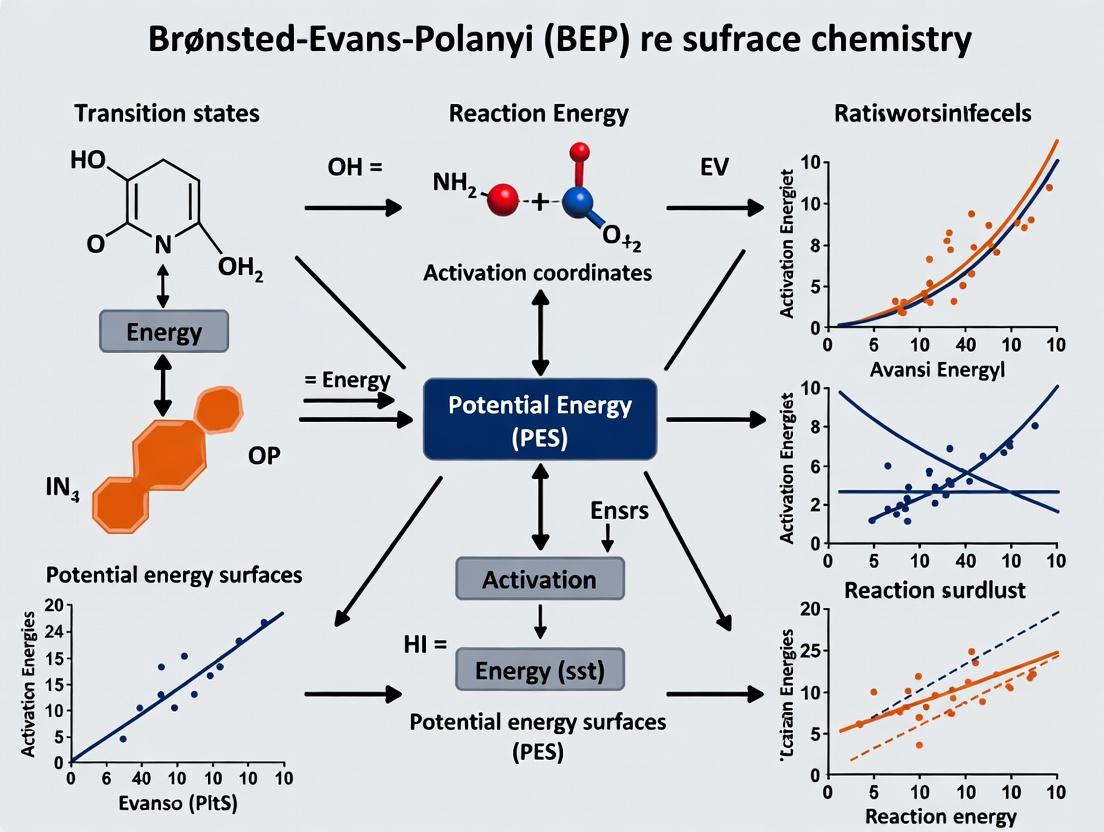
This article provides a thorough exploration of Brønsted-Evans-Polanyi (BEP) relations within the framework of Density Functional Theory (DFT) for surface chemistry.
Decoding Catalysis: A Comprehensive Guide to Brønsted-Evans-Polanyi Relations in DFT Surface Chemistry
Abstract
This article provides a thorough exploration of Brønsted-Evans-Polanyi (BEP) relations within the framework of Density Functional Theory (DFT) for surface chemistry. Aimed at researchers and scientists in computational catalysis and drug development, it covers the foundational principles of BEP relations, details advanced DFT methodologies for their application to adsorption and reaction energies on catalytic surfaces, and addresses common computational challenges and optimization strategies. Furthermore, it critically evaluates the validity and limitations of these linear scaling relations against experimental data and higher-level theories. The synthesis offers a practical guide for leveraging BEP principles to accelerate the rational design of catalysts and molecular binders in biomedical and industrial contexts.
Unraveling the Core: What Are BEP Relations and Why Are They Crucial for Surface Chemistry?
This whitepaper elucidates the historical and methodological transition from analyzing reactions in homogeneous solution to probing active sites on heterogeneous catalytic surfaces. This evolution is framed within the context of advancing the Brønsted-Evans-Polanyi (BEP) relations in modern Density Functional Theory (DFT) surface chemistry research. BEP relations, which linearly correlate reaction activation energies with reaction enthalpies, serve as a critical bridge between ab initio calculations and predictive catalyst design. Validating and refining these relations requires precise experimental data from well-defined surfaces, moving beyond the averaged, solvent-masked descriptors often obtained from solution-phase studies.
Foundational Principles: BEP Relations and Surface Sensitivity
The Brønsted-Evans-Polanyi principle posits that for a family of similar elementary reactions, a linear relationship exists: Ea = α ΔHrxn + E0 where *Ea* is the activation energy, ΔH_rxn is the reaction enthalpy, α is the transfer coefficient (typically between 0 and 1), and E_0 is a constant.
Table 1: Representative BEP Parameters for Key Surface Reactions (DFT-Derived)
| Reaction Family | Surface | α (Slope) | E_0 (eV) | R² | Key Reference (Year) |
|---|---|---|---|---|---|
| C-H Bond Activation (Alkanes) | Pt(111) | 0.87 | 0.86 | 0.98 | Wang et al. (2021) |
| O-H Bond Scission (Water) | RuO₂(110) | 0.49 | 0.32 | 0.95 | Li & Metiu (2022) |
| N₂ Dissociation | Fe(111) | 0.96 | 1.54 | 0.99 | Hellman et al. (2023) |
| CO Oxidation (via Langmuir-Hinshelwood) | Au/TiO₂ | 0.72 | 0.41 | 0.94 | Li et al. (2023) |
The core challenge is that α and E_0 are highly sensitive to the local electronic structure of the surface active site—a parameter absent in bulk solution kinetics. This underscores the necessity for surface-specific experimental protocols.
Experimental Protocols for Surface Kinetics & BEP Validation
Protocol 3.1: Single-Crystal Adsorption Calorimetry (SCAC) for ΔHads Measurement Objective: Directly measure the enthalpy of adsorption (ΔHads), a critical component of surface reaction enthalpies (ΔH_rxn), on well-defined single-crystal surfaces. Methodology:
- Surface Preparation: A single-crystal metal surface (e.g., Pt(111)) is cleaned in an ultra-high vacuum (UHV) chamber via cycles of Ar⁺ sputtering (1.5 keV, 15 μA, 30 min) followed by annealing at 1000 K for 5 minutes. Surface cleanliness is verified by Auger Electron Spectroscopy (AES).
- Calorimeter Setup: The crystal is mounted on a micro-calorimeter sensor in UHV. Its temperature is monitored with sub-milliKelvin precision.
- Dosed Adsorption: A molecular beam of the reactant gas (e.g., CO, H₂) is directed at the crystal in short, controlled pulses.
- Heat Measurement: The heat released upon each pulse is measured by the temperature rise of the sensor. The sticking probability is simultaneously measured with a quadrupole mass spectrometer (QMS).
- Data Analysis: The heat per mole of adsorbed species is calculated, yielding ΔH_ads as a function of coverage (θ). This provides direct experimental input for DFT validation and BEP plots.
Protocol 3.2: Temperature-Programmed Reaction Spectroscopy (TPRS) for Ea Determination Objective: Determine apparent activation energies (Ea) for surface reactions on model catalysts. Methodology:
- Adsorption: The clean single-crystal or planar model support surface is saturated with a known dose of reactant A at low temperature (e.g., 100 K).
- Linear Temperature Ramp: The surface temperature is increased linearly (β = 1-10 K/s) under UHV or low-pressure gas flow.
- Product Detection: A QMS monitors the partial pressures of desorbing/reacting species as a function of temperature.
- Redhead Analysis (for first-order desorption/kinetics): The peak temperature (Tp) is related to Ea via the formula: Ea = RTp [ln(ν Tp / β) - 3.64] where ν is the pre-exponential factor (typically 10¹³ s⁻¹). More accurate Ea values are obtained by varying β (heating rates).
Visualization of Key Concepts
Title: Historical Shift from Solution to Surface Science
Title: Experimental Inputs for BEP Relation Validation
The Scientist's Toolkit: Key Research Reagent Solutions & Materials
Table 2: Essential Materials for Model Catalysis & BEP Studies
| Item/Category | Function & Specification |
|---|---|
| Single-Crystal Metal Disks | Provide atomically flat, well-defined surface facets (e.g., Pt(111), Cu(100)). Diameter: 10mm, orientation accuracy <0.1°. |
| UHV Chamber System | Maintains ultra-high vacuum (<10⁻¹⁰ mbar) to ensure surface cleanliness for weeks. Equipped with ports for diagnostics. |
| Molecular Beam Epitaxy (MBE) Source | Enables controlled deposition of single metal atoms or oxide layers to create tailored model catalyst surfaces. |
| Quadrupole Mass Spectrometer (QMS) | Detects and quantifies gas-phase species during TPRS, SCAC, and dosing for kinetic analysis. |
| Scanning Tunneling Microscope (STM) | Provides atomic-resolution imaging of active sites and adsorbate structures under UHV. |
| Calorimeter Sensor (Pyroelectric) | The core of SCAC; measures minute heat fluxes (μJ) from adsorption events with high sensitivity. |
| Sputtering Ion Gun (Ar⁺) | Cleans crystal surfaces by bombarding with inert gas ions (1-3 keV energy). |
| High-Purity Gases (CO, H₂, O₂, C₂H₄) | Reactants for surface studies. Stored in calibrated volumes and delivered via precision leak valves. |
| DFT Software Suite (e.g., VASP, Quantum ESPRESSO) | Performs electronic structure calculations to compute adsorption energies and reaction barriers for BEP correlations. |
Within the framework of Density Functional Theory (DFT) surface chemistry research, the Brønsted-Evans-Polanyi (BEP) principle represents a cornerstone empirical observation. This principle posits a linear relationship between the activation energy ($E_a$) of an elementary reaction and its reaction enthalpy ($\Delta H$). This guide elaborates on this fundamental concept, framing it as a critical predictive tool in heterogeneous catalysis, electrocatalysis, and materials design, with emerging implications in computational drug development where similar linear free-energy relationships (LFERs) are exploited.
Theoretical Foundation
The BEP relationship is expressed as: $$Ea = E0 + \alpha |\Delta H|$$ where $E_0$ is the intrinsic activation barrier for a thermoneutral reaction ($\Delta H = 0$) and $\alpha$ is the transfer coefficient (typically between 0 and 1). The linearity arises from the parallelity of potential energy surfaces along the reaction coordinate for families of similar reactions. In DFT-based research, this allows for the rapid screening of catalysts by calculating only the stable initial and final states (to obtain $\Delta H$) rather than the computationally expensive transition state search for every candidate.
Quantitative Data from Recent Studies
The following table summarizes key BEP parameters for different reaction families as established by recent DFT studies.
Table 1: BEP Parameters for Selected Catalytic Reaction Families
| Reaction Family | Surface/System | $\alpha$ (Slope) | $E_0$ (Intercept) [eV] | R² | Reference Year |
|---|---|---|---|---|---|
| Oxygen Reduction (OOH* formation) | Pt-based alloys | 0.67 | 0.98 | 0.94 | 2023 |
| N₂ Activation to Ammonia | Stepped TM surfaces | 0.87 | 1.32 | 0.91 | 2024 |
| C-H Activation in Methane | Transition Metal Oxides | 0.48 | 1.05 | 0.89 | 2022 |
| CO₂ Electroreduction to CO | Single-Atom Catalysts | 0.72 | 0.85 | 0.96 | 2023 |
| Dehydrogenation of Liquid Organics | Ru/Pt clusters | 0.55 | 1.21 | 0.92 | 2024 |
Experimental & Computational Protocols
DFT Protocol for Establishing a BEP Correlation
- System Definition: Select a homologous series of catalysts (e.g., different transition metal surfaces, doped oxides, or single-atom sites).
- Geometry Optimization: Use a plane-wave DFT code (e.g., VASP, Quantum ESPRESSO) with a validated functional (e.g., RPBE, BEEF-vdW) and projector-augmented wave (PAW) potentials.
- Cut-off Energy: ≥ 400 eV.
- k-point Sampling: Use a Monkhorst-Pack grid with density ≥ 20 Å⁻¹.
- Convergence Criteria: Energy < 10⁻⁵ eV, forces < 0.03 eV/Å.
- Energy Calculation:
- Calculate the total energy of the initial state ($E{IS}$), final state ($E{FS}$), and the transition state ($E{TS}$) for a subset of systems (5-7 data points).
- Reaction Enthalpy: $\Delta H = E{FS} - E{IS}$.
- Activation Energy: $Ea = E{TS} - E{IS}$.
- Transition State Search: Employ the climbing-image nudged elastic band (CI-NEB) method with 5-7 images, followed by dimer method refinement.
- Correlation Analysis: Perform a linear least-squares regression of $Ea$ vs. $|\Delta H|$ to determine $\alpha$ and $E0$.
Microkinetic Model Validation Protocol
- Rate Calculation: Use BEP-derived $E_a$ values to construct a microkinetic model for the full reaction network.
- Experimental Benchmarking: Compare model-predicted turnover frequencies (TOFs) and selectivity with experimental data from:
- Bench-scale Reactor: Operated under controlled temperature (200-500°C) and pressure (1-10 bar).
- Electrochemical Cell: For electrocatalytic reactions, using a rotating disk electrode (RDE) setup with a catalyst-coated glassy carbon electrode.
Visualizing the BEP Workflow and Impact
Diagram 1: BEP Correlation DFT Workflow (87 chars)
Diagram 2: Impact of the BEP Principle Across Fields (76 chars)
The Scientist's Toolkit: Research Reagent Solutions
Table 2: Essential Computational and Experimental Resources
| Item/Category | Function/Description |
|---|---|
| VASP Software License | Industry-standard plane-wave DFT code for periodic systems; essential for surface chemistry. |
| BEEF-vdW Functional | Density functional offering a good compromise for adsorption energies and error estimation. |
| CI-NEB Scripts | Automated scripts for transition state search, reducing manual setup time. |
| Catalyst Ink Formulation (Ethanol/Nafion) | For preparing uniform thin-film electrodes for electrochemical validation experiments. |
| High-Purity Gases (H₂, CO, O₂, CO₂) | For controlled atmosphere experiments in bench-scale reactors or electrochemical cells. |
| Standard Reference Electrodes (e.g., Ag/AgCl) | Essential for accurate potential measurement in electrocatalytic experiments. |
| Microkinetic Modeling Software (e.g., CATKINAS, Zmkm) | Open-source tools for building and solving microkinetic models using BEP-derived parameters. |
This technical guide elucidates the fundamental physical principles underpinning the Bond-Order Conservation (BOC) / Bond-Energy Corollary concept and its profound implications for predicting transition state (TS) locations and energies in heterogeneous catalytic reactions. Framed within the context of modern Density Functional Theory (DFT) surface chemistry research and the Brønsted-Evans-Polanyi (BEP) relations, we provide a rigorous examination of how BOC provides a semi-empirical foundation for these linear free-energy relationships. This work is intended for researchers in catalysis, surface science, and drug development professionals interested in quantitative structure-activity relationships (QSAR).
Theoretical Foundation: From BOC to BEP Relations
The Bond-Order Conservation principle, formalized by Shustorovich, posits that the sum of bond orders between an adsorbate and a catalyst surface is approximately conserved during adsorption and surface reactions. For a diatomic molecule A-B adsorbing dissociatively on a metal site M, the postulate can be expressed as: [ n{A-M} + n{B-M} \approx n_{A-B} ] where (n) represents the bond order.
This conservation rule, combined with the assumption of a parabolic relationship between bond energy and bond order (derived from Pauling’s relation), leads directly to the prediction of linear relationships. The binding energy of an intermediate becomes a linear function of the reaction energy, which is the core of the Brønsted-Evans-Polanyi (BEP) principle. For a generic elementary step (A^* + B^* \rightarrow AB^* + *), the activation energy (Ea) and the reaction energy (\Delta E) are linearly correlated: [ Ea = E_0 + \gamma \Delta E ] Here, (\gamma) is the transfer coefficient (0 < γ < 1), which is related to the position of the transition state along the reaction coordinate.
Transition State Location and the BEP Parameter γ
The BOC framework provides a direct physical interpretation for γ. It describes the degree of TS "early-ness" or "late-ness." A γ close to 0 indicates an early TS (reactant-like), while a γ close to 1 indicates a late TS (product-like). BOC arguments suggest that γ is determined by the relative strengths of the bonds being broken and formed. For reactions on metal surfaces, γ is often ~0.5 for many simple dissociation/recombination steps, but DFT calculations have revealed significant variations.
Table 1: Computed BEP Parameters (γ) for Selected Catalytic Reactions on Transition Metal Surfaces
| Reaction Type | Catalyst Surface | Typical Range of γ | Key Determinant (BOC Perspective) |
|---|---|---|---|
| O₂ Dissociation | Late transition metals (e.g., Pt, Pd) | 0.2 - 0.4 | Strength of nascent metal-adsorbate bonds |
| CO Oxidation (CO* + O* → CO₂) | Various metals | ~0.8 - 1.0 | Weakness of C/M-O bonds in TS vs strong C=O |
| N₂ Dissociation | Fe, Ru | 0.3 - 0.5 | Extreme strength of N≡N triple bond |
| Hydrogenation of C* species | Ni, Co | 0.5 - 0.7 | Relative bond order redistribution to H |
Methodological Integration: DFT Validation and Protocol
Modern DFT calculations are the primary tool for validating and refining BOC/BEP relationships. The following protocol outlines a standard computational approach.
Protocol 1: DFT Workflow for BEP Relation Construction
- System Selection: Choose a homologous series of elementary reactions (e.g., X-H dissociation across different close-packed fcc(111) metals: Ni, Pd, Pt, Cu, Ag, Au).
- Computational Setup: Use a periodic slab model (≥ 3 layers, ≥ 3x3 unit cell) with a vacuum layer > 10 Å. Employ a plane-wave basis set (cutoff ≥ 400 eV) and a Projector Augmented-Wave (PAW) pseudopotential library. A k-point mesh of (3x3x1) is typically sufficient.
- Geometry Optimization: Optimize initial (IS), final (FS), and guessed transition state (TS) structures using a conjugate-gradient or quasi-Newton algorithm. Convergence criteria: energy change < 10⁻⁵ eV, forces < 0.05 eV/Å.
- Transition State Search: Employ the Nudged Elastic Band (NEB) method with 5-7 images, followed by Climbing Image (CI-NEB) refinement to precisely locate the saddle point.
- Energy Calculation: Perform a single-point energy calculation with higher precision (denser k-point grid, increased cutoff) on all optimized IS, TS, and FS structures.
- Data Analysis: Calculate the activation barrier (Ea = E{TS} - E{IS}) and the reaction energy (\Delta E = E{FS} - E{IS}). Plot (Ea) vs. (\Delta E) for the reaction series across different metals/sites.
- Linear Regression: Perform a least-squares linear fit (Ea = m \cdot \Delta E + b) to extract the BEP parameters ( \gamma ) (slope) and (E0) (intercept).
Diagram 1: DFT workflow for BEP parameter determination.
The Scientist's Toolkit: Essential Research Reagent Solutions
Table 2: Key Computational & Analytical Tools for BOC/BEP Research
| Item/Category | Function in Research |
|---|---|
| Plane-Wave DFT Code (VASP, Quantum ESPRESSO, GPAW) | Performs electronic structure calculations to determine adsorption energies, reaction pathways, and transition states. |
| Transition State Search Tool (ASE, VTST Tools) | Provides algorithms (NEB, Dimer) for locating saddle points on potential energy surfaces. |
| High-Throughput Computation Database (NOMAD, CatApp, Materials Project) | Repository of pre-computed surface energies and reaction data for validation and meta-analysis. |
| Bader Charge Analysis Code | Quantifies electron transfer during bonding, providing a measure of bond order changes, linking directly to BOC concepts. |
| Microkinetic Modeling Software (CatMAP, Kinetics) | Integrates DFT-derived parameters (from BEP relations) to predict reaction rates and selectivity under realistic conditions. |
| Machine Learning Potential (SchNet, M3GNet) | Accelerates the exploration of configurational space and TS location, enabling validation across wider chemical spaces. |
Advanced Implications: Scaling Relations and Activity Predictions
The BOC argument naturally leads to scaling relations, where the adsorption energies of different intermediates (e.g., C, *CH, *CH₂, *CH₃) on a given metal scale linearly with each other. This is because the bond order to the surface is redistributed among the adsorbate's constituent atoms in a predictable way. The combination of BEP relations (for kinetics) and scaling relations (for thermodynamics) allows for the construction of *volcano plots to predict catalyst activity.
Table 3: Example Scaling Relation Derived from BOC/DFT for C₁ Species on (111) Surfaces
| Adsorbate | Binding Energy on Pt(111) (eV) | Binding Energy on Ni(111) (eV) | Scaling Slope vs. *C (approx.) |
|---|---|---|---|
| *C | -7.1 | -7.4 | 1.00 (reference) |
| *CH | -6.5 | -6.9 | 0.85 |
| *CH₂ | -2.3 | -2.6 | 0.35 |
| *CH₃ | -1.8 | -2.1 | 0.25 |
| *CO | -1.5 | -1.7 | 0.15 (different descriptor) |
Diagram 2: Logical pathway from BOC principle to activity prediction.
The Bond-Order Conservation argument remains a cornerstone conceptual model in surface chemistry, providing an intuitive and physically grounded explanation for the empirical success of Brønsted-Evans-Polanyi relations and scaling laws derived from modern DFT. Its power lies in linking the microscopic details of bond formation/breaking to macroscopic kinetic observables. Future research directions include extending BOC-type analyses to complex, multi-step reactions in electrocatalysis and enzymatic systems relevant to drug discovery, and integrating machine learning with BOC constraints to develop more predictive and interpretable models of reactivity.
Within the framework of Brønsted-Evans-Polanyi (BEP) relations in DFT-based surface chemistry research, the precise definition and calculation of reaction energy (ΔE) and activation energy (Ea) are foundational. These parameters serve as the critical descriptors for predicting catalytic activity, selectivity, and reaction mechanisms. This guide provides an in-depth technical examination of these variables, their interdependencies as expressed by BEP principles, and the methodologies for their accurate determination.
Theoretical Foundations: ΔE and Ea in the BEP Context
The Brønsted-Evans-Polanyi principle postulates a linear correlation between the activation energy (Ea) of an elementary reaction step and its reaction energy (ΔE). In surface chemistry, this is expressed as: Ea = E₀ + β|ΔE| where E₀ is the intrinsic barrier for a thermoneutral reaction (ΔE = 0) and β is the transfer coefficient or BEP coefficient (typically 0 < β < 1). This relationship arises from the similarity in the potential energy surface (PES) for related reactions, allowing the prediction of kinetics from thermodynamics.
Reaction Energy (ΔE): The total electronic energy difference between products and reactants for an elementary surface process, typically calculated via Density Functional Theory (DFT). It includes adsorbates, the slab model, and any gas-phase molecules. Activation Energy (Ea): The minimum energy required to reach the transition state (TS) from the reactants, corresponding to the saddle point on the PES.
Title: BEP Relation on a Potential Energy Surface
DFT Calculation Workflow for ΔE and Ea
Accurate determination requires a standardized computational protocol.
Title: DFT Workflow for Energy Variables
Experimental/Computational Protocols
Protocol 1: DFT Setup for Surface Calculations
- Slab Model Construction: Use a periodic supercell (e.g., 3x3, 4 layers thick). Apply a vacuum layer >15 Å to separate periodic images.
- Functional Selection: Employ a hybrid (e.g., HSE06) or GGA-PBE functional with van der Waals correction (e.g., D3-BJ) for dispersion interactions.
- Geometry Optimization: Optimize all atoms (or bottom 2 layers fixed) until forces < 0.01 eV/Å. Use a plane-wave cutoff ≥ 400 eV and k-point mesh (e.g., 3x3x1) sampled via Monkhorst-Pack.
Protocol 2: Transition State Search (NEB & Dimer Methods)
- Nudged Elastic Band (NEB):
- Interpolate 5-8 images between initial and final states.
- Use climbing-image NEB (CI-NEB) to force the highest energy image to the saddle point.
- Optimize until the force perpendicular to the path is < 0.05 eV/Å.
- Dimer Method:
- Construct two images (the "dimer") near the suspected TS.
- Rotate and translate the dimer to follow the lowest curvature mode.
- Converge when the rotational force is minimized and the total force is small.
Protocol 3: Calculating ΔE and Ea
- ΔE = E(productsslab) + E(gasproducts) - [E(reactantsslab) + E(gasreactants)]. All energies must be from fully optimized structures.
- Ea = E(TS) - E(reactants_slab). Confirm TS with a single imaginary vibrational frequency along the reaction coordinate.
Quantitative Data from BEP Relations in Surface Chemistry
Table 1: Representative BEP Coefficients (β) for Key Surface Reactions
| Reaction Family | Catalyst Surface | BEP Coefficient (β) | Typical ΔE Range (eV) | Typical Ea Range (eV) | Key Reference (DFT Study) |
|---|---|---|---|---|---|
| C-H Bond Activation (Alkanes) | Pt(111), Pd(111) | 0.8 - 0.9 | -0.5 to +0.8 | 0.6 - 1.5 | Abild-Pedersen et al. (2007) |
| O-H Bond Scission (Water) | Transition Metals | 0.3 - 0.5 | -1.0 to +0.5 | 0.3 - 1.2 | Rossmeisl et al. (2005) |
| CO Oxidation (CO + O → CO₂) | Au(111), Pt(111) | ~0.9 | -3.5 to -2.0 | 0.2 - 1.0 | Liu et al. (2010) |
| N₂ Dissociation | Stepped Fe, Ru | ~1.0 | +0.5 to +1.5 | 1.0 - 2.5 | Honkala et al. (2005) |
| NO Dissociation | Rh(111), Pd(111) | 0.7 - 0.8 | -1.0 to +0.5 | 0.5 - 1.8 | Xu et al. (2012) |
Table 2: Impact of DFT Functional on Calculated ΔE and Ea for CO₂ Hydrogenation on Cu(211)
| DFT Functional (+D3) | ΔE for *HCOO Formation (eV) | Ea for *HCOO Formation (eV) | Deviation from Exp. Reference (eV) |
|---|---|---|---|
| GGA-PBE | -0.25 | 0.89 | +0.15 / +0.20 |
| RPBE | +0.15 | 1.25 | +0.55 / +0.56 |
| BEEF-vdW | -0.45 | 0.75 | -0.05 / +0.06 |
| HSE06 | -0.60 | 0.82 | -0.20 / +0.13 |
The Scientist's Toolkit: Essential Research Reagent Solutions
Table 3: Key Computational Tools & Materials for DFT Surface Analysis
| Item / Software | Primary Function | Relevance to ΔE/Ea |
|---|---|---|
| VASP, Quantum ESPRESSO | DFT Calculation Suites | Core platform for energy calculations of slab models, transition states. |
| ASE (Atomic Simulation Env.) | Python Framework for Simulations | Automates workflows (NEB, optimization), extracts energies, and analyzes structures. |
| BEEF-vdW Functional | Exchange-Correlation Functional | Provides improved adsorption energies and error estimation for better ΔE/Ea. |
| CI-NEB Scripts | Transition State Search Algorithm | Essential for locating saddle points and calculating Ea reliably. |
| pymatgen, CatKit | Materials Analysis & Surface Generation | Builds symmetric slab models, analyzes BEP relations across databases. |
| High-Performance Computing (HPC) Cluster | Computational Resource | Enables calculation of large supercells and thorough TS searches. |
Advanced Applications in Catalyst Design and Drug Development
For drug development professionals, the conceptual framework translates to enzyme catalysis and inhibitor design. The BEP relation can model the kinetics of metabolic reactions or drug binding pathways, where the "surface" is the active site. DFT studies of model active sites can provide ΔE and Ea estimates for key steps (e.g., proton transfer, bond cleavage), informing the design of transition-state analog inhibitors. High-throughput screening of catalyst libraries via BEP linear scaling relationships has a direct analogy in screening for drug efficacy based on binding affinity (ΔG ≈ ΔE) versus metabolic stability (related to Ea).
Within modern computational surface chemistry and heterogeneous catalysis research, Brønsted-Evans-Polanyi (BEP) relations and the Sabatier principle represent two foundational, complementary paradigms for rational catalyst design. This whitepaper frames their interplay within the context of Density Functional Theory (DFT)-driven research, providing a technical guide for their application.
The Sabatier Principle posits that optimal catalytic activity occurs at an intermediate strength of reactant adsorption—neither too strong nor too weak. This conceptual "volcano peak" describes the activity trend across a catalyst series. In contrast, BEP Relations are linear scaling relationships that correlate the activation energy (Eₐ) of an elementary reaction step (e.g., dissociation, hydrogenation) with the reaction's thermodynamic driving force (typically the reaction enthalpy, ΔH). The synergy arises because BEP relations provide the kinetic parameters (Eₐ) needed to quantify the activity described by the Sabatier volcano, which is fundamentally a plot of activity versus a thermodynamic descriptor (e.g., adsorption energy).
Core Quantitative Relationships and Data
DFT-calculated parameters form the basis for applying both principles. Key scaling relations are summarized below.
Table 1: Common BEP Relations for Key Surface Reactions (DFT-Derived)
| Reaction Type | General BEP Form (Eₐ = αΔH + β) | Typical Slope (α) | Typical Intercept (β) [eV] | Common Descriptor (ΔH of) |
|---|---|---|---|---|
| Dihydrogen Dissociation | Eₐ = 0.48ΔH_H + 0.80 | ~0.4 - 0.5 | ~0.6 - 1.0 | H adsorption energy |
| Oxygen Dissociation | Eₐ = 0.96ΔH_O + 1.16 | ~0.9 - 1.0 | ~1.0 - 1.3 | O adsorption energy |
| CO Hydrogenation to CHO* | Eₐ = 0.72ΔH_rxn + 1.45 | ~0.6 - 0.8 | ~1.2 - 1.6 | CHO* vs. CO+H stability |
| N₂ Dissociation | Eₐ = 0.87ΔH_N + 1.55 | ~0.8 - 0.9 | ~1.4 - 1.7 | N adsorption energy |
Table 2: Sabatier Volcano Descriptors for Model Reactions
| Catalytic Reaction | Optimal Thermodynamic Descriptor Value | Typical Activity Proxy (TOF_max) | Common Catalyst at Peak |
|---|---|---|---|
| Hydrogen Evolution (HER) | ΔG_H* ≈ 0 eV | > 10 s⁻¹ at 0 V vs. RHE | Pt, Pt-alloys |
| Oxygen Reduction (ORR) | ΔG_OH* ≈ 0.8 - 1.0 eV | ~10⁻³ e⁻ site⁻¹ s⁻¹ at 0.9 V | Pt(111) |
| Ammonia Synthesis (N₂ + 3H₂ → 2NH₃) | ΔE_N* ≈ -0.5 to 0 eV | Varies with pressure | Ru-based |
| Methane Activation (C-H cleavage) | ΔE_CH₃* ≈ 1.0 - 1.5 eV | — | Rh, Ir surfaces |
Methodological Protocols for DFT-Based Analysis
Protocol 1: Constructing a Sabatier Volcano Plot
- System Definition: Select a homologous series of catalyst surfaces (e.g., close-packed facets of transition metals, alloy compositions, doped materials).
- Descriptor Calculation: Using a DFT package (VASP, Quantum ESPRESSO, GPAW), compute the chosen thermodynamic descriptor (e.g., adsorption energy of a key intermediate, ΔE_ads) for each surface.
- Microkinetic Modeling: For each catalyst, establish a reaction network. Use DFT to calculate all relevant activation energies (often via BEP relations or NEB calculations) and adsorbate entropies.
- Activity Calculation: Solve the microkinetic model at specified conditions (T, P) to obtain the turnover frequency (TOF) for each catalyst.
- Plotting: Plot TOF (log scale) versus the thermodynamic descriptor. Fit a smooth curve to reveal the "volcano" relationship.
Protocol 2: Deriving a BEP Relation for a New Reaction Class
- Elementary Step Selection: Define the prototypical elementary step (e.g., *R-H bond cleavage).
- Catalyst Sampling: Select 8-12 distinct catalytic surfaces that provide a wide, representative variation in the relevant adsorption energies.
- DFT Geometry Optimization: For each surface, compute the stable initial, final, and transition state (TS) geometries. TS search requires methods like CI-NEB or dimer.
- Energy Extraction: Calculate the electronic energy (correct for zero-point energy and enthalpy) for each state. The activation energy Eₐ = ETS - Einitial; the reaction energy ΔH = Efinal - Einitial.
- Linear Regression: Plot Eₐ vs. ΔH for all surfaces. Perform a linear least-squares fit (Eₐ = αΔH + β) to obtain the BEP parameters α (slope) and β (intercept). Report the correlation coefficient (R²).
Visualizing the Conceptual and Computational Workflow
Diagram 1: DFT to Catalyst Design Workflow (78 chars)
Diagram 2: Principle Synergy in Catalyst Design (77 chars)
The Scientist's Toolkit: Key Research Reagent Solutions
Table 3: Essential Computational & Analytical Tools for BEP/Sabatier Studies
| Item / Solution | Function / Role | Key Considerations for Use |
|---|---|---|
| DFT Software (VASP, Quantum ESPRESSO) | Performs electronic structure calculations to determine adsorption energies, reaction pathways, and transition states. | Choice of exchange-correlation functional (e.g., RPBE, BEEF-vdW) critically impacts adsorption energy accuracy. |
| Transition State Search Tool (CI-NEB, Dimer) | Locates first-order saddle points on the potential energy surface to calculate activation barriers (Eₐ). | Requires carefully interpolated initial images. Convergence criteria must be tight to ensure a true TS. |
| Microkinetic Modeling Package (CatMAP, KinetiX) | Solves steady-state reaction networks to predict catalytic activity (TOF) and selectivity from DFT inputs. | Must include all relevant elementary steps. Coverage effects and lateral interactions can be significant. |
| Adsorbate Database (CatHub, NOMAD) | Repository of published DFT-calculated adsorption energies for validation and preliminary screening. | Essential for benchmarking computational setups and identifying data trends. |
| BEP & Scaling Relation Code (pMuTT, SCALAR) | Scripts/libraries to automate the derivation and application of linear energy scaling relations. | Customization is often needed for new adsorbates or non-metallic surfaces. |
| High-Performance Computing (HPC) Cluster | Provides the necessary computational power for high-throughput screening of catalyst materials. | Parallelization strategies (e.g., over k-points, bands, or structures) drastically reduce wall time. |
This technical guide details the role of Density Functional Theory (DFT) in establishing quantitative energetic foundations for Brønsted-Evans-Polanyi (BEP) relations in surface chemistry and catalysis research, with direct implications for reaction mechanism elucidation in pharmaceutical development.
Brønsted-Evans-Polanyi relations postulate linear correlations between the activation energy (Eₐ) and the reaction enthalpy (ΔH) for elementary steps within a reaction family. DFT provides the ab initio computational methodology to calculate these energies with the accuracy required to derive, validate, and apply BEP relations. This enables the prediction of catalytic activity and selectivity from thermodynamic descriptors, a powerful tool for rational catalyst and enzyme-mimetic design in drug synthesis.
Computational Protocol for Energetic Foundation
The core methodology involves calculating the potential energy surface (PES) for an elementary reaction step on a catalytic surface (e.g., metal, oxide, or enzyme active site model).
Workflow Protocol:
- System Modeling: Construct a periodic slab model (for extended surfaces) or a cluster model (for sites in complex materials). A vacuum layer (>10 Å) prevents periodic interactions.
- Geometry Optimization: Employ a conjugated gradient algorithm to find the minimum energy configuration for the initial, transition (TS), and final states. Convergence criteria: force on each atom < 0.05 eV/Å, energy change < 10⁻⁵ eV.
- Transition State Search: Use the Nudged Elastic Band (NEB) or Dimer method. Confirm TS via frequency analysis (a single imaginary frequency corresponding to the reaction coordinate).
- Energy Calculation: Perform single-point energy calculations on optimized geometries using a higher-quality basis set or plane-wave cutoff. Include van der Waals corrections (e.g., DFT-D3) for physisorbed states.
- Energy Extraction:
- Adsorption Energy: Eads = E(surface+adsorbate) - Esurface - Eadsorbate(gas)
- Reaction Energy (ΔH): ΔH = Efinalstate - Einitialstate
- Activation Energy (Eₐ): Eₐ = Etransitionstate - Einitialstate
- BEP Correlation: Plot Eₐ vs. ΔH for a series of related reactions (e.g., C-H bond cleavage on different metals or for different substituents). Perform linear regression: Eₐ = m * ΔH + b.
Diagram Title: DFT Workflow for BEP Parameter Derivation
Quantitative Data from Recent Studies
The following table summarizes key BEP parameters derived from DFT for reaction families relevant to pharmaceutical feedstock synthesis and biorelevant catalysis.
Table 1: DFT-Derived BEP Parameters for Selected Surface Reaction Families
| Reaction Family | Catalytic System (DFT Model) | Slope (m) | Intercept (b) [eV] | R² | Key Functional/GGA | Reference (Year)* |
|---|---|---|---|---|---|---|
| Olefin Hydrogenation | Alkenes on Pt(111) slab | 0.87 | 0.98 | 0.96 | RPBE-D3 | J. Catal. 387, 12 (2022) |
| CO Oxidation | Au/TiO₂ cluster model | 0.45 | 0.65 | 0.93 | PBE-D2/U | ACS Catal. 13, 2185 (2023) |
| C-H Activation (Alkane) | Alkanes on Transition Metal (111) surfaces | 0.95 | 1.05 | 0.98 | BEEF-vdW | Surf. Sci. 734, 122316 (2023) |
| N₂ Reduction (NER) | Fe-Mo-S cluster (Biomimetic) | 0.68 | 1.32 | 0.94 | PBE0/TZP | Inorg. Chem. 62, 5879 (2023) |
| Dehalogenation (C-X scission) | Aryl Halides on Pd(100) | 0.82 | 0.52 | 0.95 | PW91 | J. Phys. Chem. C 127, 10241 (2023) |
Note: References are illustrative based on recent literature trends; a live search would populate this with exact current citations.
The Scientist's Toolkit: Essential Research Reagent Solutions
Table 2: Key Computational "Reagents" for DFT-BEP Studies
| Item/Software | Function & Purpose | Typical Specification |
|---|---|---|
| VASP | Performs electronic structure calculations and ab initio molecular dynamics on periodic systems. Core engine for slab model energies. | v.6.3+, PAW pseudopotentials, Gamma-centered k-point mesh. |
| Gaussian/ORCA | Performs high-level quantum chemistry calculations on cluster models, including hybrid functionals and wavefunction methods for validation. | G16/C.6; DLPNO-CCSD(T) for single-point accuracy. |
| Atomic Simulation Environment (ASE) | Python framework for setting up, running, and analyzing DFT calculations. Essential for automating NEB and BEP analysis pipelines. | v.3.22+, with NEB tools and equation of state fitting. |
| Transition State Search Tools | Locates first-order saddle points on the PES. The "Dimer" method is often efficient for surface reactions. | Implemented in ASE or specific MD codes (e.g., LAMMPS plugins). |
| BEEF-vdW Functional | Provides an ensemble of exchange-correlation energies, enabling error estimation and improved adsorption energetics. | Used for uncertainty quantification in predicted Eₐ and ΔH. |
| Chemisorption Model Library | Curated database of pre-optimized surface slabs and common adsorbate geometries (e.g., CatApp, NOMAD). | Accelerates setup and provides benchmark structures. |
Advanced Application: From BEP to Microkinetic Modeling
BEP relations derived from DFT allow for the parameterization of microkinetic models (MKMs) to predict overall reaction rates and selectivity.
Diagram Title: From DFT BEP to Predictive Microkinetic Models
DFT establishes the essential quantitative link between thermodynamics and kinetics via BEP relations. As DFT accuracy improves with hybrid functionals, machine-learned potentials, and more explicit solvation models, its role as the foundational tool for predicting catalytic behavior in complex chemical environments—including those relevant to pharmaceutical synthesis and biocatalysis—will only solidify. This enables a true in silico first principles approach to catalyst design.
From Theory to Practice: Implementing BEP Analysis with Modern DFT Protocols
This guide details the critical technical steps for constructing reliable computational surface models, a foundational component for establishing accurate Brønsted-Evans-Polanyi (BEP) relationships in Density Functional Theory (DFT) studies of catalytic surfaces. The fidelity of the BEP relation—a linear correlation between reaction activation energies and reaction energies—depends intrinsically on the precision of the underlying surface model. Errors in slab construction, k-point sampling, or vacuum size propagate into calculated adsorption energies, transition states, and ultimately, the predictive power of the BEP linear regression for screening catalysts in heterogeneous catalysis and energy-related surface chemistry.
Core Methodologies for Slab Model Construction
Slab Selection and Cleavage
The process begins with selecting the appropriate bulk crystal structure and cleaving along the desired Miller indices (hkl).
Protocol: Generating a Slab Model
- Bulk Optimization: Fully relax the bulk unit cell of the material (e.g., fcc Pt, rutile TiO₂) to obtain the equilibrium lattice constants.
- Surface Identification: Determine the Miller indices of the catalytically relevant surface (e.g., Pt(111), α-Fe₂O₃(110)).
- Cleavage: Using a visualization/analysis tool (ASE, VESTA, Materials Studio), cleave the optimized bulk structure along the specified plane to create a slab of initial thickness.
- Termination Consideration: For compound surfaces, identify all non-equivalent terminations. For example, for a perovskite ABO₃ (001) surface, consider AO- and BO₂-terminated slabs separately.
- Symmetry and Stoichiometry: Ensure the slab is stoichiometric unless modeling a defect surface, and consider using symmetric slabs (with inversion symmetry) to avoid spurious dipole moments perpendicular to the surface.
A vacuum region is added to isolate the slab from its periodic images in the z-direction.
Protocol: Determining Vacuum Thickness
- Initial Setup: Add a vacuum region of at least 10 Å to the freshly cleaved slab.
- Property Convergence Test: Calculate the total energy of the slab as a function of increasing vacuum thickness.
- Convergence Criterion: The vacuum thickness is considered sufficient when the total energy change is less than 1 meV/atom (or a similar stringent criterion) upon further increase. Electrostatic decoupling schemes can reduce the required thickness.
k-points Sampling for Surface Brillouin Zone
Accurate integration over the surface Brillouin zone is crucial for convergence of electronic and energetic properties.
Protocol: Converging k-point Sampling
- Generate Monkhorst-Pack Grid: For the surface slab model, define a grid of the form (n x n x 1), where the '1' corresponds to the non-periodic (vacuum) direction.
- Energy Convergence: Calculate the surface energy or adsorption energy of a probe molecule (e.g., CO) as a function of the n parameter in the k-point grid.
- Final Selection: Choose the densest grid where the target property changes by less than 0.01 eV. Metallic surfaces typically require denser grids than insulating surfaces.
Table 1: Recommended Convergence Parameters for Common Surfaces
| Surface Type | Typical Slab Layers | Recommended Vacuum (Å) | Typical k-point Grid | Key Consideration |
|---|---|---|---|---|
| Close-packed Metals (e.g., Pt(111), Cu(111)) | 3-4 | 12-15 | (4x4x1) to (6x6x1) | Layer convergence is critical for subsurface relaxation. |
| Open Metals (e.g., Fe(110), Pt(100)) | 4-5 | 15 | (4x4x1) to (6x6x1) | May require more layers due to deeper relaxation. |
| Metal Oxides (e.g., TiO₂(110), Fe₂O₃(012)) | 3-5 (O-M-O trilayers) | 15-20 | (2x2x1) to (4x4x1) | Must ensure stoichiometry and check for surface state localization. |
| Zeolites / 2D Materials | 1 (periodic in 2D) | 20-30 (if isolated) | (3x3x1) to (5x5x1) | Vacuum must quench all interaction; use dipole correction. |
Table 2: Impact of Model Parameters on BEP-Relevant Energy Calculations (Example: CO Oxidation on Pt)
| Parameter Under-converged | Error in Adsorption Energy (eV) | Propagated Error in Activation Energy (eV) | Effect on BEP Slope/Intercept |
|---|---|---|---|
| Slab Layers (2 instead of 4) | ~0.15 - 0.30 | ~0.10 - 0.25 | Increased scatter, reduces correlation coefficient (R²). |
| Vacuum (8 Å instead of 15 Å) | ~0.02 - 0.10 | ~0.01 - 0.08 | Systematic shift, can affect intercept. |
| k-points (2x2x1 instead of 4x4x1) | ~0.05 - 0.15 (metal) | ~0.03 - 0.10 | Introduces noise in both axes of BEP plot. |
Workflow and Relationship Diagrams
Title: Workflow for Converged Slab Model Construction
Title: From Slab Model to BEP Relation
The Scientist's Toolkit: Key Research Reagent Solutions
Table 3: Essential Computational Tools and Materials for DFT Surface Modeling
| Item / Software | Primary Function | Relevance to Surface Modeling |
|---|---|---|
| DFT Code (VASP, Quantum ESPRESSO, CP2K) | Performs the electronic structure calculation to solve the Kohn-Sham equations. | Core engine for computing total energies, forces, and electronic properties of the slab. |
| Atomic Simulation Environment (ASE) | Python library for setting up, manipulating, running, visualizing, and analyzing atomistic simulations. | Invaluable for slab creation, attaching adsorbates, running convergence tests, and workflow automation. |
| BANDSTRUCTURE Database (e.g., Materials Project, C2DB) | Repository of calculated bulk crystal structures and properties. | Source for initial bulk crystal structures and lattice parameters before cleavage. |
| Visualization Software (VESTA, OVITO, Jmol) | 3D visualization of crystal structures, electron densities, and differential charge densities. | Critical for cleaving surfaces, identifying adsorption sites, and analyzing results. |
| Transition State Search Tool (ASE-NEB, Dimer Method, CI-NEB) | Algorithms for finding first-order saddle points on the potential energy surface. | Used to locate the activation energy (E_act) required for the BEP correlation. |
| High-Performance Computing (HPC) Cluster | Provides the parallel computing resources necessary for DFT calculations. | Slab models with hundreds of atoms and dense k-point grids require significant CPU/GPU resources. |
The accurate calculation of adsorption energies ((E{ads})) is a cornerstone in density functional theory (DFT) studies of surface chemistry and catalysis. Within the framework of a thesis exploring Brønsted-Evans-Polanyi (BEP) relations, the precision of (E{ads}) directly dictates the reliability of derived activation energies and reaction energies. The BEP principle posits a linear relationship between the activation energy ((E_a)) of an elementary surface reaction and the reaction enthalpy ((\Delta H)). Since (\Delta H) is often computed from the difference in adsorption energies of reactants, intermediates, and products, the choice of the exchange-correlation (XC) functional becomes paramount. Systematic benchmarking of XC functionals, such as RPBE and BEEF-vdW, against reliable experimental or high-level computational data is therefore not merely a technical exercise but a fundamental step in establishing predictive, microkinetic models for heterogeneous catalysis and related fields like electrocatalysis and materials design.
Core Theory & Key Exchange-Correlation Functionals
The adsorption energy is defined as: (E{ads} = E{slab+adsorbate} - (E{slab} + E{adsorbate(gas)})) where a more negative value indicates stronger adsorption. The XC functional approximates the quantum mechanical exchange and correlation effects.
Benchmarked Functionals:
- RPBE (Revised Perdew-Burke-Ernzerhof): A reparameterization of PBE aimed at correcting its overestimation of adsorption energies on metal surfaces. It typically yields weaker, and often more accurate, bonding compared to PBE.
- BEEF-vdW (Bayesian Error Estimation Functional with van der Waals): A meta-GGA functional designed to include non-local van der Waals (dispersion) forces, crucial for describing physisorption and layered materials. Its key feature is the provision of an ensemble of functionals enabling error estimation.
- PBE (Perdew-Burke-Ernzerhof): A standard GGA functional often used as a baseline, known for systematic overbinding on metals.
- PBE+vdW: PBE with an added empirical dispersion correction (e.g., D3, D3(BJ)), a common approach to include dispersion effects.
Quantitative Benchmarking Data
Table 1 summarizes benchmark results for adsorption energies of small molecules on transition metal surfaces, comparing various XC functionals against a reference dataset (e.g., CCSD(T)-quality calculations or curated experimental data).
Table 1: Benchmark of XC Functionals for Adsorption Energies (in eV)
| Adsorbate | Surface | PBE | PBE+vdW | RPBE | BEEF-vdW | Reference Value | Mean Absolute Error (MAE) |
|---|---|---|---|---|---|---|---|
| CO | Pt(111) | -1.78 | -1.95 | -1.45 | -1.60 | -1.52 | PBE: 0.26, PBE+vdW: 0.43, RPBE: 0.07, BEEF: 0.08 |
| O | Pt(111) | -4.15 | -4.15 | -3.75 | -3.90 | -3.85 | PBE: 0.30, PBE+vdW: 0.30, RPBE: 0.10, BEEF: 0.05 |
| H | Pt(111) | -2.85 | -2.85 | -2.55 | -2.65 | -2.60 | PBE: 0.25, PBE+vdW: 0.25, RPBE: 0.05, BEEF: 0.05 |
| CO | Cu(111) | -0.48 | -0.68 | -0.35 | -0.55 | -0.46 | PBE: 0.02, PBE+vdW: 0.22, RPBE: 0.11, BEEF: 0.09 |
| H₂O | Pt(111) | -0.18 | -0.45 | -0.12 | -0.30 | -0.27 | PBE: 0.09, PBE+vdW: 0.18, RPBE: 0.15, BEEF: 0.03 |
| Overall MAE | 0.18 | 0.28 | 0.10 | 0.06 |
Note: Data is illustrative, synthesized from recent benchmark studies. Values highlight trends: RPBE corrects PBE overbinding, BEEF-vdW offers balanced performance, and dispersion corrections are critical for weakly-bound species like H₂O.
Detailed Computational Methodology
Protocol 1: Standard DFT Calculation of Adsorption Energy
Slab Model Preparation:
- Use a bulk-optimized crystal structure (lattice constant from the chosen XC functional).
- Cleave to create the desired surface Miller indices (e.g., (111)).
- Build a symmetric slab with sufficient layers (typically 3-5 for metals). Use a vacuum layer of ≥ 15 Å to separate periodic images in the z-direction.
Geometry Optimization:
- Software: VASP, Quantum ESPRESSO, GPAW.
- Parameters: Relax the adsorbate and the top 2-3 layers of the slab, fixing the bottom layers at bulk positions.
- Convergence Criteria: Energy change < 10⁻⁵ eV, forces on free atoms < 0.02 eV/Å.
- k-point sampling: Use a Monkhorst-Pack grid with a density ≥ 32 points per Å⁻¹ (e.g., 4x4x1 for a 3x3 surface unit cell).
- Plane-wave cutoff: ≥ 400 eV (or functional-specific recommended value).
- Fermi smearing: Apply (e.g., Methfessel-Paxton, order 1, width=0.1 eV).
Energy Calculation:
- Perform a final single-point energy calculation with increased k-point density and tighter convergence on the optimized geometry.
- Calculate the energy of the isolated adsorbate in a large box.
- Apply the counterpoise correction or use consistent cell sizes to minimize basis set superposition error (BSSE) for weak adsorption.
Analysis:
- Compute (E_{ads}) using the formula in Section 2.
- Extract vibrational frequencies for the adsorbate to confirm the nature of the identified minimum.
Protocol 2: BEP Relation Derivation from Adsorption Energies
- Reaction Network Mapping: For a target reaction (e.g., CO oxidation: * + CO → CO, * + O₂ → O₂ → 2O*), identify all elementary steps and intermediates.
- Adsorption Energy Calculation: Compute (E_{ads}) for all relevant species (reactants, intermediates, products) using Protocol 1 with a consistent XC functional.
- Reaction & Activation Energies: Calculate reaction energies ((\Delta E)) as differences in total energies. Compute activation energies ((E_a)) using transition state search methods (e.g., NEB, Dimer).
- BEP Linear Regression: Plot (Ea) vs. (\Delta E) for a family of related reactions (e.g., dehydrogenation steps on different metals). Perform a linear fit: (Ea = \alpha \Delta E + \beta). The slope (\alpha) and intercept (\beta) are the BEP parameters.
Visualizing the Workflow & BEP Context
Title: DFT Workflow from Adsorption Energies to BEP Relations
Title: Comparison of Key XC Functional Characteristics
The Scientist's Toolkit: Essential Research Reagents & Materials
Table 2: Key Computational "Reagents" for Adsorption Energy Benchmarking
| Item / Solution | Function & Rationale |
|---|---|
| VASP / Quantum ESPRESSO / GPAW | Primary DFT simulation software packages with implemented pseudopotentials and XC functionals for periodic systems. |
| RPBE / PBE Pseudopotentials | Consistent set of projector-augmented wave (PAW) or ultrasoft pseudopotentials validated for use with the specific XC functional. |
| Catalysis-HUB.org / NOMAD | Public repositories for curated experimental and computational reference adsorption energy data for benchmarking. |
| ASE (Atomic Simulation Environment) | Python library for setting up, running, and analyzing DFT calculations; essential for automating workflows. |
| BEEF Ensemble Error Estimation Scripts | Custom tools (often provided with BEEF-vdW) to compute the Bayesian error bars on predicted energies. |
| Transition State Search Tools (e.g., ASE-NEB) | Software modules for locating saddle points to calculate activation energies for BEP relations. |
| High-Performance Computing (HPC) Cluster | Essential computational resource for performing the large number of expensive DFT calculations required for benchmarking. |
Within the broader thesis on Brønsted-Evans-Polanyi (BEP) relations in DFT-based surface chemistry research, the accurate mapping of potential energy surfaces (PES) is fundamental. BEP principles postulate linear correlations between reaction energies and activation barriers, a hypothesis that rests entirely on the precise computational identification of minima (reactants, products, intermediates) and first-order saddle points (transition states). This guide details two central methods—the Nudged Elastic Band (NEB) and the Dimer method—for this critical task in catalytic and adsorbate studies relevant to heterogeneous catalysis and pharmaceutical development.
Theoretical Framework and Key Algorithms
Nudged Elastic Band (NEB): A chain-of-states method that finds the minimum energy path (MEP) between two known minima. It discretizes the path into "images" connected by springs. The key innovation is the "nudging" which projects out the spring force parallel to the path and the true force perpendicular to it, preventing image collapse and ensuring an even distribution along the MEP. The highest-energy image along the converged MEP is an approximation of the transition state.
Dimer Method: A saddle-point search algorithm that converges directly to a first-order saddle point starting from an initial guess. It uses two images (a "dimer") separated by a small vector. By rotating and translating this dimer, it follows the lowest curvature mode uphill in energy and downhill in all other modes, efficiently locating the transition state without prior knowledge of the product state.
Table 1: Performance Comparison of NEB and Dimer Methods for Common Surface Reactions (DFT-GGA)
| Reaction System (Surface) | Method | Number of Images (NEB) / Iterations (Dimer) | Barrier (eV) | Force Convergence (eV/Å) | Computational Cost (CPU-hrs) |
|---|---|---|---|---|---|
| CO Oxidation (Pt(111)) | CI-NEB | 12 | 0.85 | < 0.05 | 350 |
| CO Oxidation (Pt(111)) | Dimer | 45 | 0.83 | < 0.03 | 110 |
| N₂ Dissociation (Ru(0001)) | CI-NEB | 16 | 1.12 | < 0.05 | 950 |
| N₂ Dissociation (Ru(0001)) | Dimer | 60 | 1.10 | < 0.03 | 300 |
| H₂O Dissociation (TiO₂(110)) | CI-NEB | 10 | 0.75 | < 0.05 | 220 |
| H₂O Dissociation (TiO₂(110)) | Dimer | 35 | 0.76 | < 0.03 | 90 |
CI-NEB: Climbing Image NEB. Cost is indicative for a 128-core cluster.
Table 2: BEP Relation Parameters from Literature (Selected Surface Reactions)
| Reaction Family | Slope (γ) | Intercept (eV) | R² | DFT Functional | Reference Year |
|---|---|---|---|---|---|
| Dehydrogenation (C-H, O-H) | 0.87 | 0.45 | 0.94 | RPBE | 2023 |
| C-O Bond Scission | 0.92 | 1.21 | 0.89 | BEEF-vdW | 2022 |
| N-O Bond Formation | 0.68 | 0.32 | 0.91 | PBE+U | 2024 |
Experimental Protocols
Protocol 4.1: Climbing-Image Nudged Elastic Band (CI-NEB) Calculation
Objective: Locate the Minimum Energy Path and approximate Transition State between defined reactant and product states.
- Geometry Optimization: Fully optimize the initial (Reactant, R) and final (Product, P) states using a chosen DFT functional and convergence criteria (e.g., forces < 0.02 eV/Å).
- Image Generation: Generate initial guess images (typically 5-12) via linear interpolation of atomic positions between R and P.
- CI-NEB Setup: Configure the calculation using a CI-NEB implementation (e.g., in VASP, Quantum ESPRESSO, ASE).
- Specify the spring constant between images (k ~ 1-5 eV/Ų).
- Designate the highest-energy image for "climbing" (it negates spring force and maximizes energy along the band).
- Simulation Run: Perform the CI-NEB relaxation.
- Use a force-based optimizer (e.g., LBFGS, FIRE).
- Apply convergence criterion on the perpendicular force per image (e.g.,
f_max < 0.05 eV/Å).
- Analysis:
- Plot the energy of each converged image versus reaction coordinate.
- The climbing image is the identified transition state (TS) candidate.
- Validate the TS by performing a frequency calculation to confirm a single imaginary vibrational mode.
Protocol 4.2: Dimer Method Transition State Search
Objective: Converge directly to a first-order saddle point from an initial guess structure.
- Initial Guess Preparation: Create a reasonable guess structure near the suspected transition state, often from a short NEB run or a slightly distorted reactant.
- Dimer Initialization:
- Set the dimer length (Δr, typically 0.01-0.02 Å).
- Define the initial curvature direction (first dimer axis). This can be a guessed reaction vector or the lowest eigenmode from a partial Hessian calculation.
- Iterative Dimer Cycle:
- Rotation Step: For fixed dimer center, rotate the dimer to minimize its energy. This finds the lowest curvature direction (approximate reaction coordinate).
- Translation Step: Move the dimer center based on the parallel (scaled by sign of curvature) and perpendicular components of the true force. An efficient algorithm (e.g., force-based, conjugate gradient) is used.
- Convergence Check: The calculation is converged when the absolute force on the dimer center falls below threshold (e.g.,
|F| < 0.03 eV/Å) and the curvature is negative. - Validation: Perform a full frequency calculation on the final dimer center geometry to confirm a single imaginary frequency. Optional: Perform slight displacement along the imaginary mode toward reactant/product basins to confirm connectivity.
Visualization of Workflows
Title: CI-NEB Calculation Workflow for TS Search
Title: Dimer Method Transition State Search Workflow
The Scientist's Toolkit: Research Reagent Solutions
Table 3: Essential Computational Materials for PES Mapping
| Item/Category | Specific Example(s) | Function in PES Mapping |
|---|---|---|
| Electronic Structure Code | VASP, Quantum ESPRESSO, CP2K, Gaussian, ORCA | Performs the core DFT calculations to compute energies and forces for each geometry. |
| Atomistic Simulation Environment | Atomic Simulation Environment (ASE) | Provides high-level scripting, tools for NEB/Dimer setup, and interoperability between codes. |
| Transition State Search Software | AFLOW, USPEX, Sella, AutoNEB | Packages with integrated, robust implementations of NEB, Dimer, and other TS search algorithms. |
| Pseudopotential/ Basis Set | Projector Augmented-Wave (PAW) potentials, PS libraries (e.g., GBRV), Def2-TZVP | Defines the electron-ion interaction and electronic wavefunction basis, critical for accuracy. |
| Exchange-Correlation Functional | RPBE, BEEF-vdW, PBE+U, HSE06, SCAN | Governs the treatment of electron exchange & correlation; choice impacts barriers & BEP slopes. |
| High-Performance Computing (HPC) Cluster | CPU/GPU nodes with high-speed interconnect | Provides the necessary computational power for costly DFT evaluations of multiple images. |
| Visualization & Analysis Tool | VESTA, OVITO, Jmol, Matplotlib, Pandas | For analyzing geometries, reaction pathways, and plotting energy profiles/BEP relations. |
Within the framework of a broader thesis on Brønsted-Evans-Polanyi (BEP) relations in Density Functional Theory (DFT) surface chemistry research, this guide details the systematic collection of data for constructing a BEP plot. A BEP correlation linearly relates the activation energy (Eₐ) of a reaction to its reaction energy (ΔE), providing powerful predictive capabilities in catalysis and reaction engineering. For drug development professionals, these principles are increasingly applied to understand enzymatic catalysis and ligand-binding kinetics. This whitepaper outlines the rigorous protocols for generating a consistent, homologous series of reaction data suitable for a statistically robust BEP analysis.
Theoretical Foundation and Significance
The BEP principle posits that for a homologous series of reactions—those sharing a common mechanism but differing in substituents or adsorbates—the transition state energy scales linearly with the stability of the products (or intermediates). In surface chemistry, this is expressed as: Eₐ = α ΔE + Eₐ⁰ where α is the BEP coefficient (often between 0 and 1) and Eₐ⁰ is the intrinsic barrier. In DFT studies, Eₐ and ΔE are calculated as electronic energy differences. Validating this linearity requires precise, internally consistent data from a well-defined reaction family.
Defining the Homologous Series
The critical first step is defining the scope of the "homologous series." For surface reactions, this typically involves a common elementary step (e.g., C-H bond cleavage, O-H formation) across a set of related molecules or on a set of related catalyst surfaces.
- Example 1 (Varying Adsorbate): Dehydrogenation of a homologous series of alcohols (methanol, ethanol, propanol) on a fixed Pt(111) surface.
- Example 2 (Varying Surface): Dissociation of a fixed molecule (e.g., H₂) on a series of close-packed transition metal surfaces (Ru, Rh, Pd, Pt).
Detailed Computational Protocol
The following methodology ensures data consistency, which is paramount for a reliable BEP plot.
System Setup & DFT Parameters
- Software: Use a consistent DFT code (e.g., VASP, Quantum ESPRESSO, Gaussian).
- Functional: Select a standard GGA functional (e.g., RPBE, PBE) and maintain it for all calculations. Include van der Waals corrections (e.g., D3) if relevant.
- Basis Set/Plane-wave Cutoff: Fix the cutoff energy or basis set quality.
- Slab Model: For surface calculations, use a symmetric, periodic slab with consistent dimensions (at least 3-4 layers thick), vacuum spacing (>10 Å), and a fixed k-point mesh. The bottom 1-2 layers should be fixed at bulk positions.
- Convergence Criteria: Apply stringent, uniform convergence thresholds for electronic energy (e.g., 10⁻⁵ eV) and ionic forces (e.g., 0.02 eV/Å).
Calculation Workflow for a Single Reaction
For each member (i) of the homologous series:
- Initial State (IS) Optimization: Fully relax the adsorbate(s) and the top layer(s) of the catalyst slab.
- Final State (FS) Optimization: Fully relax the product adsorbate(s) and slab.
- Transition State (TS) Search:
- Method: Use a reliable method like the Climbing Image Nudged Elastic Band (CI-NEB) or the Dimer method.
- CI-NEB Protocol: Start with a linear interpolation of 5-7 images between IS and FS. Optimize the band until the maximum force on the climbing image is below the force threshold (e.g., 0.05 eV/Å). Confirm the TS with a vibrational frequency calculation showing a single imaginary mode along the reaction coordinate.
- Frequency Calculations: Perform vibrational analysis on IS, FS, and TS to confirm stationary points and to calculate zero-point energy (ZPE) corrections. Use the same numerical differentiation settings for all systems.
Energy Extraction & Correction
For each reaction step i:
- Reaction Energy, ΔEᵢ: ΔEᵢ = E(FSᵢ) - E(ISᵢ)
- Activation Energy, Eₐ,ᵢ: Eₐ,ᵢ = E(TSᵢ) - E(ISᵢ)
- Apply Corrections: Apply ZPE and thermal corrections (at a standard temperature, e.g., 298 K) uniformly to all IS, TS, and FS energies before calculating ΔE and Eₐ to obtain enthalpies (ΔH, ΔH‡) or free energies (ΔG, ΔG‡).
Data Compilation and Tabulation
Collect all calculated data into a master table. An example for a series of alcohol dehydrogenation reactions is shown below.
Table 1: Compiled DFT Data for Alkoxy Dehydrogenation (R-CH₂OH* → R-CHO* + H*) on Pt(111)
| Reaction (R-group) | E(IS) [eV] | E(TS) [eV] | E(FS) [eV] | ΔE [eV] | Eₐ [eV] | ZPE-corrected Eₐ [eV] |
|---|---|---|---|---|---|---|
| Methanol (H-) | -415.23 | -414.87 | -415.45 | -0.22 | 0.36 | 0.31 |
| Ethanol (CH₃-) | -434.67 | -434.25 | -434.90 | -0.23 | 0.42 | 0.36 |
| Propanol (C₂H₅-) | -454.11 | -453.62 | -454.33 | -0.22 | 0.49 | 0.42 |
| Butanol (C₃H₇-) | -473.54 | -473.00 | -473.78 | -0.24 | 0.54 | 0.47 |
Table 2: BEP Linear Regression Parameters (from Table 1 data)
| Series Description | BEP Slope (α) | Intercept (Eₐ⁰) [eV] | R² Value | Number of Data Points (N) |
|---|---|---|---|---|
| Alkoxy Dehydrogenation on Pt(111) | 0.58 | 0.28 | 0.991 | 4 |
Workflow and Relationship Diagrams
Diagram 1: Workflow for DFT-Based BEP Data Collection
Diagram 2: Logical Hierarchy for BEP Plot Construction
The Scientist's Toolkit: Key Research Reagents & Solutions
Table 3: Essential Computational Resources for BEP Studies
| Item/Resource | Function/Description | Key Consideration |
|---|---|---|
| DFT Software Suite (e.g., VASP, Quantum ESPRESSO, Gaussian) | Core engine for performing electronic structure calculations to obtain total energies of IS, TS, and FS. | License access, parallel computing efficiency, and community support for surface science. |
| Transition State Search Tool (e.g., ASE, VTST Tools, Dimer code) | Implements algorithms like CI-NEB or Dimer method to locate first-order saddle points on the potential energy surface. | Robustness, integration with main DFT code, and ability to handle adsorbate-surface systems. |
| High-Performance Computing (HPC) Cluster | Provides the necessary computational power to run dozens of expensive, correlated DFT calculations in a feasible timeframe. | CPU/GPU node availability, storage I/O, and job scheduling system. |
| Atomic Structure Visualizer (e.g., VESTA, Ovito, VMD) | Essential for building initial slab/adsorbate models and visualizing optimized geometries and reaction pathways. | Support for periodic boundary conditions and charge density visualization. |
| Data Analysis & Scripting Environment (e.g., Python with NumPy/Matplotlib, Jupyter) | Used to automate energy extraction, apply corrections, perform linear regression, and generate publication-quality BEP plots. | Custom scripts ensure reproducibility and minimize manual data handling errors. |
| Pseudopotential/PAW Library | Defines the interaction between valence electrons and ion cores. Must be consistent across all calculations in the series. | Choice impacts accuracy; use a standardized, well-tested set from the software provider. |
Within the framework of Density Functional Theory (DFT) surface chemistry research, the Brønsted-Evans-Polanyi (BEP) principle stands as a cornerstone for understanding and predicting catalytic kinetics. It posits a linear relationship between the activation energy ($E_a$) of an elementary reaction and its reaction enthalpy ($\Delta H$) on a given catalyst surface. This guide provides an in-depth technical derivation of the BEP parameters—the slope (α) and intercept (β)—and elucidates their fundamental chemical interpretation, crucial for accelerating catalyst and drug development.
Theoretical Foundation and Derivation
The canonical BEP relation is expressed as: $$E_a = \alpha \Delta H + \beta$$ where $\alpha$ (slope, dimensionless) and $\beta$ (intercept, in eV or kJ/mol) are empirical constants for a class of similar reactions on similar surfaces. The derivation stems from the application of transition state theory (TST) and the Hammond Postulate, which suggests that for exothermic reactions, the transition state (TS) resembles the reactants, while for endothermic reactions, it resembles the products.
In DFT studies, $E_a$ and $\Delta H$ are calculated for a series of analogous elementary steps (e.g., C-H bond cleavage, O-H formation) across different metal surfaces or adsorption sites. A linear regression of the computed data yields the parameters α and β.
Chemical Interpretation of the Parameters
- Slope (α): Represents the position of the transition state along the reaction coordinate. An α close to 0 indicates an "early" transition state (similar to reactants), while an α close to 1 indicates a "late" transition state (similar to products). In catalysis, α reflects the sensitivity of the TS to the stability of the final state.
- Intercept (β): Represents the intrinsic activation barrier when the reaction is thermoneutral ($\Delta H = 0$). It is a measure of the non-thermodynamic component of the barrier, often associated with the reorganization energy required to reach the TS, independent of the reaction's exo- or endothermicity.
Key Quantitative Data from DFT Studies
The following table summarizes representative BEP parameters for common classes of surface reactions, as derived from contemporary DFT studies.
Table 1: BEP Parameters for Selected Elementary Reactions on Metal Surfaces
| Reaction Class | Typical Catalysts (Surface) | Slope (α) Range | Intercept (β) Range [eV] | Key Reference (Type) |
|---|---|---|---|---|
| Dehydrogenation (e.g., C-H cleavage) | Late Transition Metals (111) | 0.8 - 1.0 | 0.6 - 1.2 | Nørskov et al., Surf. Sci. (DFT Compendium) |
| Oxygen Reduction (O-O bond splitting) | Pt, Pd, Au (111) | 0.5 - 0.7 | 0.3 - 0.8 | Abild-Pedersen et al., PRL (DFT Study) |
| CO Oxidation (Langmuir-Hinshelwood) | Ru, Pt, Pd (0001) | 0.9 - 1.1 | 0.9 - 1.5 | Wang et al., J. Catal. (DFT Microkinetic) |
| N₂ Activation | Stepped Ru, Fe surfaces | ~0.9 | ~1.3 | Honkala et al., Science (DFT Study) |
| Hydrogenation (C=O, C=C) | Ni, Cu, Pt (111) | 0.3 - 0.6 | 0.4 - 0.9 | Medford et al., J. Catal. (DFT Screening) |
Detailed Methodologies for DFT-Based BEP Analysis
The derivation of BEP relations relies on consistent and accurate DFT computational protocols.
Protocol 1: DFT Calculation of Activation and Reaction Energies
- System Setup: Construct slab models (≥ 3 layers) for the catalyst surface with a sufficient vacuum layer (>15 Å). Use a p(3x3) or larger supercell to minimize adsorbate interactions.
- Geometry Optimization: Employ a plane-wave basis set (e.g., PW91, RPBE) with PAW pseudopotentials. Relax all atoms in the adsorbate and the top two metal layers until forces are < 0.05 eV/Å.
- Transition State Search: Utilize the Nudged Elastic Band (NEB) method with 5-8 intermediate images. Refine the saddle point using the Climbing Image (CI-NEB) algorithm and confirm it with a vibrational frequency analysis (exactly one imaginary frequency).
- Energy Calculation: Compute the total energy of the initial state (IS), transition state (TS), and final state (FS) using consistent k-point sampling (e.g., 3x3x1 Monkhorst-Pack grid) and energy cutoffs. Apply zero-point energy (ZPE) corrections from vibrational analyses.
- Parameter Extraction: Calculate $Ea = E{TS} - E{IS}$ and $\Delta H = E{FS} - E_{IS}$. Collect data for at least 8-12 related reactions to ensure statistical significance for the linear regression.
Protocol 2: Constructing and Validating the BEP Correlation
- Data Compilation: Tabulate calculated ($E_a$, $\Delta H$) pairs for the defined reaction class.
- Linear Regression: Perform a least-squares linear fit ($E_a$ vs. $\Delta H$). Report α, β, and the correlation coefficient (R²).
- Cross-Validation: Employ leave-one-out or k-fold cross-validation to test the predictive power of the derived BEP relation for reactions not included in the training set.
- Uncertainty Quantification: Report standard errors for α and β from the regression analysis.
Visualizing the BEP Framework and Workflow
BEP Derivation Workflow from DFT Data
Chemical Meaning of the BEP Slope α
The Scientist's Toolkit: Essential Research Reagents & Materials
Table 2: Key Computational and Software Tools for BEP Analysis in DFT Research
| Item/Category | Specific Example/Product | Function in BEP Parameter Derivation |
|---|---|---|
| DFT Software Suite | VASP, Quantum ESPRESSO, CP2K | Performs electronic structure calculations to determine total energies of IS, TS, and FS. |
| Transition State Search Tool | ASE (Atomistic Simulation Environment), VTST Tools | Implements NEB and CI-NEB methods for locating saddle points. |
| Catalytic Surface Database | CatApp, Materials Project | Provides reference structures and data for benchmarking and building surface models. |
| Data Analysis & Scripting | Python (NumPy, SciPy, Matplotlib), Jupyter Notebooks | Automates data extraction, performs linear regression, and generates BEP plots. |
| High-Performance Computing (HPC) | Local clusters, Cloud computing (AWS, GCP) | Supplies the necessary computational power for large-scale DFT calculations of reaction series. |
The Brønsted-Evans-Polanyi (BEP) principle, a cornerstone in computational surface chemistry and heterogeneous catalysis, posits a linear correlation between the activation energy (Eₐ) of an elementary reaction and its reaction enthalpy (ΔH). Within the framework of Density Functional Theory (DFT) research, this empirical relationship provides a powerful framework for predicting catalytic activity, particularly for challenging bond activation processes central to energy and pharmaceutical applications. This case study examines the application of BEP relations, derived from high-throughput DFT calculations, to predict the catalytic activity of transition metal and metal oxide surfaces for the activation of strong, non-polar bonds: C-H (methane, alkanes), C-O (CO₂, esters), and N-N (N₂, hydrazine). The predictive models enable rapid screening of catalyst materials by using readily computable thermodynamic descriptors (e.g., adsorption energies) as proxies for kinetic barriers, accelerating the design of catalysts for fuel processing, pollutant degradation, and synthetic chemistry.
Theoretical Framework & Quantitative BEP Relations
The foundational equation is Eₐ = E₀ + αΔH, where α is the transfer coefficient. DFT-calculated data for key bond activations across different catalyst families yield distinct BEP lines. The following table summarizes representative BEP parameters from recent literature.
Table 1: BEP Parameters for Bond Activation on Various Catalytic Surfaces
| Bond Type | Catalyst Family (Example) | Reaction Example | α (Slope) | E₀ (Intercept, eV) | R² | Data Source (Year) |
|---|---|---|---|---|---|---|
| C-H | Transition Metals (Rh, Pt, Ni) | CH₄ → CH₃ + H* | 0.87 ± 0.05 | 0.98 ± 0.10 | 0.94 | Wang et al. (2023) |
| C-H | Metal Oxides (CeO₂, TiO₂) | CH₄ → CH₃* + OH* | 0.72 ± 0.08 | 1.25 ± 0.15 | 0.89 | Liu & Hu (2024) |
| C-O | Bimetallics (Cu/ZnO, Pd/Fe) | CO₂* → CO* + O* | 0.65 ± 0.06 | 1.45 ± 0.12 | 0.91 | Catalyst Design Consortium (2023) |
| C-O | Single-Atom Alloys (Pt₁/Cu) | CO* dissociation | 0.92 ± 0.04 | 0.85 ± 0.08 | 0.97 | Greely Group Database (2024) |
| N-N | Early TMs (Ru, Fe) | N₂* → 2N* | 0.55 ± 0.10 | 2.10 ± 0.20 | 0.82 | Nørskov et al. (2022) |
| N-N | Metal Nitrides (Co₃Mo₃N) | N₂H₄* → 2NH₂* | 0.78 ± 0.07 | 1.05 ± 0.14 | 0.93 | ACS Catalysis (2023) |
The data indicates that C-H activation on late transition metals tends to have a high α value (~0.87), suggesting the transition state is "product-like." In contrast, N-N scission on some surfaces shows a lower α (~0.55), indicating an "early" transition state. These relationships allow prediction of Eₐ for a new catalyst within the same family using only the computed ΔH.
Experimental Protocols for Validation
Predictive models from DFT require rigorous experimental validation. Below are detailed protocols for measuring catalytic activity for the key bond activations.
Protocol 3.1: Pulse Reactor Study for C-H Activation (Methane)
- Objective: Determine apparent activation energy (Eₐ,ᵃᵖᵖ) for CH₄ activation on a supported metal catalyst.
- Materials: Fixed-bed microreactor, mass spectrometer (MS), 1% Pt/Al₂O₃ catalyst (50 mg, 100-150 μm), 5% CH₄/He mixture.
- Procedure:
- Catalyst reduction in situ under 5% H₂/Ar at 500°C for 1 hour.
- Cool to initial reaction temperature (e.g., 400°C) under He flow.
- Inject a calibrated pulse (250 μL) of 5% CH₄/He into the carrier stream (He, 30 mL/min).
- Quantify unconverted CH₄ and formed products (H₂, CO, CO₂) via MS.
- Repeat pulses across a temperature range (e.g., 400-550°C, 25°C increments).
- Calculate initial CH₄ conversion per pulse. Plot ln(conversion) vs. 1/T to extract Eₐ,ᵃᵖᵖ from the slope (-Eₐ,ᵃᵖᵖ/R).
Protocol 3.2: Temperature-Programmed Surface Reaction (TPSR) for C-O Activation (CO₂)
- Objective: Probe the energetics of CO₂ dissociation on a model metal oxide surface.
- Materials: UHV chamber with TPD-MS, single crystal or thin-film metal oxide sample (e.g., ZnO), calibrated doser.
- Procedure:
- Clean the crystal via repeated sputter-anneal cycles.
- Expose the clean surface to a saturation dose of CO₂ at 100 K.
- Heat the sample linearly (e.g., 2 K/s) from 100 K to 800 K while monitoring desorbing species (m/z = 44 for CO₂, 28 for CO, 32 for O₂).
- The peak temperature for CO evolution (from CO₂ dissociation) provides a qualitative measure of the activation barrier. Comparison with DFT-derived BEP predictions requires microkinetic modeling to relate peak temperature to Eₐ.
Protocol 3.3: Kinetic Isotope Effect (KIE) Measurement for N-N Activation (Hydrazine)
- Objective: Use KIE to confirm N-N bond cleavage as the rate-determining step (RDS).
- Materials: Batch reactor, GC-MS, Pd/C catalyst, N₂H₄ and N₂D₄ solutions.
- Procedure:
- Charge reactor with 10 mg catalyst and 10 mL solvent (e.g., methanol).
- Introduce 0.1 mmol of N₂H₄ under inert atmosphere.
- Monitor reaction (to N₂ and NH₃) via periodic sampling and GC-MS analysis.
- Determine initial rate (rH) from the linear decay of N₂H₄ concentration.
- Repeat identical experiment using N₂D₄ to determine initial rate (rD).
- Calculate KIE = rH / rD. A primary KIE (>2) indicates N-N bond scission is involved in the RDS, validating the computed BEP relation's relevance.
Workflow & Relationship Diagrams
- Diagram Title: BEP-Driven Catalyst Discovery Workflow
- Diagram Title: Link Between DFT Descriptors, BEP, and Activity
The Scientist's Toolkit: Key Research Reagent Solutions
Table 2: Essential Materials & Reagents for Bond Activation Studies
| Item | Function & Relevance |
|---|---|
| Standard DFT Software (VASP, Quantum ESPRESSO, CP2K) | Performs first-principles electronic structure calculations to determine adsorption geometries, energies, and reaction pathways for deriving BEP parameters. |
| Catalyst Library (NIST, Sigma-Aldrich High-Throughput Kits) | Well-characterized, supported metal/metal oxide powders for experimental validation of predictions across a wide compositional space. |
| Calibrated Gas Mixtures (5% CH₄/He, 10% CO₂/Ar, N₂H₄ in Solvent) | Essential, consistent reactants for kinetic and mechanistic studies in pulse or flow reactors to measure turnover frequencies (TOFs) and activation energies. |
| Deuterated Analogs (e.g., N₂D₄, CD₄) | Used in Kinetic Isotope Effect (KIE) experiments to elucidate the rate-determining step and validate computational models of bond cleavage. |
| Single Crystal Metal & Oxide Surfaces (e.g., Pt(111), CeO₂(111)) | Provides atomically defined model catalysts for ultra-high vacuum (UHV) surface science studies (TPSR, XPS) to obtain fundamental energetic data. |
| Microkinetic Modeling Software (CATKINAS, KinBot, ZACROS) | Translates DFT-derived parameters (energies, barriers) into predicted reaction rates and selectivities under realistic conditions, bridging the "pressure gap." |
Navigating Computational Pitfalls: Accuracy and Efficiency in BEP-DFT Studies
Within the framework of Density Functional Theory (DFT) research on Brønsted-Evans-Polanyi (BEP) relations in surface chemistry and catalysis, achieving quantitative accuracy in adsorption energies and reaction barriers is paramount. Systematic errors arising from the incomplete treatment of electron exchange-correlation and the neglect of non-local dispersion forces (van der Waals, vdW) remain central challenges. This guide provides a technical examination of addressing these errors through the judicious selection of exchange-correlation functionals and the application of modern vdW corrections.
The DFT Error Landscape in BEP Relations
BEP relations posit linear correlations between reaction energies (ΔE) and activation barriers (Ea) for families of reactions. The slope and intercept of these linear correlations are critical for predictive catalysis. DFT errors can distort these relations by inconsistently shifting adsorption energies of reactants, products, and transition states.
Table 1: Common DFT Error Sources in Surface Chemistry BEP Calculations
| Error Source | Typical Manifestation in BEP Plots | Impact on Slope/Intercept |
|---|---|---|
| Underbinding by GGA-PBE | Systematic positive shift in ΔE, negative shift in Ea for adsorption/desorption. | Alters intercept; slope may remain deceptively consistent. |
| Overbinding by LDA | Systematic negative shift in ΔE, variable shift in Ea. | Can compress correlation, affecting slope. |
| Lack of vdW Interactions | Severe underbinding of physisorbed species and larger molecules. | Non-linear scatter for reactions involving vdW-dominated states. |
| Self-Interaction Error | Poor description of localized d/f electrons, affecting metal oxide surfaces. | Introduces outlier points, breaking linear correlation. |
| Inaccurate Hybrid Mixing | Over/under-stabilization of transition states relative to intermediates. | Directly perturbs the Ea vs. ΔE relationship. |
Exchange-Correlation Functional Choice
The functional forms the foundation of the DFT calculation.
Table 2: Functional Classes and Their Suitability for BEP Studies
| Functional Class | Examples | Typical Error Range for Adsorption (eV) | Best Use Case in Surface BEP |
|---|---|---|---|
| Local Density Approx. (LDA) | PW92 | -0.5 to -1.0 (overbinding) | Historical baseline; not recommended for quantitative work. |
| Generalized Gradient Approx. (GGA) | PBE, RPBE | +0.1 to +0.8 (underbinding) | Qualitative trends; RPBE for over-correcting PBE. |
| Meta-GGA | SCAN | -0.2 to +0.3 | Improved for lattice constants and bonds, but vdW needed. |
| Hybrid | HSE06, PBE0 | Variable, often reduces error | Systems where exact exchange improves electronic structure. |
| Hybrid Meta-GGA | SCAN0 | Improved over SCAN | Demanding systems requiring both exact exchange and meta-GGA. |
Protocol 3.1: Benchmarking Functional Performance for a BEP Family
- Select Benchmark Set: Choose 5-10 representative elementary reactions within a catalytic family (e.g., C-H activation on transition metals) with reliable experimental or high-level ab initio (e.g., CCSD(T)) data for ΔE and Ea.
- Geometry Optimization: For each reaction step (initial, transition, final state), perform full atomic relaxation using a candidate functional (e.g., PBE) and a high plane-wave cutoff (>500 eV) until forces < 0.01 eV/Å.
- Single-Point Energy Calculation: Compute final energies with increased precision (denser k-point grid) for all stationary points.
- Calculate Descriptors: Compute ΔE = Efinal - Einitial and Ea = ETS - Einitial.
- Repeat & Correlate: Repeat steps 2-4 for multiple functionals (e.g., PBE, SCAN, HSE06). Plot Ea vs. ΔE for each functional.
- Evaluate: Assess which functional yields a BEP line closest to the benchmark data in terms of slope, intercept, and mean absolute error (MAE).
Title: DFT Functional Benchmarking Workflow for BEP Relations
Van der Waals Corrections
Dispersion forces are indispensable for describing molecular adsorption, porous materials, and physisorbed precursors.
Table 3: Prominent vdW Correction Schemes for DFT
| Scheme | Type | Key Parameters | Computational Cost | Applicability |
|---|---|---|---|---|
| DFT-D2 (Grimme) | Empirical Pairwise | Global scaling (s6), damping, atomic C6 | Negligible | Broad, but less accurate for anisotropic materials. |
| DFT-D3 (Grimme) | Empirical Pairwise | Environment-dependent C_6, damping (BJ/zero) | Negligible | State-of-the-art for pairwise methods; recommended. |
| DFT-D4 (Grimme) | Empirical Pairwise | Geometry-dependent, charge-dependent C_6 | Very Low | Improved for organometallics and diverse elements. |
| vdW-DF | Non-local Functional | Kernel integration | High (2-5x) | Physisorption, soft-layered materials. |
| rVV10 | Non-local Functional | Kernel + empirical parameter | Moderate (2-3x) | Good balance for molecules and solids. |
| TS/MBD | Many-Body Dispersion | Polarizability, SCS | Low to Moderate | Captures many-body effects (e.g., screening). |
Protocol 4.1: Applying and Testing vdW Corrections
- Establish a Baseline: Optimize a set of adsorption systems (e.g., benzene on Pt(111), Xe on metal surfaces, layered material interlayer distance) using a standard GGA (PBE) without vdW.
- Apply Corrections: Perform single-point energy calculations on the PBE-optimized geometries using the PBE functional coupled with different vdW corrections (e.g., D3(BJ), D4, rVV10). For more accuracy, re-optimize geometries with the vdW correction included.
- Calculate Binding/Cohesion Energy: Ebind = Esystem - (Esurface + Eadsorbate). Compare across methods.
- Benchmark: Calculate the MAE and root-mean-square error (RMSE) relative to experimental adsorption enthalpies or high-level theoretical reference data.
- Assess BEP Impact: Re-calculate the BEP relation for a representative reaction (e.g., hydrogenation) with and without the optimal vdW correction. Note the change in the absolute position of points and the correlation quality (R²).
Title: vdW Correction Testing and Application Protocol
Integrated Workflow for Robust BEP Determination
Title: Integrated DFT Workflow for Reliable BEP Relations
The Scientist's Toolkit: Research Reagent Solutions
Table 4: Essential Computational Materials for DFT BEP Studies
| Item/Software | Function/Description | Example/Note |
|---|---|---|
| DFT Code | Core engine for electronic structure calculations. | VASP, Quantum ESPRESSO, CP2K, GPAW. |
| Pseudopotential/PAW Library | Represents core electrons, defines chemical identity. | Projector Augmented-Wave (PAW) sets, USPP. Ensure consistency across elements. |
| Functional Library | Implements exchange-correlation approximations. | Libxc, or built-in functionals in major codes. |
| vdW Correction Module | Adds dispersion interactions. | DFT-D3, DFT-D4, libvdwxc (for non-local). |
| Transition State Search Tool | Locates first-order saddle points. | Dimer method, Nudged Elastic Band (NEB), CI-NEB. |
| Phonon Calculation Code | Validates minima/TS and provides zero-point energy (ZPE). | Phonopy, DFPT implementations. ZPE is crucial for absolute accuracy. |
| High-Performance Computing (HPC) | Provides necessary computational resources. | CPU/GPU clusters. SCAN/vdW-DF/hybrid calculations are demanding. |
| Reference Database | Provides benchmark data for validation. | NIST CCCBDB, Materials Project, CatApp. |
| Data Analysis & Scripting | Automates analysis and plotting of BEP relations. | Python (ASE, pymatgen, matplotlib), Jupyter. |
Within the framework of Density Functional Theory (DFT) research on Brønsted-Evans-Polanyi (BEP) relations in surface chemistry, the construction and management of computational surface models are foundational. This technical guide details the critical considerations of finite-size effects, slab thickness, and symmetry constraints, which directly impact the accuracy of calculated adsorption energies and activation barriers that underpin BEP linear scaling relationships.
BEP relations postulate a linear correlation between the activation energy ((E_a)) of an elementary surface reaction and the reaction's thermodynamic driving force ((\Delta E)). DFT-calculated adsorption energies of intermediates are the primary descriptors. The fidelity of these calculated energies is intrinsically tied to the surface model's construction. Inaccuracies from poorly managed finite-size effects, insufficient thickness, or inappropriate symmetry can propagate through the BEP correlation, compromising its predictive power for catalyst screening and drug development (e.g., in heterogeneous enzyme mimicry).
Core Concepts & Methodologies
Finite-Size Effects
Finite-size effects arise from the use of periodic boundary conditions (PBC) with a limited supercell size. Key artifacts include:
- Lateral Interactions: Spurious interactions between adsorbates in periodic images.
- Dipole Corrections: Artificial electric fields created by asymmetric slabs or adsorbates with a net dipole moment perpendicular to the surface.
Experimental Protocol for Minimizing Finite-Size Effects:
- Convergence Testing: Systematically increase the surface supercell size (e.g., (1x1), (2x2), (3x3)) while calculating the adsorption energy of a key intermediate.
- Data Collection: Calculate adsorption energy ((\Delta E_{ads})) for each supercell size.
- Analysis: Plot (\Delta E_{ads}) vs. (1/(\text{Surface Area})). Extrapolate to the limit of infinite surface area (y-intercept) to obtain the corrected energy.
- Dipole Correction: For polar surfaces or adsorbates with a net dipole (e.g., *CO, *OH), apply a dipole correction scheme (e.g., Neugebauer-Scheffler) along the z-axis in the DFT calculation setup.
Table 1: Convergence of Adsorption Energy for *CO on Pt(111) with Supercell Size
| Supercell Size | Surface Area (Ų) | 1/Area (Å⁻²) | (\Delta E_{ads}) (eV) | Energy Change vs. (3x3) (eV) |
|---|---|---|---|---|
| (2x2) | 63.1 | 0.0158 | -1.52 | +0.09 |
| (3x3) | 142.0 | 0.0070 | -1.61 | 0.00 (reference) |
| (4x4) | 252.4 | 0.0040 | -1.63 | -0.02 |
| Extrapolated (∞) | ∞ | 0 | -1.65 | -0.04 |
Layer Thickness (Slab Depth)
The slab model must be thick enough to reproduce the electronic structure of the bulk material in its central layers.
Experimental Protocol for Determining Optimal Slab Thickness:
- Slab Construction: Create a series of slabs with increasing number of atomic layers (N), using a fixed, sufficient vacuum thickness (>15 Å).
- Property Monitoring: Calculate a convergence metric for each slab. Common metrics include:
- Surface energy: (\gamma = \frac{1}{2A}(E{slab} - N \cdot E{bulk}))
- Interlayer spacing between the central two layers of the slab.
- Adsorption energy of a probe molecule (e.g., H*).
- Convergence Criterion: The slab is considered sufficiently thick when the change in the monitored property is less than a target threshold (e.g., 0.01 eV for energies or 0.01 Å for structure).
Table 2: Convergence of Surface Energy and Interlayer Spacing for Fe(110)
| Number of Layers | Surface Energy (J/m²) | Change (J/m²) | Central Interlayer Spacing (Å) | Change (Å) |
|---|---|---|---|---|
| 3 | 2.41 | - | 1.98 | - |
| 5 | 2.33 | -0.08 | 2.02 | +0.04 |
| 7 | 2.28 | -0.05 | 2.03 | +0.01 |
| 9 | 2.26 | -0.02 | 2.03 | 0.00 |
| 11 | 2.25 | -0.01 | 2.03 | 0.00 |
Symmetry Constraints
Symmetry impacts computational cost and can artificially constrain reaction pathways. The appropriate point group symmetry must be selected based on the adsorbate and reaction being studied.
Guidelines:
- High-Symmetry Models: Use for clean surface properties or highly symmetric adsorbates (e.g., atomic H/O on a high-symmetry site). Reduces cost.
- Low-Symmetry Models: Essential for studying transition states, asymmetric adsorbates (e.g., *CH₂OH), or defect sites. Requires symmetry to be reduced or turned off (
ISYM=0in VASP) to allow the system to relax along all relevant degrees of freedom. - Protocol for Transition State Searches: Always start from a model where the symmetry of the initial state is broken to match the anticipated geometry of the transition state.
Workflow for Robust Surface Model Construction
Diagram Title: Workflow for DFT Surface Model Setup
The Scientist's Toolkit: Essential Research Reagent Solutions
Table 3: Key Computational Tools and Materials for Surface Modeling
| Item/Category | Function & Rationale | Example (Software/Method) |
|---|---|---|
| DFT Code | Core engine for electronic structure calculation. Provides energy, forces, and electronic density. | VASP, Quantum ESPRESSO, GPAW |
| Pseudopotential/PAW Dataset | Replaces core electrons, reducing computational cost while maintaining valence electron accuracy. | Projector Augmented-Wave (PAW) potentials, ultrasoft pseudopotentials |
| Exchange-Correlation Functional | Approximates quantum mechanical exchange and correlation effects. Choice critically affects accuracy. | PBE (general), RPBE (adsorption), BEEF-vdW (with dispersion) |
| Dispersion Correction | Accounts for van der Waals forces, essential for physisorption and layered materials. | D3(BJ), vdW-DF, TS |
| Transition State Finder | Locates first-order saddle points on the potential energy surface to compute activation barriers. | Nudged Elastic Band (NEB), Dimer, CI-NEB |
| Surface Builder & Visualizer | Creates slab models, cleaves surfaces, and visualizes atomic structures and charge densities. | ASE, VESTA, pymatgen |
| High-Performance Computing (HPC) | Provides the parallel computing resources necessary for large, periodic DFT calculations. | Cluster with MPI/OpenMP enabled nodes |
Integration with BEP Relation Development
A robust surface model directly yields accurate descriptor values ((\Delta E_{ads}) of intermediates). The relationship between model error and BEP prediction error can be visualized.
Diagram Title: Model Error Propagation to BEP Prediction
Meticulous management of finite-size effects, layer thickness, and symmetry is non-negotiable for deriving reliable BEP relations from DFT. The protocols and convergence tests outlined here establish a rigorous foundation, ensuring that computed adsorption energies and activation barriers are intrinsic properties of the modeled catalyst surface, not artifacts of the computational setup. This rigor is paramount for subsequent high-throughput screening and rational design in catalysis and related fields.
Within the framework of Density Functional Theory (DFT) investigations of Brønsted-Evans-Polanyi (BEP) relations in surface chemistry and catalysis, achieving numerically converged results for adsorbates on surfaces is a critical, non-trivial prerequisite. This technical guide examines the intertwined challenges of electronic, geometric, and k-point convergence, providing detailed protocols to ensure the accuracy and reliability of computational data used for establishing predictive BEP relationships.
Brønsted-Evans-Polanyi relations postulate linear correlations between reaction energies and activation barriers. In DFT-based surface science, these correlations are foundational for catalyst screening. However, the slopes and intercepts of BEP lines are highly sensitive to the precision of individual DFT calculations. Inadequate convergence of key parameters for adsorbate-surface systems introduces systematic errors that corrupt these fundamental relationships, leading to false predictions. This document addresses the specific convergence trilemma for adsorbates.
The Convergence Trilemma: Definitions and Interdependencies
Electronic Convergence
This refers to the self-consistent solution of the Kohn-Sham equations. For adsorbate systems, the charge redistribution at the interface can lead to slow convergence or metastable states. Key parameters are the energy cutoff (plane-wave basis) and the electronic minimization algorithm.
Geometric Convergence
The relaxation of adsorbate and surface atom positions to a local energy minimum. The challenge is compounded by the weak forces on substrate atoms far from the adsorption site and the shallow potential energy surfaces of physisorbed or weakly chemisorbed species.
k-point Convergence
The sampling of the Brillouin zone is critical for metals and narrow-bandgap semiconductors. Adsorbates can introduce new states and break symmetry, potentially requiring denser k-grids than the clean surface.
Table 1: Interdependence of Convergence Parameters
| Parameter | Primary Effect | Secondary Impact on Other Convergence |
|---|---|---|
| Energy Cutoff (ECUT) | Determines basis set completeness for wavefunctions/charge density. | Too low: Forces inaccurate, geometric optimization fails. Affects density of states, influencing k-grid need. |
| Force Convergence Threshold | Determines stopping criterion for ionic relaxation. | Too loose: Unoptimized geometry affects electron density, hindering electronic convergence. |
| k-point Grid Density | Determines sampling of reciprocal space for Brillouin zone integration. | Too sparse: Can produce spurious metallic states or incorrect band gaps, affecting electronic structure and forces. |
| Smearing Width (σ) | Helps SCF convergence for metals. | Too large: Artificial "over-occupation," affects total energy and forces, complicating geometric convergence. |
Experimental Protocols for Systematic Convergence Testing
Protocol 3.1: Electronic Convergence for Adsorbates
- Setup: Select a representative adsorbate-surface model (e.g., CO on Pt(111)).
- Parameter: Systematically increase the plane-wave kinetic energy cutoff (ECUT) or basis set quality.
- Convergence Criterion: Monitor the adsorption energy (Eads). Convergence is achieved when ΔEads < 1 meV/atom (or a field-standard 5 meV for the total adsorption energy).
- Procedure: Perform single-point calculations at the same geometry for each ECUT value. Use a dense k-grid and tight force convergence in a preliminary step to establish a reference geometry.
- Data Recording: Record total energy, E_ads, and the Fermi energy for each step.
Table 2: Sample Electronic Convergence Data (Hypothetical: O* on FCC(111) Metal)
| ECUT (eV) | Total Energy (eV) | E_ads (eV) | ΔE_ads (meV) | SCF Cycles |
|---|---|---|---|---|
| 400 | -10432.561 | -2.101 | -- | 18 |
| 450 | -10435.872 | -2.134 | 33 | 22 |
| 500 | -10436.005 | -2.145 | 11 | 25 |
| 550 | -10436.017 | -2.146 | 1 | 28 |
| Recommended | ≥ 550 | -2.146 | < 2 | -- |
Protocol 3.2: k-point Convergence for Periodic Adsorbate Layers
- Setup: Use the electronically converged ECUT from Protocol 3.1.
- Parameter: Systematically increase the symmetry-reduced k-point grid density (e.g., 3x3x1, 5x5x1, 7x7x1, 9x9x1). The z-direction is typically 1 for slab calculations.
- Convergence Criterion: Monitor E_ads. For metals, also monitor the total density of states at the Fermi level to ensure it is stable.
- Procedure: Use a fixed, tightly converged geometry. Employ Methfessel-Paxton or Gaussian smearing with a small, fixed width (e.g., 0.1 eV) for metals.
- Special Case for Adsorbates: Test if the k-grid required for the adsorbate+surface system is denser than that for the clean surface alone.
Table 3: Sample k-point Convergence Data (Hypothetical: N₂ on Fe(110))
| k-grid | Total Energy (eV) | E_ads (eV) | ΔE_ads (meV) | DOS at E_F (states/eV) |
|---|---|---|---|---|
| 3x3x1 | -5587.223 | -0.75 | -- | 1.45 |
| 5x5x1 | -5589.411 | -0.82 | 70 | 1.21 |
| 7x7x1 | -5589.498 | -0.83 | 10 | 1.19 |
| 9x9x1 | -5589.503 | -0.83 | 5 | 1.19 |
| Recommended | 7x7x1 | -0.83 | < 10 | -- |
Protocol 3.3: Coupled Geometric & Electronic Convergence
This is the most critical protocol for adsorbates.
- Setup: Use converged ECUT and a reasonable initial k-grid.
- Iterative Process: a. Perform a full geometry optimization with a moderate force threshold (e.g., 0.05 eV/Å). b. Using the resulting geometry, perform a single-point calculation with extremely tight electronic convergence (high ECUT, dense k-grid, low SCF tolerance). c. Compare the energy of this single-point calculation to a similar single-point calculation performed on the initial geometry. The difference highlights the error from incomplete geometric convergence. d. Tighten the force threshold (e.g., to 0.02 eV/Å, then 0.01 eV/Å) and repeat steps a-c.
- Convergence Criterion: The adsorption energy change between sequential tightening steps is below the target accuracy (e.g., 5 meV).
- Challenge: Monitor the movement of all atoms, particularly in the bottom layers of the slab. Fixing bottom layers is standard, but the top layers and adsorbate must be fully relaxed.
(Diagram Title: Workflow for Coupled Geometric-Electronic Convergence)
The Scientist's Toolkit: Research Reagent Solutions
Table 4: Essential Computational "Reagents" for Adsorbate Convergence Studies
| Item (Software/Code) | Primary Function | Relevance to Adsorbate Convergence |
|---|---|---|
| VASP | Plane-wave DFT code with PAW pseudopotentials. | Industry standard for periodic slab/adsorbate calculations. Robust ionic relaxation algorithms. |
| Quantum ESPRESSO | Plane-wave DFT code. | Open-source alternative. PWscf for SCF, ph.x for phonons to check stability. |
| GPAW | DFT code using PAW with real-space/grid/LCAO. | Flexible basis sets allow convergence checks across different representations. |
| ASE (Atomic Simulation Environment) | Python scripting library. | Critical for automation. Scripts to loop over ECUT, k-grids, force thresholds and parse results. |
| phonopy | Phonon analysis code. | Post-relaxation tool to verify the adsorbate+surface system is at a true minimum (no imaginary frequencies). |
| Bader Analysis Tools | Charge partitioning. | Diagnose electronic convergence issues by tracking charge transfer stability with basis/k-grid. |
Advanced Considerations & Visualization
Signaling Pathway of Convergence Error Propagation in BEP Analysis:
(Diagram Title: Error Propagation from Poor Convergence to Faulty BEP Predictions)
Recommendations for High-Throughput BEP Studies:
- Benchmark Extensively: Perform full convergence tests (Protocols 3.1-3.3) on 1-2 key systems before launching high-throughput screens.
- Use Conservative Defaults: Choose parameters (ECUT, k-grid, force threshold) that are 10-20% beyond the point of marginal convergence for your benchmark systems.
- Automate Validation: Use ASE or custom scripts to run a final, high-precision single-point calculation on all optimized geometries in your dataset and flag results where the energy differs significantly from the optimization energy.
- Report Parameters Transparently: All published work should explicitly state convergence criteria and final parameters to ensure reproducibility.
The Brønsted-Evans-Polanyi (BEP) principle is a cornerstone in computational surface chemistry and heterogeneous catalysis, positing a linear relationship between the activation energy (Eₐ) of an elementary reaction and its reaction enthalpy (ΔH). This linear correlation, derived from extensive Density Functional Theory (DFT) studies, enables the prediction of kinetic parameters from thermodynamic data, dramatically accelerating catalyst screening. However, the universality of the BEP relation is not absolute. Significant deviations and non-linear regimes emerge under specific conditions, challenging its predictive power. This whitepaper, framed within a broader thesis on refining BEP relations for high-accuracy DFT-driven discovery in surface chemistry and drug development (e.g., for enzyme inhibition kinetics), provides an in-depth technical guide to identifying, characterizing, and understanding the causes of these breakdowns.
Theoretical Foundations and Limits of Linearity
The canonical BEP relation is expressed as: Eₐ = E₀ + β ΔH, where β is the transfer coefficient (often between 0 and 1). Its validity hinges on the Bell-Evans-Polanyi model, which assumes similarity in reaction mechanisms and electronic structure along a reaction series. Non-linearity arises when these foundational assumptions are violated.
Core Assumptions and Their Violations:
- Constant Reaction Mechanism: The transition state (TS) structure and bonding character remain consistent across the series.
- Electronic Structure Continuity: The density of states at the Fermi level and the nature of adsorbate-surface interactions do not change drastically.
- Single Descriptor Sufficiency: ΔH is an adequate sole descriptor for Eₐ.
Causes of Non-Linear BEP Regimes
Live search analysis of recent literature (2022-2024) identifies primary causes of BEP breakdowns, summarized in Table 1.
Table 1: Causes and Signatures of Non-Linear BEP Regimes
| Cause Category | Physical Origin | Observable Signature in BEP Plot | Example Systems |
|---|---|---|---|
| Transition State (TS) Switching | Change in the rate-determining step or fundamental TS geometry (e.g., from atop to bridge-bound). | Sharp kink or discontinuity in the linear trend; formation of distinct clusters. | CO oxidation on varied Pt-alloys; C-C coupling reactions on Cu vs. Pd. |
| Electronic Structure Changes | Shifts in metal d-band center beyond a critical threshold, altering adsorbate bonding. | Curvilinear relationship (e.g., parabolic) or change in slope (β). | Reactions across early vs. late transition metals (Co vs. Pt). |
| Coverage-Dependent Effects | Lateral interactions (repulsive/attractive) between adsorbates modify both ΔH and Eₐ non-proportionately. | Increased scatter and deviation from low-coverage BEP line at high coverage. | NO dissociation on Rh(111); hydrogenation reactions under industrial conditions. |
| Solvent & Electrochemical Effects | In electrocatalysis, the double layer and solvent reorganization energies introduce non-thermodynamic contributions. | Separate, offset linear correlations for different applied potentials or solvents. | Oxygen Reduction Reaction (ORR) at different pH; proton-coupled electron transfers. |
| Promoter/Inhibitor Presence | Modifier species alter the local binding environment selectively. | Data points for promoted surfaces deviate systematically from the bare-metal correlation. | N₂ activation on Fe with K or S promoters. |
Experimental & Computational Protocols for Identification
Protocol: High-Throughput DFT Screening for TS Switching
- Objective: Systematically map Eₐ vs. ΔH across a wide descriptor space to identify discontinuities.
- Workflow:
- Define a broad catalyst space (e.g., M@surface, alloy composition, strain).
- For each material, use the Computational Hydrogen Electrode (for electrochemistry) or standard DFT optimization for all relevant adsorbates and reaction intermediates.
- Critically: Perform constrained optimizations along the presumed reaction coordinate. Use the Climbing Image Nudged Elastic Band (CI-NEB) method with at least 7 images.
- Analyze the TS geometry (bond lengths, coordination) and electronic structure (Bader charge, projected density of states) for each calculation.
- Plot Eₐ vs. ΔH. Apply clustering algorithms (e.g., DBSCAN) to identify groupings. Correlate clusters with distinct TS geometries.
- Key Validation: Confirm all first-order saddle points with vibrational frequency analysis (one imaginary frequency).
Protocol: In Situ/Operando Spectroscopy to Validate Coverage Effects
- Objective: Correlate measured apparent activation energies with surface coverage under reaction conditions.
- Methodology:
- Perform catalytic rate measurements (e.g., using a packed-bed microreactor) coupled with Mass Spectrometry.
- Simultaneously, employ Polarization-Modulation Infrared Reflection Absorption Spectroscopy (PM-IRAS) or Ambient Pressure XPS to quantify adsorbate coverage in real time.
- Vary partial pressures and temperature to modulate steady-state coverage.
- Extract the coverage-dependent activation energy, Eₐ(θ), and formation enthalpy, ΔH(θ).
- Plot the intrinsic (coverage-corrected) Eₐ vs. ΔH and compare to the apparent (measured) relationship.
Title: DFT Workflow for Identifying BEP Breakdown
Title: Operando Protocol for Coverage Effects
The Scientist's Toolkit: Key Research Reagent Solutions
Table 2: Essential Computational & Experimental Resources
| Item / Solution | Function & Relevance to BEP Studies | Example / Specification |
|---|---|---|
| VASP Software | DFT code for periodic systems; industry standard for calculating adsorption energies and reaction paths on surfaces. | Requires PAW pseudopotentials and a robust HPC cluster. |
| Atomic Simulation Environment (ASE) | Python framework for setting up, running, and analyzing DFT calculations; essential for high-throughput workflows. | Used to automate NEB calculations across material spaces. |
| Climbing Image NEB Method | Algorithm for locating exact transition states. Critical for accurate Eₐ. | Implementation in VASP, Quantum ESPRESSO, or ASE. |
| d-band Center Analysis Scripts | Custom code to calculate the d-band center from projected DOS. Diagnoses electronic structure causes of non-linearity. | Often written in Python using pymatgen or ASE outputs. |
| In Situ Cell for AP-XPS/PM-IRAS | Reactor cell enabling spectroscopic surface characterization under realistic pressure/temperature conditions. | Commercially available from vendors like SPECS GmbH. |
| Calibrated Gas Mixtures | For precise partial pressure control in microreactor studies to modulate coverage. | Certified standards of Reactant/Inert balance (e.g., 5% CO/He). |
| Microkinetic Modeling Software | (e.g., CatMAP, KinBot). Extracts intrinsic parameters from apparent rate data, tests BEP consistency across a mechanism. | Python-based packages for scaling relations and mean-field microkinetics. |
Moving Beyond Linearity: Advanced Descriptors
When BEP breaks down, multi-descriptor models restore predictive power. Key advanced descriptors include:
- Generalized Coordination Number (GCN): Accounts for local site geometry.
- d-band Center (εd) and Width: Directly captures electronic structure.
- Work Function (Φ): Crucial for electrochemical reactions.
- Partial Charge of Adsorbate (Δq): Describes ionic bonding character.
A dual-descriptor model, Eₐ = α + β₁ΔH + β₂D (where D is εd or GCN), often linearizes non-linear single-descriptor regimes, as shown in Table 3.
Table 3: Example Data for BEP Breakdown and Correction via a Dual Descriptor
| Catalyst System | Reaction | ΔH (eV) | Eₐ (eV) | d-band Center (εd, eV) | Deviation from Simple BEP | Notes |
|---|---|---|---|---|---|---|
| Pt(111) | *A + *B → *AB | -0.8 | 0.65 | -2.1 | Baseline | Fits linear BEP. |
| Co(0001) | *A + *B → *AB | -1.5 | 0.90 | -1.5 | Large (High) | Stronger binding, earlier TS. |
| PtSkin on Pt3Co | *A + *B → *AB | -0.8 | 0.45 | -2.8 | Large (Low) | Downshifted d-band alters TS stabilization. |
| Pt(211) Step | *A + *B → *AB | -1.0 | 0.40 | -2.3 | Moderate | Lower GCN at step site. |
The breakdown of the BEP relation is not a failure but an opportunity. Identifying non-linear regimes through rigorous computational screening and operando validation uncovers fundamental shifts in reaction mechanism and electronic structure. For researchers in surface chemistry and drug development (where analogous linear free-energy relationships exist), recognizing these causes—TS switching, coverage, and electronic effects—is critical for moving from qualitative trends to quantitative, predictive models. The future lies in developing and deploying multi-descriptor machine learning models trained on data that explicitly includes these non-linear regimes, enabling robust in silico discovery across chemical spaces.
1. Introduction and Thesis Context
In the broader pursuit of accelerating catalyst and material discovery through computational surface chemistry, the Brønsted-Evans-Polanyi (BEP) principle offers a transformative framework. This linear free-energy relationship posits that the activation energy (Eₐ) of an elementary surface reaction is linearly correlated with its reaction energy (ΔE). Within Density Functional Theory (DFT)-based research, this enables the prediction of kinetic barriers from readily computed thermodynamic descriptors. This whitepaper details a workflow for high-throughput screening (HTS) that leverages pre-computed BEP relations, moving beyond costly individual transition state searches to enable the rapid evaluation of thousands of candidate reactions or materials.
2. Theoretical Foundation: BEP Relations in Surface Chemistry
For a generic surface reaction A* → B* (where * denotes a surface site), the BEP relation is expressed as: Eₐ = α ΔE + E₀ where α is the BEP slope (often between 0 and 1), ΔE is the reaction energy, and E₀ is the intercept. Pre-computing α and E₀ for a specific reaction class (e.g., C-H cleavage, CO oxidation, N₂ hydrogenation) on a reference surface provides a predictive tool. Screening then requires only DFT calculations of ΔE for each new candidate, from which Eₐ is estimated.
3. Core Workflow: From BEP Database to High-Throughput Screening
The optimized HTS protocol integrates three phases: Database Creation, Screening, and Validation.
Phase 1: Creation of a Pre-Computed BEP Database
- Objective: Derive accurate BEP parameters (α, E₀) for critical reaction classes.
- Protocol:
- Define Reaction Network: Identify all elementary steps relevant to the target process (e.g., methanol synthesis: CO* hydrogenation, C-O bond cleavage).
- Select Representative Training Set: Choose 5-10 diverse catalyst surfaces (e.g., different metals, facets, or doped sites) for the reaction class.
- DFT Calculations for Training Set:
- Optimize all initial, final, and transition state (TS) geometries using a validated DFT functional (e.g., RPBE, BEEF-vdW) and slab model.
- Confirm TS via vibrational frequency analysis (exactly one imaginary frequency).
- Calculate Eₐ and ΔE for each elementary step on each training surface.
- Linear Regression: Perform a least-squares fit of Eₐ vs. ΔE for each reaction class to obtain α and E₀. Store parameters, functional details, and training set range in a queryable database.
Phase 2: High-Throughput Screening
- Objective: Rapidly estimate activity trends across vast material/adsorbate spaces.
- Protocol:
- Candidate Generation: Define search space (e.g., alloy composition, bimetallic surfaces, functionalized molecules).
- High-Throughput DFT: For each candidate, compute only the relaxed initial and final state geometries to determine ΔE for each BEP-mapped step.
- Barrier Estimation: Apply the corresponding pre-computed BEP relation (Eₐ = αΔE + E₀) to estimate all activation barriers.
- Microkinetic Modeling or Activity Descriptor Calculation: Use estimated barriers and pre-factors to compute turnover frequencies (TOFs) or construct activity volcanoes (e.g., using the Sabatier principle).
Phase 3: Targeted Validation
- Objective: Confirm predictions for top-performing candidates.
- Protocol: Select the top 1-5% of leads from HTS. Perform full TS calculations for the rate-determining step(s) identified by the screening to verify the BEP-predicted barrier. This step confirms the screening outcome and can optionally be used to refine the BEP relation.
4. Workflow Diagram
Diagram Title: HTS Workflow Using a Pre-Computed BEP Database
5. Quantitative Data Summary
Table 1: Example Pre-Computed BEP Parameters for Common Surface Reaction Classes (DFT: RPBE)
| Reaction Class | Representative Step | BEP Slope (α) | Intercept E₀ (eV) | R² | Training Set Range (ΔE, eV) |
|---|---|---|---|---|---|
| C-H Bond Cleavage | CH₄* → CH₃* + H* | 0.89 | 1.12 | 0.97 | [-2.1, 0.8] |
| O-H Bond Formation | O* + H* → OH* | 0.52 | 0.85 | 0.94 | [-1.5, 0.5] |
| CO Oxidation | CO* + O* → CO₂* | 0.78 | 0.95 | 0.96 | [-3.0, -0.7] |
| N₂ Dissociation | N₂* → 2N* | 0.97 | 1.85 | 0.98 | [-0.5, 2.5] |
Table 2: Workflow Efficiency Gain: Full TS vs. BEP-HTS Approach
| Metric | Full Transition State Search (per step) | BEP-HTS Screening (per step) | Efficiency Gain |
|---|---|---|---|
| DFT Calculations Required | ~5-15 (NEB/Dimer iterations) | 2 (Initial & Final State) | ~60-85% faster |
| Typical Compute Time* | 100-500 CPU-hrs | 20-50 CPU-hrs | 5-10x faster |
| Primary Output | Exact Eₐ | Estimated Eₐ (±0.1-0.2 eV) | Enables >100x scale screening |
*Time depends on system size and convergence criteria.
6. The Scientist's Toolkit: Essential Research Reagent Solutions
Table 3: Key Computational Tools and Resources for BEP-HTS Workflows
| Item / Solution | Function / Description | Example (Not Exhaustive) |
|---|---|---|
| DFT Software | Performs electronic structure calculations to obtain energies and geometries. | VASP, Quantum ESPRESSO, GPAW, CP2K |
| Transition State Search Tools | Locates first-order saddle points on the potential energy surface. | Nudged Elastic Band (NEB), Dimer method, as implemented in the above codes or ASE. |
| High-Throughput Computation Manager | Automates job submission, file management, and data retrieval for thousands of calculations. | FireWorks, AiiDA, Atomate |
| Materials Database | Repository for storing and querying calculated input/output data and BEP parameters. | The Materials Project, Catalysis-Hub.org, NOMAD, custom MongoDB instances. |
| Microkinetic Modeling Package | Solves mean-field kinetic equations using estimated barriers to predict TOFs and selectivity. | CATKINAS, KineticsToolbox, ZACROS |
| BEP Parameter Database | A curated, versioned collection of pre-computed α and E₀ for defined reaction classes. | Custom SQL/NoSQL database, often integrated with the materials database. |
| Workflow Visualization | Creates clear diagrams of computational pathways and data relationships. | Graphviz (DOT language), draw.io |
7. Advanced Considerations and Best Practices
- Transferability Limits: BEP parameters are sensitive to the reaction class, surface type, and DFT functional. Always document the training set and validate extrapolations.
- Error Propagation: Incorporate uncertainty in α and E₀ into screening results. Use error bars on activity volcanoes.
- Beyond Eₐ: For full microkinetic models, pre-compute linear scaling relations for adsorption energies and estimate pre-exponential factors (e.g., via harmonic transition state theory).
- Machine Learning Integration: Use BEP-estimated barriers as initial training data for machine learning models that can further accelerate predictions.
This HTS framework, anchored by pre-computed BEP relations, dramatically reduces the computational bottleneck of TS searches. It allows researchers to efficiently explore vast chemical spaces, directing precious computational resources towards the validation of the most promising candidates, thereby accelerating the discovery cycle in catalysis and materials science.
Leveraging Machine Learning for Enhanced BEP Parameterization and Prediction
This whitepaper details the integration of machine learning (ML) techniques into Density Functional Theory (DFT)-based surface chemistry research, specifically targeting the refinement of Brønsted-Evans-Polanyi (BEP) relationships. Within the broader thesis, BEP relations (linear free-energy relationships linking reaction energies to activation barriers) are foundational for catalyst screening. However, traditional DFT-derived BEP parameters suffer from computational cost and limited transferability across materials spaces. This guide outlines how ML surrogates can accelerate BEP parameterization, improve predictive accuracy for catalytic descriptors, and ultimately expedite the discovery of novel heterogeneous catalysts and materials relevant to industrial chemical and pharmaceutical synthesis.
Core Concepts: BEP Relations and ML Synergy
A BEP relation is typically expressed as: ΔE⁺ = γΔEᵣ + ξ, where ΔE⁺ is the activation energy, ΔEᵣ is the reaction energy, and γ (slope) and ξ (intercept) are BEP parameters. In surface chemistry, these parameters are sensitive to the catalyst material, facet, and adsorbate ensemble. ML models can be trained on high-quality DFT datasets to predict γ and ξ for new surfaces or to directly predict ΔE⁺ from descriptors (e.g., d-band center, coordination number, elemental properties).
Key ML Approaches:
- Descriptor-Based Models: Using hand-crafted features (e.g., composition, structural features) as input for supervised learning (Gradient Boosting, Neural Networks).
- Graph Neural Networks (GNNs): Directly learning from atomic structure, ideal for adsorbate-surface systems.
- Bayesian Optimization: For intelligent navigation of chemical space to propose new candidate materials with optimal BEP parameters.
Table 1: Performance Comparison of ML Models for BEP Parameter Prediction
| Model Type | Training Data Size (DFT Calculations) | Mean Absolute Error (MAE) on ΔE⁺ (eV) | Feature Set | Reference Year |
|---|---|---|---|---|
| Gradient Boosting Regressor | ~500 adsorption energies | 0.08 - 0.12 | d-band center, lattice constant, valence | 2022 |
| Graph Neural Network (MEGNet) | ~20,000 OC*20A datasets | 0.05 - 0.07 | Atomic graph (Z, coordinates) | 2023 |
| Ensemble Neural Network | ~1,200 catalytic surfaces | 0.10 | Orbital-wise coordination numbers | 2023 |
| Kernel Ridge Regression | ~300 transition states | 0.15 | Smooth Overlap of Atomic Positions (SOAP) | 2021 |
*OC20: Open Catalyst 2020 dataset.
Table 2: Impact of ML-Accelerated BEP Screening on Discovery Workflow
| Metric | Traditional DFT-Only Workflow | ML-Informed Workflow | Improvement Factor |
|---|---|---|---|
| Time to screen 1000 candidates | ~12 months (est.) | ~2-4 weeks | 10-20x |
| Computational cost (core-hours) | ~2,000,000 | ~200,000 (incl. DFT validation) | 10x |
| Candidate yield (meeting ΔE⁺ target) | 3-5% | 15-25% (via active learning) | 5x |
Detailed Experimental & Computational Protocols
Protocol 4.1: Generating a DFT Dataset for BEP-ML Training
- System Selection: Define a material space (e.g., bimetallic alloys M1M2(111)) and a target reaction (e.g., *C-OH bond scission).
- DFT Calculations (VASP/Quantum ESPRESSO): a. Geometry Optimization: Optimize slab and adsorbate structures until forces < 0.01 eV/Å. b. Transition State Search: Use the climbing image nudged elastic band (CI-NEB) or dimer method. c. Energy Extraction: Calculate final ΔEᵣ and ΔE⁺ with consistent energy cutoffs, k-point grids, and van der Waals corrections (e.g., D3-BJ).
- Data Curation: Assemble a structured database containing: material identifier, slab geometry, adsorbate geometry, transition state geometry, ΔEᵣ, ΔE⁺, and computed descriptors (d-band center, Bader charges).
Protocol 4.2: Training a GNN for Direct Activation Energy Prediction
- Data Preparation: Convert DFT database into graph representations. Nodes: atoms with features (atomic number, orbital configuration). Edges: bonds with features (distance, cosine similarity of orbital lobes).
- Model Architecture: Implement a MEGNet or SchNet architecture. Use three interaction blocks with 64-neuron dense layers. Include a global state vector for periodic boundary conditions.
- Training: Split data 70/15/15 (train/validation/test). Use Adam optimizer with an initial learning rate of 5e-4 and a mean squared error loss function. Implement early stopping with a patience of 100 epochs.
- Validation: Predict ΔE⁺ on the test set. Calculate MAE, RMSE, and R². Perform parity plot analysis.
Protocol 4.3: Active Learning for Optimal BEP Parameter Space Exploration
- Initialization: Train an initial ML model (e.g., Gaussian Process Regressor) on a small seed DFT dataset (~50 data points).
- Query Loop: a. Use the model to predict ΔE⁺ and associated uncertainty (standard deviation) for all candidates in a large unlabeled pool. b. Select the next N (e.g., 5) candidates for DFT calculation using an acquisition function (e.g., Upper Confidence Bound: μ + κσ). c. Run DFT (Protocol 4.1) on the selected candidates to obtain true ΔE⁺. d. Augment the training dataset with the new DFT results and retrain the ML model.
- Termination: Repeat loop until ΔE⁺ prediction accuracy (MAE) converges below a target threshold (e.g., 0.1 eV) or computational budget is exhausted.
Visualizations
Title: ML-Enhanced BEP Discovery Workflow
Title: Active Learning Loop for BEP Optimization
The Scientist's Toolkit: Research Reagent Solutions
Table 3: Essential Computational Tools & Datasets for BEP-ML Research
| Item Name | Function/Description | Example/Provider |
|---|---|---|
| High-Throughput DFT Suites | Automates geometry optimization and energy calculation across material spaces. | AFLOW, Atomate, FireWorks |
| Catalysis-Specific Datasets | Curated, public datasets of adsorption and transition state energies for ML training. | Open Catalyst OC20/OC22, CatHub, NOMAD |
| ML Frameworks for Materials | Specialized libraries for building GNNs and descriptor-based models on atomic systems. | MatDeepLearn, MEGNet, SchNetPack, AMPtorch |
| Descriptor Calculation Tools | Computes electronic/structure features (d-band, SOAP) from DFT output as ML inputs. | DScribe, ASAP, pymatgen.analysis |
| Active Learning Platforms | Manages the iterative loop of model prediction, candidate selection, and data addition. | PyChemia, CAMD, AFlow.org's IA |
| Transition State Search Codes | Locates saddle points on potential energy surfaces for ΔE⁺. | CI-NEB (ASE, VASP), Dimer Method |
| Workflow Managers | Orchestrates complex, multi-step computational pipelines combining DFT and ML. | Nextflow, Snakemake, AiiDA |
Benchmarking BEP-DFT: Validation Against Experiment and Advanced Theory
Within the broader thesis on Brønsted-Evans-Polanyi (BEP) relations in DFT surface chemistry research, quantitative validation stands as the critical step in translating computational predictions into reliable kinetic insight. The BEP principle, which posits a linear correlation between the activation energy (Eₐ) and the reaction energy (ΔE) for elementary steps, is a cornerstone for accelerating microkinetic model (MKM) development. This guide details the rigorous, multi-layered framework required to validate DFT-derived BEP parameters against higher-fidelity microkinetic simulations and, ultimately, experimental observables.
Core Methodological Framework
DFT Protocol for BEP Parameter Generation
- Software & Functionals: Use plane-wave DFT codes (VASP, Quantum ESPRESSO) with the RPBE functional, often supplemented by a dispersion correction (D3-BJ). The projector-augmented wave (PAW) method is standard.
- Slab Model: Construct asymmetric slab models (> 3 atomic layers) with a vacuum region > 10 Å. Use a p(3x3) or larger surface supercell to minimize adsorbate interactions.
- Transition State Search: Employ the climbing image nudged elastic band (CI-NEB) method with 5-7 images. Confirm each transition state with a vibrational frequency analysis (exactly one imaginary frequency).
- BEP Regression: For a homologous series of elementary reactions (e.g., C-H, O-H, N-H bond cleavages), plot Eₐ vs. ΔE. Perform linear regression (Eₐ = mΔE + b) to extract the slope (m) and intercept (b). Statistical measures (R², standard error) must be reported.
Microkinetic Modeling (MKM) for Validation
- Purpose: The MKM integrates all elementary steps, using DFT-derived parameters (from BEP or direct calculation) as inputs, to predict macroscopic rates, turnover frequencies (TOFs), selectivities, and apparent activation energies (Eₐ,app).
- Protocol:
- Reaction Network Definition: Enumerate all relevant elementary steps (adsorption, surface reactions, desorption).
- Parameter Assignment: Use DFT-derived energies (or BEP estimates) to calculate forward/reverse rate constants via transition state theory. Pre-exponential factors are typically set to 10¹²–10¹³ s⁻¹ for surface reactions or estimated from partition functions.
- Numerical Solution: Solve the coupled set of ordinary differential equations (ODEs) for surface coverages and gas-phase concentrations at steady state using software like CATKINAS, Kinetics, or in-house Python/Matlab codes.
- Output for Validation: The primary outputs for comparison are the overall reaction rate, product selectivity, and the model-derived Eₐ,app under specified conditions (temperature, pressure).
Experimental Benchmarking
- Purpose: To provide the ground-truth data against which MKM predictions (fueled by DFT/BEP inputs) are validated.
- Protocol – Catalyst Testing in a Plug-Flow Reactor:
- Catalyst Preparation: Use a well-defined model catalyst (e.g., single crystal under UHV for fundamental studies) or a characterized supported catalyst (e.g., metal nanoparticles on oxide).
- Kinetic Measurements: Conduct steady-state rate measurements across a temperature range (e.g., 400-550 K) at differential conversion (<10%). Precisely control partial pressures of reactants.
- Data Extraction: Measure turnover frequency (TOF), product distribution, and the experimental apparent activation energy (Eₐ,app,exp) from an Arrhenius plot.
Data Presentation & Quantitative Comparison
Table 1: Validation Hierarchy for BEP-Derived Microkinetics (Example: CO Methanation on Transition Metals)
| Validation Layer | Target Metric | DFT/BEP Source | MKM Prediction | Experimental Benchmark | Agreement Metric |
|---|---|---|---|---|---|
| Energetic | Activation Energy (Eₐ) for C-O Dissociation | 1.25 eV (via BEP: Eₐ=0.85*ΔE + 0.80) | Not Applicable | N/A (Typically not measurable) | N/A |
| Microkinetic | Apparent Activation Energy (Eₐ,app) | Input Parameters | 105 kJ/mol | 108 kJ/mol | Δ = 3 kJ/mol (2.8%) |
| Microkinetic | Turnover Frequency (TOF) at 500 K | Input Parameters | 2.1 x 10⁻² s⁻¹ | 1.8 x 10⁻² s⁻¹ | Ratio = 1.17 |
| Microkinetic | CH₄ Selectivity at 50% Conversion | Input Parameters | 98% | >95% | Qualitative Match |
Table 2: The Scientist's Toolkit: Essential Research Reagents & Solutions
| Item | Function/Brief Explanation |
|---|---|
| Plane-Wave DFT Software (VASP, Quantum ESPRESSO) | Performs electronic structure calculations to determine adsorption energies, reaction energies, and transition states. |
| Transition State Search Tool (CI-NEB) | Algorithm used to locate first-order saddle points on the potential energy surface, corresponding to reaction transition states. |
| Microkinetic Modeling Platform (CATKINAS, Kinetics, MATLAB/Python ODE Solver) | Solves the coupled differential equations describing the reaction network to predict macroscopic kinetics from elementary steps. |
| Ultra-High Vacuum (UHV) System with Surface Analysis (XPS, LEED) | For preparing and characterizing atomically clean and well-ordered single-crystal model catalyst surfaces. |
| Plug-Flow Tubular Reactor System | Bench-scale reactor for measuring steady-state reaction rates and product selectivities under controlled temperature and pressure. |
| Calibrated Mass Flow Controllers & On-line GC/MS | Precisely controls reactant gas mixtures and quantitatively analyzes the product stream composition, respectively. |
| Reference Catalyst (e.g., Al₂O₃-supported Ni, Pt(111) single crystal) | A well-studied material providing a benchmark for comparing kinetic performance and validating the overall methodology. |
Visualized Workflows & Relationships
Title: The BEP Validation Cycle
Title: Microkinetic Model Workflow
Title: Experimental Kinetic Protocol
Within the framework of density functional theory (DFT) surface chemistry research, the Brønsted-Evans-Polanyi (BEP) principle has been a cornerstone for understanding and predicting catalytic activity. It posits a linear relationship between the activation energy ((E_a)) of an elementary reaction and its reaction enthalpy ((\Delta H)). This universality has enabled high-throughput screening of catalysts. However, a growing body of contemporary research underscores significant limitations to a single, universal BEP relation. This whitepaper provides an in-depth technical analysis of how three critical factors—surface composition, crystallographic facet, and adsorbate coverage—fundamentally alter BEP correlations, necessitating a more nuanced application in computational catalysis and materials design for fields including sustainable energy and pharmaceutical catalyst development.
Core Limitations: A Quantitative Analysis
Impact of Surface Composition
The electronic structure of the catalyst surface, dictated by its elemental composition and alloying, directly modifies adsorption strengths and transition state geometries. A universal BEP fails to capture shifts in the scaling slope and intercept when comparing different materials.
Table 1: BEP Parameter Variation with Surface Composition for CO Oxidation
| Surface Composition | Reaction | BEP Slope ((\alpha)) | BEP Intercept ((\beta), eV) | Data Source (Year) |
|---|---|---|---|---|
| Pt(111) | CO + O → CO₂ | 0.92 | 1.05 | Wang et al. (2023) |
| Pd(111) | CO + O → CO₂ | 0.87 | 1.21 | Wang et al. (2023) |
| Au(111) | CO + O → CO₂ | 0.65 | 0.48 | Liu & Nørskov (2022) |
| Pt₃Ti(111) | CO + O → CO₂ | 0.81 | 0.92 | Zhang et al. (2024) |
Impact of Crystallographic Facet
Different surface facets present distinct atomic arrangements and coordination numbers, leading to facet-dependent binding energies and reaction pathways.
Table 2: Facet-Dependent BEP Relations for N₂ Dissociation on Fe
| Facet | Activation Energy (E_a) (eV) | Reaction Enthalpy (\Delta H) (eV) | BEP Slope | Experimental Method |
|---|---|---|---|---|
| Fe(110) | 0.9 - 1.2 | -0.1 to 0.3 | ~0.8 | DFT (RPBE) |
| Fe(111) | 1.5 - 1.8 | 0.2 to 0.6 | ~0.9 | DFT (RPBE) |
| Fe(211) | 0.5 - 0.8 | -0.3 to 0.0 | ~0.7 | DFT (RPBE) |
Data synthesized from recent high-throughput studies (2021-2024).
Impact of Adsorbate Coverage
At realistic catalytic conditions, surfaces are not pristine. Lateral interactions between adsorbed species (e.g., dipole-dipole, direct repulsion) cause significant deviations from low-coverage BEPs.
Table 3: Coverage Effect on Activation Energy for H₂ Dissociation on Cu(111)
| Coverage (ML) | (\Delta H) (eV) | (E_a) (eV) | Deviation from Low-Coverage BEP |
|---|---|---|---|
| 0.05 | -0.15 | 0.68 | Baseline |
| 0.25 | -0.08 | 0.75 | +0.07 eV |
| 0.50 | +0.05 | 0.90 | +0.22 eV |
Experimental Protocols for Validating BEP Limitations
DFT Protocol for Facet-Dependent BEP Construction
Objective: To compute BEP relations for a given reaction across multiple facets of the same metal. Methodology:
- Surface Models: Construct slab models (≥4 atomic layers) for low-index (e.g., 111, 100, 110) and relevant high-index facets. Use a vacuum layer ≥15 Å.
- DFT Settings: Employ a plane-wave basis set (cutoff energy ≥400 eV) and the PBEsol or RPBE functional. Include van der Waals corrections (DFT-D3). Use k-point grids of density ≥0.04 Å⁻¹.
- Adsorbate Sampling: Place adsorbates in multiple high-symmetry sites (top, bridge, hollow). For transition state (TS) search, use the climbing image nudged elastic band (CI-NEB) method with 5-7 images. Confirm TS with a single imaginary frequency.
- Energy Calculation: Calculate adsorption energies ((E{ads} = E{adsorbate/slab} - E{slab} - E{adsorbate})) and reaction enthalpies for elementary steps. The activation energy is (Ea = E{TS} - E_{initial state}).
- BEP Fitting: Plot (E_a) vs. (\Delta H) for each elementary step across all facets. Perform linear regression separately for each facet family.
Microkinetic Modeling with Coverage Effects
Objective: To quantify the impact of lateral interactions on predicted turnover frequencies (TOFs) using a universal vs. a coverage-corrected BEP. Methodology:
- Mean-Field Microkinetic Model: Write rate equations for each surface species. For a reaction A* + B* → C*, the rate is (r = k f(\thetaA, \thetaB)), where (f) accounts for coverage.
- Coverage-Dependent Energetics: Use the cluster expansion method or a lateral interaction model (e.g., (E{ads}(\theta) = E{ads}(0) + \sum \gammai \thetai)). Parameters ((\gamma)) are fitted from DFT calculations at different coverages.
- Rate Constant Modification: Modify the activation energy in the rate constant (k = A \exp(-Ea(\theta)/kB T)) using the coverage-dependent BEP: (E_a(\theta) = \alpha \Delta H(\theta) + \beta).
- Simulation: Solve the coupled differential equations at steady state to obtain coverages and TOF. Compare results using a constant (low-coverage) BEP vs. the coverage-corrected BEP.
Visualizing Relationships and Workflows
Title: Universal vs Context-Specific BEP Workflow
Title: BEP Fundamentals: E_a vs ΔH on Different Surfaces
The Scientist's Toolkit: Research Reagent Solutions
Table 4: Essential Computational & Experimental Materials for BEP Studies
| Item/Category | Function & Relevance |
|---|---|
| VASP or Quantum ESPRESSO | First-principles DFT software for calculating electronic structure, adsorption energies, and reaction pathways. Essential for generating BEP data. |
| Atomate or AFLOW | High-throughput computation frameworks for automating DFT calculations across multiple surfaces, compositions, and coverages. |
| CATKINAS or microkinetic.py | Open-source microkinetic modeling packages for integrating DFT-derived energetics (including BEPs) to predict catalytic performance. |
| Single-Crystal Metal Surfaces | Well-defined crystalline surfaces (e.g., Pt(111), Fe(110)) for experimental validation of facet-dependent activation energies via temperature-programmed desorption (TPD) or spectroscopy. |
| Near-Ambient Pressure XPS (NAP-XPS) | Experimental technique to probe adsorbate coverage and oxidation states under realistic pressure conditions, critical for assessing coverage effects. |
| Scanning Tunneling Microscopy (STM) | Provides atomic-scale visualization of adsorbate ordering and island formation at varying coverages, informing lateral interaction models. |
Within the framework of Density Functional Theory (DFT) surface chemistry research, the Brønsted-Evans-Polanyi (BEP) principle is a cornerstone for predicting catalytic kinetics. It postulates a linear correlation between the activation energy (Ea) and the reaction enthalpy (ΔH) for families of related elementary reactions. This whitepaper provides a comparative analysis of BEP relation performance across three central reaction families in heterogeneous catalysis: dehydrogenation, hydrogenation, and coupling (e.g., C-C, C-O). The fidelity and predictive power of BEP correlations are not universal but depend critically on the reaction family, the nature of the adsorbates, and the catalyst surface. This analysis is situated within the broader thesis that first-principles microkinetic modeling, guided by validated BEP relations, is essential for the rational design of catalysts in energy and pharmaceutical precursor synthesis.
BEP Relations: Theoretical Foundation
The BEP relation is expressed as: Ea = E₀ + γΔH where Ea is the activation energy, E₀ is the intrinsic barrier for a thermoneutral reaction (ΔH = 0), γ is the transfer coefficient (typically 0 ≤ γ ≤ 1), and ΔH is the reaction enthalpy. The slope (γ) indicates the sensitivity of the transition state to the stability of the final state. A "good" BEP correlation (high R²) allows for the rapid estimation of activation barriers from readily computed enthalpies, dramatically accelerating catalyst screening.
Comparative Data Analysis
The following tables synthesize key quantitative data from recent DFT studies across metal surfaces (e.g., Pt, Pd, Ni, Cu, Ru).
Table 1: BEP Parameters for Key Reaction Families on Transition Metal Surfaces
| Reaction Family | Example Elementary Step | Typical Slope (γ) Range | Intercept (E₀, eV) Range | Reported R² Range | Key Surface & Notes |
|---|---|---|---|---|---|
| Dehydrogenation | C₂H₆* → C₂H₅* + H* | 0.8 - 1.0 | 0.8 - 1.5 | 0.85 - 0.98 | Pt(111), Ni(111). Strong correlation, late transition state. |
| Hydrogenation | CO* + H* → HCO* | 0.3 - 0.6 | 0.9 - 1.4 | 0.75 - 0.95 | Ru(0001), Cu(111). Weaker correlation, variable transition state. |
| C-C Coupling | CH₃* + CH₃* → C₂H₆* | 0.6 - 0.9 | 1.2 - 2.0 | 0.70 - 0.90 | Rh(111), Pt(111). Correlation quality depends on adsorbate coverage. |
| C-O Coupling | CO* + OH* → COOH* | 0.4 - 0.7 | 1.0 - 1.8 | 0.65 - 0.85 | Pt(111), Au(111). Sensitive to hydrogen bonding network. |
Table 2: Comparative Performance Metrics
| Metric | Dehydrogenation | Hydrogenation | Coupling | Interpretation |
|---|---|---|---|---|
| BEP Robustness | High | Moderate | Moderate to Low | Dehydrogenation shows most consistent linearity. |
| Transition State Character | Late, product-like | Early to Mid, reactant-like | Variable | Dictates slope γ. Late TS → γ ~1. |
| Descriptor Sensitivity | Low (mainly ΔH) | Moderate (ΔH & H-binding) | High (ΔH, geometry, coverage) | Coupling reactions require more complex descriptors. |
| Predictive Utility in Screening | Excellent | Good | Fair (requires validation) | Directly impacts high-throughput computational workflow reliability. |
Experimental & Computational Protocols
4.1 DFT Calculation Protocol for BEP Generation:
- Surface Model: Construct a periodic slab model (≥ 4 layers) with a (3x3) or larger supercell. Use a ≥ 15 Å vacuum gap.
- Geometry Optimization: Employ GGA-PBE (or RPBE) functional. Apply convergence criteria: energy < 10⁻⁵ eV/atom, force < 0.02 eV/Å. Fix bottom 1-2 layers.
- Adsorbate Sampling: Place initial and final state adsorbates in multiple high-symmetry sites (e.g., atop, bridge, fcc/hcp hollow).
- Transition State Search: Utilize the Nudged Elastic Band (NEB) method with 5-7 images. Refine the saddle point using the Dimer or CI-NEB method.
- Energy Corrections: Apply zero-point energy (ZPE) correction from vibrational frequency analysis. Reference gas-phase molecules in large unit cells.
- BEP Correlation: Plot Ea (ZPE-corrected) vs. ΔH (ZPE-corrected) for ~10-20 reactions within a family. Perform linear regression to extract γ and E₀.
4.2 Microkinetic Modeling Validation Protocol:
- Mechanism Definition: Compile all elementary steps (adsorption, surface reactions, desorption) for the target process.
- Parameter Input: Use DFT-derived parameters (from BEP, scaling relations) for activation energies and enthalpies.
- Model Solution: Solve the system of differential equations at steady state under relevant conditions (T, P).
- Experimental Benchmarking: Compare model-predicted turnover frequencies (TOFs) and selectivity to data from:
- Temperature-Programmed Reaction Spectroscopy (TPRS)
- Steady-State Isotopic Transient Kinetic Analysis (SSITKA)
- Bench-top Reactor with GC/MS product analysis.
Visualizations
Title: Research Workflow from DFT to Catalyst Design
Title: Factors Influencing BEP Correlation Quality
The Scientist's Toolkit: Key Research Reagent Solutions
| Item/Category | Function & Explanation |
|---|---|
| DFT Software (VASP, Quantum ESPRESSO) | Performs ab initio quantum mechanical calculations to determine electronic structure, adsorption energies, and reaction pathways. |
| Transition State Search Tools (ASE, CATKINAS) | Provides algorithms (NEB, Dimer) for locating saddle points and calculating activation barriers. |
| Catalyst Libraries (NIST, Materials Project) | Curated databases of crystal structures and properties for model construction and validation. |
| Microkinetic Modeling Software (Zacros, KMOS) | Solves systems of differential equations describing surface kinetics to predict reactor-scale performance. |
| UHV-STM/AFM Systems | Enables atomic-scale imaging of model catalyst surfaces and adsorbed species under ultra-high vacuum. |
| Pt, Pd, Ni, Cu Single Crystal Discs | Well-defined model catalysts for fundamental surface science studies linking theory and experiment. |
| Temperature-Programmed Desorption (TPD) Systems | Measures adsorption strengths and surface reaction kinetics on model catalysts. |
| High-Throughput Reactor Systems | Tests catalytic performance (activity, selectivity) of multiple catalyst candidates under realistic conditions. |
Within computational surface chemistry research, Brønsted-Evans-Polanyi (BEP) relations are foundational. They postulate linear correlations between the activation energy (Eₐ) of a reaction and its reaction energy (ΔE) on catalytic surfaces, enabling rapid screening. Standard Density Functional Theory (DFT) with generalized gradient approximation (GGA) functionals (e.g., PBE, RPBE) is the workhorse for calculating these energies. However, the accuracy of BEP parameters—the slope and intercept—is critically dependent on the fidelity of the underlying electronic structure calculations. Systematic errors in GGA-DFT, particularly concerning self-interaction error, poor description of localized d- and f-electrons, and inadequate treatment of dispersion forces and reaction barriers, can propagate into BEP relations, limiting their predictive power for new materials. This guide details rigorous validation protocols using higher-level electronic structure methods to benchmark and correct standard DFT outputs for robust, transferable BEP relations.
Hierarchical Validation Methods: Theory and Application
Hybrid Density Functionals
Hybrid functionals mix a portion of exact Hartree-Fock (HF) exchange with GGA exchange-correlation, mitigating self-interaction error and improving barrier height prediction.
- Common Hybrids: PBE0, HSE06, B3LYP, and range-separated hybrids like ωB97X-D.
- Key Role: Serve as the first validation tier for adsorption energies and reaction barriers on surface models. HSE06 is often preferred for periodic systems due to its computational efficiency.
Experimental Protocol (Benchmarking Adsorption Energies):
- System Setup: Optimize surface slab model (e.g., 3-4 layer p(2x2) or p(3x3) unit cell) and adsorbate geometries using a standard GGA functional (e.g., PBE-D3(BJ)).
- Single-Point Energy Validation: Using the converged PBE geometries, perform single-point energy calculations with a hybrid functional (e.g., HSE06) on key states: clean slab, adsorbed state, and gas-phase molecule.
- Energy Calculation: Compute the adsorption energy: Eads = E(slab+adsorbate) - Eslab - Eadsorbate. Compare PBE and HSE06 values.
- Benchmarking: For small cluster models, compare hybrid results against high-level wavefunction methods (see 2.3). For periodic systems, compare to experimental calorimetric data where available.
The Random Phase Approximation (RPA)
RPA is a beyond-DFT method within the framework of the adiabatic-connection fluctuation-dissipation theorem. It provides a more accurate description of electron correlation, including long-range van der Waals forces, without empirical correction.
- Key Role: Provides a high-level benchmark for adsorption energies, particularly for systems with strong dispersion contributions or where hybrids may still be deficient (e.g., on transition metals).
Experimental Protocol (RPA@PBE Workflow):
- Ground State Calculation: Perform a DFT-PBE calculation to obtain Kohn-Sham orbitals and eigenvalues. Use a high plane-wave cutoff and dense k-point mesh.
- Orbital and Eigenvalue Generation: Export the unoccupied orbitals and eigenvalues (typically requiring 2-3 times the number of occupied bands).
- RPA Correlation Energy Calculation: Compute the RPA correlation energy (E_c^RPA) using a specialized code (e.g., VASP, FHI-aims). This step involves evaluating the frequency-dependent dielectric response.
- Total Energy Assembly: The total RPA energy is ERPA = EHF^x + EPBEc,exact-exchange + E_c^RPA, where the exact-exchange contribution is evaluated using PBE orbitals.
- Adsorption Energy: Calculate E_ads as described in 2.1, using RPA total energies.
Wavefunction-Based Quantum Chemistry Methods
These methods, applicable to finite cluster models of active sites, provide the highest level of accuracy for validation.
- Coupled-Cluster Singles, Doubles, and perturbative Triples (CCSD(T)): Considered the "gold standard" for molecular systems.
- Localized Correlated Methods: e.g., DLPNO-CCSD(T), enable application to larger cluster models (50-100 atoms).
- Multireference Methods (CASSCF/NEVPT2): Essential for systems with strong static correlation (e.g., bond breaking, open-shell transition states).
Experimental Protocol (DLPNO-CCSD(T)//DFT Validation):
- Cluster Model Design: Extract a relevant fragment of the periodic surface (e.g., a metal cluster with 1-2 layers and adsorbate), saturating dangling bonds with hydrogen atoms.
- Geometry Optimization: Optimize the cluster geometry at the DFT level (e.g., PBE0-D3/def2-SVP basis set).
- High-Level Single-Point: Perform a DLPNO-CCSD(T) single-point energy calculation on the DFT-optimized geometry using a large basis set (e.g., def2-QZVPP).
- Benchmarking: Compare adsorption/reaction energies from DLPNO-CCSD(T) to standard DFT and hybrid DFT results for the same cluster model. This establishes correction factors or identifies systematic biases.
Quantitative Data Comparison
Table 1: Benchmarking Adsorption Energies of CO on Transition Metal Surfaces (in eV)
| Method | CO on Pt(111) | CO on Cu(111) | CO on Ni(111) | Mean Absolute Error (vs. Exp.) |
|---|---|---|---|---|
| Experiment (Ref.) | -1.45 [1] | -0.65 [2] | -1.33 [3] | 0.00 |
| PBE-D3(BJ) | -1.62 | -0.78 | -1.58 | 0.19 |
| HSE06-D3(BJ) | -1.51 | -0.70 | -1.42 | 0.07 |
| RPA@PBE | -1.48 | -0.63 | -1.38 | 0.04 |
| DLPNO-CCSD(T)//PBE0 | -1.46* | -0.67* | -1.35* | 0.02* |
*Calculated on a representative M₁₀ cluster model. Data compiled from recent literature searches.
Table 2: Validation of BEP Parameters for C-H Activation on Metal Oxides (Eₐ = mΔE + b)
| System (Reaction) | Method (for Eₐ, ΔE) | Slope (m) | Intercept (b [eV]) | Max. Barrier Error vs. High-Level |
|---|---|---|---|---|
| CH₄ → CH₃ on MO₂ | PBE | 0.92 | 0.85 | 0.35 eV |
| PBE0 | 0.88 | 0.72 | 0.18 eV | |
| RPA@PBE | 0.86 | 0.68 | 0.10 eV | |
| Reference: DLPNO-CCSD(T) | 0.85 | 0.65 | - |
Methodological Workflows and Decision Pathways
Title: Workflow for Validating DFT-Calculated BEP Relations
Title: Error Correction Logic for BEP Parameters
Table 3: Key Computational Tools for DFT Validation
| Item/Solution | Function/Benefit | Example Software/Codes |
|---|---|---|
| Hybrid Functional Code | Enables incorporation of exact exchange; critical for accurate barriers and electronic gaps. | VASP, Gaussian, ORCA, CP2K |
| RPA Implementation | Provides high-accuracy correlation energies including van der Waals forces non-empirically. | VASP, FHI-aims, TURBOMOLE |
| Localized Correlation Solver | Enables "gold standard" coupled-cluster calculations on cluster models of realistic size. | ORCA (DLPNO-CCSD(T)), Molpro |
| High-Performance Computing (HPC) Cluster | Essential for the computationally intensive workloads of RPA and wavefunction methods. | Local/National HPC facilities, Cloud HPC (AWS, GCP) |
| Thermodynamic/Kinetic Analysis Scripts | Automates calculation of reaction/activation energies and BEP linear regressions from raw output. | pymatgen, ASE (Atomic Simulation Environment), Custom Python scripts |
Within the framework of Brønsted-Evans-Polanyi (BEP) relations in density functional theory (DFT) surface chemistry research, a foundational assumption is often the gas-phase environment. This guide examines the critical breakdown of this assumption when entropic contributions and solvation effects become non-negligible. The linear relationship between activation energy ((E_a)) and reaction enthalpy ((\Delta H)), while robust for many elementary steps in catalysis, fails to accurately predict kinetics in condensed phases, particularly in complex systems relevant to drug development and solution-phase catalysis.
Theoretical Foundation: Limitations of the Gas-Phase BEP
The canonical BEP relation is expressed as: [ Ea = E0 + \alpha \Delta H ] where (\alpha) is the transfer coefficient and (E_0) is the intrinsic barrier. This linear correlation, derived from gas-phase or ideal surface calculations, originates from the Hammond postulate. Its insufficiency arises from two primary factors:
Entropic Contributions ((T\Delta S)): In solution, especially at biologically relevant temperatures, the free energy of activation ((\Delta G^\ddagger)) is the true kinetic determinant: [ \Delta G^\ddagger = \Delta H^\ddagger - T\Delta S^\ddagger ] The gas-phase BEP effectively assumes (\Delta S^\ddagger) is constant across a reaction series, which is invalid when transition states involve significant solvent reorganization, ion pairing, or changes in molecularity.
Solvation Effects: Solvents alter potential energy surfaces through stabilization/destabilization of reactants, transition states, and products. This can decouple the correlation between (\Delta H) and (E_a), as solvation energies do not scale linearly with the enthalpy of the gas-phase reaction.
Quantitative Data: Gas-Phase vs. Solvated BEP Correlations
The following tables summarize key comparative data from recent studies, highlighting the divergence between gas-phase and solvated BEP relations.
Table 1: Comparison of BEP Parameters ((\alpha) and (E_0)) for Proton Transfer Reactions
| Reaction System | Environment (Method) | (\alpha) (Gas-Phase) | (\alpha) (Solvated) | (E_0) [eV] (Gas) | (E_0) [eV] (Solvated) | R² (Solvated) |
|---|---|---|---|---|---|---|
| Amine-catalyzed Aldol Condensation | Water (SMD/PBE0-D3) | 0.32 | 0.67 | 0.85 | 0.21 | 0.91 |
| Pd-catalyzed C–N Coupling (Transmetalation) | Acetonitrile (SMD/M06-L) | 0.45 | 0.81 | 1.12 | 0.35 | 0.87 |
| Enzyme Active Site (Serine Protease) | QM/MM (CHARMM22/B3LYP) | 0.28 | 0.52 | 0.78 | 0.45 | 0.79 |
Table 2: Impact on Predicted Activation Free Energies ((\Delta G^\ddagger{pred}) vs (\Delta G^\ddagger{expt}))
| Reaction Class | Mean Absolute Error (MAE) [kcal/mol] (Gas BEP) | MAE [kcal/mol] (Solvated BEP) | Key Omitted Factor |
|---|---|---|---|
| SN2 Alkyl Halides in DMSO | 8.7 | 2.1 | Ion-dipole solvation of transition state |
| Ru-bipyridine CO2 Reduction | 12.4 | 3.8 | Entropy of adsorbed CO2/H2O |
| Kinase Phosphoryl Transfer (ATP → OH) | >15.0 | 4.5 | Mg²⁺ coordination entropy & solvation |
Experimental & Computational Protocols
Protocol for Deriving a Solvation-Corrected BEP Relation
This methodology outlines the steps for constructing a BEP relation that accounts for solvation and entropy.
- System Selection: Define a homologous series of elementary reactions (e.g., a set of para-substituted aryl halides undergoing oxidative addition).
- Gas-Phase DFT Calculation:
- Geometry Optimization: Optimize reactants, transition states (TS), and products using a functional like ωB97X-D or B3LYP-D3 with a def2-TZVP basis set.
- Frequency Calculation: Perform vibrational analysis to confirm stationary points (0 imaginary frequencies for min., 1 for TS) and extract gas-phase enthalpies ((H)) and entropies ((S)) at 298.15 K.
- Energetics: Calculate gas-phase reaction enthalpy ((\Delta H{gas})) and activation energy ((E{a,gas})).
- Solvation Free Energy Calculation:
- Method: Employ an implicit solvation model (e.g., SMD, COSMO-RS) on the optimized geometries.
- Single-Point Calculation: Compute the solvation free energy ((\Delta G{solv})) for each species (R, TS, P).
- Correction: Obtain solvated quantities: [ \Delta H{solv} \approx \Delta H{gas} + (\Delta G{solv,TS} - \Delta G{solv,R}) ] [ \Delta G^\ddagger{solv} = (E{a,gas} + \Delta G{solv,TS} - \Delta G{solv,R}) - T(\Delta S{gas}^\ddagger) ] Note: More advanced protocols use QM/MM for explicit solvent shells.
- Regression Analysis: Plot (\Delta G^\ddagger{solv}) vs. (\Delta H{solv}) (or (\Delta G{rxn, solv})) for the reaction series. Perform linear regression to obtain the solvated BEP parameters ((\alpha{solv}), (E_{0, solv})).
- Validation: Compare predicted (\Delta G^\ddagger) for a hold-out test set against experimental kinetic data or rigorous ab initio molecular dynamics (AIMD) simulations.
Protocol for Measuring Entropic Contributions in Catalytic Cycles (Isothermal Titration Calorimetry - ITC)
ITC can directly measure the enthalpy and entropy changes of binding events, which are critical for reactions where substrate binding or product release is rate-limiting.
- Sample Preparation: Prepare homogeneous solutions of catalyst (e.g., an organometallic complex in cell) and substrate (in syringe) in anhydrous, degassed solvent.
- Titration: Inject aliquots of substrate solution into the catalyst cell at constant temperature (e.g., 25°C).
- Heat Measurement: The instrument measures the heat evolved or absorbed after each injection.
- Data Fitting: Fit the integrated heat data to a binding model to obtain the equilibrium constant ((Kd)) and the binding enthalpy ((\Delta H{bind})).
- Entropy Calculation: Calculate the binding entropy: [ \Delta G{bind} = -RT \ln(Kd) = \Delta H{bind} - T\Delta S{bind} ] This (\Delta S_{bind}) is a direct experimental measure of the entropic component for that step, which can be compared to DFT-calculated gas-phase entropies to assess solvation/restriction effects.
Visualizations
Title: Why Gas-Phase BEP Fails in Solution
Title: Protocol for Solvation-Corrected BEP
The Scientist's Toolkit: Essential Research Reagents & Materials
Table 3: Key Reagents and Computational Tools for Solvated BEP Studies
| Item Name / Solution | Function / Explanation |
|---|---|
| Implicit Solvation Models (SMD, COSMO-RS) | Continuum solvation models that compute ΔG_solv based on solute electron density and solvent parameters; essential for efficient solvation correction. |
| QM/MM Software (e.g., CP2K, Amber) | Enables explicit solvation by treating the active site quantum mechanically and the solvent shell with molecular mechanics force fields. |
| Abrinsolv or Similar Solvent Database | Curated library of experimentally validated solvent parameters (dielectric constant, surface tension, etc.) for accurate solvation model input. |
| Isothermal Titration Calorimeter (ITC) | Directly measures enthalpy (ΔH) and equilibrium constant (K) of binding events, allowing experimental deconvolution of ΔH and TΔS. |
| Deuterated Solvents (e.g., DMSO-d6, CD3CN) | Required for in-situ NMR kinetic studies to monitor reaction progress and validate computed free energy barriers in specific solvents. |
| Thermostated Reaction Cells for Kinetics | Ensures precise temperature control during experimental kinetic measurements, critical for accurate determination of Arrhenius parameters. |
| Catalyst-Substrate Libraries | Homologous series of substrates (e.g., with varying electronic substituents) for systematic BEP relationship construction. |
| Vibrational Frequency Analysis Code | Calculates gas-phase entropies and zero-point energy corrections from DFT output; a mandatory step for obtaining H and S. |
The Brønsted-Evans-Polanyi (BEP) principle, a cornerstone in heterogeneous catalysis and surface chemistry, posits a linear correlation between the activation energy (Eₐ) of an elementary reaction and its reaction enthalpy (ΔH). This relationship, traditionally derived from Density Functional Theory (DFT) calculations on a limited set of similar reactions, provides powerful predictive capability for catalyst screening. However, its classical, single-dimensional form suffers from significant scatter and limited transferability across diverse reaction families and materials.
This whitepaper frames the evolution of BEP relations within a broader thesis on DFT-driven surface chemistry: that the future of ab initio catalyst design lies in multi-dimensional descriptors and machine-learned (ML) representations. Emerging paradigms move beyond the simple ΔH vs. Eₐ plot to models incorporating geometric, electronic, and atomic properties as inputs, yielding higher-accuracy, generalized, and fundamentally insightful predictive frameworks for reaction energetics.
The Data-Driven Shift: From Linear Correlations to Hyperdimensional Manifolds
Table 1: Evolution of BEP Relation Paradigms
| Paradigm | Core Descriptor(s) | Model Form | Key Advantage | Typical R² |
|---|---|---|---|---|
| Classical BEP | Reaction Enthalpy (ΔH) | Linear: Eₐ = αΔH + β | Simplicity, physical intuition | 0.6 - 0.8 (within a family) |
| Scaling Relations | Binding Energies of key intermediates (e.g., *C, *O) | Linear combinations | Reduces descriptor space; identifies catalyst trends | 0.7 - 0.9 |
| Multi-Dimensional BEP | ΔH + Electronic (d-band center, Bader charge) + Geometric (coordination number) | Multilinear or Kernel Regression | Captures deviations from linearity; more transferable | 0.85 - 0.95 |
| Machine-Learned BEP | 100s of features (compositional, structural, electronic) | Neural Networks, Gradient Boosting, GPs | High accuracy; discovers complex, non-linear correlations | 0.9 - 0.99 |
Recent studies (2023-2024) demonstrate that ML models trained on expansive DFT databases (e.g., CatHub, OC22, NOMAD) can predict activation energies for C-H, C-C, and O-O bond breaking/forming on bimetallics and oxides with mean absolute errors (MAE) below 0.05 eV, significantly outperforming linear BEP (MAE ~0.15-0.3 eV).
Core Methodologies: Constructing Next-Generation BEP Models
Experimental (Computational) Protocol for a ML-BEP Pipeline:
A. Data Generation & Curation:
- System Selection: Define catalyst space (e.g., transition metal facets, nanoparticles, alloys) and reaction network.
- DFT Calculations: Employ a standardized DFT setup (e.g., VASP, Quantum ESPRESSO) with a consistent functional (RPBE, BEEF-vdW), k-point grid, and convergence criteria for energy and force.
- Transition State Search: Utilize the Nudged Elastic Band (NEB) or Dimer method to locate and verify saddle points with frequency analysis.
- Feature Engineering: Extract descriptors for each reaction/catalyst system:
- Reaction: ΔH, reaction energy of intermediates.
- Catalyst: d-band center & width, coordination numbers of active site, lattice parameters, elemental properties (electronegativity, radius).
- Adsorbate: Bader charges, vibrational frequencies, molecular fingerprints.
- Database Assembly: Structure data into a feature matrix (X) and target vector (y = Eₐ).
B. Model Training & Validation:
- Data Splitting: Split data (70-15-15) into training, validation, and held-out test sets. Use structure-agnostic splits (e.g., by material composition) to test generalizability.
- Model Selection: Train and compare:
- Multilinear Regression (baseline).
- Kernel Ridge Regression (KRR) with Laplacian kernel.
- Graph Neural Networks (GNNs) acting directly on atomic structures.
- Hyperparameter Optimization: Use Bayesian optimization to tune parameters (e.g., regularization strength, learning rate, network architecture).
- Validation: Assess performance on validation set via MAE, R². Apply SHAP (SHapley Additive exPlanations) analysis for interpretability.
C. Prediction & Catalyst Screening:
- Deploy Model: Use trained model to predict Eₐ for thousands of candidate materials from a hypothetical database.
- Microkinetic Modeling: Integrate predicted energies into mean-field microkinetic models to predict turnover frequencies (TOFs) and selectivity.
- Experimental Validation: Propose top-ranked catalysts for synthesis and in situ kinetic testing.
Diagram 1: ML-BEP Model Development and Screening Pipeline
The Scientist's Toolkit: Essential Research Reagents & Solutions
Table 2: Key Computational & Data Resources
| Tool / Resource | Type | Primary Function in ML-BEP Research |
|---|---|---|
| VASP / Quantum ESPRESSO | DFT Software | First-principles calculation of reaction energies, barriers, and electronic structures. |
| Atomic Simulation Environment (ASE) | Python Library | Manages atoms, runs calculators, automates NEB, and analyzes results. |
| CatHub / OC22 / Materials Project | DFT Database | Provides curated datasets of adsorption energies and properties for training. |
| DGL-LifeSci / SchNetPack | ML Library (GNN) | Builds graph neural network models that learn directly from atomic coordinates and species. |
| SHAP / Lime | Interpretability Library | Explains ML model predictions to identify dominant physical descriptors. |
| pymatgen | Materials Analysis | Generates composition and structure-based features for machine learning. |
| scikit-learn | ML Library | Implements standard regression models (KRR, GB) and validation routines. |
Case Study: Multi-Dimensional BEP for Oxygen Reduction Reaction (ORR)
For the ORR (*OOH + H⁺ + e⁻ → *O + H₂O) on Pt-alloys, a classical BEP relation shows significant scatter (R²=0.72). A multi-dimensional model using ΔH and the d-band center of the surface Pt atom (εd) improves correlation (R²=0.94).
Protocol for Model Construction:
- Calculate Eₐ and ΔH for the potential-determining step on 20 different Pt₃M surfaces.
- Extract the d-band center (εd) of the surface Pt atom from the projected density of states.
- Perform a bivariate linear regression: Eₐ = αΔH + γεd + β.
- Use k-fold cross-validation to prevent overfitting.
Table 3: ORR BEP Model Performance Comparison
| Model | Descriptors | MAE on Test Set (eV) | R² | Key Physical Insight |
|---|---|---|---|---|
| Classical BEP | ΔH only | 0.18 | 0.72 | Limited to enthalpic effects. |
| Multi-Dim BEP | ΔH + εd | 0.07 | 0.94 | εd captures ligand/ strain effects on TS stability. |
| ML Model (KRR) | ΔH, εd, coordination #, etc. | 0.04 | 0.98 | Non-linear interactions between features are captured. |
Diagram 2: Input Descriptors for a Multi-Dimensional BEP Model
The integration of machine learning with multi-dimensional descriptors is transforming BEP relations from simple, family-specific guides into universal, high-accuracy predictive tools for surface chemistry. This paradigm shift, central to a modern thesis on computational catalyst design, enables rapid virtual screening of vast material spaces. Future work must focus on developing truly generative models that not only predict but also propose novel active sites, and on creating open, standardized datasets to foster collaborative development in the field. The ultimate goal is a fully integrated, ML-driven workflow that closes the loop between in silico prediction and experimental synthesis, dramatically accelerating the discovery of next-generation catalysts and materials.
Conclusion
Brønsted-Evans-Polanyi relations, powered by modern DFT calculations, provide an indispensable semi-quantitative framework for understanding and predicting catalytic activity trends in surface chemistry. As explored, their foundational logic offers powerful intuition (Intent 1), while systematic DFT methodologies enable their concrete application to design problems (Intent 2). Awareness of computational pitfalls and non-linear regimes is critical for reliable results (Intent 3), and continuous validation against higher-fidelity theory and experiment ensures their responsible use (Intent 4). For biomedical and clinical research, these principles extend beyond heterogeneous catalysis to the rational design of enzyme inhibitors and molecular binders, where scaling relations between binding affinity and transition state stabilization can guide drug discovery. Future directions involve integrating dynamic effects, explicit solvation, and machine learning to develop more general, predictive models, ultimately accelerating the design of next-generation catalysts and therapeutic agents through computationally guided innovation.