From Precursor to Performance: Mastering Catalyst Transformation for Advanced Drug Development
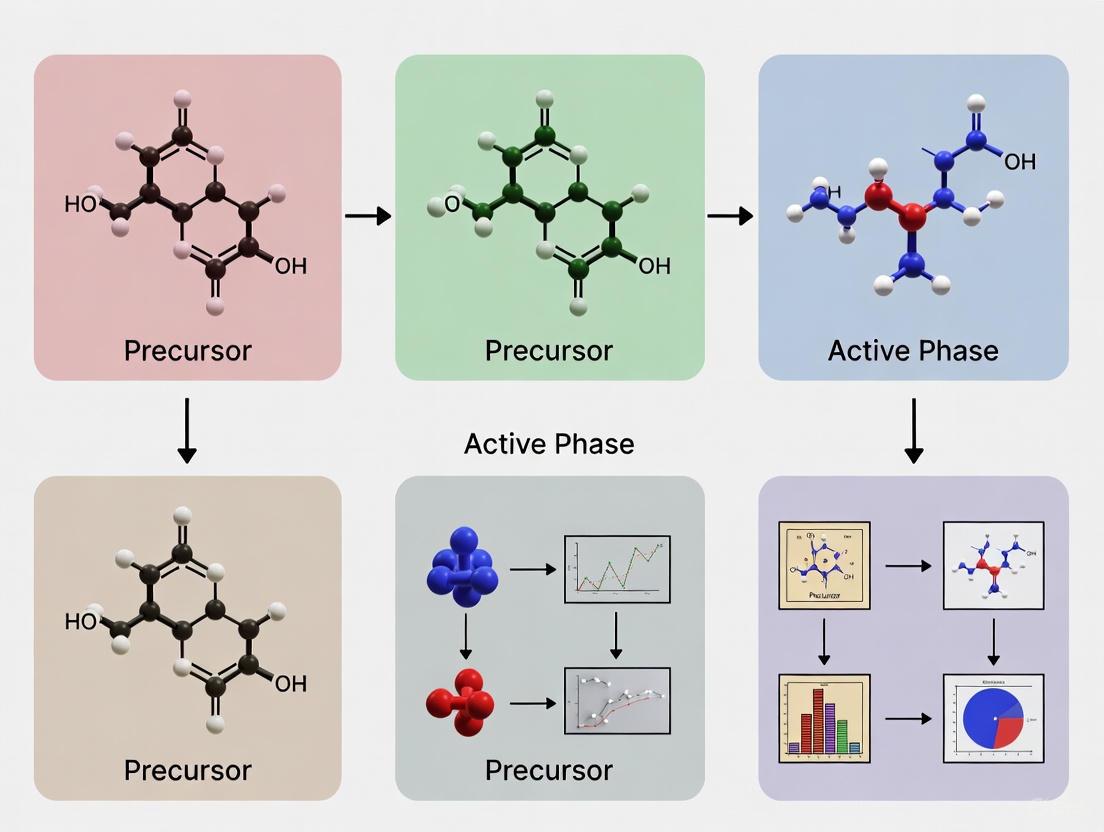
This article provides a comprehensive examination of catalyst precursor transformation into the active phase, a critical process in developing efficient and sustainable catalysts for pharmaceutical applications.
From Precursor to Performance: Mastering Catalyst Transformation for Advanced Drug Development
Abstract
This article provides a comprehensive examination of catalyst precursor transformation into the active phase, a critical process in developing efficient and sustainable catalysts for pharmaceutical applications. It covers the foundational principles of precursor design and phase evolution, explores innovative synthetic methodologies and real-world biomedical applications, addresses common optimization challenges, and outlines advanced validation and comparative analysis techniques. Tailored for researchers and drug development professionals, this review synthesizes current literature and emerging trends to serve as a practical guide for rational catalyst design, aiming to accelerate drug discovery and process optimization.
The Blueprint of Activity: Understanding Precursor Chemistry and Phase Evolution
Defining Catalyst Precursors and the Active Phase in Pharmaceutical Contexts
In the landscape of pharmaceutical manufacturing, the efficient and selective synthesis of complex molecules is paramount. Catalysis stands as a cornerstone technology in this endeavor, enabling routes that are more sustainable, cost-effective, and selective. The journey of a catalyst from an inactive, stable state to a highly reactive one is a critical process, yet it is often overlooked. This transformation, from a catalyst precursor to the active phase, is not merely an academic curiosity but a practical necessity that dictates the success of catalytic cycles in drug development and production [1]. A precursor, in the broadest chemical sense, is a substance from which another substance is derived [2]. Within catalysis, this definition narrows to a compound that contains the essential elements of the future active catalyst but in a stable, often unreactive form. This stability allows for storage, characterization, and controlled activation under specific conditions. The subsequent active phase is the state of the catalyst that actually interacts with reactants, lowering the activation energy of the desired reaction and steering it toward the target pharmaceutical intermediate or product.
Understanding this genesis is crucial for researchers and development professionals. The selection of the precursor, the method of its deposition on a support, and the specific protocol for its activation directly influence critical performance metrics such as activity, selectivity, and lifetime [3] [1]. This guide provides an in-depth technical examination of catalyst precursors and their transformation, detailing fundamental concepts, characterization methodologies, and the direct implications for pharmaceutical synthesis.
Core Definitions and Conceptual Framework
What is a Catalyst Precursor?
A catalyst precursor is a carefully synthesized and characterized compound that can be transformed into the active catalyst through a defined chemical or thermal process [4] [3]. It is the pre-catalyst state, designed for practicality in handling and preparation before being subjected to conditions that generate the true catalytic sites.
In the context of pharmaceutical production, precursors are often coordination complexes or metal salts that provide a controlled source of the catalytic metal. For instance, chloroplatinic acid (CPA) or platinum tetraammine (PTA) are simple and prevalent precursors used to prepare supported platinum metal catalysts [3]. The term "well-defined catalyst precursors" underscores the importance of precise synthesis and thorough characterization, as knowing the exact structure of the precursor is a prerequisite for understanding and controlling the resulting catalyst's activity and selectivity [4].
What Constitutes the Active Phase?
The active phase is the state of the catalyst material under operational reaction conditions that is responsible for its catalytic function. It is characterized by its ability to facilitate the chemical reaction without itself being consumed. This phase is not always a static, pre-formed entity; it often emerges dynamically as the precursor interacts with the reaction environment (e.g., reactants, temperature, pressure) [5]. A critical concept in modern catalysis is that the solid-state chemistry of the material is strongly coupled with the chemistry of the catalytic reaction. The stability of surface and bulk phases under reaction conditions is determined by the fluctuating chemical potential, meaning the catalyst can undergo restructuring. Thus, the active state is often a "working state" that may be difficult to observe under ambient conditions [5].
The Critical Distinction: Precursors vs. Reagents vs. Catalysts
In chemical synthesis, the terms precursor, reagent, and catalyst hold distinct meanings, and conflating them can lead to confusion in experimental design.
- Precursor: A starting material that is transformed into the active catalyst. It participates in the catalyst's preparation but is not the catalyst itself. Example: Platinum hexachloride,
[PtCl6]^2-, is a precursor that is reduced to form active platinum metal nanoparticles [3]. - Reagent: A substance that is consumed in a chemical reaction to bring about a chemical change in the reactant molecule. Unlike a catalyst, a reagent is not regenerated. Example: A diagnostic reagent used to detect the presence of a specific functional group in a pharmaceutical intermediate [2].
- Catalyst: A substance that increases the rate of a reaction without being consumed. It participates in the reaction cycle but is regenerated at the end. The catalyst exists in its active phase during this process. Example: The reduced platinum metal nanoparticles that catalyze a hydrogenation step in an API synthesis [2].
The relationship between these components is foundational: a precursor is activated to form a catalyst, which then acts upon reagents to transform them into desired products.
Diagram 1: Conceptual relationship between a catalyst precursor, the active phase, and reagents in a catalytic cycle. The reagent is consumed, while the catalyst is regenerated.
The Transformation Journey: From Precursor to Active Phase
The activation of a catalyst precursor is a complex process involving physical and chemical changes that create the catalytically active sites. This transformation is seldom a single step but a sequence of events dictated by the precursor's nature and the activation environment.
Common Activation Mechanisms
The pathway from precursor to active phase is typically triggered by thermal or chemical treatment. The most common mechanisms include:
- Thermal Decomposition (Calcination): The precursor is heated in an oxidizing or inert atmosphere to decompose the molecular structure, remove volatile components (like ligands or anions), and often form a metal oxide phase. This is a crucial step for creating dispersed oxide species on a support [3].
- Reduction: For metal precursors, this is a fundamental step where the metal ion is reduced to its metallic state (often zero-valent) using a reducing agent like hydrogen gas. The reduction process is sensitive; an "appropriately mild reduction treatment will preserve the high dispersion of the precursor in the reduced metal particles" [3]. The temperature and rate of reduction are critical to avoid sintering, which would decrease the active surface area.
- Oxidation: In some cases, particularly for oxidation catalysts, the precursor may be treated in an oxygen-rich atmosphere to generate the desired metal oxide active phase.
- Dynamic Restructuring under Reaction Conditions: Increasingly, it is recognized that the active phase is not always formed in a pre-treatment step but evolves in situ under the reaction conditions. The material can dynamically restructure in response to the chemical potential of the reacting mixture, meaning the "active state" is a function of the specific catalytic environment [5].
Factors Governing the Transformation
The efficiency of this transformation is governed by several factors intrinsic to the precursor and the support system:
- Dispersion of the Precursor: A foundational principle is that "well dispersed metals are most easily produced from well dispersed metal precursors" [3]. The initial distribution of the precursor on the support material dictates the final dispersion of the active metal. Techniques like Strong Electrostatic Adsorption (SEA) are designed to maximize this initial dispersion by controlling the surface charge of the support and the precursor complex [3].
- Metal-Support Interactions: The support is not inert. It must have an adequate texture—sufficient surface area and appropriately sized pores—to lodge the active phase and allow for the diffusion of reactants and products [1]. The chemical interaction between the precursor/support can stabilize the dispersed metal particles and even create unique active sites at the interface.
- Kinetics of Active State Formation: The "kinetics of the formation of the active states of a catalyst" is a critical and often neglected factor in experimental design. The same catalyst system can follow different activation paths depending on the pre-treatment workflow, leading to different active states and compromising reproducibility [5]. Standardized activation protocols are therefore essential for consistent results.
Diagram 2: The transformation workflow of a catalyst precursor to the active phase, showing key activation pathways.
Experimental Protocols for Preparation and Characterization
Rigorous and standardized experimental procedures are the bedrock of reliable catalyst research. The following protocols outline key methodologies for preparing and characterizing catalyst precursors and their active phases.
Precursor Deposition via Strong Electrostatic Adsorption (SEA)
Objective: To achieve a high and uniform dispersion of a metal precursor on a support material by controlling electrostatic interactions [3].
Methodology:
- Determine the Point of Zero Charge (PZC): The PZC of the support material (e.g., alumina, silica) is first measured. This is the pH at which the surface net charge is zero.
- Prepare Precursor Solution: Dissolve the ionic metal precursor (e.g.,
[PtCl6]^2-for anionic adsorption,[Pt(NH3)4]^2+for cationic adsorption) in deionized water. - Adjust Solution pH: Modify the pH of the precursor solution. For a support with a PZC of 5:
- For anionic precursor adsorption, set the solution pH below the PZC (e.g., pH 3). This protonates surface hydroxyl groups, creating a positive surface charge that attracts anions.
- For cationic precursor adsorption, set the solution pH above the PZC (e.g., pH 10). This deprotonates surface groups, creating a negative surface charge that attracts cations.
- Impregnation: Contact the support with the pH-adjusted precursor solution for a defined period (e.g., 1 hour) with stirring.
- Washing and Drying: Filter the solid, wash it to remove weakly adsorbed ions, and dry it at a moderate temperature (e.g., 110°C).
Characterization: Inductively Coupled Plasma (ICP) analysis of the solution before and after contact confirms metal uptake. Electron microscopy (TEM/SEM) can later be used to confirm high metal dispersion after reduction [3].
Protocol for a "Clean" Catalyst Test and Kinetic Analysis
Objective: To generate consistent, high-quality functional data on catalyst performance while accounting for the catalyst's dynamic nature, thereby producing data suitable for AI and machine learning analysis [5].
Methodology:
- Rapid Activation: Expose the fresh catalyst precursor to harsh reaction conditions (e.g., high temperature, up to 450°C) for 48 hours to quickly drive it into a steady-state. This step identifies rapidly deactivating materials.
- Systematic Kinetic Testing:
- Step 1: Temperature Variation: Measure conversion and selectivity at different temperatures while holding other parameters constant.
- Step 2: Contact Time Variation: Measure performance at different gas flow rates (or catalyst weights) to understand the effect of residence time.
- Step 3: Feed Variation: Systematically alter the feed composition:
- (a) Co-dose a reaction intermediate.
- (b) Vary the reactant/oxygen ratios.
- (c) Change the water vapor concentration.
- Post-Reaction Characterization: Analyze the spent catalyst using techniques like XPS and N₂ adsorption to link changes in physicochemical properties to performance data [5].
This "clean experiment" protocol, documented in an "experimental handbook," ensures that the kinetics of active state formation are consistently considered, mitigating reproducibility issues [5].
Essential Characterization Techniques
A multi-technique approach is vital for correlating precursor properties with the resulting active phase's performance. Key techniques are summarized in the table below.
Table 1: Key Characterization Techniques for Catalyst Precursors and Active Phases
| Technique | Analytical Information | Application to Precursors | Application to Active Phase |
|---|---|---|---|
| N₂ Physisorption | Specific surface area, pore volume, pore size distribution | Textural properties of the support material [1] | Monitor textural changes (e.g., pore blocking, sintering) after reaction [1] |
| X-ray Photoelectron Spectroscopy (XPS) | Elemental composition, chemical state, oxidation state | Confirm identity of deposited precursor species | Determine oxidation state of the active metal in situ under reaction conditions [5] |
| Inductively Coupled Plasma (ICP) | Elemental composition, metal loading | Quantify metal uptake after impregnation [3] | Check for metal leaching after catalytic use |
| Electron Microscopy (TEM/SEM) | Particle size, morphology, dispersion | Study the distribution of the precursor on the support | Directly image the size and shape of active metal nanoparticles [3] |
| In Situ/Operando Characterization | Structure and properties under reaction conditions | - | Identify the true active phase and dynamic restructuring processes [5] [1] |
The Scientist's Toolkit: Research Reagent Solutions
The experimental study of catalyst precursors requires a suite of specialized reagents, supports, and analytical tools. The following table details key materials and their functions in this field.
Table 2: Essential Research Reagents and Materials for Catalyst Precursor Studies
| Item | Function in Research | Example in Pharmaceutical Context |
|---|---|---|
| Metal Salt Precursors | Source of the catalytic metal; choice dictates dispersion and ease of reduction. | Chloroplatinic Acid, Ammonium Metavanadate, Nickel Nitrate [3] [5] |
| High Surface Area Supports | Provide a scaffold to disperse the active phase, prevent sintering, and enable diffusion. | Alumina, Silica, Titania, Carbon [1] |
| Gases for Activation & Reaction | Used for precursor reduction, oxidation, and as reactants in catalytic tests. | Hydrogen (H₂) for reduction, Oxygen (O₂) for oxidation, Inert gases (N₂, Ar) [5] [1] |
| Reference Catalysts | Benchmarks for comparing the activity and selectivity of newly synthesized catalysts. | Commercially available Pt/Al₂O₃, Ni/SiO₂ catalysts |
| Analytical Standards | Calibrate instruments for accurate quantification of reaction products and metal loadings. | ICP standards, GC/MS calibration mixes for pharmaceutical intermediates [3] |
Implications for Pharmaceutical Precursors Production
The principles of catalyst precursor activation have direct and profound implications for the synthesis of pharmaceutical precursors—the intermediate compounds that are the essential building blocks for active pharmaceutical ingredients (APIs) [6].
- Efficiency and Sustainability: Optimized catalysts, derived from well-designed precursors, directly impact the efficiency and sustainability of pharmaceutical precursor production. For example, metabolic engineering of microorganisms to produce pharmaceutical precursors can be enhanced by catalytic steps that reduce costs and environmental impact [6].
- Role of Biocatalysis: In pharmaceutical contexts, biocatalysis—using enzymes or whole cells as catalysts—is a prominent technology. Here, the "precursor" might be an proenzyme or a vitamin-derived cofactor that is activated within a biological pathway. Biocatalysis offers high selectivity under mild reaction conditions, improving product purity and aligning with green chemistry principles [6].
- Regulatory and Quality Compliance: The production of both catalyst precursors and pharmaceutical intermediates is subject to strict regulatory oversight. "Regulatory considerations play a critical role in pharmaceutical precursor production, requiring strict adherence to quality standards to ensure that intermediates are safe for further processing into drugs" [6]. This necessitates rigorous characterization and controlled activation protocols for catalysts used in these syntheses.
The journey from a defined catalyst precursor to a functional active phase is a sophisticated process at the heart of modern catalytic chemistry, especially in the demanding field of pharmaceutical synthesis. A deep understanding of the definitions, transformation mechanisms, and standardized experimental protocols is not merely academic but a practical requirement for innovation. Controlling this genesis allows researchers and drug development professionals to design catalysts with superior activity, selectivity, and stability. As the field moves towards more data-centric approaches, the generation of "clean," consistent data through rigorous protocols will be the foundation for unlocking new AI-driven discoveries [5]. This, in turn, will accelerate the development of more efficient and sustainable routes to the complex molecules that define the future of medicine.
The journey from a synthetic catalyst material to a functional active phase is governed by the nature of its precursor. In heterogeneous catalysis, catalyst precursors are the initial, often inactive, forms of a catalyst that undergo chemical and physical transformations under specific conditions to generate the active phase responsible for catalytic activity [7]. Understanding these precursor classes—spanning simple salts and coordination complexes to structured solids—is fundamental to the rational design of high-performance catalysts. The transformation pathway, dictated by the precursor's chemical composition, structure, and stability, ultimately determines critical properties of the final catalyst, including active site density, dispersion, stability, and longevity [7]. This guide provides a comprehensive technical examination of major catalyst precursor classes, their transformation pathways to active phases, and the experimental methodologies essential for their characterization within broader catalyst precursor transformation research.
Fundamental Precursor Classes and Their Characteristics
Catalyst precursors can be systematically categorized based on their chemical nature and structure. The table below summarizes the key classes, their typical compositions, and the active phases they form.
Table 1: Key Catalyst Precursor Classes and Their Transformation Outcomes
| Precursor Class | Typical Composition Examples | Transformation Conditions | Resulting Active Phase |
|---|---|---|---|
| Simple Salts | Nitrates (e.g., Fe(NO₃)₃), Chlorides, Ammonium Salts | Calcination, Reduction (in H₂ or CO) [7] | Metal Oxides, Reduced Metals (e.g., Fe⁰ from hematite) [7] |
| Coordination Complexes | Metal carbonyls, Ammines, Acetylacetonates | Thermal Decomposition, Oxidation | Dispersed Metal Nanoparticles, Metal Oxides |
| Structured Solids | Zeolites, Mixed Metal Oxides, Perovskites | Ion Exchange, Activation | Brønsted Acid Sites, Multifunctional Active Sites |
| Precipitated Hydroxides & Oxyhydroxides | FeOOH, Co(OH)₂, Ni(OH)₂ | Dehydration, Phase Transformation | Metal Oxides, Spinel Structures [8] |
The selection of a precursor class is critical, as it influences not only the final active phase but also the catalyst's deactivation behavior. For instance, catalyst deactivation through pathways like coking (carbon deposition), poisoning, and thermal degradation remains a fundamental challenge, and precursor design is a primary strategy for mitigating these issues [9].
Experimental Protocols for Precursor Synthesis and Characterization
Tracking the transformation of a precursor to its active phase requires a suite of advanced characterization techniques. The following workflow outlines a standard experimental approach, from synthesis to activity evaluation.
Figure 1: Experimental workflow for studying catalyst precursor transformation.
Key Characterization Techniques
The following table details the core characterization techniques used to probe precursor transformation, along with their specific functions and applications as demonstrated in the search results.
Table 2: Essential Characterization Techniques for Precursor Analysis
| Technique | Acronym | Primary Function | Key Information Obtained | Example from Literature |
|---|---|---|---|---|
| X-Ray Powder Diffraction [10] | XRPD / XRD | Phase identification and structure refinement. | Crystal structure, phase composition, crystallite size. | Identifying the transformation of hematite (Fe₂O₃) to active iron carbides (e.g., χ-Fe₅C₂) in Fe-based Fischer-Tropsch catalysts [7]. |
| Rietveld Analysis [10] | - | Quantitative phase analysis from XRD data. | Weight fractions of crystalline phases, unit cell parameters. | Refining the structure of microporous materials like zeolites and quantifying phase changes in mixed metal oxides [10]. |
| X-Ray Absorption Spectroscopy | XAS (EXAFS/XANES) | Probing local atomic environment. | Oxidation state, coordination number, bond distances. | Used in operando studies to identify the atomic and electronic structure of active sites during the oxygen evolution reaction (OER) [7]. |
| Scanning Electron Microscopy [8] | SEM | Imaging morphology and particle size. | Particle morphology, size distribution, surface texture. | Observing the micro-spherical morphology and attrition strength of spray-dried Fe Fischer-Tropsch catalysts before and after reaction [8]. |
| Energy Dispersive X-Ray Analysis [11] | EDX | Elemental composition analysis. | Local chemical composition and element distribution. | Determining the chemical composition of catalyst-coated membranes and synthesized electrocatalysts [11]. |
Detailed Methodological Protocol
Based on the search results, a robust protocol for studying precursor transformation, particularly for a system like iron Fischer-Tropsch catalysts, involves the following steps:
- Precursor Synthesis and Shaping: Precipitate an iron catalyst precursor with a nominal composition of 100 Fe/3 Cu/5 K/16 SiO₂ (by weight). The silica acts as a structural promoter. The precursor can be shaped via spray-drying to form micro-spherical particles (5-40 μm) ideal for slurry reactor studies [8].
- Initial Characterization:
- Activation and In-Situ Characterization:
- Activate the precursor in a controlled atmosphere, typically H₂, CO, or syngas (a mixture of H₂ and CO) [7].
- Employ in-situ XAS to monitor the reduction of Fe³⁺ and the subsequent formation of iron carbides in real-time, tracking changes in oxidation state and local coordination [7].
- Use in-situ XRD to identify the crystalline phases that appear and disappear during activation (e.g., the transition from Fe₃O₄ to χ-Fe₅C₂) [7] [10].
- Post-Reaction Analysis:
- Performance Correlation:
The Scientist's Toolkit: Essential Research Reagent Solutions
The following reagents and materials are fundamental for research in catalyst precursor transformation.
Table 3: Essential Reagents and Materials for Precursor Transformation Studies
| Reagent/Material | Function in Research | Technical Note |
|---|---|---|
| Metal Salts (Nitrates, Chlorides) | Common starting precursors for impregnation and precipitation synthesis. | High purity is critical to avoid unintended poisoning; nitrates are often preferred over chlorides to avoid residual chlorine [9]. |
| Structural Promoters (e.g., Colloidal Silica) | Enhances mechanical strength and attrition resistance of catalyst particles [8]. | The type of silica (colloidal, silicate) significantly impacts the final catalyst's durability in slurry reactors [8]. |
| Reducing Gases (H₂, CO, Syngas) | Activating precursors to their metallic or carbidic active phases [7]. | The choice of reductant (H₂ vs. CO/syngas) dictates the active phase formed (Fe⁰ vs. FexCy) in iron-based catalysts [7]. |
| Calibration Standards (for XAS) | Essential for accurate energy calibration during synchrotron-based measurements. | Foil standards (e.g., Fe, Co) are used to align the energy scale of the monochromator. |
| Specialized Gaskets & Windows (for In-Situ Cells) | Enable the containment of samples under controlled environments (high T, P, reactive gases) during characterization. | Made from X-ray transparent materials (e.g., boron nitride, diamond) for in-situ XRD and XAS. |
The systematic classification and detailed understanding of catalyst precursor classes—from simple salts to structured solids—provide the foundational knowledge required for advanced catalyst design. The transformation pathway from precursor to active phase is not merely a procedural step but a critical determinant of the catalyst's ultimate identity, functionality, and operational lifetime. By employing an integrated methodology that combines synthesis, advanced in-situ characterization, and performance evaluation, researchers can move beyond correlative observations to establish causal relationships in catalyst genesis. This rigorous approach is indispensable for tackling persistent challenges in catalysis, such as deactivation, and for pioneering the next generation of high-performance, durable catalytic materials.
The Thermodynamic and Kinetic Drivers of Phase Transformation
The transformation of a catalyst from its precursor phase to its active state is a complex process governed by fundamental thermodynamic and kinetic principles. In catalysis research, controlling this phase evolution is paramount to achieving high activity, selectivity, and stability. Metastable phases—structures with higher free energy than their thermodynamically stable counterparts but persisting due to kinetic constraints—often exhibit exceptional catalytic properties distinct from their stable forms [12]. This technical guide examines the drivers of phase transformation within the specific context of catalyst precursor activation, providing researchers with the theoretical frameworks and experimental methodologies needed to precisely control these processes for advanced catalytic applications across thermal, electro-, and photocatalytic systems.
Theoretical Foundations
Thermodynamic Driving Forces
Thermodynamics dictates the direction and equilibrium states of phase transformations through the minimization of Gibbs free energy. For any material, the phase with the lowest Gibbs free energy (G) under specific temperature, pressure, and compositional conditions is thermodynamically stable. Metastable phases possess higher free energy states but remain accessible through kinetic control of synthesis parameters [12].
The thermodynamic competition between phases can be quantified for a target phase k as [13]: ΔΦ(Y) = Φk(Y) - min[i∈Ic] Φi(Y) where Φi(Y) represents the free energy of phase i under intensive variables Y (e.g., pH, redox potential, concentration). The condition where thermodynamic competition is minimized occurs when this difference is maximized, favoring the nucleation and growth of the target phase over competing by-products [13].
In aqueous synthesis systems, the Pourbaix potential (Ψ) provides the free-energy surfaces needed to compute thermodynamic competition [13]: Ψ = (1/NM)[(G - NOμH₂O) - RT×ln(10)×(2NO-NH)pH - (2NO-NH+Q)E] where NM, NO, NH represent metal, oxygen, and hydrogen atom counts, Q is phase charge, R is the ideal gas constant, T is temperature, and E is redox potential.
Kinetic Barriers and Pathways
While thermodynamics determines the equilibrium state, kinetics governs the rate and pathway of phase transformation through energy barriers that must be overcome for nucleation and growth to proceed. The magnitude of the thermodynamic driving force serves as an effective proxy for phase transformation kinetics, appearing directly in the kinetic equations of nucleation, diffusion, and growth [13].
The Phase Transformation Graph theoretical framework reveals that the interconnectivity of multiple structural states through transformation pathways significantly impacts transformation reversibility and defect generation [14]. Martensitic transformations in shape memory alloys demonstrate that symmetry breaking during phase changes generates specific topological defects—dislocations and grain boundaries—that influence functional properties and cycling stability [14].
Table 1: Fundamental Parameters Governing Phase Transformation
| Parameter | Thermodynamic Role | Kinetic Influence | ||
|---|---|---|---|---|
| Gibbs Free Energy (ΔG) | Determines phase stability and driving force for transformation | Correlates with nucleation and growth rates; larger | ΔG | typically accelerates kinetics |
| Temperature | Affects relative phase stability through TΔS term | Governs atomic diffusion rates and thermal energy to overcome activation barriers | ||
| Composition | Determines stable phase fields in equilibrium diagrams | Influences diffusion paths and intermediate phase formation | ||
| Interface Energy | Contributes to total system energy, especially in nanoscale systems | Creates barriers to nucleation; critical nucleus size depends on interfacial terms | ||
| Symmetry Relationship | Group-subgroup relationships enable reversible transformations [14] | Determines number of transformation pathways and variant structures [14] |
Synthesis Methodologies for Controlled Phase Transformation
Thermodynamic Optimization via Minimum Thermodynamic Competition
The Minimum Thermodynamic Competition framework provides a systematic approach to identify synthesis conditions that maximize the free energy difference between target and competing phases [13]. This strategy minimizes the kinetic formation of undesired by-products even within the thermodynamic stability region of the target phase.
Experimental Protocol: MTC-Guided Synthesis Optimization
- Construct comprehensive phase diagrams using computational thermodynamics for the system of interest
- Calculate Pourbaix potentials for all competing phases using first-principles data [13]
- Identify optimal synthesis conditions where ΔΦ(Y) is maximized using gradient-based optimization algorithms [13]
- Validate experimentally by synthesizing across a range of conditions and characterizing phase purity
Application of this protocol to LiIn(IO₃)₄ and LiFePO₄ demonstrated that phase-pure synthesis occurs only when thermodynamic competition with undesired phases is minimized, not merely within the stability region of the thermodynamic Pourbaix diagram [13].
Metastable Phase Stabilization Strategies
Metastable phase materials can be stabilized through various synthesis techniques that leverage kinetic control over thermodynamic preferences [12]:
- Low-Temperature Aqueous Routes: Utilizing solution conditions that maximize driving force to target phase while minimizing competing pathways [13]
- Mechanochemical Synthesis: Applying mechanical energy to overcome nucleation barriers for metastable phases [12]
- Template-Directed Crystallization: Using surfaces or molecular templates to preferentially nucleate metastable structures
- Rapid Thermal Processing: Employing short-time, high-temperature treatments to form metastable intermediates before they convert to stable phases
Table 2: Metastable Phase Synthesis Techniques and Applications
| Synthesis Method | Key Controlling Parameters | Catalytic Applications | Limitations |
|---|---|---|---|
| Hydrothermal/Solvothermal | Temperature, pH, precursor concentration, filling degree | Metastable β-Fe₂O3 photoanodes [12], 2M-WS₂ topological superconductors [12] | Limited to stable precursors at reaction conditions |
| Electrochemical Deposition | Potential, electrolyte composition and concentration, pH | 3R-iridium oxide for oxygen evolution [12], Mo-doped Co₃O₄ [15] | Substrate-dependent, limited thickness control |
| Strong Electrostatic Adsorption | Solution pH relative to support PZC, precursor complex charge [3] | Highly dispersed Pt, Pd, Cu catalysts [3] | Requires precise pH control, limited to suitable precursors |
| Flame Spray Pyrolysis | Precursor concentration, flame temperature, quenching rate | High-temperature metastable oxides [12] | Requires specialized equipment, limited structural control |
Computational and High-Throughput Approaches
AI-Guided Discovery of Metastable Phases
Artificial intelligence approaches are revolutionizing the discovery of novel metastable phase materials by overcoming limitations of conventional thermodynamic phase diagrams [12]. Machine learning algorithms can predict synthesis conditions for metastable phases by learning from both successful and failed experiments, enabling inverse design of catalysts with tailored thermodynamic-kinetic profiles [12].
High-Throughput Screening of Bimetallic Catalysts
A proven high-throughput protocol for bimetallic catalyst discovery utilizes the similarity in electronic density of states patterns as a screening descriptor [16]. This approach successfully identified Pd-free Ni61Pt39 as a high-performance catalyst for H₂O₂ synthesis with 9.5-fold enhancement in cost-normalized productivity compared to conventional Pd catalysts [16].
Experimental Protocol: DOS Similarity Screening
- Calculate formation energies for 4350 candidate bimetallic structures using DFT [16]
- Filter thermodynamically feasible alloys (ΔEf < 0.1 eV) [16]
- Compute DOS similarity to reference catalyst using [16]: ΔDOS₂₋₁ = {∫[DOS₂(E) - DOS₁(E)]² g(E;σ)dE}¹ᐟ² where g(E;σ) = (1/σ√2π)e^(-(E-Ef)²/2σ²)
- Select top candidates with lowest ΔDOS values for experimental validation
This protocol demonstrates that including both d-states and sp-states in DOS comparisons is essential, as sp-band interactions often dominate adsorbate binding in catalytic reactions [16].
Characterization Techniques for Phase Analysis
In Situ and Operando Methods
Modern characterization techniques enable direct observation of phase transformations under realistic synthesis and reaction conditions:
- In Situ XRD: Tracks crystal structure evolution in real-time during thermal treatment or under reaction atmospheres
- Environmental TEM: Directly visualizes phase transformations at atomic resolution with gas or liquid environments
- XAS/EXAFS: Probes local coordination and electronic structure changes during transformation [15]
- AP-XPS: Monitors surface composition and oxidation states during catalytic reactions
Phase Quantification Methods
Accurate quantification of phase fractions is essential for correlating transformation extent with catalytic properties. Rietveld refinement of XRD patterns provides precise phase quantification, while electron backscatter diffraction statistically maps phase distributions at microstructural levels [17].
Applications in Catalytic Systems
Electrocatalyst Phase Transformations
In electrocatalysis, phase transformations can be intentionally induced to create highly active structures. Examples include:
- Local structural phase transition in cobalt fluoride-sulfide (CoFS) optimized electronic structure for oxygen evolution reaction, requiring only 270 mV overpotential at 10 mA cm⁻² [15]
- Phase transition from 2H to 1T MoSe₂ through doping created expanded interlayer spacing and enhanced metallic properties, improving hydrogen evolution activity by reducing overpotential by 168 mV at 10 mA cm⁻² [15]
- Gd₃Fe₅O₁₂ transformation from garnet oxide to peroxide and iron dramatically enhanced CO₂ reduction selectivity to nearly 100% Faradaic efficiency for CO [15]
Thermal Catalyst Activation
The transformation of catalyst precursors to active phases under thermal treatment follows specific pathways influenced by support interactions, precursor dispersion, and atmosphere [3]. Strong Electrostatic Adsorption enables precise control over precursor dispersion, which preserves high metal dispersion during reduction to active metallic phases [3].
Research Reagent Solutions
Table 3: Essential Materials for Phase Transformation Studies in Catalysis
| Reagent/Material | Function | Application Example |
|---|---|---|
| Chloroplatinic Acid (CPA) | Source of [PtCl₆]²⁻ for strong electrostatic adsorption [3] | Preparation of highly dispersed Pt catalysts on oxide supports |
| Platinum Tetraammine (PTA) | Source of [(NH₃)₄Pt]²⁺ for opposite-charge SEA [3] | Catalyst preparation on supports with high PZC |
| Transition Metal Ammines | Cationic precursors for electrostatic adsorption [3] | Cu, Pd, Ni catalyst preparation on low PZC supports |
| Oxide Supports with Controlled PZC | Enable selective precursor adsorption via pH control [3] | Al₂O₃ (PZC ~8), SiO₂ (PZC ~4) for selective deposition |
| Aqueous Buffers | Precise pH control during impregnation [3] | Optimization of electrostatic adsorption conditions |
Visualization of Phase Transformation Concepts
Thermodynamic Competition in Phase Selection
Phase Transformation Pathways Network
Catalyst Synthesis Workflow
Understanding the transformation of catalyst precursors into their active phases is a fundamental aspect of heterogeneous catalysis research. This structural evolution directly governs the formation of active sites, ultimately determining catalytic activity, selectivity, and stability. Characterization of these solid-state transformations requires techniques that probe bulk and local structure, composition, and reducibility. Among the most critical techniques for this purpose are X-ray Diffraction (XRD), X-ray Absorption Spectroscopy (XAS), and Temperature-Programmed Reduction (TPR). This technical guide details the application of these techniques within the specific context of tracking catalyst precursor transformations, providing researchers with methodologies, data interpretation frameworks, and practical protocols.
X-Ray Diffraction (XRD) for Phase Identification and Structure
Theoretical Foundations and Application
X-ray Diffraction is a primary technique for bulk phase identification and structure determination in solid catalysts. The principle is based on Bragg's Law (nλ = 2d sinθ), where constructive interference of X-rays occurs when they are scattered by the periodic atomic planes in a crystalline material [18]. The angular positions (2θ) of the resultant diffraction peaks provide information on the unit cell dimensions and symmetry, while the peak intensities relate to the atomic arrangement within the unit cell, and peak broadening can indicate crystallite size and microstrain [10] [18].
For catalyst precursor transformation studies, XRD is indispensable for monitoring phase changes during calcination and activation treatments. It can identify the crystalline phases present in the precursor, detect intermediate phases formed during thermal processing, and confirm the formation of the desired final active phase [10]. This is crucial for establishing the correct thermal treatment protocols to ensure complete precursor decomposition and transformation without forming undesired, inactive phases.
Experimental Protocol for Phase Transformation Studies
Sample Preparation:
- For powder samples, ensure a flat, uniform surface to minimize preferred orientation.
- For in-situ studies, use a high-temperature stage or capillary reactor to simulate process conditions.
Data Collection Parameters:
- Use Cu Kα radiation (λ = 1.54 Å) as the X-ray source.
- Set voltage and current to 45 kV and 40 mA, respectively [19].
- Perform 2θ scans from 5° to 90° at a scan speed of 0.02° to 0.05° per second [19].
- For in-situ experiments, collect patterns at set temperature intervals (e.g., every 50°C or 100°C) during heating under controlled atmosphere.
Data Analysis:
- Phase Identification: Compare collected patterns with reference databases (e.g., ICDD PDF) to identify crystalline phases.
- Quantitative Analysis: Use Rietveld refinement to quantify phase abundance, lattice parameters, and crystallite size [10].
- Crystallite Size Determination: Apply the Scherrer equation (D = Kλ / β cosθ) to estimate volume-weighted crystallite size from peak broadening, where K is the shape factor, λ is the X-ray wavelength, β is the integral breadth of the peak, and θ is the Bragg angle.
Table 1: Key XRD Parameters for Catalyst Characterization
| Parameter | Typical Value/Range | Information Obtained |
|---|---|---|
| Radiation Source | Cu Kα (λ = 1.54 Å) | Optimal balance of penetration and resolution |
| Scan Range (2θ) | 5° - 90° | Captures major diffraction lines for most materials |
| Scan Speed | 0.02° - 0.05°/s | Balance between data quality and collection time |
| Crystallite Size Range | 1 - 100 nm | Accessible via Scherrer equation analysis |
Advanced XRD Applications
The Rietveld method is a powerful tool for structure refinement of polycrystalline catalysts, allowing for the precise determination of atomic coordinates, site occupancies, and thermal parameters, even for complex mixed-phase systems [10]. Furthermore, in-situ XRD is increasingly used to track dynamic structural changes in real-time under reaction conditions, providing direct insight into the phase transitions that define the catalyst's activation pathway [20].
X-Ray Absorption Spectroscopy (XAS) for Local Structure and Electronic State
Principles and Relevance to Precursor Transformation
While XRD provides long-range order, X-ray Absorption Spectroscopy probes the local electronic structure and coordination environment of a specific element, regardless of its crystallinity. This makes it exceptionally powerful for studying catalyst precursors and supported metal catalysts, where the active phase may be amorphous or highly dispersed [21] [22]. XAS is divided into two regions:
- XANES (X-ray Absorption Near Edge Structure): Provides information on the oxidation state and geometry of the absorbing atom.
- EXAFS (Extended X-ray Absorption Fine Structure): Provides quantitative data on interatomic distances, coordination numbers, and disorder in the local environment [19].
This technique is ideal for tracking the evolution of the local coordination and oxidation state of metal atoms during precursor decomposition, which often occurs before long-range crystalline order is established.
Experimental Protocol for In-Situ XAS
Sample Preparation:
- For transmission mode, homogenously mix and press the powdered catalyst with boron nitride to achieve an optimal absorption edge step (Δμx ≈ 1.0).
- For fluorescence mode (dilute samples), use a thin layer of powder on adhesive tape.
In-Situ Cell Setup:
- Use an electrochemical or flow reactor cell with X-ray transparent windows (e.g., Kapton) [19].
- For thermal transformations, incorporate heating and gas delivery systems to control the atmosphere (e.g., H₂, He, O₂).
Data Collection:
- Align the sample and position detectors (ion chambers for transmission, fluorescence detector for dilute samples).
- Collect spectra at the absorption edge of the element of interest (e.g., Mn K-edge at 6539 eV) [19].
- For in-situ studies, acquire spectra at a sequence of applied potentials or temperatures to track dynamic changes.
Data Analysis:
- XANES: Determine the average oxidation state by comparing the edge position of the sample with those of reference compounds with known oxidation states.
- EXAFS: Fourier transform the oscillatory data to obtain a radial distribution function. Fit the data to theoretical models to extract coordination numbers (CN), interatomic distances (R), and disorder factors (Debye-Waller factor, σ²).
Table 2: Key XAS Parameters for Catalyst Characterization
| Parameter | Information Obtained | Application Example |
|---|---|---|
| Edge Position (XANES) | Average oxidation state | Tracking Mn oxidation from Mn(II,III) to Mn(III,IV) during OER [19] |
| Pre-edge Features | Site symmetry, geometry | Distinguishing tetrahedral vs. octahedral coordination |
| Coordination Number (EXAFS) | Number of nearest neighbors | Determining metal dispersion or cluster formation |
| Interatomic Distance (EXAFS) | Bond lengths | Detecting metal-support interactions |
Case Study: Manganese Oxide Catalyst
In-situ XAS was used to study a bifunctional manganese oxide catalyst. Under an oxygen reduction reaction (ORR) potential (0.7 V vs. RHE), XANES and EXAFS revealed a disordered Mn₃O₄ phase. When the potential was switched to an oxygen evolution reaction (OER) condition (1.8 V vs. RHE), approximately 80% of the catalyst was oxidized to a mixed Mn(III,IV) oxide phase, identifying it as the active phase for OER [19]. This demonstrates the power of in-situ XAS in linking specific structural motifs to catalytic function.
Temperature-Programmed Reduction (TPR)
Fundamentals and Methodology
Temperature-Programmed Reduction is a vital technique for characterizing the reducibility of catalyst precursors and the interaction between active metal phases and their supports. In a TPR experiment, the catalyst sample is heated in a linear fashion under a flowing stream of reducing gas (typically H₂ in an inert carrier). The consumption of hydrogen is monitored as a function of temperature, producing a TPR profile with characteristic reduction peaks. The temperature of these peaks indicates the reduction temperature of different species, while the area under the curve is proportional to the total amount of hydrogen consumed, which can be used to quantify the reducible species present.
Experimental Protocol
Apparatus Setup:
- Use a U-shaped quartz reactor placed inside a temperature-controlled furnace.
- Employ a thermal conductivity detector (TCD) to measure hydrogen consumption.
- Include a cold trap (e.g., isopropanol/liquid N₂) before the TCD to remove water produced during reduction.
Standard Procedure:
- Pretreatment: Load 50-100 mg of catalyst precursor. Pre-treat in an inert flow (He/Ar) at 150-300°C to remove moisture and adsorbed contaminants.
- Baseline Stabilization: Switch to the reducing gas mixture (e.g., 5% H₂/Ar) and allow the baseline to stabilize at low temperature (e.g., 50°C).
- Temperature Ramp: Initiate a linear temperature ramp (typically 5-10°C/min) from 50°C to a final temperature (e.g., 800-900°C, depending on the material).
- Calibration: Quantify hydrogen consumption by calibrating with a known amount of a standard material, such pure CuO.
Data Interpretation:
- Peak Temperature (Tₘₐₓ): Indicates the reducibility of a phase; a lower Tₘₐₓ suggests easier reduction.
- Peak Area: Quantifies the total amount of reducible species.
- Peak Shape and Number: Provides insight into the presence of multiple reducible species, their homogeneity, and the strength of metal-support interactions. Broad or multiple peaks can indicate a distribution of particle sizes or strong interactions.
Table 3: Key TPR Parameters for Catalyst Characterization
| Parameter | Typical Value/Range | Impact on Measurement |
|---|---|---|
| Sample Mass | 50 - 100 mg | Prevents signal saturation and mass/heat transfer limitations |
| Gas Composition | 5 - 10% H₂ in Ar | Standard reducing atmosphere, safe concentration |
| Heating Rate (β) | 5 - 10 °C/min | Balance between resolution and sensitivity |
| Flow Rate | 20 - 40 mL/min | Ensures efficient gas-solid contact and product removal |
Integrated Workflow and Technique Comparison
The true power of these techniques is realized when they are used in combination, providing a multi-scale view of the catalyst transformation process. A typical integrated workflow begins with TPR to identify the optimal temperature window for reducing the precursor. This is followed by in-situ XRD to monitor the crystalline phase evolution during this thermal treatment. Finally, XAS is applied to characterize the local structure and oxidation state of the reduced active phase, which may lack long-range order.
Figure 1: Integrated Workflow for Characterizing Catalyst Transformation.
Table 4: Comparative Overview of XRD, XAS, and TPR Techniques
| Characteristic | XRD | XAS | TPR |
|---|---|---|---|
| Primary Information | Bulk crystal structure, phase ID, crystallite size | Local structure, oxidation state, coordination | Reducibility, metal-support interaction |
| Crystallinity Requirement | Crystalline (Long-range order) | Crystalline or Amorphous | N/A |
| Element Specificity | No (Probes all crystalline phases) | Yes (Element-specific) | Indirectly (via consumption of H₂) |
| In-Suit/Operando Capability | Excellent [20] | Excellent [19] | Standard (the technique itself is in-situ) |
| Key Limitation | Insensitive to amorphous phases & surface species | Requires synchrotron for best quality | Does not provide structural details |
The Scientist's Toolkit: Essential Research Reagents and Materials
Table 5: Key Research Reagent Solutions for Characterization Experiments
| Item | Function | Application Example |
|---|---|---|
| Boron Nitride (BN) | Chemically inert diluent and binder | Preparing homogeneous, self-supporting pellets for XRD and transmission XAS [19] |
| Reference Compounds | Standards for calibration and quantification | CuO for TPR calibration; MnO, Mn₂O₃, MnO₂ for XANES oxidation state analysis [19] |
| High-Purity Gases | Creating controlled atmospheres | 5% H₂/Ar for TPR; O₂, He for pretreatment; specific gas mixtures for in-situ studies |
| X-Ray Transparent Windows | Enabling in-situ analysis | Kapton or silicon nitride windows for in-situ XAS and XRD cells [19] |
| ICDD PDF Database | Reference for phase identification | Comparing acquired XRD patterns to known crystal structures for phase assignment [18] |
The transformation of a catalyst precursor into its active state is a complex process involving changes in structure, composition, and oxidation state. A single characterization technique provides only a partial view. XRD delivers critical information on long-range order and phase identity, XAS offers unparalleled insight into the local coordination and electronic state of elements, and TPR quantifies reducibility and metal-support interactions. By integrating these techniques, particularly in in-situ or operando modes, researchers can construct a comprehensive, dynamic picture of the catalyst activation pathway. This multi-faceted understanding is the cornerstone of rational catalyst design and optimization, enabling the development of more efficient and sustainable catalytic processes.
The pursuit of efficient and stable heterogeneous catalysts is a central theme in chemical engineering, particularly for sustainable energy applications such as dimethyl ether (DME) synthesis and CO₂ hydrogenation to methanol. The Cu-Zn-Al (CZA) catalyst system, a cornerstone of industrial methanol production, derives its ultimate catalytic performance not merely from its bulk composition but from the structural evolution of its precursor phases during synthesis and activation. The journey from a mixed hydroxide carbonate precursor to the active metallic catalyst involves complex phase transformations that critically define the catalyst's active site distribution, stability, and overall activity [23] [24]. This case study, situated within a broader thesis on catalyst precursor transformation, provides an in-depth examination of the deliberate phase transition from a hydrotalcite (HTl) to a zincian malachite (ZM)-rich structure in CZA catalysts. We explore how this transition, governed by synthesis parameters, directly dictates the final catalyst's physicochemical properties and its performance in the single-step synthesis of DME from syngas. Understanding and controlling this precursor chemistry is paramount for the rational design of next-generation catalysts with enhanced activity and longevity.
Experimental Protocols & Methodologies
Catalyst Synthesis via Coprecipitation
The foundation of a high-performance CZA catalyst is a well-controlled coprecipitation process, which determines the nature of the precursor phase.
- Solution Preparation: Two aqueous solutions are prepared. Solution A contains metal nitrates—copper nitrate trihydrate (Cu(NO₃)₂·3H₂O), zinc nitrate hexahydrate (Zn(NO₃)₂·6H₂O), and aluminum nitrate nonahydrate (Al(NO₃)₃·9H₂O)—dissolved in deionized water in the desired molar ratios. Solution B is an alkaline precipitating solution, typically a mixture of sodium carbonate (Na₂CO₃) and sodium hydroxide (NaOH) [23].
- Precipitation Procedure: Both solutions are added dropwise, simultaneously, into a reactor containing a known volume of deionized water under vigorous stirring. The pH of the precipitation is a critical parameter and is maintained constant (±0.2 pH units) throughout the process by adjusting the relative addition rates of the two solutions [25].
- Aging and Washing: The resulting slurry is aged at a constant temperature (e.g., 338 K for 1 hour) to facilitate the crystallization of the precursor phases. The precipitate is then filtered and thoroughly washed with deionized water until the effluent is free of alkali metal ions (e.g., Na⁺) [23].
- Drying and Calcination: The filter cake is dried overnight at 378 K to remove physisorbed water. The dried precursor is subsequently calcined in a static or flowing air atmosphere (typically at 573 K to 673 K for 4-6 hours) to decompose the hydroxycarbonates and form the corresponding mixed metal oxides (CuO, ZnO, Al₂O₃) [23] [25].
Hybrid Catalyst Formulation via Kneading Extrusion
For applications like direct DME synthesis, a bifunctional hybrid catalyst is required. A kneading extrusion process can be employed to intimately combine the methanol synthesis catalyst (CZA) with a dehydration component.
- Peptization: The calcined CZA powder is physically mixed with a dehydration catalyst precursor, most commonly boehmite (γ-AlO(OH)). A peptizing agent, such as dilute nitric acid (HNO₃, 1-3 wt%), is added to the mixture. The acid disperses the components and creates a homogeneous, plastic paste [23].
- Extrusion: The paste is transferred to a piston or screw extruder and forced through a die to form cylindrical extrudates of a specific diameter (e.g., 2 mm).
- Drying and Calcination: The wet extrudates are dried at 393 K and finally calcined at a higher temperature (e.g., 723 K for 4 hours). This step serves to mechanically strengthen the extrudates and, crucially, to convert the boehmite binder into the active dehydration catalyst, γ-Al₂O₃ [23].
Precursor Phase Control through Synthesis Parameters
The formation of either hydrotalcite or zincian malachite is not arbitrary but is exquisitely sensitive to synthesis conditions, particularly the Cu/Al molar ratio and the precipitation pH.
- pH Control: As demonstrated in a study on Cu-Zn-Al-Zr systems, precipitation at a low pH (e.g., 6.0-7.0) favors the formation of zincian malachite as the dominant phase. Conversely, carrying out the precipitation at a higher pH (e.g., above 8.0) selectively yields a pure hydrotalcite-like phase. At intermediate pH values (e.g., 8.0), a mixture of both phases is typically observed [25].
- Metal Composition: The aluminum content is a decisive factor. A high Al content (e.g., lower Cu/Al ratio) promotes the formation of the layered hydrotalcite structure, which requires trivalent cations like Al³⁺ within its layers. A lower Al content (e.g., higher Cu/Al ratio) favors the formation of zincian malachite or aurichalcite phases [23] [25].
The following workflow summarizes the experimental pathway for catalyst synthesis and phase control:
Results: Correlating Precursor Phase to Catalyst Properties and Performance
Structural and Textural Properties
The choice of precursor phase has a profound impact on the structural and textural properties of the final calcined and reduced catalyst.
Table 1: Influence of Precursor Phase on Catalyst Properties
| Property | Hydrotalcite (HTl)-Derived Catalyst | Zincian Malachite (ZM)-Derived Catalyst |
|---|---|---|
| Primary Precursor Phase | Layered Double Hydroxide (e.g., (Cu,Zn)₆Al₂CO₃(OH)₁₆·4H₂O) [23] | Zincian Malachite (e.g., (Cu,Zn)₂CO₃(OH)₂) [23] |
| Typical Synthesis Condition | Higher Al content, Higher pH (e.g., >8.0) [23] [25] | Lower Al content, Lower pH (e.g., 6.0-7.0) [23] [25] |
| Metallic Surface Area (Cu) | Higher (e.g., ~45 m²/g) [23] | Lower (e.g., ~31 m²/g) [23] |
| Cu Crystallite Size | Smaller, better dispersed [23] [25] | Larger [23] |
| Acidity | Generates a significant amount of surface acidic sites [23] | Lower density of acidic sites [23] |
| Proposed Active Site Structure | Intimate contact between highly dispersed Cu nanoparticles and defective ZnOx species, potentially with Zn migration onto Cu surfaces [24] [26] | Cu sites with less intimate contact with Zn species [23] |
X-ray diffraction (XRD) analysis is indispensable for identifying these precursor phases. A pure hydrotalcite precursor shows characteristic reflections at 2θ ~ 11.8°, 23.8°, and 34.6°, while a zincian malachite-rich precursor shows peaks at 2θ ~ 32.5°, 35.5°, and 38.7° [23]. After calcination, the oxides derived from the HTl precursor often maintain a higher dispersion of copper, leading to a larger metallic copper surface area—a parameter frequently correlated with higher activity in methanol synthesis and related reactions [23] [25].
Catalytic Performance in Syngas to DME (STD)
The structural advantages of a specific precursor phase translate directly into catalytic performance. In a study on (Cu-Zn-Al)/γ-Al₂O₃ hybrid catalysts for direct DME synthesis, the catalyst derived from a precursor with a higher ZM content (CZA(3.0)) exhibited superior activity.
Table 2: Catalytic Performance in Single-Step Syngas to DME
| Catalyst | Dominant Precursor Phase | CO Conversion (%) | DME Selectivity (%) | DME Yield (mol g⁻¹ h⁻¹) x 10³ |
|---|---|---|---|---|
| CZA(1.5) | Hydrotalcite (HTl) | ~20 | ~42 | ~2.2 |
| CZA(2.5) | Mixed (HTl + ZM) | ~32 | ~48 | ~4.2 |
| CZA(3.0) | Zincian Malachite (ZM) | ~38 | ~55 | ~5.8 |
Data adapted from [23].
The data shows a clear trend: as the precursor phase transitions from pure HTl to ZM-rich, both CO conversion and DME selectivity increase significantly, resulting in a dramatically higher DME yield [23]. This was attributed to an optimal balance between a sufficient copper surface area and the strength and density of acid sites provided by the γ-Al₂O₃ dehydration component. Although the HTl-derived catalyst had a higher Cu surface area, the ZM-rich catalyst appeared to offer a more effective synergy between its metallic and acidic functions for the overall STD reaction [23].
The Scientist's Toolkit: Essential Research Reagents and Materials
The experimental work in this field relies on a set of well-defined reagents and materials, each serving a specific function in the synthesis and evaluation process.
Table 3: Key Research Reagents and Their Functions
| Reagent / Material | Function in Catalyst Research |
|---|---|
| Copper Nitrate Trihydrate (Cu(NO₃)₂·3H₂O) | Primary source of Cu²⁺ ions; the active metal component for hydrogenation after reduction [23]. |
| Zinc Nitrate Hexahydrate (Zn(NO₃)₂·6H₂O) | Primary source of Zn²⁺ ions; forms ZnO, which acts as a structural promoter and spacer, and may create active sites at the Cu-ZnO interface [23] [26]. |
| Aluminum Nitrate Nonahydrate (Al(NO₃)₃·9H₂O) | Source of Al³⁺ ions; promotes formation of HTl structure, acts as a structural stabilizer, and enhances catalyst dispersion [23] [25]. |
| Sodium Carbonate (Na₂CO₃) | Precipitating agent and source of CO₃²⁻ anions, which are incorporated into the hydroxycarbonate precursor structure [23] [25]. |
| Sodium Hydroxide (NaOH) | Precipitating agent used to control and maintain the pH of the solution during coprecipitation [23] [25]. |
| Boehmite (γ-AlO(OH)) | Used as a binder in extrusion and as a precursor to the dehydration catalyst γ-Al₂O₃, which provides acidic sites for methanol dehydration [23]. |
| Nitric Acid (HNO₃) | Peptizing agent used during the kneading process to disperse catalyst particles and form a plastic paste for extrusion [23]. |
Discussion: Mechanistic Insights and Deactivation Pathways
Activation and Working State of the Catalyst
The precursor phase not only influences the initial oxide catalyst but also dictates the morphology and interaction of the active components in their reduced, working state. The activation of the CZA catalyst in hydrogen is a complex process involving "drastic events" and "gradual changes" [24].
- Reduction of Copper Oxide: The first major event is the reduction of Cu²⁺ in CuO to metallic Cu⁰ nanoparticles. The temperature of this reduction is pressure-dependent, occurring at lower temperatures with higher H₂ pressure [24].
- Zinc Oxide Transformation and Interaction: Accompanying copper reduction, the zinc-containing component undergoes significant changes. Operando X-ray spectroscopy studies have shown evidence for the formation of a Cu-Zn alloy (α-brass) or the migration of partially reduced zinc species onto the copper surface at temperatures above 470 K under H₂ flow [24]. This intimate contact between Cu and ZnOx is widely considered a key feature of the highly active catalyst.
- Final Working Structure: The working catalyst is thus a dynamic system comprising metallic copper nanoparticles in intimate contact with a defective and potentially "reducible" zinc oxide phase. Catalysts derived from HTl precursors, with their initially higher dispersion, are often better poised to form and maintain this critical interfacial structure under reaction conditions [25] [24] [26].
The following diagram illustrates the structural evolution from precursor to the active working catalyst:
Deactivation Mechanisms in Operating Conditions
Understanding the precursor phase is also critical for predicting and mitigating catalyst deactivation. Spent catalyst analysis reveals several microstructural failure modes:
- Sintering and Phase Segregation: Under the demanding conditions of CO₂ hydrogenation (e.g., high H₂O partial pressure at 30 bar), severe microstructural transformations occur. These include the segregation of ZnO and Al₂O₃ phases and the migration of copper, leading to the growth of larger Cu particles and a consequent loss of active surface area [26].
- Water-Induced Deactivation: The high-pressure H₂O generated as a byproduct is a primary driver of deactivation. It can favor sintering and strongly adsorb onto and deactivate the Lewis acid sites crucial for methanol dehydration to DME [23] [26].
- Carbon Deposition: Though less common, carbon deposition on copper sites from side reactions can also contribute to activity decline over time [26].
Catalysts with a robust initial microstructure, often afforded by a well-formed HTl precursor, may exhibit superior resistance to these deactivation mechanisms by virtue of their higher thermal stability and better-anchored metal particles.
This case study unequivocally demonstrates that the phase transition from hydrotalcite to zincian malachite in Cu-Zn-Al catalysts is not a mere structural curiosity but a fundamental lever controlling catalytic performance. By varying the Cu/Al ratio and precipitation pH, synthesis can be directed to favor a specific precursor, which in turn dictates the copper dispersion, surface area, and acidic properties of the final catalyst. For the one-step synthesis of DME from syngas, a ZM-rich precursor was shown to provide a more effective synergy between the methanol synthesis and dehydration functions, leading to superior DME yields. However, the HTl precursor offers advantages in terms of generating higher Cu surface area and potentially enhanced stability. The activation process further refines this structure, creating a dynamic interface between Cu and ZnOx that is the hallmark of the active site. Therefore, a deep understanding of precursor phase chemistry is indispensable for the rational design of CZA catalysts, enabling precise optimization of their activity, selectivity, and stability for a targeted chemical transformation. This knowledge forms a critical chapter in the broader thesis of catalyst precursor transformation, providing a validated framework for advancing catalyst technology in sustainable chemistry.
Synthesis in Action: Innovative Methodologies and Biomedical Applications
The journey from a designed catalyst precursor to its active phase is a critical determinant of its ultimate performance in applications ranging from renewable energy conversion to environmental remediation. Precursor transformation encompasses the strategic chemical processes—including thermal activation, chemical reduction, and templating—that convert a stable, often inert, precursor material into a catalyst with targeted active sites. In the context of atomically dispersed catalysts, this transformation must be meticulously controlled to prevent the aggregation of metal atoms into nanoparticles, thereby preserving the unique geometric and electronic structures that confer high activity and selectivity. The significance of these synthesis routes is profoundly evident in the development of single-atom catalysts (SACs) and dual-atom catalysts (DACs), where the precise coordination environment of each metal atom directly dictates catalytic properties such as binding energy, reaction pathway, and stability [27] [28].
Emerging templating approaches provide a powerful means to exert this precise control during the precursor transformation process. These methods employ a sacrificial scaffold to dictate the morphology and local coordination structure of the final catalyst. A notable advancement is the use of low-cost, recyclable sodium chloride (NaCl) as a dynamic template. During high-temperature pyrolysis, the NaCl lattice confines metal atom migration to prevent aggregation. Upon melting, its ion dissociation facilitates the formation of specific asymmetric coordination environments, such as axial metal-chloride bonds, in addition to the in-plane metal-nitrogen coordination. This results in a well-defined active site, such as Cl1–Fe–N4, anchored within a 3D honeycomb-like carbon network, demonstrating how templating can simultaneously manage structure and coordination during precursor transformation [28].
Advanced synthesis methods are defined by their ability to achieve precise control over the atomic structure of catalytic active sites. The evolution from single-atom catalysts (SACs) to dual-atom catalysts (DACs) and beyond represents a frontier in catalysis research, driven by the need for more complex and cooperative active sites.
Dual-atom catalysts (DACs) represent a significant leap beyond SACs. While SACs feature isolated metal atoms, DACs consist of paired metal atoms, which can be homonuclear (e.g., Cu-Cu) or heteronuclear (e.g., Co-Cu). This configuration offers several distinct advantages rooted in the synergistic interaction between the two atoms. DACs provide a richer diversity of active sites, enabling more nuanced control over complex catalytic reactions. The metal-metal interaction in DACs can enhance electron and energy exchange, leading to optimized reaction pathways, improved catalytic efficiency, and superior selectivity. Furthermore, DACs allow for higher metal loading without sacrificing atomic dispersion, a key limitation of SACs where high metal content often leads to atom aggregation [27]. For instance, IrRu DACs achieve an exceptionally low overpotential of only 10 mV at 10 mA cm⁻² for the hydrogen evolution reaction (HER), while Co-Cu DACs reach a CO Faradaic efficiency of 99.1% at high current densities, underscoring their exceptional performance [27].
The synthesis of these advanced materials relies on a toolkit of sophisticated methods, each offering a different pathway for precursor transformation.
Table 1: Key Synthesis Methods for Atomically Dispersed Catalysts
| Synthesis Method | Core Principle | Key Advantages | Common Catalyst Types |
|---|---|---|---|
| Pyrolysis | High-temperature thermal decomposition of precursors in an inert atmosphere. | Scalable; wide applicability; enables graphitization of carbon supports. | SACs, DACs |
| Atomic Layer Deposition (ALD) | Sequential, self-limiting surface reactions of gaseous precursors. | Atomic-scale precision over film growth and metal deposition. | SACs, DACs |
| Impregnation | Porous support is saturated with a metal-containing solution, followed by drying and activation. | Simple; cost-effective. | SACs |
| Templating (e.g., with NaCl) | Using a sacrificial material to control the morphology and coordination environment during synthesis. | Controls 3D morphology; tunes local metal coordination; some templates (e.g., NaCl) are recyclable. | SACs, High-Entropy SACs |
The choice of synthesis strategy is paramount in overcoming key challenges in DAC fabrication. These challenges include achieving precise control over metal atom placement on the support material, preventing aggregation or sintering during synthesis, and consistently producing high-quality materials. Methods like ALD offer exceptional control, while innovative approaches like the NaCl templating method provide a versatile and scalable route to create tailored coordination environments [27] [28].
Detailed Experimental Protocols
Reproducibility is a cornerstone of scientific progress. The following section provides detailed, actionable protocols for key synthesis methods, enabling researchers to implement these advanced techniques in their own work.
NaCl-Templated Synthesis of Single-Atom Catalysts
This protocol outlines the synthesis of a Fe-based SAC with a Cl1–Fe–N4 coordination structure, as exemplified by the "Fe1CNCl" material [28].
- Primary Reagents: Iron(II) chloride tetrahydrate (FeCl₂·4H₂O, metal precursor), dicyandiamide (nitrogen and carbon precursor), glucose (additional carbon source), and sodium chloride (NaCl, template).
- Procedure:
- Precursor Solution Preparation: Dissolve FeCl₂·4H₂O, dicyandiamide, glucose, and NaCl in deionized water to form a homogeneous solution. The typical mass ratio can be adjusted, but a formulation with a high NaCl content (e.g., ~70-90 wt%) is used to act as the primary space-filler.
- Freeze-Drying: Subject the aqueous solution to freeze-drying (lyophilization) to remove water via sublimation. This process results in a solid, porous powder where the precursors are uniformly confined within the crystalline lattice of the NaCl template.
- High-Temperature Pyrolysis: Transfer the freeze-dried powder to a tube furnace and anneal under an inert atmosphere (e.g., argon) at a high temperature (e.g., 900°C) for a set time (e.g., 1-2 hours). The heating ramp rate should be controlled (e.g., 5°C/min).
- Key Transformation: Below its melting point (~801°C), the solid NaCl crystal lattice confines metal atoms, promoting the formation of in-plane M–Nx (x=4 or 6) coordination. Above 900°C, the molten NaCl dissociates into ions, facilitating the formation of an axial M–Cl bond, creating an asymmetric coordination sphere.
- Template Removal and Recovery: After the furnace cools to room temperature, the resulting composite is washed repeatedly with deionized water to dissolve and remove the NaCl template. The NaCl can be recovered from the wash water by evaporation with a reported recovery rate of up to 90.2%. The remaining solid is the desired SAC, which can be dried in an oven overnight.
- Characterization: The successful formation of atomically dispersed Fe sites in a Cl1–Fe–N4 configuration is confirmed by the absence of Fe-Fe bonds in EXAFS analysis and the presence of both Fe-N and Fe-Cl coordination paths. HAADF-STEM will show isolated bright spots, and XRD will show no crystalline metal nanoparticles [28].
Synthesis of Dual-Atom Catalysts via Pyrolysis
This protocol describes a general approach for preparing DACs using a pyrolysis-based method, which is a common and scalable strategy [27].
- Primary Reagents: Selected metal precursors (e.g., metal nitrates, chlorides, or acetylacetonates), nitrogen-rich organic ligands or polymers (e.g., phenanthroline, polyaniline), and a carbon support or carbon-generating precursor (e.g., carbon black, graphene oxide, ZIF-8).
- Procedure:
- Precursor Mixing: The metal precursors and nitrogen/carbon sources are thoroughly mixed. This can be achieved through:
- Impregnation: Incubating a porous carbon support with a solution containing the metal salts.
- One-Pot Synthesis: Co-dissolving or suspending all precursors (metal salts and organic ligands) in a solvent to form a homogeneous mixture or coordination polymer.
- Drying: The mixture is dried to remove the solvent, resulting in a solid precursor.
- Thermal Activation (Pyrolysis): The solid precursor is placed in a quartz boat and heated in a tube furnace under an inert (N₂, Ar) or reactive (NH₃) atmosphere. A typical pyrolysis temperature range for DACs is 700-1000°C, held for 1-4 hours. The specific temperature and time are critical and must be optimized to facilitate the formation of metal-nitrogen bonds while preventing the aggregation of metal atoms into clusters or nanoparticles.
- Post-Treatment: After pyrolysis, the material may be subjected to a mild acid wash (e.g., with dilute HCl or H₂SO₄) to remove any unstable, aggregated metal particles on the surface, leaving behind the more stable atomically dispersed DACs.
- Precursor Mixing: The metal precursors and nitrogen/carbon sources are thoroughly mixed. This can be achieved through:
- Characterization: Aberration-corrected HAADF-STEM is used to directly visualize diatomic pairs. X-ray absorption spectroscopy (XAS), including XANES and EXAFS, is essential for confirming the oxidation state and proving metal-metal coordination, which distinguishes DACs from isolated SACs [27].
Synthesis Workflow and Signaling Pathway Visualization
The transformation of precursors into active catalysts is a multi-stage process governed by specific chemical events. The following diagrams map these critical workflows and pathways.
SAC Synthesis via NaCl Templating
This diagram illustrates the step-by-step workflow for synthesizing single-atom catalysts using the recyclable NaCl template method.
Precursor to Active Phase Transformation
This pathway details the molecular-level events during the crucial pyrolysis stage, leading from a mixed precursor to an atomically dispersed active site.
The Scientist's Toolkit: Research Reagent Solutions
The synthesis of advanced catalysts requires a carefully selected set of materials and reagents, each playing a specific role in the precursor transformation process.
Table 2: Essential Research Reagents for Catalyst Synthesis
| Reagent/Category | Specific Examples | Function in Synthesis |
|---|---|---|
| Metal Precursors | FeCl₂·4H₂O, Cobalt nitrate, Copper acetylacetonate | Source of catalytic metal atoms. The anion (Cl⁻, NO₃⁻) can influence the final coordination environment. |
| Nitrogen & Carbon Sources | Dicyandiamide (DCDA), Phenanthroline, Glucose | Forms the nitrogen-doped carbon matrix that stabilizes single metal atoms. Serves as the structural support. |
| Templating Agents | Sodium Chloride (NaCl), SiO₂ nanoparticles, MgO | Sacrificial material that controls the 3D morphology and porosity of the final catalyst. NaCl can also direct coordination. |
| Support Materials | Carbon Black, Graphene Oxide, Metal-Organic Frameworks (e.g., ZIF-8) | High-surface-area materials that can be impregnated with metals or pyrolyzed to create the conductive support. |
| Gases | Argon (Ar), Nitrogen (N₂), Ammonia (NH₃) | Create an inert atmosphere during pyrolysis (Ar, N₂) or act as a reactive etchant/promoter of N-doping (NH₃). |
Advanced synthesis routes such as precursor transformation, surface energy-assisted assembly, and templating approaches are fundamental to the rational design of next-generation catalysts. The meticulous control over the transformation process, from a defined precursor to a targeted active phase, enables the creation of sophisticated architectures like single-atom and dual-atom catalysts with unparalleled precision. The continued refinement of these methods, particularly scalable and sustainable templating strategies, is pivotal for bridging the gap between laboratory-scale innovation and practical, industrial-scale application in energy conversion and environmental technologies [27] [28].
The transformation of catalyst precursors into active phases represents a critical challenge in heterogeneous catalysis, particularly for single-atom catalysts (SACs) where precise control over atomic coordination is essential. The NaCl template strategy has emerged as a scalable, cost-effective, and versatile synthesis platform that addresses the persistent bottlenecks in SAC production. This whitepaper details the mechanistic principles, experimental protocols, and structural outcomes of this methodology, demonstrating its efficacy in producing a diverse library of SACs with tailored coordination environments for applications in environmental remediation and energy conversion.
The synthesis of single-atom catalysts represents a paradigm shift in catalytic materials, maximizing metal utilization efficiency and enabling unprecedented control over active sites. However, conventional SAC synthesis strategies face significant limitations in scalability, coordination environment control, and structural morphology regulation. Traditional "top-down" and "bottom-up" approaches often suffer from metal atom aggregation driven by the Gibbs-Thomson effect, while existing templating methods frequently employ expensive, non-recoverable templates that require complex and destructive removal processes [28].
The NaCl template strategy overcomes these limitations through a novel approach that utilizes low-cost, recyclable NaCl crystals as a sacrificial template. This method simultaneously controls both the three-dimensional morphology and the local coordination structure of SACs, enabling mass production of well-defined atomic sites with tailored configurations for specific catalytic applications [28].
Mechanism and Principles
Fundamental Operating Principles
The NaCl template strategy operates through two distinct but complementary confinement mechanisms that are temperature-dependent:
Solid-State Confinement (Below 801°C): Below its melting point, solid NaCl crystals provide spatial confinement that prevents metal atom migration and aggregation during pyrolysis. The cubic crystal structure creates a rigid scaffold that directs the formation of two-dimensional nanosheets or three-dimensional honeycomb-like morphologies with symmetric coordination environments (e.g., M-N₄) [28] [29].
Liquid-Phase Templating (Above 801°C): Above NaCl's melting point, the molten salt creates a liquid confinement environment that facilitates the formation of asymmetric coordination structures. The dissociated ions, particularly Cl⁻, can coordinate with metal centers to create axial bonds (e.g., M-Cl), resulting in tailored coordination spheres such as Cl₁–Fe–N₄ [28].
The lattice matching between NaCl and the growing oxide phase is crucial for two-dimensional growth. For instance, the synthesis of two-dimensional MnO utilizes KCl as a template due to the minimal lattice mismatch (0.11%) between cubic KCl (a = 0.3138 nm) and cubic MnO (a = 0.4442 nm), enabling heteroepitaxy through crystal plane rotation [29].
Visualizing the Synthesis Workflow
The following diagram illustrates the comprehensive SAC synthesis process via the NaCl template strategy:
Quantitative Performance Data
Synthesis Outcomes and Material Characteristics
Table 1: SAC Library Synthesis Outcomes via NaCl Template Strategy
| Material Type | Number of Variants | Mass Yield Range (%) | Coordination Structures | Specific Surface Area (m²/g) | Key Applications |
|---|---|---|---|---|---|
| Single-Metal SACs | 25 distinct materials | 18.3 - 50.9 | M–N₄, M–N₆, M–Cl | Up to 3505 [30] | PMS activation, CO₂ reduction, ORR |
| High-Entropy SACs | 5 metals combined | ~30.5 (average) | Multi-metal sites | Not specified | Nitrate reduction, organic oxidation |
| Fe-SAC Specific | 1 optimized | ~3.83 wt% Fe loading | Fe–N₄ with axial Cl | 370 [31] | Water purification (100.97 min⁻¹ g⁻²) |
Table 2: Catalytic Performance Metrics of NaCl-Templated SACs
| Catalytic Application | Material | Performance Metric | Value | Reference System |
|---|---|---|---|---|
| Peroxymonosulfate Activation | Fe₁CNCl | Reaction rate constant | 100.97 min⁻¹ g⁻² | Among best Fenton-like catalysts [28] |
| Tetracycline Adsorption | LPCNS | Adsorption capacity | 1613 mg g⁻¹ | Superior to conventional carbons [30] |
| H₂O₂ Direct Synthesis | TiO₂-Pd HNS | Selectivity/Productivity | 63%, 3390 mol kgPd⁻¹ h⁻¹ | Competitive with established systems [31] |
| CO Oxidation | TiO₂-Pt HNS | Light-out temperature | 150°C | Efficient for emission control [31] |
| Pseudocapacitance | h-MoO₃ | Volumetric capacitance | 300 F cm⁻³ | Comparable to advanced materials [29] |
Experimental Protocols
Standard Synthesis Procedure for Fe₁CNCl SAC
Reagents and Materials:
- Metal precursor: FeCl₂·4H₂O (iron source)
- Nitrogen source: Dicyandiamide
- Carbon precursor: Glucose
- Template: NaCl crystals
- Solvent: Deionized water
Synthesis Workflow:
Precursor Solution Preparation: Dissolve FeCl₂·4H2O (0.5-2.0 mmol), dicyandiamide (10-20 mmol), glucose (5-10 mmol), and NaCl (50-100 g) in 200 mL deionized water. Stir for 2 hours at room temperature to achieve complete homogenization [28].
Freeze-Drying: Transfer the homogeneous solution to a freeze-drying flask and freeze rapidly at -45°C. Sublime the ice under vacuum (<0.1 mbar) for 24-48 hours to obtain a solid powder with NaCl crystals acting as a 3D hard template [28].
High-Temperature Pyrolysis: Place the freeze-dried powder in a tube furnace and anneal under argon atmosphere at 900°C for 2 hours with a heating rate of 5°C/min. The pyrolysis temperature controls the coordination environment:
- Lower temperatures (600-800°C): Favor symmetric M-N₄ coordination
- Higher temperatures (>801°C): Enable asymmetric M-N₄Cl₁ coordination [28]
Template Removal and Recovery: Wash the pyrolyzed material repeatedly with deionized water until no chloride ions are detected by silver nitrate test. Recover NaCl from the wash water through evaporation with up to 90.2% recovery rate [28].
Product Characterization: Validate atomic dispersion through HAADF-STEM, confirm coordination environment via EXAFS, and analyze surface area through N₂ physisorption.
Synthesis of Two-Dimensional Oxides for Energy Storage
Modified Protocol for 2D Transition Metal Oxides:
Salt Template Preparation: Create a saturated NaCl solution in methanol (or ethanol for less polar precursors). Inject 1 mL of this solution into 20 mL tetrahydrofuran (THF) under vigorous stirring to form a colloidally stable NaCl suspension [29].
Precursor Addition: Slowly add the metal precursor solution (0.1 M concentration in ethanol) using a syringe pump at 1 mL/h to the NaCl template suspension with continuous stirring [29].
Controlled Hydrolysis: Add hydrolysis agent (H₂O) via syringe pump at 1 mL/h to facilitate controlled oxide formation on the salt template surfaces [31].
Thermal Treatment: Anneal the mixture at 400-800°C (depending on target oxide) in air or inert atmosphere to crystallize the oxide phase [29].
Template Removal and Film Formation: Wash the product with water and ethanol, then filter to form free-standing films without binders or additives [29].
The Scientist's Toolkit: Essential Research Reagents
Table 3: Key Reagents for NaCl-Templated SAC Synthesis
| Reagent Category | Specific Examples | Function in Synthesis | Considerations for Use |
|---|---|---|---|
| Metal Precursors | FeCl₂·4H₂O, Mn(CH₃COO)₂, Pt(acac)₂, Pd(ac)₂ | Source of catalytically active metal centers | Stability under pyrolysis conditions; volatility at high temperatures |
| Carbon/Nitrogen Sources | Dicyandiamide, Glucose, Sodium Lignosulfonate | Forms supporting carbon matrix with nitrogen doping | Carbon yield; nitrogen content and bonding configurations |
| Template Materials | NaCl, KCl, Na₂SO₄ | Sacrificial scaffold for morphology control | Lattice matching; thermal stability; removal efficiency |
| Solvent Systems | Deionized H₂O, Methanol, THF, Ethanol | Medium for precursor homogenization and salt crystallization | Polarity effects on precursor distribution; freeze-drying behavior |
| Activation Agents | KOH, NH₃ | Creates porosity in carbon supports | Concentration-dependent pore structure development |
The NaCl template strategy represents a transformative approach in the journey from catalyst precursors to active phases, offering unprecedented control over atomic coordination environments alongside scalable production capabilities. This methodology successfully addresses key challenges in SAC synthesis, including prevention of metal aggregation, precise tuning of coordination spheres, and creation of hierarchically porous architectures. The extensive library of SACs and multi-metallic systems achievable through this route, coupled with their exceptional performance in energy and environmental applications, positions NaCl templating as a foundational technology for advancing single-atom catalysis from laboratory research to industrial implementation.
AI and Evolutionary Algorithms in Rational Precursor Design and Discovery
The transformation of a catalyst precursor into its active phase is a critical yet complex process in materials science and heterogeneous catalysis. The rational design of precursors dictates the final catalyst's morphology, composition, and ultimately, its activity and stability. Traditional discovery methods, reliant on trial-and-error, struggle to navigate the vast, high-dimensional search space of possible chemical compositions and synthesis conditions. The integration of Artificial Intelligence (AI) and Evolutionary Algorithms (EAs) is sharply transforming this research paradigm, enabling the predictive design and optimization of precursors with desired characteristics [32]. This technical guide explores the core algorithms, experimental protocols, and practical toolkits that are forging a new era of autonomous and rational precursor design, specifically within the context of catalyst precursor transformation.
Core Algorithmic Foundations
The AI-driven design process leverages a suite of machine learning and optimization algorithms, each addressing specific challenges in the precursor discovery pipeline.
Machine Learning for Predictive Modeling
Machine learning (ML) models are trained on experimental and computational datasets to uncover hidden relationships between a precursor's composition, structure, synthesis conditions, and the performance of the resulting active catalyst.
- Activity and Stability Prediction: ML algorithms, including support vector machines, decision trees, and deep learning models, can identify key descriptors for catalyst screening. They process massive computational data to fit potential energy surfaces with high accuracy and predict catalytic activity and stability, thus enabling faster screening of target catalysts [32]. For instance, convolutional neural networks (CNNs) and recurrent neural networks (RNNs) have been used to achieve precise predictions of bio-element activity by learning sequence features, a approach transferable to precursor design [33].
- Generative Models for De Novo Design: Models like Generative Adversarial Networks (GANs) can achieve de novo design of biological elements through adversarial training. A GAN consists of a generator that creates new candidate sequences and a discriminator that evaluates their authenticity against known functional sequences. This approach has been successfully used to generate novel E. coli promoter sequences [33], demonstrating its potential for creating new precursor compositions.
Evolutionary and Bio-Inspired Optimization
Evolutionary Algorithms are population-based metaheuristics inspired by natural selection, ideal for navigating complex optimization landscapes where traditional gradients are unavailable or the objective function is noisy.
- The Paddy Algorithm: An evolutionary optimization algorithm inspired by biological evolution, Paddy is designed for chemical systems. Its key strength lies in maintaining population diversity and avoiding premature convergence on local minima, a common challenge in chemical optimization tasks. It has demonstrated robust performance across diverse benchmarks, including mathematical optimization and targeted molecule generation [34].
- Chemical Reaction Optimization (CRO): The CRO algorithm simulates molecular collisions in a chemical reaction. It uses energy management laws to detect unpromising search directions, avoiding computational waste on uninteresting regions of the search space [35]. The four elementary collision operators—on-wall ineffective collision, decomposition, inter-molecular ineffective collision, and synthesis—work together to explore the search space both locally and globally. A variant, the Chemical reaction-inspired Dual-population Co-evolutionary Algorithm (DPCRO), uses two populations (uni-molecular and bi-molecular) that co-evolve to separately focus on convergence and diversity optimization, effectively balancing these competing goals in many-objective optimization problems [35].
- Speciated Evolution: This approach, inspired by neural network evolution, groups candidate reaction networks into species based on their similarity. This speciation mechanism helps maintain population diversity and protects innovative solutions during the evolutionary process, which is crucial for exploring a wide range of potential precursor configurations [36].
Table 1: Summary of Core AI and EA Algorithms for Precursor Design.
| Algorithm | Type | Key Mechanism | Advantage in Precursor Design |
|---|---|---|---|
| Convolutional Neural Network (CNN) [33] | Machine Learning | Learns spatial hierarchies of features from data | High-accuracy prediction of activity from sequence or structural data. |
| Generative Adversarial Network (GAN) [33] | Machine Learning | Adversarial training between generator and discriminator | De novo generation of novel, functional precursor compositions. |
| Paddy Algorithm [34] | Evolutionary Algorithm | Bio-inspired propagation without direct objective function inference | Robust versatility and innate resistance to early convergence. |
| Chemical Reaction Optimization (CRO) [35] | Evolutionary Algorithm | Energy laws and collision operators (on-wall, decomposition, etc.) | Efficiently avoids wasted computation on unpromising search directions. |
| Speciated Evolution [36] | Evolutionary Algorithm | Groups candidates by similarity to protect diversity | Maintains a wide range of solutions, fostering innovation. |
Integrated Workflows and Experimental Protocols
The power of AI and EAs is fully realized when they are embedded into closed-loop experimental workflows. These protocols bridge the gap between in silico design and physical validation.
The AI-Driven Closed-Loop Workflow for Precursor Optimization
The overarching framework for autonomous precursor discovery integrates design, synthesis, and characterization into an iterative cycle. The following diagram illustrates this integrated workflow, highlighting the roles of both AI and automation.
Diagram 1: AI-Driven Closed-Loop Precursor Optimization.
Protocol Steps:
- Goal Definition and Initial Data Input: The process begins with a researcher-defined objective, such as "maximize catalytic activity for a specific reaction while maintaining stability above a certain threshold." The system is initialized with an existing precursor database containing historical data on compositions, synthesis parameters, and corresponding performance metrics [32].
- In Silico Design and Optimization:
- AI Proposal Generation: ML models (e.g., GANs, CNNs) are used to generate a large set of candidate precursors or to predict the properties of candidates from a vast virtual space. Evolutionary Algorithms (e.g., Paddy, DPCRO) then take these candidates and perform iterative optimization. The EA operates on a population of candidate solutions, evaluating them against the objective function (e.g., predicted activity) [34] [35].
- Selection and Variation: The EA selects the most promising candidates and applies mutation and crossover-like operations (e.g., the collision operators in CRO) to create new, potentially superior offspring candidates. This cycle continues for multiple generations, refining the proposals [35].
- Automated Synthesis and Characterization: The top-ranked candidate recipes from the EA are sent to an automated high-throughput synthesis system. This may involve robotic platforms that can precisely handle precursors, control synthesis conditions (temperature, atmosphere, time), and produce a large number of samples [32]. The synthesized precursors and their transformed active phases are then automatically characterized using inline or offline techniques (e.g., spectroscopy, microscopy, performance testing) to obtain experimental data on their actual properties [32].
- Learning and Model Update: The experimental results from characterization are fed back to an AI learning module. This data is added to the central database. The ML models are then retrained on this expanded dataset, improving their predictive accuracy and generative capabilities for the next iteration of the Design-Build-Test-Learn (DBTL) cycle [32] [33]. This closed-loop feedback is essential for navigating the complex precursor-to-active-phase transformation space.
Protocol for Hyperparameter Optimization of an ANN for Precursor Classification
A critical sub-task is tuning the AI models themselves. Evolutionary algorithms like Paddy are exceptionally well-suited for this.
Objective: To identify the optimal hyperparameters (e.g., number of layers, nodes per layer, learning rate, dropout rate) for an Artificial Neural Network (ANN) tasked with classifying precursor compositions based on their predicted catalytic activity.
Materials:
- Labeled dataset of precursor compositions and their activity labels.
- Paddy software package [34].
- Machine learning framework (e.g., TensorFlow, PyTorch).
Procedure:
- Initialize Population: Define a population where each individual represents a unique set of ANN hyperparameters.
- Evaluate Fitness: For each individual (hyperparameter set), train the corresponding ANN on the training dataset and evaluate its classification accuracy on a validation set. The validation accuracy is the fitness score.
- Evolve Population:
- Selection: Preferentially select hyperparameter sets with higher fitness scores to be "parents."
- Variation (Mutation): Introduce random changes to the parent hyperparameters to create "offspring." This explores new regions of the hyperparameter space.
- Speciation (Optional): Group similar hyperparameter sets together to maintain diversity, preventing the search from converging too quickly on a suboptimal solution [36].
- Iterate: Repeat steps 2 and 3 for a predefined number of generations or until a performance plateau is reached.
- Validation: The best-performing hyperparameter set from the evolutionary run is used to train a final model on a combined training and validation set, and its performance is confirmed on a held-out test set.
Table 2: Key Research Reagent Solutions for AI-Driven Experimental Workflows.
| Reagent / Material | Function in Workflow | Technical Notes |
|---|---|---|
| High-Throughput Synthesis Robot [32] | Automated preparation of precursor libraries according to digital recipes. | Enables rapid, reproducible synthesis from liquid or solid precursors; critical for generating large experimental datasets. |
| In-line Spectrometer (e.g., RAMAN, FTIR) | Real-time monitoring of precursor transformation during synthesis or activation. | Provides immediate feedback on chemical state and reaction progress, feeding data directly to the AI model. |
| Automated Reactor System | High-throughput testing of catalytic activity, selectivity, and stability. | Evaluates the performance of the active catalyst derived from the precursor, generating the key data for the fitness function. |
| Paddy Software Package [34] | Open-source evolutionary optimization toolkit for chemical problems. | Facilitates robust optimization tasks; can be integrated into custom discovery pipelines for parameter tuning and direct precursor design. |
| Federated Learning Platform [37] | Enables collaborative model training on decentralized data without sharing raw data. | Allows institutions to pool insights for precursor design while preserving IP and patient privacy in drug development contexts. |
Discussion and Future Perspectives
The integration of AI and EAs marks a paradigm shift in precursor design, moving from a slow, human-guided process to a rapid, data-driven, and autonomous one. The core strength of this approach lies in its ability to manage complexity: EAs efficiently explore vast combinatorial spaces, while ML models provide the surrogate fitness functions that make this exploration feasible. The transition from AI-assisted to AI-designed molecules is already underway in drug development, with the first generative-AI drug candidate entering Phase II trials [37]. This trend is set to be mirrored in catalyst research, with AI-designed precursors leading to optimized active phases.
Future developments will be propelled by several key trends. Foundation models for biology and chemistry, trained on massive, collaborative datasets, will enhance the accuracy of property predictions [37]. Federated learning will allow for secure, multi-institutional collaboration, building powerful models without sharing proprietary precursor data [37]. Furthermore, the platformization of AI tools by large pharma and chemical companies will democratize access to industrial-grade design power [37]. Finally, the push towards fully closed-loop autonomous systems, or "AI chemists," will minimize human intervention, potentially leading to the discovery of novel precursor configurations and transformation pathways that are non-intuitive to human experts [32].
In conclusion, the synergistic application of AI and Evolutionary Algorithms provides a powerful and adaptable framework for the rational design and discovery of catalyst precursors. By implementing the workflows and protocols outlined in this guide, researchers can systematically accelerate the development of advanced catalysts, paving the way for transformative breakthroughs in energy, environmental science, and chemical production.
Enabling Asymmetric Synthesis for Chiral Drug Development
The development of chiral drugs represents a cornerstone of modern pharmaceuticals, with enantiopure compounds constituting a significant portion of the pharmaceutical market. The tragic history of thalidomide in the 1950s, where one enantiomer caused severe birth defects, highlighted the critical importance of stereochemical control in drug development, prompting stringent regulatory requirements for enantiomeric purity. [38] [39] Consequently, asymmetric synthesis has emerged as an indispensable methodology for producing therapeutically active compounds in pure enantiomeric form, ensuring both drug efficacy and patient safety.
The fundamental imperative for asymmetric synthesis stems from the chiral nature of biological systems. In an achiral environment, enantiomers exhibit identical physical and chemical properties; however, within chiral biological environments—including enzyme active sites and receptor binding pockets—they interact differently, often resulting in distinct pharmacological profiles. [39] This biological discrimination necessitates precise synthetic methods that can selectively generate the desired enantiomer, driving extensive research into catalytic asymmetric strategies that offer superior efficiency and atom economy compared to traditional resolution techniques.
This technical guide examines contemporary asymmetric synthesis methodologies within a critical conceptual framework: catalyst precursor transformation to the active phase. Understanding this dynamic process is fundamental to rational catalyst design and optimization for pharmaceutical applications. A catalyst precursor undergoes specific transformations under reaction conditions to generate the active species responsible for stereoselectivity. [40] Precise control over this activation pathway directly determines the efficiency, selectivity, and practical utility of asymmetric synthetic protocols in drug development pipelines.
Fundamental Concepts: Chirality and Synthesis Strategies
Stereochemical Foundations
Chirality, derived from the Greek word for "hand," describes the geometric property of a molecule that is non-superimposable on its mirror image. [39] This characteristic most commonly arises from chiral centers, typically carbon atoms bonded to four different substituents. A molecule with a single chiral center exists as two mirror-image forms called enantiomers. [39]
The strategic importance of controlling molecular handedness extends throughout chemical biology and pharmacology. Biological systems are inherently chiral, built from L-amino acids and D-sugars, leading to differential interactions with chiral molecules. In drug discovery, this often manifests as one enantiomer (the eutomer) possessing the desired therapeutic activity, while its mirror image (the distomer) may be inactive, exhibit different activity, or cause adverse effects. [38] This pharmacological distinction drives the pharmaceutical industry's overwhelming preference for developing single-enantiomer drugs, which now represent a substantial market share. [38] [39]
Strategic Approaches to Enantiopure Compounds
Multiple strategic pathways exist for obtaining enantiopure compounds, each with distinct advantages and limitations:
Chiral Pool Synthesis: Utilizes naturally occurring chiral building blocks (e.g., sugars, amino acids) as starting materials. This approach leverages nature's chirality but is limited to structurally related targets.
Asymmetric Synthesis: Employs chiral auxiliaries, reagents, or catalysts to preferentially generate one enantiomer during bond formation. This offers broader applicability but requires efficient stereocontrol elements.
Racemate Resolution: Separates enantiomers from a racemic mixture through diastereomeric salt formation or chiral chromatography. While historically important, this approach is inherently limited to 50% maximum yield without recycling.
Among these, catalytic asymmetric synthesis represents the most efficient and economically viable strategy for large-scale pharmaceutical production, as chirality is introduced catalytically rather than stoichiometrically. [39] The core challenge lies in designing catalytic systems that provide high levels of enantioselectivity alongside practical reaction rates and functional group tolerance.
The Three Pillars of Asymmetric Catalysis
Contemporary asymmetric catalysis rests on three foundational methodologies, each with distinct mechanisms and applications in pharmaceutical synthesis. These approaches—metal catalysis, organocatalysis, and biocatalysis—constitute the principal toolbox for enantioselective synthesis. [39]
Table 1: Fundamental Methodologies in Asymmetric Catalysis
| Methodology | Catalyst Types | Key Features | Pharmaceutical Applications |
|---|---|---|---|
| Transition-Metal Catalysis | Chiral ligands complexed with metals (Rh, Pd, Ru) | Broad substrate scope, versatile reaction types | Hydrogenation of alkenes/imines [41] [42], carbonylation [42] |
| Organocatalysis | Small organic molecules (proline, cinchona alkaloids) | Metal-free, air/moisture tolerant | Aldol reactions, Michael additions [39] |
| Biocatalysis | Enzymes (oxidoreductases, transferases) | High specificity, mild conditions, green chemistry | Synthesis of chiral alcohols, amines, asymmetric reductions [39] |
Transition-Metal Catalysis
Transition-metal catalysis employs chiral ligands coordinated to metal centers to create a chiral environment that differentiates between prochiral faces of substrates. [39] This approach has enabled numerous transformative asymmetric transformations, including the Nobel Prize-winning work on asymmetric hydrogenation by Knowles, Noyori, and Sharpless. [39] A representative advanced application is the Pd-catalyzed enantioconvergent aminocarbonylation and dearomative nucleophilic aza-addition developed for synthesizing chiral (N,N)-spiroketals—privileged scaffolds in drug discovery. [42] This DyKAT (Dynamic Kinetic Asymmetric Transformation) process converts racemic quinazoline-derived heterobiaryl triflates into enantiomerically pure spiroketals with excellent yields (up to 99%) and enantioselectivities (up to 98% ee). [42]
Organocatalysis
Organocatalysis utilizes small organic molecules to catalyze asymmetric reactions without metal participation. [39] This methodology, recognized by the 2021 Nobel Prize in Chemistry awarded to List and MacMillan, offers advantages including metal-free processes, tolerance to air and moisture, and often lower toxicity profiles—particularly valuable for pharmaceutical synthesis. [39] Representative organocatalysts include proline derivatives for aldol reactions and cinchona alkaloids for various nucleophilic additions. The activation modes typically involve iminium ion, enamine, hydrogen-bonding, or phase-transfer pathways.
Biocatalysis
Biocatalysis harnesses enzymes—nature's chiral catalysts—for asymmetric synthesis. [39] Advances in directed evolution and protein engineering have significantly expanded the substrate scope and stability of enzymatic catalysts, making them increasingly valuable for industrial-scale pharmaceutical production. [39] Biocatalytic processes typically proceed under mild conditions with exceptional selectivity, aligning with green chemistry principles. Common biotransformations include ketone reductions, amine resolutions, and asymmetric C-C bond formations.
Catalyst Systems: From Precursor to Active Phase
The transformation of catalyst precursors into active species under reaction conditions represents a critical dimension of asymmetric catalysis, directly influencing reaction efficiency and stereoselectivity. Understanding these dynamic processes enables rational catalyst design and optimization for pharmaceutical applications.
Active Phase Dynamics in Catalytic Systems
Catalyst precursors undergo significant structural reorganization during activation, generating the true active species responsible for stereocontrol. This dynamic reconstruction encompasses changes in chemical valences, phases, structures, and coordination environments. [40] For instance, pre-catalysts frequently transform into active phases with different oxidation states or coordination geometries under reducing conditions or in the presence of reactants. [40] These transformations are particularly pronounced in nanostructured catalysts, where reconstruction can occur across multiple scales—from atomic-level surface rearrangements to phase transformations spanning tens of nanometers. [40]
The active phase is defined as the crystal phase or structure existing during the catalytic process, while active sites represent specific atomic arrangements where substrate activation occurs. [7] These active sites undergo further transformation during catalysis, forming active species—the precise molecular entities participating in the rate-determining step. [7] Identifying these transient species requires sophisticated operando characterization techniques that monitor catalysts under working conditions. [40]
Precursor Influence on Catalyst Performance
The choice of catalyst precursor significantly impacts the structural and functional properties of the resulting active phase. In model NiO~x~/CeO~2~ systems for dry methane reforming, precursor identity directly influences nickel speciation, which in turn governs catalytic activity, selectivity, and stability. [43] Specifically, nickel chelates often serve as beneficial precursors that stabilize active nickel species and mitigate deactivation processes. [43] Different precursor compounds—including simple inorganic salts, organometallic complexes, and chelating agents—generate distinct active phase structures despite identical final metal loading, highlighting the importance of precursor selection in catalyst design. [43]
Similar principles apply to asymmetric catalysis, where ligand structure and metal precursor interactions determine the formation of competent chiral catalysts. For example, in Pd-catalyzed spiroketal synthesis, the combination of Pd(acac)~2~ precursor with JOSIPHOS-type ligands generates the highly selective active catalyst, achieving 97% enantiomeric excess. [42] Systematic optimization of precursor-ligand-reagent combinations represents a crucial strategy for enhancing asymmetric reaction performance.
Diagram 1: Catalyst activation pathway from precursor to active phase
Experimental Protocols for Key Asymmetric Transformations
Pd-Catalyzed Synthesis of Chiral (N,N)-Spiroketals
The synthesis of chiral (N,N)-spiroketals via Pd-catalyzed cascade enantioconvergent aminocarbonylation represents a state-of-the-art methodology for constructing pharmaceutically relevant spirocyclic scaffolds. [42]
Reaction Setup: Conduct reactions under anhydrous, oxygen-free conditions using standard Schlenk techniques or glovebox procedures.
Detailed Procedure:
- Reaction Vessel Preparation: Charge an oven-dried reaction tube with racemic quinazoline-derived biaryl triflate (1a, 0.20 mmol), Pd(acac)~2~ (5 mol%), and JOSIPHOS-type ligand (L4, 5.5 mol%).
- Solvent and Base Addition: Add dry 1,2-dimethoxyethane (DME, 2.0 mL) followed by Cs~2~CO~3~ (3.0 equiv, 0.60 mmol) and 2-phenylethan-1-amine (2a, 1.5 equiv, 0.30 mmol).
- Carbonylation Conditions: Place the reaction vessel in a high-pressure autoclave, purge three times with CO, then pressurize to 10 atm with CO.
- Reaction Execution: Stir the reaction mixture at 50°C for 18 hours.
- Workup Procedure: After cooling to room temperature and carefully releasing excess CO pressure, dilute the reaction mixture with ethyl acetate (10 mL) and wash with brine (5 mL).
- Product Isolation: Separate the organic layer, dry over anhydrous Na~2~SO~4~, filter, and concentrate under reduced pressure.
- Purification: Purify the crude product by flash column chromatography on silica gel (eluent: petroleum ether/ethyl acetate) to afford the desired chiral (N,N)-spiroketal.
Analysis: Characterize the product by ( ^1 \text{H} ) NMR, ( ^{13} \text{C} ) NMR, and HPLC using a chiral stationary phase to determine enantiomeric excess (typically 94-98% ee). [42]
Machine Learning-Guided Catalyst Optimization
Machine learning (ML) approaches provide powerful tools for predicting asymmetric reaction outcomes and accelerating catalyst optimization. The following protocol details ML implementation for asymmetric hydrogenation catalysts:
Data Set Curation:
- Compile experimental data for 368 substrate-catalyst combinations across five binaphthyl-derived catalyst families (BINOL-phosphite, BINOL-phosphoramidite, BINAP, BINAP-O, and BINOL-phosphoric acid). [41]
- Compute molecular parameters including bond lengths, bond angles, dihedral angles, non-bonded distances, Sterimol parameters, vibrational frequencies, NMR chemical shifts, and natural population analysis charges using density functional theory (M06-2X/6-31G level). [41]
- Include global descriptors such as HOMO/LUMO energies, dipole moment, and polar surface area. [41]
Model Training:
- Implement Random Forest (RF) regression using an 80:20 train-test split with five-fold cross-validation.
- Compare RF performance against alternative ML methods (convolutional neural networks, decision trees, extreme gradient boosting) and multivariate linear regression.
- Validate model accuracy using root-mean-square error (RMSE) between predicted and experimental enantiomeric excess values. [41]
Application: Utilize trained models to predict %ee for new catalyst-substrate combinations, prioritizing high-probability candidates for experimental validation. [41]
Diagram 2: Machine learning workflow for catalyst optimization
Analytical Methods for Characterization and Validation
Assessing Enantioselectivity
Accurate determination of enantiomeric purity represents a critical component of asymmetric methodology development. Chiral high-performance liquid chromatography (HPLC) and supercritical fluid chromatography (SFC) serve as primary techniques for enantiomeric excess (ee) determination. [38] These methods employ chiral stationary phases (e.g., amylose or cellulose derivatives, cyclodextrins, macrocyclic glycopeptides) to differentially retain enantiomers, allowing quantification of enantiomeric composition. Nuclear magnetic resonance (NMR) spectroscopy with chiral solvating agents provides complementary approaches for rapid ee assessment.
In Situ Analysis of Active Catalytic Species
Understanding catalyst activation pathways requires sophisticated characterization techniques that monitor catalysts under operational conditions:
- Operando X-ray Absorption Spectroscopy (XAS): Provides oxidation state, coordination environment, and interatomic distances of metal centers during catalysis. [40]
- In Situ Raman Spectroscopy: Identifies molecular vibrations of reaction intermediates and active species. [7]
- In Situ UV-Vis Spectroscopy: Monitors electronic transitions associated with active site formation. [7]
- In Situ X-ray Photoelectron Spectroscopy (XPS): Determines elemental composition and oxidation states at catalyst surfaces. [7]
These techniques enable direct correlation of catalytic performance with structural features, facilitating mechanistic understanding and catalyst optimization.
The Scientist's Toolkit: Essential Research Reagents and Materials
Table 2: Key Reagent Solutions for Asymmetric Synthesis Methodology
| Reagent/Material | Function/Purpose | Application Example |
|---|---|---|
| Pd(acac)~2~ Precatalyst | Palladium source for active catalyst generation | Pd-catalyzed aminocarbonylation and spirocyclization [42] |
| JOSIPHOS-Type Ligands (L4) | Chiral bisphosphine ligands for enantiocontrol | Induces high ee (97%) in spiroketal synthesis [42] |
| Cs~2~CO~3~ Base | Non-nucleophilic base for deprotonation | Essential for enantioconvergence in DyKAT processes [42] |
| Chiral HPLC Columns | Enantiomer separation and ee determination | Analysis of enantiomeric purity for spiroketal products [38] |
| Anhydrous Solvents (DME, Toluene) | Oxygen/moisture-free reaction media | Prevents catalyst decomposition in metal-catalyzed reactions [42] |
| Binaphthyl-Derived Catalyst Families | Privileged chiral scaffold for diverse transformations | Asymmetric hydrogenation of alkenes and imines [41] |
Regulatory and Industrial Perspectives
Regulatory Considerations for Chiral Drugs
Regulatory agencies worldwide require comprehensive characterization and control of stereochemistry throughout drug development. Key guidelines include:
- ICH Q6A Specifications: Mandate control of stereochemical composition for chiral drug substances, requiring specification of enantiomeric purity and development of chiral analytical methods. [38]
- FDA Guidance: Recommends early development of chiral analytical methods to monitor enantiomers in biological samples and stability studies. [38]
- EMA Requirements: Often necessitate separate toxicological evaluation of individual enantiomers, particularly when developing single enantiomers after racemate approval. [38]
These regulatory frameworks necessitate rigorous analytical control strategies and justification for developing racemic mixtures versus single enantiomers.
Industrial Implementation Strategies
Pharmaceutical companies employ various strategic approaches to asymmetric synthesis implementation:
- Early-Stage Enantiomer Evaluation: Medicinal chemistry programs typically evaluate both enantiomers of lead compounds to establish structure-activity relationships and identify the optimal stereochemistry for development. [38]
- Racemic Switching: Companies may initially develop racemic mixtures followed by subsequent development of single enantiomers ("chiral switches") to extend patent protection and potentially improve therapeutic profiles. Examples include escitalopram (S-citalopram) versus racemic citalopram. [38]
- Stereochemical Library Design: Compound screening libraries increasingly incorporate three-dimensional complexity and stereochemical diversity to explore broader chemical space and identify novel lead structures. [38]
Asymmetric synthesis continues to evolve as an indispensable enabling technology for chiral drug development, with catalytic methodologies offering unprecedented efficiency and selectivity. The conceptual framework of catalyst precursor transformation to active phases provides a powerful paradigm for understanding and optimizing these processes. Contemporary research directions include the development of increasingly sophisticated catalytic systems that operate under milder conditions, exhibit broader substrate scope, and provide higher levels of stereocontrol.
Future advancements will likely integrate computational prediction, machine learning optimization, and automated synthesis platforms to accelerate catalyst discovery and reaction development. [41] Simultaneously, the continued refinement of operando characterization techniques will provide deeper mechanistic understanding of active site formation and function. [40] These technological advances, coupled with growing regulatory emphasis on stereochemical purity, ensure that asymmetric synthesis will remain a critical discipline at the intersection of chemistry, biology, and medicine, continuing its essential role in delivering safer, more effective therapeutic agents.
The transformation of catalyst precursors into their active phases represents a foundational concept in catalytic chemistry, with profound implications for synthetic efficiency and selectivity. Within drug discovery, this paradigm is being redefined through the application of light-activated catalysts, which offer unprecedented temporal and spatial control over catalyst activation. Unlike thermal catalytic systems where activation is often instantaneous and irreversible, photoactivated precursors can be precisely transformed into active species using specific wavelengths of light, enabling sophisticated reaction control strategies that were previously unattainable.
This emerging capability addresses critical challenges in precision drug development, particularly in the construction of complex molecular architectures with defined stereochemistry and functional group compatibility. The transition from catalyst precursor to active phase in photoredox systems represents a fundamental shift from traditional activation mechanisms, as it occurs through photoinduced electron transfer events rather than thermal energy input. This transformation pathway enables the generation of highly reactive radical intermediates under exceptionally mild conditions, preserving sensitive functional groups common in pharmaceutical intermediates while accessing novel reactive pathways for molecular diversification.
Fundamental Mechanisms of Light-Activated Catalysis
Photoredox Catalysis: Basic Principles and Components
Light-activated catalysis, particularly photoredox catalysis, operates on the principle of using light-absorbing molecules to initiate single-electron transfer processes. These catalysts, typically transition metal complexes or organic dyes, absorb photons of specific wavelengths to reach excited states with significantly altered redox potentials. In this excited state, they can participate in electron transfer events with substrates that would be thermodynamically unfavorable under ground-state conditions [44].
The catalytic cycle involves a delicate interplay between light absorption, energy transfer, and electron transfer processes. When a photocatalyst absorbs a photon, it transitions from its ground state to an excited state, effectively "charging" the molecule with additional energy. This excited state can then act as either a stronger reductant or oxidant, enabling the transfer of an electron to or from a substrate molecule. This electron transfer generates reactive radical intermediates that can undergo subsequent transformations, while the photocatalyst returns to its ground state, ready to initiate another cycle [44] [45].
Advanced Activation Mechanisms: Electrophotocatalysis
A significant evolution in this field is the development of electrophotocatalysis, which combines electrical and light energy to enhance catalytic performance. In this approach, a catalyst is first "pre-charged" electrochemically, then activated by light to drive challenging transformations. This dual activation strategy significantly amplifies the reactive potential of the catalyst, enabling transformations that cannot be achieved through either stimulus alone [45].
Recent research has revealed that in polymer-based electrophotocatalysts, the catalyst substrate complex forms prior to photoactivation, enabling instantaneous chemistry when light is applied. This discovery overturns the previous assumption that the energized catalyst must diffuse to encounter its substrate, significantly informing catalyst design principles. Furthermore, studies have demonstrated that flexible, somewhat disordered polymer structures often outperform rigid, highly ordered frameworks in these systems, highlighting the importance of molecular mobility over precise structural control in catalyst design [45].
Applications in Drug Discovery: Piperazine Synthesis as a Case Study
Overcoming Limitations in Heterocycle Synthesis
The synthesis of piperazines exemplifies the transformative potential of light-activated catalysis in pharmaceutical development. As key structural components in numerous therapeutics ranging from antidepressants to cancer treatments, piperazines serve as fundamental molecular scaffolds that position pharmacophores for optimal biological interaction [46]. Traditional synthetic approaches to these nitrogen-containing heterocycles have significant limitations, often requiring harsh reagents, expensive metal catalysts, or multiple synthetic steps that restrict molecular diversity.
The application of photoredox catalysis has revolutionized access to these structures through a novel disconnection strategy. Researchers at UNC-Chapel Hill developed a method using blue LED light and an acridinium salt photocatalyst to construct piperazine rings from simple diamine and aldehyde precursors in a single step [46]. This approach leverages the unique ability of photoredox catalysts to generate reactive radical intermediates under exceptionally mild conditions, enabling bond formation without damaging sensitive functional groups often present in drug-like molecules.
Mechanism and Structural Diversification
The light-driven piperazine synthesis operates through a precisely orchestrated sequence (Figure 1). Initially, a diamine building block condenses with an aldehyde to form an imine intermediate. The photocatalyst, when excited by blue light, extracts an electron from this imine, generating a radical cation. This high-energy species undergoes spontaneous cyclization by attacking the second nitrogen atom, forming the piperazine ring core [46].
Figure 1: Photoredox catalytic cycle for piperazine formation from diamine and aldehyde precursors.
What distinguishes this methodology is its remarkable structural programmability. By systematically varying the aldehyde and diamine coupling partners, medicinal chemists can rapidly generate diverse piperazine derivatives for structure-activity relationship studies. The researchers demonstrated this capability by incorporating complex natural product-derived fragments, including lithocholic acid, highlighting the functional group tolerance of this light-mediated transformation [46]. Furthermore, they developed a two-step process involving initial hydroamination to create customized diamines, providing additional control over substitution patterns on the final piperazine ring.
Experimental Protocols and Methodologies
Standardized Photoreaction Setup and Parameters
Reproducibility in photochemical reactions requires meticulous attention to reaction setup and parameter reporting. The experimental configuration significantly influences reaction efficiency and reproducibility, necessitating comprehensive documentation of all system components [44].
Table 1: Essential Parameters for Reporting Photoredox Catalytic Reactions
| Parameter Category | Specific Parameters | Reporting Standard |
|---|---|---|
| Light Source | Type (LED, fluorescent, etc.), wavelength (nm), spectral distribution, power output (mW/cm²) | Manufacturer specifications with independent verification recommended |
| Reaction Vessel | Material (glass, quartz), geometry, path length, stirring method | Detailed description including internal dimensions |
| Photocatalyst | Identity, concentration (mol%), redox potentials, absorption characteristics | Full chemical structure or commercial source with purity |
| Reaction Conditions | Solvent, concentration of substrates, temperature, atmosphere, reaction time | Exact values for all variables |
| Photon Flux | Incident photon flux, irradiation area, light penetration depth | Actinometric measurement preferred |
Detailed Experimental Protocol: Light-Mediated Piperazine Synthesis
Reagents and Equipment:
- N,N'-dimethylethylenediamine (1.0 mmol)
- 4-methoxybenzaldehyde (1.0 mmol)
- 9-mesityl-10-methylacridinium perchlorate (2 mol%)
- Anhydrous acetonitrile (5 mL)
- Blue LED strip (450 nm, 20 W)
- Round-bottom flask (25 mL) with magnetic stir bar
- Oxygen-free nitrogen atmosphere
Procedure:
- In a dry 25 mL round-bottom flask, combine N,N'-dimethylethylenediamine (88 μL, 1.0 mmol) and 4-methoxybenzaldehyde (122 μL, 1.0 mmol) in anhydrous acetonitrile (5 mL).
- Add the acridinium photocatalyst (7.0 mg, 0.02 mmol) and stir until fully dissolved.
- Seal the flask with a rubber septum and purge the headspace with nitrogen for 15 minutes to ensure an oxygen-free environment.
- Position the blue LED strip approximately 5 cm from the reaction vessel and turn on the light source.
- Stir the reaction mixture under irradiation for 12 hours at room temperature.
- Monitor reaction progress by TLC or LC-MS until complete consumption of starting materials is observed.
- Concentrate the reaction mixture under reduced pressure and purify the crude product by flash chromatography (silica gel, hexanes/ethyl acetate gradient) to obtain the desired piperazine product as a colorless solid (85% yield).
Key Considerations:
- Oxygen must be rigorously excluded as it quenches the excited state of the photocatalyst
- Light penetration is maximized in vessels with minimal diameter and efficient stirring
- Catalyst loading may be optimized for different substrate combinations
The Scientist's Toolkit: Essential Research Reagents and Materials
Table 2: Key Reagent Solutions for Light-Activated Catalysis in Drug Discovery
| Reagent/Material | Function | Examples & Notes |
|---|---|---|
| Photoredox Catalysts | Light absorption and electron transfer | Acridinium salts (e.g., 9-mesityl-10-methylacridinium), Ir(ppy)₃, Ru(bpy)₃²⁺, organic dyes (e.g., eosin Y) |
| Polymer Electrophotocatalysts | Combine electrical charging and light activation | PTCDA-en (flexible polymer showing high activity in electrophotocatalysis) [45] |
| Light Sources | Provide specific wavelengths for catalyst excitation | Blue LEDs (450 nm), green LEDs (525 nm), Kessil lamps with tunable wavelength |
| Sacrificial Donors/Acceptors | Consume holes/electrons to complete catalytic cycle | Triethylamine, DIPEA, Hünig's base (reductive quenching); persulfates, oxygen (oxidative quenching) |
| Solvents | Reaction medium with appropriate transparency | Acetonitrile, DMF, DMSO (ensure minimal absorption at excitation wavelength) |
| Substrate Precursors | Building blocks for target structures | Diamines, aldehydes (for piperazine synthesis); diverse aryl halides, olefins for other transformations |
Catalyst Design and Optimization Strategies
Structure-Performance Relationships in Photocatalyst Design
The development of efficient light-activated catalysts requires careful consideration of multiple structural parameters. Recent research has established that molecular flexibility and pre-association with substrates are critical design principles, particularly for polymer-based photocatalysts [45]. These findings challenge conventional assumptions that highly ordered, rigid structures with maximum surface area necessarily yield optimal performance.
For heterogeneous photocatalytic systems, additional factors including light scattering, reflection at solid-liquid interfaces, and mass transport limitations must be addressed. The optical characteristics of the reaction system, including photon flux penetration and catalyst absorption properties, directly impact overall efficiency [44]. Advanced characterization techniques such as transient absorption spectroscopy enable researchers to map the temporal evolution of photocatalytic processes, identifying rate-limiting steps from femtosecond to second timescales.
Selectivity Control Through Catalyst Engineering
Beyond reaction efficiency, light-activated catalysts offer sophisticated mechanisms for controlling selectivity in complex molecular environments. By incorporating light-responsive ligands, such as diarylethene or overcrowded alkene motifs, catalysts can be designed with photoswitchable stereochemical environments [47]. These systems enable exquisite control over enantioselectivity in asymmetric transformations, potentially allowing access to both enantiomers of a chiral drug molecule from the same catalyst through selective irradiation at different wavelengths.
The underlying mechanism involves light-induced structural changes that alter the geometry and electronic properties at the catalytic metal center. For instance, Feringa and colleagues developed phosphoramidite ligands based on molecular motors that undergo reversible photoisomerization, modulating the chiral environment around a copper center in conjugate addition reactions [47]. This approach represents a significant advancement in the transformation of catalyst precursors to active phases, as the activation is not merely on/off but rather enables deliberate steering between distinct catalytic functions.
Emerging Trends and Future Perspectives
Integration with Artificial Intelligence and Automation
The design and optimization of light-activated catalysts is increasingly leveraging artificial intelligence to accelerate development cycles. Machine learning algorithms can predict catalytic performance by analyzing structural descriptors and reaction parameters, guiding experimental efforts toward promising catalyst candidates [48]. This approach is particularly valuable for navigating the complex multi-parameter space of photocatalyst design, where interactions between structural features often produce non-intuitive optimal combinations.
Automated synthesis platforms represent another frontier, enabling high-throughput exploration of photocatalytic reactions. As noted by Christopher Sandford at UTSA, the combination of light-activated catalysts with automated parallel synthesis allows rapid generation of molecular libraries for drug discovery [49]. This integration addresses the critical need for precision control in automated systems, as light can be applied with exact temporal and spatial resolution to trigger specific chemical transformations.
Sustainability and Scalability Considerations
The environmental profile of photocatalytic methodologies presents significant advantages for sustainable pharmaceutical manufacturing. Light-driven processes typically operate at ambient temperature, reducing energy consumption compared to thermal alternatives. Additionally, the ability to use sunlight as an energy input, either directly or through photovoltaic-enhanced systems, further improves the sustainability of these approaches [45].
From a practical implementation perspective, recent advances in flow photoreactor technology have addressed traditional limitations in scalability. Continuous flow systems provide superior light penetration compared to batch reactors, enabling more efficient photon utilization and facilitating scale-up. The development of heterogeneous photocatalysts that can be easily separated and reused represents another critical advancement toward industrial application, with polymer-based systems demonstrating recyclability over multiple cycles without significant loss of activity [45].
The experimental workflow for developing and optimizing light-activated catalyst systems integrates multiple approaches (Figure 2), from initial design to performance evaluation.
Figure 2: Iterative development cycle for light-activated catalyst optimization.
The strategic transformation of catalyst precursors to active phases using light represents a paradigm shift in precision drug discovery. By providing unprecedented control over reaction initiation, selectivity, and progression, light-activated catalysts enable synthetic routes to complex pharmaceutical targets that were previously inaccessible or impractical. The integration of this methodology with emerging technologies in automation, artificial intelligence, and reactor design promises to further accelerate its adoption across the drug development pipeline.
As fundamental understanding of photoinduced electron transfer processes deepens and catalyst architectures become increasingly sophisticated, the scope of accessible transformations will continue to expand. This progression toward more sustainable, efficient, and selective synthetic methodologies aligns with the evolving needs of pharmaceutical research, positioning light-activated catalysis as a cornerstone technology for next-generation drug discovery.
Overcoming Hurdles: Strategies for Controlling Transformation and Enhancing Performance
The transformation of a catalyst precursor into its active phase is a critical and complex process in heterogeneous catalysis, dictating the ultimate efficiency, selectivity, and stability of the catalyst in industrial applications [7]. This transformation is predominantly governed by the meticulously controlled processes of calcination and reduction. Calcination, the thermal treatment of a precursor in an oxidizing or inert atmosphere, serves to decompose salts, remove volatile components, and form the desired metal oxide phases with specific structural and textural properties [43]. Subsequent reduction, often in a hydrogen-rich atmosphere, activates the catalyst by converting the metal oxides into metallic species or other reduced states that constitute the true active sites for the target reaction [7] [50].
The optimization of parameters during these stages—temperature, atmosphere, and time—is not merely a procedural step but the cornerstone of catalyst design. These parameters directly dictate critical properties such as nanoparticle size and dispersion, porosity, phase composition, and the strength of metal-support interactions [50] [43]. A slight deviation can lead to incomplete precursor decomposition, nanoparticle sintering, or the formation of undesired, inactive phases, thereby severely compromising catalytic performance [51]. Within the broader context of catalyst precursor transformation research, understanding and controlling these parameters is essential for the rational design of high-performance, stable catalysts for applications ranging from environmental remediation to sustainable chemical synthesis [52] [50]. This guide provides an in-depth technical overview of optimizing these critical parameters to reliably synthesize the intended active phase.
Fundamental Concepts: Active Phase and Transformation Chemistry
Defining the Active Phase
In catalysis, the active phase refers to the specific chemical phase or structure—be it a metal, metal oxide, carbide, or other compound—that is present under reaction conditions and responsible for the catalytic activity [7]. The identity of this phase is not always static and can evolve during the reaction.
For instance, in Fischer-Tropsch synthesis (FTS):
- Cobalt-based catalysts are typically activated to form metallic cobalt (Co⁰), which is acknowledged as the active site [7].
- Iron-based catalysts are more complex; upon activation and during reaction, metallic iron (Fe⁰) is often carburized to form various iron carbides (e.g., χ-Fe₅C₂, ε-Fe₂C), which are increasingly considered the primary active phases for FTS, while magnetite (Fe₃O₄) can be active for the water-gas shift (WGS) reaction [7].
It is crucial to distinguish the active phase from the active site (the specific atomic arrangement where the reaction occurs) and the active species (the active site combined with a reaction intermediate in a specific redox state during the rate-determining step) [7]. For many late 3d-transition metal (e.g., Ni, Co, Fe) catalysts used in reactions like the oxygen evolution reaction (OER), the as-synthesized materials often act as pre-catalysts. They undergo irreversible electrochemical oxidation and structural reconstruction during operation, forming a surface layer of hydrous metal (oxy)hydroxides (MOxHy) as the true active phase [7].
Chemical Transformations During Calcination and Reduction
The journey from precursor to active phase involves distinct chemical pathways:
Calcination: This step typically involves the thermal decomposition of precursor salts. For a nitrate precursor, this can be represented as: [ 2 \text{Co(NO}3)2\cdot6\text{H}2\text{O} + \text{O}2 \xrightarrow{\Delta} 2 \text{CoO} + 4 \text{NO}2 \uparrow + O2 \uparrow + 12 \text{H}_2\text{O} \uparrow ] The process removes nitrates, carbonates, or hydroxyl groups, converting the precursor into a more stable metal oxide. The calcination atmosphere (air, O₂, N₂) critically influences the resulting oxide's properties and its subsequent reducibility [43].
Reduction: The metal oxide is then converted to the active metallic state, typically using hydrogen: [ \text{CoO} + \text{H}2 \xrightarrow{\Delta} \text{Co}^0 + \text{H}2\text{O} ] The reducibility of the oxide is a key factor, influenced by the metal's nature, its interaction with the support, and the chosen reduction parameters [7] [50].
The following diagram illustrates the logical workflow for transforming a catalyst precursor into its active phase, highlighting the key parameters and decision points.
Optimizing Calcination Parameters
Calcination Temperature
The calcination temperature is arguably the most critical parameter, as it directly controls the crystallinity, phase composition, and textural properties of the catalyst.
Table 1: Effect of Calcination Temperature on Catalyst Properties and Performance
| Material System | Temperature Range | Key Findings | Optimal Performance | Citation |
|---|---|---|---|---|
| Rice Husk Ash (RHA) | 600 - 900 °C | 600-700 °C: Honeycomb porous structure, broad amorphous SiO₂ peaks (high activity). 800 °C: Increased crystallinity, decreased activity. | Max. volcanic ash activity at 600-700 °C | [51] |
| LSCF Air Electrode | Not Specified | Lowering temperature via glucose-urea method yielded smaller, more uniform particle sizes, boosting electrocatalytic activity. | Reduced temperature enhanced performance. | [52] |
| NiOx/CeO₂ | Varies by precursor | Temperature profile must be tailored to the decomposition kinetics of the specific precursor (nitrate, citrate, etc.). | Precursor-dependent. | [43] |
The optimal temperature represents a balance: it must be high enough to ensure complete decomposition of the precursor and create a stable material, yet low enough to prevent sintering, loss of surface area, and crystallization of undesired, less active phases [51]. For instance, in the synthesis of La₀.₆Sr₀.₄Co₀.₂Fe₀.₈O₃−δ (LSCF) air electrodes, an eco-friendly glucose-urea method was shown to significantly lower the required sintering temperatures while producing powders with smaller, more uniform particle sizes that exhibited superior electrocatalytic activity [52].
Calcination Atmosphere and Time
The atmosphere during calcination determines the nature of the chemical transformations.
- Oxidizing Atmosphere (Air, O₂): This is standard for converting metal salts (e.g., nitrates, carbonates) to their corresponding oxide phases. It ensures complete removal of carbonaceous residues and stabilizes the desired oxidation state of the metal.
- Inert Atmosphere (N₂, Ar): This can be used to prevent oxidation when the desired state is a lower oxide or metallic phase, or to control the decomposition pathway of organic precursors.
The calcination time must be sufficient for the decomposition and solid-state reactions to reach completion. The required duration is often linked to the temperature (higher temperatures may require shorter times) and the mass transfer limitations within the material. Studies on RHA, for example, have employed holding times of 1 to 2 hours at the target temperature to achieve consistent results [51].
Optimizing Reduction Parameters
Reduction Temperature
The reduction temperature is pivotal for forming the active metal phase. It must be high enough to overcome the kinetic and thermodynamic barriers of oxide reduction but controlled to avoid sintering of the newly formed metal nanoparticles.
Table 2: Effect of Reduction Temperature and Atmosphere on Active Phase Formation
| Catalyst System | Reduction Temp. | Reduction Atmosphere | Resulting Active Phase | Catalytic Performance | Citation |
|---|---|---|---|---|---|
| Co-based / various supports | 250 °C (for CoO) / 450 °C (for Co⁰) | H₂/N₂ | CoO or Metallic Co (Co⁰) | CoO/TiO₂ was most active for CO₂ hydrogenation; Metallic Co generally more active but followed different reaction pathway. | [50] |
| Fe-based FTS Catalysts | Varies (e.g., 300-500°C) | H₂ or CO/Syngas | Fe⁰ or Iron Carbides (χ-Fe₅C₂, ε-Fe₂C) | Iron carbides identified as likely active phase for FTS; Fe₃O₄ active for WGS. | [7] |
| General Cobalt Catalysts | Not Specified | H₂ | Metallic Co (Co⁰) | Acknowledged active site for Fischer-Tropsch synthesis. | [7] |
The study on Co-based catalysts for CO₂ hydrogenation provides a compelling example. Pre-treatment in H₂/N₂ at 250 °C produced a CoO-active phase, while reduction at 450 °C produced metallic Co. Notably, the activity and selectivity depended on both the support and the oxidation state; CoO on TiO₂ was the most active catalyst in the study, challenging the conventional wisdom that metallic Co is always the preferred active phase [50].
Reduction Atmosphere and Time
The reducing agent and duration are equally critical.
- Atmosphere: While H₂ is the most common reducing agent, the use of CO or syngas (CO/H₂) can lead to the direct formation of carbides. For iron-based FTS catalysts, activation in CO or syngas directly generates iron carbides, which are believed to be the active phase for the reaction [7].
- Time: Sufficient reduction time is necessary to achieve a high degree of reduction. The required time depends on the reduction temperature, the partial pressure of the reducing gas, and the porosity of the catalyst. Incomplete reduction leaves inactive oxide species, while excessively long times can promote sintering.
Experimental Protocols and Methodologies
Protocol for Investigating Calcination Parameters (e.g., for NiOx/CeO₂)
This protocol outlines a systematic approach to optimize the calcination process for a supported catalyst [43] [51].
- Precursor Impregnation: Deposit the active phase precursor (e.g., nickel nitrate, acetate, or citrate) onto the support (e.g., CeO₂) via a method such as dry impregnation.
- Drying: Dry the impregnated material at ~105 °C for several hours (e.g., 24 h) to remove moisture.
- Parameter Variation:
- Temperature: Calcine separate batches of the dried precursor in a muffle furnace or tube furnace at a series of temperatures (e.g., 400 °C, 500 °C, 600 °C, 700 °C).
- Time: At each temperature, test different holding times (e.g., 1 h, 2 h, 4 h).
- Atmosphere: Perform calcination in flowing air and, for comparison, in an inert gas like N₂.
- Heating Rate: Maintain a consistent heating rate (e.g., 5 °C/min or 10 °C/min) to the target temperature to ensure reproducible thermal history.
- Cooling: Allow the samples to cool naturally to room temperature within the furnace.
- Characterization: Analyze the calcined products using:
- X-ray Diffraction (XRD) to identify crystalline phases.
- N₂ Physisorption to determine surface area and porosity.
- Scanning Electron Microscopy (SEM) to examine morphology.
- Temperature-Programmed Reduction (TPR) to assess reducibility.
Protocol for Investigating Reduction Parameters (e.g., for Co-based catalysts)
This protocol focuses on activating the calcined catalyst precursor [50].
- Calcined Catalyst Loading: Place a known mass of the calcined catalyst (oxide form) in a fixed-bed reactor.
- Pre-treatment: Often, an inert gas purge (e.g., N₂ or Ar) is used to remove air and moisture from the system.
- Parameter Variation:
- Temperature: Reduce separate catalyst batches at different temperatures (e.g., 250 °C, 350 °C, 450 °C, 550 °C).
- Atmosphere: Use pure H₂, or diluted H₂ (e.g., 5-50% H₂ in N₂/Ar), or alternatively CO or syngas.
- Time: Vary the reduction time at the target temperature (e.g., 1 h, 3 h, 6 h).
- Heating Rate: Employ a controlled heating rate (e.g., 5 °C/min) under the reducing atmosphere to the desired reduction temperature.
- Cooling and Passivation: After reduction, the catalyst is often cooled in the inert gas. For air-sensitive catalysts, a mild passivation step (brief, controlled exposure to low O₂) may be required before handling in air.
- Characterization & Testing:
- Use XRD and X-ray Photoelectron Spectroscopy (XPS) to confirm the formation of the reduced phase (metal or carbide).
- Test the reduced catalyst directly in the target reaction (e.g., CO₂ hydrogenation, Fischer-Tropsch synthesis) to correlate reduction parameters with catalytic activity and selectivity.
The workflow for this experimental optimization process, from precursor preparation to performance testing, can be visualized as follows.
The Scientist's Toolkit: Research Reagent Solutions
Table 3: Essential Materials and Reagents for Catalyst Synthesis and Testing
| Reagent/Material | Function & Purpose | Example Application |
|---|---|---|
| Metal Salt Precursors (Nitrates, Acetates, Chlorides) | Source of the active metal. Choice of anion affects decomposition temperature and gas evolution during calcination. | Ni(NO₃)₂·6H₂O for NiOx/CeO₂ catalysts [43]. |
| Chelating Agents (Citric acid, EDTA) | Forms complexes with metal cations, promoting homogeneous distribution and delaying crystallization, often allowing lower calcination temperatures. | Used in sol-gel or modified synthesis routes [43]. |
| Support Materials (CeO₂, TiO₂, Al₂O₃, SiO₂) | High-surface-area carriers to stabilize and disperse active metal nanoparticles. Support chemistry (reducible vs. non-reducible) strongly influences metal-support interaction and active phase formation [50]. | TiO₂ support stabilizes active CoO phase [50]. |
| Gases: High-Purity H₂, CO, Syngas, Air, N₂ | H₂ for reduction; CO/syngas for reduction/carburization; Air/N₂ for calcination and inert purging. | H₂/N₂ for creating CoO vs Co⁰ phases [50]. |
| Intelligent Muffle/Tube Furnaces | Provides precise, programmable control over temperature, heating rate, and holding time during calcination and reduction. | KSZN-K8 furnace for multi-parameter RHA studies [51]. |
The precise optimization of calcination and reduction parameters is a fundamental prerequisite for the successful transformation of a catalyst precursor into a highly performant active phase. As demonstrated, there is no universal recipe; the optimal combination of temperature, atmosphere, and time is highly specific to the catalyst system (active metal, support, precursor) and the target reaction. The systematic, data-driven experimental approach outlined in this guide—featuring controlled parameter variation coupled with rigorous characterization—provides a robust framework for researchers to navigate this complexity. By mastering these foundational processes, scientists can reliably engineer catalysts with enhanced activity, selectivity, and stability, thereby advancing research and development across the chemical, energy, and environmental sectors.
The Role of Precursor-Support Interactions in Dictating Final Dispersion
In the synthesis of supported metal catalysts, the final dispersion of the active metallic phase—a critical determinant of catalytic activity and stability—is profoundly influenced by the initial precursor-support interactions. These interactions, established during the initial preparation stages, dictate the anchoring of metal complexes onto the support surface, thereby controlling their mobility and sintering resistance during subsequent calcination and reduction steps. Within the broader context of catalyst precursor transformation to active phase research, understanding and engineering these interactions is a fundamental prerequisite for designing high-performance catalysts. This guide provides an in-depth examination of the mechanisms, characterization techniques, and experimental strategies for controlling metal dispersion through deliberate management of precursor-support chemistry.
Scientific Background and Key Mechanisms
The transformation of a catalyst from its precursor state to its active phase involves a complex series of chemical processes. The Strong Metal-Support Interaction (SMSI) is a key phenomenon in this realm, characterized by the migration of support material over the metal nanoparticles, forming an encapsulating layer that stabilizes the metal and modulates its electronic properties [53]. The formation of such SMSI states can be engineered through strategic precursor selection.
A prominent strategy involves leveraging phase transformations of the support precursor. In the synthesis of Ru/CeO₂ catalysts, depositing Ru species onto a Ce(OH)CO₃ precursor, followed by high-temperature H₂ reduction, induces a phase transformation to CeO₂. This reconstruction process generates a characteristic SMSI encapsulation structure, where Ru nanoparticles are coated with a thin CeO₂ layer, drastically enhancing thermal stability and preventing sintering [53]. The initial interaction between the Ru precursor and the Ce(OH)CO₃ surface is thus crucial for initiating this beneficial transformation.
Similarly, in coprecipitated Cu/Zn/Zr methanol synthesis catalysts, the initial precipitation and subsequent aging phases determine the formation of the final solid precursor. The temporal sequence of phase transformations, including the appearance of transient species like a sodium zinc carbonate hydrate, governs the formation of the desired zincian malachite structure [(Cu,Zn)₂(OH)₂CO₃]. This precursor structure is vital for creating the constructive Cu-Zn interactions necessary for high metal surface area after calcination and reduction [54].
Beyond oxide supports, the chemistry of carbon surfaces also plays a decisive role. For Pt/C catalysts, the surface chemistry of the carbon support (e.g., the concentration of oxygen-containing functional groups) and the choice of metal precursor salt significantly influence the strength of the metal-support interaction and the resulting dispersion and stability of the Pt nanoparticles [55].
Quantitative Data on Precursor Phases and Transformations
A quantitative, time-resolved understanding of phase evolution during suspension aging is a powerful tool for process control. The following table summarizes key solid phases identified during the aging of a Cu/ZnO/ZrO₂ (CZZ) catalyst precursor system, highlighting their role as transient or target structures [54].
Table 1: Solid Phases in the Aging of a Cu/ZnO/ZrO₂ Catalyst Precursor
| Formula | Geological Name | Zinc Content [mol% of Cu+Zn] | Abbreviation | Role in Precursor Transformation |
|---|---|---|---|---|
| (Cu, Zn)₂(OH)₂CO₃ | (Zincian) Malachite | 0–31 | MA | Target phase before calcination; ensures generation of constructive Cu-Zn interactions in the active catalyst. |
| (Cu, Zn)₂(OH)₂CO₃ | Rosasite | 30–50 | RO | Intermediate phase with higher Zn content. |
| (Cu, Zn)₅(OH)₄(CO₃)₃ · 6 H₂O | (Zincian) Georgeite | n. A. (0–36%?) | GE | Amorphous transient phase. |
| (Cu, Zn)₅(OH)₆(CO₃)₂ | Aurichalcite | 50–90 | AU | Transient phase observed in early aging stages. |
| Zn₅(OH)₆(CO₃)₂ | Hydrozincite | 100 | HZ | Zinc-only phase. |
| Na₂Zn₃(CO₃)₄ · 3 H₂O | n. A. | 100 | NaZCH | Amorphous transient zinc depot; influences formation of the relevant zincian malachite precursor. |
The transformation pathway is not merely a sequence of phases but can involve a complex, multi-step recrystallization process. Analytical techniques such as scanning electron microscopy (SEM), X-ray diffraction (XRD), and inductive coupled plasma optical emission spectroscopy (ICP-OES) provide quantitative data on the temporal progression of these phases [54]. For instance, monitoring the pH evolution during aging reveals a characteristic "pH-tipping point," a short drop in pH that accompanies major phase transformations and serves as a critical indicator for process control [54].
Experimental Protocols and Workflows
Potentiometric Titration for Assessing Metal-Ligand-Support Interactions
A powerful method for characterizing interactions at the molecular level is potentiometric titration in a heterogeneous liquid/solid system [56]. This protocol provides detailed information on the stability of complexes formed between metal precursors and ligands immobilized on the support surface.
- Step 1: Support Functionalization. The amorphous silica support (SiO₂) is first modified by immobilizing a ligand, such as N-(2-aminoethyl-3-aminopropyl)trimethoxysilane, onto its surface in anhydrous toluene. The functionalized support is filtered, washed, and dried [56].
- Step 2: Potentiometric Titration.
- The functionalized support is dispersed in a solution containing the metal precursor (e.g., K₂[PtCl₄]).
- Potentiometric titration is carried out at a constant ionic strength (e.g., μ = 0.1 M KCl) and temperature (20.0 ± 0.1 °C), using a CO₂-free NaOH solution as the titrant.
- The pH is measured after each addition of titrant, building a detailed titration curve [56].
- Step 3: Data Analysis. Software packages like Hyperquad2008 are used to estimate complex composition, ligand protonation constants, and complex stability constants from the titration data. The distribution of species as a function of pH is calculated using programs like Haltafall [56].
- Step 4: Catalyst Formation. The titration process can be stopped at a selected pH value. The solid is filtered, dried, and then reduced in a H₂ atmosphere at a controlled temperature (e.g., up to 532 K) to form well-dispersed metallic nanoparticles [56].
Figure 1: Potentiometric Titration Workflow for Assessing Precursor-Support Interactions.
Phase Transformation-Induced SMSI for Enhanced Stability
This protocol describes the induction of SMSI through a support precursor phase transformation, as demonstrated for Ru/CeO₂ catalysts [53].
- Step 1: Synthesis of Support Precursor. Ce(OH)CO₃ nanorods are synthesized via a hydrothermal method using cerium nitrate and urea as reagents [53].
- Step 2: Metal Precursor Impregnation. Ru⁴⁺ ions are loaded onto the Ce(OH)CO₃ precursor via incipient wetness impregnation, using an aqueous solution of nitrosyl ruthenium nitrate (Ru(NO)(NO₃)₃) [53].
- Step 3: High-Temperature Reduction and Phase Transformation. The Ru⁴⁺/Ce(OH)CO₃ material is subjected to H₂ reduction at a high temperature (e.g., 600 °C). This step simultaneously reduces the Ru species to form Ru nanoparticles and induces the phase transformation of Ce(OH)CO₃ to CeO₂, which drives the formation of the SMSI state [53].
- Step 4: Catalyst Characterization. The resulting catalyst (denoted as Ru/CeO₂-S) is characterized by techniques such as transmission electron microscopy (TEM) and hydrogen temperature-programmed reduction (H₂-TPR) to confirm the encapsulation of Ru nanoparticles by a CeO₂ layer and to measure the enhanced metal dispersion and stability [53].
The Scientist's Toolkit: Essential Research Reagents and Materials
The following table catalogues key reagents and materials used in the featured experiments for studying and controlling precursor-support interactions.
Table 2: Key Research Reagent Solutions and Materials
| Item Name | Function / Application | Specific Example from Literature |
|---|---|---|
| N-(2-aminoethyl-3-aminopropyl)-trimethoxysilane | Coupling agent to immobilize amine-functional ligands on oxide support surfaces. | Functionalization of silica support for complexing Pt²⁺ ions [56]. |
| Metal Precursor Salts | Source of the active metal. Choice of anion (chloride, nitrate, etc.) influences interaction with support. | K₂[PtCl₄] for Pt/SiO₂; Ru(NO)(NO₃)₃ for Ru/CeO₂; Cu/Zn/Zr nitrates for coprecipitation [53] [56] [54]. |
| Cerium Hydroxycarbonate (Ce(OH)CO₃) | Support precursor designed to undergo phase transformation, inducing SMSI. | Used as a nanorod support precursor for Ru to create an encapsulating CeO₂ layer during reduction [53]. |
| Sodium Bicarbonate (NaHCO₃) | Precipitating agent in coprecipitation synthesis of catalyst precursors. | Used to precipitate Cu/Zn/Zr hydroxycarbonate precursors from metal nitrate solutions [54]. |
| Hydrogen Gas (H₂) | Reducing agent to transform metal precursors into metallic nanoparticles. | Standard gas for reduction treatments to form Pt⁰ or Ru⁰ nanoparticles [53] [56]. |
Visualization and Data Analysis in Precursor-Support Interaction Research
Effective data visualization is paramount for interpreting complex analytical data and communicating findings. In quantitative data analysis, statistical visualization aims to crisply convey the logic of a specific inference, distinct from immersive infographics [57]. The core principles include:
- Show the Design: The first confirmatory plot should be the "design plot," illustrating the key dependent variable broken down by all key experimental manipulations, mirroring a preregistered analysis [57].
- Facilitate Comparison: Choose graphical elements that enable accurate visual comparisons. Our visual system is better at comparing positions along a common scale than comparing areas or colors [57].
For catalyst research, common visualizations include:
- Line Charts: Ideal for tracking trends over time, such as the evolution of phase concentrations during suspension aging or pH changes [57] [54].
- Bar Charts: Effective for comparing data across distinct categories, for instance, the metal dispersion or catalytic activity of different catalyst formulations [57] [58].
- Scatter Plots: Used to analyze relationships and correlations between two variables, like the relationship between precursor interaction strength and final metal particle size [58].
When creating diagrams or charts, ensuring sufficient color contrast is critical for accessibility. All text elements must have a contrast ratio of at least 4.5:1 for normal text and 3:1 for large text (18pt or 14pt bold) against the background color, as per WCAG 2 AA guidelines [59] [60]. The contrast-color() CSS function can automatically generate a contrasting color (white or black) for a given background, though it should be used with caution as it may not always produce clearly readable text for mid-tone colors [61].
Figure 2: SMSI Induction via Support Precursor Phase Transformation.
The application of catalytic materials in biological environments represents a frontier in therapeutic and diagnostic development. However, a fundamental challenge persists: catalysts designed for high initial reactivity often undergo rapid deactivation within complex biological milieus. This deactivation, driven by factors such as fouling, poisoning, and irreversible phase changes, severely limits the practical translation of catalytic agents for sustained biomedical applications. This guide, framed within broader research on catalyst precursor transformation to active phases, provides a technical framework for designing precursors that inherently resist these deactivation pathways. The core principle is that strategic precursor design can control the formation, architecture, and evolution of the active phase, thereby embedding stability directly into the catalyst's lifecycle from its inception.
Fundamental Deactivation Mechanisms in Biological Systems
Understanding the specific deactivation mechanisms in biological environments is a prerequisite for designing effective mitigation strategies. These mechanisms are often interrelated and can occur simultaneously.
- Fouling and Coking: The deposition of biological macromolecules (proteins, lipids) or carbonaceous species onto the catalyst surface, physically blocking active sites and preventing reactant access. In the context of catalyst precursors, uncontrolled transformation can create surface structures particularly prone to such fouling [9].
- Poisoning: The strong chemisorption of specific biological molecules (e.g., sulfur-containing species, certain amino acids) or ions onto active sites, permanently eliminating their catalytic activity [9].
- Phase Transformation and Leaching: The active phase, formed from the precursor, can undergo undesirable structural changes, dissolution (leaching of metal ions), or corrosion in an aqueous, electrolyte-rich biological environment. This is often linked to the metastable nature of the active phase generated from a poorly chosen precursor [62] [63].
- Sintering and Ostwald Ripening: The aggregation of small catalytic nanoparticles into larger ones, reducing the total surface area and number of active sites. This is a significant risk for metallic catalysts derived from precursor salts and can be accelerated by certain biological conditions [9].
Precursor Design Strategies for Enhanced Stability
The following strategies focus on engineering the catalyst precursor to dictate the properties of the final active phase, thereby enhancing its resilience.
Spatial Confinement of Active Species
This approach involves designing precursors that form active sites within confined spaces, protecting them from deactivators. A seminal study on iron oxyfluoride (FeOF) catalysts for water treatment demonstrated that intercalating the catalyst between layers of graphene oxide created angstrom-scale channels. This spatial confinement significantly mitigated the leaching of fluoride ions, which was identified as the primary deactivation pathway. The confined environment preserved the catalyst's structure, allowing it to maintain near-complete pollutant removal for over two weeks, a dramatic improvement over its bulk powder counterpart [62].
Experimental Protocol for Constructing a Spatially Confined Catalytic Membrane:
- Synthesis of FeOF Catalyst: Hydrothermally treat FeF₃·3H₂O in a methanol medium at 220 °C for 24 hours in an autoclave.
- Preparation of Graphene Oxide (GO) Suspension: Create a homogeneous aqueous suspension of single-layer GO sheets via standard exfoliation methods.
- Fabrication of Composite Membrane: Combine the synthesized FeOF with the GO suspension and subject to vacuum-assisted filtration, resulting in a layered membrane with FeOF intercalated between GO sheets.
- Characterization: Use X-ray diffraction (XRD) and transmission electron microscopy (TEM) to confirm the layered structure and intercalation. Employ X-ray photoelectron spectroscopy (XPS) and inductively coupled plasma (ICP) analysis to quantify element leaching before and after reaction cycles [62].
Stabilization via Electronic Structure Modulation
Designing precursors that lead to active phases with modulated electronic structures can enhance resistance to oxidation and dissolution. Research on a Co₆Ni₄ heterostructured catalyst for electrocatalytic nitrate reduction revealed that the Ni domains functioned as an electron reservoir, transferring electrons to Co and preventing the accumulation of high-valence Co species. This electron-rich state of Co, engineered at the precursor stage to form the heterostructure, was crucial for inhibiting deleterious phase reconstruction and ensuring stable performance over 120 hours [64].
Engineered Phase Transitions and Controlled Activation
A precursor should be viewed as a metastable state programmed to transform into a specific, stable active phase under controlled conditions. In-situ studies of Vanadium Phosphorus Oxide (VPO) catalysts reveal that lattice oxygen transfer induces predictable phase transitions. The initial V⁵⁺ phases (e.g., VOPO₄) transform reversibly under reaction conditions, and a catalyst coexisting specific V⁴⁺/V⁵⁺ phases achieved the highest activity. This underscores that designing a precursor that can maintain or cycle between a mixture of stable phases is more effective than targeting a single, pure phase that may be susceptible to reduction or oxidation [63].
Table 1: Quantitative Analysis of Catalyst Deactivation and Stabilization
| Catalyst System | Primary Deactivation Mechanism | Stabilization Strategy | Performance Outcome |
|---|---|---|---|
| Iron Oxyfluoride (FeOF) [62] | Leaching of fluoride ions (40.7% F lost in 12h) | Spatial confinement in Graphene Oxide layers | Near-complete pollutant removal maintained for >2 weeks |
| Co₆Ni₄ Heterostructure [64] | Reconstruction & accumulation of high-valence Co | Electronic modulation via Ni domains | 99.21% Faraday efficiency, 120 h stability |
| VPO Catalysts [63] | Uncontrolled phase transition from V⁵⁺ to V⁴⁺ | Precursor design for a stable phase mixture (R1-VOHPO₄/αII-VOPO₄) | Achieved highest acetic acid conversion |
High-Throughput and Informatics-Driven Discovery
The multidimensional nature of precursor design—varying composition, structure, and processing—makes it an ideal candidate for high-throughput and machine-learning (ML) approaches.
Machine Learning Workflow: A sophisticated framework for catalyst discovery uses machine-learned force fields to compute adsorption energy distributions (AEDs). This descriptor aggregates binding energies across different catalyst facets, binding sites, and adsorbates, providing a comprehensive fingerprint of a material's catalytic property landscape. By applying unsupervised ML to AEDs from nearly 160 metallic alloys, this workflow can predict promising and stable catalyst candidates, such as ZnRh and ZnPt₃, before synthesis [65].
High-Throughput Experimental (HTE) Screening: An automated, real-time optical scanning approach can screen hundreds of catalysts for performance and stability. One platform uses a fluorogenic probe to monitor reaction progress in well-plate readers, generating time-resolved kinetic data. This allows for the simultaneous assessment of reaction completion times, catalyst recoverability, and the appearance of deactivation byproducts, providing a rich dataset for informed precursor selection [66].
Diagram 1: informatics-driven precursor design workflow that integrates computational predictions with high-throughput experimental validation, creating a closed-loop system for rapidly identifying stable catalyst precursors.
The Scientist's Toolkit: Essential Reagents and Materials
Table 2: Key Research Reagent Solutions for Precursor Design and Testing
| Reagent / Material | Function in R&D | Application Context |
|---|---|---|
| Graphene Oxide (GO) Suspension | A 2D material used to create confined nanoenvironments for catalyst immobilization, mitigating leaching and aggregation. | Construction of composite catalytic membranes for sustained operation in aqueous environments [62]. |
| Hydrotalcite-like Supports | Layered double hydroxide materials that act as structured precursors for supported metal catalysts, promoting high dispersion and thermal stability. | Used as a catalyst support precursor for reforming reactions (e.g., dry reforming of methane), enhancing resistance to coking and sintering [67]. |
| Metal Acetate Complexes | Molecular precursors (e.g., Pt-Co acetate) that facilitate the formation of homogenous bimetallic phases or alloys upon controlled activation. | Synthesis of bimetallic catalysts where strong interaction between metals is crucial for activity and stability [67]. |
| Fluorogenic Probe (e.g., Nitronaphthalimide) | A molecular probe that exhibits a strong fluorescence turn-on upon specific chemical reduction, enabling real-time, high-throughput reaction monitoring. | Kinetic profiling and rapid stability screening of catalyst libraries in well-plate formats [66]. |
| Open Catalyst Project (OCP) MLFFs | Pre-trained Machine-Learned Force Fields that enable rapid and accurate computation of adsorption energies, accelerating the in-silico screening of materials. | Used in workflows to generate adsorption energy distributions (AEDs) for hundreds of candidate materials before synthesis [65]. |
Advanced Experimental Protocols for Stability Assessment
Protocol for Operando Monitoring of Phase Stability
Objective: To characterize the phase transitions of a catalyst precursor in real-time under relevant reaction conditions, identifying stable and metastable phases.
Methodology:
- Catalyst Preparation: Synthesize the catalyst precursor (e.g., VOHPO₄·0.5H₂O via an organic method in 2-butanol) and calcine it to form the active phase of interest [63].
- Operando Reactor Setup: Place the catalyst in a specially designed reactor cell that is transparent to X-rays and allows for controlled introduction of reactants and temperature.
- Data Collection: Simultaneously:
- Acquire X-ray Diffraction (XRD) patterns to monitor bulk crystalline phase evolution.
- Collect X-ray Photoelectron Spectroscopy (XPS) data to track changes in surface oxidation states and composition.
- Perform Raman spectroscopy to identify local molecular structure and phase changes.
- Record catalytic performance data (e.g., conversion, selectivity) [63].
- Data Integration: Correlate the structural data from XRD, XPS, and Raman with the activity data to identify the active phase and its domain of stability.
Protocol for Quantifying Elemental Leaching
Objective: To accurately measure the leaching of metal ions or other components from a catalyst into a surrounding solution, a critical parameter for biological applications.
Methodology:
- Reaction and Separation: Conduct the catalytic reaction in a suitable aqueous buffer for a defined period. Subsequently, separate the solid catalyst from the solution via fine-pore filtration (e.g., 0.1 µm filter) or high-speed centrifugation.
- Digestion and Analysis:
- For the Solid Catalyst: Digest the used catalyst completely using strong acids (e.g., aqua regia). Analyze the digestate using Inductively Coupled Plasma Optical Emission Spectroscopy (ICP-OES) to determine the total remaining metal content.
- For the Liquid Filtrate: Directly analyze the filtered solution using ICP-OES to quantify the concentration of leached metal ions. Alternatively, use Ion Chromatography (IC) to quantify leached anions [62].
- Calculation: Compare the leached amount to the initial loading to determine the percentage leaching, a direct metric of structural stability.
Diagram 2: The logical relationship between a catalyst precursor, the active phase it forms, the primary deactivation mechanisms (in red), and the corresponding design strategies (in blue) that mitigate them.
The paradigm in catalytic therapy is shifting from seeking merely active agents to designing intrinsically stable systems. By treating the catalyst precursor as a key programmable element that dictates the stability of the final active phase, researchers can embed resilience against deactivation from the outset. Strategies such as spatial confinement, electronic modulation, and the engineering of stable phase mixtures, validated by advanced operando characterization and accelerated by high-throughput informatics, provide a robust toolkit for this purpose. The future of stable catalysts in biological environments lies in the continued integration of these approaches, leveraging multimodal AI systems that can incorporate diverse data—from literature text to microstructural images—to design and optimize precursors, ultimately enabling the development of reliable and long-lasting catalytic therapies.
Leveraging Machine Learning and High-Throughput Experimentation for Rapid Optimization
The development of high-performance catalysts, crucial for sustainable chemical production and pollution control, has traditionally been a time-consuming process reliant on trial-and-error methods and researcher intuition [68]. This conventional approach faces significant challenges due to the multitude of factors influencing catalytic performance, including composition, support materials, particle size, morphology, and synthetic parameters [68]. The intricate nature of composition-function relationships has made trial-and-error a major driver in solid catalyst development, leading to fragmented knowledge across different catalyst families [69]. However, a transformative paradigm is emerging through the integration of machine learning (ML) and high-throughput experimentation (HTE), which is rapidly accelerating the discovery and optimization of catalytic materials.
This integrated approach is particularly valuable in the context of catalyst precursor transformation to active phase research, where understanding the evolution from designed precursors to functional catalytic systems is essential. The fusion of ML and HTE enables researchers to navigate complex parameter spaces efficiently, moving from traditional linear discovery processes to an iterative, data-driven workflow. This paradigm shift represents the fourth approach in materials science, transitioning from empirical observation and theoretical science to computational simulation and now to data-driven scientific discovery [70]. By leveraging these advanced methodologies, researchers can systematically explore precursor transformations, establish robust structure-activity relationships, and dramatically reduce the time and resources required to develop high-performance catalytic systems for energy, environmental, and industrial applications.
Core Concepts and Definitions
Machine Learning in Catalysis Research
Machine learning represents an interdisciplinary field that merges computer science, statistics, and data science to create automated learning processes that evolve through decision-making, even in uncertain conditions [68]. In catalytic research, supervised learning serves as the most commonly employed ML method, with algorithms typically categorized into regression and classification types [68]. These include:
- Artificial Neural Networks (ANNs): Considered particularly efficient for chemical engineering applications due to the nonlinear nature of chemical processes [68]
- Support Vector Machines (SVMs)
- Random Forests
- Decision Tree Methods
The application of ML in catalysis has evolved significantly since its initial exploration in the 1990s, with recent breakthroughs in protein structure prediction (exemplified by AlphaFold) unlocking access to the expansive "structural universe" of catalytic materials [71]. The next major advancement involves accumulating sufficient annotated enzyme data to unlock the "functional universe," where ML tools could predict enzyme activity, substrate scope, co-factors, and optimal environments with high accuracy [71].
High-Throughput Experimentation Platforms
High-throughput experimentation involves the rapid preparation and testing of large numbers of catalytic materials using automated systems and miniaturized platforms. Recent advancements have focused on developing integrated "chip-based" platforms that combine high-throughput in-situ synthesis with efficient characterization techniques [70]. These systems enable researchers to:
- Synthesize material libraries with compositional gradients on single substrates
- Perform comprehensive characterization using scanning probe electrochemical techniques
- Generate massive, structured datasets for ML analysis
- Dramatically accelerate the exploration of complex chemical spaces
Notable technological innovations in this domain include continuous gradient alloy film deposition techniques, micro-well coordinated PVD methods for creating discrete gradient alloy units, and scanning probe techniques for manufacturing multi-metal nanoparticles and ultra-large material libraries [70]. These platforms effectively function as compact "data factories" that generate rich datasets at unprecedented speeds and scales.
The Catalyst Informatics Framework
The integration of ML and HTE creates a powerful catalyst informatics framework that transforms how researchers approach catalyst development. This framework addresses two critical bottlenecks in traditional catalyst informatics: the scarce availability of qualified catalyst data suitable for data science applications, and the difficulty of hand-crafting descriptors that capture the essence of intricate composition-function relationships [69]. The catalyst informatics approach employs automatic feature engineering (AFE) techniques that programmatically design physically meaningful descriptors starting from general elemental properties, generating predictive ML models with tailored descriptors without requiring researchers to make initial assumptions or hypotheses about the target system [69].
Table 1: Key Advantages of Integrated ML-HTE Approach in Catalyst Development
| Advantage | Traditional Approach | ML-HTE Integrated Approach | Impact |
|---|---|---|---|
| Exploration Speed | Sequential testing of individual catalysts | Parallel synthesis and screening of thousands of variants | Development cycle reduced by 40-60% [72] |
| Data Quality | Inconsistent data from different batches | Standardized, consistent datasets from unified protocols | Enables robust model training and pattern recognition |
| Parameter Space Navigation | Limited by researcher intuition and experience | Systematic exploration guided by ML algorithms | Identifies non-obvious high-performance regions |
| Cost Efficiency | High resource requirements per sample | Miniaturized platforms and reduced reagent consumption | Experimental costs reduced by >50% [72] |
| Knowledge Transfer | Family-specific design rules | Transferable features and models across catalyst families | Accelerates development of novel catalyst systems |
Integrated Experimental and Computational Workflows
The Active Learning Cycle for Catalyst Optimization
The power of ML-guided catalyst development emerges from the tight integration of computational prediction and experimental validation through an active learning cycle. This iterative process creates a virtuous cycle of knowledge generation and refinement. A robust framework for catalyst optimization integrates high-throughput experimentation with automatic feature engineering and active learning to acquire comprehensive catalyst knowledge [69]. This approach continues until the machine learning model achieves robustness across different catalyst families, as demonstrated in the oxidative coupling of methane (OCM) where active learning was applied until models reached reliability for BaO-, CaO-, La₂O₃-, TiO₂-, and ZrO₂-supported catalysts, with 333 catalysts newly tested in the process [69].
The active learning cycle employs farthest point sampling (FPS) within the descriptor space defined by AFE to propose catalysts that are maximally dissimilar to those already in the training data [69]. These strategically selected catalysts serve as rigorous validation experiments for testing the proposed design hypothesis. The performance data from these experiments then reinforces the training dataset, enabling updated design hypotheses via AFE. This iterative process systematically eliminates design hypotheses that fail to generalize across diverse catalysts, progressively leading to a robust and experimentally validated design hypothesis.
Diagram 1: Active Learning Cycle for Catalyst Optimization (Title: ML-HTE Active Learning Workflow)
Automatic Feature Engineering Methodology
Automatic feature engineering represents a cornerstone of modern catalyst informatics, addressing the fundamental challenge of descriptor development in complex catalytic systems. The AFE methodology operates through a structured pipeline of feature assignment, synthesis, and selection [69]. This process begins by assigning physical quantities of elements to catalysts with their elemental compositions reflected through commutative operations. In practice, researchers utilize numerous parameters of elements (e.g., 58 parameters from the XenonPy database with normalization) which are assigned to each catalyst using five types of commutative operations: maximum, minimum, average, product, and standard deviation [69].
The AFE process then synthesizes higher-order features from these primary features using mathematical function forms (including x, sqrt(x), x², x³, ln(x), exp(x), and their reciprocals) to capture non-linear and combinatorial effects [69]. Finally, the system employs genetic algorithm-based approaches to select optimal feature sets that minimize error metrics in cross-validation with robust regression methods. This comprehensive approach generates physically meaningful descriptors tailored to specific catalytic systems without requiring researchers to make initial assumptions or hypotheses about the target system, often revealing non-intuitive design principles that might be overlooked through traditional approaches.
High-Throughput Experimental Platform Design
The experimental component of integrated catalyst development relies on sophisticated HTE platforms capable of generating high-quality, consistent data at scale. Modern platforms incorporate several key technological elements:
Combinatorial Synthesis Systems: Advanced deposition techniques including continuous gradient alloy薄膜, micro-well coordinated PVD methods, and aerosol jet printing enable the creation of material libraries with precise compositional control [70]. These systems can generate thousands of unique compositions on single substrates, dramatically accelerating the exploration of complex multi-element systems.
High-Throughput Characterization: Scanning probe electrochemical techniques, including scanning droplet cell microscopy (SDC) and scanning electrochemical cell microscopy (SECCM), provide spatially resolved electrochemical characterization at various scales [70]. These methods enable precise measurement and analysis of catalytic activity across composition gradients and material libraries.
Automated Testing Protocols: Standardized experimental protocols ensure data consistency across large catalyst sets, which is crucial for effective ML model training [69]. Automated systems can test hundreds of catalysts under identical conditions, eliminating batch-to-batch variations that often plague traditional sequential testing approaches.
These integrated platforms effectively function as compact "data factories" that generate rich, structured datasets ideally suited for machine learning analysis. The synergy between sophisticated experimental design and computational modeling creates a powerful ecosystem for catalyst discovery and optimization.
Experimental Protocols and Methodologies
Catalyst Library Design and Synthesis
The foundation of successful ML-guided catalyst development lies in the design and synthesis of comprehensive catalyst libraries. For cobalt-based catalyst systems, a robust synthesis protocol involves precipitation methods using various precipitants or precipitant precursors [68]. A representative procedure for creating diverse catalyst libraries includes:
Materials Preparation Protocol:
- Prepare an aqueous solution (100 mL) of precipitants such as H₂C₂O₄•2H₂O (0.22 M), Na₂CO₃ (0.22 M), NaOH (0.44 M), or ammonium hydroxide (0.44 M)
- Add this solution to a 100-mL aqueous solution of Co(NO₃)₂·6H₂O (0.2 M) under continuous stirring for 1 hour at room temperature
- Separate the obtained precipitate by centrifugation and wash with distilled water several times to achieve near-neutral pH washing liquor
- Transfer the precipitate to a 250-mL Teflon-lined stainless-steel autoclave and heat at 80°C for 24 hours
- Harvest the precipitate at room temperature by centrifugation and wash with distilled water
- Dry the washed solids at 80°C overnight followed by calcination in a furnace under static air atmosphere [68]
This methodology ensures complete conversion of Co²⁺ from cobalt nitrate into the precipitated precursor, optimizing material utilization and economic efficiency. The intentional addition of a slight excess of the precipitating agent maximizes the yield by ensuring quantitative completion of the precipitation reaction [68].
High-Throughput Screening and Characterization
Efficient screening methodologies are essential for evaluating the performance of catalyst libraries generated through HTE approaches. For electrocatalyst systems, advanced scanning probe techniques enable high-resolution characterization of catalytic activity:
Scanning Electrochemical Cell Microscopy (SECCM) Protocol:
- Utilize dual-channel nanopipettes for simultaneous imaging of oxygen reduction reaction (ORR) activity and reaction products
- Employ precise positioning systems to target specific regions of interest within material libraries
- Apply controlled potential sequences while measuring current response across the sample surface
- Collect spatially resolved electrochemical data with micron-scale resolution
- Correlate activity measurements with compositional data from the same regions [70]
For thermal catalysis applications, automated testing systems enable efficient evaluation of large catalyst sets:
High-Throughput Catalytic Testing Protocol:
- Load catalyst libraries into multi-channel reactor systems with independent temperature control
- Establish standardized feed composition and flow rates across all test channels
- Implement automated product sampling and analysis using mass spectrometry or gas chromatography
- Collect conversion and selectivity data under identical reaction conditions
- Normalize performance metrics based on catalyst mass or active site density [69]
These standardized protocols ensure data consistency and quality, which is crucial for training accurate machine learning models.
Table 2: Essential Research Reagent Solutions for ML-HTE Catalyst Studies
| Reagent/Category | Function/Role | Example Specifications | Application Notes |
|---|---|---|---|
| Cobalt Precursors | Active phase formation | Co(NO₃)₂·6H₂O (purity ≥98%) | Varying precipitants yield different precursor phases [68] |
| Precipitating Agents | Control precursor morphology | H₂C₂O₄•2H₂O, Na₂CO₃, NaOH, NH₄OH (purity 98-99%) | Selection affects nucleation kinetics and particle size [68] |
| Support Materials | Provide structural framework | BaO, CaO, La₂O₃, TiO₂, ZrO₂ (high surface area grades) | Support composition significantly influences ML descriptors [69] |
| Elemental Dopants | Modify electronic properties | Li, Na, Mg, K, Ca, Ti, V, Mn, Fe, Co, Ni, Cu, Zn, etc. | Library includes 28 elements including 'none' for controls [69] |
| Characterization Standards | Ensure data consistency | Certified reference materials for calibration | Critical for cross-platform data integration and model transfer |
Data Management and Machine Learning Implementation
Effective data management practices are essential for successful ML-guided catalyst development. The implementation of machine learning models follows a structured workflow:
Data Preprocessing and Feature Engineering Protocol:
- Data Collection: Compile consistent datasets using standardized experimental protocols [69]
- Feature Assignment: Assign physical properties of elements to catalysts using commutative operations (max, min, average, product, standard deviation) [69]
- Feature Synthesis: Generate higher-order features through mathematical operations (x, sqrt(x), x², x³, ln(x), exp(x), and reciprocals) [69]
- Feature Selection: Employ genetic algorithm-based approaches to select optimal feature combinations that minimize cross-validation error [69]
- Model Training: Implement Huber regression or artificial neural networks with leave-one-out cross-validation to prevent overfitting [68]
For ANN implementations specifically:
- Configure 600 different ANN architectures to identify optimal network structures
- Utilize custom software developed in Fortran or Python libraries (Scikit-Learn, TensorFlow, PyTorch)
- Develop Excel-VBA applications for data transfer between interfaces and computational backends
- Implement Compass Search algorithms for optimization of input variables [68]
This structured approach to data management and model implementation ensures robust, reproducible results that effectively capture the complex relationships between catalyst composition, structure, and performance.
Implementation Framework and Technical Considerations
Workflow Integration and Optimization
Successful implementation of ML-HTE frameworks requires careful integration of computational and experimental components into a seamless workflow. The optimization process employs sophisticated algorithms to navigate complex parameter spaces:
Optimization Framework Protocol:
- Target Definition: Establish clear optimization objectives (e.g., minimize energy consumption, maximize conversion, minimize cost)
- Constraint Specification: Define practical constraints (synthesis feasibility, stability requirements, cost limitations)
- Multi-objective Optimization: Implement algorithms that balance competing objectives (e.g., catalyst cost vs. energy efficiency)
- Validation Cycling: Integrate proposed catalysts from optimization into subsequent HTE cycles
- Model Refinement: Continuously update ML models with new experimental data [68]
This framework enables simultaneous optimization of multiple parameters, as demonstrated in cobalt-based catalyst studies where neural networks were used to minimize both catalyst costs and energy consumption for achieving 97.5% hydrocarbon conversion [68]. The optimization analysis selected the most cost-effective catalysts while maintaining target performance metrics, demonstrating the practical economic benefits of this integrated approach.
Technical Requirements and Infrastructure
Establishing an effective ML-HTE infrastructure requires specific technical components and computational resources:
Computational Infrastructure Requirements:
- ML Software Stack: Open-source tools including Scikit-Learn, TensorFlow, PyTorch, and Chainer [68]
- Custom Applications: Fortran programs for ANN configuration, Excel-VBA tools for data management [68]
- Feature Engineering Capabilities: Access to elemental property databases (e.g., XenonPy with 58+ parameters) [69]
- High-Performance Computing: Resources for genetic algorithm-based feature selection and model training
Experimental Infrastructure Requirements:
- Automated Synthesis Systems: Robotic liquid handlers, automated catalyst preparation stations
- High-Throughput Characterization: Multi-channel reactors, automated product analysis systems
- Data Management Platforms: Structured databases for catalyst compositions, synthesis parameters, and performance metrics
- Integration Interfaces: Software tools for seamless data transfer between experimental and computational systems
The significant transformation in the field is that implementing ML software no longer presents major difficulties for non-experts due to recent developments in accessible, open-source tools [68]. This democratization of ML capabilities enables broader adoption across the catalysis research community.
Future Perspectives and Challenges
Emerging Opportunities and Development Trajectories
The integration of ML and HTE in catalyst development continues to evolve rapidly, with several emerging opportunities shaping the future trajectory of the field. The convergence of artificial intelligence, high-throughput experimentation, and advanced characterization is creating unprecedented capabilities for catalyst discovery and optimization [70]. Key emerging opportunities include:
Generative AI for Catalyst Design: Protein language models and diffusion models are increasingly applied to generate novel catalyst compositions with desired properties [71]. These models can create protein sequences with high success rates and potentially enable entirely new enzyme functions through generative design methods.
Autonomous Discovery Systems: The integration of ML with robotic experimentation platforms is progressing toward fully autonomous discovery systems that can design, execute, and analyze experiments with minimal human intervention [71]. These systems liberate scientists from repetitive manual tasks and optimize experimental conditions through continuous learning.
Knowledge Transfer Across Catalyst Families: Advanced frameworks demonstrate that features refined on one catalyst support can improve predictions on others, enabling transfer of knowledge between different catalyst families [69]. This approach addresses the historical fragmentation of catalyst development where different families were developed nearly independently without explicit exchange of design guidelines.
Multi-scale Modeling Integration: The combination of density functional theory (DFT), molecular dynamics, and machine learning creates comprehensive multi-scale models that bridge electronic structure, atomic arrangement, and macroscopic performance [73]. This integration provides deeper mechanistic insights while maintaining computational efficiency.
Addressing Current Limitations and Research Challenges
Despite significant progress, several challenges remain in fully realizing the potential of ML-guided catalyst development. Current limitations include:
Data Scarcity and Quality: Experimental datasets are typically small and can be inconsistent, hindering ML models from learning meaningful patterns [71]. Achieving the necessary data quality requires robust high-throughput assays, which can be complex and resource-intensive to implement [71].
Model Transferability and Generalization: ML models are often trained with data from specific protein families using particular substrates and reaction conditions, which may not generalize well to other systems [71]. This challenge can potentially be addressed through transfer learning, where models trained in one domain are fine-tuned on smaller, relevant datasets for new applications.
Data Complexity: Enzyme function is influenced by numerous factors beyond the chemical step, including stability, solubility, and experimental artifacts [71]. Every assay has limitations, and researchers often struggle with unobservable variables that complicate model interpretation.
Bridging the Automation Gap: While computational methods have advanced rapidly, experimental automation still faces challenges in synthesis reproducibility, characterization throughput, and data standardization. Future developments need to focus on creating integrated systems that seamlessly connect computational design with experimental validation.
The future development of ML-guided catalyst design will require closer collaboration between computational experts and experimental researchers, improved data sharing practices, and continued advancement of both algorithmic approaches and experimental technologies. As these challenges are addressed, the integration of machine learning and high-throughput experimentation will become increasingly central to catalyst development, potentially transforming how we discover and optimize catalytic materials for sustainable energy, environmental remediation, and chemical production.
Proof of Concept: Analytical Validation and Performance Benchmarking
Advanced Analytical Workflows for Validating Active Phase Formation
The transformation of a catalyst precursor into its active phase is a fundamental process that dictates the ultimate performance, selectivity, and stability in catalytic reactions. This transition is often complex, involving multiple chemical and structural changes that are highly sensitive to the catalyst's composition and the reaction environment. Understanding and validating this transformation is therefore paramount for the rational design of high-performance catalysts, particularly within advanced research domains such as higher alcohol synthesis and oxidative coupling of methane. The challenge lies in deconvoluting the intricate interplay of various parameters—composition, structure, and reaction conditions—to unambiguously identify the true active sites. This guide details advanced, integrated workflows that combine high-throughput experimentation, sophisticated characterization, and data-driven modeling to systematically probe and validate active phase formation, moving beyond traditional trial-and-error approaches toward a more predictive science of catalyst design [74] [69].
Foundational Principles of Active Phase Validation
Defining the Active Phase and Key Phenomena
The "active phase" refers to the specific chemical and physical state of a catalyst under operating conditions that is responsible for its catalytic function. This state is dynamic, and its formation from a precursor is influenced by several key phenomena:
- Composition-Function Relationships: The final catalytic properties are intricately linked to the elemental composition and the interactions between multiple components. For instance, in multicomponent FeCoCuZr catalysts for higher alcohol synthesis, each metal plays a distinct role, and their synergy defines the active site [74].
- Structure Sensitivity: The catalytic activity and selectivity can depend profoundly on the size, shape, and exposed facets of nanoparticles. Differences in the coordination environment of surface atoms, described by descriptors like the generalized coordination number (GCN), lead to variations in adsorption energies and reaction pathways [75].
- Intrinsic Kinetics vs. Transport Effects: A core principle of catalytic kinetics is to ensure that the measured reaction rates reflect the chemical transformation at the active site, free from distortions caused by heat or mass transfer limitations. Laboratory reactors must be designed for isothermal operation and ideal flow patterns to obtain intrinsic kinetic data [76].
The Challenge of Data Variance and Reconciliation
A significant hurdle in validating active phases is the considerable variation in kinetic data (e.g., apparent activation energies and reaction orders) reported across different laboratories for the same catalyst and reaction. This scatter can often be traced to catalyst heterogeneity. Differences in synthesis and pretreatment protocols result in catalysts with varying nanoparticle size and shape distributions. When a reaction is structure-sensitive, this inherent heterogeneity in practical catalysts directly leads to divergent kinetic measurements. Reconciling this data requires modeling approaches that explicitly account for this structural diversity rather than treating the catalyst as a uniform entity [75].
Integrated Workflow for Active Phase Analysis
The following diagram outlines a comprehensive, iterative workflow that integrates experimental data generation, catalyst characterization, and model building to validate active phase formation.
High-Throughput Experimentation and Data Acquisition
High-throughput experimentation (HTE) is a powerful approach for rapidly generating large, consistent datasets that map a vast compositional and reaction condition space. This is crucial for studying active phase formation, as it allows researchers to observe precursor evolution across a wide parameter range.
Experimental Protocol for HTE
This protocol is adapted from methodologies used in developing multicomponent catalysts for reactions like oxidative coupling of methane (OCM) and higher alcohol synthesis (HAS) [74] [69].
- Library Design: Define the chemical space of interest. For a quaternary catalyst system M1-M2-M3/Support, this could involve selecting 3 promoter elements from a pool of ~28 (e.g., Li, Na, Mg, Co, Cu, Zr, La) and one support material (e.g., BaO, La₂O₃, SiO₂). The "none" element can be included to study lower-component systems.
- Automated Synthesis: Utilize automated impregnation or precipitation systems.
- Procedure: Prepare stock solutions of metal precursors (e.g., nitrates, chlorides). Use a liquid-handling robot to deposit precise volumes onto the support material in a parallel reactor array (e.g., 48-well microreactor). The typical loading is 0.37 mmol of each metal per gram of support.
- Drying/Calcination: Dry the samples overnight, followed by calcination in a static or flow-through furnace at a predetermined temperature (e.g., 500-800°C for 4 hours) to decompose the precursors and form the initial oxidic phase.
- Parallelized Testing: Use the microreactor system for catalytic testing.
- Reaction Conditions (Example for HAS): Feed gas: H₂/CO/Ar (with H₂:CO = 2.0), Total Pressure: 50 bar, Temperature: 533 K, Gas Hourly Space Velocity (GHSV): 24,000 cm³ h⁻¹ gcat⁻¹.
- Product Analysis: The reactor effluent from each well is analyzed using parallel gas chromatography (GC) equipped with Flame Ionization (FID) and Thermal Conductivity (TCD) detectors to quantify hydrocarbons, alcohols, and permanent gases.
- Data Collection: For each catalyst, record the composition and the resulting performance metrics, including:
- Conversion of reactants (XCO, XH₂)
- Selectivity to products (SHA, SCO₂, S_CH₄)
- Space-Time Yield of target products (STYHA in gHA h⁻¹ gcat⁻¹)
- Catalyst stability over time-on-stream (e.g., 150 hours)
Key Reagent Solutions and Materials
Table 1: Essential Research Reagents for Catalyst Preparation and Testing
| Item | Function/Description | Example in Protocol |
|---|---|---|
| Metal Precursor Salts | Source of active and promoter metals. | Nitrates of Fe, Co, Cu, Zr, La [74] [69]. |
| High-Surface-Area Supports | Carrier for dispersing active phases. | BaO, La₂O₃, TiO₂, ZrO₂, SiO₂ [69]. |
| Liquid-Handling Robot | Enables precise, automated dispensing of precursor solutions. | Critical for preparing large, consistent catalyst libraries in HTE [69]. |
| Parallel Microreactor System | Allows simultaneous testing of multiple catalysts under controlled conditions. | 48-well reactor system for testing under high-pressure HAS conditions [74]. |
| Process Mass Spectrometer | For rapid, parallel monitoring of gas-phase composition. | Can be used for initial screening before detailed GC analysis [69]. |
Data Integration and Model-Driven Analysis
The large, multimodal datasets generated from HTE and characterization require advanced data science techniques to extract meaningful insights and identify the key features linked to active phase formation.
Automatic Feature Engineering (AFE)
AFE is a technique that programmatically designs physically meaningful descriptors from elemental properties, avoiding researcher bias [69].
- Procedure:
- Feature Assignment: Start with a library of ~58 elemental properties (e.g., atomic radius, electronegativity, ionization potential). For a given catalyst composition, assign these properties using commutative operations (max, min, average, standard deviation).
- Feature Synthesis: Generate a large pool of candidate features (e.g., ~3,480) by applying mathematical operations (e.g., x², √x, ln(x), eˣ) to the primary features.
- Feature Selection: Use a genetic algorithm to select a small set of descriptors (e.g., 8 features) that optimize the prediction accuracy (minimize MAE in cross-validation) of a supervised machine learning model, such as Huber regression.
Active Learning for Targeted Exploration
Active learning closes the loop between experimentation and modeling, guiding the selection of the most informative experiments to perform next [74] [69].
- Workflow:
- Train an initial ML model (e.g., Gaussian Process with Bayesian Optimization) on a seed dataset.
- Use acquisition functions (e.g., Expected Improvement for exploitation, Predictive Variance for exploration) to recommend a shortlist of promising catalyst compositions or conditions.
- Incorporate human expertise to select the final candidates (e.g., 6 per cycle) for the next round of HTE.
- Add the new experimental results to the dataset and retrain the model.
- Repeat until performance metrics converge or a target is achieved. This approach can reduce the number of experiments required by over 90% compared to traditional unguided screening [74].
Structure-Descriptor-Based Microkinetic Modeling (MKM)
This modeling framework rationalizes kinetic data variance and identifies the active site by linking catalyst structure to activity [75].
- Protocol:
- Structure Generation: Construct a diverse ensemble of nanoparticle models with different sizes and shapes.
- Descriptor Calculation: Calculate a structural descriptor (e.g., Generalized Coordination Number - GCN) for every surface site on these nanoparticles.
- Energetics Estimation: Use machine learning models or scaling relations derived from DFT to predict the adsorption energies of key reaction intermediates as a function of the GCN.
- Microkinetic Modeling: Implement a microkinetic model using the structure-dependent energetics. Simulate the reaction kinetics for the entire nanoparticle ensemble, effectively modeling a real catalyst with a distribution of active sites.
- Validation and Analysis: Compare the model's predictions (activation energies, reaction orders) with experimental data. The model can identify the most active site (e.g., a specific GCN range) and reconcile data scatter by attributing it to differences in nanoparticle structure between various catalyst batches.
Analytical Techniques for Direct Characterization
While indirect kinetic analysis is powerful, direct characterization of the catalyst under working conditions is essential for validation.
Core Characterization Techniques
Table 2: Key Techniques for Characterizing Active Phase Formation
| Technique | Key Function in Active Phase Validation | Experimental Insights |
|---|---|---|
| Operando Spectroscopy | Provides simultaneous measurement of catalytic performance and catalyst structure. | Identifies the specific chemical state (e.g., reduced metal, oxide) and surface intermediates present during reaction [74]. |
| In-situ Microscopy | Visualizes structural dynamics (particle sintering, redispersion, facet changes) under reaction conditions. | Directly correlates nanoscale structural changes with activity loss or enhancement [75]. |
| X-ray Photoelectron Spectroscopy (XPS) | Determines elemental composition, chemical state, and oxidation states on the catalyst surface. | Confirms the reduction of a precursor oxide to a metallic active phase or the formation of a specific surface compound [69]. |
Validating active phase formation is a multifaceted challenge that demands an integrated approach. By combining high-throughput experimentation to generate broad datasets, operando characterization to provide direct structural insights, and data-driven modeling to decipher complex composition-structure-activity relationships, researchers can move from observing catalyst performance to truly understanding the genesis of the active site. The workflows and protocols detailed here provide a robust framework for accelerating the development of next-generation catalysts, transforming catalyst design from an empirical art into a predictive science.
The journey of a catalyst from its precursor state to its active phase is a complex structural and chemical evolution that fundamentally dictates its ultimate performance. Benchmarking this performance through the standardized metrics of activity, selectivity, and stability is not merely a final assessment but a critical feedback loop for understanding the precursor-to-active-phase transformation itself [77]. In contemporary catalysis research, this transformation is increasingly recognized as a dynamic process where the initial precursor, often a tailored metal complex or salt, undergoes significant reconstruction under reaction conditions. The nature of the precursor and the pathway of its activation control the formation of the active site's geometric and electronic structures, which in turn are responsible for the catalyst's efficiency in accelerating reactions, steering toward desired products, and maintaining operational integrity over time [43] [40].
This guide provides an in-depth technical framework for benchmarking catalytic performance, firmly rooted in the context of catalyst precursor transformation. A holistic approach that correlates synthetic parameters—such as the choice of precursor—with the dynamic formation of the active phase and the resulting catalytic metrics is essential for the rational design of superior catalysts [43] [78]. This is particularly crucial in fields like drug development, where catalytic efficiency and selectivity directly impact the sustainability and cost-effectiveness of synthetic pathways for active pharmaceutical ingredients (APIs).
Core Performance Metrics in Catalysis
The performance of a catalyst is quantitatively assessed using three primary metrics. These metrics are intrinsically linked to the nature of the active phase formed from its precursor.
Activity
Catalytic activity measures the speed at which a catalyst converts reactants into products. The Turnover Frequency (TOF) is the most fundamental metric of intrinsic activity, defined as the number of reactant molecules converted per active site per unit of time [79] [77]. For industrial applications, the Reaction Rate normalized by the mass or volume of the catalyst is also widely used. The activity is profoundly influenced by the active phase generated from the precursor. For instance, in Fe-based Fischer-Tropsch synthesis catalysts, the reduction of a precursor can lead to various iron carbides (e.g., χ-Fe₅C₂, ε-Fe₂C), each with distinct activity levels, whereas metallic Co⁰ is acknowledged as the active phase for Co-based catalysts [7].
Selectivity
Selectivity defines a catalyst's ability to direct the reaction toward a desired product, minimizing the formation of by-products. It is typically reported as the percentage of converted reactants that form a specific product. The Catalyst Selectivity Index (CSI) is a more advanced framework that links selectivity enhancements to broader sustainability impacts, such as reduced energy consumption and CO₂ footprint [79]. Selectivity is a direct manifestation of the precise structure of the active site. The coordination environment of a metal atom in a Single-Atom Catalyst (SAC), for example, can be tuned via the precursor and synthesis to optimize adsorption energies for specific reaction intermediates, thereby dictating the reaction pathway [80].
Stability
Stability refers to a catalyst's ability to maintain its activity and selectivity over time during prolonged operation. It is measured as the duration of operation or the number of catalytic cycles a catalyst can withstand before a significant drop in performance (e.g., a 50% loss in activity). Deactivation often stems from the dynamic transformation of the active phase under reaction conditions, leading to processes such as sintering, coking, leaching, or phase change [40] [81] [77]. A classic example is the agglomeration of active Au nanoparticles in Au/CuO catalysts, which leads to a sharp decline in performance [81]. Therefore, a key design goal is to create active phases from robust precursors that resist such deleterious reconstruction.
Table 1: Core Metrics for Benchmarking Catalytic Performance
| Metric | Key Quantitative Measures | Link to Active Phase & Precursor |
|---|---|---|
| Activity | Turnover Frequency (TOF), Reaction Rate (per mass/volume) | Determined by the intrinsic activity of the final active phase (e.g., Ni⁰, Fe-carbides, Co⁰) formed from the precursor [7] [77]. |
| Selectivity | Selectivity (%), Catalyst Selectivity Index (CSI) | Dictated by the geometric and electronic structure of the active site, which is engineered through precursor choice and transformation pathway [80] [79]. |
| Stability | Lifetime (hours/cycles), Deactivation rate, Recyclability | Governed by the resistance of the synthesized active phase to sintering, coking, leaching, and irreversible phase transformation under operational conditions [43] [40] [81]. |
Experimental Protocols for Assessing Performance
Robust benchmarking requires standardized experimental protocols and advanced characterization to deconvolute the complex interplay between precursor transformation and performance.
Catalyst Testing and Kinetic Analysis
To accurately measure the core metrics, controlled testing in a continuous-flow fixed-bed reactor (for heterogeneous catalysis) or a batch reactor (for homogeneous/slurry-phase systems) is essential. The critical steps involve:
- Catalyst Activation (In Situ): The catalyst precursor is activated directly in the reactor under a specific atmosphere (e.g., H₂, CO, syngas) and temperature program to transform it into the active phase. The activation process must be meticulously monitored [7] [78].
- Steady-State Performance Measurement: Once activated, the catalyst is brought to steady-state operational conditions (temperature, pressure, reactant concentration). Activity (TOF) and selectivity are measured by analyzing the effluent stream using techniques like online gas chromatography (GC) or mass spectrometry (MS) [82].
- Long-Term Stability Testing: The catalyst is kept under operational conditions for an extended period (dozens to hundreds of hours) with periodic sampling to track changes in conversion and selectivity, establishing its deactivation profile [81].
Operando and In Situ Characterization
Linking performance to the active phase requires observing the catalyst under working conditions. Operando methodology, which combines simultaneous spectroscopic characterization and catalytic activity measurement, is a powerful tool for this [40] [78].
- Techniques: Key methods include Operando Scanning Electron Microscopy (OSEM) to visualize morphological changes [78], Near-Ambient Pressure X-ray Photoelectron Spectroscopy (NAP-XPS) to probe surface composition [78], and X-ray Absorption Spectroscopy (XAS) to determine the oxidation state and local coordination of the metal active sites [7].
- Application: For example, NAP-XPS and OSEM have been used to decode the activation of a technical multi-promoted ammonia synthesis catalyst, revealing that the active structure consists of a nanodispersion of Fe covered by mobile K-species, termed "ammonia K," which is formed from a complex wüstite-based precursor during reduction [78].
The following workflow diagram illustrates the integrated process of catalyst testing and characterization:
The Scientist's Toolkit: Essential Reagents and Materials
The following table details key reagents, materials, and instrumentation essential for research in catalyst precursor transformation and performance benchmarking.
Table 2: Key Research Reagent Solutions and Experimental Materials
| Category/Item | Specific Examples | Function in Precursor & Active Phase Research |
|---|---|---|
| Metal Precursors | Nickel salts (nitrates, acetates), Cu/Zn hydroxycarbonates, Organometallic complexes (e.g., Mn-CNP [77]) | Source of the active metal; the anion and ligand structure dictate the transformation pathway, metal dispersion, and final active phase structure [43] [54]. |
| Promoter Precursors | Salts of Al, K, Ca, Zr (e.g., Al(NO₃)₃, K₂CO₃) | Modify the chemical and structural properties of the active phase, enhancing activity, selectivity, and stability [78]. |
| Support Materials | CeO₂, Al₂O₃, ZSM-5 zeolite, ZnO | Provide a high-surface-area matrix to stabilize and disperse the active phase; can strongly interact with the precursor/metal (Strong Metal-Support Interaction) [43] [81]. |
| Characterization Tools | Operando SEM/NAP-XPS, X-ray Diffraction (XRD), X-ray Absorption Spectroscopy (XAS) | Identify and quantify the active phase under reaction conditions; track phase transformations and elemental speciation during activation and catalysis [40] [7] [78]. |
| Analytical Instrumentation | Online Gas Chromatograph (GC), Mass Spectrometer (MS) | Quantify reactant conversion and product distribution in real-time, enabling accurate calculation of activity and selectivity metrics [82]. |
Advanced Benchmarking and Data Reporting
Moving beyond basic metrics, advanced benchmarking involves a holistic analysis of the catalyst's life cycle and the dynamic nature of its active sites.
The Catalyst Selectivity Index (CSI) and Sustainability
The Catalyst Selectivity Index (CSI) is a framework designed to quantitatively assess how enhancements in catalyst efficiency (including selectivity) directly impact the total energy consumption and CO₂ footprint of an entire industrial process, such as fuel production or chemical synthesis [79]. This metric is vital for positioning catalyst performance within the broader context of green chemistry and sustainable manufacturing, which is of growing importance in the pharmaceutical industry.
Acknowledging Dynamic Active Sites
A modern understanding of catalysis acknowledges that active sites are not necessarily static. Precursors can transform into active phases that are thermodynamically metastable and undergo further reconstruction under the influence of reactants, potential, or light [40] [77]. This "dynamic reconstruction" can generate the true active species in situ. Therefore, benchmarking must account for this temporal evolution, as the performance at the start of the reaction may differ significantly from the performance under steady-state conditions [40] [77]. Failing to do so may lead to incorrect structure-activity correlations.
Table 3: Advanced Considerations for Robust Benchmarking
| Concept | Description | Impact on Performance Benchmarking |
|---|---|---|
| Catalyst Sensitivity Index (CSI) | A metric evaluating the impact of catalyst efficiency improvements on the overall energy and CO₂ footprint of a chemical process [79]. | Places catalytic performance in the context of environmental sustainability and process economics. |
| Dynamic Reconstruction | The phenomenon where the catalyst's structure, composition, and oxidation state change under reaction conditions to form the true active phase [40]. | Means the initial pre-catalyst structure may not represent the working state; necessitates operando characterization for accurate benchmarking. |
| Induction Period | The initial phase of a catalytic reaction where the pre-catalyst is transforming into the active species, often characterized by low activity [77]. | Can lead to underestimation of a catalyst's intrinsic activity if performance is measured too early; induction kinetics are a key performance descriptor. |
| Deactivation Pathways | Processes such as sintering, coking, leaching, and phase transformation that cause loss of activity over time [43] [81]. | Understanding these pathways, often triggered by dynamic changes, is crucial for designing catalysts with superior long-term stability. |
The transformation of a catalyst from its precursor state to its active phase is a critical determinant of its ultimate performance, stability, and economic viability in industrial applications. This process governs essential characteristics such as metal dispersion, active site coordination, and the strength of metal-support interactions, which collectively define catalytic efficiency [83] [43]. Within the broader context of catalyst precursor transformation research, the strategic selection of precursor compounds and synthesis methodologies represents a fundamental lever for optimizing catalytic systems. Current investigations focus on understanding how precursor chemistry influences the structural, textural, and electronic properties of the final catalyst, with significant implications for activity, selectivity, and deactivation resistance [43].
The economic and practical dimensions of catalyst synthesis—encompassing precursor cost, synthesis scalability, and process efficiency—are equally crucial as performance metrics for industrial implementation. Traditional synthesis approaches often face challenges in precisely controlling the local coordination environment of active sites while maintaining cost-effectiveness at scale [28]. This technical review provides a comprehensive analysis of contemporary precursor strategies, evaluating their relative merits across technical performance, economic feasibility, and scalability parameters to guide researcher selection and development of optimized catalytic systems.
Methodology for Comparative Analysis
Evaluation Framework
The comparative assessment of precursor strategies in this review is structured around three primary axes: (1) Cost, encompassing precursor material expenses and processing requirements; (2) Scalability, evaluating synthesis complexity and potential for mass production; and (3) Efficiency, measuring catalytic performance relative to resource input. Data were extracted from recent catalytic studies employing systematically varied precursor approaches, with particular emphasis on controlled comparisons within unified catalytic systems [43].
Experimental protocols were standardized across studies to enable direct comparison, with catalytic testing performed under controlled conditions relevant to industrial applications such as dry methane reforming (DMR) and CO oxidation. Characterization techniques including X-ray absorption spectroscopy (XAS), temperature-programmed oxidation (TPO), and electron microscopy provided structural insights correlating precursor strategy with resultant catalytic properties [83] [43].
Experimental Workflow for Precursor Evaluation
The following diagram illustrates the generalized experimental workflow for systematic precursor evaluation, as implemented across the studies analyzed in this review.
Quantitative Comparison of Precursor Strategies
Precursor-Dependent Catalyst Performance
Table 1: Comparative performance of NiOx/CeO2 catalysts from different precursors in dry methane reforming
| Precursor Type | Specific Example | Metal Dispersion | CO2 Conversion (%) | CH4 Conversion (%) | Stability (Carbon Deposition) | Active Phase Characteristics |
|---|---|---|---|---|---|---|
| Inorganic Salts | Ni(NO₃)₂ | Moderate | 72 | 68 | High (15% weight gain) | Large NiO particles, weak metal-support interaction |
| Organometallic Complexes | Nickel acetylacetonate | High | 85 | 82 | Moderate (8% weight gain) | Well-dispersed NiO, moderate interaction |
| Chelates | Nickel EDTA complexes | Very High | 92 | 90 | Low (3% weight gain) | Highly dispersed Ni species, strong metal-support interaction |
The data reveal significant differences in catalytic performance based on precursor selection. Chelating precursors, particularly EDTA complexes, facilitate superior metal dispersion and stronger metal-support interactions, resulting in enhanced activity and significantly reduced carbon deposition during dry methane reforming [43]. This improved stability is attributed to the formation of smaller, more stable nickel species that resist sintering and coking under harsh reforming conditions.
Economic and Scalability Assessment
Table 2: Cost and scalability analysis of precursor strategies for catalyst synthesis
| Precursor Strategy | Relative Cost | Scalability Potential | Synthesis Complexity | Mass Yield | Environmental Impact | Key Applications |
|---|---|---|---|---|---|---|
| Conventional Impregnation | Low | High | Low | 60-80% | Moderate (acid waste) | Bulk industrial catalysts |
| Template-Assisted (NaCl) | Very Low | Very High | Moderate | 18.3-50.9% | Low (template recyclable ~90%) | Single-atom catalysts (SACs) |
| Phase Transformation-Induced | Moderate | High | High | 70-85% | Moderate | Supported metal nanoparticles |
The economic analysis demonstrates that template-assisted strategies using low-cost NaCl templates offer exceptional cost-effectiveness and environmental sustainability, with template recovery rates reaching 90.2% [28]. This approach enables the mass production of single-atom catalysts with tailored coordination environments, achieving mass yields ranging from 18.3% to 50.9% across a library of 25 distinct SACs [28]. Phase transformation strategies offer balanced performance with good scalability and respectable yields, making them suitable for supported nanoparticle catalysts requiring strong metal-support interactions [83].
Detailed Experimental Protocols
Phase Transformation-Induced SMSI Protocol
The synthesis of Ru/CeO₂ catalysts with strong metal-support interaction (SMSI) via precursor phase transformation involves a meticulously controlled two-step process [83]:
Precursor Support Synthesis: Ce(OH)CO₃ nanorods are first prepared via hydrothermal synthesis using cerium nitrate (Ce(NO₃)₃·6H₂O) and urea (CH₄N₂O) in deionized water at 100°C for 24 hours.
Metal Impregnation: Ru species are deposited onto the Ce(OH)CO₃ precursor via incipient wetness impregnation using an aqueous solution of nitrosyl ruthenium nitrate (Ru(NO)(NO₃)₃).
Phase Transformation: The impregnated precursor undergoes H₂ reduction treatment at 600°C, which simultaneously transforms the Ce(OH)CO₃ to CeO₂ and reduces the Ru species to form Ru nanoparticles.
SMSI Formation: The phase transformation process generates characteristic encapsulation structures where Ru nanoparticles are covered by a thin CeO₂ layer, creating the desired strong metal-support interaction.
This method yields catalysts with exceptional thermal stability, maintaining CO oxidation activity even after calcination at 700°C in air, significantly outperforming conventionally prepared Ru/CeO₂-T catalysts [83].
Template-Assisted SAC Synthesis Protocol
The scalable synthesis of single-atom catalysts using NaCl templates follows this optimized procedure [28]:
Precursor Solution Preparation: A homogeneous aqueous solution containing metal precursor (e.g., FeCl₂·4H₂O), dicyandiamide (nitrogen source), glucose (carbon precursor), and NaCl template is prepared.
Freeze-Drying: The solution is freeze-dried to obtain a solid powder where NaCl crystals form a 3D template framework, confining metal precursors within the interstitial spaces.
Controlled Pyrolysis: The powder mixture is annealed under argon atmosphere with precise temperature control:
- At lower temperatures (≤800°C): Formation of symmetric M-N₄ or M-N₆ coordination
- Above NaCl melting point (900°C): Ion dissociation enables axial M-Cl coordination creation
Template Removal: The NaCl template is removed by washing with water, achieving 90.2% recovery rate for reuse.
This method enables precise control over coordination environments while producing 3D honeycomb-like porous structures ideal for mass transport in catalytic applications [28].
Precursor-Dependent NiOx/CeO2 Synthesis Protocol
The systematic comparison of nickel precursor influences follows this standardized approach [43]:
Support Preparation: CeO₂ support is synthesized via precipitation method to ensure consistent surface properties across all samples.
Incipient Wetness Impregnation: Various nickel precursors are dissolved in minimal water and added to CeO₂ support:
- Inorganic salts: Ni(NO₃)₂, NiCl₂
- Organometallic complexes: Nickel acetylacetonate
- Chelates: Nickel EDTA complexes
Drying and Calcination: Impregnated materials are dried at 110°C for 12 hours followed by calcination at 500°C for 4 hours in air.
Activity Testing: Catalysts are evaluated in dry methane reforming at 700°C with CH₄:CO₂ ratio of 1:1 at atmospheric pressure.
This protocol enables direct comparison of precursor effects while maintaining consistency in all other synthesis parameters [43].
Mechanism of Precursor Transformation to Active Phase
Structural Evolution Pathways
The transformation from precursor to active phase follows distinct pathways depending on precursor chemistry and synthesis conditions. The following diagram illustrates key transformation mechanisms identified across precursor strategies.
The transformation mechanisms reveal three dominant pathways: (1) Thermal decomposition of precursors leading to metal oxide nanoparticles, (2) Phase transformation of support precursors inducing SMSI effects, and (3) Template-directed assembly controlling coordination environments at the atomic scale [83] [28] [43]. The precursor chemistry directly influences which pathway dominates and consequently determines the final active site structure.
Research Reagent Solutions
Table 3: Essential research reagents for precursor strategy implementation
| Reagent Category | Specific Examples | Function in Synthesis | Impact on Final Catalyst |
|---|---|---|---|
| Metal Precursors | Nitrosyl ruthenium nitrate, Nickel nitrate, FeCl₂·4H₂O | Source of active metal component | Determines metal dispersion, oxidation state, and interaction with support |
| Support Precursors | Ce(OH)CO₃, Cerium nitrate, Urea | Forms catalyst support structure | Controls texture, porosity, and oxygen storage capacity |
| Template Agents | NaCl, SiO₂, MgO | Directs morphology and coordination | Creates porous structures, controls single-atom coordination environment |
| Chelating Agents | EDTA, Acetylacetone, Citric acid | Modifies metal complexation | Enhances metal dispersion, reduces particle size, improves stability |
| Reducing Agents | H₂ gas, NaBH₄ | Reduces metal to active state | Controls reduction kinetics, final particle size, and morphology |
| Structure Directors | Dicyandiamide, Glucose, Pluronic surfactants | Controls carbon structure | Creates specific pore architectures, nitrogen doping, conductivity |
The selection of research reagents fundamentally governs the feasibility and outcome of each precursor strategy. Template agents like NaCl enable mass production of single-atom catalysts with tailored coordination environments, while chelating agents facilitate improved metal dispersion in conventional impregnation approaches [28] [43]. Support precursors such as Ce(OH)CO₃ enable phase transformation routes to catalysts with enhanced strong metal-support interactions [83].
The comparative analysis of precursor strategies reveals distinct trade-offs between cost, scalability, and efficiency objectives. Template-assisted approaches using recyclable NaCl templates offer exceptional cost-effectiveness and environmental sustainability for mass production of single-atom catalysts with tailored coordination environments [28]. Phase transformation strategies provide balanced performance in creating strong metal-support interactions with good thermal stability, particularly valuable for high-temperature applications [83]. Precursor chemical engineering through chelating agents or organometallic complexes enables superior metal dispersion and stability, though at increased precursor cost [43].
The optimal precursor strategy selection depends critically on the specific application requirements, balancing performance needs with economic constraints. Future research directions should focus on developing more precise structure-property relationships, expanding template-assisted synthesis to broader material systems, and reducing the cost of advanced precursor compounds to enhance commercial viability. The systematic understanding of precursor transformation mechanisms provides a robust foundation for rational design of next-generation catalytic materials with optimized performance and economic characteristics.
Linking Precursor Structure to In Vitro and In Vivo Catalytic Efficacy
The transformation of a catalyst from its precursor state to its active phase is a cornerstone of catalytic science, dictating efficiency and applicability in both industrial processes and therapeutic interventions. The molecular architecture of the precursor compound—encompassing its anion type, metal center, and coordination geometry—exerts a profound and lasting influence on the final catalyst's structure, dispersion, and electronic properties. This deterministic relationship is critical for designing catalysts with enhanced performance, whether for chemical synthesis in a reactor or for enabling chemical reactions within a living organism. This guide delves into the quantitative relationships between precursor structure and catalytic efficacy, providing researchers with the experimental and theoretical frameworks needed to advance catalyst design from the laboratory bench to in vivo applications.
The Precursor-to-Performance Relationship: Core Principles
The precursor serves as the architectural blueprint for the active catalyst. Its decomposition under specific thermal or chemical conditions dictates critical properties of the resulting catalytic site. The core principles of this relationship can be broken down into three interconnected areas:
- Anionic Identity and Decomposition Pathway: The anion (e.g., NO₃⁻, Cl⁻, CO₃²⁻) in a metal salt precursor influences the temperature and pathway of decomposition. For instance, carbonate anions can decompose to release CO₂, creating a porous structure in situ, whereas chloride anions may require higher calcination temperatures and risk leaving residual poison on the active sites [84] [85]. This directly affects the catalyst's surface area and accessibility.
- Coordination Geometry and Metal Center Stabilization: The ligand environment around the metal center in the precursor determines its stability and the spatial arrangement upon anchoring to a support. In single-atom catalysts (SACs), precursors that allow for stable, square planar coordination upon dispersion can lead to more durable and active sites compared to those with octahedral coordination [86].
- Impact on Active Site Distribution and Stability: The strength of the metal-support interaction is often predetermined by the precursor's ability to react with surface functional groups on the support. This interaction controls the mobility of metal atoms during activation, preventing aggregation and ensuring high dispersion of active sites, which is paramount for both heterogeneous catalysis and bioorthogonal applications [87] [88].
Quantitative Data: Precursor-Dependent Catalytic Performance
The following tables summarize quantitative performance data for catalysts synthesized from different precursors, highlighting the critical role of precursor selection.
Table 1: Performance of Ni-Al Mixed Oxides from Different Ni Precursors in Oxidative Dehydrogenation of Ethane (ODHE) [84] [85]
| Nickel Precursor (Anion) | Surface Area (m²/g) | Ethane Conversion at 475°C (%) | Ethylene Selectivity (%) | Key Structural Feature |
|---|---|---|---|---|
| Carbonate (CO₃²⁻) | 212 | 53.2 | 72.6 | Highest non-stoichiometry (Ni³⁺/vacancies), interconnected pores |
| Chloride (Cl⁻) | Data Not Specified | ~35 (Estimated from graph) | ~68 (Estimated from graph) | Well-defined octahedral morphology |
| Nitrate (NO₃⁻) | Lower than CO₃²⁻ | ~28 (Estimated from graph) | ~65 (Estimated from graph) | Polydisperse nanoparticles |
| Sulfate (SO₄²⁻) | Broadest Pore Distribution | Low | Low | Incompletely decomposed precursor, residual sulfur |
Table 2: Performance of Pd/Al₂O₃ Catalysts from Different Pd Precursors in VOC Oxidation [87]
| Palladium Precursor | Metal Dispersion (%) | Temperature for 99% C₂H₆ Conversion (K) | Temperature for 99% C₃H₈ Conversion (K) | Key Finding |
|---|---|---|---|---|
| Pd(NO₃)₂ | 17.7 | 598 | 583 | Highest dispersion and best performance |
| Pd(NH₃)₄Cl₂ | Aggregated | 648 | 633 | Moderate performance loss |
| PdCl₂ | Aggregated | 663 | 648 | Chloride poisoning observed |
Table 3: Catalytic Efficiency of DNA-Templated Cu Nanoparticles for Bioorthogonal CuAAC Reaction [88]
| DNA-Templated Nanocatalyst | Average CuNP Size (nm) | Relative Catalytic Efficiency (Conversion Rate) | Application Context |
|---|---|---|---|
| Apt-Cu30 (T30 template) | 3.12 | Highest (90% conversion in <60 min) | Prodrug activation in cancer cells |
| Apt-Cu40 (T40 template) | 4.79 | Intermediate | Prodrug activation in cancer cells |
| Apt-Cu20 (T20 template) | 1.78 | Lowest | Prodrug activation in cancer cells |
| CuSO₄ / Sodium Ascorbate | N/A | 10x lower than Apt-Cu30 | Traditional solution-phase catalyst |
Experimental Protocols for Establishing Structure-Activity Relationships
Objective: To synthesize a series of Ni-Al mixed oxide catalysts using different nickel precursors to investigate the "precursor chemistry-material structure-catalytic performance" relationship.
Materials:
- Nickel precursors: Nitrate hexahydrate (Ni(NO₃)₂·6H₂O), carbonate (NiCO₃), chloride (NiCl₂), sulfate (NiSO₄), and acetate (Ni(acac)₂).
- Aluminum precursor: γ-Al₂O₃ or Al(O-iPr)₃.
- Ball mill (planetary or mixer mill).
- Zirconia or stainless-steel milling jars and balls.
- Muffle furnace.
Procedure:
- Mechanochemical Mixing: Combine nickel precursor and aluminum precursor in a 1:1 molar ratio (Ni:Al) in a milling jar. Use a ball-to-powder mass ratio of 20:1.
- Milling: Seal the jar and mill at 300 rpm for 2 hours. Pause for 15 minutes after every 30 minutes of milling to prevent overheating.
- Calcination: Transfer the resulting homogeneous powder to a ceramic crucible. Calcine in a muffle furnace at 600°C for 4 hours with a heating rate of 5°C/min under static air.
- Characterization: The resulting NiAlOx-P powders (where P denotes the precursor anion) are characterized by XRD, N₂ physisorption, H₂-TPR, and XPS as detailed in Section 5.
Objective: To prepare Pd nanocatalysts on alumina-coated cordierite monoliths using different Pd salts and evaluate their activity in alkane oxidation.
Materials:
- Palladium precursors: Pd(NO₃)₂·2H₂O, PdCl₂, Pd(NH₃)₄Cl₂·H₂O.
- Cordierite honeycomb ceramics (200 cpsi).
- Pseudo-boehmite and γ-Al₂O₃ powder.
- Nitric acid (HNO₃, 3% w/w).
Procedure:
- Slurry Preparation: Disperse 20 g pseudo-boehmite in 40 g deionized water. Add 40 g of 3% w/w HNO₃ under stirring to form an aluminum sol.
- Carrier Coating: Mix 180 g γ-Al₂O₃ powder with 720 g deionized water. Add the aluminum sol to prepare a slurry with 20% w/w solid content. Immerse pretreated cordierite monoliths into the slurry for 15 minutes. Remove, blow with compressed air to remove excess slurry, dry at 120°C for 2 h, and calcine at 600°C for 4 h.
- Pd Impregnation: Prepare aqueous solutions of Pd(NO₃)₂, PdCl₂, and Pd(NH₃)₄Cl₂ with a Pd²⁺ concentration of 1.0% w/w. Impregnate the alumina-coated cordierites into these solutions.
- Drying and Calcination: Dry the impregnated monoliths at 120°C for 2 h and calcine at 600°C for 4 h to obtain the final catalysts with ~0.2% w/w Pd loading.
- Activity Test: Evaluate catalytic activity in a fixed-bed reactor using a feed gas of 0.2% ethane, 21% O₂, and balance N₂ at a GHSV of 10,000 h⁻¹ over a temperature range of 250-550°C.
Objective: To construct a targeted, biocompatible nanocatalyst for efficient prodrug activation in cancer cells via the CuAAC reaction.
Materials:
- Single-stranded DNA (e.g., 5'-T₃₀-[Linker]-MUC1 Aptamer-3').
- Copper sulfate (CuSO₄).
- Sodium ascorbate.
- 3-azido-7-hydroxycoumarin (prodrug model) and phenylacetylene.
- Phosphate buffered saline (PBS).
- Centrifugal filters (MWCO 10kDa).
Procedure:
- DNA-Templated CuNP Synthesis: Incubate the designed DNA strand (10 µM) with CuSO₄ (500 µM) in PBS buffer (pH 7.4) for 5 minutes.
- Reduction: Add a fresh solution of sodium ascorbate (5 mM) to the mixture and vortex thoroughly. Allow the reaction to proceed for 1 hour at room temperature. The solution will develop a characteristic red fluorescence under UV light.
- Purification: Purify the formed Apt-Cu30 nanocomposites using a centrifugal filter (MWCO 10kDa) to remove excess copper ions and ascorbate.
- In Vitro Catalysis Test: Incubate the Apt-Cu30 nanocatalyst with a mixture of 3-azido-7-hydroxycoumarin and phenylacetylene. Monitor the formation of the fluorescent triazole product (λex = 340 nm; λem = 460 nm) over time using a fluorescence plate reader or HPLC.
- In Vivo Application: For targeted therapy, administer the prodrug precursors along with the aptamer-targeted Apt-Cu30 nanocatalyst to tumor-bearing models. The nanocatalyst will be internalized into target cells via receptor-mediated endocytosis, where it catalyzes the cycloaddition reaction to synthesize the active drug intracellularly.
Advanced Characterization for Elucidating Active Phase Formation
Establishing a robust structure-activity relationship necessitates a multi-technique characterization approach to link precursor chemistry to the structure of the active site.
- X-ray Photoelectron Spectroscopy (XPS): Determines the elemental composition, chemical state, and electronic structure of surface species. For example, in Ni-Al oxides, the ratio of satellite to main peak in the Ni 2p spectrum indicates the degree of non-stoichiometry (Ni³⁺/cation vacancies), which correlates with ODHE activity [85].
- Hydrogen Temperature-Programmed Reduction (H₂-TPR): Probes the reducibility of metal species and their interaction with the support. Different precursors lead to distinct reduction profiles, indicating variations in the strength of metal-support interactions [87] [85].
- X-ray Absorption Fine Structure (EXAFS/XANES): Provides element-specific information on the oxidation state and local coordination environment of metal atoms, indispensable for characterizing single-atom catalysts like Pt₁/CeO₂ [86].
- Solid-State NMR Spectroscopy: A powerful technique for probing the local coordination environment of atoms in the support and their interaction with the metal. For instance, ¹⁷O NMR can distinguish different oxygen species and their binding modes in Pt/CeO₂ SACs, revealing detailed local structures that dictate catalytic behavior in CO oxidation [86].
Characterization Workflow: This diagram outlines the primary characterization techniques used to analyze catalysts synthesized from different precursors, connecting the physical and chemical properties investigated with the specific methods employed.
The Scientist's Toolkit: Essential Research Reagents and Materials
Table 4: Key Research Reagent Solutions for Precursor-Catalyst Studies
| Reagent / Material | Function in Research | Specific Example |
|---|---|---|
| Metal Salt Precursors | Source of the catalytic metal; anion dictates morphology and activity. | NiCO₃, Pd(NO₃)₂, PtCl₄ [84] [87] [85]. |
| High-Surface-Area Supports | Provide a scaffold to disperse and stabilize active metal phases. | γ-Al₂O₃, CeO₂ nanoparticles, mesoporous silica [86] [87]. |
| Structure-Directing Agents | Control pore architecture and morphology during synthesis. | Pseudo-boehmite for coating monolithic supports [87]. |
| Functionalized DNA Oligomers | Serve as templates for biocompatible nanocatalysts and enable cell-specific targeting. | T₃₀-DNA linked to MUC1 aptamer [88]. |
| Prodrug Components | Model substrates for evaluating bioorthogonal catalytic efficacy in vitro/vivo. | 3-azido-7-hydroxycoumarin and phenylacetylene [88]. |
| Solid-State NMR Active Nuclei | Isotopic labeling for high-resolution structural analysis of active sites. | ¹⁷O-enriched supports for studying metal-support interfaces [86]. |
The journey from a catalyst precursor to a highly active phase is a complex transformation governed by fundamental chemical principles. A deep understanding of the precursor's anionic identity, its decomposition kinetics, and its interaction with the support is not merely an academic exercise but a practical necessity for rational catalyst design. By leveraging the experimental and characterization strategies outlined in this guide—from mechanochemical synthesis and advanced spectroscopy to the engineering of DNA-based nanocatalysts—researchers can systematically decode the structure-activity relationships that underpin catalytic efficacy. This knowledge is universally critical, enabling the precise design of robust industrial catalysts for energy applications and the development of safe, targeted bioorthogonal catalysts for advanced therapeutics. The future of catalyst design lies in the continued, synergistic application of multiscale characterization, computational modeling, and tailored synthesis to master the precursor's role in creating the active site.
The Role of Computational Chemistry and DFT in Validating Catalyst Design
The transformation of a catalyst from its precursor state to its active phase is a complex process critical to the efficiency of industrial catalytic reactions. Traditional experimental methods often struggle to probe the electronic and atomic-scale changes occurring during this activation. Computational chemistry, particularly Density Functional Theory (DFT), has emerged as an indispensable tool for validating catalyst design, offering atomic-level insights into these mechanisms that are often impossible to obtain solely through experimental techniques. [89] [90]
DFT calculations allow researchers to understand crucial catalytic aspects by simulating the electronic structure of atoms and molecules. This enables the prediction of key properties including adsorption energies, activation energy barriers, and electronic structure information, all essential for rational catalyst design. [90] The reliability of these insights, however, depends significantly on the selected computational methods and models, requiring careful consideration of approximations to balance accuracy with computational cost. [90]
Fundamental DFT Principles in Catalysis
Density Functional Theory bypasses the complex many-electron wavefunction, using the electron density, ρ(r) as its fundamental variable. This three-dimensional function makes DFT calculations computationally feasible for the large systems typical in catalysis research. The theory rests on the Hohenberg-Kohn theorems, which state that the ground-state electron density uniquely determines all properties, including energy and wavefunction, of a system. [90]
In practice, DFT solves the Kohn-Sham equations, which consider a fictitious system of non-interacting electrons that produces the same density as the real system. The critical component is the exchange-correlation functional, which accounts for quantum mechanical effects not covered by classical electrostatics. The choice of functional (e.g., GGA, GGA+U) profoundly impacts the accuracy of results, especially for systems with strongly correlated d or f electrons, such as transition metal catalysts. [90] [91]
Table 1: Common DFT Approximations and Their Applications in Catalysis
| Functional Type | Key Features | Common Catalytic Applications | Limitations |
|---|---|---|---|
| GGA (GGA-PBE) | Accounts for electron density gradient; good for bond energies. | Surface adsorption studies; metal catalysts. | Systematically underestimates band gaps. |
| GGA+U | Adds Hubbard U parameter for strong electron correlation. | Transition metal oxides; rare-earth catalysts. | Requires empirical U parameter. |
| Meta-GGA (R2SCAN) | Depends on density, gradient, and kinetic energy density. | Improved surface energy prediction. | Higher computational cost. |
| Hybrid (HSE06) | Mixes Hartree-Fock exchange with DFT exchange. | Band gaps; photocatalysis. | Very high computational cost. |
DFT Methodologies for Probing Catalyst Precursors and Active Sites
Model Selection and Construction
The first critical step is constructing a model that accurately represents the catalytic system. For solid surfaces and heterogeneous catalysts, this typically involves creating a periodic slab model with sufficient vacuum space to separate periodic images. The model must be large enough to avoid self-interaction and capture the relevant chemistry, such as the active site and surrounding environment. [90] For precursor transformation studies, the model may need to simulate the evolution from a dispersed precursor to a structured active phase, requiring careful attention to the initial coordination environment.
Key Calculational Protocols
Several standard computational protocols are employed to extract meaningful catalytic parameters:
- Adsorption Energy Calculation: The adsorption energy (Eads) of reactants, intermediates, and products is a fundamental descriptor of catalytic activity. It is calculated as Eads = Etotal - (Esurface + Emolecule), where Etotal is the energy of the adsorbed system, Esurface is the energy of the clean catalyst surface, and Emolecule is the energy of the isolated molecule. [91]
- Reaction Energy Barrier Calculation: The energy barrier (Ea) for an elementary reaction step is found by locating the transition state (TS) between the initial and final states. This is typically done using methods like the Nudged Elastic Band (NEB) or Dimer method. The difference in energy between the TS and the initial state gives Ea. [90]
- Electronic Structure Analysis: Properties like the d-band center—the weighted average energy of the d-band states—serve as powerful activity descriptors for transition metal catalysts. A higher d-band center relative to the Fermi level typically correlates with stronger adsorbate binding. [90] [91]
Diagram 1: DFT Workflow for Catalyst Validation. This flowchart outlines the standard computational protocol for using DFT in catalyst design, from initial model construction to final mechanism analysis.
Application to Catalyst Precursor Transformation
The transformation of catalyst precursors to active phases often involves changes in oxidation state, coordination geometry, and surface structure. DFT provides a powerful means to simulate this evolution and understand the activation process at the electronic level.
Surface Stability and Morphology Prediction
A catalyst's performance is dictated by its surface structure, as over 90% of industrial reactions occur on catalyst surfaces. The SurFF model, a machine-learning accelerated foundation model, addresses this by predicting crystal surface stability and morphology with DFT-level accuracy but at 100,000 times the speed. [92] [93] SurFF uses a three-step process: surface generation, ML-driven surface relaxation, and Wulff construction to determine the equilibrium shape and exposed facets of a catalyst. This is crucial for understanding which active sites become available during precursor transformation. [92]
Activity and Selectivity Screening
DFT enables high-throughput screening of catalytic activities, such as adsorption energies, which are key descriptors for activity and selectivity. For instance, in CO₂ electroreduction to methanol, an AI-driven framework using pre-trained atomic models and active learning achieved a thousand-fold increase in screening efficiency, identifying novel single-atom catalysts from thousands of candidates. [93] This approach is vital for predicting the performance of the active phase formed from a given precursor.
Table 2: Key Catalytic Properties Accessible via DFT Calculations
| Property | Computational Method | Role in Catalyst Validation |
|---|---|---|
| Surface Energy | Calculation of cleaved surface energy relaxation. | Predicts stable crystal facets & morphology (Wulff shape). |
| Adsorption Energy | Energy difference between adsorbed and separated states. | Primary descriptor for reactant/intermediate binding strength. |
| d-band Center | Projected density of states (PDOS) analysis for d-electrons. | Electronic descriptor for transition metal catalyst activity. |
| Reaction Energy Barrier | Transition state search (NEB, Dimer) and frequency validation. | Determines reaction rate and selectivity; identifies rate-limiting step. |
| Bader Charge | Topological analysis of electron density. | Tracks electron transfer during precursor activation. |
Reaction Pathway and Kinetics Analysis
The CaTS (Transition State Screening) framework tackles the computationally expensive task of mapping reaction pathways. Using transfer learning, CaTS trains accurate machine learning force fields with only hundreds of catalytic reaction data points, accelerating transition state searches by nearly 10,000-fold while maintaining consistency with DFT. [93] This allows for the efficient exploration of complex reaction networks, helping to identify the most probable pathways and the kinetic bottlenecks that govern product selectivity during the catalytic cycle originating from the precursor state.
Advanced and Integrated Computational Workflows
While DFT is powerful, its limitations in accuracy for certain systems and its computational cost have driven the development of advanced and integrated methods.
Addressing DFT's Limitations
Standard DFT functionals can have systematic errors, such as underestimating band gaps by 40-50%. [91] Approaches like GGA+U, which introduces a Hubbard U term to handle strong electron correlation in localized d/f orbitals, improve the description of transition metal oxides. [91] For even higher accuracy, methods like coupled-cluster theory (CCSD(T)) are considered the "gold standard," but are prohibitively expensive for large systems. [94] New neural networks like MEHnet are now being trained on CCSD(T) data to predict multiple electronic properties with high accuracy and at a much lower computational cost, potentially covering the entire periodic table. [94]
AI-Enhanced Generative Design
Generative AI models are pushing catalyst design beyond screening towards inverse design. CatDRX, a reaction-conditioned variational autoencoder, is pre-trained on a broad reaction database and can generate novel catalyst structures conditioned on specific reaction components (reactants, reagents, products). [95] This allows for the exploration of catalyst space beyond existing libraries, generating candidates that are then validated using computational chemistry and chemical knowledge. [95]
Diagram 2: AI-Driven Catalyst Generation. This diagram illustrates the architecture of generative AI models like CatDRX for inverse catalyst design, where new catalysts are generated based on desired reaction conditions and then validated.
The Computational Chemist's Toolkit
Table 3: Essential Research Reagent Solutions for Computational Catalysis
| Tool / Software | Primary Function | Role in Catalyst Validation |
|---|---|---|
| VASP | Plane-wave DFT code with periodic boundary conditions. | Industry-standard for calculating surface reactions and electronic structure of solid catalysts. |
| Quantum ESPRESSO | Open-source plane-wave DFT code. | Accessible platform for catalyst modeling; alternative to commercial codes. |
| GPaw | DFT code using the Projector Augmented-Wave (PAW) method. | Allows for both grid-based and atomic-orbital basis sets; flexible for large systems. |
| PyMatGen | Python library for materials analysis. | Automates generation of crystal structures and surfaces for high-throughput screening. |
| pVASP | Python toolkit for VASP workflow automation. | Streamlines setup, execution, and post-processing of large numbers of DFT calculations. |
| MLFFs (e.g., EquiformerV2) | Machine-Learned Force Fields. | Accelerates structural relaxation and molecular dynamics with near-DFT accuracy. |
Computational chemistry, with DFT at its core, has fundamentally transformed the paradigm of catalyst design from empirical trial-and-error to a rational, knowledge-driven discipline. It provides the critical capability to visualize and quantify the journey of a catalyst precursor to its active phase, elucidating mechanisms, predicting stability, and screening for activity and selectivity. While challenges in accuracy and computational cost remain, the integration of DFT with emerging machine learning and AI methods is creating a new generation of powerful, multi-scale tools. This synergistic combination promises to further accelerate the discovery and validation of next-generation catalysts, enabling a deeper understanding and more precise engineering of their transformative power from precursor to active site.
Conclusion
The transformation of catalyst precursors into the active phase is a cornerstone of modern catalytic science, with profound implications for accelerating drug discovery and developing more sustainable pharmaceutical processes. The key takeaways from this review underscore that success hinges on a multidisciplinary approach: a deep understanding of precursor chemistry, the adoption of innovative synthetic and computational tools like AI and templating strategies, rigorous optimization to prevent common failure modes, and comprehensive validation against relevant performance metrics. Future directions will likely involve the increased integration of generative AI and automated high-throughput platforms for inverse catalyst design, a greater focus on dynamic and stimuli-responsive precursors for spatiotemporal control in therapeutic applications, and the development of robust, data-rich frameworks to bridge laboratory-scale synthesis with clinical-scale manufacturing. By mastering the journey from precursor to active phase, researchers can unlock new generations of highly selective, efficient, and tunable catalysts that will redefine the boundaries of pharmaceutical development.
References
- 1. On the Genesis of a Catalyst: A Brief Review with an ... [https://www.mdpi.com/2673-4117/4/3/136]
- 2. What Is A Precursor In Chemistry? | The Science Blog [https://www.reagent.co.uk/blog/what-is-a-precursor-in-chemistry/]
- 3. Simple, Scientific Syntheses with Common Catalyst ... [https://www.sciencedirect.com/science/article/abs/pii/S0167299106809092]
- 4. What is Well-Defined Catalyst Precursors [https://www.lookchem.com/Topics_well-defined-catalyst-precursors.html]
- 5. Data-Centric Heterogeneous Catalysis: Identifying Rules ... [https://pmc.ncbi.nlm.nih.gov/articles/PMC9936587/]
- 6. key term - Pharmaceutical precursors production [https://fiveable.me/key-terms/biological-chemistry-ii/pharmaceutical-precursors-production]
- 7. Active Phase - an overview [https://www.sciencedirect.com/topics/engineering/active-phase]
- 8. Catalytic performance and attrition strength of spray-dried ... [https://www.sciencedirect.com/science/article/abs/pii/S0926860X10006393]
- 9. Unlocking catalytic longevity: a critical review of catalyst ... [https://pubs.rsc.org/en/content/articlehtml/2025/ya/d5ya00015g]
- 10. Characterization of heterogeneous catalysts by X-ray ... [https://www.sciencedirect.com/science/article/abs/pii/S0920586198000546]
- 11. X-Ray Characterization Techniques [https://www.electrocat.org/2016/09/29/x-ray-characterization-techniques/]
- 12. Advances in metastable phase catalysis with ... [https://www.sciencedirect.com/science/article/abs/pii/S1369702125003876]
- 13. Optimal thermodynamic conditions to minimize kinetic by- ... [https://www.nature.com/articles/s44160-023-00479-0]
- 14. Phase Transformation Graph and Transformation Pathway ... [https://link.springer.com/article/10.1007/s40830-020-00271-5]
- 15. Phase transition of catalysts for advanced electrocatalysis [https://www.sciencedirect.com/science/article/abs/pii/S0010854524002662]
- 16. High-throughput computational-experimental screening ... [https://www.nature.com/articles/s41524-021-00605-6]
- 17. Quantitative analysis of phase fraction and mechanical ... [https://www.sciencedirect.com/science/article/abs/pii/S2589152923002405]
- 18. X-ray Diffraction Techniques for Mineral Characterization [https://www.mdpi.com/2075-163X/12/2/205]
- 19. In-situ X-Ray Absorption Spectroscopy (XAS) Investigation ... [https://pmc.ncbi.nlm.nih.gov/articles/PMC3874100/]
- 20. Recent advances in the application of in situ X-ray ... [https://www.sciencedirect.com/science/article/pii/S2950155524000892]
- 21. Methodological characterization of X-ray absorption ... [https://www.sciencedirect.com/science/article/pii/S2949822824002405]
- 22. X-ray in catalyst research [https://www.malvernpanalytical.com/en/learn/knowledge-center/insights/x-ray-in-catalyst-research]
- 23. Insights of precursor phase transition of (Cu-Zn-Al)/γ-Al2O3 ... [https://www.sciencedirect.com/science/article/abs/pii/S092058612200102X]
- 24. Drastic Events and Gradual Change Define the Structure of ... [https://pmc.ncbi.nlm.nih.gov/articles/PMC9314061/]
- 25. Highly efficient Cu-based catalysts via hydrotalcite-like ... [https://www.sciencedirect.com/science/article/abs/pii/S0920586116300852]
- 26. Critical microstructural modifications of Cu/Zn/Al 2 O 3 ... [https://www.sciencedirect.com/science/article/abs/pii/S0920586124004516]
- 27. Review article Advanced development of dual-atom catalysts [https://www.sciencedirect.com/science/article/abs/pii/S0378775324008759]
- 28. A templating approach with phase change to tailored ... [https://www.nature.com/articles/s41467-025-63117-7]
- 29. Scalable salt-templated synthesis of two-dimensional ... [https://www.nature.com/articles/ncomms11296]
- 30. NaCl-template assisted preparation of porous carbon ... [https://www.sciencedirect.com/science/article/abs/pii/S0921883118307672]
- 31. Pd/Pt hollow nanospheres for H 2 O 2 direct synthesis and CO ... [https://pubs.rsc.org/en/content/articlehtml/2021/nr/d0nr08871d]
- 32. Artificial intelligence for catalyst design and synthesis [https://www.sciencedirect.com/science/article/abs/pii/S259023852500181X]
- 33. AI-Assisted Rational Design and Activity Prediction of ... [https://www.mdpi.com/1420-3049/29/15/3512]
- 34. Paddy: Evolutionary Optimization Algorithm for Chemical ... [https://pubs.rsc.org/en/content/articlelanding/2025/dd/d4dd00226a]
- 35. Chemical Reaction-inspired Dual-population Co ... [https://www.sciencedirect.com/science/article/abs/pii/S0957417425018767]
- 36. Speciated evolution of oscillatory mass-action chemical ... [https://pubmed.ncbi.nlm.nih.gov/40321200/]
- 37. The Future of AI in Drug Development: 10 Trends That Will ... [https://huspi.com/blog-open/the-future-of-ai-in-drug-development-10-trends-that-will-redefine-rd/]
- 38. Part 9: Stereochemistry in Drug Discovery and Development [https://chiralpedia.com/blog/part-9-stereochemistry-in-drug-discovery-and-development/]
- 39. Understanding the Fundamentals of Asymmetric Synthesis [https://chiralpedia.com/blog/understanding-the-fundamentals-of-asymmetric-synthesis/]
- 40. Dynamic transformation of active sites in energy and ... [https://pubs.rsc.org/en/content/articlehtml/2024/ee/d4ee02365j]
- 41. A unified machine-learning protocol for asymmetric ... [https://pmc.ncbi.nlm.nih.gov/articles/PMC6983389/]
- 42. Catalytic asymmetric synthesis of (N, N)- spiroketal via Pd ... [https://www.nature.com/articles/s41467-025-64590-w]
- 43. Effect of Active Phase Precursor on Structural, Textural and ... [https://www.mdpi.com/2073-4352/14/7/634]
- 44. Comparative Evaluation of Light‐Driven Catalysis [https://pmc.ncbi.nlm.nih.gov/articles/PMC9401044/]
- 45. Light-powered, reusable: Sustainable catalyst drives ... [https://news.cornell.edu/stories/2025/08/light-powered-reusable-sustainable-catalyst-drives-challenging-reactions]
- 46. UNC Chemists Develop Light-Powered Method to Build Key ... [https://chem.unc.edu/news/unc-chemists-develop-light-powered-method-to-build-key-drug-molecules-faster/]
- 47. Using Light to Modify the Selectivity of Transition Metal ... [https://pmc.ncbi.nlm.nih.gov/articles/PMC8519094/]
- 48. AI in single-atom catalysts: a review of design and ... [https://www.oaepublish.com/articles/jmi.2024.78]
- 49. Chemist to advance drug discovery using light to activate ... [https://news.utsa.edu/2025/03/chemist-to-advance-drug-discovery-using-light-to-activate-catalysts/]
- 50. Uncovering the reaction mechanism behind CoO as active ... [https://www.nature.com/articles/s41467-022-27981-x]
- 51. The Effects of Calcination Process Parameters on RHA ... [https://pmc.ncbi.nlm.nih.gov/articles/PMC12251049/]
- 52. Lowering the calcination temperature and boosting ... [https://pubs.rsc.org/en/content/articlelanding/2025/gc/d4gc06160h]
- 53. Enhancing CO oxidation stability of Ru/CeO2 catalysts via ... [https://www.sciencedirect.com/science/article/pii/S0926860X25003874]
- 54. Phase Transformation Processes in Coprecipitated Cu/Zn/Zr ... [https://pmc.ncbi.nlm.nih.gov/articles/PMC12435107/]
- 55. Metal-support interaction in Pt/C catalysts. Influence of the ... [https://www.sciencedirect.com/science/article/pii/000862239400096I]
- 56. A new way of assessing the interaction of a metallic phase ... [https://arabjchem.org/a-new-way-of-assessing-the-interaction-of-a-metallic-phase-precursor-with-a-modified-oxide-support-substrate-as-a-source-of-information-for-predicting-metal-dispersion/]
- 57. 15 Visualization – Experimentology [https://experimentology.io/015-viz.html]
- 58. Top 6 Visualizations for Quantitative Analysis Methods Data [https://chartexpo.com/blog/quantitative-data-analysis-methods]
- 59. Elements must meet minimum color contrast ratio thresholds [https://dequeuniversity.com/rules/axe/4.8/color-contrast]
- 60. Understanding WCAG 2 Contrast and Color Requirements [https://webaim.org/articles/contrast/]
- 61. contrast-color() - CSS - MDN Web Docs [https://developer.mozilla.org/en-US/docs/Web/CSS/Reference/Values/color_value/contrast-color]
- 62. Overcoming the reactivity-stability challenge in water ... [https://www.nature.com/articles/s41467-025-64684-5]
- 63. Lattice oxygen transfer induced active phase transition of ... [https://www.sciencedirect.com/science/article/abs/pii/S1872206725648443]
- 64. Revealing and modulating catalyst reconstruction for highly ... [https://www.nature.com/articles/s41467-025-61075-8]
- 65. Machine learning accelerated descriptor design for catalyst ... [https://www.nature.com/articles/s41524-025-01664-9]
- 66. A Scoring Model for Catalyst Informatics Based on Real ... [https://www.mdpi.com/2073-4344/15/7/636]
- 67. Effective precursor of catalyst for hydrogen and syngas ... [https://www.sciencedirect.com/science/article/abs/pii/S0016236125008725]
- 68. Machine learning-guided catalyst design: optimization by ... [https://link.springer.com/article/10.1007/s44344-025-00027-2]
- 69. Acquiring and transferring comprehensive catalyst ... [https://pmc.ncbi.nlm.nih.gov/articles/PMC11792127/]
- 70. 基于高通量高分辨在位合成与探针技术的大数据电化学 [https://www.bjscistar.com/page182?article_id=117]
- 71. Machine learning applied to biocatalysis research [https://www.nature.com/articles/s41467-025-64510-y]
- 72. 贵研铂业:2025年度向特定对象发行A股股票募集资金使用的 ... [http://money.finance.sina.com.cn/corp/view/vCB_AllBulletinDetail.php?stockid=600459&id=11472665]
- 73. 化学与环境工程学院陈嘉平教授团队在《Advanced Materials ... [https://www.szu.edu.cn/info/1302/20637.htm]
- 74. Active learning streamlines development of high performance catalysts for higher alcohol synthesis - PMC [https://pmc.ncbi.nlm.nih.gov/articles/PMC11239856/]
- 75. Reconciling experimental catalytic data stemming from ... [https://pubs.rsc.org/en/content/articlehtml/2023/sc/d2sc06819b]
- 76. Experimental methods in catalytic kinetics [https://www.sciencedirect.com/science/article/abs/pii/S0920586199000711]
- 77. Performance of homogeneous catalysts viewed in dynamics [https://pmc.ncbi.nlm.nih.gov/articles/PMC9910057/]
- 78. Decoding technical multi-promoted ammonia synthesis ... [https://www.nature.com/articles/s41467-025-63061-6]
- 79. A Framework and Metric to Assess the Impact of Catalyst ... [https://link.springer.com/article/10.1007/s11244-015-0401-1]
- 80. Strategies for enhancing catalytic performance of single-atom ... [https://www.the-innovation.org/article/doi/10.59717/j.xinn-mater.2025.100141]
- 81. Benchmarking catalytic activity and cyclic stability of ... [https://www.sciencedirect.com/science/article/abs/pii/S0360319925012042]
- 82. Toward Benchmarking in Catalysis Science: Best Practices ... [https://suncat.stanford.edu/publications/toward-benchmarking-catalysis-science-best-practices-challenges-and-opportunities]
- 83. Enhancing CO oxidation stability of Ru/CeO2 catalysts via ... [https://www.sciencedirect.com/science/article/abs/pii/S0926860X25003874]
- 84. Structure-Activity Relationships in Ni-Al Mixed Oxides [https://pubmed.ncbi.nlm.nih.gov/40941993/]
- 85. Structure–Activity Relationships in Ni-Al Mixed Oxides [https://www.mdpi.com/1420-3049/30/17/3465]
- 86. Revealing the structure-activity relationship of Pt 1 /CeO 2 ... [https://www.nature.com/articles/s41467-025-58709-2]
- 87. Effects of Palladium Precursors on the Activity of Palladium ... [https://pmc.ncbi.nlm.nih.gov/articles/PMC10097109/]
- 88. DNA-based platform for efficient and precisely targeted ... [https://www.nature.com/articles/s41467-022-29167-x]
- 89. Density functional theory for catalyst development and ... [https://www.nature.com/articles/s44359-025-00087-5]
- 90. Density functional theory methods applied to ... [https://pubs.rsc.org/en/content/articlehtml/2024/cp/d4cp00266k]
- 91. 如何利用DFT计算吸附能与反应能垒,预测催化反应选择性? [https://www.huasuankeji.com/news/?p=349069]
- 92. 清华万引教授:万倍加速催化剂设计,AI突破DFT瓶颈! [https://finance.sina.com.cn/tech/csj/2025-10-11/doc-inftpeum0367254.shtml]
- 93. 化工系王笑楠课题组在AI用于多相催化剂的发现及设计研究 ... [https://www.tsinghua.edu.cn/info/1175/121427.htm]
- 94. New computational chemistry techniques accelerate the ... [https://news.mit.edu/2025/new-computational-chemistry-techniques-accelerate-prediction-molecules-materials-0114]
- 95. Reaction-conditioned generative model for catalyst design ... [https://www.nature.com/articles/s42004-025-01732-7]