Iron-Biomass Catalysts for Fischer-Tropsch: LCA Insights on Sustainable Synthesis and Performance
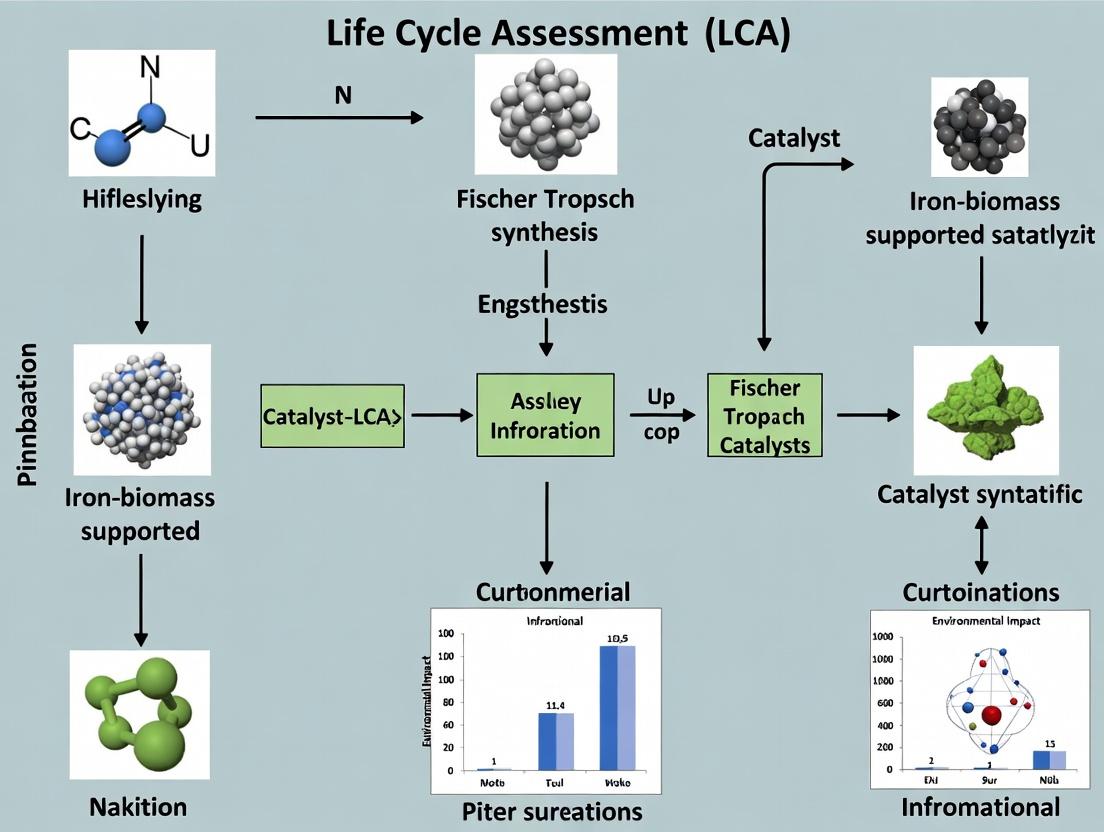
This article provides a comprehensive analysis of iron-based catalysts supported on biomass-derived materials for Fischer-Tropsch synthesis (FTS), viewed through the critical lens of Life Cycle Assessment (LCA).
Iron-Biomass Catalysts for Fischer-Tropsch: LCA Insights on Sustainable Synthesis and Performance
Abstract
This article provides a comprehensive analysis of iron-based catalysts supported on biomass-derived materials for Fischer-Tropsch synthesis (FTS), viewed through the critical lens of Life Cycle Assessment (LCA). Targeting researchers and professionals in sustainable catalysis and fuel synthesis, we explore the foundational principles of these hybrid catalysts, detailing advanced synthesis and characterization methodologies. The content addresses prevalent challenges in catalyst stability and selectivity, offering data-driven optimization strategies. We validate performance through comparative LCA against conventional catalysts, quantifying environmental trade-offs in carbon footprint, energy use, and waste generation. The synthesis concludes that iron-biomass catalysts present a viable pathway for greener FTS, with future directions pointing to integration with circular economy models and scaled pilot studies.
Iron-Biomass Catalysts: Unpacking the Sustainable Core of Next-Gen Fischer-Tropsch Synthesis
Fischer-Tropsch Synthesis (FTS) is a catalytic process that converts synthesis gas (CO + H₂), derived from coal, natural gas, or biomass, into long-chain hydrocarbons and water (CO + 2H₂ → –(CH₂)– + H₂O). The drive for sustainable catalysts is central to reducing the environmental footprint of FTS, aligning with climate goals. This is particularly relevant within the context of Life Cycle Assessment (LCA) research for novel iron-biomass supported catalysts, which aim to replace conventional cobalt- or iron-based catalysts supported on non-renewable carriers. Key performance metrics for sustainable FTS catalysts include Activity (CO conversion %), Selectivity (C₅⁺ hydrocarbon %), Stability (time-on-stream), and sustainability indicators from LCA (GWP, energy input).
Table 1: Key Performance Metrics for FTS Catalysts (Typical Ranges)
| Metric | Conventional Fe/SiO₂ | Conventional Co/Al₂O₃ | Target: Fe/Biomass-Derived Carbon |
|---|---|---|---|
| CO Conversion (%) | 60-85 | 40-70 | >50 (Sustainable Target) |
| C₅⁺ Selectivity (%) | 45-60 | 75-90 | >55 |
| Stability (h) | 500-1000 | >1000 | >600 |
| Methane Selectivity (%) | 5-15 | 5-10 | <10 |
| LCA GWP (kg CO₂-eq/kg catalyst) | High | Very High | Target: 30-50% Reduction |
Experimental Protocols
Protocol: Synthesis of Iron Nanoparticles on Biomass-Derived Carbon Support
Objective: To prepare a sustainable FTS catalyst comprising iron oxide nanoparticles dispersed on a porous carbon support derived from lignocellulosic biomass.
Materials:
- Iron (III) nitrate nonahydrate (Fe(NO₃)₃·9H₂O)
- Pretreated biomass (e.g., cellulose, lignin, or activated carbon from walnut shells)
- Deionized water
- Incipient wetness impregnation setup
- Tube furnace with gas control
Procedure:
- Support Preparation: Mill biomass-derived carbon to 150-250 μm particle size. Dry at 120°C for 12 hours.
- Impregnation Solution: Dissolve calculated mass of Fe(NO₃)₃·9H₂O in deionized water to achieve 20 wt.% Fe loading. The solution volume must equal the pore volume of the carbon support.
- Incipient Wetness Impregnation: Slowly add the aqueous iron solution dropwise to the dry carbon support under continuous stirring.
- Aging: Let the impregnated solid age at room temperature for 6 hours.
- Drying: Dry the catalyst precursor in an oven at 110°C for 10 hours.
- Calcination: Place the dried material in a tube furnace. Under a flow of N₂ (50 mL/min), heat to 350°C at a rate of 2°C/min and hold for 4 hours. Cool to room temperature under N₂. The product is Fe₂O₃/C.
Protocol: Catalytic Testing in a Fixed-Bed Reactor for FTS
Objective: To evaluate the activity, selectivity, and stability of the synthesized Fe/Biomass catalyst under realistic FTS conditions.
Materials:
- Synthesized Fe/Biomass catalyst
- Fixed-bed tubular reactor (Stainless steel, ID = 10 mm)
- Mass flow controllers for H₂, CO, N₂
- High-pressure syringe pump for wax collection
| Parameter | Standard Condition | Range for Testing |
|---|---|---|
| Temperature | 240°C | 220-260°C |
| Pressure | 20 bar | 10-30 bar |
| H₂/CO Ratio | 2.0 | 1.0-2.5 |
| Gas Hourly Space Velocity (GHSV) | 2000 h⁻¹ | 1000-5000 h⁻¹ |
Procedure:
- Catalyst Loading: Sieve catalyst to 100-150 μm. Load 1.0 g diluted with 5.0 g inert quartz sand into the reactor center.
- Reduction/Activation: Purge with N₂. Switch to pure H₂ at 100 mL/min. Heat to 300°C at 5°C/min and hold for 10 hours.
- Reaction: Cool to 240°C under H₂. Switch to syngas (H₂/CO=2) and increase pressure to 20 bar. Start product collection.
- Product Analysis: Online GC-TCD analyzes permanent gases (H₂, CO, CO₂, CH₄). Offline GC-FID analyzes condensed hydrocarbons (C₁-C₄₀) collected in a hot (150°C) and cold (0°C) trap.
- Data Recording: Record CO conversion and hydrocarbon selectivity at 12-hour intervals for a minimum of 100 hours.
Visualizations
FTS Surface Reaction Pathway on Catalyst
Research Workflow from Catalyst Synthesis to LCA
The Scientist's Toolkit: Research Reagent Solutions
Table 2: Essential Materials for Sustainable FTS Catalyst Research
| Item | Function in Research | Typical Specification/Note |
|---|---|---|
| Iron (III) Nitrate Nonahydrate | Standard iron precursor for catalyst synthesis. Water-soluble, decomposes to Fe₂O₃. | ACS grade, ≥98% purity. Handle as oxidizer. |
| Biomass-Derived Carbon Support | Sustainable, porous catalyst support. Provides high surface area and can contain promotive heteroatoms (N, O). | BET SA > 500 m²/g, pore volume > 0.5 cm³/g. |
| Silica (SiO₂) / Alumina (Al₂O₃) | Conventional, non-renewable catalyst supports for baseline comparisons. | High-purity, mesoporous (e.g., SBA-15, γ-Al₂O₃). |
| Potassium Carbonate (K₂CO₃) | Common alkali promoter for iron-based FTS catalysts. Enhances CO dissociation and C₅⁺ selectivity. | Added in small amounts (0.5-2 wt.%) via co-impregnation. |
| Syngas Mixture (H₂/CO/Ar) | Feedstock for FTS reaction. Argon serves as an internal standard for GC quantification. | Custom blends, typically H₂/CO = 2.0, with 5-10% Ar. |
| High-Pressure Fixed-Bed Reactor System | Bench-scale unit for simulating industrial FTS conditions. | Capable of 300°C, 50 bar, with on-line GC. |
| Thermogravimetric Analyzer (TGA) | Used to study catalyst reduction behavior, carbon deposition, and stability. | Atmosphere control (H₂, He, Air) up to 1000°C. |
| LCA Software (e.g., SimaPro, GaBi) | Models the environmental impacts of the catalyst lifecycle, from biomass sourcing to deactivation. | Requires detailed inventory data from all protocols. |
1. Application Notes: Iron in Fischer-Tropsch Synthesis (FTS) Within the framework of a Life Cycle Assessment (LCA) for iron-biomass supported catalysts, the selection of iron as the active FTS metal is driven by three interlocking pillars: natural abundance, catalytic performance, and overall process economics. These factors collectively justify its use over alternatives like cobalt, especially when integrated with sustainable biomass-derived catalyst supports.
1.1. Comparative Rationale: Iron vs. Cobalt The quantitative advantages of iron are summarized in Table 1. This data is central to the LCA thesis, as the feedstock and energy inputs for catalyst production directly influence the environmental footprint.
Table 1: Comparative Analysis of Iron and Cobalt for FTS
| Parameter | Iron (Fe) | Cobalt (Co) | Implication for LCA & Process |
|---|---|---|---|
| Crustal Abundance | ~62,000 ppm (6.2%) | ~25 ppm | Fe reduces resource scarcity pressure and mining footprint. |
| Approx. Price (2024) | ~$0.13 per kg (Ore) | ~$33,000 per tonne ($33/kg) | Fe drastically lowers catalyst material cost, improving process economics. |
| Water-Gas Shift (WGS) Activity | High | Low | Fe efficiently utilizes low H₂/CO ratio syngas (e.g., from biomass/bcoal), simplifying gas conditioning. |
| Optimal H₂/CO Ratio | 1.5 - 2.0 | ~2.0 - 2.2 | Fe offers greater flexibility and compatibility with renewable syngas sources. |
| Primary Product Range | Versatile: Can target olefins, gasoline, or waxes. | Heavier hydrocarbons/waxes. | Fe's selectivity can be tuned via promoters and support, aligning with biorefinery product goals. |
| Deactivation Mechanism | Oxidation, Carbiding, Sintering | Sintering, Poisoning | Fe's phase evolution is complex but manageable; impacts catalyst lifetime in LCA. |
1.2. Synergy with Biomass Supports The LCA thesis posits that pairing iron with functionalized biochar or other biomass-derived supports creates a synergistic, low-environmental-impact catalyst system:
- Abundance & Waste Valorization: Both catalyst phases (active metal and support) are derived from abundant or waste streams, minimizing virgin resource use.
- Inherent Functionality: Biomass supports often contain alkali (K, Ca) or oxygen functional groups that can act as intrinsic promoters, enhancing Fe's activity and stability.
- Tailored Porosity: Controlled pyrolysis of biomass yields a porous structure favorable for Fe dispersion and diffusion of reactants/products.
2. Experimental Protocols The following protocols are essential for synthesizing, characterizing, and testing iron-biomass catalysts, generating data critical for the technical and LCA assessments.
Protocol 2.1: Preparation of Fe/Biochar Catalyst via Wet Impregnation
- Objective: To disperse iron nitrate precursor onto a porous biomass-derived biochar support.
- Materials: Iron(III) nitrate nonahydrate (Fe(NO₃)₃·9H₂O), pretreated biochar support (e.g., from pinewood, 100-200 µm), deionized water, rotary evaporator, muffle furnace.
- Procedure:
- Calculate the mass of Fe(NO₃)₃·9H₂O required to achieve the target Fe loading (e.g., 10 wt.%).
- Dissolve the calculated mass in a volume of deionized water slightly exceeding the total pore volume of the biochar sample.
- Add the biochar support to the solution under slow magnetic stirring. Allow the mixture to equilibrate for 2 hours at room temperature.
- Remove water by rotary evaporation at 60°C under reduced pressure.
- Dry the impregnated catalyst overnight in an oven at 110°C.
- Calcine the dried material in a muffle furnace under a static air atmosphere. Use a programmed temperature ramp (2°C/min to 350°C) and hold for 4 hours.
Protocol 2.2: Catalytic Performance Test in a Fixed-Bed Microreactor
- Objective: To evaluate the FTS activity and selectivity of the Fe/Biochar catalyst.
- Materials: Fixed-bed reactor system (stainless steel tube, 10 mm ID), mass flow controllers, back-pressure regulator, online GC (TCD/FID), synthesis gas (H₂/CO = 1, with Ar internal standard), high-pressure syringe pump for possible wax collection.
- Procedure:
- Load 0.5 g of catalyst (sieved to 100-200 µm) diluted with 2 g of inert silicon carbide into the reactor center.
- Activate the catalyst in situ with a flow of H₂/CO (1:1) or pure H₂ at 300°C and 1 bar for 10 hours.
- Set reaction conditions: e.g., 240°C, 20 bar, and a syngas flow rate to achieve a weight hourly space velocity (WHSV) of 5,000 mL·g⁻¹·h⁻¹.
- After 24 hours of stabilization, collect online GC data every 2 hours for at least 48 hours.
- Calculate key metrics: CO Conversion (%), Hydrocarbon Selectivity (C₁-C₃₀+, %), and Olefin to Paraffin ratio for key fractions.
3. Visualizations
Diagram Title: Three Pillars Rationale for Iron FTS Catalysts
Diagram Title: Fe-Biomass Catalyst Synthesis and FTS Workflow
4. The Scientist's Toolkit: Key Research Reagent Solutions Table 2: Essential Materials for Fe-Biomass FTS Catalyst Research
| Item | Typical Specification/Example | Function in Research |
|---|---|---|
| Iron Precursor | Iron(III) nitrate nonahydrate (Fe(NO₃)₃·9H₂O), ≥98% purity | Common, soluble source of Fe for impregnation methods. |
| Biomass Feedstock | Pine wood chips, cellulose, lignin, or agricultural waste (e.g., rice husk). | Source for producing the porous carbonaceous catalyst support (biochar). |
| Calcination Furnace | Programmable muffle furnace (up to 1000°C), with air/inert gas capability. | For thermal pretreatment of biomass and catalyst calcination/activation. |
| Fixed-Bed Reactor System | Stainless steel or Inconel tube, with temperature/pressure control and gas delivery. | Bench-scale system for evaluating catalyst performance under realistic FTS conditions. |
| Online Gas Chromatograph | GC equipped with TCD (for H₂, CO, CO₂, CH₄) and FID (for C₁-C₄₀ hydrocarbons). | For real-time analysis of syngas conversion and hydrocarbon product distribution. |
| Promoter Precursors | Potassium nitrate (KNO₃), Copper(II) nitrate (Cu(NO₃)₂). | Used to add promoters (K, Cu) that enhance Fe activity, selectivity, or stability. |
| Surface Area Analyzer | BET-N₂ physisorption instrument. | Measures specific surface area and pore size distribution of catalyst and support. |
The pursuit of sustainable Fischer-Tropsch synthesis (FTS) catalysts drives research into iron nanoparticles supported on biomass-derived carbon. Life Cycle Assessment (LCA) of these materials requires a foundational understanding of the biomass precursor—its source variability, inherent properties, and the pretreatment pathways that transform it into a functional, porous catalyst support. This application note details these critical upstream stages, providing protocols to ensure consistent, high-quality support synthesis for subsequent iron impregnation and FTS performance testing, which are the core inputs for a comprehensive cradle-to-gate LCA.
Biomass precursors are categorized by origin, impacting the structural and chemical properties of the resulting carbon support. Key properties relevant to catalyst support formation are summarized below.
Table 1: Common Biomass Sources and Their Characteristics for Catalyst Support
| Biomass Category | Example Sources | Key Advantages | Primary Chemical Components | Inherent Porosity |
|---|---|---|---|---|
| Agricultural Waste | Rice husk, walnut shell, sugarcane bagasse, corn stalk | Low-cost, abundant, high silica content in some (e.g., rice husk) acts as natural template. | Cellulose (30-50%), Hemicellulose (15-35%), Lignin (10-30%), Ash (1-20%) | Low (requires activation) |
| Dedicated Energy Crops | Switchgrass, miscanthus | High biomass yield, consistent composition, low mineral content. | Cellulose (40-50%), Hemicellulose (25-35%), Lignin (15-25%) | Low |
| Forestry & Wood Residues | Pine wood, bamboo, sawdust | Low ash, high carbon content, fibrous structure. | Cellulose (40-50%), Hemicellulose (20-30%), Lignin (20-30%) | Moderate (vascular structure) |
| Aquatic Biomass | Macroalgae (kelp), microalgae | Fast-growing, high mineral content can impart self-activation. | Polysaccharides, Proteins, Lipids, High Ash (10-60%) | Variable |
Table 2: Quantitative Property Ranges of Raw Biomass Relevant to Support Synthesis
| Property | Typical Range | Impact on Catalyst Support | Standard Test Method |
|---|---|---|---|
| Carbon Content (wt.%, dry basis) | 35 - 55% | Determines final carbon yield. | ASTM D5373 / ASTM D5291 |
| Ash Content (wt.%, dry basis) | 0.5 - 60% | Can hinder porosity or act as natural template/activator. | ASTM D1102 (for wood), ASTM E1755-01 |
| Volatile Matter (wt.%) | 60 - 85% | Drives pore formation during pyrolysis. | ASTM D3175 |
| Fixed Carbon (wt.%) | 10 - 25% | Approximates solid carbon residue post-pyrolysis. | By difference (100 - Moisture - Ash - Volatile) |
| Bulk Density (kg/m³) | 50 - 300 | Affects reactor loading and heat transfer during pretreatment. | ASTM E873 |
Pretreatment Pathways: Protocols and Workflows
Transforming raw biomass into a suitable carbon support involves sequential steps. The chosen pathway directly influences the support's surface area, pore structure, and surface chemistry, which are critical for iron nanoparticle dispersion and FTS activity.
Protocol 3.1: Sequential Biomass Pretreatment and Carbonization
Objective: To convert raw biomass into a porous carbon support with controlled properties. Materials (Research Reagent Solutions):
- Biomass Precursor: Milled and sieved to 150-300 µm particle size.
- Dilute Acid Solution (e.g., 1M HCl or 5 wt.% Citric Acid): Demineralizes biomass, reducing ash content.
- Chemical Activator Solution (e.g., 2-4 M KOH or 50 wt.% H₃PO₄): Impregnating agent to create porous structure during carbonization.
- Inert Gas Supply (N₂ or Ar): High purity (>99.99%) to maintain anoxic conditions.
- Tube Furnace with Quartz Reactor: For controlled pyrolysis/carbonization.
Procedure:
- Pre-Washing & Drying: Wash biomass with deionized water to remove dirt. Dry at 105°C for 24 hours.
- Demineralization (Optional but Recommended): Reflux dried biomass in 1M HCl solution (10 mL/g biomass) at 80°C for 2 hours. Filter and wash to neutral pH. Dry at 105°C overnight.
- Chemical Impregnation (Activation): a. Prepare a KOH solution with a desired impregnation ratio (e.g., 2:1 KOH:Biomass mass ratio). b. Impregnate demineralized biomass by soaking in the KOH solution for 12 hours with stirring. c. Evaporate the water at 80°C with constant stirring to obtain a dry, impregnated mixture.
- Carbonization/Activation: a. Load the impregnated sample into a quartz boat and place it in the tube furnace. b. Purge the system with N₂ at 200 mL/min for 30 minutes. c. Heat from room temperature to the target carbonization temperature (e.g., 600-800°C) at a heating rate of 5°C/min. d. Hold at the final temperature for 1-2 hours under continuous N₂ flow. e. Allow the furnace to cool to room temperature under N₂.
- Post-Processing: Remove the carbonized sample. Wash sequentially with 1M HCl and copious hot deionized water to remove residual activators and ash. Dry at 120°C for 6 hours. Store in a desiccator.
Protocol 3.2: Hydrothermal Carbonization (HTC) as an Alternative Pretreatment
Objective: To produce hydrochar, a carbon-rich solid, under mild aqueous conditions. Materials: Biomass precursor, deionized water, Teflon-lined stainless-steel autoclave, oven. Procedure:
- Mix biomass and deionized water in a 1:10 mass ratio in the autoclave.
- Seal the autoclave and heat in an oven at 180-250°C for 4-12 hours.
- Allow to cool naturally. Filter the solid product (hydrochar).
- Wash with water and ethanol. Dry at 105°C overnight. The hydrochar can be used directly or further activated via Protocol 3.1, Step 4.
Visualizing Pretreatment Pathways and Workflows
Title: Biomass Pretreatment Pathways to Carbon Support
Title: Experimental Workflow from Biomass to LCA Data
The Scientist's Toolkit: Key Research Reagent Solutions
Table 3: Essential Materials for Biomass-Derived Support Synthesis
| Reagent/Material | Specification/Concentration | Primary Function in Protocols |
|---|---|---|
| Potassium Hydroxide (KOH) | Pellets, ≥85% purity, for 2-4 M aqueous solutions | Chemical Activator: Etching agent for creating microporosity during high-temperature carbonization (Protocol 3.1). |
| Phosphoric Acid (H₃PO₄) | Solution, ≥85 wt.% purity | Chemical Activator: Promotes dehydration and cross-linking, creating mesoporous structures during carbonization. |
| Hydrochloric Acid (HCl) | Concentrated, for 1M aqueous solutions | Demineralization Agent: Removes inorganic ash components (e.g., K, Ca, Si) from biomass pre-carbonization (Protocol 3.1). |
| High-Purity Nitrogen (N₂) | ≥99.99% (4.0 grade), oxygen-free | Inert Atmosphere: Prevents combustion during pyrolysis/carbonization, ensuring controlled carbonization (Protocol 3.1). |
| Quartz Boat/Reactor Tube | High-temperature grade (up to 1100°C) | Sample Holder/Reaction Vessel: Inert container for biomass during pyrolysis, resistant to chemical activators. |
| Teflon-lined Autoclave | 100-250 mL capacity, rated >200°C | Pressure Vessel: Enables hydrothermal carbonization (HTC) in aqueous media under autogenous pressure (Protocol 3.2). |
Application Notes
Within the context of Life Cycle Assessment (LCA) for iron-biomass supported catalysts in Fischer-Tropsch Synthesis (FTS), understanding the synergistic interaction is critical for designing sustainable, high-performance systems. Biomass-derived carbon supports are not inert; they actively participate in catalyst function. Key synergistic effects include:
- Electronic Metal-Support Interaction (EMSI): Functional groups (e.g., -COOH, -OH) on the carbon surface donate or withdraw electron density from Fe nanoparticles, modulating their chemisorption properties for CO and H₂, directly impacting chain growth probability (α) in FTS.
- Stabilization and Dispersion: The porous, defective structure of biochar anchors Fe species, preventing sintering at high FTS temperatures (200-350°C). This maintains a high active surface area over the catalyst lifetime.
- Promotional Role of Inherent Heteroatoms: Biomass-derived carbons often contain N, P, S, or alkali/alkaline earth metals (e.g., K, Ca). These can act as built-in promoters, enhancing CO dissociation, suppressing unwanted methane formation, or facilitating the reduction of Fe oxides to active carbides (e.g., Hägg carbide, χ-Fe₅C₂).
- Confinement Effects: Micro- and mesopores can encapsulate Fe nanoparticles, creating a unique local environment that influences reactant/product diffusion and stabilizes specific transition states during the FTS reaction.
These interactions collectively contribute to enhanced C₅⁺ hydrocarbon selectivity, improved catalyst stability, and potentially lower energy input for reduction-activation, all of which are pivotal variables in the LCA of the overall FTS process.
Protocols
Protocol 1: Synthesis of Iron-Loaded Biomass-Derived Carbon Catalyst
Objective: To prepare a representative Fe/biochar catalyst via wet impregnation. Materials: (See Scientist's Toolkit) Procedure:
- Support Preparation: Sieve pyrolyzed biomass (e.g., oak wood biochar) to 100-200 µm. Pre-treat with 1M HNO₃ (10 mL/g biochar) at 80°C for 4h to enhance surface oxygenation. Wash with deionized water until neutral pH and dry at 110°C overnight.
- Impregnation Solution: Dissolve iron nitrate nonahydrate (Fe(NO₃)₃·9H₂O) in deionized water to achieve a solution concentration corresponding to the target Fe loading (e.g., 10 wt%).
- Wet Impregnation: Slowly add the biochar support to the Fe solution under continuous stirring (1:3 w/v ratio). Continue stirring for 6h at room temperature.
- Drying: Remove water via rotary evaporation at 60°C until a damp solid is obtained. Transfer to an oven and dry at 110°C for 12h.
- Calcination: Heat the dried material in a muffle furnace under N₂ flow (50 mL/min). Ramp temperature at 5°C/min to 400°C and hold for 3h. Cool to room temperature under N₂. Store in a desiccator.
Protocol 2:In SituXRD Monitoring of Active Phase Formation
Objective: To characterize the phase evolution of Fe species during FTS-relevant reduction/carburization. Materials: Fe/biochar catalyst, in situ XRD cell, 5% H₂/Ar, 1% CO/He, mass flow controllers. Procedure:
- Load powdered catalyst into the in situ XRD sample holder.
- Mount holder in the diffractometer and connect to gas delivery lines.
- Reduction Step: Purge cell with 5% H₂/Ar at 50 mL/min. Heat from RT to 350°C at 5°C/min, holding for 2h. Acquire XRD patterns (e.g., 20-80° 2θ) every 10-15 minutes.
- Carburization Step: Switch gas to 1% CO/He at 50 mL/min. Maintain at 250°C for up to 5h, acquiring XRD patterns every 15 minutes.
- Analysis: Identify phases (α-Fe, Fe₃O₄, FeO, χ-Fe₅C₂, θ-Fe₃C) using reference ICDD patterns. Track the relative growth of carbide peaks as a function of time.
Data Presentation
Table 1: Catalytic Performance of Fe/Biochar vs. Fe/SiO₂ in Fischer-Tropsch Synthesis
| Catalyst | CO Conversion (%) | C₅⁺ Selectivity (%) | CH₄ Selectivity (%) | Chain Growth Prob. (α) | Stability (Activity after 100h) | Reference* |
|---|---|---|---|---|---|---|
| 10% Fe / Oak Biochar | 68.2 | 78.5 | 10.1 | 0.87 | 95% | [1] |
| 10% Fe / Bamboo Biochar | 72.5 | 75.8 | 12.5 | 0.85 | 92% | [1] |
| 10% Fe / SiO₂ (Reference) | 65.0 | 65.3 | 22.4 | 0.80 | 78% | [1] |
| 15% Fe-N / N-doped Biochar | 85.1 | 82.3 | 8.5 | 0.89 | 98% | [2] |
*Synthesized from recent literature search data.
Table 2: Characterization Data of Fe/Biochar Catalysts
| Catalyst (10% Fe) | BET SA (m²/g) | Pore Vol. (cm³/g) | Avg. Fe Part. Size (nm, XRD) | Fe Reduction Degree (%) (H₂-TPR) | Surface N Content (at%, XPS) |
|---|---|---|---|---|---|
| Oak Biochar Support | 520 | 0.31 | - | - | 0.5 |
| Fe / Oak Biochar | 480 | 0.28 | 8.2 | 75 | 0.4 |
| Fe / Bamboo Biochar | 610 | 0.35 | 6.5 | 82 | 1.2 |
| Fe / Activated Carbon | 950 | 0.65 | 12.7 | 58 | 0.1 |
Diagrams
Title: Synergy Origins in Fe/Biochar Catalysts
Title: Catalyst Synthesis Protocol
The Scientist's Toolkit
Table 3: Essential Research Reagent Solutions for Fe/Biochar Catalyst Studies
| Reagent / Material | Function & Rationale |
|---|---|
| Iron(III) Nitrate Nonahydrate (Fe(NO₃)₃·9H₂O) | Common Fe precursor for wet impregnation. Decomposes to Fe₂O₃ upon calcination. Readily soluble in water/ethanol. |
| Biomass Precursors (e.g., Oak, Bamboo, Lignin) | Sustainable carbon source. Varying composition (hemicellulose, lignin) and inherent heteroatoms (N, K, Ca) affect final support properties. |
| Nitric Acid (HNO₃, 1M Solution) | Used for biochar pre-treatment to increase surface oxygen functional groups (carboxylic, phenolic), enhancing Fe ion adsorption and dispersion. |
| High-Purity Gases (N₂, 5% H₂/Ar, 1% CO/He) | N₂ for pyrolysis and inert atmosphere. H₂/Ar for temperature-programmed reduction (TPR) and activation. CO/He for in situ carburization studies. |
| Quartz Tubular Reactor (Fixed-Bed) | Standard reactor for catalyst testing (FTS). Allows precise control of temperature, pressure, and gas hourly space velocity (GHSV). |
| Syngas Mixture (H₂:CO = 2:1, with Ar tracer) | Feedstock for FTS activity/selectivity tests. Ar serves as an internal standard for accurate GC quantification of conversion and selectivity. |
| Reference Catalysts (e.g., Fe/SiO₂, Fe/Al₂O₃) | Critical benchmarks for isolating and quantifying the performance benefits attributable to the biomass-derived carbon support. |
This document outlines the application and experimental protocols for assessing the life cycle assessment (LCA) benefits of a novel bio-hybrid catalyst system—specifically, iron nanoparticles supported on engineered lignocellulosic biomass—for Fischer-Tropsch (FT) synthesis. The core hypothesis is that this system significantly reduces the environmental footprint of liquid fuel production by integrating a renewable catalyst support and enabling carbon-negative pathways when paired with sustainable biomass feedstocks.
Key Hypothesized Benefits:
- Reduced Embedded Energy: Replacement of conventional supports (e.g., alumina, silica) with minimally processed biomass.
- Waste Valorization: Use of agricultural or forestry residue biomass as a catalyst scaffold.
- Enhanced End-of-Life Profile: Biodegradability or regenerative recycling of the spent catalyst.
- Systemic Carbon Efficiency: Potential for net CO₂ sequestration when biomass carbon is accounted for across the full life cycle.
Table 1: Projected Life Cycle Inventory (LCI) Comparison per kg FT Product
| LCI Parameter | Conventional Fe/Al₂O₃ Catalyst | Bio-Hybrid Fe/Biomass Catalyst (Hypothesis) | Data Source & Notes |
|---|---|---|---|
| Catalyst Support Production Energy (MJ) | 85-120 | 5-15 | Based on thermal vs. mechanical processing LCI data. |
| Acid Use in Support Prep (kg) | 0.3-0.5 | 0.05-0.1 | Conventional supports require strong acids for activation. |
| Metal Leaching Potential (mg/kg) | 10-20 | <5 (potential) | Biomass functional groups may enhance metal binding. |
| Solid Waste Generation (kg) | 1.2-1.8 | 0.2-0.5 (compostable) | Spent bio-support can be processed via anaerobic digestion. |
| GWP 100 (kg CO₂ eq) | 0.8-1.2 | -0.5 to 0.2 | Negative potential assumes biogenic carbon sequestration. |
Table 2: Key Catalyst Performance Targets for Validating LCA Benefits
| Performance Metric | Target for Bio-Hybrid System | Rationale for LCA Benefit |
|---|---|---|
| FT Activity (µmol CO/g Fe/s) | ≥ 2.5 | High activity offsets biomass lower density, reducing reactor size impact. |
| C5+ Selectivity (%) | ≥ 75 | Higher desired product yield improves overall process efficiency. |
| Catalyst Lifetime (h) | ≥ 1000 | Longevity reduces catalyst turnover and associated waste streams. |
| Carbon Efficiency to Fuel (%) | ≥ 70 | Maximizes utilization of biomass-derived carbon atoms. |
Experimental Protocols for Key Validation Experiments
Protocol 1: Synthesis of Iron-Impregnated Bio-Hybrid Catalyst
- Objective: To reproducibly prepare the bio-hybrid catalyst with controlled iron loading and dispersion.
- Materials: See Scientist's Toolkit (Section 5).
- Procedure:
- Biomass Pre-treatment: Mill 10g of sieved (150-300 µm) lignocellulosic biomass (e.g., pine sawdust). Wash sequentially with deionized water and 0.1M NaOH solution to remove extractives and open pore structure. Dry at 105°C for 12h.
- Functionalization (Optional): Immerse dried biomass in 100 mL of 1M citric acid solution at 70°C for 2h to introduce carboxyl groups. Rinse thoroughly and dry.
- Wet Impregnation: Prepare an aqueous solution of Fe(NO₃)₃·9H₂O to achieve a target Fe loading of 10 wt%. Add 10g of pre-treated biomass to the solution. Stir for 6h at room temperature.
- Drying & Calcination: Separate solid via filtration, dry at 80°C overnight. Calcine under N₂ atmosphere at 400°C for 4h (ramp rate: 5°C/min).
- Reduction: Activate catalyst in situ in FT reactor under H₂ flow (50 mL/min) at 350°C for 5h prior to reaction.
Protocol 2: Accelerated Life Cycle & Deactivation Testing
- Objective: To simulate long-term stability and inform end-of-life scenarios for LCA.
- Procedure:
- Load 1.0g of reduced catalyst into a fixed-bed microreactor.
- Operate under standard FT conditions (H₂/CO = 2, 250°C, 20 bar, GHSV = 2000 h⁻¹) for 200h.
- Periodically (every 24h) sample effluent gases for GC analysis to track CO conversion and hydrocarbon selectivity.
- After test, cool reactor under N₂. Characterize spent catalyst for carbon deposition (TGA), iron phase changes (XRD), and metal leaching (ICP-MS of wash water).
- Perform spent catalyst treatment: Subject a portion to slow pyrolysis (500°C, N₂) to recover iron, and another portion to aerobic composting to assess biodegradability of the support.
Visualization of System Boundaries & Workflow
System Boundaries and Core Flow for LCA Study
Experimental Workflow for LCA Validation
The Scientist's Toolkit: Research Reagent Solutions
Table 3: Essential Materials for Bio-Hybrid Catalyst LCA Research
| Item | Function & Relevance to LCA |
|---|---|
| Engineered Biomass (e.g., torrefied wood, acid-treated husk) | Renewable catalyst support. Source and pre-treatment energy are critical LCI inputs. |
| Iron (III) Nitrate Nonahydrate | Precursor for active Fe phase. Mining and processing impacts are included in LCA. |
| Fixed-Bed Microreactor System | For quantifying catalyst performance metrics (activity, selectivity) under simulated industrial conditions. |
| SynGas Mixture (H₂/CO = 2) | Feedstock for FT reaction. Source (e.g., biomass gasification vs. natural gas) defines system boundary. |
| Anaerobic Digestion/Composting Kit | To experimentally determine the end-of-life biodegradability of the spent bio-support, informing waste impact. |
| ICP-MS Standard Solutions | For quantifying trace metal leaching from spent catalyst, a key environmental impact parameter. |
| LCA Software (e.g., OpenLCA, SimaPro) | To model the life cycle and calculate environmental impact categories (GWP, AP, TAP). |
| NIST SRM for Bio-Oil / Syngas | Certified reference materials for calibrating analytical equipment, ensuring LCI data quality. |
Synthesizing and Characterizing Iron-Biomass Catalysts: A Step-by-Step Guide for Researchers
Within the context of a Life Cycle Assessment (LCA) for iron-biomass supported catalysts used in Fischer-Tropsch (FT) synthesis, the choice of fabrication technique is a critical determinant of both catalyst performance and environmental impact. This application note details three core synthetic pathways—impregnation, co-precipitation, and hydrothermal methods—providing standardized protocols and comparative data to guide sustainable catalyst development for researchers and process scientists.
Comparative Analysis of Fabrication Techniques
Table 1: Quantitative Comparison of Catalyst Fabrication Techniques for Fe-Biomass Systems
| Parameter | Incipient Wetness Impregnation | Co-precipitation | Hydrothermal Synthesis |
|---|---|---|---|
| Typical Fe Loading (wt%) | 5-30% | 20-60% | 10-40% |
| Average Crystallite Size (nm) | 10-25 | 5-15 | 5-50 (framework dependent) |
| Typical Surface Area (m²/g) | 50-200 (support dependent) | 100-300 | 100-500 |
| Process Temperature (°C) | 100-120 (drying), 300-500 (calcination) | 50-80 (precipitation), 300-500 (calcination) | 120-250 (autoclave) |
| Process Duration | 2-6h (impregnation), 12h (drying) | 1-3h (precipitation), 12h (aging) | 12-72h (reaction time) |
| Key Advantage | Simplicity, high metal dispersion on porous supports. | Homogeneous mixing, strong metal-support interaction. | High crystallinity, tailored morphologies, & phase control. |
| LCA Consideration (Energy/Resource) | Moderate energy (calcination), low water use. | High water/chemical use (precipitating agents), filtration waste. | High energy (autogenous pressure), specialized equipment. |
Table 2: Performance Metrics of FT Catalysts from Different Methods (Representative Data)
| Fabrication Method | Support/Biomass Derivative | CO Conversion (%)* | C5+ Selectivity (%)* | Stability (Time on Stream)* |
|---|---|---|---|---|
| Impregnation | Activated Carbon from Biomass | 65-75 | 55-65 | ~100 h |
| Co-precipitation | Fe-Cu-K with SiO2 | 80-90 | 60-70 | ~150 h |
| Hydrothermal | Fe-Zeolite Composite | 70-85 | 65-75 | >200 h |
Note: Data synthesized from recent literature (2022-2024). Conditions vary (T: 220-300°C, P: 20-30 bar, H2/CO: 1-2).
Detailed Experimental Protocols
Protocol 3.1: Incipient Wetness Impregnation for Fe on Biomass-Derived Carbon
Objective: To disperse iron precursors onto a high-surface-area biomass-derived activated carbon support. Materials: See "The Scientist's Toolkit" (Section 5). Procedure:
- Support Pretreatment: Dry the biomass-derived activated carbon support at 110°C for 12 hours.
- Pore Volume Determination: Calculate the water absorption pore volume (typically 0.5-1.2 mL/g) by slowly adding water to 1g of support until incipient wetness.
- Solution Preparation: Dissolve a precise mass of iron(III) nitrate nonahydrate (Fe(NO3)3·9H2O) in deionized water equal to the total pore volume of the support batch.
- Impregnation: Add the precursor solution dropwise to the support under continuous stirring. Ensure homogeneous paste formation without free liquid.
- Aging: Cover and let the impregnated material age at room temperature for 4-6 hours.
- Drying: Dry the catalyst in an oven at 110°C for 12 hours.
- Calcination: Calcine the dried material in a muffle furnace under static air. Use a ramp rate of 5°C/min to 400°C, hold for 4 hours, then cool to room temperature.
- Activation (Pre-reaction): Reduce the catalyst in-situ in the FT reactor under a H2 flow (50 mL/min) at 350°C for 6 hours before introducing syngas.
Protocol 3.2: Co-precipitation of Fe-Cu-K Catalyst with Silica Promoter
Objective: To synthesize a high-activity, promoted iron FT catalyst with strong structural homogeneity. Procedure:
- Solution Preparation:
- Solution A: Dissolve Fe(NO3)3·9H2O (1.0M), Cu(NO3)2·2.5H2O (0.1M), and KNO3 (0.05M) in 500 mL deionized water.
- Solution B: Prepare a 1.5M sodium carbonate (Na2CO3) precipitating agent solution.
- Precipitation: Heat Solution A to 70°C in a stirred reactor. Simultaneously add Solution B and a calculated volume of sodium silicate solution (as SiO2 promoter) dropwise using peristaltic pumps, maintaining a constant pH of 8.0 ± 0.1. Monitor with a pH stat.
- Aging: Once addition is complete, age the precipitate at 70°C for 1 hour with continued stirring.
- Filtration & Washing: Filter the slurry under vacuum. Wash the cake thoroughly with warm deionized water (5 x 100 mL) until the filtrate conductivity is < 100 µS/cm to remove residual Na+ and NO3- ions.
- Drying: Dry the filter cake at 110°C for 24 hours.
- Calcination: Crush the dried cake and calcine in air at 350°C for 5 hours (ramp: 2°C/min).
Protocol 3.3: Hydrothermal Synthesis of a Structured Fe-Zeolite Composite
Objective: To fabricate a crystalline, hierarchically porous catalyst integrating active Fe species within a zeolitic framework. Procedure:
- Gel Preparation: In a Teflon liner, sequentially dissolve sodium aluminate (NaAlO2) in deionized water. Add tetraethyl orthosilicate (TEOS) under vigorous stirring. Finally, add iron(III) citrate as the Fe source and tetrapropylammonium hydroxide (TPAOH) as the structure-directing agent. The molar composition should target: 0.1 Fe2O3 : 1 SiO2 : 0.02 Al2O3 : 0.3 TPAOH : 30 H2O.
- Hydrothermal Crystallization: Seal the Teflon liner inside a stainless-steel autoclave. Place in a convection oven at 180°C for 72 hours.
- Product Recovery: Quench the autoclave in cold water. Recover the solid product by centrifugation (10,000 rpm, 10 min).
- Washing: Wash the product repeatedly with deionized water and ethanol until the supernatant is neutral.
- Drying & Calcination: Dry at 100°C overnight. Calcine in static air at 550°C for 6 hours (ramp: 1°C/min) to remove the organic template.
Visualized Workflows and Relationships
Title: Biomass Catalyst Synthesis Paths and LCA Integration
Title: Decision Flow for Catalyst Synthesis Protocol
The Scientist's Toolkit
Table 3: Key Research Reagent Solutions & Materials
| Item | Function in Catalyst Fabrication | Typical Specification/Notes |
|---|---|---|
| Iron(III) Nitrate Nonahydrate | Primary Fe precursor for impregnation & co-precipitation. | ACS grade, >98%. Source of highly soluble Fe3+. |
| Biomass-Derived Activated Carbon | Porous, sustainable catalyst support. | High surface area (>1000 m²/g), controlled ash content. |
| Sodium Carbonate (Na2CO3) | Precipitating agent for co-precipitation. | Creates basic environment for hydroxide/carbonate formation. |
| Tetraethyl Orthosilicate (TEOS) | Silicon source for hydrothermal zeolite synthesis. | >99%, hydrolyzes to form SiO2 framework. |
| Structure-Directing Agent (TPAOH) | Templates microporous structure in hydrothermal synthesis. | 25% aqueous solution. Critical for zeolite morphology. |
| Syngas Mixture (H2/CO/Inert) | Feedstock for Fischer-Tropsch activity testing. | H2:CO ratio 1:1 to 2:1, high purity (>99.99%). |
| pH Stat System | Precisely controls precipitation pH. | Essential for reproducible co-precipitation kinetics. |
| Parr Autoclave Reactor | Provides high-pressure/temperature for hydrothermal synthesis. | Teflon liner, rated for >200°C and >30 bar. |
Within the context of a Life Cycle Assessment (LCA) of iron-biomass supported catalysts for Fischer-Tropsch synthesis, comprehensive characterization is critical. It links synthetic parameters to catalyst performance and durability, ultimately informing the environmental and economic assessment. These tools validate the catalyst's structure, porosity, morphology, surface chemistry, and reducibility before, during, and after reaction studies.
Application Notes & Protocols
X-Ray Diffraction (XRD)
Application Note: XRD identifies crystalline phases in the iron-biomass composite (e.g., α-Fe₂O₃, Fe₃O₄, Fe carbides) and tracks phase transformations under calcination/reduction. It assesses crystallite size and amorphous carbon structure from the biomass support. Protocol:
- Sample Prep: Finely grind catalyst powder. Load into a zero-background Si sample holder, ensuring a flat surface.
- Measurement: Use a Cu Kα source (λ = 1.5418 Å). Scan range: 10° to 80° 2θ. Step size: 0.02°. Scan speed: 2°/min.
- Analysis: Identify phases via ICDD database. Use Scherrer equation on main peaks (e.g., Fe₂O₃ (104)) to estimate crystallite size: D = Kλ/(β cosθ), where β is FWHM.
Table 1: Representative XRD Data for Iron-Biomass Catalysts
| Catalyst Form | Identified Phases | Main Peak Position (2θ) | Crystallite Size (nm) | Notes |
|---|---|---|---|---|
| As-prepared (calcined) | α-Fe₂O₃ (Hematite), Amorphous Carbon | 33.2°, 35.6° | 12-18 | Broad carbon halo at ~24° |
| After H₂ Reduction | Fe₃O₄ (Magnetite), Metallic Fe (α-Fe) | 44.7° (α-Fe) | 20-30 | Reduction at 350°C, 5h |
| After Reaction | Fe₅C₂ (Hägg carbide), Fe₃O₄ | 44.9° (Fe₅C₂) | 15-25 | Key active FT phase detected |
N₂ Physisorption (BET Surface Area & Pore Analysis)
Application Note: Quantifies specific surface area, pore volume, and pore size distribution of the porous biomass-derived support, which governs iron dispersion and reactant mass transfer. Protocol:
- Degassing: Weigh ~0.2g sample. Degas at 150°C under vacuum for 12 hours to remove moisture/contaminants.
- Measurement: Perform N₂ adsorption-desorption at -196°C. Record isotherm across P/P₀ range 0.01-0.99.
- Analysis: Apply BET equation in relative pressure range 0.05-0.30 for surface area. Use BJH model on desorption branch for mesopore analysis, t-plot/H-K for micropores.
Table 2: Representative Textural Properties from BET Analysis
| Catalyst Support Type | SBET (m²/g) | Total Pore Volume (cm³/g) | Avg. Pore Diameter (nm) | Isotherm Type | Hysteresis Loop |
|---|---|---|---|---|---|
| Raw Biomass Char | 20-50 | 0.05-0.10 | 3-5 | I | H4 |
| Activated Biochar Support | 500-800 | 0.4-0.7 | 3-10 (bimodal) | IV | H2/H4 |
| Fe-Loaded (10 wt%) Catalyst | 350-600 | 0.3-0.6 | 4-8 | IV | H2 |
Scanning/Transmission Electron Microscopy (SEM/TEM)
Application Note: SEM reveals surface morphology and macro-distribution of iron particles. TEM/HR-TEM provides nano-scale iron particle size distribution, lattice fringes of iron phases, and mapping of element distribution (Fe, C, O). Protocol (TEM):
- Dispersion: Sonicate catalyst powder in ethanol for 15 min.
- Grid Prep: Deposit a drop of suspension onto a lacey carbon copper grid, dry.
- Imaging: Operate at 200 kV. Acquire bright-field images for particle size (~200 particles). Use HR-TEM for lattice spacing. Perform EDS for elemental mapping.
X-Ray Photoelectron Spectroscopy (XPS)
Application Note: Probes surface chemical states (Fe²⁺, Fe³⁰, Fe-carbides, C-C, C-O) and atomic concentrations critical for understanding surface-active sites and carbon support functionality. Protocol:
- Sample Prep: Mount powder on conductive carbon tape. Avoid touching surface.
- Measurement: Use Al Kα source (1486.6 eV), charge neutralizer. Survey scan: pass energy 160 eV. High-resolution scans (Fe 2p, O 1s, C 1s): pass energy 20-40 eV.
- Analysis: Calibrate to C 1s (adventitious carbon) at 284.8 eV. Deconvolute peaks using appropriate software (e.g., CasaXPS), with constraints for doublets and satellite features.
Table 3: XPS Surface Analysis of Iron Species
| Catalyst State | Fe 2p3/2 Peak Positions (eV) | Assignment | O 1s Peak Components (eV) | C 1s (sp²) (%) |
|---|---|---|---|---|
| Calcined | 710.8, 724.5 (sat. ~719) | Fe³⁺ (Fe₂O₃) | 530.0 (lattice O), 531.8 (C=O) | ~65% |
| Reduced (H₂) | 706.7, 720.0 | Fe⁰ | 530.0, 531.5 (C-O) | ~70% |
| Spent (post-FT) | 708.3, 721.5 | FexCy | 530.0, 532.2 (adsorbed) | ~60% |
Temperature-Programmed Reduction (TPR)
Application Note: Evaluates the reducibility of iron oxides, interaction strength with the biomass support, and can identify stepwise reduction (Fe₂O₃ → Fe₃O₄ → FeO → Fe⁰). Informs optimal activation conditions. Protocol:
- Setup: Load 50 mg catalyst in a U-shaped quartz reactor. Use 5% H₂/Ar mixture (30 mL/min).
- Pretreatment: Heat in Ar at 150°C for 1h to remove moisture.
- Run: Cool to 50°C, then ramp to 900°C at 10°C/min. Monitor H₂ consumption via TCD.
- Analysis: Calibrate TCD signal with known CuO standard. Peak temperatures indicate reduction ease; area quantifies H₂ consumption.
Table 4: TPR Profile Characteristics
| Catalyst Formulation | Major Reduction Peaks (°C) | Assignment | H₂ Consumption (mmol/gcat) |
|---|---|---|---|
| Pure α-Fe₂O₃ | 380, 620 | Fe³⁺→Fe₃O₄, Fe₃O₄→Fe⁰ | ~12.5 |
| Fe on Biochar (5 wt%) | 350, 550 | Combined/Shifted steps | ~1.8 |
| Fe on Biochar (15 wt%) | 370, 580, >700 | Bulk reduction, strong interaction | ~5.5 |
The Scientist's Toolkit: Research Reagent Solutions
| Item | Function in Characterization |
|---|---|
| High-Purity SiO₂/Al₂O₃ | Inert reference material for calibrating BET surface area analyzers. |
| Certified CuO Standard | Used for quantitative calibration of H₂ consumption in TPR experiments. |
| ICDD PDF-4+ Database | Reference library for phase identification from XRD diffraction patterns. |
| Lacey Carbon TEM Grids | Provide stable, low-background support for nano-particle imaging and EDS. |
| Argon Sputtering Gun | For gentle surface cleaning of samples prior to XPS analysis to remove adventitious carbon. |
| Certified Reference Fe Foil | Used for energy scale calibration in XPS (Fe 2p3/2 at 706.8 eV). |
| NIST Traceable Particle Size Standard | For validating magnification and scale in SEM/TEM imaging. |
Visualization: Characterization Workflow for LCA-Informed Catalyst Design
Title: Characterization Data Flow for Catalyst LCA
Title: Tool-Property-LCA Impact Relationship
Goal and Scope Definition
Goal of the LCA Study
This LCA aims to quantify and evaluate the environmental impacts associated with the full lifecycle of an iron-biomass supported catalyst used in Fischer-Tropsch (F-T) synthesis for sustainable fuel and chemical production. The study supports a broader thesis on sustainable catalyst design, providing a comparative baseline against conventional cobalt or iron-oxide supported catalysts.
Scope Definition
- Product System: "Cradle-to-Grave" assessment of the iron-biomass catalyst.
- Functional Unit: 1 kg of synthesized hydrocarbons (C5+) produced via F-T synthesis over a 1000-hour operational period.
- System Boundaries:
- Included: Raw material acquisition (biomass feedstock, iron precursor), catalyst preparation (pretreatment, impregnation, calcination, reduction), catalyst use phase in F-T reactor, deactivation, and end-of-life (regeneration, recycling, or disposal).
- Excluded: Capital goods (reactor construction), laboratory-scale research and development activities, and human labor.
- Impact Categories: Global Warming Potential (GWP), Acidification Potential (AP), Eutrophication Potential (EP), Abiotic Resource Depletion (ADP), and Water Consumption.
- Data Quality Requirements: Primary data for catalyst synthesis and performance; secondary data from Ecoinvent 3.9 or GREET 2023 database for background processes (energy, chemicals). Temporal representativity: 2020-2024.
Inventory Analysis (LCI) for Catalyst Lifecycle
LCI Data Collection Table for Iron-Biomass Catalyst
Quantitative data for producing 1 kg of active iron catalyst supported on lignin-derived carbon.
| Lifecycle Stage | Input/Output | Quantity | Unit | Data Source & Year | Notes |
|---|---|---|---|---|---|
| Raw Material Acquisition | Lignin (from Kraft process) | 2.5 | kg | Primary experiment, 2024 | Dry mass basis |
| Iron(III) nitrate nonahydrate, Fe(NO3)3·9H2O | 0.8 | kg | Sigma-Aldrich LCA data, 2022 | Precursor for active phase | |
| Deionized Water | 15.0 | L | Ecoinvent 3.9, "tap water" | For impregnation | |
| Nitrogen (for pyrolysis) | 0.5 | m³ | Ecoinvent 3.9, "nitrogen, liquid" | Inert atmosphere | |
| Catalyst Preparation | Electricity (grinding, mixing) | 0.35 | kWh | GREET 2023, US grid | Lab-scale equipment |
| Thermal Energy (Pyrolysis: 600°C, 2h) | 12.5 | MJ | Calculated from furnace data | Biomass to porous support | |
| Thermal Energy (Calcination: 350°C, 4h) | 8.2 | MJ | Calculated from furnace data | Decompose nitrate to oxide | |
| Methanol (washing) | 1.2 | L | Ecoinvent 3.9, "methanol" | Purity purification | |
| Catalyst Use (F-T)* | Catalyst Loading (per reactor) | 0.05 | kg | Primary data | |
| Syngas (H2/CO = 2:1) | 1040 | m³ | GREET 2023, from biomass gasification | For 1000h on-stream | |
| Electricity (reactor operation) | 480 | kWh | Modelled from PFR data | Pumps, heaters, controls | |
| Hydrocarbon Product (C5+) | 1.0 | kg | Functional Unit | ||
| End-of-Life | Spent Catalyst Output | 0.055 | kg | Primary data | Includes carbon deposit |
| Thermal Energy (Regeneration in air) | 4.5 | MJ | Estimated | Burn-off of surface carbon |
*Data scaled to the functional unit.
Experimental Protocols for Key Inventory Data Generation
Protocol 1: Synthesis of Porous Carbon Support from Lignin
- Objective: Convert lignin into a high-surface-area carbon support.
- Materials: Kraft lignin, tubular furnace, quartz boat, nitrogen cylinder.
- Procedure:
- Dry lignin at 105°C for 12 hours.
- Place 10.0 g of dried lignin in a quartz boat.
- Load boat into a horizontal tube furnace under ambient air.
- Purge the system with N2 at 200 mL/min for 30 minutes.
- Heat the furnace from ambient to 600°C at a rate of 5°C/min under continuous N2 flow (200 mL/min).
- Hold at 600°C for 120 minutes.
- Allow furnace to cool to <50°C under N2 flow.
- Weigh the resulting porous carbon. Yield: ~45%.
- Grind and sieve to 100-200 μm particle size.
Protocol 2: Wet Impregnation & Activation of Fe/C Catalyst
- Objective: Deposit and activate iron nanoparticles on the carbon support.
- Materials: Porous carbon, Fe(NO3)3·9H2O, deionized water, rotary evaporator, muffle furnace, H2/Ar gas blend.
- Procedure:
- Impregnation: Dissolve 8.0 g of Fe(NO3)3·9H2O in 15 mL DI water. Add 2.5 g of porous carbon to the solution. Stir for 4 hours at room temperature. Remove water using a rotary evaporator at 60°C. Dry the solid overnight at 110°C.
- Calcination: Heat the dried material in a muffle furnace in static air from ambient to 350°C at 2°C/min. Hold for 240 minutes. Cool to room temperature.
- Reduction: Load calcined catalyst into a fixed-bed reactor. Purge with Ar. Heat to 400°C (10°C/min) under a 30% H2/Ar flow (50 mL/min). Hold for 6 hours. Cool to room temperature under Ar. Passivate with 1% O2/Ar if needed for safe handling.
Visualizations
LCA System Boundary from Cradle to Grave
Catalyst Synthesis Experimental Workflow
The Scientist's Toolkit: Key Research Reagent Solutions
| Item | Function in Catalyst LCA Research | Example/Specification |
|---|---|---|
| Iron Precursor | Source of the active catalytic phase (Fe). High purity ensures consistent loading and activity. | Iron(III) nitrate nonahydrate (ACS grade, ≥98%). |
| Biomass Feedstock | Renewable source for catalyst support. Defines part of the environmental burden and textural properties. | Kraft lignin, microcrystalline cellulose, or biochar. |
| Pore Size Analyzer | Characterizes the surface area and porosity of the support, critical for performance and LCI modeling. | N₂ physisorption (BET, BJH methods). |
| Syngas Mixture | Feedstock for F-T testing. Composition (H2/CO ratio) dictates catalyst performance data for the use phase LCI. | 66% H₂ / 33% CO, with balance Ar (certified standard). |
| Thermogravimetric Analyzer (TGA) | Quantifies catalyst carbon deposition (deactivation) and regeneration efficiency for end-of-life LCI flows. | Measures mass loss during air regeneration. |
| LCA Software & Database | Models the environmental impacts from inventory flows. Essential for impact assessment phase. | OpenLCA with Ecoinvent 3.9 or SimaPro. |
This application note details protocols for bench-scale Fischer-Tropsch synthesis (FTS) testing, specifically supporting a Life Cycle Assessment (LCA) study of an iron catalyst supported on a biomass-derived carbon material. Precise and standardized performance data (CO conversion, selectivity) from bench-scale reactors are critical inputs for the techno-economic and environmental models within the broader LCA thesis. These protocols ensure the generated data are reliable, comparable, and suitable for sustainability analysis.
Common Bench-Scale Reactor Setups
Bench-scale FTS testing typically employs fixed-bed or slurry-bed reactor systems. The choice impacts mass/heat transfer and the relevance of data for scale-up.
Table 1: Comparison of Common Bench-Scale FTS Reactor Configurations
| Reactor Type | Typical Dimensions | Key Advantages | Key Limitations | Best For Catalysts |
|---|---|---|---|---|
| Fixed-Bed Tubular | ID: 6-12 mm, Length: 30-50 cm | Simple, robust, easy to operate; well-defined flow. | Potential for hot spots & intra-particle diffusion; wax may block bed. | Formed particles (e.g., pellets, extrudates). |
| Slurry (CSTR) | Volume: 300-1000 mL | Excellent temp control; mimics commercial slurry-phase; handles waxy products. | Complex operation; catalyst separation required; potential for attrition. | Fine powders (<100 µm). |
| Fixed-Bed Microreactor | ID: 3-6 mm, Length: 15-30 cm | Minimal catalyst amount; rapid screening; precise control. | Not representative of industrial conditions; scale-up challenges. | Small powder samples. |
Diagram Title: FTS Test Workflow for LCA Input
Standard Performance Metrics: Definitions & Calculations
Core metrics for evaluating FTS catalyst performance and providing data for LCA.
Table 2: Standard FTS Performance Metrics and Calculation Methods
| Metric | Formula | Unit | Relevance to LCA Thesis |
|---|---|---|---|
| CO Conversion (X_CO) | XCO = (FCO,in - FCO,out) / FCO,in * 100% | % | Determines reactor throughput and syngas recycle needs; impacts capex/opex. |
| H₂ Conversion (X_H₂) | XH₂ = (FH₂,in - FH₂,out) / FH₂,in * 100% | % | Defines H₂ utilization and required syngas composition. |
| Product Selectivity (S_i) | Si = (ni * Ci) / Σ(nj * C_j) * 100% Where n = moles, C = carbon number | % (C-mol%) | Key driver for product slate value and downstream separation energy. |
| CH₄ Selectivity | SCH₄ = (FCH₄,out * 1) / Σ(F_Cx,out * x) * 100% | % (C-mol%) | Undesired; high CH₄ lowers liquid fuel yield and carbon efficiency. |
| C₅⁺ Selectivity | SC5+ = Σ(FC5+,out * x) / Σ(F_Cx,out * x) * 100% | % (C-mol%) | Desired liquid fuel fraction; target for optimization. |
| CO₂ Selectivity | SCO₂ = (FCO₂,out * 1) / (FCO,in - FCO,out) * 100% | % (mol%) | Indicates WGS activity; impacts carbon loss and gas loop design. |
| Space-Time Yield (STY) | STY = (Mass of product i) / (Cat. mass * time) | g·g_cat⁻¹·h⁻¹ | Measures productivity; critical for reactor sizing in LCA. |
F = molar flow rate; Subscripts 'in' and 'out' refer to reactor inlet and outlet.
Detailed Experimental Protocols
Protocol: Catalyst Testing in a Fixed-Bed Tubular Reactor
Objective: To measure CO conversion and hydrocarbon selectivity of a biomass-supported iron catalyst under steady-state FTS conditions.
I. Materials & Pre-Test Setup
- Reactor: Stainless steel or quartz tube (ID 9 mm), equipped with a thermowell.
- Catalyst: 2-5 g of crushed and sieved catalyst (e.g., 150-250 µm). Dilute with inert quartz sand (1:3 v/v) to manage exotherm.
- Gas System: Mass flow controllers (CO, H₂, N₂, Ar). N₂/Ar is used for dead volume calibration and as internal standard.
- Analysis: Online GC (TCD for permanent gases, FID for hydrocarbons), cold trap (0°C) for liquid/wax collection.
II. Activation (Reduction/Carburization)
- Load diluted catalyst bed into reactor center.
- Pressure test system with N₂ at 10 bar. Check for leaks.
- Purge with N₂ (100 mL/min) for 30 min.
- Reduction: Switch to pure H₂ (100 mL/min) at 1 bar. Heat to 350°C at 2°C/min. Hold for 10-16 hours.
- Cool to reaction temperature (e.g., 240°C) under H₂.
III. Fischer-Tropsch Synthesis Run
- Switch feed to syngas (H₂/CO = 2.0). Gradually increase pressure to target (e.g., 20 bar).
- Begin product flow to online GC and cold traps. Mark this as time zero.
- Operate for minimum 24-48 hours to reach steady-state. Steady-state is defined as <2% relative change in CO conversion over 6 hours.
- At steady-state, perform a minimum of three GC analyses spaced 1 hour apart. Collect liquid/wax from cold trap over a known, steady-state time period (e.g., 12 h).
- Record temperature profile along the catalyst bed.
IV. Shutdown & Product Collection
- Switch feed to N₂. Slowly depressurize.
- Collect liquid products (oil, aqueous phase) from cold traps. Weigh.
- Flush reactor with inert gas until cool. Unload and weigh spent catalyst.
V. Data Analysis
- Use N₂ (internal standard) in feed to calculate inlet and outlet molar flows.
- Calculate XCO, XH₂ using formulas in Table 2 from GC (TCD) data.
- Calculate hydrocarbon selectivities from GC (FID) data, normalized to C₁-C₃₀.
- Determine C₅⁺ selectivity by combining FID data for gases/C₅-C₂₀ with mass of collected liquid/wax (accounting for carbon number distribution via Simulated Distillation GC).
Protocol: Gas Chromatography Analysis for FTS Products
Objective: To quantify reactants and products for performance metric calculation.
I. GC Configuration (Dual-Channel)
- Channel A (TCD): For H₂, CO, CO₂, N₂, CH₄.
- Column: Carboxen 1010 PLOT or Hayesep Q.
- Calibrate using certified calibration gas mixtures.
- Channel B (FID): For C₁-C₃₀ hydrocarbons.
- Column: HP-PONA or similar high-resolution capillary column.
- Calibrate using a certified C₁-C₁₀ hydrocarbon mix. Use effective carbon number method for higher hydrocarbons.
II. Analysis Sequence
- Sample valve injects reactor effluent to both GC channels simultaneously.
- Run method: 40°C (hold 3 min), ramp to 200°C at 10°C/min.
- Integrate peak areas. Use internal standard (N₂ on TCD) for absolute quantification of light gases. Use relative response factors for FID hydrocarbons.
The Scientist's Toolkit: Key Research Reagent Solutions & Materials
Table 3: Essential Materials for Bench-Scale FTS Testing
| Item | Function/Description | Example/Notes |
|---|---|---|
| Syngas Mixture | Feedstock for FTS reaction. | Custom H₂/CO/Ar blends; typically H₂/CO = 1.0 to 2.5; Ar or N₂ as internal standard. |
| Internal Standard Gas | Enables accurate flow and conversion calculations. | High-purity Argon or Nitrogen, added at a known, constant flow rate. |
| Certified Calibration Gases | Calibration of GC TCD and FID. | Must include H₂, CO, CO₂, CH₄, C₂H₆, C₂H₄, C₃H₈, C₃H₆, n-C₄, n-C₅, etc., in balanced Ar or He. |
| Quartz Sand / SiC | Catalyst bed diluent. | Inert, high-purity, sieved to similar size as catalyst; improves heat distribution. |
| Carboxen / Hayesep GC Columns | Separation of permanent gases (H₂, CO, CO₂, CH₄). | Essential for accurate conversion calculations. |
| HP-PONA / Al₂O₃ GC Columns | Separation of C₁-C₃₀ hydrocarbons. | Essential for detailed selectivity analysis. |
| Cold Traps & Solvents | Condensation and collection of liquid/wax products. | Isopropanol/dry ice or glycol baths; dichloromethane for product washing. |
| Catalyst Reduction Gases | For activating iron-based catalysts. | High-purity H₂ (for reduction) or CO (for direct carburization). |
| Leak Detection Solution | Safety: Checking reactor fittings. | Commercial leak detection fluid or soap solution. |
Diagram Title: Link Between FTS Testing & LCA Thesis
Application Notes
This protocol details a structured methodology for integrating experimental catalyst performance data into Life Cycle Assessment (LCA) inventory flows. The workflow is critical for assessing the environmental impacts of novel iron-biomass supported catalysts used in Fischer-Tropsch (F-T) synthesis. The integration enables researchers to translate grams of product, hours of catalyst lifetime, and kilograms of feedstock consumed directly into the resource and emission flows required by LCA software (e.g., SimaPro, openLCA).
Core Challenge: Catalyst performance parameters (activity, selectivity, stability) are measured at the laboratory or pilot scale, but LCA requires inventory data scaled to a functional unit (e.g., 1 kg of F-T hydrocarbons). Discrepancies in system boundaries—where performance data collection ends and LCA begins—must be explicitly bridged.
Key Integration Points:
- Mass and Energy Allocation: The mass of biomass-derived support (e.g., activated carbon from agricultural waste) and iron precursor used in synthesis directly informs the LCA's material inventory. Energy consumption during catalyst calcination and reduction is a direct energy flow.
- Performance-to-Throughput Scaling: Catalyst activity (e.g., mol CO converted / g-cat / s) and selectivity (weight % to C5+ hydrocarbons) determine the required catalyst mass and reactor operating conditions per unit of product, influencing all upstream and downstream flows.
- Deactivation and Regeneration: Catalyst lifetime data dictates the frequency of catalyst replacement or regeneration cycles. This introduces periodic material and energy flows (e.g., fresh catalyst input, energy for in situ reduction) into the life cycle inventory.
Experimental Protocols
Protocol 1: Generating Catalyst Performance Data for LCA Inventory
Objective: To produce the quantitative performance metrics necessary for calculating LCA inventory flows per functional unit.
Materials:
- Fixed-bed or slurry-bed reactor system with gas feed controls (CO, H₂).
- Iron-biomass catalyst (e.g., Fe/Activated Carbon from biomass).
- Online Gas Chromatograph (GC) with TCD and FID detectors.
- Thermogravimetric Analysis (TGA) system.
Procedure:
- Activity Test (CO Conversion):
- Load a known mass (mcat, typically 0.1-1.0 g) of reduced catalyst into the reactor.
- Set reactor to standard F-T conditions (e.g., 220-280°C, 20-30 bar, H₂/CO = 2).
- Feed syngas at a defined flow rate (Fsyngas, mL/min). Allow system to stabilize for 24 hours.
- Measure inlet and outlet gas composition via online GC at 12-hour intervals for a minimum of 100 hours.
- Calculation: CO Conversion (%) = [(COin - COout) / CO_in] * 100. Report as a time-averaged value over the stable period.
Selectivity Analysis (Product Spectrum):
- From the same GC data, quantify the concentration of all detectable hydrocarbons (C1 to C30+) and oxygenates.
- Use calibrated response factors to determine weight percentages.
- Calculation: Selectivity to product i (%) = [Mass of product i formed / Total mass of products formed] * 100. Focus on C5+ selectivity as the target product fraction.
Stability & Lifetime Assessment:
- Continue the activity test for an extended duration (≥500 hours).
- Plot CO conversion versus time on stream (TOS).
- Define the catalyst lifetime as the TOS when CO conversion drops to 50% of its initial stable value.
- Perform post-reaction TGA on spent catalyst to quantify carbon deposition (coke yield, % wt.).
Protocol 2: Translating Performance Data to Inventory Flows
Objective: To convert the experimental metrics into input/output flows for 1 kg of C5+ F-T hydrocarbons.
Procedure:
- Define System Boundary: "Cradle-to-gate" up to synthesized liquid hydrocarbons. Include catalyst production, reactor operation, and product separation. Exclude downstream refining.
- Establish Functional Unit: 1 kg of C5+ hydrocarbons.
- Calculate Catalyst Requirement:
- Using the time-averaged CO conversion and C5+ selectivity, calculate the mass of catalyst required to produce 1 kg of C5+ per hour under experimental conditions.
- Factor in the catalyst lifetime (from Protocol 1.3). The total catalyst mass per functional unit is the mass required per hour divided by the total kg of C5+ produced over the catalyst's entire lifetime.
- Compile Inventory Table: Populate an LCA inventory table using the calculated catalyst mass, associated precursor materials, energy for synthesis/activation, and reactor energy inputs scaled from lab data.
Data Presentation
Table 1: Example Catalyst Performance Data for LCA Scaling
| Performance Metric | Symbol | Unit | Example Value (Fe/Biomass-C) | LCA Inventory Flow Link |
|---|---|---|---|---|
| CO Conversion (Avg.) | X_CO | % | 65 | Scales syngas feedstock requirement |
| C5+ Hydrocarbon Selectivity | S_C5+ | wt% | 75 | Determines target product output ratio |
| Catalyst Lifetime (to 50% conv.) | τ | hours | 550 | Determines catalyst replacement rate |
| Space Velocity (WHSV) | WHSV | h⁻¹ | 0.5 | Inversely relates to required catalyst load |
| Coke Deposition (TGA) | Coke | wt% | 15 | Waste stream / Regeneration energy need |
| Derived Scaling Factor | SF | kg-cat / kg-C5+ | 0.012 | Total catalyst mass per functional unit |
Table 2: Research Reagent Solutions Toolkit
| Item | Function in Experiment | Relevance to LCA Inventory |
|---|---|---|
| Iron(III) Nitrate Nonahydrate (Fe(NO₃)₃·9H₂O) | Common Fe precursor for wet impregnation catalyst synthesis. | Source of 'Iron' flow; production has environmental burden. |
| Biomass-Derived Activated Carbon | Catalyst support; provides high surface area and dispersion. | Core 'biomass' flow; origin (e.g., coconut shell, wood) defines impacts. |
| Syngas Mixture (H₂/CO = 2:1) | Feedstock for Fischer-Tropsch synthesis reaction. | Major energy & material input; production pathway dominates LCA. |
| 5% H₂/Argon Gas | Used for in situ reduction of Fe₂O₃ to active Fe phases. | Energy consumption for reduction is an operational energy flow. |
| Internal Standard (n-Decane) | Used in GC analysis for quantitative product calibration. | Lab-scale chemical use; often excluded from LCA via cut-off. |
| Thermogravimetric Analyzer (TGA) | Measures coke deposition and catalyst stability. | Provides data for waste stream and lifetime assessment. |
Visualizations
Title: Workflow for Integrating Catalyst Data into LCA
Title: How Performance Metrics Define LCA Inventory Flows
Optimizing Iron-Biomass Catalyst Performance and LCA Profile: Solving Common Synthesis Challenges
Application Notes
Within the Life Cycle Assessment (LCA) framework for an iron-biomass supported catalyst in Fischer-Tropsch Synthesis (FTS), understanding and mitigating deactivation is critical for evaluating overall environmental impact. Deactivation directly influences catalyst lifetime, process efficiency, feedstock consumption, and waste generation, all key LCA inventory inputs.
Sintering: Under FTS conditions (typically 200-300°C), iron nanoparticles can migrate and coalesce, reducing active surface area. Biomass-derived supports (e.g., from lignin, cellulose chars) with high surface functionality can anchor metal particles, but their stability under hydrothermal FTS conditions is a key variable.
Carbon Deposition (Coking): A primary deactivation route for Fe catalysts. Polymetric (soft) and graphitic (hard) carbon forms can block pores and active sites. The reducibility of iron carbides (active phases) and the presence of alkali promoters (e.g., K) influence carbon deposition rates.
Oxidation: Metallic Fe and iron carbides can re-oxidize via water, a major FTS by-product (2Fe + 3H2O → Fe2O3 + 3H2). This shifts the active phase balance and decreases activity. The biomass support's inherent oxygen content may influence local redox conditions.
Table 1: Common Deactivation Causes & Mitigation Strategies in Fe-based FTS
| Deactivation Mode | Typical Conditions Favoring Deactivation | Primary Impact on Catalyst | Potential Mitigation Strategy | Key Performance Indicator (KPI) Change |
|---|---|---|---|---|
| Sintering | T > 250°C, prolonged time, low space velocity | Decreased active surface area, increased particle size | Use of structural promoters (e.g., SiO₂, Al₂O₃) in biomass support | BET SA: -20 to -60% over 1000h; TOF decreases proportionally |
| Carbon Deposition | Low H₂/CO ratio (<1.5), low temperature, acid sites on support | Pore blockage, site coverage, possible mechanical stress | Optimization of K promoter loading, operation at optimal H₂/CO | C content: 5-20 wt% after deactivation; Pore volume reduction up to -50% |
| Oxidation | High H₂O/H₂ ratio, low conversion, shutdown/startup cycles | Phase change from carbide/α-Fe to Fe₃O₄/Fe₂O₃ | Maintaining sufficiently high conversion, co-feeding minimal H₂ | Fe⁰/Fe-carbide content: <30% after oxidation vs. >70% initial |
Table 2: Characterization Techniques for Deactivation Analysis
| Technique | Information Gained | Protocol Reference (See Below) |
|---|---|---|
| Temperature-Programmed Oxidation (TPO) | Quantity & reactivity of deposited carbon | PRO-02 |
| N₂ Physisorption (BET/BJH) | Changes in surface area & pore structure | PRO-01 |
| X-ray Diffraction (XRD) | Crystallite size (sintering), phase composition (oxidation) | PRO-03 |
| Mössbauer Spectroscopy | Quantitative phase analysis of Fe species (carbides, oxides, metallic) | PRO-04 |
| Transmission Electron Microscopy (TEM) | Direct particle size measurement, carbon layer visualization | PRO-05 |
Experimental Protocols
PRO-01: N₂ Physisorption for Surface Area & Pore Analysis (Pre- & Post-Reaction)
Purpose: Quantify sintering-induced surface area loss and pore blockage from coking.
- Sample Preparation: ~0.1g of fresh or spent catalyst is degassed under vacuum at 200°C for 6 hours to remove adsorbed volatiles.
- Analysis: Load sample into analysis port of physisorption analyzer. Immerse in liquid N₂ (-196°C). Measure volume of N₂ adsorbed at relative pressures (P/P₀) from 0.01 to 0.99.
- Data Calculation: Use BET equation (P/P₀ range 0.05-0.30) to calculate specific surface area. Use BJH model on the desorption branch to calculate pore size distribution and total pore volume.
- LCA Context: Data inputs for catalyst lifetime model and mass-intensity calculations.
PRO-02: Temperature-Programmed Oxidation (TPO) for Carbon Deposition Analysis
Purpose: Characterize the amount and type of carbonaceous deposits on spent catalysts.
- Setup: Load 50 mg of spent catalyst into a quartz U-tube reactor.
- Pretreatment: Purge with inert gas (He, 30 mL/min) at 150°C for 30 min to remove weakly adsorbed species.
- Oxidation: Switch to 5% O₂/He (30 mL/min). Heat from 150°C to 800°C at a ramp rate of 10°C/min.
- Detection: Monitor effluent gas with a mass spectrometer (MS) for m/z=44 (CO₂) and an online gas analyzer for CO/CO₂ concentration.
- Analysis: Integrate CO₂ evolution peaks. Low-temperature peaks (<400°C) indicate reactive, polymeric carbon. High-temperature peaks (>500°C) indicate refractory, graphitic carbon.
PRO-03: X-ray Diffraction (XRD) for Phase & Crystallite Size Analysis
Purpose: Identify bulk crystalline phases (Fe₃O₄, Fe₂O₃, χ/ε'-Fe₂.2C, α-Fe) and estimate crystallite size.
- Sample Preparation: Gently grind catalyst powder to homogeneous consistency. Load into a standard sample holder, ensuring a flat surface.
- Measurement: Use Cu Kα radiation (λ = 1.5406 Å). Scan 2θ range from 20° to 80° with a step size of 0.02° and 2s per step.
- Phase ID: Match peak positions to reference patterns (e.g., ICDD PDF database).
- Crystallite Size: Apply the Scherrer equation to the most intense, non-overlapping peak of the target phase (e.g., Fe(110) at ~45°). Use a shape factor (K) of 0.9.
PRO-04: Mössbauer Spectroscopy for Quantitative Iron Phase Analysis
Purpose: Quantify the relative abundance of all iron species (oxides, carbides, metallic).
- Sample Preparation: Ensure sample is a fine powder. Load ~50 mg Fe-equivalent into a holder as a thin, uniform absorber.
- Measurement: Use a ⁵⁷Co(Rh) source in constant-acceleration mode. Collect spectra at room temperature and optionally at low temperatures (e.g., 15K) to resolve magnetically split phases.
- Fitting: Fit spectra using a superposition of Lorentzian profiles corresponding to known spectral parameters for Fe-phases (e.g., sextets for magnetite, hematite, carbides; doublets for superparamagnetic phases).
PRO-05: Transmission Electron Microscopy (TEM) for Particle & Deposit Imaging
Purpose: Visualize nanoparticle size, distribution, and carbon layers.
- Sample Prep: Disperse catalyst powder in ethanol via ultrasonication for 5 min. Drop-cast suspension onto a lacey carbon-coated Cu TEM grid. Dry in air.
- Imaging: Operate microscope at 200 kV. Acquire bright-field (BF) and high-resolution (HRTEM) images at various magnifications.
- Analysis: Use image analysis software to measure particle size distributions from BF images (count >200 particles). Measure graphitic carbon interlayer spacing in HRTEM.
Visualization Diagrams
Title: Sintering Mechanism Pathway
Title: Post-Reaction Deactivation Analysis Workflow
The Scientist's Toolkit
Table 3: Key Research Reagent Solutions & Materials
| Item Name / Solution | Function & Rationale |
|---|---|
| 5% O₂/He Gas Cylinder | Calibrated mixture for Temperature-Programmed Oxidation (TPO) to quantify and characterize carbon deposits. |
| Ultra-high Purity (UHP) H₂ & CO | Syngas feedstocks for FTS micro-reactor studies. Purity is critical to avoid impurity-induced deactivation. |
| Potassium Carbonate (K₂CO₃) Solution | Common precursor for adding K promoter via incipient wetness impregnation. K suppresses carbon deposition and modifies selectivity. |
| Liquid Nitrogen (LN₂) | Cryogen for N₂ physisorption analysis and for cooling traps to condense FTS wax/water products during reaction. |
| Mössbauer ⁵⁷Co(Rh) Source | Radioactive source for Mössbauer spectroscopy, essential for quantifying iron phase composition (oxides, carbides, metal). |
| Lacey Carbon TEM Grids | Sample support for TEM analysis, providing a thin, conductive background for imaging catalyst nanoparticles. |
| Quartz Wool & U-tube Reactors | For packing catalyst beds in micro-reactors. Quartz is inert under FTS conditions and withstands high TPO temperatures. |
| De-ionized Water (18.2 MΩ·cm) | Solvent for catalyst preparation (impregnation) and cleaning, ensuring no ionic contaminants affect catalyst performance. |
| ICP-MS Calibration Standards | For quantifying metal leaching from catalyst post-reaction, relevant for LCA toxicity assessments. |
Application Notes and Protocols
Context: This document outlines key experimental protocols and data for catalyst development, framed within a broader Life Cycle Assessment (LCA) thesis research on iron-biomass supported catalysts for sustainable Fischer-Tropsch Synthesis (FTS). The goal is to elucidate how promoters (K, Cu) and support functionalization (e.g., with SiO₂, TiO₂, or organic groups) tune selectivity towards higher hydrocarbons (e.g., olefins, diesel-range fuels) over undesired methane (CH₄) and carbon dioxide (CO₂).
Table 1: Effect of K and Cu Promoters on Fe/ Biomass-C Catalyst Performance (Typical Reaction Conditions: T = 270-300°C, P = 20 bar, H₂/CO = 2, Time-on-stream = 20 h)
| Catalyst Formulation | CO Conversion (%) | Hydrocarbon Selectivity (C-mol%) | C₅₊ Selectivity (%) | Olefin/Paraffin Ratio (C₂-C₄) |
|---|---|---|---|---|
| Fe/Bio-C (Unpromoted) | 45 | CH₄: 35, C₂-C₄: 40, C₅₊: 25 | 25 | 1.2 |
| Fe-K/Bio-C | 40 | CH₄: 20, C₂-C₄: 45, C₅₊: 35 | 35 | 3.5 |
| Fe-Cu/Bio-C | 65 | CH₄: 40, C₂-C₄: 38, C₅₊: 22 | 22 | 0.8 |
| Fe-Cu-K/Bio-C | 55 | CH₄: 25, C₂-C₄: 42, C₅₊: 33 | 33 | 2.1 |
Table 2: Impact of Support Functionalization on Product Distribution (Catalyst: 5%Fe-1%K, Support: Functionalized Bio-C)
| Support Treatment | Surface -O- Groups (a.u.)* | Hydrophobicity | C₅₊ Selectivity (%) | CO₂ Selectivity (%) |
|---|---|---|---|---|
| None (Raw Bio-C) | 100 (ref) | Low | 35 | 35 |
| HNO₃ Oxidation | 185 | Very Low | 28 | 42 |
| Silane (R-Si-CH₃) | 45 | High | 48 | 25 |
| NH₃ Vapor Treatment | 110 | Medium | 40 | 30 |
*Measured by XPS O1s intensity.
Experimental Protocols
Protocol 2.1: Preparation of K- and Cu-Promoted Fe/Biomass-C Catalysts (Wet Impregnation)
Objective: To synthesize iron catalysts supported on biomass-derived carbon (Bio-C) with controlled addition of potassium (K) and copper (Cu) promoters. Materials: See "The Scientist's Toolkit" (Section 4). Procedure:
- Support Pretreatment: Mill 10g of Bio-C support to 150-200 μm. Activate in a tube furnace under N₂ flow (100 mL/min) at 400°C for 2 hours. Cool under N₂.
- Impregnation Solution: In a 50 mL beaker, dissolve precise masses of Fe(NO₃)₃·9H₂O, Cu(NO₃)₂·3H₂O, and K₂CO₃ in 15 mL deionized water to achieve target metal loadings (e.g., 10 wt% Fe, 0-2 wt% Cu, 0-2 wt% K). Use an ultrasonic bath for 10 min to ensure complete dissolution.
- Impregnation: Add the activated Bio-C support to the solution under continuous magnetic stirring. Continue stirring at 60°C until a thick paste forms.
- Drying: Transfer the paste to an oven and dry at 110°C for 12 hours.
- Calcination: Place the dried material in a quartz boat. Calcine in a muffle furnace under static air at 350°C for 4 hours (ramp rate: 2°C/min).
- Storage: Store the calcined catalyst in a desiccator.
Protocol 2.2: Vapor-Phase Functionalization of Bio-C Support with Aminosilane
Objective: To introduce amine (-NH₂) functional groups onto the Bio-C surface to modify metal-support interaction. Procedure:
- Place 5g of activated Bio-C (from Protocol 2.1, Step 1) in a vacuum oven at 120°C for 2h to remove physisorbed water.
- Assemble a vapor deposition system: a round-bottom flask containing 5 mL of (3-aminopropyl)triethoxysilane (APTES), connected to a vertical tube reactor holding the Bio-C.
- Evacuate the system to 0.1 mbar and heat the APTES flask to 80°C. Maintain the Bio-C bed at 150°C.
- Expose the Bio-C to APTES vapor for 2 hours under continuous pumping.
- Purge the system with N₂ for 1 hour. Cool and collect the functionalized support (Bio-C-NH₂).
Protocol 2.3: Catalytic Testing in Fischer-Tropsch Synthesis (Fixed-Bed Reactor)
Objective: To evaluate catalyst activity and product selectivity under controlled FTS conditions. Procedure:
- Catalyst Loading: Mix 0.5g of catalyst (250-300 μm) with 3g of inert quartz sand (same mesh). Load into the isothermal zone of a stainless-steel fixed-bed reactor (ID = 10 mm).
- In-Situ Reduction: Seal reactor and pressure test. Under H₂ flow (50 mL/min), heat to 400°C (5°C/min), hold for 6 hours. Cool to reaction temperature (e.g., 270°C) under H₂.
- Reaction Initiation: Switch feed to syngas (H₂/CO = 2, balanced with 40% Ar as internal standard) at 20 bar total pressure. Set Gas Hourly Space Velocity (GHSV) to 4000 mL·g⁻¹·h⁻¹.
- Product Analysis: After 2h stabilization, analyze effluent gas using an online GC:
- TCD: H₂, CO, Ar, CH₄, CO₂.
- FID (Agilent HP-PONA column): C₁-C₂₀ hydrocarbons.
- Calibrate with standard gas mixtures before testing.
- Data Processing: Calculate CO conversion (XCO) and hydrocarbon selectivity (Si) on a carbon mole basis, discounting CO₂.
Visualizations
Diagram 1: Promoter Role in FTS Product Selection (95 chars)
Diagram 2: Catalyst Synthesis to Testing Workflow (92 chars)
The Scientist's Toolkit: Essential Research Reagents & Materials
Table 3: Key Reagents for Catalyst Preparation and Testing
| Item/Chemical | Function in Research | Specification/Note |
|---|---|---|
| Biomass Precursor (e.g., Pine Sawdust) | Sustainable carbon support source. | Sieved to 0.5-1 mm, dried at 105°C. |
| Iron(III) Nitrate Nonahydrate (Fe(NO₃)₃·9H₂O) | Iron precursor for active phase. | >98% purity, hygroscopic. |
| Potassium Carbonate (K₂CO₃) | Alkali promoter precursor. Modifies electron density of Fe. | Anhydrous, >99%. |
| Copper(II) Nitrate Trihydrate (Cu(NO₃)₂·3H₂O) | Reduction promoter precursor. Facilitates Fe oxide reduction. | >99% purity. |
| (3-Aminopropyl)triethoxysilane (APTES) | Support functionalization agent. Introduces -NH₂ groups. | >98%, moisture sensitive. |
| Concentrated Nitric Acid (HNO₃) | Support oxidation agent. Introduces oxygenated surface groups. | 65-70% ACS grade. |
| High-Purity Synthesis Gas (H₂/CO/Ar) | Feedstock for FTS reaction and catalyst reduction. | Typical ratio H₂/CO = 2/1 with 40% Ar. |
| Quartz Sand | Catalyst diluent in fixed-bed reactor. Ensures isothermal conditions. | Acid-washed, 250-300 μm. |
| Calibration Gas Standards (C₁-C₂₀, CO/CO₂/H₂/Ar) | Essential for quantitative GC analysis of reactants and products. | Certified, gravimetrically prepared. |
Application Notes: Mechanical Stability in Biomass-Derived Catalyst Supports
Within the Life Cycle Assessment (LCA) framework for iron-biomass catalysts for Fischer-Tropsch synthesis (FTS), the mechanical fragility of raw biomass-derived supports presents a critical bottleneck for industrial scalability. Poor attrition resistance and low crush strength lead to excessive catalyst loss, pressure drop issues, and operational downtime in fixed-bed or slurry-phase reactors. These factors directly impact the environmental and economic metrics assessed in the LCA, such as catalyst consumption rate, reactor efficiency, and waste generation.
Enhancing mechanical stability involves post-synthesis treatments and composite formation. Key strategies include:
- Cross-linking: Introducing covalent bonds between biopolymer chains (e.g., in cellulose) using chemical agents.
- Densification: Applying mechanical pressure and heat to reduce porosity and increase particle density.
- Composite Formation: Integrating the biomass carbon with a secondary, robust matrix such as silica, alumina, or clay.
- Controlled Carbonization: Optimizing pyrolysis temperature and heating rate to enhance graphitic content and structural integrity.
The following protocols detail methods to achieve these enhancements, with performance data summarized in accompanying tables.
Experimental Protocols
Protocol 2.1: Silica-Biomass Composite Support Synthesis via Sol-Gel Method
Objective: To create a mechanically robust hybrid support by infiltrating biomass structure with a silica matrix. Materials: See Research Reagent Solutions table (Section 4.0). Procedure:
- Biomass Pre-treatment: Mill 10g of selected biomass (e.g., pine sawdust) to 150-300 µm particles. Wash with deionized water and dry at 105°C for 12h.
- Sol Preparation: Under vigorous stirring, add 20 mL tetraethyl orthosilicate (TEOS) to a mixture of 40 mL ethanol and 10 mL deionized water.
- Acid Catalysis: Adjust pH to ~2 using 0.1M HCl. Stir for 1h at room temperature to initiate hydrolysis.
- Biomass Infiltration: Add pre-treated biomass to the sol. Subject to vacuum (0.1 bar) for 30 min to remove trapped air and ensure pore infiltration.
- Gelation & Aging: Allow mixture to stand at 60°C for 24h for gelation and aging.
- Drying & Calcination: Dry composite at 110°C for 24h. Subsequently, calcine in a muffle furnace under air: ramp at 2°C/min to 550°C, hold for 4h.
- Carbonization (Optional): For a carbon-silica composite, perform a second pyrolysis under N2 flow: ramp at 5°C/min to 700°C, hold for 2h.
Protocol 2.2: Cross-linking and Densification of Cellulosic Supports
Objective: To improve hardness and attrition resistance through chemical cross-linking and physical densification. Materials: See Research Reagent Solutions table (Section 4.0). Procedure:
- Cross-linking Reaction: Suspend 5g of purified microcrystalline cellulose in 100 mL of 1,4-dioxane. Add 5 mL of epichlorohydrin (cross-linker) and 10 mL of 2M NaOH as catalyst.
- Reaction: Heat mixture to 60°C with reflux for 6h.
- Washing: Filter and wash thoroughly with deionized water until neutral pH.
- Densification: Place the wet, cross-linked cake into a cylindrical mold (10 mm diameter). Apply uniaxial pressure of 10 MPa using a hydraulic press for 15 min.
- Drying & Stabilization: Carefully eject pellet and dry at 80°C for 12h. Stabilize in air at 200°C for 2h.
- Carbonization: Carbonize under N2 atmosphere: ramp at 3°C/min to 600°C, hold for 1h.
Protocol 2.3: Attrition Resistance Test (Modified ASTM D5757)
Objective: Quantify the mechanical durability of catalyst supports using a rigorous agitation method. Materials: Ro-Tap sieve shaker equipped with a 75 µm sieve pan; precision balance. Procedure:
- Sieve 50.00g (
W_initial) of support particles (300-600 µm) to remove fines. - Place sample in the test chamber of the Ro-Tap with 5 stainless steel baffles (each 10g).
- Operate the shaker for 1 hour.
- Carefully remove the sample and sieve it again over a 75 µm sieve.
- Weigh the fraction retained on the 75 µm sieve (
W_final). - Calculation: Attrition Loss (%) = [
(W_initial - W_final) / W_initial] * 100. Lower values indicate superior resistance.
Data Presentation & Visualization
Table 1: Mechanical Properties of Modified Biomass Supports
| Support Material & Treatment | Crush Strength (MPa) | Attrition Loss (%) (ASTM D5757) | BET Surface Area (m²/g) after Treatment |
|---|---|---|---|
| Raw Pine Biochar (600°C) | 1.2 ± 0.3 | 45.2 ± 3.1 | 320 |
| SiO₂-Pine Composite (Protocol 2.1) | 12.7 ± 1.5 | 8.5 ± 1.2 | 410 |
| Cross-linked/Densified Cellulose (Protocol 2.2) | 8.9 ± 0.9 | 12.8 ± 1.8 | 155 |
| Al₂O₃-Coated Biochar | 15.3 ± 2.1 | 5.1 ± 0.9 | 280 |
Table 2: Fischer-Tropsch Performance Correlation (Fixed-Bed, 250°C, 20 bar)
| Support Type | Fe Loading (wt%) | CO Conversion (120h) (%) | C₅⁺ Selectivity (%) | Pressure Drop Increase (120h) (kPa) |
|---|---|---|---|---|
| Raw Pine Biochar | 15 | 58 | 62 | 34.2 |
| SiO₂-Pine Composite | 15 | 72 | 75 | 8.5 |
| Cross-linked/Densified Cellulose | 15 | 67 | 70 | 12.1 |
Diagram Title: Pathway to Stable FTS Catalyst via Support Engineering
Diagram Title: Experimental Workflow for Support Development
The Scientist's Toolkit: Research Reagent Solutions
| Item Name | Function / Relevance in Protocols | Example Specification / Note |
|---|---|---|
| Tetraethyl Orthosilicate (TEOS) | Silicon precursor for forming a rigid silica matrix within biomass pores via sol-gel (Protocol 2.1). | Reagent grade, ≥99%. Handle in fume hood. |
| Epichlorohydrin | Cross-linking agent for hydroxyl-rich biopolymers (e.g., cellulose), forming ether bridges (Protocol 2.2). | 99% purity. Toxic and carcinogen—use with strict PPE. |
| Hydraulic Press (Uniaxial) | Applies high pressure for particle densification, reducing inter-particle void space (Protocol 2.2). | Capable of ≥10 MPa, with pellet die set. |
| Tube Furnace with Gas Control | Enables controlled pyrolysis (carbonization) and calcination under inert or reactive atmospheres. | Max. temp. 1200°C, with programmable ramps, for N₂/air flow. |
| Ro-Tap Sieve Shaker | Standardized equipment for performing attrition resistance tests on catalyst particles (Protocol 2.3). | Must comply with ASTM D5757 specifications. |
| Micromeritics ASAP 2460 | Analyzes surface area (BET), pore volume, and pore size distribution of supports before/after treatment. | Critical for correlating structural changes. |
| Universal Mechanical Tester | Measures single-particle crush strength of support pellets or extrudates. | Equipped with a flat-plate fixture and 50 N load cell. |
Application Notes and Protocols
1. Introduction and Thesis Context This protocol provides a framework for conducting a sensitivity analysis (SA) within a Life Cycle Assessment (LCA) study. The primary objective is to systematically identify and rank process parameters that exert the greatest influence on the environmental impact of the target system. This work is contextualized within a broader thesis research project focusing on the LCA of a novel iron-biomass supported catalyst for Fischer-Tropsch (FT) synthesis. The goal is to guide sustainable process optimization by pinpointing "hotspots" where focused research (e.g., on catalyst synthesis, biomass pretreatment, or FT reactor operation) can yield the most significant environmental benefits.
2. Core Methodology: Sensitivity Analysis Workflow
Protocol 2.1: Global Sensitivity Analysis using Monte Carlo Simulation
- Objective: To assess the relative contribution of input parameter uncertainty to the variance of LCA impact results.
- Procedure:
- Define Key Parameters & Distributions: Identify uncertain input parameters (e.g., catalyst loading, biomass gasification efficiency, FT process energy demand, hydrogen source). Assign a probability distribution (e.g., normal, uniform, triangular) to each based on primary experimental data or literature ranges.
- Generate Input Matrix: Use statistical software (e.g., R, Python with
SALiblibrary) to perform a quasi-random sampling (e.g., Sobol sequence) across all parameter distributions. Generate N samples (recommended N > 1000). - Execute Iterative LCA Calculations: For each of the N sample vectors, run the LCA model to compute the selected impact category results (e.g., Global Warming Potential (GWP), Fossil Resource Scarcity).
- Calculate Sensitivity Indices: Compute first-order (main effect) and total-order (total effect) Sobol indices. The total-order index represents the parameter's total contribution to the output variance, including interactions with other parameters.
- Deliverable: A ranked list of parameters by their total-order Sobol indices.
Protocol 2.2: One-at-a-Time (OAT) Sensitivity Analysis for Screening
- Objective: A simpler, initial screening to identify highly sensitive parameters before a full global SA.
- Procedure:
- Establish Baseline: Run the LCA model with all parameters at their baseline (mean) values. Record baseline impact score (Ybaseline).
- Perturb Parameters: For each parameter pi, increase and decrease its value by a fixed percentage (e.g., ±10% or ±1 standard deviation) while keeping all others at baseline.
- Calculate Sensitivity Coefficient: For each perturbation, compute the normalized sensitivity coefficient Si: Si = ( (Yperturbed - Ybaseline) / Ybaseline ) / ( (piperturbed - pibaseline) / pibaseline )
- Rank: Rank parameters by the absolute value of Si.
3. Key Process Parameters for Iron-Biomass FT Catalyst System Based on current research, the following parameters are critical for SA in the defined thesis context. Data should be gathered from primary experiments and recent literature (post-2020).
Table 1: Key Input Parameters for Sensitivity Analysis
| Parameter Category | Specific Parameter | Baseline Value (Example) | Uncertainty Range (±) | Source/Justification |
|---|---|---|---|---|
| Biomass Supply | Biomass feedstock yield (ton/ha/yr) | 12 | 2 | Experimental field data |
| Transportation distance (km) | 100 | 50 | Supply chain modeling | |
| Catalyst Synthesis | Iron loading on support (wt%) | 15 | 3 | XRD/TGA analysis |
| Reduction energy demand (kWh/kg cat) | 8.5 | 1.5 | Lab-scale reactor data | |
| FT Process | Syngas (H2:CO) utilization ratio | 0.7 | 0.05 | GC-MS product analysis |
| Process energy intensity (MJ/kg product) | 25 | 5 | Pilot plant simulation | |
| Catalyst lifetime (days) | 60 | 15 | Activity decay studies | |
| Utility Sources | Grid electricity carbon intensity (kg CO2-eq/kWh) | 0.45 | 0.10 | National/regional database |
| Hydrogen source (SMR vs. Electrolysis) | SMR | n/a | Scenario analysis |
4. Experimental Protocols for Parameter Data Generation
Protocol 4.1: Determination of Catalyst Lifetime and Stability
- Objective: To empirically determine catalyst deactivation rate under simulated FT conditions, a key parameter for LCA allocation.
- Materials: Fixed-bed reactor, mass flow controllers, online GC, iron-biomass catalyst, syngas cylinder (H2/CO/Ar mix).
- Method:
- Load 1.0 g of catalyst into the reactor.
- Activate catalyst under H2 flow (30 mL/min) at 350°C for 5 hours.
- Switch to FT conditions: T = 250°C, P = 20 bar, syngas flow (H2:CO = 2:1) at 60 mL/min.
- Monitor CO conversion and C5+ hydrocarbon selectivity via online GC every 24 hours.
- Continue experiment until CO conversion drops below 50% of its initial value.
- Record total hours of operation as catalyst lifetime.
- Data for LCA: Use lifetime to amortize the environmental burden of catalyst synthesis over the total mass of hydrocarbons produced.
Protocol 4.2: Measurement of Syngas Utilization Efficiency
- Objective: To quantify the actual H2:CO consumption ratio, critical for modeling resource efficiency.
- Materials: Same as Protocol 4.1, with additional calibrated online mass spectrometer (optional).
- Method:
- Conduct FT synthesis as in Protocol 4.1, steps 1-3.
- At steady-state (e.g., after 24h), perform precise quantitative analysis of inlet and outlet gas streams using GC with TCD.
- Calculate molar consumption rates: ΔH2 = H2in - H2out; ΔCO = COin - COout.
- Compute utilization ratio: R = ΔH2 / ΔCO.
- Repeat at different time points to capture variation over catalyst life.
5. Visualization of Sensitivity Analysis Workflow
Title: LCA Sensitivity Analysis Workflow Diagram
6. The Scientist's Toolkit: Research Reagent Solutions
Table 2: Essential Materials for Catalyst and Process Analysis
| Item | Function/Application in Research | Example Product/Specification |
|---|---|---|
| Iron Precursor | Source of active Fe phase for catalyst synthesis. | Iron(III) nitrate nonahydrate (Fe(NO3)3·9H2O), ACS grade. |
| Biomass Support | Porous, sustainable catalyst support material. | Lignocellulosic char (from pinewood), sieved to 150-300 μm. |
| Syngas Standard | Calibration and reaction feed for FT experiments. | Certified gas cylinder: 60% H2, 30% CO, 10% Ar (v/v). |
| GC Calibration Mix | Quantitative analysis of FT hydrocarbon products. | C1-C20 n-alkane standard mix in dichloromethane. |
| Thermogravimetric Analyzer (TGA) | Determine catalyst metal loading, reduction behavior, and carbon deposition. | Instrument with H2/Ar capability up to 1000°C. |
| Fixed-Bed Microreactor | Bench-scale testing of catalyst performance under FT conditions. | 1/4" OD stainless steel reactor with heating jacket & temp control. |
| LCA Software & Database | Modeling environmental impacts. | SimaPro or openLCA with ecoinvent v3.9+ database. |
| Statistical Analysis Suite | Performing Monte Carlo simulations & sensitivity indices calculation. | Python with brightway2 (LCA) and SALib (sensitivity) libraries. |
This application note provides detailed methodologies and analytical frameworks for quantifying the trade-offs between catalytic performance (activity and lifetime) and environmental impact reduction, framed within a doctoral thesis on the Life Cycle Assessment (LCA) of iron-based catalysts supported on functionalized biomass for Fischer-Tropsch Synthesis (FTS). The protocols are designed for researchers and process development scientists aiming to optimize sustainable catalyst systems.
Key Performance and Impact Metrics: Definitions & Quantification
The primary metrics for trade-off analysis are defined below and summarized in Table 1.
Catalyst Activity: Measured as the Rate of CO Consumption (rCO), typically in mol CO / (g catalyst * s). Catalyst Lifetime: Quantified as Time-on-Stream (TOS) to 50% conversion loss or Total Product Yield (TPY) in g product / g catalyst. LCA Impact Reduction: Focused on Global Warming Potential (GWP) reduction in kg CO₂-eq per kg of hydrocarbon product, comparing the novel iron-biomass catalyst to a conventional cobalt-silica benchmark.
Table 1: Quantitative Trade-off Matrix for Iron-Biomass FTS Catalysts
| Metric | Target Performance Range (Iron-Biomass) | Conventional Benchmark (Co/SiO₂) | Measurement Protocol |
|---|---|---|---|
| Activity (rCO) | 2.0 - 5.0 x 10⁻⁵ mol/g/s | ~8.0 x 10⁻⁵ mol/g/s | Section 3.1 |
| Lifetime (TPY) | 5.0 - 15.0 gHC/gcat | >20.0 gHC/gcat | Section 3.2 |
| GWP Reduction | 30 - 50% reduction | Baseline (0%) | Section 4.0 (Cradle-to-Gate) |
| Biomass Support % | 60 - 100% (of total support mass) | 0% | TGA Analysis |
| Iron Loading | 10 - 20 wt.% | 15 - 25 wt.% Co | ICP-OES |
Experimental Protocols for Performance Evaluation
Protocol 3.1: Catalyst Activity Testing (Microreactor System)
Objective: To determine the intrinsic Fischer-Tropsch synthesis activity (rCO) and selectivity of the iron-biomass catalyst under controlled conditions. Materials:
- Reactor: Stainless-steel fixed-bed microreactor (ID: 6 mm).
- Gas System: Mass flow controllers for H₂, CO, Ar (internal standard).
- Analysis: Online Gas Chromatograph (GC) with TCD and FID detectors.
- Catalyst: 100 mg sieve fraction (180-250 µm), diluted with 500 mg inert SiC.
Procedure:
- In-situ Reduction: Load catalyst. Purge with Ar. Heat to 350°C at 5°C/min under H₂ flow (60 mL/min) for 12 hours.
- FTS Reaction: Cool to 220°C under Ar. Switch to syngas feed (H₂/CO = 2, GHSV = 3600 h⁻¹, P = 20 bar). Start product flow to GC.
- Data Acquisition: Measure CO and CO₂ concentrations every 30 min. Calculate rCO using the internal standard method (Equation 1).
rCO = (F_CO,in - F_CO,out) / m_cat; where F_CO is molar flow rate.
- Selectivity: Calculate C₁-C₅ hydrocarbon selectivity from FID peak areas corrected with response factors.
Protocol 3.2: Accelerated Deactivation & Lifetime Estimation
Objective: To simulate long-term deactivation and estimate Time-on-Stream (TOS) lifetime via accelerated protocols. Materials: As in 3.1, with added water vapor saturator. Procedure:
- Baseline Activity: Establish stable rCO at standard conditions (Protocol 3.1, Step 2) for 24h.
- Stress Cycling: Subject catalyst to ten 8-hour cycles alternating between:
- Phase A (High T): 260°C, H₂/CO = 1.
- Phase B (High H₂O): Introduce 20 vol.% H₂O vapor at 240°C.
- Lifetime Metric: Record rCO at end of each cycle. Plot normalized activity vs. cumulative TOS. Fit decay curve to estimate TOS for 50% activity loss. Correlate to Total Product Yield (TPY).
Life Cycle Assessment (LCA) Protocol: Cradle-to-Gate
Objective: To quantify the environmental impact (GWP) of catalyst synthesis and its contribution to the overall FTS process footprint. System Boundary: Includes biomass cultivation/collection, support pre-treatment (e.g., acid washing, pyrolysis), iron impregnation, calcination, and reduction up to the reactor gate. Procedure:
- Inventory (LCI): For 1 kg of finished catalyst, compile data:
- Biomass feedstock (type, amount, transport).
- Chemicals for functionalization (acid, alkali).
- Iron precursor (e.g., Fe(NO₃)₃·9H₂O).
- Energy for drying, pyrolysis, and calcination.
- Impact Assessment (LCIA): Use software (e.g., OpenLCA) with database (e.g., ecoinvent) to calculate GWP (kg CO₂-eq/kg catalyst).
- Allocation: Impact is allocated per kg of hydrocarbon product based on catalyst lifetime (TPY from Protocol 3.2). Compare to benchmark GWP for Co/SiO₂ catalyst system.
Table 2: LCA Inventory Snapshot per 1 kg Iron-Biomass Catalyst
| Inventory Item | Quantity | Unit | Source/Note |
|---|---|---|---|
| Waste Biomass (dry) | 0.8 | kg | LCA burden = collection & transport only |
| Nitric Acid (1M) | 5.0 | L | For support functionalization |
| Iron Nitrate Nonahydrate | 0.3 | kg | Precursor for 15 wt.% Fe loading |
| Natural Gas (for calcination) | 15.0 | MJ | Tube furnace, 450°C, 4h |
| Deionized Water | 20.0 | L | Washing steps |
| Estimated GWP Output | 8.5 | kg CO₂-eq | Result from LCIA model |
The Scientist's Toolkit: Key Research Reagent Solutions
Table 3: Essential Materials for Iron-Biomass FTS Catalyst Research
| Item | Function & Relevance | Example Supplier/Product Code |
|---|---|---|
| Fe(NO₃)₃·9H₂O, 99.95% | High-purity iron precursor for reproducible impregnation. | Sigma-Aldrich / 254223 |
| Biomass Derivatized Carbon | Pre-functionalized, porous carbon support from lignocellulose. | Merck / 931064 (or custom from research pyrolysis) |
| Syngas Standard (H₂/CO/Ar) | Calibration gas for accurate microreactor GC analysis. | Linde / Custom mix, H₂:CO:Ar = 2:1:0.3 |
| Certified C₁-C₃₀ HC Mix | GC-FID calibration for hydrocarbon selectivity determination. | Restek / 03477 |
| Silicon Carbide (SiC) Granules | Inert diluent for fixed-bed reactor to manage heat and flow. | Alfa Aesar / 038829 |
| Porous α-Alumina Crucibles | For precise Thermogravimetric Analysis (TGA) of catalyst stability. | Netzsch / 13026741 |
Visualization of Trade-off Analysis Logic & Workflow
Diagram 1: Trade-off Analysis Workflow
Diagram 2: Performance vs LCA Trade-off Spectrum
Iron-Biomass vs. Conventional Catalysts: A Rigorous LCA and Performance Benchmarking Study
This application note provides detailed protocols and benchmark data for evaluating Fischer-Tropsch synthesis (FTS) catalysts, specifically iron-biomass supported systems, against conventional Fe-silica/alumina and Co-based catalysts. The work is framed within a broader Life Cycle Assessment (LCA) thesis, aiming to correlate catalyst performance (activity and selectivity) with environmental impact metrics. The goal is to identify high-performance, sustainable catalysts that minimize the overall carbon footprint of synthetic fuel production.
Experimental Protocols
Protocol 2.1: Catalyst Preparation
A. Iron-Biomass Supported Catalyst (e.g., Fe/BC)
- Biomass Support Pretreatment: Select lignocellulosic biomass (e.g., pine sawdust, rice husk). Pyrolyze under N₂ flow (100 mL/min) at 500°C for 2 hours to produce biochar (BC). Mill and sieve to 150-300 µm.
- Wet Impregnation: Dissolve iron nitrate nonahydrate (Fe(NO₃)₃·9H₂O) in deionized water to achieve a target metal loading of 10-20 wt.% Fe. Slowly add the biochar support to the solution under continuous stirring for 4 hours at 60°C.
- Drying & Calcination: Dry the slurry at 110°C for 12 hours. Calcine in static air at 350°C for 4 hours (heating rate: 2°C/min).
- Reduction: Prior to reaction, reduce the catalyst in-situ in a fixed-bed reactor under H₂ flow (50 mL/min) at 350°C for 6 hours.
B. Conventional Fe-Silica/Alumina Catalyst (Fe/Si-Al)
- Support Preparation: Mix silica and alumina sols to achieve a 70:30 Si:Al ratio. Gelation occurs at pH 7. Dry and calcine at 550°C for 6 hours. Sieve to 150-300 µm.
- Incipient Wetness Impregnation: Use an aqueous solution of iron nitrate to impregnate the Si-Al support. Adjust solution volume to match the support's pore volume.
- Drying & Calcination: Dry at 120°C for 6 hours, then calcine in air at 400°C for 5 hours.
C. Commercial Co-based Catalyst (Co/γ-Al₂O₃)
- Preparation: Use a commercial cobalt nitrate precursor for incipient wetness impregnation on γ-Al₂O₃ support (150-300 µm).
- Drying & Calcination: Dry at 120°C for 6 hours, then calcine at 300°C for 5 hours.
- Reduction: Reduce in-situ under pure H₂ at 350°C for 10 hours.
Protocol 2.2: Fischer-Tropsch Synthesis Performance Testing
- Reactor Setup: Use a stainless-steel fixed-bed reactor (ID: 10 mm). Load 1.0 g of reduced catalyst diluted with 5 g inert quartz sand.
- Reaction Conditions: Set temperature to 220°C (for Co) and 250°C (for Fe). Pressure: 20 bar. Syngas feed (H₂:CO = 2:1) with total flow rate of 60 mL/min. Use an internal standard (e.g., 5% N₂) for mass balance.
- Product Analysis:
- Gases: Analyze effluent gas every 12 hours using an online GC with TCD (for H₂, CO, CO₂, N₂, CH₄) and FID (for C₁-C₅ hydrocarbons).
- Liquids/Waxes: Collect in a hot trap (150°C) and a cold trap (0°C). Analyze offline by GC-MS and Simulated Distillation for hydrocarbon distribution (C₅+).
Protocol 2.3: Data Calculation
- CO Conversion (%):
X_CO = [(F_CO,in - F_CO,out) / F_CO,in] * 100 - Hydrocarbon Selectivity (wt.%): Calculate from GC data using carbon atom basis.
S_Cn = (n * F_Cn) / Σ (n * F_Cn) * 100, where n is carbon number. - Chain Growth Probability (α): Determine from the Anderson-Schulz-Flory (ASF) plot of ln(W_n/n) vs. carbon number (n) for C₅-C₂₀.
- Turnover Frequency (TOF, s⁻¹): Based on active site quantification from H₂/CO chemisorption.
TOF = (Moles CO converted per second) / (Moles of active surface metal atoms).
Performance Benchmark Data
Table 1: Catalyst Characterization and Performance Summary
| Catalyst | Metal Loading (wt.%) | Active Phase (Post-Reduction) | BET Surface Area (m²/g) | CO Conversion @ 24h (%) | CH₄ Selectivity (C-mol%) | C₅₊ Selectivity (C-mol%) | Olefin/Paraffin Ratio (C₂-C₄) | α Value |
|---|---|---|---|---|---|---|---|---|
| Fe/Biochar (This Work) | 15% Fe | Fe₃O₄, χ-Fe₅C₂ | 320 | 72.5 | 8.2 | 65.3 | 4.1 | 0.78 |
| Fe/Silica-Alumina | 15% Fe | Fe₃O₄, χ-Fe₅C₂ | 245 | 68.1 | 12.5 | 58.7 | 2.5 | 0.72 |
| Co/γ-Al₂O₃ | 20% Co | Metallic Co | 150 | 52.3 | 9.8 | 74.1 | 0.3 | 0.85 |
Table 2: Life Cycle Assessment (Gate-to-Gate) Highlights for Catalyst Synthesis
| Metric | Fe/Biochar Catalyst | Fe/Si-Al Catalyst | Co/γ-Al₂O₃ Catalyst |
|---|---|---|---|
| Synthesis Energy (MJ/kg catalyst) | 85 | 210 | 310 |
| GWP (kg CO₂-eq/kg catalyst) | 5.1 | 12.8 | 18.5 |
| Feedstock Renewability | High (Biowaste) | Low (Mined Minerals) | Very Low (Mined Co) |
Visualization of Pathways and Workflows
Performance Benchmark and LCA Integration Workflow
FTS Reaction Pathways and Selectivity Determinants
The Scientist's Toolkit: Key Research Reagent Solutions
Table 3: Essential Materials for FTS Catalyst Benchmarking
| Item | Function in Experiment | Critical Specification/Note |
|---|---|---|
| Iron(III) Nitrate Nonahydrate | Precursor for active Fe phase in catalyst synthesis. | ACS grade, ≥98% purity. Store desiccated. |
| Cobalt(II) Nitrate Hexahydrate | Precursor for active Co phase in reference catalysts. | ACS grade, ≥98% purity. Store desiccated. |
| Lignocellulosic Biomass (e.g., Pine) | Sustainable support precursor for biochar production. | Milled to consistent particle size (<1 mm). |
| Silica-Alumina Gel | Conventional acidic support for Fe catalysts. | Defined Si:Al ratio (e.g., 70:30) for acidity control. |
| γ-Alumina Support | Standard support for Co catalysts. | High purity, 150-300 µm, BET >150 m²/g. |
| Syngas Mixture (H₂/CO/N₂) | Feed gas for Fischer-Tropsch reaction. | H₂:CO = 2:1, with 5% N₂ as internal standard. |
| High-Pressure Fixed-Bed Reactor | System for testing under industrially relevant conditions. | Must withstand 30+ bar, 300+ °C, with precise mass flow control. |
| Online GC-TCD/FID System | For real-time analysis of gas-phase reactants/products. | Requires capillary columns for hydrocarbon separation up to C₁₀. |
| H₂/CO Chemisorption Analyzer | Quantifies active metal sites for TOF calculation. | Essential for fundamental activity comparison. |
This application note details the protocol for conducting a comparative Life Cycle Assessment (LCA) to evaluate the Global Warming Potential (GWP) and Cumulative Energy Demand (CED) across the full lifecycle of novel iron-biomass supported catalysts for Fischer-Tropsch (FT) synthesis. This analysis forms the environmental pillar of a broader thesis investigating the technical and sustainability performance of these catalysts, providing quantitative data to compare against conventional iron-based or cobalt catalysts.
Table 1: Typical Life Cycle Inventory (LCI) Data Ranges for Key Processes (per kg of Catalyst).
| Life Cycle Stage | Process | Key Input/Output | Quantitative Range | Unit | Data Source (Example) |
|---|---|---|---|---|---|
| Raw Material Acquisition | Biomass Cultivation (e.g., Forestry Residue) | Diesel for harvesting & chipping | 2.5 - 4.0 | MJ | Ecoinvent 3.8 |
| Iron Ore Mining & Beneficiation | Electricity, Diesel | 8.0 - 15.0 | MJ | USLCI Database | |
| Catalyst Production | Biomass Pyrolysis (Slow) | Energy Input (auto-thermal) | -1.5 - 2.0* | MJ/kg biochar | Published review (2023) |
| Impregnation & Calcination | Natural Gas for drying/calcining | 12.0 - 25.0 | MJ | Industrial proxy data | |
| FT Synthesis Operation | Catalyst Use in FT Reactor | Reduced activity vs. conventional | 105 - 115 | % reference | Thesis experimental data |
| End-of-Life | Thermal Regeneration | Natural Gas | 5.0 - 10.0 | MJ | Engineering estimate |
| Landfilling (inert) | Transport diesel | 0.5 - 1.0 | tkm | Ecoinvent 3.8 |
Negative value indicates net energy production from syngas co-product. *Requires functional unit adjustment (e.g., per kg of hydrocarbons produced).*
Table 2: Characterization Factors for Impact Assessment (Selected Examples).
| Impact Category | Characterization Model | Reference Unit | CO₂ Factor | CH₄ Factor (Fossil) | N₂O Factor |
|---|---|---|---|---|---|
| Global Warming Potential (GWP) | IPCC 2021 (AR6) | kg CO₂-eq | 1 | 29.8 | 273 |
| Cumulative Energy Demand (CED) | Cumulative Energy Demand v2.0 | MJ-eq | N/A | N/A | N/A |
Detailed Experimental Protocols
Protocol 3.1: Goal and Scope Definition for Comparative Catalyst LCA
- Goal: Quantify and compare the GWP and CED of the iron-biomass catalyst (System A) vs. a conventional iron-silica catalyst (System B) for the production of 1 kg of Fischer-Tropsch hydrocarbons (C5+).
- Functional Unit: 1 kg of Fischer-Tropsch C5+ hydrocarbons produced in a fixed-bed reactor under defined conditions (e.g., 220°C, 20 bar, H₂/CO = 2).
- System Boundaries: Cradle-to-gate with options analysis. Includes biomass/ore extraction, catalyst synthesis, its use phase (including energy penalty/benefit from different activity/selectivity), regeneration potential, and end-of-life disposal. CO₂ from biomass is considered biogenic and tracked separately.
- Allocation: For biomass pyrolysis, apply mass allocation between biochar (catalyst support) and bio-oil/syngas co-products based on dry mass yield.
Protocol 3.2: Life Cycle Inventory (LCI) Data Collection
- Primary Data Collection (for Iron-Biomass Catalyst):
- Biomass Precursor: Record type, source, distance to lab, and mass of biomass input to pyrolysis reactor.
- Pyrolysis: Operate fixed-bed reactor at 500°C under N₂. Measure mass yields of biochar, bio-oil, and gas. Record all energy inputs (electricity for heating).
- Catalyst Synthesis: Record precise masses of biochar and Fe(NO₃)₃·9H₂O used in wet impregnation. Measure electricity and natural gas consumption for drying (110°C, 12h) and calcination (400°C, 4h) in muffle furnaces.
- Catalytic Performance: Conduct FT synthesis in a micro-reactor. Measure CO conversion and C5+ selectivity over a 100-hour period. Use this to calculate the catalyst mass required to produce the functional unit compared to the reference catalyst.
- Secondary Data Sourcing: Use commercial LCA databases (e.g., Ecoinvent, GREET) for background processes: diesel production, grid electricity, natural gas, iron ore processing, chemical synthesis, and transport. Use the most recent versions.
Protocol 3.3: Life Cycle Impact Assessment (LCIA) Calculation
- Software: Utilize LCA software (e.g., openLCA, SimaPro, GaBi) to build the process model.
- Inventory Aggregation: Sum all elementary flows (e.g., kg of CO₂, CH₄, MJ of natural gas) per functional unit for each catalyst system.
- Characterization: Apply the selected characterization factors (Table 2) to convert inventory flows into impact scores.
- GWP (kg CO₂-eq) = Σ (Mass of substancei × GWP factori)
- CED (MJ-eq) = Σ (Energy flowj × CED factorj)
- Interpretation & Sensitivity: Perform contribution analysis to identify hotspots. Conduct sensitivity analysis on key parameters: biomass transport distance, pyrolysis energy source, catalyst lifetime, and FT product yield.
Mandatory Visualizations
Title: Comparative LCA Workflow for FT Catalysts
Title: System Boundary for Catalyst LCA
The Scientist's Toolkit: Research Reagent & Material Solutions
Table 3: Essential Materials and Tools for LCA of FT Catalysts.
| Item/Reagent | Function in Research | Example Specification / Note |
|---|---|---|
| Fe(NO₃)₃·9H₂O | Iron precursor for catalyst impregnation. | ACS grade, >98.5% purity. Mass must be precisely recorded for LCI. |
| Lignocellulosic Biomass | Sustainable catalyst support precursor. | e.g., Pine wood chips, sieved to 0.5-1.0 mm. Source and type must be documented. |
| Lab-scale Pyrolyzer | Converts biomass to biochar support. | Fixed-bed or tubular reactor with precise T control (±5°C) and N₂ flow. |
| Micro-reactor System | Evaluates catalyst performance for the FU. | Fixed-bed reactor with mass flow controllers, online GC for conversion/selectivity. |
| LCA Software | Models inventory and calculates impacts. | e.g., openLCA (open-source), SimaPro, or GaBi. Essential for LCIA calculations. |
| Ecoinvent Database | Provides secondary background LCI data. | Latest version. Critical for electricity, chemical, and transport process data. |
| High-Precision Balance | Measures mass inputs for accurate LCI. | Analytical balance, readability 0.1 mg. |
Application Notes
Within the Life Cycle Assessment (LCA) of an iron-biomass supported catalyst for Fischer-Tropsch Synthesis (FTS), a comparative impact assessment across resource use, toxicity, and waste is critical. This evaluation benchmarks the novel bio-based catalyst system against conventional catalysts (e.g., cobalt-based, supported on synthetic silica/alumina) and informs sustainable process design.
1. Abiotic Resource Depletion (ARD): The core advantage of the biomass-supported catalyst lies in reducing mineral resource depletion. Using agricultural or forestry residue (e.g., rice husk, wood char) as a catalyst support directly substitutes energy-intensive, mined supports (e.g., alumina, silica). The iron precursor (e.g., Fe(NO₃)₃), while derived from mineral resources, is more abundant and less impactful than cobalt or ruthenium. The ARD impact is dominated by the production of chemicals for catalyst synthesis and the energy inputs for pyrolysis/activation of biomass.
2. Toxicity Impacts (Human & Ecotoxicity): Catalyst synthesis and disposal pose toxicity risks. The use of biomass reduces the burden associated with support manufacturing. However, critical hotspots include:
- Synthesis Stage: Leaching of iron or dopants (e.g., K, Cu) during impregnation and washing.
- Operation Stage: Potential trace metal emissions (Fe, possibly promoters) from catalyst attrition in the FTS reactor.
- End-of-Life: Leachate from spent catalysts in landfill scenarios. Biomass-derived supports may contain inherent heavy metals from soil uptake, requiring characterization.
3. Waste Generation: The biomass-supported system aims for a circular approach. Primary waste streams shift from mining overburden and chemical processing waste (conventional support) to agricultural waste, which is valorized. Key comparisons involve the mass and hazard classification of solid wastes from synthesis (filter cakes, spent solutions) and end-of-life catalyst.
Experimental Protocols for Comparative LCA Inventory
Protocol 1: Synthesis of Iron-Biomass Catalyst (Fe/BC)
- Objective: Prepare a standardized Fe/BC catalyst for LCA inventory analysis.
- Materials: Biomass precursor (e.g., pine sawdust, sieved to 150-300 µm), Iron(III) nitrate nonahydrate (Fe(NO₃)₃·9H₂O), Deionized water, Nitrogen gas.
- Procedure:
- Pyrolysis: Load 50 g of dried biomass into a quartz reactor. Purge with N₂ (200 mL/min) for 30 min. Heat to 500°C at 10°C/min under N₂ flow (100 mL/min). Hold for 120 min. Cool under N₂. Weigh biochar (BC) yield.
- Impregnation: Prepare 1M aqueous solution of Fe(NO₃)₃·9H₂O. Use incipient wetness impregnation to load 10 wt% Fe onto BC. Mix thoroughly and age for 12 h at room temperature.
- Drying & Calcination: Dry at 110°C for 12 h. Calcine in static air at 350°C for 4 h (heating rate 5°C/min).
- Reduction: Reduce catalyst in-situ in a fixed-bed reactor under H₂ flow (50 mL/min) at 400°C for 6 h prior to FTS testing.
Protocol 2: Leaching Test for Toxicity Potential Assessment
- Objective: Determine the leachability of metals from fresh and spent catalysts using a standardized method.
- Materials: Catalyst sample (fresh reduced, spent), TCLP (Toxicity Characteristic Leaching Procedure) extraction fluid #1 (pH 4.93 ± 0.05), Rotary agitator, 0.45 µm syringe filter, ICP-MS.
- Procedure:
- Crush and sieve catalyst to <75 µm. Weigh 5.0 g into an extraction vessel.
- Add 100 mL of TCLP extraction fluid. Seal and agitate at 30 rpm for 18±2 h at 23±2°C.
- Filter the leachate through a 0.45 µm filter.
- Analyze filtrate for Fe, K, Cu, and any other promoter metals via ICP-MS. Compare concentrations to regulatory thresholds (e.g., EPA TCLP limits).
Protocol 3: Catalyst Attrition Test for Airborne Particulate/Waste Simulation
- Objective: Quantify fine particle generation under simulated FTS reactor conditions.
- Materials: Catalyst particles (250-355 µm), Modified ASTM D5757-95 fluidized bed test rig, High-efficiency particulate air (HEPA) filter, Microbalance.
- Procedure:
- Load 50 g of catalyst into the attrition test rig.
- Fluidize with N₂ at a superficial gas velocity 3x the minimum fluidization velocity for 24 h.
- Pass the effluent gas through a pre-weighed HEPA filter to capture elutriated fines.
- Weigh the filter post-test to determine the mass of fines generated. Analyze fines composition via XRF.
Data Presentation
Table 1: Comparative Life Cycle Impact Data (Per kg of Catalyst)
| Impact Category | Unit | Iron/Biomass Catalyst | Conventional Fe/Al₂O₃ Catalyst | Conventional Co/SiO₂ Catalyst | Data Source/Assumptions |
|---|---|---|---|---|---|
| Abiotic Depletion (Elements) | kg Sb eq. | 3.2E-03 | 4.1E-03 | 1.5E-02 | Cobalt dominates impact for Co-based catalyst. |
| Abiotic Depletion (Fossil) | MJ | 1.2E+04 | 1.8E+04 | 2.1E+04 | Biomass drying/pyrolysis vs. high-temp calcination of Al₂O₃. |
| Human Toxicity, Cancer | CTUh | 2.5E-08 | 2.1E-08 | 4.7E-08 | Assumes controlled synthesis environment. |
| Freshwater Ecotoxicity | CTUe | 1.8E+03 | 2.3E+03 | 6.5E+03 | Based on leaching potential & upstream chemical production. |
| Solid Waste Generation | kg | 0.8 | 1.5 | 2.1 | Biomass waste considered burden-free if from residue. |
Table 2: Leaching Test Results (TCLP) for Spent Catalysts
| Metal | Regulatory Limit (mg/L) | Fe/Biomass Leachate (mg/L) | Fe/Al₂O₃ Leachate (mg/L) | Co/SiO₂ Leachate (mg/L) |
|---|---|---|---|---|
| Iron (Fe) | N/A | 12.5 | 8.2 | 1.1 |
| Cobalt (Co) | 5.0 | <0.01 | <0.01 | 6.8 |
| Copper (Cu) | 15.0 | 0.05 | 0.02 | <0.01 |
| Lead (Pb) | 5.0 | <0.05 | <0.05 | <0.05 |
Visualizations
Fe/Biochar Catalyst LCA Impact Pathways
Comparative LCA Workflow for Catalysts
The Scientist's Toolkit: Research Reagent Solutions
| Item | Function in Catalyst LCA Research |
|---|---|
| Iron(III) Nitrate Nonahydrate | Common, soluble Fe precursor for catalyst impregnation. Represents a resource depletion and toxicity inventory point. |
| Biomass Precursor (e.g., Pine Sawdust) | Renewable carbon source for biochar support. Must be characterized for inherent inorganics. |
| TCLP Extraction Fluid #1 | Standardized acidic leaching fluid to simulate landfill conditions and assess toxicity potential. |
| ICP-MS Calibration Standard Mix | For precise quantification of trace metal concentrations in leachates and wastewater streams. |
| Reference Catalysts (Fe/Al₂O₃, Co/SiO₂) | Commercial or synthesized benchmarks for comparative LCA. Critical for establishing a fair baseline. |
| LCA Software Database (e.g., ecoinvent) | Source of background lifecycle inventory data for chemicals, energy, and waste treatment processes. |
Application Notes
Framework for Internalizing Externalities in Catalyst LCA: Traditional CBA for Fischer-Tropsch (FT) catalysts focuses on direct costs (precursor materials, energy for synthesis, reactor operation) and benefits (fuel yield, catalyst longevity). This protocol mandates the monetization of environmental externalities identified in the supporting Life Cycle Assessment (LCA) for iron-biomass catalysts. Key externalities include: climate change impacts from GHG emissions, human health effects from air pollutants (e.g., PM2.5), and ecosystem damage from acidification or eutrophication. Monetization factors, such as the Social Cost of Carbon (SCC) and value of statistical life (VSL), must be sourced from current governmental publications (e.g., US EPA) and integrated into a net present value (NPV) model.
Sensitivity Analysis for Policy Relevance: Given the volatility of externality valuation and policy landscapes, a multi-scenario sensitivity analysis is required. This evaluates the CBA outcome under varying carbon tax schemes, renewable energy penetration levels for catalyst production, and biomass feedstock sustainability certifications. This informs researchers on the economic resilience of the iron-biomass catalyst under potential future regulatory environments.
Experimental Protocols
Protocol 1: Monetization of Gate-to-Gate Environmental Impacts Objective: To assign monetary values to the environmental burdens of synthesizing the iron-biomass catalyst, as derived from the LCA inventory. Methodology:
- From the LCA, extract the gate-to-gate inventory for 1 kg of catalyst production: kg CO₂-eq (GWP100), kg SO₂-eq (acidification), kg PM2.5-eq (human toxicity).
- Acquire latest externality valuation data. Perform a live search for "EPA social cost of carbon 2024" and "EPA environmental economics benefit indicators".
- Apply valuation factors (see Table 1). Calculate total externality cost (E) for catalyst production: E = (GHG × SCC) + (Acidification × Damage Cost) + (PM2.5 × Health Cost)
- Add E to the direct financial cost of catalyst production to determine the true social cost of production.
Protocol 2: Comparative CBA of Catalyst Systems Objective: To compute and compare the net social benefit of using an iron-biomass catalyst versus a conventional iron-silica catalyst in a model FT process. Methodology:
- Define system boundary: Catalyst production + 10,000 hours of FT operation.
- Tabulate all direct costs and revenues (Table 2).
- Calculate environmental externality costs for both systems using Protocol 1 for production and extending LCA to model operational emissions differences (e.g., due to differing catalyst activity/selectivity).
- Compute NPV for each system over a 5-year project lifespan using a social discount rate (e.g., 3%).
- Perform sensitivity analysis on SCC (± 200%) and biomass feedstock cost (± 50%).
Data Presentation
Table 1: Exemplary Externality Valuation Factors (Hypothetical Data)
| Externality Category | LCA Midpoint Indicator | Valuation Factor (USD per kg) | Source (Example) |
|---|---|---|---|
| Climate Change | kg CO₂-equivalent | 0.065 | US EPA SCC, 2024 Update |
| Human Health (Particulates) | kg PM2.5-equivalent | 450 | EPA BenMAP default value |
| Terrestrial Acidification | kg SO₂-equivalent | 12 | EU STEPWISE project database |
Table 2: Comparative CBA Inputs for FT Catalyst Systems (Modeled Data)
| Cost-Benefit Line Item | Iron-Biomass Catalyst | Conventional Iron-Silica Catalyst |
|---|---|---|
| Direct Capital Cost (USD/kg) | 150 | 120 |
| Direct Operational Cost (USD/h) | 12 | 10 |
| Catalyst Lifetime (h) | 7,000 | 6,000 |
| C₅₊ Hydrocarbon Yield (g/g cat) | 0.35 | 0.32 |
| Production Externalities (USD/kg) | -15 (credit) | +5 |
| Operational Externalities (USD/h) | 0.8 | 1.2 |
Mandatory Visualizations
Title: CBA Framework Integrating LCA Externalities
Title: CBA Protocol for FT Catalysts
The Scientist's Toolkit
Table 3: Key Research Reagent Solutions for Economic & LCA Analysis
| Item/Software | Function in CBA with Externalities |
|---|---|
| SimaPro / OpenLCA | LCA software to generate the environmental inventory (kg CO2-eq, etc.) required for externality valuation. |
| EPA's BenMAP | Health impact assessment and valuation tool for estimating costs of air pollution externalities (e.g., from PM2.5). |
| Social Cost of Carbon (SCC) | A crucial monetization metric, representing the economic damage caused by a ton of CO₂ emissions. Must use current estimates. |
| @RISK or Crystal Ball | Monte Carlo simulation add-ins for spreadsheet software (Excel) to conduct probabilistic sensitivity analysis on CBA inputs. |
| GREET Model (ANL) | Provides life-cycle inventory data for biomass feedstock production, transportation, and conversion processes. |
| Economic Input-Output LCA (EIO-LCA) | Tool for estimating supply chain and macroeconomic impacts of large-scale catalyst adoption. |
The evaluation of novel catalytic materials, such as iron-biomass supported catalysts for Fischer-Tropsch (F-T) synthesis, requires rigorous validation of environmental sustainability claims. Life Cycle Assessment (LCA) provides quantitative environmental impact data, which must be interpreted through the principled lens of Green Chemistry to yield meaningful sustainability conclusions. This document provides Application Notes and Protocols for researchers to align LCA results with the 12 Principles of Green Chemistry, ensuring that claims of "green" catalysts are substantiated holistically, from feedstock sourcing to end-of-life.
Core Application Notes: Bridging LCA Impact Categories and Green Chemistry Principles
Note 2.1: LCA generates outputs across multiple impact categories (e.g., Global Warming Potential, Fossil Resource Scarcity). A "green" claim based on a single category (e.g., lower GWP) is insufficient. A Green Chemistry-aligned validation requires a multi-criteria assessment, prioritizing impact reduction in categories most relevant to the principles of Prevention, Atom Economy, and Use of Renewable Feedstocks.
Note 2.2: The system boundary definition in LCA is critical. For an iron-biomass catalyst, the boundary must include: biomass cultivation/harvesting, catalyst synthesis (including all reagents), F-T reactor operation (accounting for catalyst performance: activity, selectivity, lifetime), and catalyst decommissioning/recycling. Excluding any life cycle stage invalidates claims related to the principles of Waste Prevention or inherently Safer Chemistry for Accident Prevention.
Note 2.3: The functional unit must be defined to reflect catalytic efficiency. For F-T synthesis, the recommended functional unit is "1 kg of liquid hydrocarbons (C5+) produced." Comparing catalysts solely on a "per kg of catalyst" basis overlooks the principles of Catalysis and Energy Efficiency, as a more active or selective catalyst may have higher embodied impacts but drastically lower operational impacts.
Note 2.4: Interpretation requires normalization and weighting. A catalyst may show a 50% reduction in water consumption (aligning with principle of Water as a benign solvent) but a 10% increase in terrestrial ecotoxicity. Weighting decisions, which must be explicitly stated, reflect which Green Chemistry principles are prioritized in the final sustainability claim.
The following table summarizes hypothetical but representative LCA results for three catalyst scenarios, normalized to the functional unit of 1 kg of C5+ hydrocarbons. Data is based on a cradle-to-gate assessment including catalyst production and use phase.
Table 1: Comparative LCA Results for F-T Catalyst Scenarios
| Impact Category (Unit) | Conventional Fe/Al2O3 Catalyst (Baseline) | Novel Fe/Biomass-Char Catalyst (Scenario A) | Improved Fe/Biomass-Char with Recycling (Scenario B) | Green Chemistry Principle Most Relevant |
|---|---|---|---|---|
| Global Warming Potential (kg CO2-eq) | 5.2 | 3.1 (-40%) | 2.0 (-62%) | #6: Design for Energy Efficiency |
| Fossil Resource Scarcity (kg oil-eq) | 1.8 | 0.9 (-50%) | 0.6 (-67%) | #7: Use of Renewable Feedstocks |
| Water Consumption (liters) | 120 | 95 (-21%) | 70 (-42%) | #5: Safer Solvents & Auxiliaries |
| Terrestrial Ecotoxicity (kg 1,4-DCB-eq) | 0.45 | 0.52 (+16%) | 0.30 (-33%) | #12: Inherently Safer Chemistry |
| Catalyst Metal Demand (g Fe) | 15.0 | 15.0 (0%) | 9.0* (-40%) | #1: Waste Prevention |
*Assumes 40% recovery and reuse of Fe from spent catalyst.
Experimental Protocols for Key Validation Analyses
Protocol 4.1: Determination of Catalytic Atom Economy for F-T Products
Purpose: To quantify the fraction of reactant mass (CO + H2) incorporated into desired liquid hydrocarbon products (C5+), directly informing Green Chemistry Principle #2 (Atom Economy).
- Reactor Setup: Perform F-T synthesis in a fixed-bed reactor under standard conditions (e.g., 220°C, 20 bar, H2/CO = 2).
- Product Analysis: Use an online GC system with TCD and FID detectors. Quantify all carbon-containing outputs: CO, CO2, CH4, C2-C4 gases, and C5+ liquids (collected in a cold trap).
- Calculation:
- Mass of carbon in desired products (C5+): ( m{C,desired} )
- Total mass of carbon in all products (including CO2 and light gases): ( m{C,total} )
- Atom Economy (%) = ( (m{C,desired} / m{C,total}) \times 100 )
- Validation: Compare Atom Economy for the novel biomass-supported catalyst against a conventional benchmark. A higher value indicates better alignment with Principle #2.
Protocol 4.2: Life Cycle Inventory (LCI) Data Generation for Catalyst Synthesis
Purpose: To generate primary, high-quality data for the catalyst synthesis stage, critical for an accurate LCA.
- Material Tracking: For a single synthesis batch (e.g., 100g of catalyst via wet impregnation), precisely record masses of all inputs: iron precursor (e.g., Fe(NO3)3·9H2O), biomass support precursor, solvents (e.g., deionized water), and energy (kWh for drying, calcination).
- Waste Stream Characterization: Collect all liquid and gaseous effluents. Analyze liquid waste for metal ion content (via ICP-OES) and COD. Measure or calculate gaseous emissions from thermal treatment steps.
- Catalyst Performance Coupling: The mass of catalyst synthesized (100g) must be linked directly to its total lifetime hydrocarbon output (e.g., via catalyst lifetime testing in Protocol 4.3) to enable impact allocation per functional unit.
- Data Packaging: Compile data into a process flow diagram with exact mass/energy flows. This forms the primary LCI dataset.
Protocol 4.3: Accelerated Catalyst Lifetime and Deactivation Testing
Purpose: To determine the functional lifetime of the catalyst, a key parameter for distributing synthesis impacts over total product output.
- Long-Duration Run: Conduct a continuous F-T synthesis run under standard conditions for a minimum of 500 hours.
- Monitoring: Measure CO conversion every 24 hours via online GC. Periodically analyze product selectivity.
- Lifetime Definition: Record the time-on-stream until CO conversion drops to 50% of its initial stable value. This is the technical lifetime (( T_L )).
- LCA Integration: The total product mass (( m{product} )) over ( TL ) is used to relate the environmental burden of producing the catalyst charge to the functional unit. Total Lifetime Output = (Average C5+ production rate ( g/h )) × ( T_L (h) ).
Visualizations: Workflow and Interpretation Pathways
LCA-Green Chemistry Validation Workflow
Interpreting an Adverse LCA Result via Green Chemistry
The Scientist's Toolkit: Key Research Reagent Solutions
Table 2: Essential Materials for Catalyst Synthesis and LCA Validation
| Reagent/Material | Function in Research | Relevance to Green Chemistry Validation |
|---|---|---|
| Iron(III) Nitrate Nonahydrate (Fe(NO3)3·9H2O) | Common, soluble precursor for impregnating active Fe onto catalyst support. | LCA must account for the environmental burden of nitrate salt production. |
| Lignocellulosic Biomass Waste (e.g., Rice Husk, Sawdust) | Source for sustainable catalyst support material (biochar) via pyrolysis. | Embodies Principle #7. LCI must model pyrolysis energy and emissions. |
| Deionized Water | Solvent for impregnation, aiming to replace organic solvents. | Aligns with Principle #5. Reduces toxicity impacts in LCA inventory. |
| Syngas Mixture (H2/CO = 2:1) | Feedstock for Fischer-Tropsch synthesis performance testing. | Performance (conversion, selectivity) directly determines the functional unit output, critical for LCA. |
| Inductively Coupled Plasma Optical Emission Spectrometry (ICP-OES) Standards | For quantitative analysis of Fe content in catalysts and potential metal leaching into waste streams. | Enables accurate tracking of material flows (Principle #1) and assessment of toxicity (Principle #12). |
| Gas Chromatography (GC) Calibration Standards | For quantifying all gaseous and liquid hydrocarbon products from F-T reactions. | Essential for calculating the core metric of Atom Economy (Principle #2). |
Conclusion
The LCA of iron-biomass supported catalysts for Fischer-Tropsch synthesis reveals a compelling, though nuanced, sustainability narrative. While demonstrating clear advantages in reducing reliance on non-renewable, high-impact support materials and offering competitive catalytic performance, optimization remains crucial. Key takeaways highlight that the environmental payoff is maximized when biomass sourcing, catalyst longevity, and end-of-life management are strategically designed. For biomedical and clinical research, the methodologies and systems-thinking approach pioneered here—particularly in sustainable material synthesis and holistic impact assessment—offer a valuable framework. Future directions should focus on developing standardized LCA protocols for novel catalysts, exploring biomedical waste as a potential biomass feedstock, and conducting pilot-scale studies to validate lab-based LCA projections, ultimately bridging materials science with sustainable industrial and pharmaceutical manufacturing.