Machine Learning for Catalytic Activity Prediction: A Comprehensive Guide for Accelerated Discovery
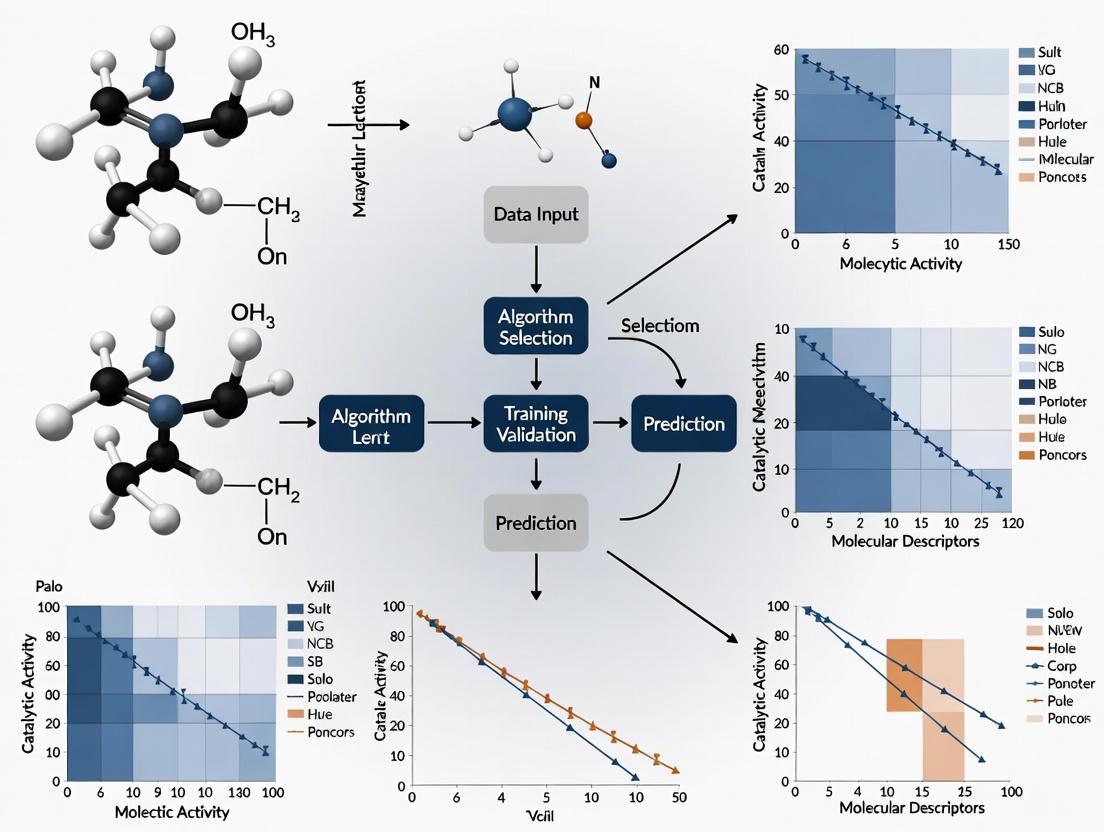
This article provides a comprehensive overview of the transformative role of machine learning (ML) in predicting catalytic activity, a critical task for researchers in drug development and materials science.
Machine Learning for Catalytic Activity Prediction: A Comprehensive Guide for Accelerated Discovery
Abstract
This article provides a comprehensive overview of the transformative role of machine learning (ML) in predicting catalytic activity, a critical task for researchers in drug development and materials science. It explores the foundational shift from empirical, trial-and-error methods to data-driven discovery paradigms, detailing key ML algorithms and their specific applications in optimizing reaction conditions, elucidating mechanisms, and designing novel catalysts. The content further addresses central challenges such as data scarcity and model interpretability, offering troubleshooting strategies and validation frameworks. By synthesizing methodological insights with comparative analyses, this guide equips scientists with the knowledge to leverage ML for accelerating catalyst screening, enhancing predictive accuracy, and informing rational design in biomedical and clinical research.
From Trial-and-Error to Data-Driven Discovery: The New Paradigm in Catalysis
The integration of machine learning (ML) into catalysis research represents a transformative approach to accelerating catalyst discovery and optimization. ML techniques efficiently navigate vast, multidimensional chemical spaces, uncovering complex patterns and relationships that traditional experimental and computational methods can miss due to their time-consuming and resource-intensive nature [1] [2]. At the heart of this data-driven revolution are two fundamental learning paradigms: supervised learning, which predicts catalytic properties from labeled data, and unsupervised learning, which discovers hidden structures and patterns within unlabeled data [3] [4]. The choice between these paradigms is primarily dictated by the nature of the available data and the specific research objective, whether it is predicting a catalyst's performance or uncovering new classifications of catalytic materials [1].
This article provides a structured guide to applying these core ML concepts within catalytic activity prediction research. It details specific protocols, presents comparative data, and outlines essential computational tools, offering a practical framework for researchers to implement these techniques in their work.
Core Concepts and Comparative Analysis
Supervised vs. Unsupervised Learning: Definitions and Catalytic Applications
Supervised learning operates like a student learning with a teacher. The algorithm is trained on a labeled dataset where each input example (e.g., a catalyst's descriptor set) is paired with a known output value (e.g., adsorption energy or reaction yield). The model learns the mapping function from the inputs to the outputs, which it can then use to make predictions on new, unseen catalyst data [3] [4]. Its applications in catalysis are predominantly predictive, including forecasting catalyst efficiency, reaction yields, and selectivity [5] [1].
Unsupervised learning, in contrast, involves a machine exploring data without a teacher-provided answer key. The algorithm is given unlabeled data and must independently identify the inherent structure, patterns, or groupings within it [3] [6]. This approach is primarily used for knowledge discovery in catalysis, such as identifying novel catalyst families through clustering or reducing the dimensionality of complex feature spaces for visualization [7] [1].
Structured Comparison of ML Techniques
The following table summarizes the key characteristics of these two learning approaches in a catalytic research context.
Table 1: Comparative Analysis of Supervised vs. Unsupervised Learning
| Parameter | Supervised Learning | Unsupervised Learning |
|---|---|---|
| Input Data | Labeled data (input-output pairs) [3] [4] | Unlabeled data (inputs only) [3] [6] |
| Primary Goal | Prediction of known catalytic properties [1] | Discovery of hidden patterns or groups [1] |
| Common Tasks | Regression (e.g., yield prediction), Classification (e.g., high/low activity) [3] | Clustering, Dimensionality Reduction [3] [1] |
| Catalysis Examples | Predicting adsorption energy of single-atom catalysts [5]; Forecasting reaction yield [8] | Grouping ligands by similarity [1]; Identifying catalyst trends via PCA [7] |
| Feedback Mechanism | Direct feedback via prediction error against known labels [4] | No feedback mechanism; success is based on utility of findings [3] |
| Advantages | High predictive accuracy; interpretable results [1] | No need for labeled data; reveals previously unknown insights [3] |
| Disadvantages | Requires costly, well-labeled datasets; risk of overfitting [3] | Results can be harder to interpret; lower predictive power [1] |
Experimental Protocols for Catalytic Activity Prediction
This section outlines detailed methodologies for implementing supervised and unsupervised learning in catalytic research, using published studies as a guide.
Protocol 1: Supervised Learning for Adsorption Energy Prediction
This protocol is adapted from studies predicting key properties of single-atom catalysts (SACs), such as adsorption energy for CO~2~ reduction [5].
Objective: To train a supervised learning model capable of predicting the adsorption energy of molecules on single-atom catalyst surfaces.
Materials & Data Sources:
- Dataset: A curated set of SAC structures with corresponding adsorption energies, often derived from Density Functional Theory (DFT) calculations [5].
- Descriptors: Features (inputs) include elemental properties of the metal center, local coordination environment, and electronic structure descriptors [7].
- Target Variable: The adsorption energy (output) from DFT [5].
Procedure:
- Data Collection & Curation: Compile a dataset from computational databases like the Materials Project (MP) or Catalysis-Hub.org. The dataset should include final energy per atom, band gap, and other relevant DFT-calculated properties [5].
- Feature Engineering: Calculate and select meaningful catalyst descriptors. These can be geometric, electronic, or compositional features that are hypothesized to influence adsorption strength [7].
- Model Training & Selection:
- Model Evaluation: Assess the final model's performance on the held-out test set using metrics like Root Mean Squared Error (RMSE) and Mean Absolute Error (MAE) to quantify prediction accuracy against DFT-calculated values [5] [8].
Protocol 2: Unsupervised Learning for Catalyst Classification
This protocol describes using clustering to identify groups of catalysts with similar characteristics without prior knowledge of performance labels [1].
Objective: To identify inherent groupings within a library of catalysts or ligands based on their molecular descriptors.
Materials & Data Sources:
- Dataset: A collection of unlabeled catalyst or ligand structures (e.g., a set of organometallic complexes) [1].
- Descriptors: Molecular fingerprints or features capturing steric and electronic properties (e.g., feature vectors from RDKit, electronic parameters, steric maps).
Procedure:
- Data Preprocessing: Compile structural data for all catalysts in the study. Generate molecular descriptors or fingerprints for each catalyst to create a feature matrix [1].
- Dimensionality Reduction (Optional): Apply Principal Component Analysis (PCA) to reduce the feature space dimensionality. This simplifies clustering and allows for visualization of the catalyst landscape in 2D or 3D plots [7] [1].
- Clustering Algorithm Application:
- Apply a clustering algorithm such as K-means to the descriptor data.
- Determine the optimal number of clusters (K) using methods like the elbow method or silhouette analysis [6].
- Cluster Interpretation & Validation:
- Analyze the formed clusters to identify common structural or electronic traits within each group.
- Validate the chemical relevance of the clusters by comparing them to known catalyst classifications or by examining their performance in catalytic reactions post-hoc [1].
Workflow Visualization
The following diagram illustrates a generalized ML workflow for catalytic activity prediction, integrating both supervised and unsupervised elements.
Successful implementation of ML in catalysis relies on a suite of software tools and data resources.
Table 2: Essential Computational Tools for ML in Catalysis
| Tool / Resource | Type | Function in Research | Example Use Case |
|---|---|---|---|
| scikit-learn [10] | Software Library | Provides robust implementations of classic ML algorithms (RF, SVM, PCA). | Building and evaluating a Random Forest model for yield prediction [9]. |
| TensorFlow/PyTorch [10] | Software Library | Frameworks for building and training deep neural networks. | Developing a complex model for catalyst property prediction [8]. |
| pymatgen [7] | Software Library | Python library for materials analysis; helps generate material descriptors. | Processing crystal structures of catalysts to compute input features [7]. |
| Materials Project (MP) [5] [7] | Database | Repository of computed material properties for inorganic crystals. | Sourcing DFT-calculated formation energies and band structures for training [5]. |
| Catalysis-Hub.org [7] | Database | Specialized database for reaction and activation energies on surfaces. | Obtaining adsorption energies for catalytic reactions to use as training labels [7]. |
| Atomic Simulation Environment (ASE) [7] | Software Library | Set of tools for setting up, controlling, and analyzing atomistic simulations. | Automating high-throughput DFT calculations to build a custom dataset [7]. |
| CatDRX Framework [8] | Generative Model | A variational autoencoder for generative catalyst design conditioned on reactions. | Generating novel catalyst candidates for a specific reaction type [8]. |
Supervised and unsupervised machine learning offer powerful, complementary pathways for advancing catalytic science. Supervised learning provides a direct route to predictive modeling of catalyst performance, while unsupervised learning excels at exploratory data analysis and uncovering intrinsic patterns within complex catalyst libraries. The choice of approach is not rigid; a research workflow often benefits from combining both, for instance, using unsupervised clustering to segment data before building specialized supervised models for each cluster. As data availability continues to grow and algorithms become more sophisticated, the integration of these ML paradigms will undoubtedly play a central role in the rational and accelerated design of next-generation catalysts.
In the pursuit of sustainable energy and efficient chemical production, the rational design of high-performance catalysts is paramount. [11] Central to this endeavor are catalytic descriptors—quantitative or qualitative measures that capture the key properties of a system, enabling researchers to understand the fundamental relationship between a material's atomic structure and its catalytic function. [12] The advent of machine learning (ML) has revolutionized this field, providing powerful data-driven tools to navigate the vast complexity of catalytic systems and uncover intricate structure-activity relationships. [1] This Application Note details the core categories of catalytic descriptors and provides structured protocols for their application within ML frameworks, focusing on bridging atomic-scale structural information to macroscopic catalytic activity and selectivity.
Categories of Key Catalytic Descriptors
Catalytic descriptors can be broadly classified based on the fundamental properties they represent. The following table summarizes the primary types, their basis, and their applications.
Table 1: Key Categories of Catalytic Descriptors
| Descriptor Category | Physical/Chemical Basis | Example Descriptors | Primary Application in Catalyst Design |
|---|---|---|---|
| Energy Descriptors [12] | Thermodynamic states of reaction intermediates | Binding Energy, Adsorption Free Energy (e.g., ΔGH, ΔGO, ΔGOH) | Predicting catalytic activity trends via volcano plots; assessing stability of intermediates. |
| Electronic Descriptors [12] | Electronic structure of the catalyst material | d-band center, Density of States (DOS), HOMO/LUMO energy | Explaining and predicting adsorption strength and surface reactivity. |
| Geometric/Structural Descriptors [11] | Local atomic environment and coordination | Coordination Number (CN), Atomic Radius, Bond Lengths | Differentiating adsorption site motifs and capturing strain effects. |
| Data-Driven/Composite Descriptors [13] [14] | Multidimensional feature space from data or theory | ML-derived feature importance (e.g., ODI_HOMO_1_Neg_Average), "One-hot" encoded additives |
Capturing complex, non-linear structure-property relationships not evident from single descriptors. |
Quantitative Performance of ML Models Using Advanced Descriptors
The predictive accuracy of machine learning models is highly dependent on the richness and uniqueness of the atomic structure representations (descriptors) used. The following table compiles performance metrics from recent studies employing advanced descriptive methodologies.
Table 2: Performance of ML Models with Enhanced Structural Representations
| ML Model | Key Descriptor / Representation Strategy | Catalytic System | Performance (Mean Absolute Error - MAE) |
|---|---|---|---|
| Equivariant Graph Neural Network (EquivGNN) [11] | Equivariant message-passing enhanced representation resolving chemical-motif similarity. | Diverse descriptors at metallic interfaces (complex adsorbates, high-entropy alloys, nanoparticles). | < 0.09 eV across all systems |
| Graph Attention Network (GAT-wCN) [11] | Connectivity-based graph with atomic numbers as nodes and Coordination Numbers (CN) as enhanced features. | Atomic-carbon monodentate adsorption on ordered surfaces (Cads Dataset). | 0.128 eV (Formation energy of M-C bond) |
| GAT without CNs (GAT-w/oCN) [11] | Basic connectivity-based graph structure without coordination numbers. | Atomic-carbon monodentate adsorption on ordered surfaces (Cads Dataset). | 0.162 eV (Formation energy of M-C bond) |
| Random Forest with CNs [11] | Site representation supplemented with coordination numbers. | Atomic-carbon monodentate adsorption on ordered surfaces (Cads Dataset). | 0.186 eV (Formation energy of M-C bond) |
| XGBoost [13] | Composite descriptors from DFT and molecular features (e.g., ODI_HOMO_1_Neg_Average, ALIEmax GATS8d). |
Ti-phenoxy-imine catalysts for ethylene polymerization. | R² (test set) = 0.859 |
Experimental Protocol: Predicting Binding Energies with Graph Neural Networks
This protocol details the methodology for employing an Equivariant Graph Neural Network (EquivGNN) to predict binding energies of adsorbates on catalyst surfaces, a critical energy descriptor. [11]
The following diagram illustrates the integrated computational and machine learning workflow for descriptor prediction.
Step-by-Step Procedure
Step 1: System Definition and Dataset Curation
- Action: Define the scope of the catalytic system (e.g., monodentate adsorbates on pure metals, bidentate adsorbates on alloys, or nanoparticles). [11]
- Protocol: Assemble a dataset of atomic structures. Structures can be obtained from relaxed or unrelaxed Density Functional Theory (DFT) calculations or crystallographic databases. Each structure must be paired with its target property (e.g., binding energy from DFT).
Step 2: Graph Representation of Atomic Structures
- Action: Convert each atomic structure into a graph. [11]
- Protocol:
- Nodes: Represent individual atoms.
- Edges: Connect pairs of atoms that are chemically bonded or within a specified cutoff radius.
- Node Features: Encode atom-specific information (e.g., atomic number, atomic weight). Enhanced models can include Coordination Number (CN) as a critical node feature to significantly improve accuracy. [11]
- Edge Features: Can include spatial information such as interatomic distance and vector direction, which is crucial for equivariant models.
Step 3: Model Architecture and Training
- Action: Construct and train the Equivariant Graph Neural Network.
- Protocol:
- Architecture: Utilize an equivariant message-passing framework. In this process, node features are updated by aggregating ("passing") information from their neighboring nodes. [11]
- Equivariance: The model is designed to be equivariant to rotation and translation, meaning its predictions are consistent regardless of the system's orientation in space. This is essential for capturing true physical relationships.
- Readout/Global Pooling: After several message-passing layers, the updated node features from the entire graph are aggregated into a single, graph-level representation. [11]
- Output Layer: This graph-level representation is passed through a final neural network layer to predict a scalar value, such as the binding energy.
Step 4: Validation and Prediction
- Action: Evaluate model performance and deploy for predictions.
- Protocol:
- Validation: Use k-fold cross-validation (e.g., 5-fold CV) to assess model generalizability. Compare predicted binding energies against DFT-calculated values using metrics like Mean Absolute Error (MAE). [11]
- Prediction: Use the trained model to predict binding energies for new, unseen atomic structures, enabling rapid screening of candidate materials.
The Scientist's Toolkit: Essential Research Reagents & Solutions
Table 3: Key Computational and Experimental Tools for Descriptor-Driven Catalyst Research
| Item / Solution | Function / Description | Application Context |
|---|---|---|
| Density Functional Theory (DFT) [12] [13] | Computational method to calculate electronic structure properties, such as adsorption energies and d-band centers. | Generating training data and target values for energy and electronic descriptors. |
| Equivariant Graph Neural Network (EquivGNN) [11] | ML model architecture that respects physical symmetries (rotation/translation invariance) in 3D space. | Accurately predicting descriptors for complex systems with diverse adsorption motifs. |
| High-Throughput Experimentation (HTE) [14] | Automated platforms for rapidly testing thousands of catalyst recipes or reaction conditions. | Generating large, consistent experimental datasets for building robust data-driven ML models. |
| One-Hot Vectors / Molecular Fragment Featurization (MFF) [14] | Method to convert categorical variables (e.g., presence of a functional group) into a numerical format ML models can understand. | Encoding catalyst recipe information (e.g., additives) as input descriptors for predictive models. |
| SHAP (SHapley Additive exPlanations) Analysis [13] | A technique for interpreting the output of ML models by quantifying the contribution of each input descriptor to the final prediction. | Identifying the most critical descriptors governing catalytic activity or selectivity from a complex model. |
Advanced Application: Multi-Round Learning for Catalyst Optimization
For complex experimental systems, such as tuning catalyst selectivity with additives, a multi-round ML strategy is highly effective. The following protocol is adapted from a study on CO2 reduction reaction (CO2RR) catalysts. [14]
This iterative learning process efficiently narrows down the optimal catalyst recipe from a vast possibility space.
Step-by-Step Procedure
Round 1: Initial Screening with Macro-Descriptors
- Objective: Identify the most impactful metal additives and broad functional groups.
- Protocol:
- Descriptor Definition: Use one-hot encoding to create descriptors indicating the presence or absence of specific metals (e.g., Sn, Cu) and functional groups (e.g., aliphatic -OH, -NH₂) in a catalyst recipe. [14]
- Model Training: Train classification (e.g., Random Forest, XGBoost) and regression models to predict product selectivity (e.g., Faradaic Efficiency for CO, C₂⁺ products) from these descriptors. [14]
- Output: A ranked list of the most important metal and organic group features.
Round 2: Refinement with Local Structure Descriptors
- Objective: Understand the influence of specific molecular fragments.
- Protocol:
- Descriptor Definition: Transform the structural information of organic additives using Molecular Fragment Featurization (MFF) to create a more detailed feature matrix. [14]
- Model Training: Retrain ML models using these new, more granular descriptors.
- Output: Insights into how specific local structures (e.g., nitrogen heteroaromatic rings vs. aliphatic amines) influence selectivity.
Round 3: Synergistic Effect Analysis
- Objective: Discover non-linear, synergistic interactions between descriptor combinations.
- Protocol:
- Descriptor Definition: Use algorithms like Random Intersection Trees to find frequent and impactful combinations of the features identified in Rounds 1 and 2. [14]
- Model Application: Identify pairs or triplets of features that, when present together, have a positive or negative synergistic effect on the target property (e.g., aliphatic -OH combined with an aliphatic amine enhances C₂⁺ selectivity). [14]
- Output: A set of design rules for formulating high-performing catalyst recipes.
Final Step: Design and Experimental Validation
- Action: Propose and test new catalysts.
- Protocol: Design new catalyst compositions based on the derived ML rules. These candidates are then synthesized and tested experimentally to validate the model's predictions and confirm the discovery of improved catalysts. [14]
The field of catalysis research is undergoing a profound transformation, shifting from traditional trial-and-error experimentation and theoretical simulations toward a new paradigm rooted in data-driven scientific discovery. This transition is largely fueled by the integration of high-throughput experimentation (HTE) and machine learning (ML), which together are accelerating the design and optimization of catalysts for applications ranging from renewable energy to pharmaceutical development. However, the effectiveness of this approach is critically dependent on overcoming significant data challenges, including the generation of high-quality, standardized datasets and the implementation of robust database curation practices that ensure data findability, accessibility, interoperability, and reusability (FAIR). The historical development of catalysis can be delineated into three stages: the initial intuition-driven phase, the theory-driven phase represented by density functional theory (DFT), and the current emerging stage characterized by the integration of data-driven models with physical principles [15]. In this third stage, ML has evolved from being merely a predictive tool to becoming a "theoretical engine" that contributes to mechanistic discovery and the derivation of general catalytic laws.
The performance of ML models in catalysis is highly dependent on data quality and volume [15]. Although the rise of high-throughput experimental methods and open-access databases has significantly promoted data accumulation in catalysis, data acquisition and standardization remain major challenges for ML applications in this domain [15]. High-throughput experimentation (HTE) is a method of scientific inquiry that facilitates the evaluation of miniaturized reactions in parallel [16]. This approach advances the assessment of a range of experiments, allowing the exploration of multiple factors simultaneously in contrast to the traditional one variable at a time (OVAT) method. When applied to organic chemistry, HTE enables accelerated data generation, providing a wealth of information that can be leveraged to access target molecules, optimize reactions, and inform reaction discovery while enhancing cost and material efficiency. Additionally, HTE has proven effective in collecting robust and comprehensive data for machine learning (ML) algorithms that are more accurate and reliable [16].
Quantitative Landscape of Catalysis Data and ML Performance
The effectiveness of ML-driven catalysis research hinges on the quality and volume of available data, as well as the performance of the algorithms processing this information. The field has seen significant advancements in data generation and model accuracy, with specific benchmarks established for various catalyst types and predictive tasks.
Table 1: Performance Metrics of ML Models for Catalytic Activity Prediction
| Catalyst System | ML Model | Key Features | Performance (R²/MAE) | Data Source |
|---|---|---|---|---|
| Multi-type HECs | Extremely Randomized Trees (ETR) | 10 minimal features including φ = Nd0²/ψ0 | R² = 0.922 | Catalysis-hub (10,855 structures) [17] |
| Metallic Interfaces | Equivariant GNN (equivGNN) | Enhanced atomic structure representations | MAE < 0.09 eV for binding energies | Custom datasets [11] |
| Binary Alloys | Random Forest Regression (RFR) | Coordination numbers as local environment feature | MAE: 0.186 eV (vs. 0.346 eV without CN) | Cads Dataset [11] |
| Transition Metal Single-Atoms | CatBoost Regression | 20 features | R² = 0.88, RMSE = 0.18 eV | Literature data [17] |
| Double-Atom Catalysts | Random Forest Regression | 13 features | R² = 0.871, MSE = 0.150 | Computational data [17] |
Table 2: Catalysis Database Characteristics and Applications
| Database Name | Data Content | Size | Primary Use Cases | Accessibility |
|---|---|---|---|---|
| Catalysis-hub | Hydrogen adsorption free energies and corresponding adsorption structures | 11,068 HER free energies (10,855 after filtering) | Training ML models for HER catalyst prediction | Open-access, peer-reviewed [17] |
| Material Project | Material structures and properties | N/A | Discovery of new catalyst candidates | Open database [17] |
| High-Throughput Experimentation Databases | Reaction conditions, yields, and characterization data | 1536 reactions simultaneously (ultra-HTE) | Reaction optimization and discovery | Often institutional [16] |
The data in Catalysis-hub, which includes various types of hydrogen evolution catalysts (HECs) such as pure metals, transition metal intermetallic compounds, light metal intermetallic compounds, non-metallic compounds, and perovskites, exemplifies the diverse data sources available for ML training [17]. All data in this database are derived from DFT calculations and are sourced from published literature, peer-reviewed, and validated to ensure data accuracy. The distribution of free energies of the HECs in this dataset ranges from -12.4 to 22.1 eV, with 95.5% of the data falling within the range of [-2, 2] eV, which is particularly relevant for catalytic activity prediction [17].
High-Throughput Experimentation: Protocols and Workflows
High-throughput experimentation represents a foundational methodology for generating the extensive datasets required for robust ML model training in catalysis. Modern HTE originates from well-established high-throughput screening (HTS) protocols from the 1950s that were used predominately to screen for biological activity [16]. The adoption of HTE for chemical synthesis was limited until successful examples of its application were demonstrated between the mid-1990s and early 2000s, when automation was repurposed for chemical synthesis and reaction development with advancement in commercial equipment that are compatible with a range of different types of chemistry and in situ reaction monitoring [16].
HTE Experimental Protocol for Catalyst Screening
Objective: To rapidly screen multiple catalyst candidates and reaction conditions in parallel for catalytic activity assessment.
Materials and Equipment:
- Automated liquid handling systems
- Microtiter plates (96-well, 384-well, or 1536-well formats)
- Inert atmosphere chambers (for air-sensitive reactions)
- High-throughput analytical platforms (e.g., HPLC, GC-MS, LC-MS)
- Automated reaction monitoring systems
Procedure:
- Experimental Design: Strategically select variables to test (catalysts, solvents, ligands, substrates, temperatures) using statistical design of experiments (DoE) principles to maximize information gain while minimizing the number of experiments.
- Plate Preparation: Arrange reaction vessels in microtiter plates, considering spatial bias effects where center and edge wells may experience different conditions [16].
- Reagent Dispensing: Use automated liquid handlers to dispense reagents in microliter to nanoliter volumes with high precision. Account for solvent properties (surface tension, viscosity) that may affect dispensing accuracy [16].
- Reaction Execution: Conduct reactions under controlled conditions (temperature, atmosphere, mixing). For photoredox chemistry, ensure consistent light irradiation across all wells [16].
- Reaction Monitoring: Employ in-situ analytical techniques or quench reactions at predetermined timepoints.
- Product Analysis: Utilize high-throughput analytical methods to quantify reaction outcomes (yield, selectivity, conversion).
- Data Recording: Record all reaction parameters and outcomes in standardized formats with appropriate metadata.
Troubleshooting Tips:
- Include control reactions and replicates to assess reproducibility
- Implement randomization to avoid systematic errors
- Validate miniaturized reaction outcomes against traditional scale reactions
- Account for evaporation effects in microscale reactions [16]
HTE-ML Integration Workflow
Today, HTE strategies for chemical synthesis can be broadly utilized toward different objectives depending on the research goals, including building libraries of diverse target compounds, reaction optimization where multiple variables are simultaneously varied to identify an optimal condition, and reaction discovery to identify unique transformations [16]. The introduction of ultra-HTE, which allows for testing 1536 reactions simultaneously, has significantly accelerated data generation and broadened the ability to examine reaction chemical space [16].
Database Curation Frameworks and Data Stewardship
Robust database curation is essential for transforming raw experimental and computational data into valuable, reusable resources for the catalysis community. Effective data stewardship ensures that datasets adhere to FAIR principles (Findable, Accessible, Interoperable, and Reusable), enabling their effective use in ML applications.
Data Curation Protocol for Catalysis Databases
Objective: To implement comprehensive data curation practices that enhance data quality, interoperability, and reusability for ML-driven catalysis research.
Procedure:
- Data Collection and Ingestion:
- Acquire data from diverse sources (experimental measurements, computational simulations, literature extracts)
- Implement automated data validation checks during ingestion
- Record provenance information including experimental conditions, computational parameters, and measurement techniques
Data Standardization:
- Apply standardized nomenclature for chemical structures (IUPAC names, SMILES, InChI identifiers)
- Use consistent units and measurement standards across datasets
- Implement metadata standards following frameworks such as MIAME (Minimum Information About a Microarray Experiment) and MIBI (Minimum Information in Biological Imaging) [18]
Quality Control and Validation:
- Perform outlier detection using statistical methods
- Validate computational data through convergence tests and method benchmarks
- Cross-validate experimental data through replicates and control experiments
Feature Engineering and Descriptor Calculation:
- Compute catalytic descriptors (e.g., d-band center, coordination numbers, adsorption energies)
- Generate structural features using atomic simulation environments [17]
- Implement feature selection algorithms to identify the most relevant descriptors
Data Storage and Management:
- Utilize structured databases with appropriate schema design
- Implement version control for dataset updates
- Establish data backup and preservation protocols
Data Access and Sharing:
- Implement access control mechanisms based on user roles
- Provide APIs for programmatic data access
- Apply FAIR data principles to maximize reusability [18]
Implementation Considerations:
- Develop Data Management Plans (DMPs) at project inception
- Utilize attribute-based access control for sensitive data
- Implement blockchain technology for enhanced data integrity and traceability in certain applications [19]
The integration of diverse data types—ranging from sequencing and clinical data to proteomic and imaging data—highlighted the complexity and expansive scope of AI applications in these fields [18]. The current challenges identified in AI-based data stewardship and curation practices include lack of infrastructure and cost optimization, ethical and privacy considerations, access control and sharing mechanisms, large scale data handling and analysis and transparent data-sharing policies and practice [18].
Data Curation Framework
The Scientist's Toolkit: Essential Research Reagents and Solutions
The successful implementation of HTE and database curation in catalysis research relies on a suite of specialized tools, reagents, and computational resources. This toolkit enables researchers to generate high-quality data efficiently and process it effectively for ML applications.
Table 3: Essential Research Reagents and Computational Tools for Catalysis Data Science
| Category | Item | Specification/Function | Application Context |
|---|---|---|---|
| HTE Hardware | Automated Liquid Handling Systems | Precision dispensing of µL-nL volumes | High-throughput reaction setup [16] |
| Microtiter Plates | 96-well, 384-well, 1536-well formats | Parallel reaction execution [16] | |
| Inert Atmosphere Chambers | Control of oxygen and moisture levels | Air-sensitive catalytic reactions [16] | |
| Analytical Tools | High-Throughput LC-MS/GC-MS | Rapid analysis of reaction mixtures | Reaction outcome determination [16] |
| Mass Spectrometry (MS) | High-sensitivity detection and quantification | Reaction monitoring [16] | |
| Computational Resources | VASP (Vienna Ab initio Simulation Package) | DFT calculations for material properties | High-throughput computational screening [20] |
| Atomic Simulation Environment (ASE) | Python module for atomistic simulations | Automated feature extraction [17] | |
| VASPKIT | Pre- and post-processing of VASP calculations | Automation of DFT workflows [20] | |
| Data Management | FAIR Data Infrastructure | Findable, Accessible, Interoperable, Reusable data | Database curation and sharing [18] |
| Data Management Plans (DMPs) | Documentation of data handling procedures | Project data governance [18] | |
| ML Algorithms | Random Forest Regression | Ensemble learning for property prediction | Catalytic activity prediction [17] [11] |
| Graph Neural Networks (GNNs) | Learning from graph-structured data | Structure-property relationships [11] | |
| Extremely Randomized Trees (ETR) | High-performance regression with minimal features | Multi-type catalyst prediction [17] |
Case Study: ML-Driven Hydrogen Evolution Reaction Catalyst Discovery
The integration of HTE and curated databases with ML is powerfully illustrated by recent advances in hydrogen evolution reaction (HER) catalyst discovery. HER is an important strategy to cope with the global energy shortage and environmental degradation, and given the large cost involved in HER, it is crucial to screen and develop stable and efficient catalysts [20]. The development of an efficient ML model to predict HER activity across diverse catalysts demonstrates the potential of this integrated approach.
In one notable study, researchers obtained atomic structure features and hydrogen adsorption free energy (ΔGH) data for 10,855 HECs from Catalysis-hub for training and prediction [17]. The dataset included various types of HECs, such as pure metals, transition metal intermetallic compounds, light metal intermetallic compounds, non-metallic compounds, and perovskite. Using only 23 features based on atomic structure and electronic information of the catalyst active sites, without the need for additional DFT calculations, they established six ML models, with the Extremely Randomized Trees (ETR) model achieving superior performance with an R² score of 0.921 for predicting ΔGH [17].
Through feature importance analysis and feature engineering, the researchers reselected and identified more relevant features, reducing the number of features from 23 to 10 and improving the R² score to 0.922 [17]. This feature minimization approach introduced a key energy-related feature φ = Nd0²/ψ0, which correlates with HER free energy [17]. The time consumed by the ML model for predictions is one 200,000th of that required by traditional density functional theory (DFT) methods [17]. This case study exemplifies how the combination of curated data, appropriate feature engineering, and optimized ML algorithms can dramatically accelerate catalyst discovery while reducing computational costs.
The integration of high-throughput experimentation, rigorous database curation, and machine learning represents a transformative approach to addressing the data challenges in catalysis research. By implementing standardized protocols for data generation, curation, and management, researchers can build high-quality datasets that enable the development of accurate predictive models for catalytic activity. As these methodologies continue to evolve and become more accessible, they hold the potential to significantly accelerate the discovery and optimization of catalysts for sustainable energy applications, pharmaceutical development, and industrial processes. The future of catalysis research lies in the continuous refinement of these data-driven approaches, fostering collaboration between experimentalists, theoreticians, and data scientists to overcome existing limitations and unlock new opportunities in catalyst design.
ML Algorithms in Action: Techniques for Predicting Activity and Optimizing Catalysts
Accurately predicting catalytic descriptors with machine learning (ML) is paramount for accelerating catalyst design. The cornerstone of developing a universal, efficient, and accurate ML model is a unique representation of a system's atomic structure. Such representations must be applicable across a wide material domain, easily computable, and, crucially, capable of resolving the similarity and dissimilarity between atomic structures, a key challenge in complex catalytic systems ranging from simple adsorbates on pure metals to highly disordered high-entropy alloys and supported nanoparticles [21]. This document provides application notes and detailed protocols for generating and utilizing these atomic structure descriptors, framed within the broader objective of advancing machine learning for catalytic activity prediction.
Quantifying Descriptor Performance Across Catalytic Systems
The predictive performance of ML models is highly dependent on the chosen atomic structure representation and the complexity of the catalytic system. The following table summarizes the performance, quantified by Mean Absolute Error (MAE), of various models and representations across different system complexities.
Table 1: Performance of Structure Representations and ML Models on Various Catalytic Systems
| Catalytic System | Description / Adsorbate | ML Model / Representation | Key Performance Metric (MAE) | Reference / Context |
|---|---|---|---|---|
| Ordered Surfaces (Monodentate) | Atomic Carbon (Cads Dataset) | RFR (Basic Features) | 0.346 eV | [21] |
| Atomic Carbon (Cads Dataset) | RFR (Features + Coordination Numbers) | 0.186 eV | [21] | |
| Atomic Carbon (Cads Dataset) | GAT-w/oCN (Connectivity-based) | 0.162 eV | [21] | |
| Atomic Carbon (Cads Dataset) | GAT-wCN (Connectivity-based + CN) | 0.128 eV | [21] | |
| 3-fold Hollow Sites (Cads Dataset) | GAT-w/oCN (All training data) | 0.11 eV (Training MAE) | [21] | |
| Complex Catalytic Systems | Metallic Interfaces (Various) | Equivariant GNN (equivGNN) | < 0.09 eV for different descriptors | [21] |
| 11 Diverse Adsorbates | DOSnet (with ab initio features) | 0.10 eV | [21] | |
| CO* and H* | CGCNN / SchNet (with non-ab initio features) | 0.116 eV / 0.085 eV | [21] |
Protocol: Developing an ML Model for Catalytic Descriptor Prediction
This protocol outlines the key steps for developing a machine learning model to predict binding energies and other catalytic descriptors from atomic structures.
Materials and Computational Reagents
Table 2: Essential Research Reagent Solutions for ML in Catalysis
| Item / Reagent | Function / Description | Example / Note |
|---|---|---|
| Density Functional Theory (DFT) | Generates high-quality training data (e.g., binding energies) for the ML model. Considered the computational equivalent of an experimental assay. | Used to calculate target properties for datasets like the Cads Dataset [21]. |
| Atomic Structure Representation | Converts the 3D atomic configuration into a numerical input for the ML model. This is the foundational "feature set." | Ranges from simple features (element type) to complex graph structures [21]. |
| Site Representation (with CN) | A specific representation that includes atomic numbers and coordination environments. | Improved RFR model MAE from 0.346 eV to 0.186 eV [21]. |
| Connectivity-Based Graph | Represents the atomic structure as a graph (nodes=atoms, edges=bonds) for graph neural networks. | Used as input for GAT models; requires enhancement to resolve chemical-motif similarity [21]. |
| Equivariant Graph Neural Network (equivGNN) | The ML model architecture that learns from graph-structured data while respecting physical symmetries. | The final model achieving high accuracy across diverse systems [21]. |
| Random Forest Regression (RFR) | A robust machine learning algorithm suitable for initial benchmarking with hand-crafted features. | Used to evaluate the importance of different representation levels [21]. |
Step-by-Step Experimental Methodology
Dataset Curation and Generation
- Objective: Assemble a set of atomic structures with their corresponding target properties (e.g., binding energies from DFT).
- Procedure: Perform high-throughput DFT calculations for a representative set of catalytic systems relevant to your research (e.g., monodentate adsorbates on alloy surfaces, complex bidentate motifs, HEA surfaces).
- Output: A curated dataset, such as the Cads Dataset used in the referenced study [21].
Atomic Structure Representation and Feature Engineering
- Objective: Convert each atomic structure in the dataset into a numerical representation.
- Procedure: a. Begin with simple site representations: Use basic features like elemental properties. b. Incorporate local environment descriptors: Add coordination numbers (CNs) for each atom, which has been shown to significantly improve performance [21]. c. Advance to graph-based representations: Represent the entire adsorption motif as a graph. Use atomic numbers as node features. For edges, start with a connectivity-based method (i.e., define edges based on atomic bonds).
- Output: A dataset of feature vectors or graph objects ready for ML model training.
Model Training, Validation, and Benchmarking
- Objective: Train and evaluate the performance of different ML models.
- Procedure: a. Benchmark with simpler models: Use a model like Random Forest Regression (RFR) with the site representations from Step 2a and 2b to establish a baseline performance. b. Progress to Graph Neural Networks (GNNs): Train a Graph Attention Network (GAT) or similar GNN on the graph-based representations from Step 2c. c. Implement an Equivariant GNN (equivGNN): To achieve state-of-the-art performance and handle complex systems, develop or employ an equivariant GNN model. This model uses enhanced message-passing to create robust representations that can distinguish subtle chemical-motif similarities [21]. d. Validation: Use k-fold cross-validation (e.g., 5-fold CV) to ensure robust performance metrics and avoid overfitting.
- Output: Trained ML models with validated performance metrics (e.g., MAE).
Model Deployment and Prediction
- Objective: Use the trained model to predict descriptors for new, unknown catalytic systems.
- Procedure: Feed the atomic structure representation of the new system into the trained model (e.g., the equivGNN) to obtain a prediction for the binding energy or other catalytic descriptors.
- Output: Predicted catalytic descriptors for novel materials, enabling high-throughput computational screening.
Visualizing the Experimental Workflow
The following diagram illustrates the logical workflow for developing the ML model, from data generation to prediction, as described in the protocol.
Visualizing the Evolution of Atomic Structure Representations
The complexity of the atomic structure representation directly impacts the model's ability to resolve chemical-motif similarity. This evolution is summarized in the following diagram.
The integration of machine learning (ML) into the realm of organometallic catalysis represents a paradigm shift in how researchers approach catalyst design and reaction optimization. This is particularly true for the prediction of enantioselectivity and reaction yields, properties central to the synthesis of chiral pharmaceuticals and fine chemicals. Where traditional methods rely on labor-intensive experimental screening or computationally expensive quantum mechanics, ML offers a powerful, data-driven alternative. This case study, framed within broader thesis research on ML for catalytic activity prediction, examines the practical application of machine learning models to forecast complex catalytic outcomes, detailing specific protocols, key reagents, and data interpretation methods for research scientists.
Machine Learning Approaches in Catalysis: A Comparative Analysis
The application of ML in catalysis spans various model types and featurization strategies, each with distinct advantages. The table below summarizes the performance of different ML approaches as demonstrated in recent case studies.
Table 1: Comparison of Machine Learning Models for Predicting Catalytic Properties
| Catalytic System | ML Task | ML Model(s) Used | Key Descriptors/Features | Reported Performance | Reference |
|---|---|---|---|---|---|
| Pd-catalyzed asymmetric β-C–H bond activation | Enantioselectivity (% ee) prediction | Deep Neural Network (DNN) | Molecular descriptors from a metal-ligand-substrate complex | RMSE of 6.3 ± 0.9% ee on test set; demonstrated high generalizability to other reactions. | [22] |
| Magnesium-catalyzed epoxidation & thia-Michael addition | Enantioselectivity (ee) prediction from small datasets | Multiple models evaluated | Curated experimental parameters and molecular descriptors | Best model achieved R² ~0.8; successful generalization to untested substrates. | [23] |
| Amidase-catalytic enantioselectivity | Classification of high/low enantioselectivity | Random Forest (RF) Classifier | Substrate "chemistry" (functional groups) and "geometry" (3D structure) descriptors | High F-score (>0.8) for classifying reactions with ee ≥ 90%. | [24] |
| Chiral Single-Atom Catalysts (SACs) for HER | Evaluation and prediction of HER performance | SISSO (Sure Independence Screening and Sparsifying Operator) | Spatial and chiral effects from DFT calculations | Identified interpretable descriptors linking chirality to enhanced HER activity. | [25] |
| Generative catalyst design (CatDRX) | Catalyst generation & yield prediction | Reaction-conditioned Variational Autoencoder (VAE) | Structural representations of catalysts and reaction components | Competitive performance in yield prediction and novel catalyst generation. | [8] |
A critical step in building these models is the conversion of chemical structures into a numerical format that the algorithm can process, known as featurization or molecular representation. The choice of representation significantly impacts model performance and interpretability.
Table 2: Common Molecular Representation Strategies in Catalytic ML
| Representation Type | Description | Application Example | Advantages | Limitations | |
|---|---|---|---|---|---|
| Physical Organic Descriptors | Pre-defined parameters like Sterimol values, NBO charges, HOMO/LUMO energies. | Multivariate linear regression models for enantioselectivity. | Chemically intuitive, directly related to mechanism. | Not easily transferable; requires redefinition for new systems. | [26] |
| Atomic-Centered Symmetry Functions (ACSFs) | Histograms describing the 3D atomic environment around each atom. | Random forest model for amidase enantioselectivity. | Captures complex 3D geometry; generalizable. | Requires geometry optimization; less chemically transparent. | [24] |
| Reaction-Based Representations | Representations encoding the 3D structure of key reaction intermediates or transition states. | Predicting DFT-computed ee in organocatalysis from intermediate structures. | Incorporates mechanistic insight; high accuracy. | Dependent on the identification of a relevant mechanistic species. | [26] |
| SLATM (Spectral London and Axilrod-Teller-Muto) | A comprehensive representation composed of two- and three-body potentials from atomic coordinates. | Quantum Machine Learning (QML) for predicting activation energies. | Physics-based; offers a good balance of accuracy and cost. | Computationally intensive to generate. | [26] |
Detailed Experimental Protocols
Protocol 1: Building a DNN Model for Enantioselectivity Prediction in C–H Activation
This protocol is adapted from Hoque and Sunoj's work on Pd-catalyzed β-C–H functionalization [22].
1. Data Curation and Dataset Construction
- Source: Manually curate a dataset from published literature. The exemplary study used 240 unique catalytic reactions.
- Data Points: For each reaction, record the chiral ligand, substrate, coupling partner, catalyst precursor, additive, base, solvent, temperature, and the experimentally measured enantiomeric excess (% ee).
- Key Consideration: Ensure diversity in reaction components to build a robust model. The dataset contained 77 unique chiral ligands and 51 unique coupling partners.
2. Choice of Featurization Strategy
- Structurally-Based Featurization: Instead of featurizing individual components, select a mechanistically relevant species. For C–H activation, the metal-ligand-substrate complex prior to the enantiodetermining step is ideal.
- Descriptor Generation:
- Generate a reasonable 3D geometry for this complex for each reaction in the dataset.
- Use quantum chemistry software (e.g., Gaussian, ORCA) for geometry optimization at a low-cost level (e.g., DFTB) if necessary.
- Calculate a set of molecular descriptors (e.g., steric, electronic, topological) from the optimized structure. Software like DRAGON or RDKit can be used.
3. Model Training and Validation
- Data Splitting: Split the dataset into training (~80%) and test (~20%) sets. Use stratified splitting to ensure the ee distribution is similar in both sets.
- Model Architecture: Implement a Deep Neural Network (DNN). A typical architecture may include:
- An input layer matching the number of descriptors.
- 2-4 hidden layers with activation functions like ReLU or Tanh.
- A linear output layer for regression (% ee prediction).
- Training: Use a loss function like Mean Squared Error (MSE) and an optimizer like Adam. Perform hyperparameter tuning (learning rate, layers, nodes) via cross-validation.
- Validation: Evaluate the final model on the held-out test set. The exemplary study achieved an RMSE of 6.3 ± 0.9% ee [22].
Workflow for building a DNN model to predict enantioselectivity in C–H activation reactions.
Protocol 2: Random Forest Classification for Biocatalytic Enantioselectivity
This protocol is based on the work by Li et al. for predicting amidase enantioselectivity [24].
1. Data Collection and Preprocessing
- Source: Collect a dataset of reactions with known enantioselectivity outcomes. The exemplary study used 240 substrates.
- Output Standardization: Convert all enantioselectivity data (ee of product or recovered substrate) into the enantiomeric ratio (E value) and subsequently into the free energy difference:
ΔΔG‡ = -RT ln E. - Classification: Define a classification threshold based on
-ΔΔG‡. For example, samples with-ΔΔG‡ ≥ 2.40 kcal/mol(corresponding to ee ≥ 90% at 303 K) are classed as "positive" (high enantioselectivity), and the rest as "negative".
2. Feature Calculation and Selection
- Descriptor Types: Calculate two types of descriptors for each substrate:
- Chemistry Descriptors: Based on functional group "cliques" derived from the 2D molecular structure.
- Geometry Descriptors: Atomic-Centered Symmetry Functions (ACSFs) obtained from the 3D optimized geometry of the substrate.
- Feature Selection: Perform a feature selection process (e.g., based on variance or correlation) to reduce dimensionality and prevent overfitting.
3. Model Building and Evaluation
- Algorithm: Train a Random Forest (RF) Classifier. RF is robust against overfitting and works well on small-to-medium-sized datasets.
- Validation: Use 5-fold cross-validation on the training set to tune hyperparameters (e.g., number of trees, tree depth).
- Performance Metrics: Evaluate the model on the test set using Accuracy, Precision, Recall, F-score, and AUC (Area Under the ROC Curve). The exemplary model achieved an F-score above 0.8 [24].
The Scientist's Toolkit: Essential Research Reagents and Computational Solutions
Table 3: Key Research Reagent Solutions for ML-Driven Catalysis Research
| Reagent / Software Solution | Function / Purpose | Example in Use | Considerations | |
|---|---|---|---|---|
| Vienna Ab initio Simulation Package (VASP) | Performing Density Functional Theory (DFT) calculations for descriptor generation and validation. | Used to calculate formation energies and spin densities of chiral single-atom catalysts. | Provides high-quality electronic structure data; computationally intensive. | [25] |
| RDKit | Open-source cheminformatics toolkit for calculating molecular descriptors and fingerprinting. | Generating 2D molecular descriptors for machine learning input. | Versatile and programmable; integral to many ML workflows in chemistry. | [26] [24] |
| Scikit-learn | Python library providing efficient tools for machine learning and statistical modeling. | Implementing Random Forest, SVM, and other classifiers/regressors. | Accessible for beginners with comprehensive algorithms; requires coding knowledge. | [24] |
| Gaussian 09/16 | Quantum chemistry software package for molecular geometry optimization and property calculation. | Optimizing 3D geometries of substrates for calculating geometry-based descriptors. | Industry standard for accurate quantum chemical calculations; commercial license required. | [24] |
| SISSO (Sure Independence Screening and Sparsifying Operator) | A compressed-sensing method for identifying optimal descriptive parameters from a huge feature space. | Identifying interpretable descriptors linking chirality to HER activity from DFT data. | Powerful for model interpretation and descriptor identification; mathematically complex. | [25] |
Visualization of Chirality Effects in Catalysis
The study of chiral single-atom catalysts (SACs) provides a clear example of how ML can decode complex structure-property relationships. Song et al. used DFT and ML to show that chirality in carbon nanotube-based SACs significantly enhances Hydrogen Evolution Reaction (HER) activity [25]. The CISS effect causes a broken symmetry in the spin density distribution around the catalytic metal center (e.g., In, Sb, Bi). This asymmetry facilitates more efficient electron transfer, a key descriptor in the resulting ML model, thereby boosting catalytic activity. Right-handed M–N-SWCNT(3,4) structures were found to particularly benefit from this effect.
Logical relationship between chirality and enhanced catalytic activity through the CISS effect.
This case study demonstrates that machine learning is no longer a futuristic concept but a practical, powerful tool for addressing central challenges in organometallic catalysis. By leveraging well-curated datasets, informative molecular representations, and robust modeling protocols, researchers can now predict enantioselectivity and yields with remarkable accuracy, thereby streamlining the catalyst design cycle. The integration of ML with computational chemistry and experimental validation creates a virtuous cycle of discovery, promising to significantly accelerate the development of new catalytic transformations for the synthesis of complex molecules, especially in the pharmaceutical and fine chemical industries. Future directions will involve the wider adoption of generative models for de novo catalyst design and a greater emphasis on extracting chemically interpretable insights from complex ML models.
In enzyme research, a significant gap has persisted between computational tools that predict what reaction an enzyme catalyzes and those that identify where the catalysis occurs. This fragmentation severely limits our ability to fully characterize enzymatic function, particularly for unannotated proteins or complexes with quaternary structures [27]. The Catalytic Activity and site Prediction and Inalysis tool in Multimer proteins (CAPIM) addresses this critical need by integrating binding pocket identification, catalytic residue annotation, and functional validation into a unified, automated pipeline [27] [28].
CAPIM's development is situated within the broader paradigm shift in catalytic science, where machine learning (ML) is evolving from a purely predictive tool into a theoretical engine for mechanistic discovery [15]. By combining the capabilities of three established tools—P2Rank, GASS, and AutoDock Vina—CAPIM bridges the long-standing divide between residue-level annotation and functional characterization, providing a powerful resource for drug discovery and protein engineering [27].
Core Components and Workflow of the CAPIM Pipeline
The CAPIM pipeline integrates specialized computational tools into a coordinated workflow that transforms a protein structure input into validated functional predictions. Its architecture is designed to overcome the limitations of single-purpose tools by combining complementary analytical approaches.
Integrated Tools and Their Functions
Table 1: Core Computational Components of the CAPIM Pipeline
| Tool | Primary Function | Methodological Approach | Role in CAPIM |
|---|---|---|---|
| P2Rank | Binding pocket prediction | Machine learning (Random Forest) using physicochemical, geometric, and statistical features [27] | Identifies potential ligand-binding pockets on protein structures without requiring structural templates [27] |
| GASS | Catalytic residue identification & EC number annotation | Genetic algorithm-based structural template matching with non-exact amino acid matches [27] | Annotates catalytically active residues and assigns Enzyme Commission (EC) numbers across protein chains [27] |
| AutoDock Vina | Functional validation via substrate docking | Energy-based docking scoring binding affinity using hydrogen bonding, hydrophobic contacts, and van der Waals forces [27] | Validates predicted catalytic sites by assessing substrate binding affinity and spatial compatibility [27] |
Integrated Workflow Visualization
The following diagram illustrates the coordinated flow of data and analyses through the CAPIM pipeline:
Key Technological Advantages
CAPIM introduces several technological innovations that address critical limitations in existing tools:
- Multimeric Support: Unlike many structure-based tools restricted to single polypeptide chains, CAPIM supports any number of peptide chains in protein complexes, enabling analysis of enzymatic functions dependent on quaternary structures [27].
- Residue-Level Functional Annotation: By merging P2Rank's spatial predictions with GASS's functional templates, CAPIM generates residue-level activity profiles within predicted pockets, connecting structural features directly to mechanistic function [27].
- Template-Free and Template-Based Integration: The combination of P2Rank's template-free, machine learning approach with GASS's template-based method creates a complementary system that balances novelty detection with known catalytic motif recognition [27].
Performance and Validation
CAPIM has demonstrated robust performance through comprehensive case studies involving both well-characterized enzymes and unannotated multi-chain targets [27]. While the developers note that their aim is "not to outperform existing specialized EC predictors," but rather to provide residue-level functional annotation and binding site validation, the pipeline successfully bridges the critical gap between catalytic residue identification and functional annotation [27].
Comparative Performance Metrics
Table 2: Performance Assessment of CAPIM Component Technologies
| Tool/Component | Validation Method | Reported Performance | Application Context |
|---|---|---|---|
| GASS | Validation against Catalytic Site Atlas (CSA) | Correctly identified >90% of catalytic sites in multiple datasets [27] | Ranked 4th among 18 methods in CASP10 substrate-binding site competition [27] |
| P2Rank | Benchmarking against other pocket prediction tools | High-accuracy prediction through ML-based feature evaluation [27] | Used as reference grid for docking analysis within CAPIM [27] |
| AutoDock Vina | Binding pose and affinity prediction | Energy-based scoring accounting for key molecular interactions [27] | Provides quantitative measures of binding affinity and spatial compatibility [27] |
The utility of the integrated CAPIM pipeline is particularly evident for complex multimeric targets where traditional tools fail. By supporting analysis of polymeric structures such as amyloids, CAPIM enables investigations into enzymatic functions that emerge only at the quaternary structure level [27].
Experimental Protocol for CAPIM Implementation
This section provides a detailed methodology for implementing the CAPIM pipeline, from initial setup to result interpretation.
System Requirements and Installation
CAPIM is available both as a standalone application and as a hosted web service:
- Web Service: Accessible at
https://capim-app.serve.scilifelab.sefor users preferring a browser-based interface [27] - Standalone Application: Available at
https://git.chalmers.se/ozsari/capim-appfor local installation [27] - System Requirements: The pipeline has no limitation on the number of peptide chains analyzed, making it suitable for larger polymeric protein structures [27]
Input Preparation and Processing
Input Requirements:
- Protein structure files in PDB format
- For docking validation: user-defined ligand structures in appropriate chemical format
- Default parameters are provided for all components, with advanced options for customization
Step-by-Step Procedure:
Structure Preparation
- Obtain protein structure through experimental methods or homology modeling
- Ensure proper protonation states and structural integrity
- For multimeric proteins, include all relevant chains in the input file
Pipeline Execution
- Submit structure to CAPIM via web interface or command line
- P2Rank automatically identifies potential binding pockets using its machine learning approach [27]
- GASS concurrently identifies catalytically active residues using genetic algorithms and assigns EC numbers [27]
- The system merges outputs to generate residue-level activity profiles
Functional Validation
- Prepare substrate ligand files for docking validation
- Define docking grid based on P2Rank predictions
- Execute AutoDock Vina to assess binding affinity and spatial compatibility [27]
- Analyze docking poses and affinity scores to validate predicted catalytic function
Result Interpretation and Analysis
Key Outputs:
- Identified binding pockets with confidence scores
- Annotated catalytic residues with associated EC numbers
- Residue-level activity profiles connecting spatial predictions to functional annotations
- Docking results with binding affinities and interaction models
Validation Criteria:
- Consistency between predicted pockets and annotated catalytic residues
- Agreement between EC number assignments and docking results
- Structural plausibility of catalytic residue arrangements
- Comparative analysis with known enzymatic functions when available
Essential Research Reagents and Computational Tools
Successful implementation of integrated prediction pipelines requires specific computational resources and analytical components.
Table 3: Essential Research Reagent Solutions for Catalytic Activity Prediction
| Resource Category | Specific Tool/Resource | Function in Research | Application Context |
|---|---|---|---|
| Specialized Prediction Tools | P2Rank | Machine learning-based binding pocket identification using physicochemical and geometric features [27] | Template-free prediction of potential ligand binding sites |
| GASS (Genetic Active Site Search) | Identifies catalytic residues across protein chains and assigns EC numbers through structural template matching [27] | Functional annotation of catalytic activity beyond single-chain limitations | |
| Validation Resources | AutoDock Vina | Energy-based docking to validate substrate binding in predicted active sites [27] | Functional validation of predicted catalytic sites through binding affinity assessment |
| Reference Databases | Catalytic Site Atlas (CSA) | Reference database of catalytic residues for validation studies [27] | Benchmarking tool performance against known catalytic sites |
| Protein Data Bank (PDB) | Source of protein structures for analysis and template identification [27] | Essential structural repository for input data and comparative analyses |
CAPIM represents a significant advancement in computational enzymology by integrating disparate analytical capabilities into a unified framework. By combining binding pocket identification, catalytic site annotation, and functional validation, it addresses the critical gap between residue-level annotation and functional characterization that has long limited computational enzyme research [27].
The pipeline's support for multimeric proteins extends its utility to complex biological systems that were previously difficult to analyze with conventional tools. As machine learning continues to transform catalytic science from trial-and-error approaches to principled prediction [15], integrated frameworks like CAPIM will play an increasingly vital role in accelerating drug discovery and protein engineering applications.
For researchers investigating enzymatic function, particularly for uncharacterized proteins or complex multimeric assemblies, CAPIM offers a powerful hypothesis-generation tool that bridges structural bioinformatics with functional mechanism analysis. Its development marks an important step toward comprehensive computational characterization of enzymatic function across the proteome.
Navigating Pitfalls: Overcoming Data Scarcity, Overfitting, and Model Interpretability
In machine learning for catalytic activity prediction, data quality is not merely a convenience—it is the fundamental foundation upon which reliable, accurate, and interpretable models are built. High-quality data ensures that models are trained on accurate and representative samples, which directly impacts performance, generalizability to unseen data, and the trustworthiness of predictions [29]. The presence of noisy data—containing inaccuracies, errors, or inconsistencies—and the challenge of small datasets—containing insufficient samples for robust model training—represent significant hurdles that can obscure underlying patterns and lead to inaccurate predictions and misguided scientific conclusions [30] [31]. In critical sectors, decisions based on faulty data can trigger costly miscalculations. This document outlines detailed application notes and protocols to overcome these data quality challenges, specifically framed within catalytic activity prediction research.
The tables below summarize the core challenges and the corresponding strategic approaches for handling small and noisy datasets in catalysis informatics.
Table 1: Taxonomy of Data Quality Issues and Their Impact on Catalysis ML Models
| Data Issue Type | Definition & Examples | Impact on Catalytic Model Performance |
|---|---|---|
| Noisy Data [30] [31] | Errors, inconsistencies, or irrelevant information. Includes random noise (sensor fluctuations), systematic noise (faulty instrument calibration), and outliers (data points far from the expected range). | Obscures true structure-activity relationships, reduces predictive accuracy, leads to models that learn incorrect patterns and fail to generalize [31]. |
| Small Datasets [32] | Insufficient data samples for the machine learning model to learn effectively. A common issue in high-throughput catalytic experimentation and specialized catalyst studies. | Models are prone to overfitting, where they memorize the training data instead of learning generalizable patterns, resulting in poor performance on new, unseen catalysts [32]. |
| Incomplete Data [33] | Missing feature values or labels (e.g., unmeasured adsorption energies, missing process conditions from experimental records). | Introduces bias, complicates the use of many standard ML algorithms, and can lead to incomplete understanding of catalytic descriptor importance. |
Table 2: Strategic Framework for Mitigating Data Quality Issues
| Core Challenge | Primary Strategy | Key Techniques & Algorithms |
|---|---|---|
| Noisy Data | Data Cleaning & Robust Model Selection [30] [31] | Statistical outlier detection (Z-scores, IQR), smoothing (moving averages), automated anomaly detection (Isolation Forest, DBSCAN), and using noise-robust algorithms like Random Forests [30] [31]. |
| Small Datasets | Data Augmentation & Efficient Model Design [32] | Feature engineering and selection [14], transfer learning, and employing specialized methods like few-shot learning [32]. |
| Incomplete Data | Data Imputation [30] [33] | Employing techniques such as mean/mode imputation or more advanced methods like K-Nearest Neighbors (KNN) imputation to address missing data points [30] [33]. |
Experimental Protocols for Data Handling
Protocol 1: Handling Noisy Data in Catalytic Descriptor Sets
This protocol is designed to identify and remediate noise within datasets containing catalytic descriptors, such as those derived from experimental conditions, catalyst properties, or theoretical calculations.
3.1.1 Materials and Reagents
- Software Environment: Python 3.8+ with key libraries: pandas for data manipulation, scikit-learn for imputation and model building, and NumPy for numerical operations [30] [29].
- Input Data: A dataset of catalytic experiments, typically in CSV format, containing columns for various descriptors (e.g., ionic radius, electronegativity, heat of formation of oxides [14]) and target properties (e.g., faradaic efficiency, selectivity).
3.1.2 Step-by-Step Procedure
- Noise Identification:
- Visual Inspection: Generate visualizations including box plots to identify outliers in descriptor distributions and scatter plots to spot anomalies in bivariate relationships [30] [31].
- Statistical Methods: Calculate Z-scores or use the Interquartile Range (IQR) method to flag data points that deviate significantly from the mean. Data points with Z-scores beyond ±3 or those falling outside 1.5 times the IQR are typically considered outliers [30] [31].
- Domain Expertise Consultation: Critically review flagged data points with catalysis experts to distinguish between genuine measurement errors and valid, rare catalytic phenomena [31].
Data Cleaning and Imputation:
- Correct Errors: Fix typos and ensure consistent formatting of categorical data (e.g., catalyst names) using simple replacement functions [30].
- Handle Missing Values: Use imputation to fill missing descriptor values. The choice of method should depend on the nature of the data [30] [33].
- Remove Duplicates: Identify and remove duplicate experimental entries to prevent bias in the model [30] [29].
Data Transformation:
- Smoothing: For continuous data or time-series trends (e.g., catalyst deactivation profiles), apply smoothing techniques like moving averages to reduce short-term fluctuations [30].
- Feature Scaling: Scale features to a similar range to prevent models from being skewed by descriptors with large variances. Standardization is a common technique [30].
Protocol 2: Knowledge Extraction from Small Catalytic Datasets
This protocol outlines a methodology for maximizing information gain from a limited set of catalytic experiments, inspired by iterative learning approaches used in catalyst design [14].
3.2.1 Materials and Reagents
- Feature Engineering Tools: Libraries for molecular featurization (e.g., for organic additives [14]) and domain knowledge for creating descriptive features.
- ML Algorithms: Tree-based models (e.g., Random Forest, XGBoost) are particularly effective for small datasets and provide inherent feature importance analysis [14].
3.2.2 Step-by-Step Procedure
- Intelligent Feature Engineering:
- Go beyond raw data by creating meaningful descriptors. For example, in a study on Cu catalysts for CO₂RR, the presence or absence of specific metal salts or functional organic groups in a catalyst recipe were used as initial binary (one-hot) descriptors [14].
- Leverage domain knowledge to create descriptors that capture critical physicochemical properties or structural motifs.
Iterative Learning and Feature Refinement:
- Round 1: Initial Analysis. Train a model (e.g., Random Forest) using the initial descriptor set. Perform descriptor importance analysis to identify the most critical features influencing the target catalytic property (e.g., faradaic efficiency for C₂⁺ products) [14].
- Round 2: Descriptor Enrichment. Refine the critical features identified in Round 1. For organic molecules, this could involve transforming the local molecular structure into a more detailed feature matrix using molecular fragment featurization (MFF) [14]. Repeat model training and importance analysis on this enriched set.
- Round 3: Synergistic Effects. Use techniques like "random intersection trees" to examine important variable combinations that have positive or negative synergistic effects on catalytic performance [14].
Model Validation for Small Data:
- Employ rigorous validation techniques like leave-one-out cross-validation (LOOCV) to assess the model's performance and generalizability more reliably when data is scarce [34].
- Use the insights from the iterative learning process to guide the design of a minimal set of high-value validation experiments, effectively expanding the dataset with strategically chosen data points.
Workflow Visualizations
Noisy Data Management Workflow
The following diagram illustrates the logical flow and decision points for identifying and handling noisy data in catalytic datasets.
Noisy Data Management Workflow
Small Dataset Knowledge Extraction
This workflow depicts the iterative paradigm for extracting maximum knowledge from a limited number of catalytic experiments.
Small Dataset Knowledge Extraction
The Scientist's Toolkit: Research Reagent Solutions
Table 3: Essential Computational and Data Tools for Catalysis Informatics
| Tool / Resource | Type | Primary Function in Data Handling |
|---|---|---|
| pandas (Python Library) [30] [29] | Software Library | Core data structure (DataFrame) for manipulation, cleaning (e.g., drop_duplicates(), dropna()), and transformation of tabular catalytic data. |
| scikit-learn (Python Library) [30] [29] | Software Library | Provides a unified interface for imputation (SimpleImputer, KNNImputer), feature scaling (StandardScaler), model training, and validation (cross-validation). |
| Isolation Forest Algorithm [31] | Algorithm | An unsupervised method for anomaly detection in high-dimensional datasets, useful for identifying outliers in complex descriptor spaces. |
| Random Forest / XGBoost [14] | Algorithm | Tree-based ensemble models robust to noise and effective for small datasets; provide native feature importance scores for descriptor analysis. |
| Molecular Fragment Featurization (MFF) [14] | Method | Transforms the structure of organic molecules (e.g., additives) into a numerical feature matrix, enabling the ML model to learn from local chemical environments. |
| High-Throughput Experimentation (HTE) [14] | Platform | Automated systems for rapid, large-scale catalyst testing under varied conditions, generating large, consistent datasets that mitigate small-data problems. |
In machine learning for catalytic activity prediction, the ultimate goal is to develop models that generalize effectively to new, unseen catalyst compositions and reaction conditions. Overfitting represents a fundamental challenge to this goal, occurring when a model learns not only the underlying patterns in the training data but also the noise and irrelevant details [35]. An overfit model may appear to perform exceptionally well on its training data yet fails to make accurate predictions for novel catalytic systems, leading to misleading conclusions and inefficient resource allocation in catalyst development [36].
The high-dimensionality of catalyst feature spaces—encompassing descriptors for electronic properties, steric factors, composition, and synthesis conditions—makes catalytic activity prediction particularly prone to overfitting [14]. Complex models may inadvertently memorize specific catalyst representations rather than learning the genuine structure-property relationships that govern activity and selectivity. This review provides a structured framework of regularization techniques and cross-validation protocols specifically tailored for researchers applying machine learning in catalysis science, enabling the development of more robust and predictive models.
Regularization Techniques: Theoretical Foundations
Regularization techniques prevent overfitting by introducing constraints on model complexity during the training process. These methods effectively discourage the model from becoming overly complex and relying too heavily on any particular feature or pattern present in the training data [35].
Norm Penalties: L1 (LASSO) and L2 (Ridge) Regularization
Norm penalties add a constraint term to the model's loss function, penalizing large parameter values. The mathematical formulation involves modifying the standard loss function:
Standard Loss Function: Loss = Error(Training Data)
Regularized Loss Function: Loss = Error(Training Data) + λ × Penalty(Term)
The hyperparameter λ (alpha) controls the strength of regularization, determining the trade-off between fitting the training data and maintaining model simplicity [35].
Table 1: Comparison of L1 and L2 Regularization Techniques
| Feature | L1 Regularization (LASSO) | L2 Regularization (Ridge) |
|---|---|---|
| Penalty Term | Sum of absolute values of coefficients (Σ|w|) | Sum of squared values of coefficients (Σw²) |
| Effect on Coefficients | Can reduce coefficients to exactly zero | Shrinks coefficients toward zero but not exactly zero |
| Feature Selection | Performs embedded feature selection | Retains all features with reduced weights |
| Use Case in Catalysis | Identifying critical catalyst descriptors | When all catalyst descriptors may contribute to activity |
| Computational Efficiency | Less efficient for high-dimensional data | More efficient due to analytical solutions |
L1 regularization (LASSO) is particularly valuable in catalysis research for feature selection, as it can identify the most critical descriptors—such as Fermi energy, bandgap, or specific promoter atomic numbers—that truly influence catalytic performance from a potentially large set of candidate descriptors [37] [14]. L2 regularization (Ridge) is preferred when researchers believe most catalyst descriptors contribute to activity and should be retained in the model, albeit with reduced influence [38].
Dropout Regularization
Dropout is a regularization technique specifically designed for neural networks, which randomly "drops" a proportion of neurons during each training iteration [36]. In the context of catalyst design, this prevents the network from becoming overly reliant on any single descriptor or pathway, forcing it to develop robust representations that generalize better to new catalytic systems.
The dropout process creates an ensemble of different "thinned" networks during training, with each iteration effectively training a slightly different architecture. At prediction time, all neurons are active, but their weights are scaled to approximate the averaging effect of all the thinned networks [36].
Experimental Protocols for Regularization Implementation
Protocol: Implementing L1 (LASSO) Regularization for Catalyst Selection
Objective: Identify critical descriptors and predict catalyst performance using L1 regularization.
Materials and Computational Environment:
- Python 3.x with scikit-learn, pandas, numpy
- Catalyst dataset with descriptor matrix and target properties (e.g., yield, selectivity)
- Computational resources (standard workstation sufficient)
Procedure:
- Data Preparation:
Model Training with L1 Regularization:
Model Evaluation:
Interpretation: A successful implementation will yield a sparse model with only the most relevant catalyst descriptors retained, while maintaining comparable performance between training and test sets.
Protocol: Implementing Dropout Regularization for Neural Networks in Catalyst Property Prediction
Objective: Develop a robust neural network model for predicting catalytic properties while preventing overfitting.
Materials and Computational Environment:
- Python with Keras/TensorFlow or PyTorch
- Catalyst dataset with normalized descriptors
- GPU acceleration (recommended for large networks)
Procedure:
- Network Architecture with Dropout:
Model Training:
Performance Monitoring:
Interpretation: A well-regularized model will show converging training and validation loss curves, rather than diverging (which indicates overfitting). The optimal dropout rate should be determined experimentally for each specific catalyst dataset.
Table 2: Regularization Hyperparameter Optimization Guide
| Regularization Type | Key Hyperparameters | Typical Range | Optimization Method |
|---|---|---|---|
| L1 (LASSO) | alpha (λ) | 0.001 to 1.0 | GridSearchCV, LassoCV |
| L2 (Ridge) | alpha (λ) | 0.001 to 1.0 | GridSearchCV, RidgeCV |
| Elastic Net | alpha (λ), l1_ratio | alpha: 0.001-1.0, l1_ratio: 0-1 | GridSearchCV, ElasticNetCV |
| Dropout | dropout_rate | 0.1 to 0.5 (input layers: 0.1-0.2, hidden: 0.2-0.5) | Manual tuning, Bayesian optimization |
Cross-Validation Protocols for Robust Model Assessment
Cross-validation provides a more reliable estimate of model performance on unseen data compared to a single train-test split, which is particularly important in catalysis research where data acquisition is often resource-intensive [39].
k-Fold Cross-Validation Protocol
Objective: Obtain a robust performance estimate for catalyst activity prediction models.
Procedure:
- Dataset Preparation:
Cross-Validation Execution:
Stratified k-Fold for Classification: For classification tasks (e.g., categorizing catalysts as high/medium/low activity), stratified k-fold maintains class distribution:
Interpretation: A low variance in cross-validation scores across folds indicates stable model performance, while high variance suggests the model is sensitive to the specific data partition and may not generalize well.
Nested Cross-Validation for Hyperparameter Tuning
Objective: Optimize model hyperparameters without introducing bias in performance estimation.
Procedure:
- Setup Nested Cross-Validation:
Interpretation: Nested cross-validation provides the most realistic performance estimate for model deployment in real-world catalyst discovery workflows.
Nested Cross-Validation for Catalyst ML
Table 3: Cross-Validation Strategies for Catalysis Research
| Method | Splitting Strategy | Best Use Cases in Catalysis | Advantages | Limitations |
|---|---|---|---|---|
| Holdout Validation | Single split (typically 70-80% train, 20-30% test) | Very large datasets (>10,000 samples) | Fast computation | High variance, dependent on single split |
| k-Fold Cross-Validation | Dataset divided into k equal folds; each fold used once as test set | Medium-sized catalyst datasets (100-10,000 samples) | Reduces variance, uses all data | Computationally intensive |
| Stratified k-Fold | Maintains class distribution in each fold | Classification of catalyst performance (high/medium/low) | Preserves class imbalance | Not for regression tasks |
| Leave-One-Out (LOOCV) | Each sample used once as test set | Small catalyst datasets (<100 samples) | Maximizes training data | Computationally expensive, high variance |
| Nested Cross-Validation | Outer loop for performance estimation, inner loop for parameter tuning | Method comparison and unbiased performance estimation | Unbiased performance estimate | High computational cost |
Case Studies in Catalysis Research
Case Study: Regularization in n-Heptane Isomerization Catalyst Prediction
A study on Pt-Cr/Zr(x)-HMS catalysts for n-heptane isomerization demonstrated the effectiveness of regularization networks (RN) in predicting catalytic activity and selectivity [40]. The researchers synthesized catalysts with varying Cr/Zr molar ratios and evaluated performance across different temperatures and time-on-stream.
Implementation:
- Regularization was applied to manage model complexity with limited experimental data points
- The regularized model accurately predicted isomerization selectivity and catalyst debehavior
- Performance comparison showed slightly better results with regularization compared to response surface methodology (RSM)
Outcome: The regularized model successfully captured the nonlinear relationships between catalyst composition, reaction conditions, and performance metrics, enabling prediction of optimal catalyst formulations.
Case Study: Descriptor Selection with LASSO for CO2-Assisted Oxidative Dehydrogenation
Research on CO2-assisted oxidative dehydrogenation of propane (CO2-ODHP) employed random forest regression with built-in feature importance to identify critical descriptors [41]. The approach analyzed literature-derived data to predict propylene space-time yield.
Implementation:
- Combined reaction conditions and catalyst components as input features
- Utilized SHAP (SHapley Additive exPlanations) for model interpretation
- Identified temperature and specific promoter elements as most influential descriptors
Outcome: The feature selection capability of regularized models helped identify key factors controlling catalytic performance, guiding rational catalyst design for CO2 utilization.
Table 4: Essential Research Reagents and Computational Tools for ML in Catalysis
| Resource | Type | Function/Application | Examples/Specifications |
|---|---|---|---|
| Scikit-learn | Software Library | Machine learning algorithms and utilities | Python library, includes regularization implementations |
| Keras/TensorFlow | Deep Learning Framework | Neural network implementation with dropout | Python APIs, GPU acceleration support |
| Catalyst Datasets | Data Resources | Training and validation of ML models | High-throughput experimental data, literature compilations |
| Molecular Descriptors | Feature Set | Numerical representation of catalysts | Electronic properties (Fermi energy, bandgap), steric parameters, composition |
| High-Throughput Experimentation | Experimental Platform | Generation of consistent, large-scale datasets | Automated screening systems (e.g., 12,708 data points from 20 catalysts) |
| SHAP Analysis | Interpretation Tool | Model explainability and descriptor importance | Python library, identifies critical catalyst features |
| Computational Resources | Hardware | Model training and hyperparameter optimization | GPU clusters for deep learning, standard workstations for traditional ML |
Catalysis ML Workflow with Regularization
Effective management of overfitting through regularization techniques and robust cross-validation protocols is essential for developing reliable machine learning models in catalytic activity prediction. The integration of these methods ensures that models generalize well to new catalyst compositions and reaction conditions, accelerating the discovery and optimization of catalytic materials.
As catalysis research increasingly embraces data-driven approaches, the disciplined application of regularization and cross-validation will be critical for extracting meaningful structure-activity relationships from complex, high-dimensional data. The protocols outlined in this review provide a foundation for researchers to implement these techniques in their own catalyst informatics workflows, ultimately contributing to more efficient and predictive catalyst design.
The adoption of complex machine learning (ML) models in catalytic activity prediction has introduced a significant challenge: the black-box problem [42]. These models, including deep neural networks and ensemble methods, make highly accurate predictions based on input data, but their internal decision-making processes remain opaque and poorly understandable by humans [42]. In mission-critical fields like catalyst development and drug discovery, this lack of transparency creates substantial barriers to adoption, as researchers cannot understand the underlying reasoning behind predictions [43] [44].
The drive for explainable artificial intelligence (XAI) stems from very practical needs in scientific research. When ML models predict catalytic activity or drug-protein interactions, scientists need to understand which features and relationships the model has leveraged, not just receive a final prediction value [45] [43]. This understanding is crucial for validating models against domain knowledge, identifying potential biases, and most importantly, extracting novel physical insights that can guide subsequent experimental work [45] [17].
Interpretability methods can be broadly categorized into two approaches: model-specific techniques that leverage intrinsically interpretable model architectures, and post-hoc techniques that approximate and explain existing black-box models after training [46].
Intrinsically Interpretable Models
Intrinsically interpretable models maintain a transparent relationship between input features and output predictions [46]. These include linear models with meaningful, human-understandable features; decision trees that provide a clear logical pathway for decisions; and rule-based systems that operate on predefined logical conditions [46]. For scientific applications, these models can be particularly valuable when the feature set has been carefully designed to incorporate domain knowledge, such as using energy-related descriptors in catalyst prediction [17].
A key advantage of intrinsic interpretability is that the explanations are faithful to what the model actually computes, unlike post-hoc explanations that approximate model behavior [44]. This faithfulness is crucial in high-stakes scientific applications where understanding the true mechanism is as important as the prediction itself.
Post-Hoc Explanation Techniques
For situations where complex models are necessary, several post-hoc explanation methods have been developed:
Local Interpretable Model-agnostic Explanations (LIME): Approximates black-box model behavior locally around a specific prediction by fitting an interpretable model to perturbed instances in the neighborhood of the point of interest [46] [47].
SHapley Additive exPlanations (SHAP): Based on game theory, SHAP quantifies the contribution of each feature to an individual prediction by computing its marginal contribution across all possible feature subsets [42] [46] [47].
Partial Dependence Plots (PDPs): Visualize the relationship between a feature and the predicted outcome while averaging out the effects of all other features, providing a global view of feature importance [46] [47].
Permutation Feature Importance: Measures importance by randomly shuffling feature values and observing the resulting decrease in model performance, with significant decreases indicating high feature importance [46] [47].
Quantitative Comparison of Interpretation Methods
Table 1: Comparison of Major Interpretation Techniques for Catalysis Research
| Method | Scope | Model Compatibility | Output Type | Key Advantages | Limitations in Scientific Context |
|---|---|---|---|---|---|
| SHAP | Local & Global | Model-agnostic | Feature contribution values | Additive, mathematically grounded; Provides unified measure | Computationally intensive; May create unrealistic data points with correlated features |
| LIME | Local | Model-agnostic | Local surrogate model | Human-friendly explanations; Handles complex data types | Sensitive to kernel settings; Unstable explanations for similar points |
| PDP | Global | Model-agnostic | 1D or 2D plots | Intuitive visualization; Global perspective | Assumes feature independence; Hides heterogeneous effects |
| ICE | Local | Model-agnostic | Individual conditional lines | Reveals heterogeneous relationships; More detailed than PDP | Difficult to see average effects; Can become visually cluttered |
| Feature Importance | Global | Model-specific | Importance scores | Simple implementation; Concise summary | Requires access to true outcomes; Results vary with shuffling |
| Global Surrogate | Global | Model-agnostic | Interpretable model | Approximates entire model behavior; Any interpretable model can be used | Additional approximation error; May not capture full model complexity |
Table 2: Performance Metrics for ML Models in Catalyst Prediction Applications
| Study Focus | Model Type | Feature Count | Key Performance Metrics | Interpretability Approach |
|---|---|---|---|---|
| Multi-type HER catalyst prediction [17] | Extremely Randomized Trees (ETR) | 10 (reduced from 23) | R² = 0.922 | Feature importance analysis and engineering |
| Binary alloy HEA catalysts [17] | Not specified | 147 | R² = 0.921, RMSE = 0.224 eV | Not specified |
| Transition metal single-atom catalysts [17] | CatBoost Regression | 20 | R² = 0.88, RMSE = 0.18 eV | Not specified |
| Double-atom catalysts on graphene [17] | Random Forest Regression | 13 | R² = 0.871, MSE = 0.150 | Not specified |
| Water-gas shift reaction [45] | Artificial Neural Networks | 27 descriptors | Accurate predictions with 30% of data | PCA for information space analysis |
Experimental Protocols for Model Interpretation
Protocol 1: SHAP Analysis for Feature Contribution Mapping
Purpose: To quantify and visualize the contribution of each input feature to individual predictions in catalyst performance models.
Materials and Reagents:
- Trained ML model for catalytic activity prediction
- Preprocessed test dataset of catalyst descriptors
- SHAP Python library (shap)
- Computing resources capable of handling combinatorial calculations
Procedure:
- Model Preparation: Load pre-trained model and corresponding test dataset ensuring consistent feature scaling.
- SHAP Explainer Selection: Choose appropriate explainer based on model type (e.g., TreeExplainer for tree-based models, KernelExplainer for model-agnostic applications).
- SHAP Value Calculation: Compute SHAP values for all instances in the test set using appropriate background distribution.
- Result Visualization:
- Generate summary plots showing global feature importance
- Create force plots for individual prediction explanations
- Produce dependence plots to reveal feature interactions
- Physical Insight Extraction: Correlate high-impact features with known catalytic principles and identify potential novel descriptors.
Troubleshooting Notes:
- For large datasets, use a representative sample to reduce computation time
- When features are highly correlated, consider grouping related features
- Validate SHAP explanations against domain knowledge for physical plausibility
Protocol 2: Feature Importance Analysis via Permutation
Purpose: To identify the most critical catalyst descriptors by measuring model performance degradation when feature information is destroyed.
Materials and Reagents:
- Trained ML model with established baseline performance
- Validation dataset with true activity values
- scikit-learn or similar ML library with permutation importance capability
Procedure:
- Baseline Establishment: Calculate model performance (R², RMSE) on untouched validation data.
- Feature Permutation: Iteratively shuffle each feature column while keeping others constant, recalculating performance after each permutation.
- Importance Calculation: Compute importance scores as the decrease in performance relative to baseline.
- Statistical Validation: Repeat permutation process multiple times (typically 10-100 iterations) to establish confidence intervals.
- Result Interpretation: Rank features by importance and identify thresholds for significance based on domain knowledge.
Troubleshooting Notes:
- Be cautious with highly correlated features as permutation may create unrealistic data instances
- For small datasets, consider cross-validated permutation importance
- Compare results with other importance measures (e.g., built-in tree importance) for validation
Protocol 3: Minimal Feature Optimization for Model Simplification
Purpose: To reduce model complexity while maintaining predictive performance by identifying the minimal sufficient feature set.
Materials and Reagents:
- Full dataset with comprehensive catalyst descriptors
- ML model development environment
- Feature selection libraries (scikit-learn, specialized feature engineering tools)
Procedure:
- Comprehensive Feature Assembly: Collect all potentially relevant features based on domain knowledge and prior research.
- Baseline Model Training: Develop a model with all available features and establish performance baseline.
- Iterative Feature Elimination:
- Rank features by importance using multiple methods
- Systematically remove least important features
- Retrain model and monitor performance degradation
- Feature Engineering: Create composite features that capture fundamental relationships (e.g., the energy-related feature φ = Nd0²/ψ0 for HER catalysts) [17].
- Validation: Confirm that simplified model maintains performance across validation sets and catalyst types.
Troubleshooting Notes:
- Monitor for performance cliffs indicating removal of critical features
- Pay special attention to features with known physical significance in catalysis
- Validate minimal feature set across different catalyst classes to ensure robustness
Research Reagent Solutions
Table 3: Essential Computational Tools for ML Interpretability in Catalysis Research
| Tool Name | Type | Primary Function | Application in Catalysis Research | Access Method |
|---|---|---|---|---|
| SHAP Library | Python library | SHAP value calculation | Quantifying feature contributions to catalyst activity predictions | Python PIP install |
| LIME | Python library | Local surrogate explanations | Explaining individual catalyst predictions with interpretable models | Python PIP install |
| ELI5 | Python library | ML model explanation | Debugging models and explaining predictions for various catalyst types | Python PIP install |
| InterpretML | Open-source package | Interpretable model building | Building glass-box models for catalyst discovery | Python PIP install |
| Atomic Simulation Environment (ASE) | Python library | Atomic-scale simulations | Feature extraction from catalyst adsorption structures | Python PIP install |
| Catalysis-hub | Database | Catalytic reaction data | Source of training data for HER catalysts and other catalytic systems | Web access |
Workflow Visualization
ML Interpretation Workflow for Catalyst Discovery
Taxonomy of ML Interpretation Methods
Case Study: HER Catalyst Prediction with Minimal Features
A recent breakthrough in HER catalyst prediction demonstrates the power of careful feature engineering and interpretation [17]. Researchers developed an Extremely Randomized Trees model that achieved exceptional predictive performance (R² = 0.922) using only ten carefully selected features, reduced from an initial set of twenty-three [17].
The key insight came from developing a composite energy-related feature φ = Nd0²/ψ0 that strongly correlated with hydrogen adsorption free energy (ΔG_H) [17]. This feature engineering was guided by iterative interpretation of model behavior, specifically through:
- Initial Model Training: Training multiple model types on the full 23-feature set
- Feature Importance Analysis: Using permutation importance and SHAP values to identify redundant or non-informative features
- Domain Knowledge Integration: Combining statistical insights with catalysis principles to create physically meaningful composite features
- Validation: Confirming that the simplified model maintained predictive accuracy while dramatically improving interpretability
This approach reduced computational requirements while enhancing physical interpretability, ultimately enabling the prediction of 132 new catalyst candidates from the Materials Project database [17]. The time consumed by the optimized ML model for predictions was approximately one 200,000th of that required by traditional DFT methods, demonstrating the powerful efficiency gains achievable through well-interpreted ML approaches [17].
Interpreting black-box ML models is not merely a technical exercise in model transparency—it is a fundamental requirement for advancing catalytic science. The methodologies outlined in this work, from SHAP analysis to minimal feature optimization, provide researchers with a systematic approach to extract physical insights from complex models. When implemented within the iterative workflow of catalyst design and validation, these interpretation techniques transform ML from a pure prediction tool into a discovery engine that can reveal novel structure-property relationships and accelerate the development of next-generation catalysts.
In the field of machine learning (ML) for catalytic activity prediction, the generalization ability of a model—its capacity to make accurate predictions on new, unseen catalysts or reactions—is paramount. The process of feature engineering, which involves selecting, creating, and transforming input variables (descriptors), is a critical determinant of this generalizability. While complex algorithms can learn intricate patterns, their performance is fundamentally constrained by the quality and relevance of the descriptors fed into them [1]. Well-chosen descriptors that capture the underlying physical and electronic principles of catalysis can lead to robust, interpretable, and transferable models. Conversely, poor descriptor selection can result in models that are overly fitted to training data and fail in practical applications. This document provides detailed application notes and protocols for researchers to systematically select meaningful descriptors, thereby enhancing the generalizability of ML models in catalytic activity prediction.
Theoretical Foundation: The Role of Descriptors in Catalytic ML
Machine learning models in catalysis operate by learning a mapping function from input descriptors to a target catalytic property, such as yield, enantioselectivity, or turnover frequency [1]. Descriptors act as a quantitative representation of the chemical system, encoding information about the catalyst, reactants, and conditions.
- Supervised Learning Paradigm: Most catalytic prediction tasks use supervised learning, where a model is trained on a labeled dataset. Here, the algorithm learns to map structural or mechanistic features (descriptors) to a target property (label) [1]. The model's ability to perform this mapping accurately for new data hinges on the descriptors' capacity to represent the fundamental factors governing the reaction.
- The Generalizability Challenge: Transition-metal-catalysed reactions are characterized by a vast, multidimensional chemical space and the intricate interplay of steric, electronic, and mechanistic factors [1]. A model may memorize noise or spurious correlations in the training data if descriptors do not capture these core principles, leading to poor performance on test data or new experimental setups. Feature engineering directly addresses this by focusing the model's learning on chemically meaningful information.
Protocol 1: A Systematic Workflow for Feature Engineering
The following protocol outlines a standardized, iterative workflow for feature engineering in catalytic ML projects.
Objective: To select and refine a set of molecular and reaction descriptors that maximize the predictive accuracy and generalizability of an ML model for a target catalytic property.
Pre-requisites: A curated dataset of catalytic reactions, including structures (e.g., in SMILES format) and associated performance data (e.g., yield, % ee).
Step 1 – Hypothesize and Assemble a Primary Descriptor Pool
- Action: Based on chemical intuition and literature knowledge of the catalytic system, compile a comprehensive initial list of potential descriptors.
- Methodology:
- Catalyst-Centric Descriptors: Calculate electronic (e.g., HOMO/LUMO energies, natural population analysis charges) and steric (e.g., percent buried volume, %VBur, steric maps) parameters for the catalyst, particularly the metal center and ligand environment [1].
- Ligand-Centric Descriptors: Utilize pre-defined ligand libraries or calculate descriptors such as Bite Angles, Sterimol parameters, and topological indices.
- Substrate-Centric Descriptors: For organic substrates, calculate common molecular descriptors (e.g., molecular weight, number of rotatable bonds, logP) or quantum chemical properties.
- Reaction Condition Descriptors: Include numerical variables such as temperature, concentration, solvent polarity parameters, and reaction time.
- Output: A data matrix where each row is a catalytic reaction and each column is a candidate descriptor or the target property.
Step 2 – Data Preprocessing and Cleaning
- Action: Prepare the descriptor matrix for analysis.
- Methodology:
- Handle Missing Data: Impute or remove descriptors/reactions with excessive missing values.
- Scale and Normalize: Apply standardization (e.g., Z-score normalization) or min-max scaling to ensure all descriptors are on a comparable scale, which is crucial for many ML algorithms.
- Remove Near-Zero Variance Descriptors: Eliminate descriptors that show almost no variability, as they contribute little to the model.
Step 3 – Descriptor Selection and Dimensionality Reduction
- Action: Reduce the descriptor set to a manageable number of meaningful, non-redundant features.
- Methodology:
- Univariate Analysis: Filter descriptors based on their individual correlation with the target property.
- Multivariate Analysis:
- Principal Component Analysis (PCA): An unsupervised technique that transforms the original descriptors into a new set of uncorrelated variables (principal components) that capture the maximum variance in the data [34]. This is useful for visualization and noise reduction.
- Recursive Feature Elimination (RFE): A supervised method that fits a model (e.g., Random Forest) and recursively removes the least important descriptors to find the optimal subset.
- Domain Knowledge Integration: Manually review the shortlisted descriptors to ensure they are chemically interpretable and align with mechanistic understanding.
Step 4 – Model Training and Validation with Selected Features
- Action: Assess the impact of the selected descriptor set on model generalizability.
- Methodology:
- Train multiple ML algorithms (e.g., Random Forest, Gradient Boosting, Linear Regression) using the refined descriptor set.
- Validate using Rigorous Splitting: Evaluate model performance using a strict train-validation-test split. For catalytic datasets, use time-split or cluster-based split to avoid data leakage and more realistically assess generalizability to new catalyst scaffolds or reaction types [1].
- Quantify Performance: Use metrics like R², Mean Absolute Error (MAE), and Root Mean Square Error (RMSE) on the test set as the primary indicator of generalizability.
Step 5 – Interpretation and Iteration
- Action: Interpret the model to validate the chemical relevance of the selected descriptors.
- Methodology:
- Use SHapley Additive exPlanations (SHAP) or feature importance plots from tree-based models to quantify each descriptor's contribution to predictions [34].
- If model performance or interpretability is unsatisfactory, return to Step 1 to incorporate new descriptors or refine the selection process.
The following workflow diagram visualizes this iterative protocol.
Diagram 1: Feature Engineering Workflow for Catalytic ML
Application Notes: Case Studies in Catalysis
Case Study 1: Predicting Enantioselectivity in Asymmetric Catalysis
- Challenge: Quantitative prediction of enantiomeric excess (% ee) is difficult due to the subtle energy differences between diastereomeric transition states.
- Descriptor Strategy: Focus on steric and electronic descriptors of the chiral ligand and catalyst-substrate interaction. Sterimol parameters (B1, B5, L) and percent buried volume (%VBur) are highly effective for capturing steric effects influencing enantioselectivity [1].
- Outcome: Models built on these physically meaningful descriptors show significantly better transferability to new ligand scaffolds compared to those using simpler, non-mechanistic descriptors.
Case Study 2: Optimization of Reaction Conditions
- Challenge: Simultaneously optimize multiple continuous variables (e.g., temperature, concentration, solvent) to maximize yield.
- Descriptor Strategy: Use a combination of catalyst descriptors and easily tunable reaction condition parameters as the feature set. This allows the model to learn the complex interactions between catalyst structure and reaction environment.
- ML Application: This is often framed as a Bayesian Optimization problem, where the ML model guides the selection of the next experiment by balancing exploration and exploitation within the multi-dimensional condition space [1].
Data Presentation: Quantitative Analysis of Descriptor Efficacy
The following tables summarize key descriptor types and their impact on model performance as evidenced in literature.
Table 1: Taxonomy of Common Descriptors in Catalytic Activity Prediction
| Descriptor Category | Specific Examples | Chemical Property Encoded | Calculation Method / Source |
|---|---|---|---|
| Steric Descriptors | Percent Buried Volume (%VBur), Sterimol Parameters (B1, B5, L), Tolman Cone Angle | Ligand size, shape, and steric bulk around the metal center | Computational geometry (e.g., SambVca), Quantum Chemistry |
| Electronic Descriptors | HOMO/LUMO Energies, Natural Charges, σ‑donating/π‑accepting ability, Hammett Parameters | Electron density at metal center, ligand donor/acceptor strength | Density Functional Theory (DFT), Linear Free Energy Relationships |
| Reaction Condition Descriptors | Temperature, Concentration, Solvent Polarity (e.g., Dielectric Constant), Time | Kinetic and thermodynamic driving forces, solvation effects | Experimental records, solvent parameter databases |
| Compositional & Structural | Metal Identity, Ligand Topology, Number of Specific Functional Groups | Elemental composition and basic molecular framework | Periodic table, molecular fingerprinting |
Table 2: Impact of Descriptor Selection on Model Generalizability (Hypothetical Data Based on Literature Trends [1])
| Descriptor Set | Number of Features | Train R² | Test R² | Generalizability Assessment |
|---|---|---|---|---|
| A: All Computed Descriptors | 250 | 0.98 | 0.45 | Poor. Classic overfitting; model memorizes noise. |
| B: Steric & Electronic Only | 15 | 0.85 | 0.82 | Good. Chemically meaningful features enable robust prediction. |
| C: PCA of Set A | 10 | 0.88 | 0.84 | Excellent. Dimensionality reduction removes redundancy and noise. |
| D: Simple Molecular Weight | 1 | 0.30 | 0.28 | Poor. Single, non-mechanistic descriptor lacks predictive power. |
Protocol 2: Experimental Methodology for a Cited Workflow
This protocol details the methodology behind a successful application of feature engineering and ML for predicting activation energies, as highlighted in the search results [1].
Title: Protocol for Building a Multiple Linear Regression (MLR) Model to Predict Pd-Catalyzed C–O Bond Cleavage Activation Energies.
Background: Liu et al. (2022) used a combination of DFT calculations and MLR to model energy barriers for 393 Pd-catalyzed allylation reactions [1].
Materials and Software:
- Computational Chemistry Suite: Software for DFT calculations (e.g., Gaussian, ORCA) to generate quantum chemical descriptors.
- Programming Environment: Python with libraries (pandas, scikit-learn, numpy) for data handling and ML.
- Dataset: 393 reactions with known activation energies (DFT-calculated).
Procedure:
- Descriptor Generation (DFT): For each reaction structure in the dataset, perform DFT calculations to obtain key quantum chemical properties. These served as the candidate descriptor pool.
- Data Curation: Compile the calculated descriptors and the target activation energies into a structured data table.
- Feature Selection: Identify the most relevant descriptors through correlation analysis and domain knowledge. The study found that a select few descriptors capturing electronic, steric, and hydrogen-bonding effects were most significant.
- Model Training: Construct an MLR model using the selected descriptors as independent variables and the activation energy as the dependent variable.
- Validation: Validate the model using leave-one-out cross-validation (LOOCV) or a similar method to ensure its reliability and generalizability.
Outcome: The final MLR model achieved a high correlation (R² = 0.93) with DFT-calculated energies, demonstrating that a simple, interpretable model with well-chosen descriptors can effectively capture complex catalytic interactions [1].
The Scientist's Toolkit: Research Reagent Solutions
Table 3: Essential Computational Tools for Feature Engineering in Catalysis
| Tool / Resource Name | Type | Primary Function in Feature Engineering |
|---|---|---|
| RDKit | Open-source Cheminformatics Library | Calculates 2D/3D molecular descriptors, molecular fingerprints, and handles SMILES processing. |
| SambVca | Web-Based Tool | Computes steric descriptors, specifically the percent buried volume (%VBur), for organometallic complexes. |
| Gaussian / ORCA | Quantum Chemistry Software | Calculates electronic structure descriptors (HOMO/LUMO, charges, energies) via DFT or other methods. |
| scikit-learn | Python ML Library | Provides tools for data preprocessing (scaling), dimensionality reduction (PCA), and feature selection (RFE). |
| SHAP | Python Library for ML Interpretation | Explains the output of any ML model by quantifying the contribution of each descriptor to individual predictions. |
Advanced Concepts and Future Directions
As the field evolves, feature engineering is becoming more automated and integrated with deeper mechanistic understanding.
- Automated Feature Engineering: Techniques are being developed to automatically generate and select optimal descriptors from molecular structures, reducing reliance on manual curation and a priori knowledge [34].
- Integration with Explainable AI (XAI): Tools like SHAP are crucial for moving beyond "black box" models. By interpreting which descriptors drive predictions, researchers can validate models against chemical theory and potentially discover new design principles [34].
- Descriptor Transferability: A key research challenge is developing descriptors and models that are transferable across different reaction classes, rather than being specific to a single catalytic system. This represents the ultimate test of generalizability.
Benchmarking Performance: Model Validation, Comparison, and Real-World Efficacy
In the field of machine learning (ML) for catalytic activity prediction, the development of highly accurate models is only valuable if their performance can be rigorously and reliably validated. Establishing robust validation methodologies is particularly crucial in catalysis research, where models guide resource-intensive experimental work in areas such as electrocatalyst discovery for energy technologies and enzyme engineering for industrial biotechnology [48] [49]. Without proper validation, models may suffer from overfitting and overly optimistic performance estimates due to high structural similarity between proteins or materials in training and test sets, ultimately leading to failed experimental validation and wasted resources [49] [50].
This Application Note addresses two foundational pillars of robust validation: corrected resampling techniques that provide unbiased performance estimates, and statistical significance testing that ensures observed improvements are meaningful. We frame these methodologies within the context of catalytic property prediction, drawing on recent advances in both enzyme informatics and materials informatics to provide practical protocols for researchers developing predictive models for catalytic activity, binding energies, and other key descriptors.
Statistical Foundations and Significance Testing
Statistical significance testing provides a framework for determining whether differences in model performance metrics arise from genuine improvements rather than random variations in the data splitting or model initialization. In catalysis ML, where datasets are often limited and high-dimensional, these tests are essential for reliable model selection.
Key Statistical Tests for Model Comparison
Table 1: Statistical Significance Tests for Catalysis ML Model Validation
| Test Name | Application Context | Implementation Considerations | Interpretation Guidelines |
|---|---|---|---|
| Paired t-test | Comparison of two models across multiple cross-validation folds | Requires performance metrics from paired data splits; assumes normal distribution of differences | p < 0.05 suggests significant difference; widely used but sensitive to outliers |
| Wilcoxon Signed-Rank Test | Non-parametric alternative to paired t-test | Does not assume normal distribution; uses rank differences instead of raw values | More robust for small samples; preferred when normality assumptions are violated |
| McNemar's Test | Comparison of model classification accuracy using contingency tables | Requires binary outcomes (correct/incorrect predictions) for both models | Useful for classification tasks; examines disagreement between models |
| 5x2-Fold Cross-Validation Test | Rigorous comparison with limited data | Performs 5 replications of 2-fold cross-validation; uses F-statistic | Reduces bias in variance estimation; recommended for small datasets in catalysis |
Implementing Statistical Testing in Catalysis Research
For catalytic property prediction, statistical testing should be aligned with the specific characteristics of catalysis datasets. The recently developed CataPro framework for enzyme kinetic parameter prediction exemplifies this approach, utilizing unbiased dataset construction through sequence similarity clustering before model evaluation [49]. Similarly, in heterogeneous catalysis, equivariant graph neural networks (equivGNNs) have demonstrated the need for rigorous testing, as they achieved mean absolute errors <0.09 eV for binding energy predictions across diverse metallic interfaces [11].
When implementing these tests, researchers should:
- Apply multiple complementary tests to confirm findings
- Account for multiple testing corrections when comparing numerous models
- Report both p-values and effect sizes to convey practical significance
- Consider computational constraints relative to dataset size
Corrected Resampling Methods
Standard cross-validation approaches can yield optimistically biased performance estimates when applied to catalysis datasets where similar structures may appear in both training and test splits. Corrected resampling methods address this through appropriate dataset structuring and resampling techniques.
Cluster-Based Cross-Validation for Catalysis Data
The CataPro framework established a benchmark solution to this problem by implementing sequence similarity-based clustering before data splitting [49]. This approach ensures that highly similar sequences (above a defined similarity threshold) do not appear in both training and test sets, preventing inflation of performance metrics.
Protocol 3.1: Cluster-Based Cross-Validation for Enzyme or Catalyst Data
- Sequence/Structure Collection: Compile all amino acid sequences (for enzymes) or structural representations (for materials) in your dataset.
- Similarity Calculation: Compute pairwise similarity using:
- For enzymes: Sequence alignment tools (BLAST, Needleman-Wunsch)
- For catalysts: Structural fingerprints or composition similarity metrics
- Clustering: Apply clustering algorithm (CD-HIT for proteins [49]) with appropriate similarity cutoff (typically 0.4 for enzymes).
- Cluster Assignment: Assign each data point to a specific cluster based on similarity.
- Stratified Splitting: Split clusters (not individual data points) into k-folds, maintaining similar distribution of cluster sizes and target values across folds.
- Iterative Training/Testing: For each fold, use all data points from k-1 folds for training and data points from the held-out cluster for testing.
Nested Cross-Validation for Hyperparameter Optimization
A common validation error occurs when the same data is used for both hyperparameter tuning and performance estimation. Nested (double) cross-validation provides a solution by embedding the tuning process within an outer validation loop.
Protocol 3.2: Nested Cross-Validation Implementation
- Define Outer Loop: Partition data into k-folds (typically 5 or 10) for performance estimation.
- Define Inner Loop: For each training set in the outer loop, implement a separate cross-validation (typically 5-fold) for hyperparameter optimization.
- Hyperparameter Tuning: For each inner loop, search hyperparameter space using grid search, random search, or Bayesian optimization.
- Model Training: Train final model on the entire outer loop training set using optimal hyperparameters.
- Performance Estimation: Evaluate model on the held-out outer loop test set.
- Iterate: Repeat steps 2-5 for all outer loop folds.
- Final Model: Report mean and standard deviation of performance metrics across all outer test folds.
Experimental Protocols for Validation Studies
This section provides detailed protocols for implementing robust validation in catalytic property prediction studies, with specific examples from both enzymology and materials catalysis.
Protocol for Enzyme Kinetic Parameter Prediction Validation
Based on the CataPro framework [49], this protocol establishes a robust validation pipeline for predicting enzyme kinetic parameters (kcat, Km, kcat/Km).
Table 2: Dataset Preparation for Enzyme Kinetic Parameter Validation
| Step | Description | Tools/Parameters | Quality Control |
|---|---|---|---|
| Data Collection | Extract kcat/Km entries from BRENDA and SABIO-RK databases | Database-specific APIs or manual curation | Remove entries with missing critical information or unrealistic values |
| Sequence Retrieval | Obtain amino acid sequences for all enzymes | UniProt ID mapping | Verify sequence completeness and annotation quality |
| Substrate Structure | Convert substrates to canonical SMILES | PubChem CID to SMILES | Standardize tautomers and stereochemistry |
| Clustering | Cluster sequences at 40% similarity threshold | CD-HIT (v4.8.1) | Evaluate cluster size distribution; adjust cutoff if needed |
| Stratified Splitting | Partition clusters into 10 folds | Custom Python script | Ensure similar distribution of kinetic values across folds |
Materials and Reagents:
- Computational Environment: Python 3.8+ with scikit-learn, PyTorch/TensorFlow, RDKit
- Sequence Analysis: CD-HIT (v4.8.1) for sequence clustering [49]
- Molecular Representations: RDKit for molecular fingerprints; ProtT5 for protein sequence embeddings [49]
- Validation Framework: Custom Python implementation of nested cross-validation
Procedure:
- Dataset Preparation: Follow Table 2 to create unbiased dataset splits.
- Feature Engineering:
- Generate enzyme representations using ProtT5-XL-UniRef50 model (1024-dimensional vectors)
- Create substrate representations using MolT5 embeddings (768-dimensional) and MACCS keys fingerprints (167-dimensional) [49]
- Concatenate enzyme and substrate representations into 1959-dimensional input vectors
- Model Training:
- Implement neural network architecture with appropriate regularization (dropout, L2 regularization)
- Use Adam optimizer with learning rate scheduling
- Apply early stopping based on validation loss
- Validation:
- Execute 10-fold cluster-based cross-validation
- For each fold, implement 5-fold nested cross-validation for hyperparameter tuning
- Record performance metrics (MAE, RMSE, R²) for each outer test fold
- Statistical Testing:
- Perform paired t-tests or Wilcoxon signed-rank tests comparing against baseline models
- Apply Bonferroni correction for multiple comparisons
- Results Interpretation:
- Report mean ± standard deviation of performance metrics
- Visualize performance differences with statistical significance annotations
- Conduct error analysis to identify systematic prediction failures
Protocol for Catalyst Binding Energy Prediction Validation
Based on recent advances in heterogeneous catalysis ML [48] [11], this protocol addresses validation for predicting adsorption energies and other catalytic descriptors.
Materials and Reagents:
- Dataset: Curated adsorption energies from DFT calculations (e.g., C, O, N, H adsorption)
- Structure Representations: Atomic composition features, d-band descriptors (d-band center, d-band filling, d-band width, d-band upper edge) [48]
- ML Algorithms: Random Forest, Graph Neural Networks (GNNs), Equivariant GNNs
- Validation Tools: Scikit-learn for cross-validation; custom scripts for statistical testing
Procedure:
- Data Compilation:
- Collect heterogeneous catalyst dataset with adsorption energies and d-band characteristics
- Include diverse catalyst types: pure metals, alloys, high-entropy alloys, supported nanoparticles
- Feature Preparation:
- Calculate electronic structure descriptors (d-band center, filling, width, upper edge)
- Generate geometric features (coordination numbers, atomic radii differences)
- For GNNs: Construct graph representations with atoms as nodes and connectivity as edges
- Model Training with Validation:
- Implement equivariant GNN architecture for enhanced representation of chemical motifs [11]
- Train models using k-fold cross-validation with cluster-based splitting
- Apply Bayesian optimization for hyperparameter tuning in inner cross-validation loop
- Performance Assessment:
- Evaluate prediction accuracy using MAE, RMSE across test folds
- Compare against baseline methods (linear regression, random forests, standard GNNs)
- Perform statistical significance testing on fold-level performance differences
- Uncertainty Quantification:
- Implement bootstrap sampling to estimate confidence intervals
- Analyze residuals for patterns suggesting systematic errors
- Identify outliers using SHAP analysis and Random Forest feature importance [48]
The Scientist's Toolkit: Research Reagent Solutions
Table 3: Essential Computational Tools for Robust Validation in Catalysis ML
| Tool Category | Specific Software/Packages | Application in Validation | Key Features |
|---|---|---|---|
| Statistical Testing | Scipy.stats (Python), R stats package | Implementing significance tests | Paired t-test, Wilcoxon, ANOVA implementations |
| Cross-Validation | Scikit-learn (Python), MLR3 (R) | Corrected resampling methods | Stratified k-fold, grouped k-fold, nested CV |
| Sequence Analysis | CD-HIT, BLAST+ | Creating unbiased dataset splits | Sequence clustering, similarity analysis |
| Molecular Representation | RDKit, DeepChem, ProDy | Generating input features for ML | Fingerprints, graph representations, embeddings |
| Model Interpretation | SHAP, Lime, ELI5 | Understanding model predictions and errors | Feature importance, partial dependence plots |
| High-Performance Computing | SLURM, Docker, Singularity | Managing computational resources | Job scheduling, environment reproducibility |
Robust validation through corrected resampling and statistical significance testing represents a critical methodology for advancing machine learning in catalytic activity prediction. The protocols outlined in this Application Note provide concrete implementation guidance drawn from recent advances in both enzyme informatics and heterogeneous catalysis. By adopting these rigorous validation practices, researchers can develop more reliable predictive models that successfully translate to experimental catalyst design and optimization.
The integration of cluster-based cross-validation, nested resampling for hyperparameter tuning, and appropriate statistical testing creates a foundation for trustworthy ML in catalysis. As the field continues to evolve, these validation frameworks will enable more accurate predictions of catalytic properties, ultimately accelerating the discovery of novel catalysts for energy, environmental, and industrial applications.
The integration of machine learning (ML) into catalysis research represents a paradigm shift, moving beyond traditional trial-and-error experimentation and theoretical simulations. A critical development within this field is the application of ensemble learning, a technique that combines multiple ML models to achieve superior predictive performance compared to any single constituent model. This application note provides a structured comparison between ensemble methods and single-model approaches, detailing their performance, protocols for implementation, and specific applications in catalytic activity prediction. Framed within a broader thesis on ML for catalysis, this document serves as a practical guide for researchers and scientists aiming to implement these advanced data-driven techniques.
Empirical studies across various catalysis tasks consistently demonstrate that ensemble methods can outperform single models in key predictive metrics. The table below summarizes a comparative analysis of model performance for predicting Hydrogen Evolution Reaction (HER) free energy (ΔG_H), a critical descriptor in electrocatalysis.
Table 1: Performance Comparison of Single vs. Ensemble Models for HER Catalyst Prediction
| Model Type | Specific Model | Key Performance Metric (R²) | Number of Features | Data Set Size |
|---|---|---|---|---|
| Ensemble | Extremely Randomized Trees (ETR) | 0.922 [17] | 10 | 10,855 catalysts |
| Ensemble | Random Forest | High (Outperforms single trees) [1] | Varies | Varies |
| Single Model | Decision Tree | Lower than Ensemble [1] | Varies | Varies |
| Deep Learning (Single) | Crystal Graph Convolutional Neural Network (CGCNN) | Lower than ETR [17] | Varies | 10,855 catalysts |
| Deep Learning (Single) | Orbital Graph Convolutional Neural Network (OGCNN) | Lower than ETR [17] | Varies | 10,855 catalysts |
The superiority of the ensemble ETR model, which achieved an R² value of 0.922 using a minimized set of only ten features, highlights two key advantages of ensemble methods: high predictive accuracy and enhanced data efficiency. This model's performance surpassed not only simpler single models but also more complex deep learning architectures, underscoring that a well-constructed ensemble can be state-of-the-art without requiring overly complex black-box models [17]. Furthermore, ensemble methods are recognized for their robustness, as they reduce overfitting by averaging out the biases and errors of individual models, leading to more reliable predictions on new, unseen data [51] [52].
Experimental Protocols for Catalysis Tasks
Protocol 1: High-Throughput Catalyst Screening for HER
This protocol outlines the steps for using an ensemble model to discover new hydrogen evolution reaction (HER) catalysts, based on a successful implementation that identified 132 promising candidates [17].
Data Curation
- Source: Obtain raw data from public databases such as Catalysis-hub [17]. The dataset should include catalyst structures and associated properties (e.g., DFT-calculated ΔG_H).
- Cleaning: Filter the data to remove unreasonable structures and confine the target property (e.g., ΔG_H) to a physically meaningful range (e.g., -2 eV to 2 eV). The final curated dataset contained 10,855 catalysts spanning various types (pure metals, intermetallic compounds, perovskites) [17].
Feature Engineering
- Descriptor Identification: The core of a successful model often lies in identifying a minimal set of highly relevant features. The protocol in [17] extracted 23 initial features based on the atomic structure and electronic information of the catalyst's active site using the Atomic Simulation Environment (ASE).
- Feature Minimization: Employ feature importance analysis (e.g., from the Random Forest or ETR model) to identify the most critical descriptors. The study [17] successfully reduced the feature set to just 10, including a newly defined key energy-related feature ( \phi = \text{Nd0}^2 / \psi0 ), which showed strong correlation with ΔGH.
Model Training and Validation
- Algorithm Selection: Train and compare multiple ensemble models, such as Extremely Randomized Trees (ETR), Random Forest, and Gradient Boosting models [17] [1].
- Evaluation: Use k-fold cross-validation to assess model performance rigorously. Primary metrics should include R² score, Mean Absolute Error (MAE), and Root Mean Squared Error (RMSE) [17].
- Benchmarking: Compare the ensemble's performance against single models (e.g., Decision Tree) and deep learning models (e.g., CGCNN) to validate the ensemble's advantage [17].
Prediction and Validation
- Screening: Use the trained and validated ensemble model (e.g., the optimized ETR model) to predict the properties of new, unknown catalysts from databases like the Materials Project.
- DFT Verification: Confirm the ML predictions for the most promising candidates by performing DFT calculations. The time efficiency gain can be substantial, with the ML model performing predictions ~200,000 times faster than DFT [17].
Protocol 2: Developing Machine Learning Potentials for Reactive Systems
This protocol describes an active learning workflow for constructing accurate and data-efficient ML potentials to model catalytic reactivity and dynamics, incorporating enhanced sampling [53].
Initial Data Set Generation (Stage 0)
- Objective: Characterize the pristine catalyst surface and relevant adsorbed intermediate species.
- Method: Perform uncertainty-aware molecular dynamics (MD) simulations using a preliminary model (e.g., Gaussian Processes with atomic cluster expansion descriptors) at operando temperatures (e.g., 700 K) and higher to diversify configurations. Enhanced sampling (e.g., OPES) explores adsorption sites and surface diffusion [53].
Reactive Pathway Discovery (Stage 1)
- Objective: Harvest initial reactive configurations and identify transition states.
- Method: Conduct "flooding-like" enhanced sampling (e.g., OPES-flooding) combined with uncertainty-aware MD. This method fills the reactant basin with a bias potential, allowing spontaneous reaction events along low free-energy pathways. Configurations with high model uncertainty are prioritized for subsequent DFT labeling [53].
Potential Refinement (Stage 2)
- Objective: Achieve a uniformly accurate description of the transition pathways.
- Method: Implement a Data-Efficient Active Learning (DEAL) procedure. A Graph Neural Network (GNN) potential is trained on the accumulated data. New structures are selected for DFT calculations based on a criterion of high uncertainty and low redundancy to build a minimal yet comprehensive training set. This step requires only ~1000 DFT calculations per reaction to obtain a robust potential [53].
Mechanistic Analysis
- Objective: Calculate free energy profiles and characterize reaction mechanisms.
- Method: Use the refined ML potential to run long-time-scale MD or perform free energy sampling (e.g., using the same enhanced sampling method without active learning) to compute reaction rates and elucidate mechanisms under dynamic operating conditions [53].
Visualization of Workflows
Ensemble Model Workflow
The following diagram illustrates the sequential workflow for building and applying an ensemble model for catalyst screening, as detailed in Protocol 1.
Active Learning for ML Potentials
The following diagram outlines the iterative, data-efficient active learning procedure for developing machine learning potentials for reactive systems, as described in Protocol 2.
Successful implementation of ML in catalysis relies on a suite of computational tools and data resources. The following table lists essential "research reagents" for the featured experiments.
Table 2: Essential Computational Tools for ML in Catalysis
| Tool/Resource Name | Type | Primary Function in Catalysis Research |
|---|---|---|
| Atomic Simulation Environment (ASE) [17] | Software Python Module | Atomistic simulations and, crucially, automated feature extraction from catalyst adsorption structures. |
| Catalysis-hub [17] | Database | Repository of peer-reviewed, DFT-calculated catalytic properties and structures for training ML models. |
| Open Catalyst 2025 (OC25) [54] | Dataset | A comprehensive dataset with ~7.8M DFT calculations for solid-liquid interfaces, used for training foundational models. |
| FLARE [53] | Software | Gaussian Process (GP) based tool for on-the-fly learning of potential energy surfaces during active learning. |
| VASP [54] | Software | Density Functional Theory (DFT) code used for generating high-fidelity reference data (labels) for training ML models. |
| Collective Variables (CVs) [53] | Computational Concept | Low-dimensional descriptors of complex system transformations, essential for guiding enhanced sampling simulations. |
In the field of machine learning (ML) for catalytic activity prediction, the evaluation criteria have traditionally been dominated by predictive accuracy metrics such as R-squared (R²) and root mean square error (RMSE) [55]. However, for research to be truly impactful and deployable in real-world scenarios such as drug development and catalyst design, a more holistic evaluation framework is essential [56]. This framework must integrate computational efficiency, environmental sustainability, and robust performance on experimental data. This document provides detailed application notes and protocols for implementing such a multi-faceted evaluation strategy, specifically tailored for researchers and scientists in catalytic informatics.
Core Evaluation Framework and Quantitative Metrics
Moving beyond accuracy requires a standardized set of metrics that capture model performance across three pillars: Predictive Power, Computational Efficiency, and Real-World Reliability.
Table 1: Core Quantitative Metrics for Holistic Model Evaluation
| Evaluation Pillar | Metric | Description | Interpretation in Catalysis Context |
|---|---|---|---|
| Predictive Power | R² (Training/Test) [55] | Proportion of variance explained by the model. | High test R² indicates strong generalizability to new catalysts. |
| Q² (Cross-Validation) [55] | Predictive power estimate via cross-validation. | Guards against overfitting; crucial for small datasets. | |
| Macro F1-Score [56] | Harmonic mean of precision and recall for multi-class. | Useful for classifying catalytic performance tiers. | |
| Computational Efficiency | Training Time [57] | Total time to train the model. | Impacts iteration speed in research cycles. |
| Inference Latency [57] | Time to make a single prediction. | Critical for high-throughput virtual screening. | |
| Throughput [57] | Predictions processed per second. | Measures scalability for large molecular libraries. | |
| Sustainability & Real-World Reliability | Total CO₂ Emissions [57] | Carbon footprint of model training/inference. | Important for environmental impact and cost. |
| Bias Quantification [56] | Analysis of performance variation across subgroups. | Ensures model fairness and reliability for diverse catalyst classes. | |
| Region of Practical Equivalence (ROPE) [56] | Proportion of predictions within a pre-defined error margin. | Assesses clinical/industrial utility of predictions. |
Experimental Protocols for Holistic Model Benchmarking
Protocol 1: Benchmarking Predictive Performance and Efficiency
Objective: To compare multiple ML algorithms for catalytic activity prediction using a comprehensive set of metrics from Table 1.
Materials:
- A curated dataset of catalytic reactions (e.g., 165 α-diimino nickel complexes for ethylene polymerization [55]).
- Computing environment (Local PC and Cloud VMs in different regions [57]).
- ML Libraries: Scikit-learn, XGBoost, CatBoost, LightGBM, PyTorch/TensorFlow.
Methodology:
- Data Preprocessing and Splitting:
Model Training and Hyperparameter Tuning:
- Select a diverse set of algorithms (e.g., XGBoost, Random Forest, GCNs, Gradient Boosted Models) [55] [58].
- Perform 10-fold cross-validation on the training set for hyperparameter tuning. Use techniques like grid search or random search to optimize parameters for each model [57].
- Apply sample weighting during training if the dataset exhibits class imbalance [57].
Model Evaluation:
- Predictive Power: Predict on the holdout test set and calculate R², RMSE, and Q² [55].
- Computational Efficiency: Log the total training time for each model and measure the average inference latency and throughput on the test set [57].
- Sustainability: Use tools like
codecarbonto estimate the energy consumption and CO₂ emissions during the training and inference phases for each model [57].
Analysis:
- Use Pareto frontier analysis to identify models that offer the best trade-off between predictive performance (e.g., AUC) and efficiency (e.g., latency, emissions) [57].
- Calculate the proposed Green Efficiency Weighted Score (GEWS), a composite metric that normalizes and weights key performance, efficiency, and sustainability metrics to guide the selection of simpler, greener, and more efficient models [57].
Diagram 1: Performance and efficiency benchmarking workflow.
Protocol 2: Evaluating Real-World Predictive Power via Transfer Learning
Objective: To assess a model's ability to maintain predictive performance when applied to a new, small, or experimentally diverse catalytic dataset, mimicking real-world discovery campaigns.
Materials:
- Source Data: A large-scale dataset, which can be experimental (e.g., PubChem) or virtual (e.g., custom-tailored virtual molecular databases) [58].
- Target Data: A smaller, experimental dataset of interest (e.g., organic photosensitizers for C–O bond formation) [58].
- Model: A deep learning model capable of transfer learning, such as a Graph Convolutional Network (GCN) for molecular graphs [58].
Methodology:
- Pretraining Phase:
- Train the GCN model on the large source dataset. The pretraining task can be the prediction of catalytic activity from a related domain or even a surrogate task like predicting molecular topological indices (e.g., Kappa indices, BertzCT), which are cost-effective to compute [58].
- This phase allows the model to learn fundamental chemical and structural patterns.
Transfer Learning / Fine-Tuning Phase:
- Take the pretrained model and replace the final output layer to match the task on the smaller target dataset (e.g., predicting photoreaction yield).
- Retrain (fine-tune) the model on the experimental target data. Use a lower learning rate to avoid catastrophic forgetting of the general features learned during pretraining [58].
Evaluation:
- Compare the performance of the fine-tuned model against a model trained from scratch solely on the small target dataset.
- The key metric is the improvement in prediction accuracy (e.g., R², MAE) on the target task, demonstrating the value of knowledge transfer for real-world applications with limited data [58].
Diagram 2: Transfer learning for real-world predictive power.
Protocol 3: Bias and Robustness Analysis for Catalytic Predictions
Objective: To identify and quantify systematic predictive errors (biases) in ML-predicted catalytic properties across different demographic or molecular subgroups.
Materials:
- A clinical or experimental dataset with associated demographic/structural metadata (e.g., catalyst composition, reaction conditions).
- A validated ML model for catalytic property prediction.
- Statistical software (e.g., R with
gamlsspackage) [56].
Methodology:
- Generate Predictions: Use the trained ML model to predict the catalytic activity for all samples in the test set.
- Calculate Errors: Compute the prediction error as the difference between the ML-predicted value and the experimental reference value for each sample.
- Bias Distribution Modeling:
- Instead of just reporting the mean error, model the entire distribution of errors (e.g., using GAMLSS in R) as a function of external factors like molecular weight, complexity, or specific functional groups [56].
- This reveals if the model systematically over- or under-predicts for certain subgroups of catalysts.
- Quantify Bias:
- Probability of Bias: Calculate the percentage of cases where the prediction overestimates the true experimental value within a specific subgroup [56].
- Region of Practical Equivalence (ROPE): Determine the proportion of predictions where the error falls within a pre-defined, clinically/industrially acceptable margin. A lower ROPE coverage for a subgroup indicates higher practical bias [56].
Analysis:
- This analysis helps identify blind spots in the training data or model, guiding the collection of more balanced data and building trust in the model's predictions across the entire chemical space of interest.
The Scientist's Toolkit: Research Reagent Solutions
Table 2: Essential Computational Tools for Catalytic Activity Prediction
| Tool Name | Type/Function | Application in Catalysis Research |
|---|---|---|
| XGBoost / LightGBM [55] [57] | Gradient Boosting Framework | High-performance, tree-based models for QSAR prediction on structured molecular data. Often provide a good balance of accuracy and computational efficiency. |
| Graph Convolutional Network (GCN) [58] | Deep Learning Architecture | Operates directly on molecular graphs, learning from topological structure. Ideal for transfer learning from large virtual databases. |
| CAPIM Pipeline [27] | Integrated Tool Suite | Combines P2Rank (pocket detection), GASS (EC number annotation), and AutoDock Vina (docking) for residue-level catalytic activity and site prediction in enzymes. |
| AutoDock Vina [27] | Molecular Docking Software | Used for functional validation of predicted catalytic sites by simulating substrate binding and estimating binding affinity. |
| RDKit / Mordred [58] | Molecular Descriptor Calculator | Generates topological and physicochemical descriptors (e.g., Kappa indices, BertzCT) from molecular structures for model input. |
| U-Sleep / YASA [56] | (Reference for Bias Analysis) | Exemplifies tools where bias analysis frameworks are applied, highlighting the importance of such evaluation for any predictive model. |
| R Shiny App (Bias Explorer) [56] | Interactive Analysis Tool | Enables dynamic exploration of algorithmic bias and performance across different demographic and clinical subgroups. |
The integration of computational efficiency, sustainability, and real-world predictive power into the evaluation paradigm is no longer optional for machine learning in catalytic activity prediction. By adopting the protocols and metrics outlined in these application notes, researchers can develop more robust, practical, and deployable models. This holistic approach accelerates the reliable design of novel catalysts and therapeutic agents, ultimately bridging the gap between computational promise and practical application.
The application of machine learning (ML) in catalytic activity prediction represents a paradigm shift from traditional trial-and-error approaches to a data-driven research framework [59]. However, the inherent "black box" nature of many complex ML models poses a significant challenge for their adoption in rigorous scientific research [60]. This application note addresses the critical need for robust validation methodologies that bridge ML predictions with experimental and theoretical data, ensuring that model outputs are not just statistically sound but also chemically meaningful and scientifically valid.
Validation serves as the critical bridge between computational predictions and real-world application, establishing confidence in ML models and transforming them from curious forecasting tools into reliable assets for catalytic discovery and optimization [61]. This document provides a structured framework and detailed protocols for researchers seeking to validate ML predictions in catalysis, with a focus on practical implementation across diverse catalytic systems.
Core Validation Framework
A comprehensive validation strategy for ML predictions in catalysis requires a multi-faceted approach that integrates computational and experimental verification methods. The framework presented below establishes the foundational relationships between ML predictions and their necessary validation pathways.
Diagram 1: Core validation framework connecting ML predictions with verification methods. The framework integrates theoretical, experimental, and interpretability approaches to establish prediction credibility.
Quantitative Performance Metrics for ML Models
Evaluating ML model performance requires multiple quantitative metrics that assess different aspects of prediction quality. The table below summarizes key metrics extracted from recent catalytic ML studies, demonstrating the performance standards achievable in validated models.
Table 1: Performance Metrics of ML Models in Catalytic Studies
| Study Focus | Algorithm | Key Performance Metrics | Validation Approach | Reference |
|---|---|---|---|---|
| Au-BFO Photocatalytic Degradation | XGBoost | R² = 1.0, MAE = 0.99, RMSE = 1.88 | Train-test split, external dataset | [62] |
| Chemical Adsorption Energy Prediction | AutoML (Feature Selection) | MAE = 0.23 eV | Feature deletion experiments | [63] |
| Toxicity Prediction | Multiple Algorithms | Average AUC = 0.84 | External validation vs. Tox21 challenge | [64] |
| CO2 Reduction Catalyst Screening | Neural Networks | Rapid prediction of adsorption energies | Feature space dimensionality reduction | [59] |
These metrics demonstrate that well-validated ML models can achieve remarkable predictive accuracy for catalytic properties, with R² values approaching 1.0 and mean absolute errors below chemically significant thresholds [62]. The MAE of 0.23 eV for adsorption energy prediction is particularly noteworthy, as this falls within the chemical accuracy threshold for many catalytic applications [63].
Experimental Validation Protocols
Protocol 1: Experimental Verification of Photocatalytic Performance Predictions
This protocol provides a detailed methodology for validating ML predictions of photocatalytic activity, based on established experimental approaches from recent literature [62].
4.1.1 Materials and Equipment
- Catalyst Material: Au-doped bismuth ferrite (Au-BFO) nanocomposites (0-2 wt% Au)
- Target Pollutant: 2,4-dichlorophenoxyacetic acid (2,4-D) solution (5-80 mg/L)
- Light Source: 105 W visible light lamp
- Analytical Instrumentation: HPLC system with UV detector
- Reaction Vessel: 250 mL cylindrical quartz photoreactor with water circulation jacket
- Supporting Equipment: Magnetic stirrer, pH meter, centrifuge
4.1.2 Experimental Procedure
Catalyst Preparation and Characterization
- Synthesize Au-BFO catalysts via sol-gel method with varying Au concentrations (0, 0.5, 1, 1.5, 2 wt%)
- Characterize materials for specific surface area (BET), band gap (UV-Vis DRS), and elemental composition (XPS)
- Record all physical-chemical properties for correlation with ML features
Photocatalytic Testing
- Prepare 100 mL of 2,4-D solution at specified concentration (20 mg/L standard)
- Adjust solution pH to desired value (3-9 range) using NaOH or H₂SO₄
- Add catalyst at specified loading (0.5-2.5 g/L) to reaction vessel
- Place reactor under light source with constant stirring
- Collect 2 mL samples at regular time intervals (0, 15, 30, 60, 120, 180 min)
- Centrifuge samples to remove catalyst particles
- Analyze supernatant via HPLC to determine 2,4-D concentration
Performance Calculation
- Calculate degradation efficiency: η = (C₀ - Cₜ)/C₀ × 100%
- Determine reaction rate constants using pseudo-first-order kinetics
- Compare experimental results with ML predictions
- Calculate accuracy metrics (MAE, RMSE) between predicted and observed values
4.1.4 Data Interpretation Guidelines
- Experimental conditions account for approximately 90% of prediction variance, versus only 10% for catalyst composition [62]
- Reaction time is the most significant factor, contributing SHAP values of approximately 24.65 [62]
- Optimal performance typically occurs at neutral to weak alkaline conditions (pH 7-9)
- 1 wt% Au-BFO composites generally show superior performance due to optimal electron trapping
Protocol 2: Validation of Adsorption Energy Predictions
This protocol describes the procedure for validating ML-predicted adsorption energies using theoretical calculations, adapted from methodologies used in high-throughput catalyst screening [63] [61].
4.2.1 Computational Resources
- Software: Vienna Ab initio Simulation Package (VASP) or equivalent DFT code
- Computing Infrastructure: High-performance computing cluster
- Post-processing Tools: Python scripts for data analysis, pymatgen for materials analysis
4.2.2 DFT Calculation Procedure
Surface Model Construction
- Build slab models of candidate catalyst surfaces
- Include various surface terminations and adsorption sites
- Ensure sufficient vacuum spacing (≥15 Å) between periodic images
- Set appropriate k-point mesh for Brillouin zone sampling
DFT Calculation Parameters
- Employ PAW-PBE pseudopotentials
- Set plane-wave cutoff energy to 500 eV
- Use convergence criteria of 10⁻⁵ eV for electronic steps and 0.02 eV/Å for ionic steps
- Include van der Waals corrections when appropriate (e.g., D3 method)
- Apply dipole corrections along the surface normal direction
Adsorption Energy Calculation
- Optimize geometry of clean surface
- Optimize geometry of adsorbate-surface system
- Calculate adsorption energy: Eads = Eadsorbate/surface - Esurface - Eadsorbate
- Account for zero-point energy and thermal corrections when necessary
Validation Analysis
- Compare DFT-calculated adsorption energies with ML predictions
- Calculate statistical metrics (MAE, R²) to quantify agreement
- Identify systematic deviations for model refinement
Theoretical Validation Methods
Descriptor Validation and Mechanistic Interpretation
Validating the physical meaningfulness of ML-identified descriptors is crucial for theoretical validation. The SHAP (SHapley Additive exPlanations) framework provides a mathematically rigorous approach to interpret ML model outputs and validate descriptor significance [62] [61].
Table 2: Key Descriptors for Catalytic Properties Identified Through ML Approaches
| Catalytic System | Critical Descriptors | Validation Method | Physical Significance |
|---|---|---|---|
| Binary Alloy Surfaces | Local geometric features [63] | Feature deletion experiments | More important than electronic features for adsorption energy |
| CO2 Hydrogenation Catalysts | d-band center, adsorption energy distribution [61] | SISSO analysis | Determinants of activity and selectivity |
| Au-BFO Photocatalysts | Reaction time, pH, initial concentration [62] | SHAP analysis | Experimental conditions outweigh composition effects |
| Toxicity Prediction | log P, molecular topology, ZMIC [64] | Information gain analysis | Related to bioavailability and molecular interactions |
The process of theoretical validation through descriptor analysis follows a systematic workflow that ensures the physical relevance of ML-identified features:
Diagram 2: Theoretical validation workflow for descriptor analysis and mechanism proposal. The process ensures ML-identified features have physical relevance to catalytic mechanisms.
Microkinetic Modeling Integration
Microkinetic modeling provides a powerful approach for theoretical validation by connecting atomic-scale predictions with macroscopic kinetic behavior. The Microkinetic-guided Machine Learning Path Search (MMLPS) method exemplifies this approach, combining ML-accelerated potential energy surface exploration with kinetic analysis [61].
5.2.1 MMLPS Implementation Protocol
Potential Energy Surface Mapping
- Train machine learning force fields (MLFF) on DFT data
- Use stochastic surface walking (SSW) to explore reaction pathways
- Identify intermediates and transition states
Kinetic Analysis
- Calculate rate constants for elementary steps
- Perform microkinetic simulations under relevant conditions
- Predict reaction rates, selectivities, and apparent activation energies
Experimental Comparison
- Compare predicted kinetics with experimental measurements
- Refine ML models based on discrepancies
- Identify dominant reaction pathways under working conditions
Research Reagent Solutions
Implementing the validation protocols described in this document requires specific computational and experimental tools. The following table catalogs essential research reagent solutions for ML-driven catalytic research.
Table 3: Essential Research Reagent Solutions for ML-Driven Catalysis Research
| Tool/Category | Specific Examples | Primary Function | Application in Validation |
|---|---|---|---|
| ML Libraries | Scikit-learn, XGBoost, PyTorch | Model building and training | Developing predictive models for catalytic properties |
| Interpretability Tools | SHAP, LIME, INVASE | Model interpretation and explanation | Identifying critical features and validating descriptor significance |
| DFT Software | VASP, Quantum ESPRESSO | Electronic structure calculations | Generating training data and validating ML predictions |
| Descriptor Calculators | RDKit, Mordred | Molecular and material descriptors | Converting structures to machine-readable features |
| Catalyst Databases | CatHub, NOMAD, Materials Project | Curated experimental and computational data | Training data sources and benchmark comparisons |
| Automated ML Platforms | AutoML frameworks, Bayesian optimization | Streamlined model selection and hyperparameter tuning | Reducing manual effort in model development |
| Experimental Data Management | ELN (Electronic Lab Notebook), CDS (Catalyst Data System) | Standardized data collection and storage | Ensuring data quality for model training and validation |
Robust validation of ML predictions through integration of experimental and theoretical data is no longer optional but essential for advancing catalytic science. The frameworks, protocols, and tools presented in this application note provide a systematic approach to bridge the gap between black-box predictions and scientifically meaningful insights. By implementing these methodologies, researchers can accelerate catalyst discovery while maintaining scientific rigor, ultimately driving the field toward more predictive and mechanistic catalyst design.
The future of ML in catalysis lies not just in improving predictive accuracy but in enhancing our fundamental understanding of catalytic phenomena. As validation methodologies continue to mature, ML will increasingly serve as a bridge between different theoretical and experimental approaches, creating a more unified and predictive science of catalysis.
Conclusion
The integration of machine learning into catalytic activity prediction marks a fundamental paradigm shift, moving the field beyond traditional trial-and-error and computationally intensive simulations. This synthesis demonstrates that while ensemble methods and advanced Graph Neural Networks offer superior predictive accuracy for complex systems, the choice of model must be guided by data availability, interpretability needs, and specific application goals. Critical challenges remain, particularly in obtaining high-quality, standardized data and developing models that provide genuine physical insight rather than mere black-box predictions. Future progress hinges on the development of small-data algorithms, improved multi-modal learning that integrates structural and mechanistic knowledge, and the creation of robust, validated pipelines. For biomedical research, these advances promise to significantly accelerate the discovery of enzymatic inhibitors and the design of novel biocatalysts for drug synthesis, ultimately enabling more efficient and targeted therapeutic development.
References
- 1. Catalysis meets machine learning: a guide to data-driven ... [https://pubs.rsc.org/en/content/articlehtml/2025/cc/d5cc05274b?page=search]
- 2. Machine learning-driven predictive design of catalytic ... [https://link.springer.com/article/10.1007/s43937-025-00081-9]
- 3. Supervised and Unsupervised learning [https://www.geeksforgeeks.org/machine-learning/supervised-unsupervised-learning/]
- 4. Supervised vs Unsupervised Machine Learning [https://www.refontelearning.com/blog/supervised-vs-unsupervised-machine-learning]
- 5. Single-atom catalysts property prediction via Supervised ... [https://www.sciencedirect.com/science/article/abs/pii/S1385894724021132]
- 6. Supervised vs Unsupervised Machine Learning Techniques [https://www.promptcloud.com/blog/supervised-vs-unsupervised-machine-learning-techniques-examples/]
- 7. Applications of Machine Learning in Alloy Catalysts [https://pmc.ncbi.nlm.nih.gov/articles/PMC9036033/]
- 8. Reaction-conditioned generative model for catalyst design ... [https://www.nature.com/articles/s42004-025-01732-7]
- 9. Machine Learning in Catalysis, From Proposal to Practicing [https://pmc.ncbi.nlm.nih.gov/articles/PMC6963892/]
- 10. Hands-On Training: Machine Learning for Catalysis ... [https://cculab.com/workshop/hands-on-training-machine-learning-for-catalysis-research/]
- 11. Resolving chemical-motif similarity with enhanced atomic ... [https://www.nature.com/articles/s41467-025-63860-x]
- 12. Descriptors construction and application in catalytic site design [https://pmc.ncbi.nlm.nih.gov/articles/PMC12312069/]
- 13. Machine learning-based activity prediction of phenoxy ... [https://pubmed.ncbi.nlm.nih.gov/40055239/]
- 14. Machine Learning Descriptors for Data‐Driven Catalysis Study [https://pmc.ncbi.nlm.nih.gov/articles/PMC10401178/]
- 15. Machine learning for catalysis: Bridging data-driven ... [https://www.sciencedirect.com/science/article/abs/pii/S2468519425005415]
- 16. Advancing Organic Chemistry Using High‐Throughput ... [https://pmc.ncbi.nlm.nih.gov/articles/PMC12462754/]
- 17. A machine learning model with minimize feature ... [https://www.nature.com/articles/s41524-025-01607-4]
- 18. Data stewardship and curation practices in AI-based ... [https://humgenomics.biomedcentral.com/articles/10.1186/s40246-025-00716-x]
- 19. Key Trends in Quantitative Analysis for 2025 [https://moldstud.com/articles/p-the-future-of-quantitative-analysis-key-trends-to-watch-in-2025]
- 20. Machine Learning-Assisted High-Throughput Screening for ... [https://www.mdpi.com/1420-3049/30/4/759]
- 21. Resolving chemical-motif similarity with enhanced atomic ... [https://pmc.ncbi.nlm.nih.gov/articles/PMC12489042/]
- 22. Deep learning for enantioselectivity predictions in catalytic ... [https://pubs.rsc.org/en/content/articlehtml/2022/dd/d2dd00084a]
- 23. Machine Learning Prediction of Enantioselectivity in ... [https://chemrxiv.org/engage/chemrxiv/article-details/68e90872dfd0d042d1dbe667]
- 24. Machine learning-assisted amidase-catalytic ... [https://www.nature.com/articles/s41467-024-53048-0]
- 25. Interpretable machine learning for chiral induced symmetry ... [https://www.sciencedirect.com/science/article/abs/pii/S2095495624008428]
- 26. Reaction-based machine learning representations for ... [https://pmc.ncbi.nlm.nih.gov/articles/PMC8153079/]
- 27. CAPIM: Catalytic activity and site prediction and analysis tool ... [https://pmc.ncbi.nlm.nih.gov/articles/PMC12535199/]
- 28. CAPIM: Catalytic activity and site prediction and analysis ... [https://pubmed.ncbi.nlm.nih.gov/41108546/]
- 29. Ensuring Data Quality in Machine Learning: Best Practices ... [https://medium.com/@khotijahs1/ensuring-data-quality-in-machine-learning-best-practices-and-python-code-example-809f46cf5bcb]
- 30. Effective Strategies for Handling Noisy Data in Machine ... [https://medium.com/@InsightCoder/effective-strategies-for-handling-noisy-data-in-machine-learning-79f02f216b63]
- 31. Key Techniques for Dealing with Noisy Data [https://www.sapien.io/blog/key-techniques-for-dealing-with-noisy-data]
- 32. Machine Learning Methods with Noisy, Incomplete or ... [https://www.mdpi.com/2076-3417/11/9/4132]
- 33. Best Practices for Data Quality in Machine Learning [https://www.anomalo.com/blog/data-quality-in-machine-learning-best-practices-and-techniques/]
- 34. Recent developments in the use of machine learning ... [https://www.sciencedirect.com/science/article/pii/S1385894725016936]
- 35. Overfitting and Regularization in ML [https://www.geeksforgeeks.org/machine-learning/overfitting-and-regularization-in-ml/]
- 36. Combating Overfitting with Dropout Regularization [https://medium.com/data-science/combating-overfitting-with-dropout-regularization-f721e8712fbe]
- 37. A comparative analysis of machine learning predictive ... [https://www.sciencedirect.com/science/article/pii/S2352492824034299]
- 38. Prevent Overfitting Using Regularization Techniques [https://www.analyticsvidhya.com/blog/2021/07/prevent-overfitting-using-regularization-techniques/]
- 39. Cross Validation in Machine Learning [https://www.geeksforgeeks.org/machine-learning/cross-validation-machine-learning/]
- 40. Reliable prediction of n-heptane isomerization over Pt/(CrOx ... [https://pmc.ncbi.nlm.nih.gov/articles/PMC9055328/]
- 41. Explainable machine-learning predictions for catalysts in ... [https://pmc.ncbi.nlm.nih.gov/articles/PMC10905517/]
- 42. Interpreting Black-Box Models: A Review on Explainable ... [https://link.springer.com/article/10.1007/s12559-023-10179-8]
- 43. Machine Learning in Drug Discovery: A Review - PMC [https://pmc.ncbi.nlm.nih.gov/articles/PMC8356896/]
- 44. Stop Explaining Black Box Machine Learning Models ... [https://pmc.ncbi.nlm.nih.gov/articles/PMC9122117/]
- 45. A machine learning framework for the analysis and ... [https://www.sciencedirect.com/science/article/pii/S0926337319310045]
- 46. Model Interpretability Techniques Explained [https://builtin.com/articles/model-interpretability-techniques]
- 47. Interpretability Methods in Machine Learning: A Brief Survey [https://www.twosigma.com/articles/interpretability-methods-in-machine-learning-a-brief-survey/]
- 48. Machine learning for catalyst optimization: Outlier detection ... [https://www.sciencedirect.com/science/article/abs/pii/S0926860X25003357]
- 49. Robust enzyme discovery and engineering with deep ... [https://www.nature.com/articles/s41467-025-58038-4]
- 50. A roadmap for robust and trustworthy medical AI [https://www.the-innovation.org/article/doi/10.59717/j.xinn-med.2025.100145]
- 51. Ensemble Learning: Combining Models for Better Machine ... [https://medium.com/@duygujones/ensemble-learning-combining-models-for-better-machine-learning-d75d7be66b10]
- 52. A Comparative Analysis of Ensemble Strategies for ... [https://link.springer.com/10.1007/978-3-031-98498-3_4]
- 53. Data efficient machine learning potentials for modeling ... [https://www.nature.com/articles/s41524-024-01481-6]
- 54. Open Catalyst 2025: Catalysis Dataset & Models [https://www.emergentmind.com/topics/open-catalyst-2025-oc25]
- 55. Catalytic Activity Prediction of α-Diimino Nickel Precatalysts ... [https://www.mdpi.com/2073-4344/14/3/195]
- 56. Beyond accuracy: a framework for evaluating algorithmic ... [https://www.nature.com/articles/s41598-025-06019-4]
- 57. Benchmarking Machine Learning Models for Efficient and ... [https://www.mdpi.com/1999-5903/17/10/467]
- 58. Transfer learning from custom-tailored virtual molecular ... [https://www.nature.com/articles/s42004-025-01678-w]
- 59. 2025热门技术深度剖析!机器学习驱动的催化剂设计打破 ... [https://blog.csdn.net/2401_83378697/article/details/148580786]
- 60. 催化作用与机器学习的结合:数据驱动的发现与设计指南 [https://www.ebiotrade.com/newsf/2025-11/20251107000643128.htm]
- 61. 机器学习在热催化CO2加氢中的应用:催化剂设计 - 论文- 科学网 [https://paper.sciencenet.cn/htmlpaper/2025/10/202510241552123141456.shtm]
- 62. 基于机器学习的金掺杂铁酸铋光催化降解2,4-D性能预测与 ... [https://www.ebiotrade.com/newsf/2025-10/20251029095255355.htm]
- 63. 上海交大贺玉莲课题组基于AutoML 进行知识自动提取 [https://hub.baai.ac.cn/view/36467]
- 64. 新污染物诱导12种细胞核受体相关活性的机器学习预测模型 [https://pmc.ncbi.nlm.nih.gov/articles/PMC12308469/]