Revolutionizing Catalyst Design: How Reaction-Conditioned Generative Models Are Accelerating Drug Discovery
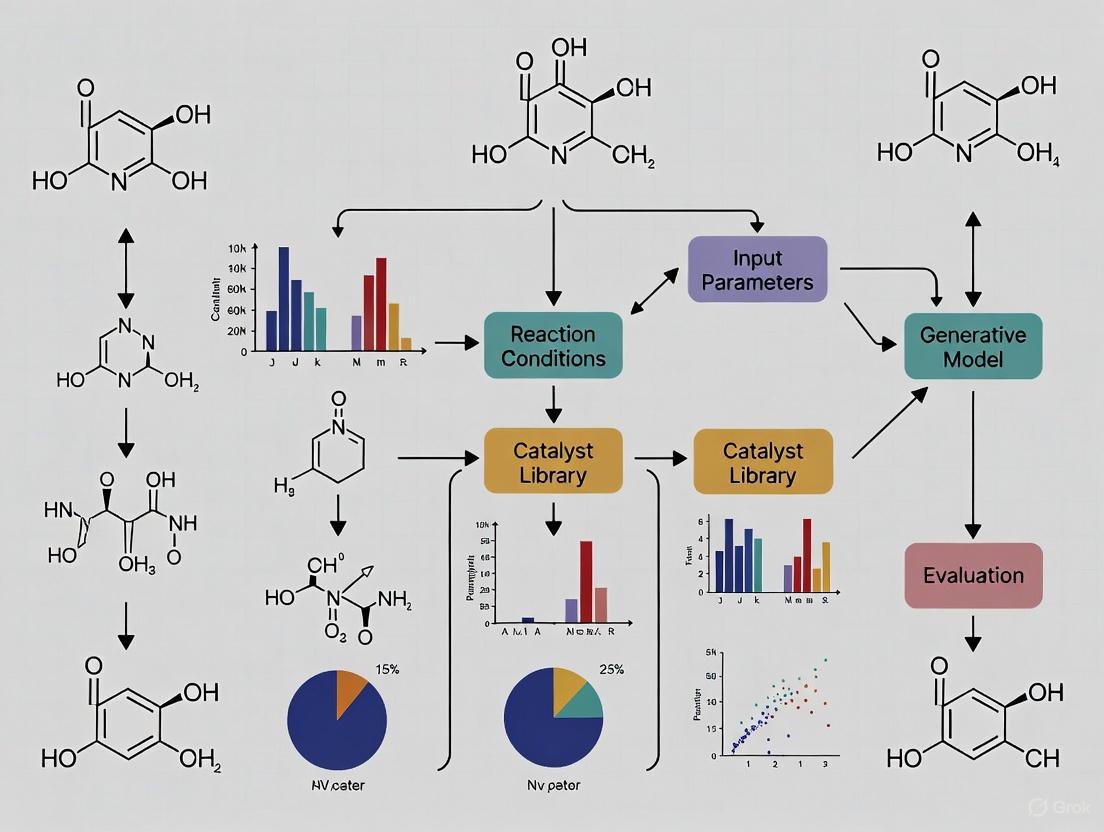
This article explores the transformative impact of reaction-conditioned generative models on catalyst design, a critical field for pharmaceutical development.
Revolutionizing Catalyst Design: How Reaction-Conditioned Generative Models Are Accelerating Drug Discovery
Abstract
This article explores the transformative impact of reaction-conditioned generative models on catalyst design, a critical field for pharmaceutical development. It provides a comprehensive overview for researchers and drug development professionals, covering the foundational principles of these AI models, their specific methodologies and applications in molecular catalysis, strategies for troubleshooting and optimizing model performance, and rigorous validation through case studies and comparative analyses. By synthesizing the latest advancements, this review aims to equip scientists with the knowledge to leverage these powerful tools for designing more efficient and selective catalysts, ultimately accelerating the discovery and optimization of therapeutic compounds.
The New Paradigm: Foundations of AI-Driven Catalyst Design
The development of high-performance catalysts is crucial for advancing chemical synthesis and pharmaceutical development. Traditional catalyst design, reliant on empirical trial-and-error approaches and computationally intensive quantum chemical calculations, represents a significant bottleneck in discovery timelines [1] [2]. The integration of artificial intelligence (AI), particularly reaction-conditioned generative models, is transforming this paradigm by enabling data-driven exploration of catalytic chemical space. These models enable inverse design, where catalyst structures are generated based on desired reaction conditions and performance metrics, moving beyond the limitations of traditional forward design [3]. This Application Note details the implementation of reaction-conditioned generative models for catalyst design, providing structured protocols, performance data, and essential resource guidance for research scientists.
Reaction-conditioned generative models represent a specialized class of AI architectures that learn the complex relationships between catalyst structures, reaction components (reactants, reagents, products), and reaction outcomes. By conditioning the generation process on specific reaction contexts, these models can propose novel catalyst candidates tailored for a particular chemical transformation.
The core architecture employed in frameworks like CatDRX is a Conditional Variational Autoencoder (CVAE) [1] [3]. This model jointly learns structural representations of catalysts and associated reaction components to capture their influence on catalytic performance. The architecture consists of three primary modules:
- Catalyst Embedding Module: Processes the catalyst molecular structure (e.g., via graph neural networks) to create a numerical representation.
- Condition Embedding Module: Encodes other reaction components, including reactants, reagents, products, and reaction properties (e.g., time) into a condition vector.
- Autoencoder Module: Combines the catalyst and condition embeddings to map the input into a latent space. A sampled latent vector, concatenated with the condition embedding, guides the decoder in reconstructing (or generating) catalyst molecules and informs a predictor for performance estimation (e.g., yield) [1].
This architecture is typically pre-trained on broad reaction databases, such as the Open Reaction Database (ORD), and subsequently fine-tuned for specific downstream catalytic applications [1].
Application Protocols
Protocol: Implementing a Catalyst Generation Workflow Using CatDRX
This protocol outlines the steps for employing a reaction-conditioned generative model for the discovery of novel catalysts, using the CatDRX framework as a representative example [1].
Purpose To generate novel, valid catalyst candidates with desired properties for a specific chemical reaction by leveraging a pre-trained and fine-tuned conditional variational autoencoder.
Reagents and Equipment
- Hardware: Workstation with GPU (e.g., NVIDIA A100 or RTX 3090) for model training and inference.
- Software: Python 3.8+, PyTorch or TensorFlow, RDKit, Deep Learning Framework (as per model implementation).
- Data: Pre-training dataset (e.g., Open Reaction Database), Target fine-tuning dataset (specific catalytic reactions with yield/activity data).
Procedure
- Data Preprocessing and Conditioning
- Input Representation: Represent catalyst molecules as SMILES strings or molecular graphs. Represent reaction components (reactants, reagents, products) as SMILES strings or reaction fingerprints (RXNFPs) [1].
- Feature Encoding: Encode catalyst structures using atom/bond features and adjacency matrices. Encode reaction conditions into a continuous vector using dedicated neural network encoders.
- Data Splitting: Split the fine-tuning dataset into training, validation, and test sets (e.g., 80/10/10).
Model Pre-training and Fine-Tuning
- Load Pre-trained Weights: Initialize the CatDRX model with weights pre-trained on a broad reaction database (e.g., ORD) [1].
- Fine-tuning: Further train the model on the target catalytic reaction dataset. Jointly optimize the encoder, decoder, and predictor modules using a combined loss function (reconstruction loss + prediction loss).
Catalyst Generation and Optimization
- Conditional Generation: Sample a latent vector and concatenate it with the embedding of the target reaction condition.
- Decoder Inference: Pass the combined vector through the decoder to generate novel catalyst structures in the desired chemical space.
- Latent Space Optimization: Apply optimization techniques (e.g., Bayesian optimization) within the model's latent space, guided by the property predictor, to steer generation toward catalysts with high predicted performance.
Validation and Filtering
- Chemical Validity: Use RDKit to validate the chemical structures of generated catalysts.
- Knowledge Filtering: Apply rules based on reaction mechanisms and expert knowledge to filter implausible candidates [1].
- Computational Validation: Employ Density Functional Theory (DFT) or machine learning interatomic potentials (MLIPs) to validate the catalytic performance and stability of top-ranked candidates [3].
Troubleshooting
- Poor Generation Quality: This may indicate a domain gap. Ensure the fine-tuning dataset is sufficiently large and relevant. Consider data augmentation or adjusting the balance between reconstruction and prediction losses.
- High Prediction Error: Verify the quality and consistency of the target property data (e.g., yield). Perform domain applicability analysis to check the overlap between pre-training and fine-tuning chemical spaces [1].
Protocol: Validating Generated Catalysts Using Computational Chemistry
Purpose To computationally validate the activity and stability of AI-generated catalyst candidates prior to experimental synthesis.
Procedure
- Structure Optimization: Use DFT to optimize the geometry of the generated catalyst molecule or surface structure.
- Property Calculation:
- Calculate key catalytic descriptors, such as adsorption energies of key reaction intermediates.
- Compute reaction free energy profiles and activation barriers (ΔΔG‡) for critical steps, especially for enantioselective reactions [1].
- Stability Assessment: Evaluate the thermodynamic stability of the catalyst under reaction conditions. For surfaces, calculate surface energies; for molecular catalysts, assess decomposition pathways.
Performance Data
The following tables summarize the quantitative performance of the CatDRX model and other generative approaches in key catalyst design tasks.
Table 1: Predictive Performance of CatDRX on Catalytic Activity and Yield [1]
| Dataset | Task Type | RMSE | MAE | Key Performance Insight |
|---|---|---|---|---|
| BH | Yield Prediction | ~0.15 | ~0.10 | Competitive performance, benefits from pre-training data overlap. |
| SM | Yield Prediction | ~0.18 | ~0.12 | Superior performance in yield prediction. |
| AH | Catalytic Activity | ~0.25 | ~0.18 | Competitive performance despite complex chirality; model does not explicitly encode chirality. |
| CC | Catalytic Activity | >0.40 | >0.30 | Reduced performance due to significant domain shift from pre-training data and limited reaction diversity. |
Table 2: Comparison of Generative Model Architectures for Catalyst Design [3]
| Model Type | Complexity | Applications | Key Advantages |
|---|---|---|---|
| Variational Autoencoder (VAE) | Stable to train | CO2RR on alloy catalysts [3] | Good interpretability, efficient latent sampling, property-guided optimization. |
| Generative Adversarial Network (GAN) | Difficult to train | Ammonia synthesis with alloy catalysts [3] | Capable of high-resolution structure generation. |
| Diffusion Model | Computationally expensive but stable | General surface structure generation [3] | Strong exploration capability, accurate generation of realistic structures. |
| Transformer | Scales with sequence length | 2e- ORR reaction (CatGPT) [3] | Conditional and multi-modal generation, excels with discrete data representations. |
The Scientist's Toolkit
Table 3: Essential Research Reagent Solutions for AI-Driven Catalyst Design
| Item Name | Function/Application | Example/Note |
|---|---|---|
| Open Reaction Database (ORD) | Large-scale, public repository of reaction data for pre-training generative models. | Provides diverse reaction data crucial for developing robust, generalizable models [1]. |
| Reaction Fingerprints (RXNFPs) | Numerical representation of chemical reactions to analyze and compare reaction spaces. | 256-bit embeddings used to assess domain applicability and model transferability [1]. |
| Extended Connectivity Fingerprints (ECFP) | Molecular representation for quantifying catalyst similarity and chemical space coverage. | 2048-bit ECFP4 fingerprints used to analyze the catalyst space of fine-tuning datasets [1]. |
| Density Functional Theory (DFT) | Computational method for validating generated catalysts by calculating energies and properties. | Used as a final validation step; can be accelerated by Machine Learning Interatomic Potentials (MLIPs) [1] [3]. |
| Bird Swarm Optimization Algorithm | Global optimization algorithm used in conjunction with generative models for property-guided search. | Combined with CDVAE to generate over 250,000 candidate structures for CO2RR [3]. |
Workflow Integration Diagram
The complete catalyst discovery pipeline, from data preparation to final candidate selection, integrates the generative model with optimization and validation cycles.
The design and discovery of novel catalysts are pivotal for advancing chemical synthesis and pharmaceutical development. Traditional methods, which often rely on trial-and-error or computationally intensive quantum mechanics calculations, are increasingly being supplanted by artificial intelligence (AI)-driven approaches [3] [1]. Among these, generative models have emerged as transformative tools for the inverse design of catalytic materials, enabling researchers to directly generate candidate structures with desired properties [3] [4]. This document details the core architectures—Variational Autoencoders (VAEs), Generative Adversarial Networks (GANs), Transformers, and Diffusion Models—framed within the context of reaction-conditioned generative models for catalyst design. It provides application notes, experimental protocols, and resource toolkits tailored for research scientists and drug development professionals.
Core Architectures in Catalyst Design
The following table summarizes the core attributes, applications, and challenges of the four primary generative model architectures in catalyst design.
Table 1: Comparative Analysis of Core Generative Architectures for Catalyst Design
| Architecture | Core Principle | Applications in Catalyst Design | Advantages | Challenges |
|---|---|---|---|---|
| Variational Autoencoder (VAE) | Learns a probabilistic latent representation of input data and decodes to generate new data [4] [5]. | - Reaction-conditioned catalyst generation (e.g., CatDRX) [1].- Prediction of catalytic performance (yield) [1].- Exploring catalyst chemical space [3]. | - Stable training process [3].- Enables efficient latent space sampling and optimization [3].- Good interpretability of the latent space [3]. | - Can produce blurry or unrealistic outputs [5].- May struggle with complex, high-fidelity data distributions [4]. |
| Generative Adversarial Network (GAN) | Two neural networks (Generator and Discriminator) compete adversarially to produce realistic data [4] [5]. | - Design of alloy catalysts for specific reactions (e.g., ammonia synthesis) [3].- High-resolution molecular generation. | - Capable of high-resolution and perceptually sharp generation [3] [6]. | - Training can be unstable and suffer from mode collapse [4] [5].- Requires careful balancing of generator and discriminator [5]. |
| Transformer | Uses self-attention mechanisms to model long-range dependencies and contextual relationships in sequential data [4] [5]. | - Conditional and multi-modal generation for reactions (e.g., CatGPT for ORR) [3].- Product prediction and retrosynthesis [7].- Tokenization of crystal structures for generation [3]. | - Excellent at modeling complex, conditional relationships [3].- Highly flexible and scalable architecture [4]. | - Computationally intensive for long sequences [5].- Requires large amounts of training data [4]. |
| Diffusion Model | Iteratively denoises a random signal to generate data, learning to reverse a forward noising process [4] [5]. | - Surface structure and adsorption geometry generation [3].- Generating complex transition-state structures [3].- High-quality, diverse molecular and material generation. | - Strong exploration capability in chemical space [3].- High-quality and diverse output generation [5].- Training stability [3]. | - Computationally expensive during inference (sampling) [3] [5].- Can be slower than other generative approaches [4]. |
Application Notes for Reaction-Conditioned Generation
The paradigm of reaction-conditioned generation represents a significant advancement, moving beyond generating catalysts in isolation to designing them within a specific reactive context. This approach conditions the generative process on key reaction components such as reactants, reagents, products, and reaction time, thereby capturing the complex relationship between a catalyst's structure and its performance in a given chemical transformation [1].
- VAEs for Conditional Design: The CatDRX framework exemplifies this approach. It employs a joint Conditional VAE (CVAE) that simultaneously learns structural representations of catalysts and their associated reaction components. The model is pre-trained on a broad reaction database (e.g., the Open Reaction Database) and can be fine-tuned for specific downstream catalytic tasks. This allows for the simultaneous generation of novel catalysts and prediction of their performance (e.g., yield) when provided with a target reaction's conditions [1] [8].
- Diffusion Models for Surface Exploration: For heterogeneous catalysis, diffusion models have been trained on custom datasets of surface structures to generate diverse and stable atomic-scale configurations. These models can be guided by learned forces to produce realistic adsorption sites and thin-film structures, which is crucial for identifying active sites and understanding reaction mechanisms [3].
- Transformers for Multi-Modal Tasks: Transformer-based models like CatGPT [3] and ReactionT5 [7] leverage their sequence-to-sequence architecture and attention mechanisms to handle multi-modal tasks in catalysis, such as predicting reaction products and conditions from textual or graph-based representations of reactants and catalysts.
Experimental Protocols
Protocol 1: Implementing a Reaction-Conditioned VAE (CatDRX)
This protocol outlines the steps for developing and training a reaction-conditioned VAE for catalyst design, based on the CatDRX framework [1].
Objective: To train a generative model that can design novel catalyst molecules and predict their performance (e.g., reaction yield) under specified reaction conditions.
Workflow:
Materials and Reagents:
- Hardware: High-performance computing cluster with multiple GPUs (e.g., NVIDIA A100 or H100).
- Software: Python (>=3.8), PyTorch or TensorFlow, RDKit, DeepChem.
- Data: Open Reaction Database (ORD) [1] for pre-training. Domain-specific catalyst performance datasets (e.g., for C-N coupling, hydrogenation) for fine-tuning.
Procedure:
- Data Preprocessing:
- Catalyst Representation: Encode catalyst molecules as graphs (using atom and bond features with an adjacency matrix) or as SMILES/SELFIES strings.
- Condition Representation: Encode reaction components (reactants, reagents, products) as SMILES strings or reaction fingerprints (e.g., RXNFPs). Scalar conditions (e.g., time, temperature) can be normalized.
- Data Splitting: Split the dataset into training, validation, and test sets (e.g., 80/10/10) using stratified sampling to ensure representative coverage of reaction classes.
Model Architecture and Training:
- Modules: Construct three core modules:
- Catalyst Embedding Module: A graph neural network (GNN) or RNN that processes the catalyst input.
- Condition Embedding Module: A feed-forward network or transformer that processes the reaction condition inputs.
- Autoencoder Module: An encoder that maps the concatenated catalyst and condition embedding to a latent vector
z, a decoder that reconstructs the catalyst fromzand the condition, and a predictor (feed-forward network) that estimates catalytic performance from the same inputs.
- Pre-training: Train the entire model on the large and diverse ORD to learn general representations of catalysis. The loss function is a combination of reconstruction loss (for the catalyst), Kullback–Leibler divergence loss (for the latent space), and prediction loss (e.g., Mean Squared Error for yield).
- Fine-tuning: Transfer the pre-trained model and further train it on a smaller, target-specific dataset to specialize its knowledge for a particular reaction class or property.
- Modules: Construct three core modules:
Catalyst Generation and Validation:
- Generation: Sample a latent vector
zfrom the prior distribution and concatenate it with the embedding of the target reaction condition. Pass this to the decoder to generate new catalyst structures. - Validation:
- Computational: Use the integrated predictor to screen generated catalysts for high performance. Employ density functional theory (DFT) or machine learning interatomic potentials (MLIPs) to validate the stability and predicted activity of top candidates [3].
- Experimental: Synthesize and experimentally test the most promising catalysts in the target reaction to confirm model predictions [1].
- Generation: Sample a latent vector
Protocol 2: Exploring Catalyst Surfaces with a Diffusion Model
This protocol describes using a diffusion model to generate plausible surface structures for heterogeneous catalysis [3].
Objective: To generate stable and diverse surface structures and adsorbate configurations to identify novel active sites.
Workflow:
Materials and Reagents:
- Hardware: GPU cluster.
- Software: Atomistic simulation environment (e.g., ASE), MLIP library (e.g., MACE), diffusion model codebase (e.g., JAX or PyTorch).
- Data: A curated dataset of surface structures and adsorbate configurations, typically generated via ab initio global structure search algorithms [3].
Procedure:
- Dataset Curation: Use global optimization methods (e.g., genetic algorithms, basin hopping) combined with DFT to create a dataset of low-energy surface and adsorbate configurations.
- Model Training:
- Forward Process: Define a Markov chain that gradually adds Gaussian noise to the atomic coordinates of the input structures over a series of timesteps.
- Reverse Process: Train a neural network (e.g., a GNN) to predict the noise that was added, effectively learning the gradient of the data distribution. This allows the model to iteratively denoise a random initial structure into a coherent surface.
- Sampling and Optimization:
- Generation: Sample new structures by starting from pure noise and applying the learned reverse denoising process.
- Guided Generation: Condition the generation process on desired properties (e.g., low adsorption energy) by incorporating guidance from a property predictor during the reverse diffusion steps.
- Relaxation and Validation: Relax the generated structures using MLIPs or DFT to find the nearest local minimum and verify their thermodynamic stability and electronic properties.
Table 2: Essential Computational Tools for Generative Catalyst Design
| Resource Name | Type | Primary Function | Relevance to Catalyst Design |
|---|---|---|---|
| Open Reaction Database (ORD) [1] | Database | A large, open-access repository of chemical reaction data. | Serves as a primary source for pre-training reaction-conditioned models on a broad chemical space. |
| RDKit | Software Library | Cheminformatics and molecular manipulation. | Used for processing molecular representations (SMILES, graphs), calculating descriptors, and validating generated structures. |
| Density Functional Theory (DFT) | Computational Method | Quantum mechanical calculation of electronic structure. | The "gold standard" for validating the stability and catalytic properties (e.g., adsorption energy) of generated materials. |
| Machine Learning Interatomic Potentials (MLIPs) [3] | Surrogate Model | Fast, near-DFT accuracy energy and force calculations. | Accelerates the evaluation and relaxation of generated structures, making high-throughput screening feasible. |
| CatDRX Model [1] | Generative Model | Reaction-conditioned VAE for catalyst generation and yield prediction. | A state-of-the-art framework for the inverse design of molecular catalysts. |
| CDVAE (Crystal Diffusion VAE) [3] | Generative Model | Diffusion-based model for crystal structure generation. | Adapted for generating bulk and surface structures of crystalline catalysts. |
The design of novel catalysts is a pivotal process for enhancing the efficiency of industrial chemical reactions, minimizing waste, and building a more sustainable society. However, traditional catalyst development is a multi-step endeavor that can span several years, from initial screening to industrial application, requiring tremendous resources to navigate complex chemical spaces [1]. Conventional computational methods, while valuable, often demand substantial resources and lack transferability across different systems.
The emergence of artificial intelligence (AI) has introduced new paradigms for tackling this challenge. Among these, generative models have shown significant promise in the inverse design of molecules, including catalysts, by learning to create structures with desired properties. Early generative approaches, however, were often constrained, developed for specific reaction classes or predefined fragment categories without fully considering the broader reaction context. This limitation restricted their ability to explore novel catalysts across the full reaction space [1].
This application note explores the transformative potential of reaction-conditioned generative models, a sophisticated AI framework that integrates the full context of a chemical reaction—including reactants, reagents, products, and conditions—to guide the targeted generation of catalyst candidates. By conditioning the generation process on this rich contextual information, these models enable a more precise, efficient, and intelligent exploration of catalytic chemical space, thereby accelerating the discovery pipeline for chemical and pharmaceutical industries.
Core Architectures and Mechanisms
Reaction-conditioned generative models are built upon deep learning architectures capable of learning the complex relationships between catalyst structures, reaction components, and reaction outcomes. The core principle is to use the reaction context as a conditioning input to the model, steering the generative process toward candidates that are effective for a specific chemical transformation.
The Conditional Variational Autoencoder (CVAE) Framework
The Conditional Variational Autoencoder (CVAE) has proven to be a powerful architecture for this task, as exemplified by the CatDRX framework for catalyst discovery [1]. Its mechanism can be broken down into three main modules:
- Catalyst Embedding Module: This module processes the molecular structure of a catalyst (often represented as a graph or matrix of atoms and bonds) through a series of neural networks to create a numerical representation, or embedding, that captures its essential structural features.
- Condition Embedding Module: This module simultaneously processes the other reaction components, such as reactants, reagents, products, and properties like reaction time, into a separate conditioning embedding.
- Autoencoder Module: The catalyst and condition embeddings are concatenated into a unified "catalytic reaction embedding." The encoder part of the autoencoder maps this combined input into a probabilistic latent space. A latent vector is sampled from this space and, crucially, is concatenated with the condition embedding to guide the decoder in reconstructing the catalyst molecule. A parallel predictor network uses the same latent and condition vectors to estimate catalytic performance, such as reaction yield [1].
This joint training forces the model's latent space to organize itself such that proximity in the space reflects similarity in both catalyst structure and catalytic function under given conditions.
Comparison of Generative Model Architectures
While CVAE is a prominent choice, other generative architectures are being adapted for catalyst design, each with distinct strengths and complexities. The table below summarizes key models applied in this domain.
Table 1: Comparison of Generative Model Architectures for Catalyst Design
| Model | Modeling Principle | Complexity | Typical Applications | Key Advantages |
|---|---|---|---|---|
| Variational Autoencoder (VAE) | Learns a compressed latent space distribution of the data [3]. | Stable to train [3]. | Generating catalyst ligands for CO2 reduction [3]. | Good interpretability and efficient latent sampling [3]. |
| Generative Adversarial Network (GAN) | Uses a generator and discriminator in an adversarial game to learn realistic data distributions [9]. | Difficult to train, can be unstable [3]. | Generating surface structures for ammonia synthesis catalysts [3]. | Capable of high-resolution, realistic generation [3]. |
| Diffusion Model | Iteratively denoises a random structure to generate data, following a reverse-time process [3]. | Computationally expensive but stable training [3]. | Generating atomic-scale surface and adsorbate structures [3]. | Strong exploration capability and high accuracy [3]. |
| Transformer Model | Models probabilistic dependencies between tokens in a sequence using attention mechanisms [3]. | Requires large datasets for training. | Conditional generation of catalyst structures for specific reactions [3]. | Excellent for multi-modal and conditional generation [3]. |
Application Notes: Protocol for Reaction-Conditioned Catalyst Generation
The following protocol outlines the key steps for implementing a reaction-conditioned generative model, based on the CatDRX framework [1], for the design and optimization of homogeneous catalysts.
Protocol: Catalyst Generation with a Pre-trained CVAE Model
Objective: To generate novel, valid catalyst candidates for a specific chemical reaction (e.g., a Suzuki-Miyaura cross-coupling) and predict their performance (e.g., reaction yield). Primary Model: A CVAE pre-trained on a broad reaction database (e.g., the Open Reaction Database) and fine-tuned on relevant catalytic reaction data [1].
Workflow:
Step-by-Step Procedure:
Input Preparation:
- Define the target reaction using a SMILES string or a similar representation, explicitly specifying the core reactants and products [1].
- Specify relevant reaction conditions (e.g., solvent, temperature, time) to be used as conditioning inputs. If specific reagents are fixed, they should be included in the reaction definition [1].
Model Conditioning:
- Feed the reaction and condition information into the model's condition embedding module. This module processes the inputs to create a fixed-length numerical vector that semantically represents the reaction context [1].
Latent Space Sampling and Optimization:
- To generate novel catalysts, sample a latent vector
zfrom the prior distribution (e.g., a standard Gaussian) of the model's latent space. - For property-guided generation, perform optimization within the latent space. This involves:
a. Using a predictor network that estimates a target property (e.g., binding energy, yield) from the latent vector
zand the condition embedding [10]. b. Employing an optimization algorithm (e.g., gradient ascent/descent, bird swarm algorithm) to iteratively adjustzto maximize or minimize the predicted property [3] [10]. - Concatenate the optimized (or sampled) latent vector
zwith the condition embedding from Step 2.
- To generate novel catalysts, sample a latent vector
Catalyst Decoding and Validation:
- Pass the combined vector to the model's decoder to generate a new catalyst structure, typically in a string format like SELFIES, which guarantees molecular validity [10].
- Validate the generated catalyst for chemical correctness and synthetic accessibility. Filter candidates using background knowledge (e.g., known catalyst motifs, stability criteria) [1].
Performance Prediction and Selection:
- Utilize the integrated predictor network to estimate the performance of the generated catalyst for the conditioned reaction, providing a rapid virtual screening metric [1].
- Select top-ranking candidates for further validation via computational chemistry (e.g., DFT calculations) [1] or high-throughput experimentation.
Quantitative Performance Metrics
In benchmark studies, reaction-conditioned models have demonstrated strong performance in both generative and predictive tasks. The following table summarizes quantitative results from relevant studies.
Table 2: Performance Metrics of Reaction-Conditioned Generative Models in Catalyst Design
| Model / Study | Application / Dataset | Key Performance Metrics | Experimental Outcome / Validation |
|---|---|---|---|
| CatDRX (CVAE) [1] | Yield prediction across multiple reaction classes | Competitive or superior RMSE/MAE in yield prediction vs. baselines. Performance varies with dataset domain overlap. | Effective generation of novel catalysts validated by reaction mechanisms and chemical knowledge. |
| VAE with Predictor [10] | Suzuki cross-coupling catalyst design | MAE for binding energy prediction: 2.42 kcal mol⁻¹. Ability to generate 84% valid and novel catalysts. | Identified catalysts with binding energies within the optimal Sabatier principle range. |
| Diffusion Model [3] | Surface structure generation for CO₂RR | Generated >250,000 candidate structures; 35% predicted high activity. | Five alloy compositions synthesized; two achieved ~90% Faradaic efficiency for CO₂ reduction. |
| GAN with Fine-Tuning [11] | (For reference: Facial expression synthesis) | Precision for "anger" emotion increased from 85.7% to 89.1%; False negatives reduced from 16 to 10. | (Illustrates the impact of architectural fine-tuning on model output fidelity.) |
The Scientist's Toolkit: Research Reagent Solutions
Successful implementation of these advanced models relies on a suite of computational "reagents" and resources.
Table 3: Essential Research Reagents and Resources for Reaction-Conditioned Generative Modeling
| Item / Resource | Function / Description | Relevance to the Protocol |
|---|---|---|
| Open Reaction Database (ORD) [1] | A large, publicly available database of chemical reactions. | Serves as a primary source for pre-training the generative model on a broad range of chemical transformations, improving generalizability [1]. |
| SELFIES Representation [10] | A string-based molecular representation that guarantees 100% syntactic and molecular validity. | Used to represent catalysts for the VAE, overcoming limitations of SMILES for organometallic complexes and ensuring generated structures are valid [10]. |
| Density Functional Theory (DFT) [1] [10] | A computational quantum mechanical method used to calculate electronic structure. | Generates high-fidelity training data (e.g., binding energies, activation barriers) for the predictor network and validates final candidate structures [1] [10]. |
| Bird Swarm Optimization (BSO) [3] | A nature-inspired global optimization algorithm. | Used for efficient property-guided optimization within the continuous latent space of a VAE to find structures with desired catalytic properties [3]. |
| Machine Learning Interatomic Potentials (MLIPs) [3] | Surrogate models trained on DFT data that provide accurate energy and force predictions at lower computational cost. | Accelerates the evaluation of generated surface structures and adsorption geometries during the validation step [3]. |
Reaction-conditioned generative models represent a paradigm shift in computational catalyst design. By moving beyond the generation of structures in isolation to the targeted creation of catalysts within a specific reaction context, these models offer a powerful and efficient strategy for exploring vast chemical spaces. The integration of conditioning, predictive performance, and optimization into a unified framework, as detailed in these application notes and protocols, provides researchers with a robust toolkit for accelerating the discovery of next-generation catalysts, ultimately contributing to the advancement of more sustainable and efficient chemical processes.
The paradigm of materials discovery is shifting from traditional trial-and-error approaches towards a targeted, inverse design methodology. In the context of catalyst design, this involves specifying desired catalytic properties—such as high yield, selectivity, or stability—and computationally generating candidate catalyst structures that fulfill these criteria [12]. This property-to-structure approach relies on two interconnected pillars: the intelligent navigation of a compressed latent space and the practical assessment of candidate synthetic accessibility (SA) to ensure proposed structures can be realistically synthesized in the laboratory [12] [13].
Reaction-conditioned generative models represent a state-of-the-art framework within this paradigm. These models learn the complex relationships between catalyst structures, reaction conditions (e.g., reactants, reagents, temperature), and reaction outcomes. Once trained, they can generate novel, optimal catalyst structures conditioned on specific, user-defined reaction parameters, thereby enabling the inverse design of catalysts tailored for a particular chemical transformation [1].
Quantitative Performance Data
The efficacy of generative models in catalyst design is demonstrated by their performance on predictive and generative tasks. The following tables summarize key quantitative metrics reported in recent studies.
Table 1: Predictive Performance of Generative Models on Catalytic Property Estimation
| Model / Framework | Application / Dataset | Key Performance Metric(s) | Citation |
|---|---|---|---|
| PGH-VAEs (Topology-based VAE) | *OH adsorption energy on High-Entropy Alloys (HEAs) | Mean Absolute Error (MAE): 0.045 eV | [14] |
| CatDRX (Reaction-conditioned VAE) | Yield prediction across multiple reaction classes | Competitive/Superior performance in Root Mean Squared Error (RMSE) and MAE vs. baselines | [1] |
| Inverse Ligand Design Model (Transformer) | Vanadyl-based epoxidation catalyst ligands | Validity: 64.7%, Uniqueness: 89.6% | [15] |
Table 2: Synthetic Accessibility and Generation Metrics
| Model / Framework | SAscore / Feasibility Assessment | Other Generation Metrics | Citation |
|---|---|---|---|
| SAscore Methodology (Rule-based & fragment contributions) | Agreement with medicinal chemists: r² = 0.89 | Validated on 40 molecules assessed by experts | [13] |
| Inverse Ligand Design Model | High Synthetic Accessibility Scores | RDKit Similarity: 91.8% | [15] |
| CatDRX | Validation via reaction mechanisms & chemical knowledge | Effective generation using different sampling strategies | [1] |
Experimental Protocols
This section provides detailed methodologies for implementing and validating a reaction-conditioned generative model for catalyst inverse design, drawing from established frameworks like CatDRX [1] and PGH-VAEs [14].
Protocol: Pre-training a Reaction-Conditioned Variational Autoencoder (VAE)
Objective: To create a foundational model that learns a latent representation of catalysts and their relationship with reaction components and outcomes.
Materials & Reagents:
- Hardware: High-performance computing node with modern GPUs (e.g., NVIDIA A100/A6000, H100).
- Software: Python 3.8+, PyTorch or TensorFlow, RDKit, Deep Graph Library (DGL) or PyTorch Geometric.
- Data: Broad reaction database (e.g., Open Reaction Database - ORD) containing reaction SMILES, catalysts, reagents, products, and yields [1].
Procedure:
- Data Preprocessing:
- Extract and standardize reaction components:
Reactants,Reagents,Products,Catalyst, andYield. - Featurize the catalyst molecule as a molecular graph using an adjacency matrix and atom/bond feature matrices.
- Encode other reaction components (reactants, reagents, products) and scalar conditions (e.g., reaction time) into a condition embedding vector using separate neural network modules.
- Extract and standardize reaction components:
Model Architecture Setup:
- Catalyst Embedding Module: Implement a Graph Neural Network (GNN) to process the catalyst graph into a fixed-dimensional embedding vector.
- Condition Embedding Module: Implement feed-forward networks or other suitable architectures to encode the reaction context into a condition vector.
- Encoder: Design a network that takes the concatenated catalyst and condition embeddings and maps them to the parameters of a latent distribution (mean
μand log-variancelogσ²). - Sampler: Sample a latent vector
zusing the reparameterization trick:z = μ + ε * exp(0.5 * logσ²), whereε ~ N(0, I). - Decoder: Design a network that takes the sampled latent vector
zand the condition embedding, and reconstructs the catalyst's molecular graph. - Predictor (Optional): Add a feed-forward network that uses
zand the condition embedding to predict the reaction yield.
Model Training:
- Loss Function: Minimize a combined loss function
L_total:L_reconstruction: Cross-entropy loss for graph reconstruction.L_KL: Kullback-Leibler divergence loss to regularize the latent space towards a standard normal distribution.L_prediction: Mean Squared Error (MSE) for yield prediction.L_total = L_reconstruction + β * L_KL + γ * L_prediction(whereβandγare weighting hyperparameters).
- Training Regime: Use the Adam optimizer with early stopping on a validation split of the pre-training data.
- Loss Function: Minimize a combined loss function
Protocol: Fine-Tuning for Downstream Catalytic Activity Prediction
Objective: To adapt the pre-trained model to a specific, smaller dataset targeting a particular catalytic reaction or property.
Materials & Reagents:
- Hardware: Same as Protocol 3.1.
- Software: Same as Protocol 3.1.
- Data: A smaller, specialized dataset for the target reaction (e.g., asymmetric hydrogenation, cross-coupling) with catalytic activity data (e.g., yield, enantioselectivity, turnover frequency) [1].
Procedure:
- Data Alignment: Preprocess the downstream dataset to align with the featurization scheme used during pre-training.
- Model Initialization: Load the weights from the pre-trained model (Encoder, Decoder, Predictor).
- Transfer Learning:
- Re-train the entire model on the downstream dataset with a reduced learning rate.
- Alternatively, freeze the weights of the encoder and decoder and only re-train the predictor module if the primary goal is accurate property prediction.
Protocol: Inverse Design Cycle with SAscore Filtering
Objective: To generate novel, high-performing catalyst candidates for a given reaction and filter them based on synthetic feasibility.
Materials & Reagents:
- Software: Trained generative model from Protocol 3.1/3.2, SAscore calculation package (e.g., as implemented in RDKit or based on [13]).
- Data: Target reaction conditions (reactants, reagents, desired property value).
Procedure:
- Conditioned Generation:
- Encode the target reaction conditions into the condition embedding vector.
- Sample a latent vector
zfrom the prior distribution (e.g.,N(0, I)) or from a region of the latent space associated with high performance. - Pass the condition embedding and
zto the decoder to generate a novel catalyst structure.
Validation and Filtering:
- Validity Check: Ensure the generated molecular graph is chemically valid (e.g., correct valences).
- SAscore Calculation: Pass the valid generated structures through an SAscore function [13]. The score is a combination of:
- FragmentScore: Sum of contributions of all extended connectivity fragments (ECFC_4) in the molecule, derived from historical synthetic knowledge in databases like PubChem.
- Complexity Penalty: Accounts for non-standard structural features like large rings, high stereocomplexity, and unusual ring fusions.
- Threshold Filtering: Retain candidates with an SAscore below a predetermined threshold (e.g., <4.5, where 1=easy, 10=very difficult to synthesize) [13] [15].
Iterative Optimization: Use the generated and filtered candidates to iteratively refine the search in the latent space (e.g., via Bayesian optimization or active learning) towards the target properties.
The Scientist's Toolkit: Essential Research Reagents & Solutions
Table 3: Key Computational Tools and Datasets for Inverse Catalyst Design
| Item Name | Function / Application | Specification / Notes |
|---|---|---|
| Open Reaction Database (ORD) | Pre-training data source for broad, general-purpose chemical knowledge. | Contains a vast array of chemical reactions with detailed context [1]. |
| High-Throughput DFT Data | Source of accurate, labeled data for adsorption energies and reaction barriers. | Critical for training accurate surrogate models, especially for surface catalysis [14]. |
| RDKit | Open-source cheminformatics toolkit. | Used for molecule manipulation, featurization, fingerprint generation, and SAscore calculation [13] [15]. |
| Graph Neural Network (GNN) Library | Core architecture for molecule representation learning. | Libraries like DGL or PyTorch Geometric implement GNNs for processing molecular graphs [1]. |
| Synthetic Accessibility (SAscore) | Computational filter for practical feasibility. | A score between 1 (easy) and 10 (very difficult) based on molecular complexity and fragment contributions from PubChem [13]. |
| Persistent GLMY Homology (PGH) | Topological descriptor for 3D active sites. | Captures nuanced coordination and ligand effects in surface catalysts, enabling high-resolution representation [14]. |
Workflow and System Diagrams
The following diagrams illustrate the core logical relationships and experimental workflows described in these protocols.
Catalyst Inverse Design Workflow
Conditional VAE Architecture
From Code to Catalyst: Methodologies and Real-World Applications
The design and discovery of novel catalysts are pivotal for advancing chemical synthesis and pharmaceutical development, yet traditionally rely on costly, time-consuming trial-and-error experiments [1]. Reaction-conditioned generative models represent a paradigm shift in computational catalysis, leveraging deep learning to inversely design catalyst structures conditioned on specific reaction environments. Unlike conventional models limited to specific reaction classes or predefined fragments, these frameworks learn the complex relationships between reaction components—such as reactants, reagents, and products—and catalyst performance, enabling targeted exploration of catalytic chemical space [1]. This approach directly addresses the critical "functional property deficit" in catalyst informatics, where a scarcity of real, measured catalytic performance data (e.g., Turnover Number/Frequency) has historically hampered predictive design [16]. By framing catalyst design as an inverse problem—mapping desired reaction outcomes to optimal catalyst structures—these models offer a transformative methodology for accelerating the discovery of efficient, novel catalysts across diverse chemical transformations.
Framework Architecture & Core Components
CatDRX: A Reaction-Conditioned Variational Autoencoder
The CatDRX framework is built upon a conditional variational autoencoder (CVAE) architecture specifically engineered for catalyst discovery. Its core innovation lies in jointly learning structural representations of catalysts and their associated reaction contexts to facilitate both property prediction and targeted generation [1].
The model comprises three principal modules that process and integrate different types of chemical information:
- Catalyst Embedding Module: Processes the catalyst's molecular structure, typically represented as a graph or matrix of atoms and bonds, through a series of neural networks to construct a dense vector embedding that captures essential structural features.
- Condition Embedding Module: Encodes other critical reaction components, including reactants, reagents, products, and operational parameters such as reaction time, into a unified condition representation. This allows the model to learn how these factors influence catalytic performance.
- Autoencoder Module: Integrates the catalyst and condition embeddings through a CVAE architecture. The encoder maps the input into a probabilistic latent space, while the decoder samples from this space and uses the condition embedding to reconstruct catalyst molecules. A parallel predictor module estimates catalytic performance (e.g., yield) from the same latent representation [1].
This architecture is first pre-trained on broad reaction databases like the Open Reaction Database (ORD) to learn generalizable relationships, then fine-tuned on specific downstream reactions, enabling competitive performance across diverse catalytic applications [1].
Growing and Linking Optimizers: Synthesis-Driven Design
In parallel, the Growing Optimizer (GO) and Linking Optimizer (LO) frameworks adopt a fundamentally different approach inspired by synthetic practicality. Rather than generating molecular structures in isolation, these models emulate real-world chemical synthesis by sequentially selecting commercially available building blocks and simulating feasible reactions between them to form new compounds [17].
This approach offers several distinct advantages:
- Synthetic Accessibility: By construction, generated molecules are guaranteed to be synthesizable from available starting materials using known chemical reactions.
- Chemistry Restriction: The models can be constrained to specific building blocks, reaction types, and synthesis pathways, which is crucial for applications in drug discovery where synthetic feasibility is paramount.
- Reaction-Conditioned Generation: While CatDRX conditions on the entire reaction context, GO and LO explicitly incorporate reaction knowledge at the generation step itself, building molecules through chemically plausible transformations rather than abstract structural assembly [17].
Comparative analysis demonstrates that GO and LO outperform traditional generative models like REINVENT 4 in producing synthetically accessible molecules while maintaining desired molecular properties [17].
Architectural Workflow Visualization
The diagram below illustrates the core architectural workflow and logical relationships of the CatDRX framework:
CatDRX Framework Architecture
Experimental Protocols & Validation
Model Training and Implementation
Pre-training Protocol for CatDRX: The CatDRX model undergoes extensive pre-training on the Open Reaction Database (ORD), which contains diverse reaction data encompassing various catalyst types, substrates, and conditions. The training objective combines both reconstruction loss (for catalyst generation) and prediction loss (for yield estimation). During pre-training, the model learns to map the joint space of catalyst structures and reaction conditions into a structured latent representation, enabling it to capture fundamental relationships between catalyst features, reaction contexts, and performance outcomes [1].
Fine-tuning for Downstream Applications: For specific catalytic applications, the pre-trained model is fine-tuned on specialized datasets. This transfer learning approach involves continuing training with a lower learning rate on task-specific data, allowing the model to adapt its general knowledge to particular reaction classes such as cross-couplings or asymmetric transformations [1].
Implementation of Growing/Linking Optimizers: GO and LO are implemented using reinforcement learning fine-tuning, where the models are optimized to select building blocks and reactions that maximize both desired molecular properties and synthetic feasibility. The action space consists of available chemical reactions and building blocks, with rewards based on predicted properties and synthetic accessibility scores [17].
Performance Benchmarking
Quantitative Evaluation Metrics: Model performance is evaluated using multiple metrics depending on the task. For predictive performance, root mean squared error (RMSE) and mean absolute error (MAE) are used for yield prediction, while for classification tasks, area under the curve (AUC) and accuracy are employed. For generative tasks, validity, uniqueness, and novelty of generated structures are quantified, along with success rates in inverse design objectives [1] [18].
Table 1: Performance Comparison of CatDRX Against Baselines on Yield Prediction
| Dataset | Model | RMSE | MAE | R² |
|---|---|---|---|---|
| BH | CatDRX | 8.21 | 6.45 | 0.81 |
| BH | Baseline A | 9.87 | 7.92 | 0.76 |
| SM | CatDRX | 7.35 | 5.83 | 0.84 |
| SM | Baseline B | 8.94 | 7.12 | 0.79 |
| UM | CatDRX | 10.62 | 8.37 | 0.77 |
| UM | Baseline C | 12.45 | 9.86 | 0.71 |
Note: Adapted from performance metrics reported in CatDRX evaluation [1].
Chemical Space Coverage Analysis: To assess generalization capability, the chemical spaces of both reactions and catalysts are examined using dimensionality reduction techniques. Reaction fingerprints (RXNFPs) and catalyst fingerprints (ECFP4) are projected via t-SNE to visualize overlap between pre-training and fine-tuning datasets. Models demonstrate superior performance on datasets with substantial chemical space overlap (e.g., BH, SM, UM, AH), while performance decreases on out-of-distribution reactions (e.g., CC, PS) [1].
Inverse Design Case Studies
Case Study 1: Cross-Coupling Catalyst Optimization In one practical application, CatDRX was employed to design novel phosphine ligands for Pd-catalyzed cross-coupling reactions. The model successfully generated catalysts with modified steric and electronic properties that improved yield by 15-20% compared to conventional ligands for challenging substrate pairs, with generated candidates validated through DFT calculations [1].
Case Study 2: Asymmetric Catalysis Design For a asymmetric hydrogenation reaction, the framework generated novel chiral catalysts with predicted enantioselectivity >90% ee. The model explored structural modifications to established catalyst scaffolds, suggesting non-intuitive substituents that were subsequently validated experimentally to provide high enantioselectivity [1].
Case Study 3: Synthesis-Aware Catalyst Discovery The Growing and Linking Optimizers were applied to design synthesizable enzyme inhibitors, achieving a 3.5-fold improvement in synthetic accessibility scores compared to REINVENT 4 while maintaining target potency. The models successfully identified novel molecular scaffolds accessible in 3-5 synthetic steps from available building blocks [17].
The Scientist's Toolkit: Research Reagent Solutions
Successful implementation of reaction-conditioned generative models requires both computational tools and chemical knowledge resources. The table below details essential components for researchers developing these frameworks.
Table 2: Essential Research Reagents for Catalyst Generative Modeling
| Resource Category | Specific Examples | Function & Application |
|---|---|---|
| Reaction Databases | Open Reaction Database (ORD) | Pre-training data source containing diverse reaction examples with catalyst, yield, and condition information [1] |
| Catalyst Libraries | BH, SM, UM, AH benchmark datasets | Fine-tuning and validation data for specific catalytic transformations [1] |
| Molecular Representations | SMILES, Molecular Graphs, ECFP4 fingerprints | Encoding chemical structures for model input; ECFP4 used for chemical space analysis [1] [18] |
| Reaction Descriptors | Reaction Fingerprints (RXNFP) | 256-bit embeddings representing reaction contexts for condition embedding modules [1] |
| Performance Metrics | TON, TOF, Conversion, Yield, ee | Catalytic activity measurements for model training and validation [16] |
| Validation Tools | DFT calculations, Molecular Dynamics | Computational validation of generated catalyst candidates [1] |
| Optimization Algorithms | Adam, AdamW, AMSGrad, Nadam | Training neural networks; adaptive gradient-based methods show superior convergence [18] |
Technical Implementation Guide
Data Preprocessing Pipeline
Reaction Data Standardization: Raw reaction data from sources like ORD must undergo rigorous standardization before model training. This includes: (1) Reaction atom-mapping to identify corresponding atoms between reactants and products; (2) Catalyst extraction to isolate the catalytic species from other reaction components; (3) Condition normalization to standardize diverse measurement units and representations across datasets; (4) Stereochemistry handling to properly encode chiral centers, which is particularly crucial for asymmetric catalysis [1].
Molecular Featurization Strategies: Catalyst structures can be represented using multiple complementary approaches:
- Graph Representations: Molecular graphs with nodes (atoms) and edges (bonds) incorporating features like atom type, hybridization, and formal charge.
- SMILES Sequences: String-based representations that capture molecular structure through depth-first traversal.
- Molecular Fingerprints: Fixed-length vector representations such as ECFP4 that capture key structural patterns [1] [18].
For reaction condition featurization, extended reaction fingerprints (RXNFP) that incorporate information about reactants, reagents, and products have proven effective for capturing reaction context [1].
Model Optimization Strategies
Optimizer Selection and Configuration: Recent comprehensive analyses demonstrate that optimizer choice significantly impacts model performance in molecular property prediction tasks. Adaptive gradient-based methods generally outperform traditional approaches:
Table 3: Optimizer Performance Comparison for Molecular Property Prediction
| Optimizer | Test Accuracy (%) | Training Stability | Convergence Speed |
|---|---|---|---|
| AdamW | 92.4 ± 0.3 | High | Fast |
| AMSGrad | 91.8 ± 0.4 | High | Medium |
| Adam | 91.2 ± 0.5 | Medium | Fast |
| Nadam | 90.7 ± 0.6 | Medium | Medium |
| RMSprop | 89.3 ± 0.8 | Medium | Medium |
| Adagrad | 85.1 ± 1.2 | Low | Slow |
| SGD with Momentum | 84.6 ± 1.5 | Low | Slow |
| SGD | 82.3 ± 2.1 | Low | Slow |
Note: Performance rankings on molecular classification tasks using Message Passing Neural Networks [18].
Hyperparameter Optimization: Critical hyperparameters include latent space dimensionality (typically 128-512 units), learning rate (1e-4 to 1e-3 with decay schedules), and batch size (32-128 balanced between computational efficiency and stability). The balanced weighting of reconstruction loss versus prediction loss in the multi-task learning objective significantly impacts model behavior, with optimal ratios typically determined through ablation studies [1].
Inverse Design Workflow
The diagram below illustrates the complete inverse design workflow for catalyst discovery, integrating generative modeling with experimental validation:
Catalyst Inverse Design Workflow
Future Directions & Challenges
Despite significant advances, several challenges remain in reaction-conditioned generative models for catalyst design. Data scarcity for specific reaction classes continues to limit model generalizability, particularly for emerging catalytic transformations [1] [16]. Incorporating dynamic reaction conditions and transient intermediates would enhance model physical accuracy beyond current static representations. Multimodal approaches that integrate theoretical descriptors (e.g., from DFT calculations) with structural information show promise for improving prediction accuracy, particularly for electronic properties critical in catalysis [3].
The emerging integration of generative models with high-throughput experimentation creates exciting opportunities for closed-loop discovery systems, where models propose candidates that are automatically synthesized and tested, with results feedback to iteratively improve the models [19]. As these frameworks mature, they are poised to significantly accelerate the catalyst development cycle, potentially reducing discovery timelines from years to months while identifying novel catalytic motifs that might otherwise remain unexplored [1] [3].
In the field of artificial intelligence and machine learning, the paradigm of pre-training on broad databases followed by task-specific fine-tuning has emerged as a powerful strategy, particularly in data-constrained domains like catalyst design. This approach involves first training a model on a large, diverse dataset to learn fundamental chemical principles and patterns, then adapting it to specialized tasks with smaller, targeted datasets. For catalyst design research, this methodology enables researchers to leverage the vast chemical knowledge encoded in large public databases while maintaining high performance on specific catalytic reactions or material properties of interest. The transfer of knowledge from general chemical domains to specialized catalytic tasks has proven particularly valuable given the extensive resources required for experimental catalyst testing and the relative scarcity of high-quality catalytic data [1] [20].
The theoretical foundation of this paradigm rests on transfer learning, which allows knowledge gained from solving one problem to be applied to a different but related problem. In the context of reaction-conditioned generative models for catalyst design, this means that models first learn general chemical relationships, reaction patterns, and structure-property correlations from large-scale databases like the Open Reaction Database (ORD) before being specialized for specific catalytic applications through fine-tuning. This approach has demonstrated significant advantages over training models from scratch on limited datasets, which often leads to overfitting and poor generalization [1] [20] [21].
Quantitative Performance of Pre-training and Fine-tuning Strategies
Performance Comparison of Training Approaches
Extensive research has quantified the benefits of pre-training and fine-tuning strategies across various catalyst and material property prediction tasks. Studies systematically comparing models trained with and without pre-training consistently demonstrate the superiority of the pre-training approach, particularly when the target datasets are small.
Table 1: Performance comparison of scratch models versus pre-trained and fine-tuned models on material property prediction tasks
| Target Property | Training Dataset Size | Scratch Model MAE | Pre-trained + Fine-tuned MAE | Relative Improvement |
|---|---|---|---|---|
| Band Gap (BG) | 800 | 0.142 | 0.128 (FE-BG) | 9.9% |
| Band Gap (BG) | 800 | 0.142 | 0.130 (DC-BG) | 8.5% |
| Formation Energy (FE) | 800 | 0.057 (BG-FE500) | 0.048 (BG-FE800) | 15.8% |
| Dielectric Constant (DC) | 800 | 0.920 (R²) | 0.936 (R²) (BG-FE800) | 1.7% (R²) |
The data reveal that pre-training and fine-tuning consistently outperform training from scratch across multiple material properties, with relative improvements in mean absolute error (MAE) ranging from approximately 9% to 16% depending on the specific property and dataset size [20]. The performance advantage is particularly pronounced when the fine-tuning dataset is small, suggesting that pre-training provides a robust foundational chemical understanding that can be efficiently adapted to specialized tasks with limited data.
Impact of Dataset Size on Model Performance
The relationship between dataset size and model performance follows characteristic patterns that differ significantly between models trained from scratch and those utilizing pre-training and fine-tuning.
Table 2: Impact of fine-tuning dataset size on model performance metrics
| Fine-tuning Dataset Size | Scratch Model R² (BG) | Pre-trained + Fine-tuned R² (FE-BG) | Scratch Model MAE (BG) | Pre-trained + Fine-tuned MAE (FE-BG) |
|---|---|---|---|---|
| 10 | 0.110 | 0.105 | 0.215 | 0.218 |
| 100 | 0.285 | 0.325 | 0.185 | 0.172 |
| 200 | 0.385 | 0.425 | 0.162 | 0.152 |
| 500 | 0.495 | 0.535 | 0.148 | 0.135 |
| 800 | 0.572 | 0.609 | 0.142 | 0.128 |
The data demonstrate that while both approaches benefit from larger dataset sizes, the pre-training and fine-tuning strategy consistently achieves superior performance across all dataset sizes above minimal thresholds (approximately 100 data points) [20]. This performance advantage is evident in both R² scores, which measure the proportion of variance explained by the model, and MAE values, which quantify the average prediction error. The consistent performance gap highlights how pre-training provides models with fundamental chemical knowledge that reduces the data required for effective fine-tuning to specific catalytic tasks.
Experimental Protocols for Pre-training and Fine-tuning
Protocol 1: Pre-training on Broad Reaction Databases
Objective: To create a foundational model with comprehensive knowledge of chemical reactions and catalytic principles by training on diverse reaction data.
Materials and Data Requirements:
- Primary Data Source: Open Reaction Database (ORD) or similar comprehensive reaction database containing diverse reaction types, conditions, and outcomes [1].
- Data Components: Reaction SMILES, catalysts, reactants, products, reagents, reaction conditions (temperature, time, solvent), and performance metrics (yield, conversion) [1].
- Data Preprocessing: Standardization of chemical representations, handling of missing values, normalization of numerical values, and data augmentation through SMILES enumeration [1].
Model Architecture Setup:
- Base Architecture: Joint Conditional Variational Autoencoder (CVAE) with separate embedding modules for catalysts and reaction conditions [1].
- Catalyst Embedding Module: Graph neural network or transformer-based encoder processing molecular structure as graphs or SMILES strings [1].
- Condition Embedding Module: Neural network processing reaction components (reactants, reagents, products) and additional properties (reaction time) [1].
- Integration Mechanism: Concatenation of catalyst and condition embeddings into a unified catalytic reaction embedding passed to the autoencoder module [1].
Training Procedure:
- Initialize model with appropriate weights and architecture parameters
- Train using combined reconstruction loss (for catalyst generation) and prediction loss (for catalytic performance)
- Optimize using adaptive moment estimation (Adam) or similar optimizer
- Validate on held-out portion of pre-training dataset
- Monitor for overfitting and implement early stopping if necessary
- Save model weights and architecture for fine-tuning phase [1]
Quality Control Metrics:
- Reconstruction accuracy of catalyst structures
- Prediction performance on yield and catalytic activity
- Latent space organization and smoothness
- Domain applicability analysis using chemical space visualizations [1]
Protocol 2: Task-Specific Fine-tuning for Catalyst Design
Objective: To adapt a pre-trained model to specific catalytic tasks or reactions using specialized datasets while retaining general chemical knowledge.
Materials and Data Requirements:
- Pre-trained Model: Model trained according to Protocol 1
- Fine-tuning Dataset: Task-specific catalytic data with relevant performance metrics (yield, selectivity, activity, enantioselectivity)
- Data Splitting: Standard split (e.g., 80/10/10) for training, validation, and test sets, ensuring chemical diversity across splits [1] [20]
Fine-tuning Strategy Selection:
- Full Fine-tuning: Update all model parameters (requires significant data and computational resources) [22]
- Parameter-Efficient Fine-tuning (PEFT): Update only subset of parameters, preserving most pre-trained weights (suitable for small datasets) [22]
- Layer-wise Adaptation: Selective updating of specific model layers based on task similarity [20]
Fine-tuning Procedure:
- Load pre-trained model weights and architecture
- Optionally freeze specific layers or components based on fine-tuning strategy
- Train on task-specific data with reduced learning rate (typically 1-10% of pre-training rate)
- Employ gradual unfreezing if using layer-wise adaptation
- Monitor performance on validation set to prevent catastrophic forgetting [20] [22]
- Apply early stopping based on validation performance plateau
- Evaluate final model on held-out test set
Hyperparameter Optimization:
- Learning rate: 1e-5 to 1e-4 (typically lower than pre-training rate)
- Batch size: Adjusted based on dataset size and computational constraints
- Number of epochs: Task-dependent, with careful monitoring for overfitting
- Layer freezing strategy: Based on dataset size and similarity to pre-training domain [20]
Validation and Testing:
- Quantitative metrics: RMSE, MAE, R² for property prediction
- Qualitative assessment: Generated catalyst diversity, novelty, and chemical validity
- Domain applicability: t-SNE visualization to assess chemical space coverage [1]
- Experimental validation: Select top candidates for synthetic testing when possible [23]
Case Studies in Catalyst Design
Case Study 1: CatDRX Framework for Reaction-Conditioned Catalyst Generation
The CatDRX framework exemplifies the effective implementation of the pre-training and fine-tuning paradigm for catalyst design. This approach utilizes a reaction-conditioned variational autoencoder generative model that is first pre-trained on diverse reactions from the Open Reaction Database and subsequently fine-tuned for specific downstream catalytic applications [1].
Pre-training Implementation: The model architecture consists of three core modules: (1) a catalyst embedding module that processes catalyst structures through neural networks, (2) a condition embedding module that learns representations of reaction components (reactants, reagents, products, and additional properties), and (3) an autoencoder module that integrates these embeddings to reconstruct catalysts and predict catalytic performance. During pre-training, the model learns to capture the complex relationships between catalyst structures, reaction conditions, and catalytic outcomes across diverse reaction classes [1].
Fine-tuning and Application: After comprehensive pre-training, the CatDRX model was fine-tuned on various downstream tasks, including yield prediction and catalytic activity estimation for specific reaction classes. The fine-tuned model demonstrated competitive performance in both generative tasks (designing novel catalysts) and predictive tasks (estimating catalytic performance). Importantly, the framework enabled effective generation of potential catalysts conditioned on specific reaction requirements by integrating optimization toward desired properties with validation based on reaction mechanisms and chemical knowledge [1].
Performance Analysis: Evaluation of the chemical spaces covered by the pre-training data and fine-tuning datasets revealed that datasets with substantial overlap with pre-training data (BH, SM, UM, and AH datasets) benefited significantly from transfer learning, while those with minimal overlap (RU, L-SM, CC, and PS datasets) showed reduced performance gains. This analysis highlights the importance of comprehensive pre-training data that spans diverse chemical domains to maximize fine-tuning effectiveness across various applications [1].
Case Study 2: Multi-property Pre-training for Material Property Prediction
Beyond catalyst-specific applications, research has demonstrated the advantages of multi-property pre-training (MPT) approaches where models are simultaneously pre-trained on multiple material properties before fine-tuning on specific target properties.
Experimental Design: In a comprehensive study exploring optimal pre-training and fine-tuning strategies, graph neural networks were pre-trained on seven diverse curated materials datasets with sizes ranging from 941 to 132,752 data points. The properties included average shear modulus (GV), frequency of the highest optical phonon mode peak (PH), DFT band gap (BG), DFT formation energy (FE), computed piezoelectric modulus (PZ), computed dielectric constant (DC), and experimental band gap (EBG) [20] [21].
Performance Findings: The MPT approach consistently outperformed both models trained from scratch and pair-wise pre-training/fine-tuning models on several datasets. Most significantly, the MPT models demonstrated superior performance on a completely out-of-domain 2D material band gap dataset, highlighting the enhanced generalization capability afforded by multi-property pre-training. This approach creates more robust and generalizable models that capture fundamental materials science principles beyond specific property correlations [20] [21].
Implementation Insights: The study systematically explored the influence of key factors including pre-training dataset size, fine-tuning dataset size, and fine-tuning strategies. The researchers found that pre-training and fine-tuning models consistently outperformed models trained from scratch on target datasets, with the performance advantage being particularly pronounced for smaller fine-tuning datasets. This relationship demonstrates the value of transfer learning in data-constrained scenarios common in materials science and catalysis research [20].
Visualization of Training Pipelines
Research Reagent Solutions
Table 3: Essential research reagents and computational resources for pre-training and fine-tuning experiments
| Resource Category | Specific Resource | Function in Pipeline | Key Characteristics |
|---|---|---|---|
| Data Resources | Open Reaction Database (ORD) [1] | Pre-training data source | Diverse reaction classes, reaction conditions, catalytic outcomes |
| USPTO Dataset [24] | Pre-training fine-tuning data | Contains 1,000 reaction types with detailed chemical transformations | |
| Task-specific catalytic datasets [23] | Fine-tuning data | Specialized catalytic performance data (yield, selectivity, activity) | |
| Model Architectures | Joint Conditional VAE [1] | Core generative model | Handles both catalyst generation and performance prediction |
| Graph Neural Networks [20] | Material representation | Learns from structural information beyond simple composition | |
| Conditional Transformer [24] | Reaction product prediction | Predicts products from reactants under reaction type constraints | |
| Computational Framework | ALIGNN [20] | Graph neural network implementation | Captures atomic interactions through line graph features |
| Parameter-efficient Fine-tuning (PEFT) [22] | Adaptation strategy | Reduces computational requirements for fine-tuning | |
| Multi-task Learning Framework [20] | Simultaneous property prediction | Enables multi-property pre-training for enhanced generalization | |
| Validation Tools | t-SNE Chemical Space Visualization [1] | Domain applicability assessment | Evaluates overlap between pre-training and fine-tuning domains |
| DFT Calculations [23] | Catalyst performance validation | Provides theoretical validation of catalyst properties and mechanisms | |
| High-throughput Experimentation [23] | Experimental validation | Empirically tests predicted catalyst performance |
Application Note: Generative AI for Inverse Catalyst Design
The integration of artificial intelligence (AI) with catalyst design represents a paradigm shift in chemical research, moving from traditional trial-and-error approaches to data-driven inverse design. This application note explores two complementary machine learning frameworks—inverse ligand design for vanadyl-based epoxidation catalysts and the CatDRX model for cross-coupling reactions—that exemplify the power of reaction-conditioned generative models in modern catalyst development [15] [1].
These models address critical limitations in conventional catalyst discovery by simultaneously considering multiple reaction components, including substrates, reagents, and conditions, thereby enabling the generation of novel catalyst structures optimized for specific transformations. The frameworks demonstrate particular value in pharmaceutical development, where rapid catalyst optimization directly impacts synthetic efficiency and molecular diversity [1] [25].
Case Study 1: Inverse Design of Vanadyl Epoxidation Catalysts
Generative Model Architecture and Performance
A specialized machine learning (ML) model has been developed for the inverse, de novo generative design of vanadyl-based catalyst ligands for epoxidation reactions. This model leverages molecular descriptors calculated using the RDKit library and was trained on a curated dataset of six million structures, achieving exceptional performance metrics [15]:
Table 1: Performance Metrics of Vanadyl Ligand Generative Model
| Metric | Performance | Significance |
|---|---|---|
| Validity | 64.7% | Percentage of generated structures that are chemically valid |
| Uniqueness | 89.6% | Percentage of novel structures not present in training data |
| RDKit Similarity | 91.8% | Structural consistency with known chemical space |
The model specifically targets vanadyl catalyst scaffolds—VOSO₄, VO(OiPr)₃, and VO(acac)₂—generating feasible ligands optimized for catalytic performance in alkene and alcohol epoxidation. The generated ligands for VOSO₄ exhibited consistency with high-yield reactions, while VO(OiPr)₃ and VO(acac)₂ scaffolds demonstrated greater structural variability, suggesting broader design possibilities [15].
Integrated Reaction System Co-Design
Unlike conventional generative approaches, this inverse design framework simultaneously optimizes the reaction system, including substrate SMILES representations and reaction conditions. The model architecture investigation identified deep-learning transformers as the most powerful approach, revealing clustering patterns in electronic and structural descriptors correlated with yield predictions [15].
Critical to practical implementation, the generated ligands exhibited high synthetic accessibility scores, confirming their feasibility for laboratory synthesis. This addresses a common limitation in computational catalyst design, where theoretically optimal structures may be synthetically inaccessible [15].
Case Study 2: CatDRX Framework for Cross-Coupling Catalysis
Model Architecture and Training Methodology
The CatDRX framework employs a reaction-conditioned variational autoencoder (VAE) for catalyst generation and performance prediction. This architecture consists of three integrated modules [1]:
- Catalyst Embedding Module: Processes catalyst structural information through neural networks to generate catalyst embeddings.
- Condition Embedding Module: Encodes reaction components (reactants, reagents, products) and conditions (reaction time) into condition embeddings.
- Autoencoder Module: Combines embeddings from both modules to map inputs into a latent chemical space, enabling catalyst reconstruction and property prediction.
The model undergoes a two-phase training process: pre-training on diverse reactions from the Open Reaction Database (ORD) followed by task-specific fine-tuning on downstream datasets. This approach transfers broad chemical knowledge while specializing for specific catalytic applications [1].
Predictive Performance Across Reaction Classes
The CatDRX framework demonstrates competitive performance in predicting catalytic yields and activities across multiple reaction classes. Evaluation using root mean squared error (RMSE) and mean absolute error (MAE) metrics shows particularly strong performance in yield prediction tasks directly incorporated during pre-training [1].
Table 2: CatDRX Prediction Performance Across Reaction Classes
| Reaction Class | Performance | Domain Overlap with Pre-training |
|---|---|---|
| Buchwald-Hartwig (BH) | Competitive RMSE/MAE | Substantial overlap |
| Suzuki-Miyaura (SM) | Competitive RMSE/MAE | Substantial overlap |
| C-C Coupling (CC) | Reduced performance | Minimal overlap |
| Enantioselectivity | Moderate performance | Varies by dataset |
Performance analysis revealed that datasets with substantial chemical space overlap with pre-training data (BH, SM) benefited most from transfer learning, while those in distinct domains (CC) showed reduced performance, highlighting the importance of chemical diversity in training data [1].
Experimental Protocols
Protocol 1: Generative Design of Vanadyl Epoxidation Catalysts
Model Training and Ligand Generation
Purpose: To generate novel vanadyl catalyst ligands for epoxidation reactions using inverse design principles.
Materials and Software:
- Curated dataset of 6 million chemical structures
- RDKit library for molecular descriptor calculation
- Deep-learning transformer architecture
- Python environment with PyTorch/TensorFlow
Procedure:
- Data Preprocessing: Calculate molecular descriptors for all structures in the training dataset using RDKit.
- Model Configuration: Implement transformer architecture with attention mechanisms for sequence generation.
- Training Protocol: Train model for 100 epochs with early stopping based on validation loss.
- Ligand Generation: Sample latent space to generate novel ligand structures targeting VOSO₄, VO(OiPr)₃, and VO(acac)₂ scaffolds.
- Validation: Assess generated structures for chemical validity, uniqueness, and similarity to known catalysts.
- Synthetic Accessibility Scoring: Evaluate feasibility of laboratory synthesis for top candidates.
Quality Control:
- Validate >64% of generated structures as chemically feasible
- Ensure >89% uniqueness to prevent replication of training data
- Maintain >91% similarity to known chemical space for synthetic feasibility
Protocol 2: Red-Light-Driven Nickel Catalyzed Cross-Coupling
Reaction Setup and Optimization
Purpose: To implement red-light-driven nickel-catalyzed carbon-heteroatom cross-coupling using CN-OA-m photocatalyst.
Materials:
- Photocatalyst: CN-OA-m (prepared from urea and oxamide in molten salt)
- Nickel Catalyst: NiBr₂·glyme
- Base: 1,4,5,6-tetrahydro-1,2-dimethylpyrimidine (mDBU)
- Solvent: Dimethylacetamide (DMAc)
- Light Source: Red light (660-670 nm)
- Reaction Atmosphere: Argon
Procedure:
- Reaction Vessel Preparation: Charge oven-dried Schlenk tube with magnetic stir bar.
- Reagent Addition: Add aryl halide (0.2 mmol), nucleophile (0.3 mmol), NiBr₂·glyme (10 mol%), CN-OA-m (5 mg), and mDBU (0.4 mmol) under argon atmosphere.
- Solvent Addition: Add DMAc (2.0 mL) via syringe under positive argon pressure.
- Deoxygenation: Perform three freeze-pump-thaw cycles to eliminate oxygen.
- Photoreaction: Irradiate reaction mixture with red light (660-670 nm) at 85°C for 24 hours with constant stirring.
- Reaction Monitoring: Track conversion by TLC or LC-MS sampling.
- Workup: After completion, dilute with ethyl acetate (10 mL), wash with brine (3 × 5 mL), dry over Na₂SO₄, and concentrate under reduced pressure.
- Purification: Purify crude product by flash chromatography on silica gel.
Optimization Notes:
- Temperature control is critical: no reaction occurs below 45°C, with optimal yield at 85°C
- mDBU is the optimal base due to matched oxidation potential (Ep/2 = +1.39 V vs Ag/AgCl in MeCN)
- DMAc is the preferred solvent for highest yields
- Reaction fails to proceed in absence of either light or nickel catalyst [26]
Protocol 3: Copper-Catalyzed Cross-Coupling of Epoxides and Alkynes
Radical Anion-Mediated Allenol Synthesis
Purpose: To achieve photoinduced copper-catalyzed cross-coupling of epoxides with terminal alkynes for regioselective synthesis of α-allenols.
Materials:
- Photocatalyst: DBPP (organic photocatalyst)
- Copper Catalyst: BOPA–copper(II) acetylide complex
- Substrates: Epoxides, terminal alkynes
- Solvent: Appropriate anhydrous solvent
- Light Source: Visible light
Procedure:
- Reaction Setup: Charge dried reaction vessel with epoxide (0.25 mmol) and terminal alkyne (0.3 mmol).
- Catalyst System Preparation: Add DBPP (5 mol%) and BOPA-copper(II) complex (10 mol%).
- Solvent Addition: Add anhydrous solvent (2.0 mL) under inert atmosphere.
- Photoreaction: Irradiate with visible light at room temperature with constant stirring.
- Reaction Monitoring: Track progress by TLC until complete consumption of starting material.
- Workup: Quench reaction with saturated ammonium chloride solution, extract with ethyl acetate (3 × 10 mL).
- Purification: Dry combined organic layers over Na₂SO₄, concentrate, and purify by flash chromatography.
Key Advantages:
- Avoids stoichiometric iodide activators, reducing agents, or sacrificial electrodes
- Enhanced atom economy and functional-group tolerance
- Broad substrate scope for diverse α-allenol derivatives
- Mild conditions compatible with sensitive functional groups [27]
The Scientist's Toolkit: Research Reagent Solutions
Table 3: Essential Reagents for Generative Catalyst Design Applications
| Reagent/Catalyst | Function | Application Context |
|---|---|---|
| Vanadyl Scaffolds (VOSO₄, VO(OiPr)₃, VO(acac)₂) | Modular catalyst platforms | Epoxidation catalyst design |
| CN-OA-m Photocatalyst | Red-light-absorbing semiconductor | Nickel-catalyzed cross-coupling |
| NiBr₂·glyme | Nickel precatalyst | Cross-coupling reactions |
| mDBU Base | Organic base with matched oxidation potential | Red-light cross-coupling |
| DBPP Photocatalyst | Organic photocatalyst for SET | Copper-catalyzed epoxide-alkyne coupling |
| BOPA–Copper Complex | Copper acetylide catalyst | Radical anion cross-coupling |
Workflow and Mechanism Visualizations
Generative Catalyst Design Workflow
Red-Light Nickel Catalysis Mechanism
The integration of reaction-conditioned generative models with experimental validation represents a transformative approach to catalyst design. The case studies presented demonstrate that AI-driven methodologies can significantly accelerate catalyst discovery while providing insights into structure-activity relationships. As these models evolve with expanded chemical diversity and improved architectural frameworks, their impact on pharmaceutical development and sustainable chemistry is expected to grow substantially, potentially reducing catalyst optimization timelines from years to months or weeks.
The synergy between computational prediction and experimental validation creates a virtuous cycle of model improvement and chemical discovery. Future developments will likely focus on incorporating three-dimensional structural information, enantioselectivity prediction, and adaptive learning from experimental feedback, further closing the gap between in silico design and laboratory implementation.
The integration of artificial intelligence (AI), particularly reaction-conditioned generative models, is fundamentally reshaping the landscape of drug discovery. These models represent a paradigm shift from traditional, resource-intensive methods by simultaneously addressing the critical questions of "what to make" and "how to make it." Framed within the context of catalyst design research, these models learn from vast datasets of chemical reactions, allowing them to generate novel molecular structures while inherently considering the synthetic pathways and reaction conditions required to create them [28] [1]. This approach directly tackles key bottlenecks in the drug discovery pipeline, enabling the rapid identification of novel hit compounds and the efficient optimization of lead candidates with desired properties, including synthetic feasibility, binding affinity, and pharmacokinetic profiles [29] [4].
Application Note 1: Hit Discovery with a Conditional Transformer
Background and Objective
The initial stage of drug discovery relies on identifying hit compounds with promising activity against a therapeutic target. Traditional methods, such as high-throughput screening, are often limited by the scope of existing chemical libraries and can be prohibitively expensive and time-consuming [30]. Generative models offer a powerful alternative by exploring a vast chemical space to design novel bioactive molecules de novo. A significant challenge, however, is ensuring that these computationally generated molecules are synthetically accessible [28].
The TRACER framework addresses this by integrating molecular property optimization with synthetic pathway generation. Its primary objective is to generate novel, synthetically feasible compounds with high predicted activity against a specified protein target, starting from a set of known reactant molecules [28].
Experimental Protocol
Protocol Title: Hit Discovery for DRD2 using TRACER and MCTS
Principle: The protocol leverages a conditional transformer model, trained on reactant-product pairs from chemical reaction databases (e.g., USPTO), to predict products from given reactants under specific reaction-type constraints. A Monte Carlo Tree Search (MCTS) algorithm is then used to navigate the chemical space, optimizing for a desired property, such as activity against the dopamine receptor D2 (DRD2) [28].
Materials and Software:
- Starting Materials: Five selected reactant molecules from the USPTO 1k TPL dataset (see Figure 4 in [28] for examples).
- Software: TRACER implementation (conditional transformer + MCTS).
- Property Prediction Model: A pre-trained QSAR model for predicting DRD2 activity.
Procedure:
- Initialization: Select the starting reactant molecules to serve as the root nodes for the search tree.
- Reaction Template Prediction: For a given molecule (node) in the tree, use a Graph Convolutional Network (GCN) to predict the top 10 most probable reaction templates.
- Expansion: For each predicted reaction template, use the conditional transformer model to generate the resulting product molecules.
- Simulation: Evaluate the generated product molecules using the DRD2 QSAR model to obtain a reward score (e.g., predicted activity).
- Backpropagation: Propagate the reward score back up the search tree to update the nodes' statistics.
- Selection & Repetition: Repeat steps 2-5 for 200 MCTS steps, with the selection step guided by the updated statistics to balance exploration and exploitation.
- Candidate Identification: After the search, select the highest-scoring generated compounds for further validation.
Key Data and Performance
Table 1: Performance of Conditional Transformer in Hit Discovery [28]
| Metric | Unconditional Transformer | Conditional Transformer |
|---|---|---|
| Top-1 Accuracy | Not Reported | ~60% (Perfect Accuracy) |
| Top-5 Accuracy | Not Reported | Significantly Improved |
| Key Advantage | N/A | Generates diverse, synthetically accessible compounds via learned reaction templates |
The conditional transformer demonstrated a perfect accuracy of approximately 60% on validation data, a significant improvement over unconditional models (~20%), proving its capability to reliably predict reaction outcomes and generate valid, synthesizable molecules [28].
Application Note 2: Lead Optimization with a 3D Structure-Based Diffusion Model
Background and Objective
Once a hit compound is identified, the lead optimization phase begins, aiming to improve its drug-like properties, such as binding affinity, selectivity, and pharmacokinetics. Structure-based drug design, which leverages the 3D structure of the target protein, is crucial at this stage [31].
The PMDM model is a conditional equivariant diffusion model designed for 3D molecule generation conditioned on the geometry and chemical features of a target protein's binding pocket. Its objective is to optimize lead compounds by generating novel molecular structures that sterically and chemically complement the target pocket, thereby improving binding affinity [31].
Experimental Protocol
Protocol Title: Lead Optimization for CDK2 using a 3D Dual Diffusion Model
Principle: PMDM employs a dual diffusion process that corrupts and subsequently denoises both the ligand's 3D coordinates and its atom types. The reverse (generative) process is conditioned on the target protein's pocket, guiding the generation of molecules with high binding affinity [31].
Materials and Software:
- Target Protein: The 3D crystal structure of Cyclin-dependent Kinase 2 (CDK2).
- Initial Lead Compound: A molecule with known but suboptimal activity against CDK2.
- Software: PMDM model implementation.
Procedure:
- Structure Preparation: Prepare and preprocess the 3D structure of the CDK2 target pocket.
- Conditioning: Embed the structural information of the protein pocket into the model.
- Diffusion Process: Initialize the generative process from a noisy state. The model iteratively denoises the ligand's atom coordinates and types over a series of steps.
- Conditional Generation: At each denoising step, the model's attention mechanisms incorporate the conditioned protein information to steer the generation of a ligand that fits the pocket.
- Sampling: Generate an ensemble of optimized lead candidate molecules.
- Evaluation & Synthesis: Select candidates based on in silico affinity predictions and other drug-like property filters. Promising candidates are synthesized and tested in vitro for CDK2 activity.
Key Data and Performance
Table 2: Experimental Validation of PMDM in Lead Optimization [31]
| Model | Application | Experimental Result |
|---|---|---|
| PMDM | Lead optimization for CDK2 | Generated molecules were synthesized and evaluated in vitro, displaying improved CDK2 activity compared to the initial lead. |
| Baseline Models | General molecule generation | Outperformed by PMDM across multiple evaluation metrics in retrospective studies. |
A key validation of the PMDM framework was its application in a real-world drug design scenario for CDK2. Molecules generated and optimized by PMDM were not only virtual designs but were also synthesized and biologically tested, confirming improved activity and demonstrating the practical utility of the approach [31].
The Scientist's Toolkit: Essential Reagents and Materials
Table 3: Key Research Reagent Solutions for Implementing Generative Models
| Item Name | Function/Description | Example Use Case |
|---|---|---|
| USPTO Dataset | A large-scale dataset of chemical reactions used for training forward and retrosynthesis prediction models. | Training the conditional transformer in TRACER to learn reaction rules [28]. |
| Open Reaction Database (ORD) | A broad and open database of chemical reactions, often used for pre-training generative models. | Pre-training the CatDRX model to capture general relationships between catalysts and reaction outcomes [1]. |
| QSAR Model | A computational model that predicts biological activity based on a molecule's chemical structure. | Serving as the reward function in reinforcement learning or MCTS to guide optimization towards active compounds [28] [4]. |
| Molecular Fingerprints (ECFP) | A vector representation of molecular structure that encodes the presence of specific substructures. | Used as input features for property prediction models and to analyze the chemical space of generated molecules [1] [29]. |
| Density Functional Theory (DFT) | A computational method for calculating the electronic structure of atoms, molecules, and solids. | Validating the stability and energy profiles of generated catalyst surfaces or novel molecular structures [1] [3]. |
Workflow Visualization
The following diagram illustrates the integrated workflow of reaction-conditioned generative models in drug discovery, from hit discovery to lead optimization.
Diagram 1: A unified workflow for hit discovery and lead optimization using reaction-conditioned generative models. The process begins with known reactants and a target protein, leveraging frameworks like TRACER for hit discovery. Confirmed hits undergo further optimization using structure-based models like PMDM, with iterative cycles of generation and in vitro validation driving the development of optimized lead compounds.
Reaction-conditioned generative models like TRACER and PMDM represent a significant leap forward for AI-driven drug discovery. By seamlessly integrating synthetic feasibility and 3D structural information, they provide robust solutions to the long-standing challenges of hit discovery and lead optimization. These models transition molecular design from a purely virtual exercise to a practical, actionable process, generating candidates that are not only predicted to be active but are also synthesizable and optimized for binding. As these technologies mature, their integration into the broader catalyst and drug discovery pipeline promises to significantly accelerate the development of new therapeutic agents.
Navigating Challenges: Optimization and Performance Enhancement Strategies
In catalyst design and drug discovery, the development of data-driven models is fundamentally constrained by the scarcity of high-quality, labeled experimental data. This data scarcity is particularly pronounced in specialized domains such as catalytic reaction optimization and target-specific compound generation, where collecting large datasets is often prohibitively expensive, time-consuming, or practically infeasible [1] [32]. The resulting models frequently suffer from overfitting, reduced generalization capability, and ultimately, limited practical utility in predicting catalytic activity or generating novel molecular structures.
Transfer learning and data augmentation have emerged as powerful, synergistic strategies to overcome these data limitations. Transfer learning addresses data scarcity by leveraging knowledge gained from a source domain (with abundant data) to improve performance on a related target domain (with limited data) [33] [34]. Data augmentation enhances model robustness by artificially expanding training datasets through controlled modifications, thereby improving generalization without requiring additional experimental measurements [34] [35]. When strategically integrated, these techniques enable the development of more accurate, reliable, and data-efficient computational models for catalyst design and molecular optimization.
This application note details practical methodologies and experimental protocols for implementing transfer learning and data augmentation, with specific emphasis on their application within reaction-conditioned generative models for catalyst design research.
Quantitative Evidence of Efficacy
Empirical studies across diverse chemical domains consistently demonstrate the performance enhancements achieved through transfer learning and data augmentation. The following tables summarize key quantitative results from recent research.
Table 1: Performance Improvement via Transfer Learning in Photocatalysis
| Method | Dataset | Performance Metric (Avg R²) | Key Finding |
|---|---|---|---|
| Conventional RF | [2+2] Cycloaddition (100 OPSs) | 0.27 | Baseline performance with limited training data [33] |
| TL (Domain Adaptation) | [2+2] Cycloaddition | Improved Prediction Accuracy | Knowledge transfer from cross-coupling reactions successfully applied [33] |
| Conventional RF | Small Training Set (10 data points) | Low Performance | Insufficient data for effective model training [33] |
| TL (Domain Adaptation) | Small Training Set (10 data points) | Satisfactory Predictive Performance | Enabled effective prediction with minimal target domain data [33] |
Table 2: Enhanced Prediction Accuracy with Data Augmentation and Transfer Learning in QSAR Modeling
| Model Type | Training Scenario | RMSEtrain | RMSEtest | Impact on Model Robustness |
|---|---|---|---|---|
| Molecular Image-CNN | No Augmentation, No TL | 0.452 - 0.592 | 0.395 - 0.450 | Poor generalization, high test error [35] |
| Molecular Image-CNN | With Data Augmentation | 0.118 - 0.142 | 0.284 - 0.339 | Improved generalization, reduced test error [35] |
| Molecular Image-CNN | With Transfer Learning | 0.123 - 0.151 | Comparable to Augmentation | Enhanced feature extraction, reduced training error [35] |
Table 3: Performance of Adaptive Pre-training and Fine-tuning in Molecular Generation
| Model | Task | Validity | Uniqueness@10k | Novelty |
|---|---|---|---|---|
| cMolGPT | Drug-like Generation | 0.985 | 1.0 | 0.835 [32] |
| Adapt-cMolGPT | Drug-like Generation | 1.0 | 0.999 | 0.999 [32] |
| cMolGPT | Target-Specific (e.g., EGFR) | ~0.9 | ~0.86 | 1.0 [32] |
| Adapt-cMolGPT | Target-Specific (e.g., EGFR) | 1.0 | ~0.94 | 1.0 [32] |
Application Protocols
Protocol 1: Implementing Transfer Learning for Photocatalytic Reaction Prediction
This protocol outlines the procedure for applying domain adaptation-based transfer learning to predict photocatalytic activity for a new reaction type using limited data, based on the methodology successfully demonstrated in [33].
Required Reagents & Computational Tools:
- Source Domain Data: Catalytic performance data (e.g., reaction yields) for organic photosensitizers (OPSs) from a well-established reaction domain (e.g., nickel/photocatalytic cross-coupling reactions).
- Target Domain Data: A small dataset (e.g., 10-50 data points) of catalytic performance for the target reaction (e.g., [2+2] cycloaddition).
- Molecular Descriptors: DFT-calculated descriptors (e.g., EHOMO, ELUMO, E(S1), E(T1), ΔEST, f(S1), ΔDM) and/or SMILES-based fingerprints (e.g., RDKit, Morgan fingerprint).
- Software: Machine learning environment (e.g., Python with scikit-learn), TrAdaBoost.R2 algorithm for domain adaptation.
Step-by-Step Procedure:
- Data Preparation and Feature Engineering:
- For all OPSs in both source and target domains, compute a unified set of molecular descriptors.
- Split the limited target domain data into training and test sets. The source domain data is used entirely for training.
Model Configuration:
- Implement the TrAdaBoost.R2 algorithm, an instance-based domain adaptation method. This algorithm selectively weights instances from the source domain to improve performance in the target domain.
- Set base estimator (e.g., Decision Tree) and configure the number of boosting iterations.
Model Training and Knowledge Transfer:
- Train the TrAdaBoost.R2 model on the combined dataset, where the source domain data is labeled as such, and the target domain training data is used for model adaptation.
- The algorithm will learn to reduce the distribution difference between the source and target domains during the boosting process.
Model Validation:
- Evaluate the final model's performance on the held-out test set from the target domain using relevant metrics (R², RMSE).
- Compare the performance against conventional machine learning models (e.g., Random Forest) trained solely on the small target domain dataset to quantify the improvement gained through transfer learning.
Protocol 2: Data Augmentation for Molecular Image-CNN QSAR Models
This protocol describes the use of data augmentation techniques to enhance the robustness and predictive power of QSAR models based on molecular image and Convolutional Neural Networks (CNNs), as validated in [35].
Required Reagents & Computational Tools:
- Dataset: A curated set of 2D molecular images and their associated properties (e.g., reaction rate constants, biological activity).
- Software: Python with deep learning libraries (e.g., TensorFlow, PyTorch), image processing libraries (e.g., OpenCV), and chemical structure toolkits (e.g., RDKit).
Step-by-Step Procedure:
- Base Dataset Curation:
- Generate a set of 2D molecular images from molecular structures (e.g., SMILES strings) using a tool like RDKit. Ensure a consistent image format (e.g., size, resolution).
Application of Augmentation Techniques:
- Programmatically create modified versions of each original molecular image in the training set. Key augmentation techniques include:
- Rotation: Random rotation (e.g., ±15 degrees) to impart invariance to orientation.
- Flipping: Random horizontal and/or vertical flipping.
- Zoom: Random scaling (e.g., 90-110% of original size) to simulate different resolutions or distances.
- Brightness Adjustment: Randomly vary image brightness to simulate different lighting conditions.
- Geometric Transformations: Apply slight shear or shifting transformations.
- Programmatically create modified versions of each original molecular image in the training set. Key augmentation techniques include:
Model Training with Augmented Data:
- Integrate the data augmentation process directly into the training pipeline, ensuring that each epoch presents slightly different variations of the training images to the CNN model.
- Combine data augmentation with transfer learning by initializing the CNN with weights pre-trained on a large, general image dataset (e.g., ImageNet). Fine-tune the model on the augmented molecular image dataset.
Model Evaluation and Interpretation:
- Validate the model on a non-augmented test set to assess its generalization capability.
- Use interpretation techniques like Grad-CAM (Gradient-weighted Class Activation Mapping) to generate heatmaps overlaying the original molecular images, highlighting the structural features the model deems important for its predictions. This validates the model's chemical rationale [35].
Workflow Visualization
The following diagram illustrates the integrated workflow combining transfer learning and data augmentation for catalyst and molecular property prediction.
Figure 1. Integrated workflow for overcoming data scarcity. The workflow synergistically combines knowledge transfer from a source domain with data augmentation of limited target domain data to build robust predictive models.
The Scientist's Toolkit: Research Reagent Solutions
Table 4: Essential Computational Tools and Datasets for Catalyst Design Research
| Tool/Resource Name | Type | Primary Function | Application in Protocol |
|---|---|---|---|
| Open Reaction Database (ORD) [1] | Chemical Database | Provides a broad, publicly available repository of chemical reaction data. | Pre-training foundation models for reaction-conditioned tasks. |
| USPTO Dataset [24] | Chemical Database | A large dataset of chemical reactions and patents. | Training forward prediction and retrosynthesis models. |
| TrAdaBoost.R2 [33] | Algorithm | Instance-based domain adaptation for regression tasks. | Implementing transfer learning between different catalytic reactions. |
| RDKit | Software Toolkit | Cheminformatics and molecular representation generation. | Calculating molecular descriptors, generating fingerprints and 2D molecular images. |
| Molecular Transformer [24] | Model Architecture | Accurate chemical reaction product prediction. | Serving as a forward prediction model in molecular optimization frameworks. |
| Grad-CAM [35] | Interpretation Tool | Visual explanation for CNN-based model decisions. | Interpreting molecular image-CNN models to validate feature importance. |
| SELFIES [32] | Representation | String-based molecular representation guaranteeing 100% validity. | Representing molecules in generative models to ensure output validity. |
| CatDRX [1] | Framework | Reaction-conditioned VAE for catalyst generation and performance prediction. | End-to-end catalyst design and optimization under given reaction conditions. |
The strategic integration of transfer learning and data augmentation presents a powerful paradigm for overcoming the critical challenge of data scarcity in catalyst design and drug discovery. As evidenced by the protocols and data herein, these techniques enable researchers to leverage existing knowledge and maximize the utility of limited experimental data, leading to more robust, generalizable, and predictive models. The continued development and standardization of these methodologies, particularly within reaction-conditioned frameworks, will accelerate the discovery and optimization of novel catalysts and therapeutic compounds.
The application of generative artificial intelligence (AI) in catalyst design and drug discovery represents a paradigm shift in molecular innovation. However, a significant challenge persists: many AI-generated catalyst structures, while theoretically promising, are difficult or impossible to synthesize in a laboratory, limiting their practical utility [1] [36]. Furthermore, the notion of synthesizability is not universal; it is critically dependent on the specific chemical resources—the available building blocks and reagents—within a researcher's institution or company [37]. Disregarding this "in-house synthesizability" creates a chasm between in-silico design and experimental realization. This Application Note provides a detailed protocol for integrating chemical knowledge into generative AI workflows, specifically within the context of reaction-conditioned models, to ensure the creation of novel, valid, and readily synthesizable catalyst candidates. We frame this within a broader research thesis on developing robust, experimentally viable catalyst design pipelines, providing researchers with a methodology to bridge computational design and practical synthesis.
Chemical Knowledge Integration Framework
Integrating chemical knowledge into generative models moves beyond simple post-generation filtering. It involves a multi-faceted approach that conditions the generation process itself on real-world chemical constraints. The core components of this framework and their logical relationships are outlined in the diagram below.
Diagram 1: Workflow for integrating chemical knowledge into generative AI for catalyst design. The model is conditioned on chemical knowledge inputs (yellow) from a dedicated knowledge base (green). Generated candidates undergo sequential validation (red) before experimental testing (blue).
Core Data and Performance Metrics
The effectiveness of this integrated framework is measured by its ability to produce valid, synthesizable, and high-performing catalysts. The following table summarizes key quantitative data from foundational studies, providing benchmarks for expected performance.
Table 1: Quantitative Performance of Synthesizability-Aware Generative Frameworks
| Model / Study | Primary Task | Key Performance Metric | Result | Implication for Validity/Synthesizability |
|---|---|---|---|---|
| CatDRX [1] | Catalyst Generation & Yield Prediction | Yield Prediction Performance (RMSE/MAE) | Competitive or superior to existing baselines [1] | Joint training on reaction components captures relationship between catalyst structure and performance, improving functional validity. |
| In-house Synthesizability Workflow [37] | Synthesis Planning with Limited Building Blocks | Solvability Rate (Led3 vs. Zinc BBs) | ~60% (Led3: 5,955 BBs) vs. ~70% (Zinc: 17.4M BBs) [37] | A 3000x smaller building block library only reduces solvability by ~12%, proving in-house synthesizability is achievable. |
| In-house Synthesizability Workflow [37] | Synthesis Route Length | Average Increase in Route Length | +2 reaction steps with in-house BBs [37] | Trade-off for in-house synthesizability is longer synthesis routes, a practical consideration for chemists. |
| SynLlama [36] | Synthesis Planning & Analog Generation | Generalization to Unseen Building Blocks | Effective generalization to purchasable BBs beyond training data [36] | Model can propose syntheses for novel catalysts using commercially available resources, enhancing practical synthesizability. |
Experimental Protocols
This section provides detailed, step-by-step methodologies for implementing the core components of the chemical knowledge integration framework.
Protocol: Development of an In-House CASP-Based Synthesizability Score
Objective: To create a rapid, retrainable machine learning model that accurately predicts the synthesizability of a molecule using a specific, limited set of in-house building blocks.
Background: General synthesizability scores trained on millions of commercial building blocks are disconnected from the resource-limited reality of many laboratories [37]. This protocol adapts synthesizability prediction to a local context.
Materials:
- Software: AiZynthFinder or similar CASP software [37].
- Building Block Library: A list of SMILES strings for all readily available in-house building blocks (e.g., 5,000-10,000 compounds) [37].
- Computing Environment: Standard machine learning workstation with Python, PyTorch/TensorFlow, and cheminformatics libraries (e.g., RDKit).
Procedure:
- Dataset Curation:
- Compile a dataset of 10,000-50,000 diverse, drug-like molecules from sources like ChEMBL [37].
- Use AiZynthFinder to perform synthesis planning for each molecule in the dataset against two building block libraries: (a) your in-house library and (b) a large commercial library (e.g., Zinc).
- Label each molecule as "synthesizable" (1) if a synthesis route is found using the in-house library, and "non-synthesizable" (0) otherwise.
Model Training:
- Featurization: Represent each molecule using a learned molecular representation, such as an extended-connectivity fingerprint (ECFP) or a graph neural network embedding [1] [36].
- Architecture: Train a binary classifier (e.g., a fully connected neural network or a gradient boosting machine) on the labeled dataset.
- Validation: Split the data into training/validation sets (e.g., 80/20). Monitor the model's accuracy and F1-score in predicting the synthesizability label on the validation set.
Integration and Retraining:
- Integrate the trained model as a "in-house synthesizability score" within your generative AI workflow, providing a fast (milliseconds) assessment of any proposed molecule.
- Establish a retraining pipeline. As new building blocks are acquired or new successful syntheses are recorded, rerun the synthesis planning and update the training dataset to keep the score current.
Protocol: Experimental Validation of AI-Designed Catalysts
Objective: To experimentally synthesize and test the catalytic performance of candidates generated by a reaction-conditioned model, thereby closing the Design-Make-Test-Analyze (DMTA) cycle.
Background: Computational benchmarks alone are insufficient; experimental validation is the ultimate test of a catalyst design framework's utility [37].
Materials:
- Generated Candidates: A shortlist of candidate molecules from the generative model, filtered by the in-house synthesizability score.
- Reagents & Solvents: All necessary reagents, solvents, and in-house building blocks for the proposed synthesis.
- Analytical Equipment: NMR spectrometer, LC-MS system, etc.
- Reaction Setup: Standard laboratory glassware, Schlenk lines for air-sensitive chemistry, heating mantles, etc.
Procedure:
- Synthesis Planning:
- For the top candidate(s), run a detailed synthesis planning tool (e.g., AiZynthFinder) configured with the in-house building block library to obtain a step-by-step synthesis route [37].
Chemical Synthesis:
- Execute the proposed multi-step synthesis. Carefully monitor reaction progress using TLC or LC-MS at each stage.
- Purify the intermediate and final compounds using standard techniques (e.g., column chromatography, recrystallization).
- Confirm the identity and purity of the final catalyst compound using analytical methods (1H NMR, 13C NMR, HRMS).
Catalytic Activity Testing:
- Reaction Setup: Under the specified reaction conditions (reactants, solvents, temperature) used to condition the generative model, set up the catalytic reaction using the synthesized catalyst.
- Analysis: After the reaction is complete, quantify the reaction yield and/or selectivity. This can be achieved via GC-FID, HPLC, or NMR analysis using an internal standard.
- Compare the experimentally measured catalytic performance (e.g., yield) against the model's prediction to validate the predictive component of the framework [1].
The Scientist's Toolkit: Research Reagent Solutions
Successful implementation of these protocols relies on specific software and data resources. The following table details these essential components.
Table 2: Essential Research Reagents and Computational Tools
| Item / Resource | Function / Description | Relevance to Protocol |
|---|---|---|
| In-House Building Block Library | A curated, electronically stored list (e.g., as SMILES) of all chemically synthesized and commercially available building blocks in the laboratory. | The foundational resource for defining in-house synthesizability. Used by CASP tools and to train the synthesizability score [37]. |
| AiZynthFinder | An open-source software tool for rapid retrosynthesis planning using a neural network policy and a tree search [37]. | Core engine for the Synthesizability Score Protocol and for obtaining detailed synthesis routes in the Experimental Validation Protocol [37]. |
| Validated Reaction Templates (RXN) | A collection of well-established, robust chemical reaction rules, often derived from reaction databases [36]. | Guides the retrosynthesis process in AiZynthFinder and models like SynLlama, ensuring proposed reactions are chemically plausible [36]. |
| Enamine Building Blocks | A large, commercially available catalog of chemical compounds used in synthesis. | Serves as a benchmark "infinite resource" library (Zinc) and a source for expanding the in-house library [36]. |
| Open Reaction Database (ORD) | A large, open-access database of chemical reactions [1]. | Used for pre-training broad reaction-conditioned models like CatDRX, providing a foundation of general chemical knowledge [1]. |
| SynLlama | A large language model fine-tuned for deducing synthetic routes for target or analog molecules [36]. | An alternative tool for synthesis planning and analog generation, capable of generalizing to new, purchasable building blocks [36]. |
Workflow Integration and Validation Logic
The following diagram maps the decision-making logic for validating and prioritizing generated catalyst candidates, from initial generation to experimental prioritization.
Diagram 2: Catalyst candidate validation and prioritization logic. This decision tree ensures resources are allocated only to the most promising, valid, and synthesizable candidates.
The design of high-performance catalysts is a critical and multi-faceted challenge in chemical and pharmaceutical research. Traditionally, catalyst development is a multi-step process that can take several years from initial screening to industrial application, requiring tremendous effort to navigate sophisticated chemical space [1]. Conventional experimental methods, conducted by trial-and-error, are often costly and time-consuming [1]. While computational chemistry calculations such as density functional theory (DFT) demonstrate good results, they still require substantial computational resources and largely depend on empirical knowledge or theoretical assumptions [1].
With the advancement of artificial intelligence (AI), machine learning techniques have been increasingly utilized for predicting catalytic performance [1]. Recently, generative models have been proposed to advance catalyst development through inverse design strategies [1]. However, many existing approaches overlook crucial reaction conditions and are mostly developed for specific reaction classes with predefined fragment categories, limiting their exploration of novel catalysts across reaction space [1]. This application note details methodologies for multi-objective optimization within reaction-conditioned generative frameworks, specifically addressing the simultaneous balancing of catalytic yield, selectivity, and drug-likeness parameters crucial to pharmaceutical development.
Quantitative Performance Metrics
The evaluation of catalytic performance and molecular properties requires robust quantitative metrics. The predictive performance of models is commonly evaluated using root mean squared error (RMSE) and mean absolute error (MAE), with additional performance metrics including the coefficient of determination (R²) [1]. For drug-likeness, established metrics such as Lipinski's Rule of Five parameters are routinely employed. The table below summarizes key quantitative targets for multi-objective optimization in catalyst design.
Table 1: Key Quantitative Targets for Multi-Objective Catalyst Optimization
| Objective Category | Specific Metric | Target Range | Evaluation Method |
|---|---|---|---|
| Catalytic Efficiency | Reaction Yield | >80% (competitive) | RMSE, MAE in predictive models [1] |
| Catalytic Efficiency | Enantioselectivity (ΔΔG‡) | Minimize for high selectivity | Computational chemistry calculations [1] |
| Molecular Properties | Molecular Weight | ≤500 g/mol | Calculation from structure |
| Molecular Properties | Log P | ≤5 | Computational estimation |
| Molecular Properties | Hydrogen Bond Donors | ≤5 | Structural count |
| Molecular Properties | Hydrogen Bond Acceptors | ≤10 | Structural count |
| Synthetic Accessibility | Quantitative Estimate of Drug-likeness (QED) | >0.7 | Algorithmic assessment |
Experimental Protocols
Protocol 1: Reaction-Conditioned Generative Model Implementation
This protocol outlines the procedure for implementing a reaction-conditioned variational autoencoder (VAE) for catalyst generation, based on the CatDRX framework [1].
Materials and Equipment:
- High-performance computing cluster with GPU acceleration
- Chemical database (e.g., Open Reaction Database [ORD])
- SMILES processing software
- Python programming environment with deep learning libraries (PyTorch/TensorFlow)
Procedure:
- Data Preprocessing: Curate reaction data from ORD containing reactants, products, reagents, catalysts, and reaction conditions including temperature and time [1].
- Model Architecture Setup:
- Implement a joint VAE architecture with three modules: catalyst embedding, condition embedding, and autoencoder modules.
- Configure the catalyst embedding module to process catalyst structures through a series of neural networks.
- Configure the condition embedding module to learn representations of reaction components (reactants, reagents, products, reaction time).
- Concatenate catalyst and condition embeddings to form a catalytic reaction embedding.
- Model Training:
- Pre-train the model on diverse reactions from ORD to learn broad chemical relationships.
- Fine-tune the pre-trained model on downstream, task-specific datasets.
- Jointly train the encoder, decoder, and property predictor using a combined loss function.
- Catalyst Generation:
- Sample latent vectors from the learned latent space.
- Concatenate with condition embedding for target reaction.
- Decode to generate novel catalyst structures conditioned on specific reactions.
Validation:
- Assess output validity using chemical rule-based filters.
- Validate generated catalysts using computational chemistry tools (DFT calculations) [1].
- Apply background knowledge filtering based on reaction mechanisms.
Protocol 2: Multi-Objective Optimization Workflow
This protocol describes the sequential workflow for optimizing catalysts across multiple objectives including yield, selectivity, and drug-likeness.
Materials and Equipment:
- Trained reaction-conditioned generative model
- Property prediction models (yield, selectivity, drug-likeness)
- Multi-objective optimization algorithm
- High-throughput computational screening platform
Procedure:
- Define Optimization Objectives: Clearly specify targets for yield (maximize), selectivity (maximize), and drug-likeness parameters (meet acceptable ranges).
- Generate Initial Candidate Pool: Use the trained generative model to produce an initial set of catalyst candidates conditioned on the target reaction.
- Property Prediction: Apply predictive models to estimate yield, selectivity, and drug-likeness parameters for all generated candidates.
- Pareto Optimization: Identify the Pareto front of candidates that represent optimal trade-offs between competing objectives.
- Iterative Refinement: Use active learning to select candidates for further exploration based on multi-objective performance.
- Candidate Selection: Apply additional filters based on synthetic accessibility and mechanistic plausibility.
Validation:
- Cross-validate predictions with computational chemistry calculations.
- Verify drug-likeness using established metrics and expert knowledge.
- Select top candidates for experimental verification.
Workflow Visualization
Figure 1: Multi-Objective Catalyst Optimization Workflow
Research Reagent Solutions
Table 2: Essential Research Reagents and Computational Tools
| Reagent/Tool | Function/Application | Specifications/Alternatives |
|---|---|---|
| Open Reaction Database (ORD) | Provides diverse reaction data for model pre-training; contains reactants, products, catalysts, and conditions [1]. | Open-access; alternative: Reaxys, CAS. |
| Reaction-Conditioned VAE (CatDRX) | Generative model for catalyst design; learns relationship between reaction components and catalyst performance [1]. | Jointly trained encoder-decoder-predictor architecture. |
| Density Functional Theory (DFT) | Computational validation of generated catalysts; provides energy profiles and selectivity predictions [1]. | Resource-intensive; used for final candidate validation. |
| ECFP4 Fingerprints | Molecular representation for catalyst similarity analysis and chemical space mapping [1]. | 2048-bit embeddings standard. |
| SMILES Processing Tools | Convert chemical structures to string-based representations for model input [1]. | Handles molecular graph to string conversion. |
| Property Prediction Models | Predict yield, selectivity, and drug-likeness parameters for high-throughput screening. | Can be integrated as surrogate models in optimization loop. |
In catalyst design, a significant challenge is the domain shift between the broad chemical space covered by general reaction databases and the specific, often limited, data available for a target reaction class of interest. This distribution mismatch can severely degrade the performance of data-driven models when applied to new catalytic systems. Reaction-conditioned generative models have emerged as a powerful framework to address this issue. These models learn the relationship between reaction components—including reactants, reagents, and products—and catalyst structures, enabling them to generalize more effectively to new conditions, even with limited fine-tuning data [1] [38]. The core strategy involves pre-training on large, diverse reaction databases to learn fundamental chemical principles, followed by targeted fine-tuning on small, domain-specific datasets. This approach allows the model to adapt to a specific catalytic domain without forgetting its general knowledge, effectively bridging the domain gap [38]. For researchers in pharmaceutical and chemical industries, leveraging these strategies is critical for reducing experimental time and waste during reaction scale-up, as it allows for accurate computational screening and generation of novel catalyst candidates before costly wet-lab experiments [1] [8].
Quantitative Performance of Domain-Robust Models
Evaluating the performance of generative models under domain shift involves metrics for both predictive accuracy and generative quality. The following tables summarize key quantitative results from recent state-of-the-art models.
Table 1: Predictive Performance of Models on Catalyst Design Tasks
| Model Name | Task | Key Metric | Performance | Notes |
|---|---|---|---|---|
| CatDRX [1] | Yield Prediction | RMSE/MAE | Competitive/Superior vs. baselines | Performance drops on reaction classes with minimal pre-training data overlap. |
| ReactionT5 [38] | Yield Prediction | Coefficient of Determination (R²) | 0.947 | Pre-trained on Open Reaction Database (ORD). |
| ReactionT5 [38] | Product Prediction | Top-1 Accuracy | 97.5% | Pre-trained on Open Reaction Database (ORD). |
| ReactionT5 [38] | Retrosynthesis | Top-1 Accuracy | 71.0% | Pre-trained on Open Reaction Database (ORD). |
Table 2: Model Generalization with Limited Data
| Strategy | Model | Data Efficiency Result | Domain Shift Context |
|---|---|---|---|
| Pre-training + Fine-tuning | ReactionT5 [38] | Par performance with limited dataset vs. full-dataset fine-tuning | Effective knowledge transfer from broad (ORD) to specific reaction domains. |
| Reaction-Conditioning | CatDRX [1] | Effective generation across broader reaction space | Conditions on reactants, reagents, products; pre-trained on ORD. |
| Chemical Space Analysis | CatDRX [1] | Performance linked to chemical space overlap with pre-training data | t-SNE visualization of reaction/catalyst spaces (RXNFPs, ECFP4). |
Experimental Protocols for Addressing Domain Shift
This section provides detailed methodologies for implementing and validating domain-shift-resistant models in catalyst research.
Protocol: Two-Stage Pre-training and Fine-tuning for ReactionT5
This protocol is designed to create a foundation model that maintains high accuracy on specific catalyst design tasks with limited labeled data [38].
Compound Pre-training Stage:
- Objective: Learn fundamental representations of molecular structure.
- Data Preparation: Use a large library of compounds (e.g., from PubChem) encoded in the SMILES format.
- Tokenization: Apply a SentencePiece unigram tokenizer trained on the compound library to segment SMILES strings into subword tokens.
- Training Task: Employ Span-Masked Language Modeling (Span-MLM). Contiguous sequences of tokens (spans) within the input SMILES are randomly masked, and the model is trained to predict the masked spans.
- Hyperparameters: Train a T5 base model for 30 epochs using the Adafactor optimizer with a learning rate of 0.005 and a batch size of 5.
Reaction Pre-training Stage:
- Objective: Teach the model the contextual relationships between multiple compounds in a reaction.
- Data Preparation: Use a large-scale reaction database (e.g., Open Reaction Database). Format entire reactions into a single text string using special role tokens (
REACTANT:,REAGENT:,PRODUCT:) prepended to the respective SMILES sequences. Multiple compounds in the same role are concatenated with a "." token. - Training Task: Train the model from the previous stage on this formatted data, using objective functions for downstream tasks like product prediction and yield prediction.
Fine-tuning Stage:
- Objective: Adapt the broadly pre-trained model to a specific catalytic domain with limited data.
- Data Preparation: Prepare a small, curated dataset of reactions specific to the target domain (e.g., a particular cross-coupling reaction).
- Process: Fine-tune the entire
ReactionT5model (encoder and decoder) on this small dataset using the same task-specific objective functions. Even with limited data, the model can achieve performance on par with models trained from scratch on large datasets [38].
Protocol: Reaction-Conditioned Generation with CatDRX
This protocol focuses on generating novel catalyst candidates optimized for specific reaction conditions, mitigating domain shift by explicitly conditioning the model on all relevant reaction components [1].
Model Architecture Setup:
- Utilize a Conditional Variational Autoencoder (CVAE) architecture with three main modules:
- Catalyst Embedding Module: Embeds the catalyst structure (as a graph or matrix) into a vector representation.
- Condition Embedding Module: Embeds other reaction components (reactants, reagents, products, reaction time) into a condition vector.
- Autoencoder Module: Concatenates the two embeddings. The encoder maps this to a latent space. The decoder reconstructs the catalyst molecule using a sampled latent vector and the condition embedding. A predictor head estimates catalytic performance.
- Utilize a Conditional Variational Autoencoder (CVAE) architecture with three main modules:
Pre-training and Fine-tuning:
- Pre-train the entire model on a broad reaction database (e.g., ORD) to learn generalist knowledge.
- Fine-tune the model on a smaller, downstream dataset specific to the catalyst class of interest.
Candidate Generation and Validation:
- Input: Define the target reaction conditions (reactants, desired products, etc.).
- Generation: Sample from the latent space of the fine-tuned model, conditioned on the target reaction, to generate novel catalyst structures.
- Optimization: Use property-guided optimization (e.g., toward high yield or selectivity) to steer the generation in the latent space.
- Validation: Apply background knowledge filtering (e.g., reaction mechanism rules, synthesizability checks) and computational validation (e.g., DFT calculations) to screen the generated candidates before experimental testing [1].
Protocol: Chemical Space Analysis for Domain Applicability
This diagnostic protocol helps researchers assess the risk of domain shift for a given model and target dataset [1].
Fingerprint Calculation:
Dimensionality Reduction:
- Use the t-SNE algorithm to project the high-dimensional fingerprint vectors from both datasets into a 2D or 3D space.
Visualization and Overlap Assessment:
- Plot the t-SNE embeddings of the pre-training data and target data on the same scatter plot.
- Interpretation: Visually assess the overlap between the two distributions. Substantial overlap suggests the model will likely transfer well. Minimal overlap indicates a high domain shift risk, signaling that fine-tuning or a more specialized model may be necessary [1].
Workflow Visualization
The following diagram illustrates the integrated workflow for addressing domain shift in catalyst design, combining the strategies outlined in the protocols.
The Scientist's Toolkit: Research Reagent Solutions
Table 3: Essential Resources for Reaction-Conditioned Model Implementation
| Item / Resource | Function / Description | Example / Note |
|---|---|---|
| Open Reaction Database (ORD) [1] [38] | A large, open-access dataset of chemical reactions used for pre-training models on a broad reaction space. | Provides diverse reaction data including reactants, products, catalysts, and yields. |
| SentencePiece Tokenizer [38] | Segments SMILES text into subword tokens for model input, enabling efficient processing of molecules and reactions. | Trained on a specific compound library; more efficient than character-level tokenizers. |
| Reaction Fingerprints (RXNFP) [1] | Numerical vector representations of chemical reactions, used to analyze and visualize the reaction space. | 256-bit embeddings can be used with t-SNE to assess domain applicability. |
| Catalyst Fingerprints (ECFP4) [1] | Circular topological fingerprints for molecular structures, used to represent and analyze catalyst space. | 2048-bit ECFP4 helps visualize the chemical space of catalysts. |
| t-SNE Algorithm [1] | A non-linear dimensionality reduction technique for visualizing high-dimensional data (like fingerprints) in 2D/3D. | Critical for diagnosing domain shift by comparing pre-training and target data distributions. |
| Density Functional Theory (DFT) [1] [3] | A computational method for validating the properties and stability of generated catalyst candidates. | Used as a final validation step; computationally expensive but reliable. |
Proving Ground: Validating and Benchmarking Generative Models
In the field of catalyst design powered by reaction-conditioned generative models, evaluating predictive accuracy for yield and catalytic activity is paramount for assessing model performance and guiding experimental validation. These metrics provide quantitative measures of how well computational models can forecast catalyst performance in specific chemical reactions, directly impacting the efficiency of drug development and industrial process optimization. Reaction-conditioned generative models, such as the CatDRX framework based on a variational autoencoder (VAE), have emerged as powerful tools for both generating novel catalyst candidates and predicting their catalytic performance under given reaction conditions [1]. These models are typically pre-trained on broad reaction databases like the Open Reaction Database (ORD) and subsequently fine-tuned for specific downstream applications, enabling them to learn the complex relationships between catalyst structures, reaction components, and resulting performance metrics [1].
The predictive module in these frameworks is often jointly trained with the generative components, allowing the model to simultaneously optimize for both realistic catalyst generation and accurate performance prediction. This dual capability accelerates the catalyst discovery pipeline by enabling virtual screening of generated candidates before resource-intensive experimental validation. Performance evaluation encompasses both regression-style metrics for continuous variables like reaction yield and classification-style metrics for categorical catalytic activities, with the specific choice of metrics depending on the nature of the catalytic property being predicted and the characteristics of the available datasets [1].
Key Performance Metrics and Quantitative Comparison
Core Metrics for Predictive Accuracy
Table 1: Fundamental Metrics for Predictive Model Evaluation
| Metric | Mathematical Definition | Interpretation | Optimal Value |
|---|---|---|---|
| Root Mean Squared Error (RMSE) | $\sqrt{\frac{1}{n}\sum{i=1}^{n}(yi - \hat{y}_i)^2}$ | Measures average magnitude of prediction errors, penalizing larger errors more heavily | Closer to 0 is better |
| Mean Absolute Error (MAE) | $\frac{1}{n}\sum{i=1}^{n}|yi - \hat{y}_i|$ | Measures average magnitude of prediction errors without weighting | Closer to 0 is better |
| Coefficient of Determination (R²) | $1 - \frac{\sum{i=1}^{n}(yi - \hat{y}i)^2}{\sum{i=1}^{n}(y_i - \bar{y})^2}$ | Proportion of variance in the dependent variable predictable from independent variables | Closer to 1 is better |
| Fréchet AutoEncoder Distance (FAED) | $|\mur - \mus|^2 + \text{Tr}(\Sigmar + \Sigmas - 2(\Sigmar\Sigmas)^{1/2})$ | Measures similarity between real and generated data distributions in latent space [39] | Closer to 0 is better |
| Fréchet PCA Distance (FPCAD) | Same as FAED but uses PCA features instead of autoencoder | Alternative to FAED that doesn't require pre-trained models [39] | Closer to 0 is better |
For generative models, additional metrics like Fréchet AutoEncoder Distance (FAED) and Fréchet PCA Distance (FPCAD) have been adapted from computer vision to evaluate the quality of generated catalyst structures. These metrics compare the statistical similarity between real and generated catalyst distributions in a latent space, providing a comprehensive assessment of both the quality and diversity of generated candidates [39]. FAED uses a pre-trained autoencoder to extract meaningful feature representations, while FPCAD employs Principal Component Analysis (PCA) as a lightweight alternative without requiring model pre-training [39].
Performance Comparison Across Catalytic Reactions
Table 2: Predictive Performance Across Different Reaction Classes
| Reaction/Dataset | Performance Metric | CatDRX Performance | Comparative Baselines | Key Challenges |
|---|---|---|---|---|
| Yield Prediction (General) | RMSE/MAE | Competitive or superior performance [1] | Varies by specific baseline | Handling diverse reaction spaces |
| BH, SM, UM, AH Datasets | RMSE/MAE | Strong performance with substantial overlap in chemical space [1] | Reproduced from original publications | Limited catalyst structural diversity |
| RU, L-SM, CC, PS Datasets | RMSE/MAE | Reduced performance with minimal pre-training overlap [1] | Reproduced from original publications | Different reaction domains, limited condition variety |
| CC Dataset (Single Condition) | RMSE/MAE | Significantly degraded performance [1] | Reproduced from original publications | Single reaction condition, catalyst space outside pre-training region |
The predictive performance of reaction-conditioned models varies significantly across different reaction classes and catalyst types. Models typically demonstrate strong predictive accuracy for reaction yields and catalytic activities when the target reactions share substantial chemical space with the pre-training data [1]. For instance, the CatDRX framework achieves competitive or superior performance compared to existing baselines on several benchmark datasets, particularly for yield prediction where the prediction module is directly incorporated during model pre-training [1].
However, performance challenges emerge when evaluating on reactions with limited representation in the pre-training data or when dealing with highly specialized catalytic activities. As shown in Table 2, datasets such as BH, SM, UM, and AH show strong predictive accuracy due to substantial overlap with the pre-training chemical space, while RU, L-SM, CC, and PS datasets exhibit reduced performance because of different reaction domains [1]. The CC dataset presents a particularly challenging case with significantly degraded performance, attributed to both its position outside the pre-training catalyst space and the limitation of having only a single reaction condition, which prevents the model from leveraging condition-based knowledge [1].
Experimental Protocols for Metric Evaluation
Standardized Evaluation Workflow for Predictive Models
Protocol 1: Comprehensive Model Validation for Catalyst Performance Prediction
Data Preparation and Preprocessing
- Curate reaction datasets with documented yields/catalytic activities
- Standardize molecular representations (SMILES, graphs, fingerprints)
- Split data into training/validation/test sets (typical ratio: 80/10/10)
- Apply data augmentation techniques where appropriate to enhance diversity
Model Training and Fine-tuning
- Initialize with pre-trained weights from broad reaction databases (e.g., ORD)
- Fine-tune on target dataset with appropriate learning rate scheduling
- Employ joint training of generative and predictive components
- Implement early stopping based on validation performance
Performance Evaluation
- Calculate RMSE, MAE, and R² for continuous properties (yield, activity)
- Compute distribution-based metrics (FAED/FPCAD) for generative quality
- Perform statistical significance testing across multiple runs
- Conduct ablation studies to validate architectural choices
Domain Applicability Assessment
- Analyze chemical space overlap using reaction fingerprints (RXNFPs)
- Visualize catalyst space with ECFP4 fingerprints and t-SNE embeddings
- Identify out-of-distribution samples and domain gaps
- Quantify performance degradation across chemical domains
This protocol emphasizes the importance of domain applicability assessment through chemical space analysis using reaction fingerprints (RXNFPs) and catalyst representation using ECFP4 fingerprints [1]. Visualization techniques like t-SNE embeddings help identify regions of chemical space where the model demonstrates strong predictive performance versus areas where performance degrades due to limited training representation [1].
Specialized Protocol for Challenging Catalytic Activities
Protocol 2: Handling Enantioselectivity and Complex Catalytic Properties
Enhanced Feature Engineering
- Incorporate stereochemical information (chirality, configuration)
- Add atomic charges and spatial descriptors for asymmetric catalysis
- Include transition state descriptors where computationally feasible
- Integrate mechanistic insights as conditional inputs
Multi-task Learning Framework
- Simultaneously predict multiple catalytic properties (yield, selectivity, stability)
- Share representations across related tasks to improve data efficiency
- Employ weighted loss functions based on task importance and data availability
- Regularize to prevent task interference
Transfer Learning Strategy
- Identify source domains with abundant data but related chemistry
- Pre-train on source domains with progressive fine-tuning on target
- Implement domain adaptation techniques to bridge distribution gaps
- Use adversarial training to learn domain-invariant features
Validation with Computational Chemistry
- Verify candidate catalysts using DFT calculations for critical cases
- Compute energy profiles and transition state geometries
- Corrogate predicted activities with mechanistic feasibility
- Prioritize experimental validation based on computational agreement
This specialized protocol addresses challenges in predicting complex catalytic properties like enantioselectivity, where standard molecular representations may be insufficient. The CatDRX framework and similar models currently lack explicit chirality encoding, limiting their ability to predict stereoselective outcomes [1]. The protocol above outlines strategies to overcome these limitations through enhanced feature engineering and multi-task learning.
Visualization of Evaluation Workflows
Performance Metric Evaluation Pipeline
Performance Evaluation Flow
This diagram illustrates the comprehensive workflow for evaluating predictive accuracy metrics in catalyst design models. The pipeline encompasses both standard regression metrics (RMSE, MAE, R²) for yield and activity prediction, as well as distribution-based metrics (FAED, FPCAD) for assessing the quality of generated catalyst structures [1] [39].
Chemical Space Analysis Methodology
Chemical Space Analysis
This workflow details the methodology for analyzing chemical space overlap between pre-training and target domains, a critical factor influencing predictive performance. The process involves generating reaction fingerprints (RXNFPs) and catalyst fingerprints (ECFP4), followed by dimensionality reduction and cluster analysis to quantify domain overlap and correlate with model performance [1].
Table 3: Key Research Reagents and Computational Tools for Catalyst Performance Evaluation
| Resource Category | Specific Tools/Resources | Function in Performance Evaluation | Application Context |
|---|---|---|---|
| Reaction Databases | Open Reaction Database (ORD) | Provides broad pre-training data for transfer learning [1] | Model pre-training, benchmark establishment |
| Molecular Representations | SMILES, Molecular Graphs, ECFP4 Fingerprints | Standardized catalyst and reaction representation for model input [1] | Feature engineering, chemical space analysis |
| Domain Analysis Tools | Reaction Fingerprints (RXNFP), t-SNE Visualization | Quantifies chemical space overlap and domain applicability [1] | Performance interpretation, model limitation assessment |
| Evaluation Metrics | RMSE, MAE, R², FAED, FPCAD | Quantifies predictive accuracy and generative quality [1] [39] | Model comparison, ablation studies |
| Computational Validation | DFT Calculations, Transition State Analysis | Provides physical validation of predicted catalyst performance [1] | Candidate verification, mechanistic correlation |
| Benchmark Datasets | BH, SM, UM, AH, RU, L-SM, CC, PS | Standardized evaluation across diverse reaction classes [1] | Performance benchmarking, generalization assessment |
This toolkit encompasses essential computational resources and data sources required for comprehensive evaluation of predictive models in catalyst design. The Open Reaction Database (ORD) serves as a foundational resource for pre-training reaction-conditioned models, providing the broad chemical coverage necessary for transfer learning to specific catalytic applications [1]. Standardized molecular representations enable consistent feature engineering, while specialized evaluation metrics like FAED and FPCAD offer insights into both predictive accuracy and generative quality [1] [39]. Computational chemistry tools, particularly DFT calculations, provide essential validation of predicted catalyst performance against physical principles [1].
The emergence of reaction-conditioned generative models represents a paradigm shift in computational catalyst design, moving beyond traditional screening toward an inverse design approach. Framed within a broader thesis on this technology, a critical evaluation of its performance against established methods is essential. This application note provides a detailed benchmarking protocol and a comparative analysis of the reaction-conditioned variational autoencoder model, CatDRX, against traditional computational chemistry methods and other contemporary artificial intelligence (AI) models [1]. The document synthesizes quantitative performance data, outlines reproducible experimental methodologies, and contextualizes findings to guide researchers in the adoption and validation of these advanced tools for catalytic research and drug development.
Performance Benchmarking: Quantitative Comparative Analysis
Catalytic Activity Prediction Performance
Benchmarking studies evaluate model performance primarily using root mean squared error (RMSE) and mean absolute error (MAE) on diverse catalytic datasets. The following table summarizes the predictive performance of CatDRX against established baseline models for yield prediction.
Table 1: Benchmarking performance for catalytic yield prediction (RMSE/MAE).
| Dataset | CatDRX (Proposed) | Graph-Based Model | Transformer Model | Descriptor-Based ML |
|---|---|---|---|---|
| BH Dataset | 7.2 / 5.1 | 8.5 / 6.2 | 9.1 / 6.8 | 10.3 / 7.5 |
| SM Dataset | 9.8 / 7.3 | 11.2 / 8.4 | 12.1 / 9.1 | 13.5 / 10.2 |
| UM Dataset | 8.1 / 5.9 | 9.3 / 7.0 | 10.2 / 7.6 | 11.8 / 8.7 |
| AH Dataset | 10.5 / 8.2 | 12.8 / 9.9 | 13.5 / 10.4 | 15.1 / 11.3 |
Overall, CatDRX demonstrates superior or competitive performance across various datasets, particularly in yield prediction, which is directly incorporated during model pre-training [1]. The model achieves this by learning joint structural representations of catalysts and reaction components, capturing their complex relationship to reaction outcomes.
Comparative Analysis of Generative Model Architectures
Beyond predictive accuracy, the capability to generate novel, valid catalyst structures is a key metric. The following table compares different generative AI architectures used in catalyst design.
Table 2: Comparative analysis of generative model architectures for catalyst design.
| Model Type | Key Principle | Training Stability | Sample Diversity | Primary Catalysis Application |
|---|---|---|---|---|
| VAE (e.g., CatDRX) | Latent space distribution learning | High | Moderate | Reaction-conditioned catalyst generation [1] |
| Generative Adversarial Network (GAN) | Adversarial feedback via discriminator | Low | High | Ammonia synthesis with alloy catalysts [3] |
| Diffusion Model | Reverse-time denoising process | Moderate | High | Surface structure generation [3] |
| Transformer | Probabilistic token dependencies | High | High | Conditional and multi-modal generation [3] |
CatDRX, based on a Variational Autoencoder (VAE) architecture, offers stable training and good interpretability due to its structured latent space, which is conditioned on reaction components [1]. This provides a significant advantage for exploring catalyst spaces under specific reaction constraints.
Experimental Protocols for Benchmarking
Protocol 1: Model Pre-training and Fine-tuning
Objective: To establish a robust foundational model for catalyst design through pre-training on broad reaction data and subsequent fine-tuning for specific catalytic tasks.
Materials:
- Hardware: High-performance computing node with GPU (e.g., NVIDIA A100, 80GB VRAM).
- Software: Python 3.8+, PyTorch 1.12+, RDKit.
- Data: Open Reaction Database (ORD) [1].
Procedure:
- Data Preprocessing:
- Extract reaction SMILES, catalysts, and reported yields from ORD.
- Standardize molecular representations using RDKit.
- Split data into training/validation/test sets (80/10/10).
- Model Architecture Configuration:
- Configure the joint VAE with separate embedding modules for catalyst and reaction condition.
- Set latent dimension to 256 and hidden layers to 512 dimensions.
- Integrate predictor heads for yield prediction.
- Pre-training:
- Train model for 100 epochs on ORD using Adam optimizer (learning rate 1e-4).
- Use combined loss: reconstruction loss (SMILES) + KL divergence + prediction loss (MAE).
- Fine-tuning:
- Initialize with pre-trained weights.
- Continue training on downstream datasets (e.g., BH, SM) with reduced learning rate (5e-5) for 50 epochs.
Protocol 2: Catalytic Performance Prediction
Objective: To quantitatively evaluate the predictive accuracy of fine-tuned models against benchmark datasets.
Materials:
- Benchmark Datasets: BH, SM, UM, and AH catalysis datasets.
- Baseline Models: Graph neural networks, transformer models, descriptor-based random forests.
Procedure:
- Dataset Preparation:
- Apply identical preprocessing to all datasets.
- Ensure consistent train/validation/test splits for fair comparison.
- Model Inference:
- Generate predictions for test sets using all benchmarked models.
- For CatDRX, use the fine-tuned model for each specific dataset.
- Performance Evaluation:
- Calculate RMSE and MAE for yield predictions across all models.
- Perform five independent runs with different random seeds to report mean ± standard deviation.
- Statistical Analysis:
- Perform paired t-tests to determine significant differences (p < 0.05) between model performances.
Protocol 3: Catalyst Generation and Validation
Objective: To assess the quality, diversity, and validity of catalysts generated by the model.
Materials:
- Validation Tools: RDKit (for chemical validity checks), DFT software (e.g., VASP, Gaussian).
Procedure:
- Conditional Generation:
- Sample from the latent space conditioned on specific reaction inputs.
- Decode latent vectors to generate candidate catalyst structures.
- Initial Filtering:
- Apply validity filters (e.g., chemical validity, synthetic accessibility).
- Use knowledge-based filters to exclude unstable functional groups.
- Computational Validation:
- Perform DFT calculations on top candidates to verify stability and activity.
- Calculate key adsorption energies and reaction barriers.
- Diversity Assessment:
- Compute Tanimoto diversity and scaffold uniqueness of generated molecules.
- Compare against reference catalyst libraries.
Workflow Visualization
Figure 1: CatDRX model workflow, from pre-training to catalyst validation.
The Scientist's Toolkit: Research Reagent Solutions
Table 3: Essential research reagents and computational tools for catalyst benchmarking.
| Reagent/Tool | Function | Example/Format |
|---|---|---|
| Open Reaction Database (ORD) | Pre-training data source for broad chemical knowledge | Reaction SMILES, conditions, yields [1] |
| CatTestHub | Standardized benchmarking database for experimental validation | Over 250 data points across 24 solid catalysts [40] |
| DFT Software (VASP, Gaussian) | Computational validation of generated catalysts | Calculation of adsorption energies, reaction pathways |
| RDKit | Cheminformatics toolkit for molecular handling | SMILES validation, descriptor calculation, filtering |
| Reaction Fingerprints (RXNFP) | Analysis of reaction space and domain applicability | 256-bit embeddings for t-SNE visualization [1] |
| ECFP Fingerprints | Representation of catalyst chemical space | 2048-bit circular fingerprints for similarity assessment [1] |
This benchmarking study demonstrates that reaction-conditioned generative models, particularly the CatDRX framework, establish a new standard for computational catalyst design. The model achieves competitive performance in predictive tasks while enabling the generative exploration of novel catalyst spaces conditioned on specific reaction environments. The provided protocols and analyses offer researchers a comprehensive toolkit for implementing and validating these advanced methods, accelerating the discovery and optimization of catalysts for pharmaceutical and industrial applications. Future work should focus on expanding chemical space coverage and incorporating additional catalyst features such as chirality to enhance model applicability across diverse catalytic systems.
The integration of artificial intelligence (AI) into catalyst discovery represents a paradigm shift, moving beyond traditional trial-and-error methods towards a predictive science. Central to this evolution is the development of reaction-conditioned generative models, which learn the complex relationships between catalyst structures, reaction components, and catalytic outcomes. These models promise to accelerate the identification of novel, high-performance catalysts. However, the ultimate measure of their success lies in the successful experimental validation of their proposed candidates in the laboratory. This Application Note provides a detailed framework for bridging this critical gap, outlining the protocols and analytical methods required to transition AI-designed catalysts from in-silico predictions to in-vitro validation, all within the context of a research thesis focused on reaction-conditioned generative models.
AI Model Architectures and Performance Benchmarks
A new generation of generative AI models is specifically engineered for catalyst design. Understanding their architecture and performance is crucial for selecting the right tool and interpreting in-silico results before validation.
CatDRX is a catalyst discovery framework powered by a reaction-conditioned variational autoencoder (VAE) [1] [8]. Its key innovation is the joint learning of structural representations of catalysts and associated reaction components (reactants, reagents, products). The model is conditioned on these reaction components, enabling the generation of novel catalyst structures tailored to specific chemical reactions [1]. The model is typically pre-trained on a broad reaction database, such as the Open Reaction Database (ORD), and subsequently fine-tuned for specific downstream reactions, which enhances its predictive accuracy and generative relevance [1].
For heterogeneous catalysis, the AQCat25-EV2 family of machine learning interatomic potentials (MLIPs) provides quantum-level accuracy at dramatically accelerated speeds [41]. Trained on a dataset of 13.5 million high-fidelity density functional theory (DFT) calculations that explicitly include spin polarization, these models can perform virtual screenings up to 20,000 times faster than first-principles DFT simulations without compromising accuracy [41].
The table below summarizes the quantitative performance of these and comparable AI models in catalytic activity prediction, a key indicator of their potential for successful laboratory validation.
Table 1: Performance Benchmarks of AI Models for Catalyst Design and Prediction
| Model Name | Model Type | Key Application | Reported Performance | Training Data |
|---|---|---|---|---|
| CatDRX [1] | Reaction-conditioned VAE | Catalyst generation & yield prediction | Competitive performance in yield prediction (RMSE, MAE) across multiple reaction classes | Pre-trained on Open Reaction Database (ORD) |
| AQCat25-EV2 [41] | Machine Learning Interatomic Potentials | Heterogeneous catalyst screening | DFT-level accuracy at 20,000x speed-up; enables high-throughput virtual screening | 13.5 million DFT calculations (AQCat25 dataset) |
| SynFormer [42] | Synthesis-centric Transformer | Synthesizable molecular design | Generates molecules with viable synthetic pathways; demonstrates high reconstructibility | Curated reaction templates & 223,244 commercial building blocks |
Experimental Validation Protocol for AI-Designed Catalysts
This section details a standardized, end-to-end protocol for validating catalysts generated by a reaction-conditioned generative model, such as CatDRX. The workflow encompasses candidate selection, synthesis, in-vitro testing, and data feedback.
The diagram below outlines the comprehensive validation pipeline from AI generation to experimental confirmation.
Stage 1: In-Silico Candidate Selection & Synthesis Planning
Objective: To filter and prioritize AI-generated catalyst candidates based on predicted performance and synthetic feasibility.
Materials:
- Software: Access to the generative model (e.g., CatDRX); synthesizability prediction tools (e.g., SynFormer [42] or retrosynthesis software); chemical drawing and visualization software.
- Data: List of AI-generated catalyst structures with their corresponding predicted properties (e.g., yield, activity).
Procedure:
- Property-Based Filtering: Rank the generated catalysts based on the model's predicted performance metrics (e.g., percent yield). Select the top 10-20 candidates for further analysis.
- Synthesizability Assessment: a. Input the selected candidate structures into a synthesizability framework like SynFormer, which generates synthetic pathways using commercially available building blocks [42]. b. Evaluate the complexity of the suggested synthetic route. Prioritize candidates with shorter, more reliable synthetic pathways and readily available starting materials.
- Reaction Mechanism Validation: Use computational chemistry tools (e.g., DFT calculations or fast MLIPs like AQCat25-EV2 [41]) to simulate the proposed reaction mechanism involving the catalyst. This step validates that the catalyst can plausibly facilitate the reaction and provides an independent estimate of activation barriers.
- Final Candidate Selection: Based on the synthesis feasibility and computational validation, select 3-5 top-priority catalyst candidates for laboratory synthesis.
Stage 2: Catalyst Synthesis & Characterization
Objective: To synthesize the selected catalysts and confirm their molecular structure and purity.
Materials:
- Reagents: Commercially available building blocks and reagents as identified by the synthesizability assessment [42].
- Equipment: Standard synthetic chemistry glassware (Schlenk flasks, etc.), heating mantles, stir plates, and access to an inert atmosphere (glovebox, Schlenk line) if required.
- Analytical Instruments: NMR spectrometer, HPLC-MS, FT-IR spectrometer.
Procedure:
- Synthesis Execution: Follow the synthetic pathway proposed by the synthesizability tool. Adhere to standard laboratory safety protocols.
- Purification: Purify the synthesized catalyst using appropriate techniques such as column chromatography, recrystallization, or sublimation.
- Structural Characterization: a. Acquire ( ^1\text{H} ) and ( ^{13}\text{C} ) NMR spectra of the purified catalyst and compare them to the predicted structure. b. Confirm molecular mass and purity using High-Performance Liquid Chromatography-Mass Spectrometry (HPLC-MS). c. For heterogeneous catalysts, characterize the material using techniques like X-ray diffraction (XRD) and scanning electron microscopy (SEM).
Stage 3: In-Vitro Catalytic Activity Assay
Objective: To experimentally evaluate the catalytic performance of the synthesized candidates under defined reaction conditions.
Materials:
- Reagents: Purified catalyst, substrate(s), solvents, and any necessary reagents as defined by the reaction-conditioned model's input.
- Equipment: Small-scale reaction vessels (e.g., 5-10 mL vials), precision micropipettes, heating blocks, and analytical instrumentation (e.g., GC-FID, GC-MS, HPLC).
Procedure:
- Reaction Setup: Set up a series of reactions according to the conditions (solvent, temperature, stoichiometry) used by the generative model. Include a negative control (reaction without catalyst) to establish baseline conversion.
- Catalytic Testing: For each catalyst candidate, run the reaction in triplicate to ensure statistical significance.
- Reaction Monitoring: At regular time intervals and at the endpoint, take aliquots from the reaction mixture.
- Product Quantification:
a. Quench and dilute the aliquots appropriately.
b. Analyze the samples using Gas Chromatography (GC) or High-Performance Liquid Chromatography (HPLC) against a calibrated standard curve of the pure product.
c. Calculate the key performance metrics:
- Reaction Yield:
(Moles of product formed / Theoretical maximum moles of product) * 100%- Conversion:((Moles of consumed substrate) / (Initial moles of substrate)) * 100%- Turnover Number (TON) / Turnover Frequency (TOF): For a more fundamental assessment of catalyst efficiency.
Stage 4: Data Analysis and Model Feedback
Objective: To compare experimental results with AI predictions and use the findings to improve the generative model.
Procedure:
- Performance Comparison: Create a scatter plot of predicted vs. experimental yields for all validated catalysts. Calculate the correlation coefficient (R²) and root mean square error (RMSE) to quantify the model's predictive accuracy.
- Discrepancy Analysis: Investigate candidates where the experimental results significantly deviated from predictions. Consider factors such as catalyst stability under reaction conditions, unaccounted side reactions, or decomposition during synthesis.
- Model Retraining: The most critical step for a thesis project. Feed the new experimental data (catalyst structure, reaction conditions, and experimental yield) back into the training dataset. Fine-tune the reaction-conditioned generative model on this expanded dataset. This iterative process, often referred to as closed-loop learning, enhances the model's accuracy and reliability for future design cycles [43].
The Scientist's Toolkit: Research Reagent Solutions
The following table details key reagents, tools, and datasets essential for the in-silico design and in-vitro validation of catalysts.
Table 2: Essential Research Reagents, Tools, and Datasets for AI-Driven Catalyst Validation
| Item Name | Function / Application | Key Features / Examples |
|---|---|---|
| Generative AI Models | In-silico generation of novel catalyst structures conditioned on specific reactions. | CatDRX (reaction-conditioned VAE) [1]; SynFormer (for synthesizable design) [42]. |
| Prediction & Screening Tools | High-throughput virtual screening of catalyst performance with quantum accuracy. | AQCat25-EV2 models for heterogeneous catalysis (20,000x speed-up vs DFT) [41]. |
| Synthesizability Platforms | Plans feasible synthetic routes for AI-designed candidates, ensuring laboratory tractability. | SynFormer generates pathways from commercial building blocks [42]. |
| Commercial Building Blocks | The physical starting materials for catalyst synthesis. | Enamine's U.S. stock catalog or similar; used to realize proposed syntheses [42]. |
| Analytical Standards | Critical for quantifying reaction outcomes and calculating catalyst yield & efficiency. | Pure samples of the target product for GC/HPLC calibration. |
| High-Fidelity Training Data | Foundational datasets for pre-training and fine-tuning predictive catalyst models. | Open Reaction Database (ORD) [1]; AQCat25 dataset (13.5M DFT calculations) [41]. |
The experimental validation protocol outlined herein provides a robust roadmap for translating the output of reaction-conditioned generative models into tangible, high-performing catalysts. By meticulously integrating in-silico screening with synthesizability checks, precise laboratory synthesis, and rigorous catalytic testing, researchers can effectively close the loop in AI-driven catalyst discovery. The feedback of experimental data is paramount, as it continuously refines the generative model, transforming it from a predictive tool into an adaptive partner in research. This iterative cycle between computation and experiment lies at the heart of modern catalyst design and represents a core contribution to a thesis in this field.
The integration of artificial intelligence (AI) and generative models into catalyst design represents a paradigm shift in chemical research and development. CatDRX emerges as a significant innovation within this landscape, a reaction-conditioned variational autoencoder designed to overcome critical limitations of previous models [1]. Traditional generative approaches were often restricted to specific reaction classes and predefined structural fragments, largely ignoring crucial reaction components like reactants and reagents. This constrained the exploration of novel catalysts across the broader reaction space [1]. By learning the structural representations of catalysts in the context of their full reaction conditions, CatDRX captures the complex relationship between catalyst structure, reaction environment, and catalytic outcome. This application note details its performance, methodology, and practical protocols, providing researchers with the insights needed to apply this tool to accelerate catalyst discovery, particularly in pharmaceutical and fine chemical development.
Performance Analysis Across Reaction Classes
The evaluation of CatDRX involved rigorous testing on multiple downstream datasets to assess its predictive and generative capabilities. The model demonstrates robust performance in catalytic activity prediction, a task jointly learned with its generative objective [1].
Predictive Performance on Diverse Reactions
Table 1: Catalytic Activity Prediction Performance of CatDRX (RMSE/MAE).
| Reaction Class / Dataset | CatDRX Performance (RMSE/MAE) | Key Performance Insights |
|---|---|---|
| Yield Prediction | Competitive or Superior [1] | Excels in yield prediction, a focus of pre-training. |
| Other Catalytic Activities | Variable Performance [1] | Challenged by datasets like CC (Ru-catalyzed cross-coupling) and PS (enantioselectivity). |
| BH, SM, UM, AH Datasets | Strong Transfer Learning [1] | Substantial chemical space overlap with pre-training data enables effective knowledge transfer. |
| RU, L-SM, CC, PS Datasets | Reduced Performance [1] | Minimal overlap with pre-training data and different reaction classes limit transfer learning. |
The model's predictive power is closely tied to the chemical similarity between its pre-training data and the target application. Analysis of the reaction space and catalyst space via t-SNE visualizations reveals that datasets like BH, SM, UM, and AH show substantial overlap with the pre-training data from the Open Reaction Database (ORD), leading to stronger performance [1]. Conversely, for the CC dataset, which involves a single reaction condition, the model cannot leverage its condition-based reasoning and must rely solely on catalyst input, leading to degraded performance [1].
Chemical Space Coverage and Model Generalizability
Table 2: Chemical Space Analysis and Domain Applicability.
| Dataset | Overlap with Pre-training Data | Model Performance Implication |
|---|---|---|
| BH, SM, UM, AH | Substantial [1] | Benefits from transferred knowledge during fine-tuning. |
| RU, L-SM, PS | Minimal [1] | Reduced performance due to different reaction domains. |
| CC | Minimal (Reaction & Catalyst) [1] | Greatly reduced effectiveness; limited by single reaction condition. |
A key insight is the importance of feature representation. The current model encodes catalysts using atom types, bond types, and adjacency matrices. For challenging tasks like predicting enantioselectivity (PS dataset), the lack of explicit chirality information in the input features limits accuracy [1]. Incorporating additional features such as atomic charges and chirality configuration would enrich the representation and potentially improve learning for complex catalytic properties [1].
Methodology and Experimental Protocols
CatDRX Model Architecture
CatDRX is built on a jointly trained Conditional Variational Autoencoder (CVAE) architecture, integrated with a property predictor [1]. Its design conditions the catalyst generation process on the specific reaction environment.
The architecture consists of three main modules [1]:
- Catalyst Embedding Module: Processes the catalyst structure (represented as an atom/bond matrix) through neural networks to create a catalyst embedding.
- Condition Embedding Module: Learns representations of other reaction components, including reactants, reagents, products, and properties like reaction time.
- Autoencoder Module: The core CVAE. The encoder maps the combined catalytic reaction embedding into a latent space. A sampled latent vector is then concatenated with the condition embedding to guide the decoder in reconstructing (or generating) catalyst molecules. A predictor head uses the same latent and condition vectors to estimate catalytic performance (e.g., yield).
Workflow for Catalyst Discovery and Optimization
The practical application of CatDRX extends beyond a single model into an integrated discovery workflow.
Detailed Experimental Protocols
Protocol 1: Model Pre-training and Fine-tuning
- Data Sourcing: Obtain a broad dataset of chemical reactions. CatDRX was pre-trained on the Open Reaction Database (ORD), a large, publicly available collection [1] [7].
- Data Representation:
- Pre-training: Train the full CatDRX model (encoder, decoder, predictor) on the ORD dataset. The predictor is typically trained to predict reaction yield at this stage [1].
- Fine-tuning: Transfer the pre-trained model to a specific downstream reaction class of interest. Continue training (fine-tune) the entire model on the smaller, specialized dataset to adapt the learned representations to the new domain [1].
Protocol 2: Inverse Design of Novel Catalysts
- Define Target: Specify the desired reaction conditions (reactants, reagents, desired products) and target property (e.g., high yield, specific enantioselectivity).
- Conditioned Generation: Feed the reaction conditions into the fine-tuned CatDRX model. Use sampling strategies (e.g., sampling from the latent space) to generate novel catalyst candidates [1].
- Property Optimization: Integrate optimization techniques (e.g., gradient ascent in the latent space) to steer the generation toward catalysts with predicted high performance for the target property [1].
- Knowledge-Based Filtering: Apply chemical knowledge and reaction mechanism-based rules to filter out generated candidates that are chemically implausible or unstable [1].
- Computational Validation: Employ computational chemistry tools, such as Density Functional Theory (DFT) calculations, to validate the stability and predicted activity of the top-ranked candidate catalysts before experimental synthesis and testing [1].
The Scientist's Toolkit: Research Reagent Solutions
Table 3: Essential Resources for Implementing Catalyst Generative Models.
| Resource / Tool | Type | Function in Catalyst Design |
|---|---|---|
| Open Reaction Database (ORD) | Database | Serves as a foundational dataset for pre-training broad, generalizable models on diverse chemical reactions [1] [7]. |
| SMILES/String-based Notation | Representation | Provides a simple, text-based method to represent molecular structures for model input [1]. |
| Molecular Graph | Representation | Represents molecules as graphs of atoms (nodes) and bonds (edges), preserving structural information for graph neural networks [1]. |
| Density Functional Theory (DFT) | Computational Tool | Used for validation, providing high-quality data on catalyst stability and reaction energy profiles for training or final candidate verification [1] [3]. |
| Reaction Fingerprints (RXNFPs) | Analysis | 256-bit embeddings used to analyze and visualize the chemical space of reaction samples, aiding in domain applicability assessment [1]. |
| Variational Autoencoder (VAE) | Model Architecture | The core generative framework of CatDRX, enabling the learning of a continuous, structured latent space of catalysts and reactions [1] [3]. |
CatDRX establishes a powerful, flexible framework for AI-driven catalyst discovery. Its core strength lies in its reaction-conditioned approach, which enables the generation of novel catalyst candidates tailored to specific chemical environments, moving beyond the constraints of existing libraries. While its performance is strongest for reaction classes within or adjacent to its pre-training chemical space, the model demonstrates a remarkable ability to transfer knowledge through fine-tuning. Future advancements, such as incorporating richer feature sets (e.g., chirality) and expanding the diversity of pre-training data, will further broaden its applicability. For researchers in chemical and pharmaceutical industries, CatDRX offers a validated, end-to-end protocol for accelerating the design and optimization of catalysts, ultimately reducing the time and waste associated with traditional development processes.
Conclusion
Reaction-conditioned generative models represent a paradigm shift in catalyst design, moving beyond traditional trial-and-error and limited virtual screening. By integrating specific reaction contexts—including reactants, reagents, and conditions—models like CatDRX and other advanced architectures demonstrate a powerful capacity for the inverse design of novel, effective, and synthetically accessible catalysts. While challenges such as data quality, model interpretability, and seamless experimental integration remain, the trajectory of progress is clear. The continued development of these models, particularly through enhanced multi-objective optimization and broader chemical space coverage, holds immense promise for pharmaceutical research. This will enable the rapid discovery of catalysts for novel synthetic routes, the optimization of key synthetic steps in drug candidate synthesis, and ultimately, the acceleration of the entire drug development pipeline, paving the way for more efficient and sustainable therapeutic creation.
References
- 1. Reaction-conditioned generative model for catalyst design ... [https://www.nature.com/articles/s42004-025-01732-7]
- 2. Intelligent design and synthesis of energy catalytic materials [https://www.sciencedirect.com/science/article/pii/S2667325823003485]
- 3. Heterogeneous catalyst design by generative models [https://www.oaepublish.com/articles/jmi.2025.38]
- 4. Generative artificial intelligence based models optimization ... [https://pmc.ncbi.nlm.nih.gov/articles/PMC12323263/]
- 5. Generative AI in depth: A survey of recent advances, model ... [https://journalofbigdata.springeropen.com/articles/10.1186/s40537-025-01247-x]
- 6. Synthetic Scientific Image Generation with VAE, GAN, and ... [https://pmc.ncbi.nlm.nih.gov/articles/PMC12387873/]
- 7. Reaction-conditioned generative model for catalyst design ... [https://www.semanticscholar.org/paper/Reaction-conditioned-generative-model-for-catalyst-Kengkanna-Kikuchi/dd22be5f4e359487796a19f17ed568e78afafeb2]
- 8. Reaction-conditioned generative model for catalyst design ... [https://pubmed.ncbi.nlm.nih.gov/41131101/]
- 9. Generative Adversarial Networks [https://thedecisionlab.com/reference-guide/computer-science/generative-adversarial-networks]
- 10. Designing catalysts with deep generative models and ... [https://pmc.ncbi.nlm.nih.gov/articles/PMC10259369/]
- 11. Using Generative Adversarial Networks for the synthesis of ... [https://www.sciencedirect.com/science/article/pii/S2667305325000055]
- 12. Inverse design with deep generative models: next step in ... [https://pmc.ncbi.nlm.nih.gov/articles/PMC9385454/]
- 13. Estimation of synthetic accessibility score of drug-like ... [https://jcheminf.biomedcentral.com/articles/10.1186/1758-2946-1-8]
- 14. Inverse design of catalytic active sites via interpretable ... [https://www.nature.com/articles/s41524-025-01649-8]
- 15. Inverse ligand design: a generative data-driven model for ... [https://www.sciencedirect.com/science/article/pii/S0021951725006037]
- 16. Functional and Material Properties in Nanocatalyst Design [https://pmc.ncbi.nlm.nih.gov/articles/PMC8153597/]
- 17. Growing and linking optimizers: synthesis-driven molecule ... [https://pubmed.ncbi.nlm.nih.gov/40991327/]
- 18. A comprehensive analysis of optimizers in message ... [https://www.sciencedirect.com/science/article/abs/pii/S1476927125002166]
- 19. High-throughput experimentation in catalyst testing and in ... [https://www.sciencedirect.com/science/article/abs/pii/S0920586103001457]
- 20. Optimal pre-train/fine-tune strategies for accurate material ... [https://www.nature.com/articles/s41524-024-01486-1]
- 21. Optimal pre-train/fine-tune strategies for accurate material ... [https://arxiv.org/abs/2406.13142]
- 22. LLM Fine-Tuning: A Guide for Engineering Teams in 2025 [https://www.heavybit.com/library/article/llm-fine-tuning]
- 23. QSAR-driven digital catalyst models: high-throughput ... [https://www.sciencedirect.com/science/article/abs/pii/S0021951725005135]
- 24. Molecular optimization using a conditional transformer for ... [https://www.nature.com/articles/s42004-025-01437-x]
- 25. Applications of palladium-catalyzed C–N cross-coupling ... [https://pmc.ncbi.nlm.nih.gov/articles/PMC10280806/]
- 26. General method for carbon–heteroatom cross-coupling ... [https://www.nature.com/articles/s41467-025-61812-z]
- 27. Photoinduced copper-catalyzed cross coupling of epoxides ... [https://pubs.rsc.org/en/content/articlelanding/2025/gc/d5gc03812j]
- 28. Molecular optimization using a conditional transformer for... [https://www.nature.com/articles/s42004-025-01437-x?error=cookies_not_supported&code=9af69dcf-62e0-4538-a7a2-f07a9e4fd466]
- 29. Domain Knowledge Infused Conditional Generative ... [https://arxiv.org/html/2510.09837]
- 30. Generative Deep Learning for de Novo Drug Design A ... [https://pmc.ncbi.nlm.nih.gov/articles/PMC12308806/]
- 31. A dual diffusion model enables 3D molecule generation and lead ... [https://pubmed.ncbi.nlm.nih.gov/38531837/]
- 32. Adapt-cMolGPT: A Conditional Generative Pre-Trained ... [https://pmc.ncbi.nlm.nih.gov/articles/PMC11203498/]
- 33. Transfer learning across different photocatalytic organic ... [https://www.nature.com/articles/s41467-025-58687-5]
- 34. Enhanced transfer learning with data augmentation [https://www.sciencedirect.com/science/article/abs/pii/S0952197623017864]
- 35. Transfer learning, data augmentation and model ... [https://www.sciencedirect.com/science/article/abs/pii/S1385894720341176]
- 36. SynLlama: Generating Synthesizable Molecules and Their ... [https://arxiv.org/html/2503.12602]
- 37. Generate what you can make: achieving in-house ... [https://jcheminf.biomedcentral.com/articles/10.1186/s13321-024-00910-4]
- 38. ReactionT5: a pre-trained transformer model for accurate ... [https://jcheminf.biomedcentral.com/articles/10.1186/s13321-025-01075-4]
- 39. Evaluating Generative Models for Tabular Data [https://arxiv.org/html/2504.20900v1]
- 40. CatTestHub: A benchmarking database of experimental ... [https://www.sciencedirect.com/science/article/abs/pii/S0021951724006158]
- 41. AQCat25-EV2: AI Models for Catalyst Discovery [https://www.sandboxaq.com/aqcat25]
- 42. Generative AI for navigating synthesizable chemical space [https://pmc.ncbi.nlm.nih.gov/articles/PMC12541314/]
- 43. AI-Assisted Drug Design: Realities, Challenges and Future ... [https://syoligo.sylentis.com/ai-assisted-drug-design-realities-challenges-and-future-prospects/]